
Chapter 5 Tree Searching Strategies 5 1 Satisfiability
Chapter 5 Tree Searching Strategies 5 1
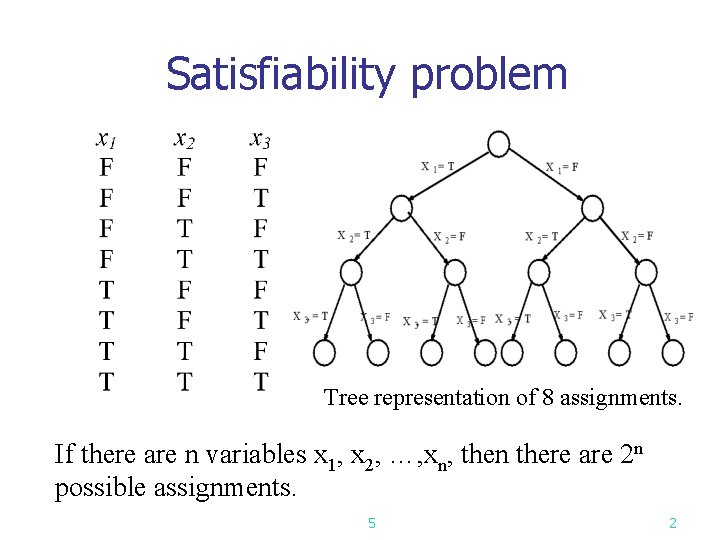
Satisfiability problem Tree representation of 8 assignments. If there are n variables x 1, x 2, …, xn, then there are 2 n possible assignments. 5 2
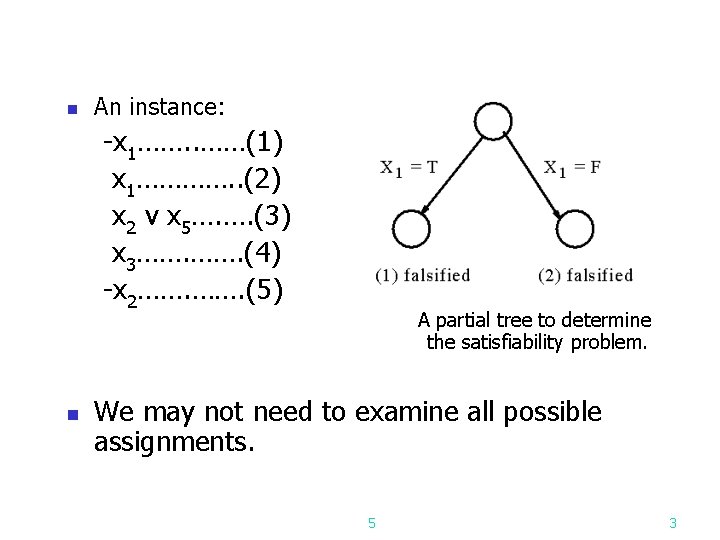
n An instance: -x 1……. . ……(1) x 1…………. . (2) x 2 v x 5…. …. (3) x 3……. (4) -x 2……. (5) n A partial tree to determine the satisfiability problem. We may not need to examine all possible assignments. 5 3
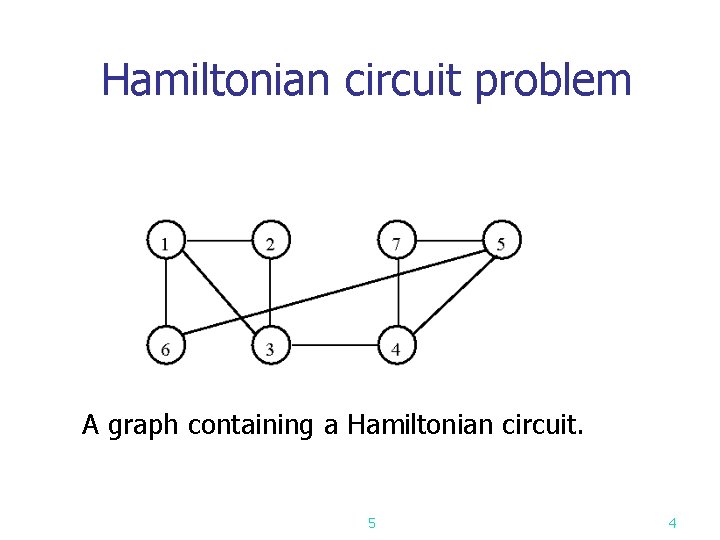
Hamiltonian circuit problem A graph containing a Hamiltonian circuit. 5 4
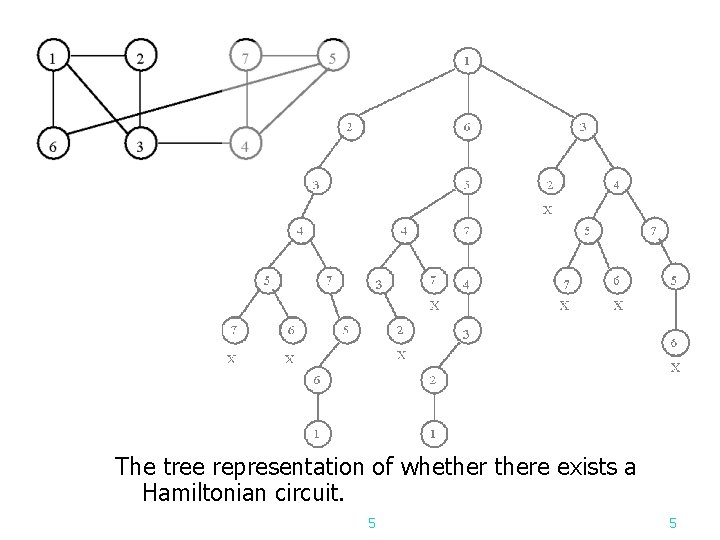
The tree representation of whethere exists a Hamiltonian circuit. 5 5
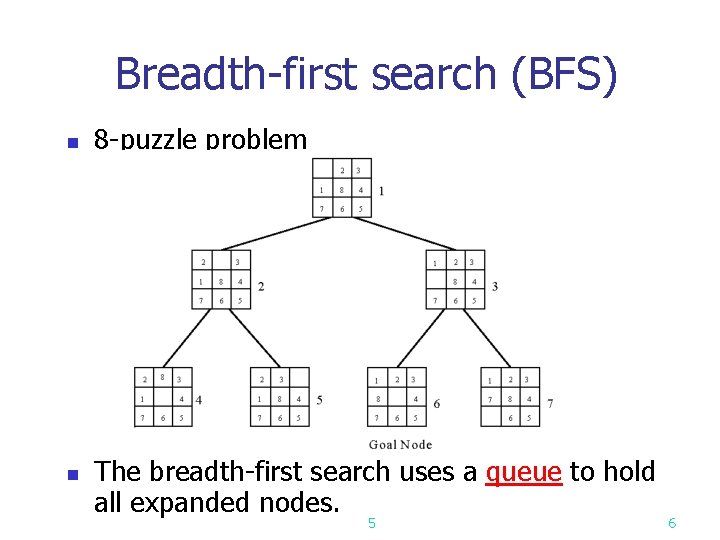
Breadth-first search (BFS) n n 8 -puzzle problem The breadth-first search uses a queue to hold all expanded nodes. 5 6
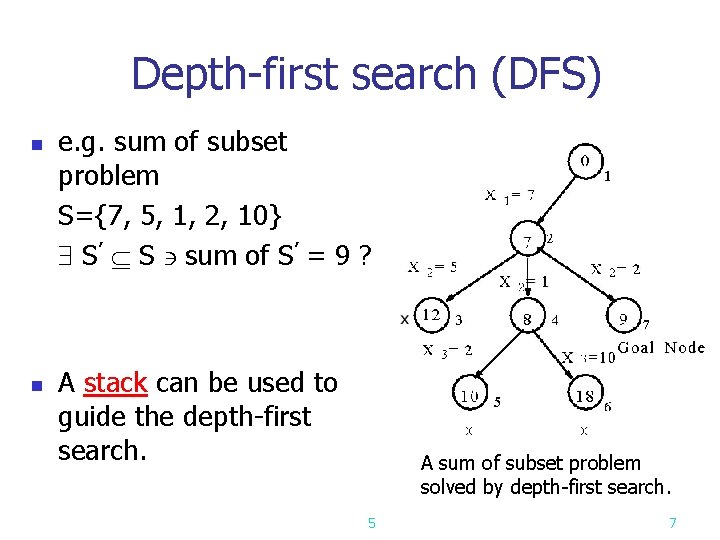
Depth-first search (DFS) n n e. g. sum of subset problem S={7, 5, 1, 2, 10} S’ S sum of S’ = 9 ? A stack can be used to guide the depth-first search. A sum of subset problem solved by depth-first search. 5 7
Hill climbing n n A variant of depth-first search The method selects the locally optimal node to expand. e. g. 8 -puzzle problem evaluation function f(n) = d(n) + w(n) where d(n) is the depth of node n w(n) is # of misplaced tiles in node n. 5 8
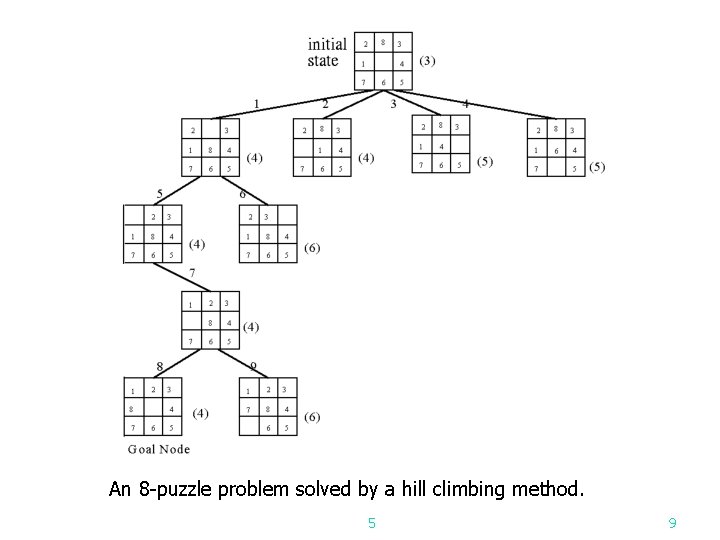
An 8 -puzzle problem solved by a hill climbing method. 5 9
Best-first search strategy n n n Combine depth-first search and breadth-first search. Selecting the node with the best estimated cost among all nodes. This method has a global view. 5 10
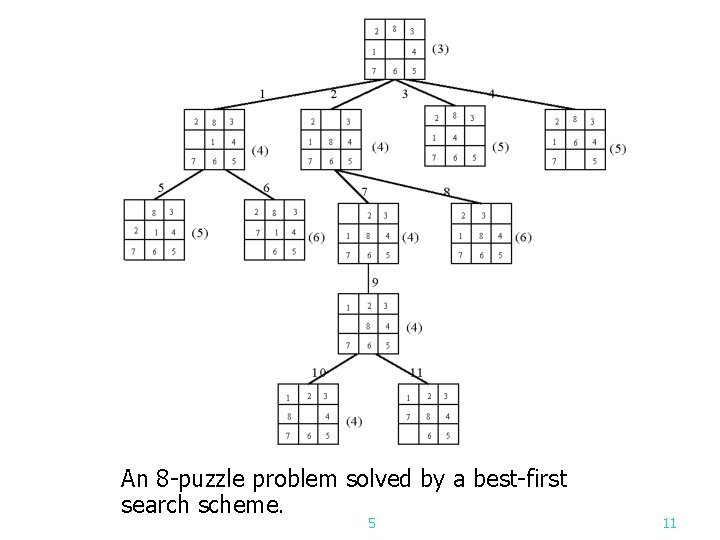
An 8 -puzzle problem solved by a best-first search scheme. 5 11
Best-First Search Scheme Step 1: Form a one-element list consisting of the root node. Step 2: Remove the first element from the list. Expand the first element. If one of the descendants of the first element is a goal node, then stop; otherwise, add the descendants into the list. Step 3: Sort the entire list by the values of some estimation function. Step 4: If the list is empty, then failure. Otherwise, go to Step 2. 5 12
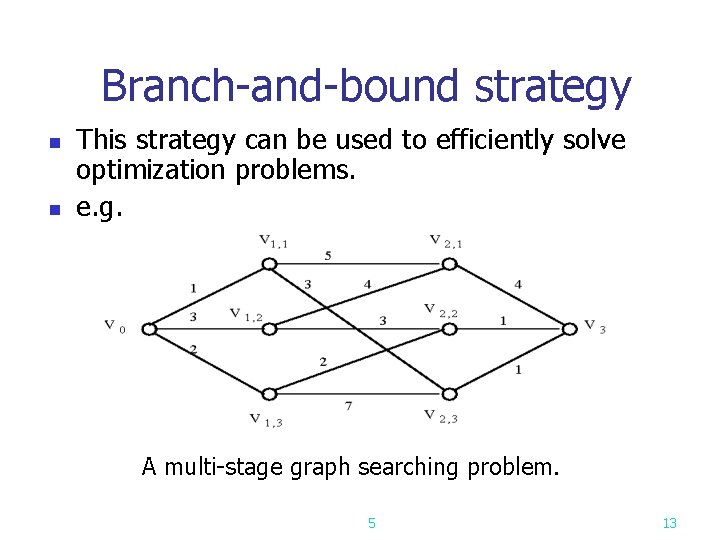
Branch-and-bound strategy n n This strategy can be used to efficiently solve optimization problems. e. g. A multi-stage graph searching problem. 5 13
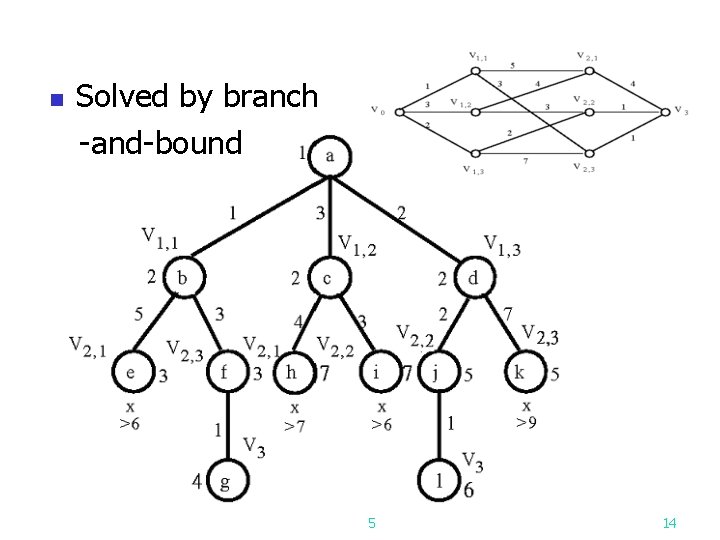
n Solved by branch -and-bound 5 14
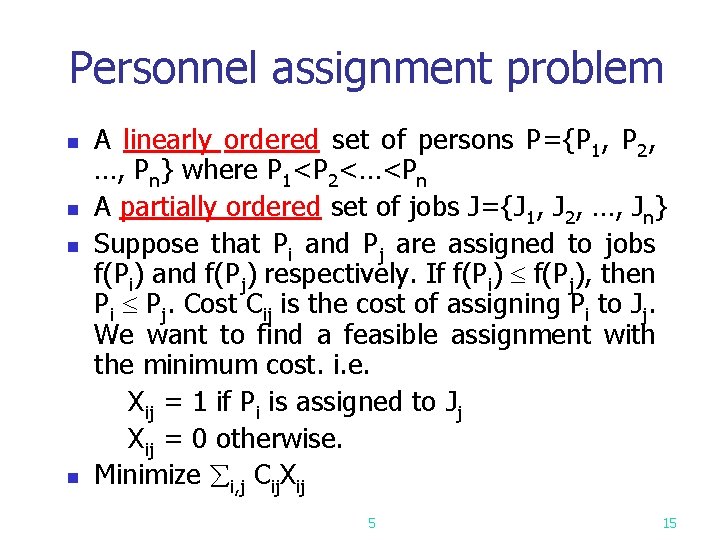
Personnel assignment problem n n A linearly ordered set of persons P={P 1, P 2, …, Pn} where P 1<P 2<…<Pn A partially ordered set of jobs J={J 1, J 2, …, Jn} Suppose that Pi and Pj are assigned to jobs f(Pi) and f(Pj) respectively. If f(Pi) f(Pj), then Pi Pj. Cost Cij is the cost of assigning Pi to Jj. We want to find a feasible assignment with the minimum cost. i. e. Xij = 1 if Pi is assigned to Jj Xij = 0 otherwise. Minimize i, j Cij. Xij 5 15
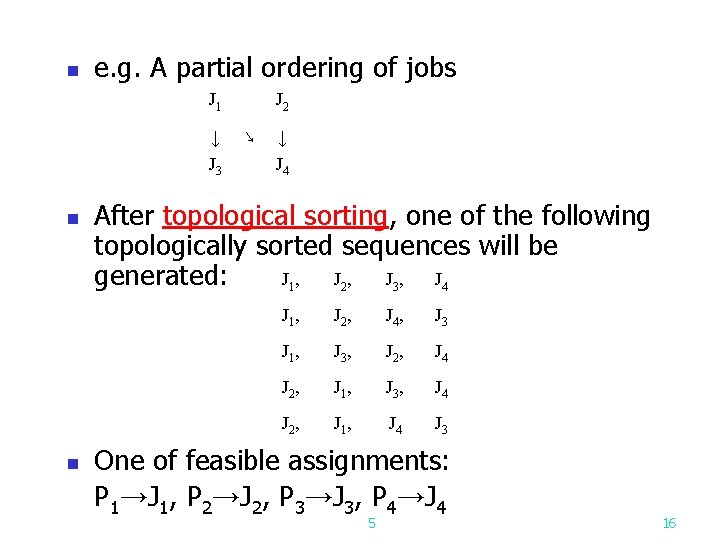
n e. g. A partial ordering of jobs J 1 ↓ J 3 n n J 2 ↘ ↓ J 4 After topological sorting, one of the following topologically sorted sequences will be generated: J 1 , J 2 , J 3 , J 4 J 1 , J 2 , J 4 , J 3 J 1 , J 3 , J 2 , J 4 J 2 , J 1 , J 3 , J 4 J 2 , J 1 , J 4 J 3 One of feasible assignments: P 1→J 1, P 2→J 2, P 3→J 3, P 4→J 4 5 16
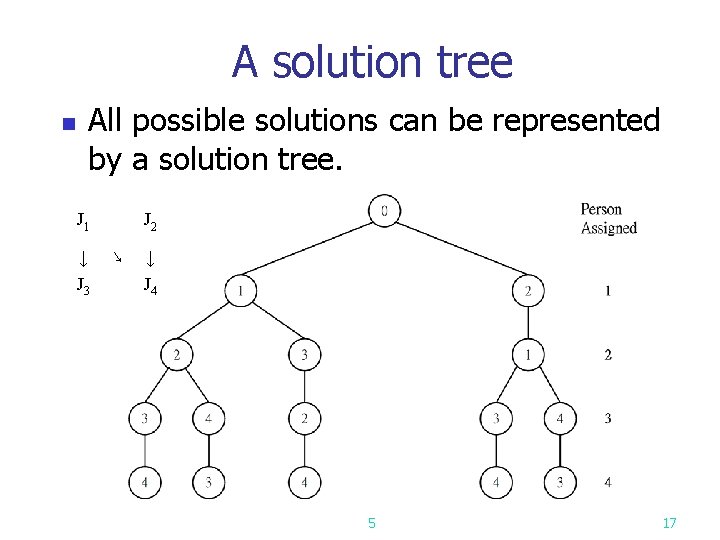
A solution tree All possible solutions can be represented by a solution tree. n J 1 ↓ J 3 J 2 ↘ ↓ J 4 5 17
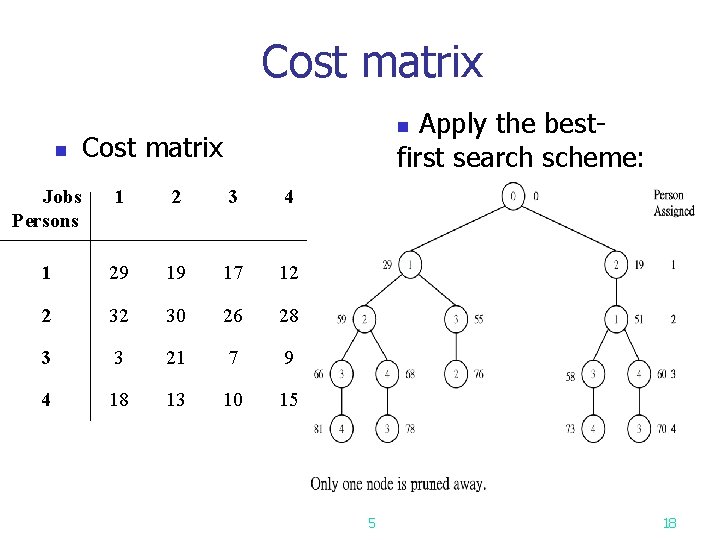
Cost matrix n Apply the bestfirst search scheme: n Cost matrix Jobs Persons 1 2 3 4 1 29 19 17 12 2 32 30 26 28 3 3 21 7 9 4 18 13 10 15 5 18
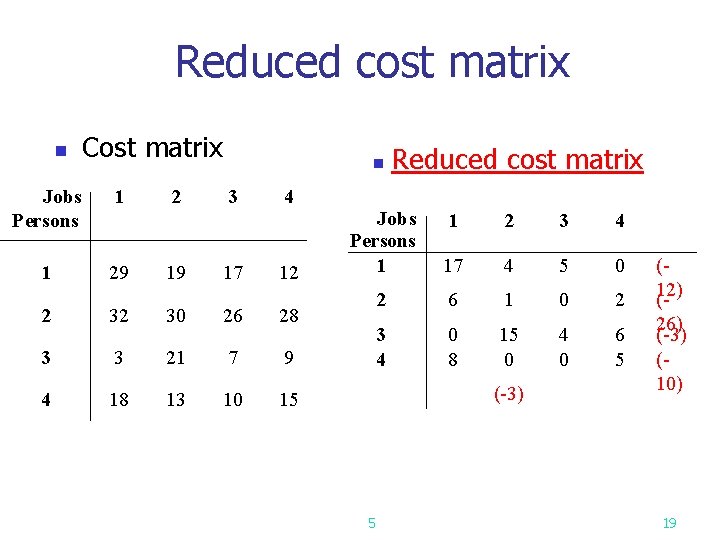
Reduced cost matrix n Cost matrix Jobs Persons 1 1 29 2 19 n 3 17 4 12 2 32 30 26 28 3 3 21 7 9 4 18 13 10 15 Reduced cost matrix Jobs Persons 1 1 2 3 4 17 4 5 0 2 6 1 0 2 3 4 0 8 15 0 4 0 6 5 (-3) 5 (12) (26) (-3) (10) 19
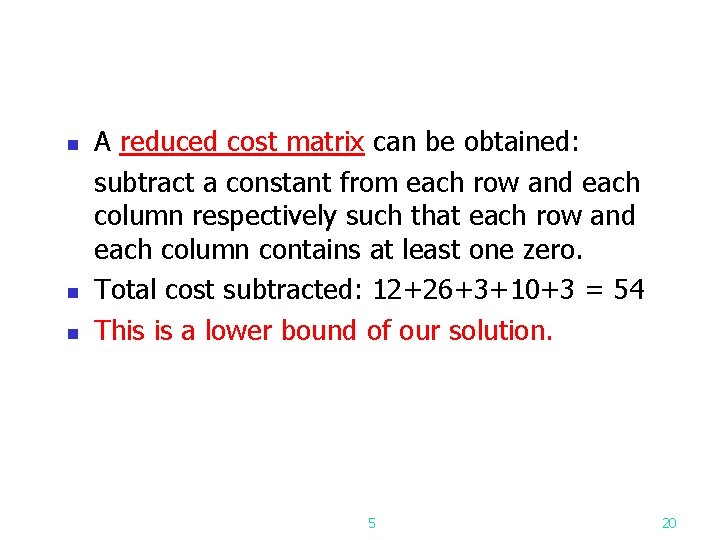
n n n A reduced cost matrix can be obtained: subtract a constant from each row and each column respectively such that each row and each column contains at least one zero. Total cost subtracted: 12+26+3+10+3 = 54 This is a lower bound of our solution. 5 20
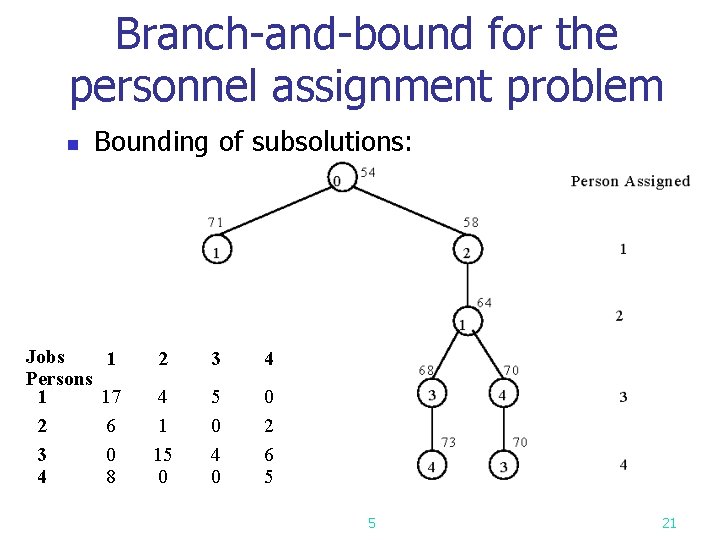
Branch-and-bound for the personnel assignment problem n Jobs Persons 1 2 3 4 Bounding of subsolutions: 1 2 3 4 17 6 0 8 4 1 15 0 4 0 0 2 6 5 5 21
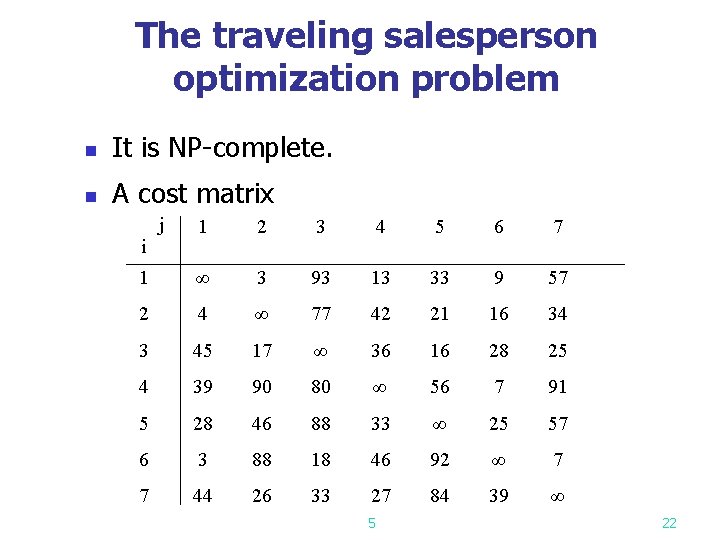
The traveling salesperson optimization problem n It is NP-complete. n A cost matrix j 1 2 3 4 5 6 7 1 ∞ 3 93 13 33 9 57 2 4 ∞ 77 42 21 16 34 3 45 17 ∞ 36 16 28 25 4 39 90 80 ∞ 56 7 91 5 28 46 88 33 ∞ 25 57 6 3 88 18 46 92 ∞ 7 7 44 26 33 27 84 39 ∞ i 5 22
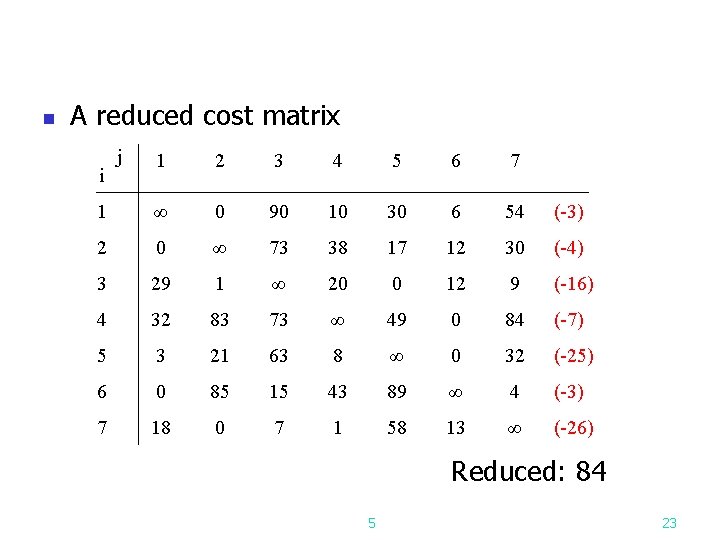
n A reduced cost matrix j 1 2 3 4 5 6 7 1 ∞ 0 90 10 30 6 54 (-3) 2 0 ∞ 73 38 17 12 30 (-4) 3 29 1 ∞ 20 0 12 9 (-16) 4 32 83 73 ∞ 49 0 84 (-7) 5 3 21 63 8 ∞ 0 32 (-25) 6 0 85 15 43 89 ∞ 4 (-3) 7 18 0 7 1 58 13 ∞ (-26) i Reduced: 84 5 23
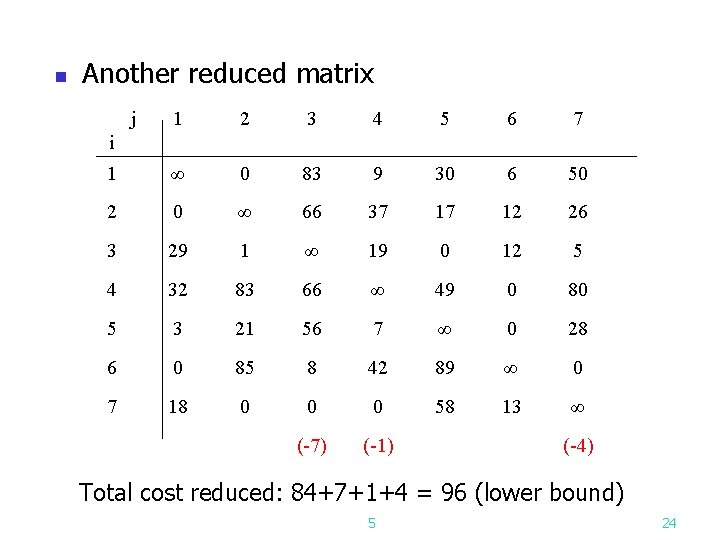
n Another reduced matrix j 1 2 3 4 5 6 7 1 ∞ 0 83 9 30 6 50 2 0 ∞ 66 37 17 12 26 3 29 1 ∞ 19 0 12 5 4 32 83 66 ∞ 49 0 80 5 3 21 56 7 ∞ 0 28 6 0 85 8 42 89 ∞ 0 7 18 0 0 0 58 13 ∞ (-7) (-1) i (-4) Total cost reduced: 84+7+1+4 = 96 (lower bound) 5 24
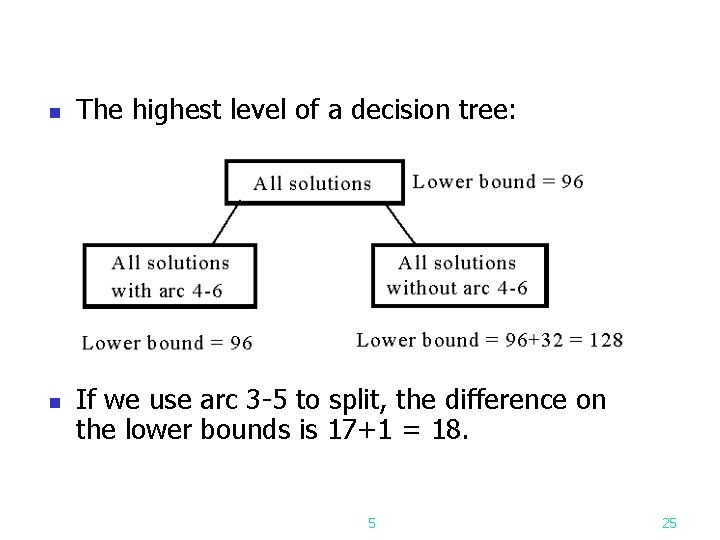
n n The highest level of a decision tree: If we use arc 3 -5 to split, the difference on the lower bounds is 17+1 = 18. 5 25
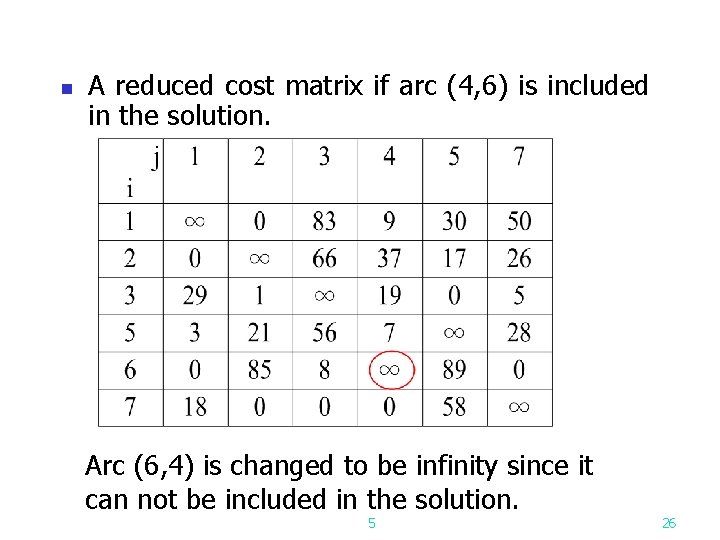
n A reduced cost matrix if arc (4, 6) is included in the solution. Arc (6, 4) is changed to be infinity since it can not be included in the solution. 5 26
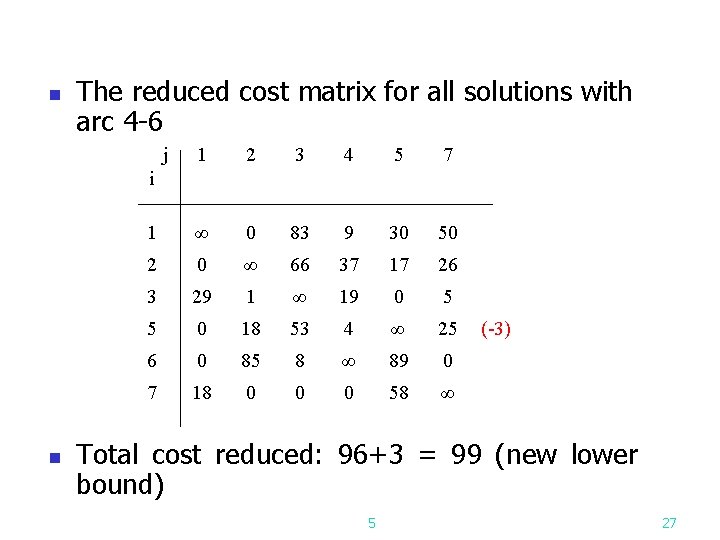
n The reduced cost matrix for all solutions with arc 4 -6 j 1 2 3 4 5 7 1 ∞ 0 83 9 30 50 2 0 ∞ 66 37 17 26 3 29 1 ∞ 19 0 5 5 0 18 53 4 ∞ 25 6 0 85 8 ∞ 89 0 7 18 0 0 0 58 ∞ i n (-3) Total cost reduced: 96+3 = 99 (new lower bound) 5 27
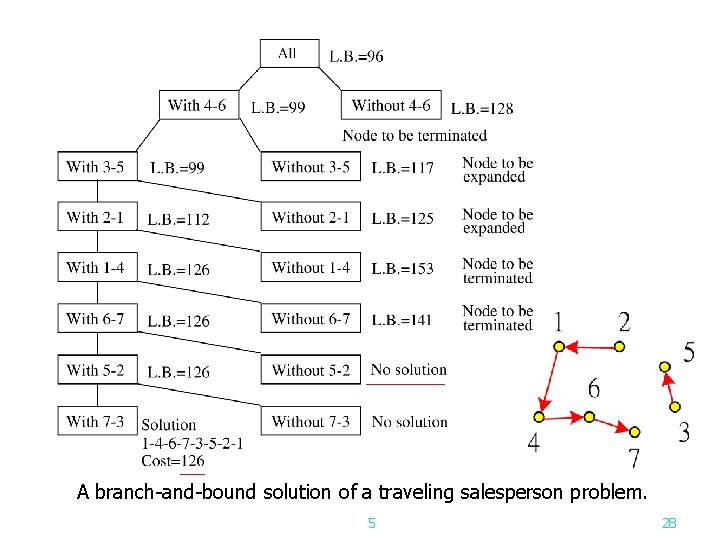
A branch-and-bound solution of a traveling salesperson problem. 5 28
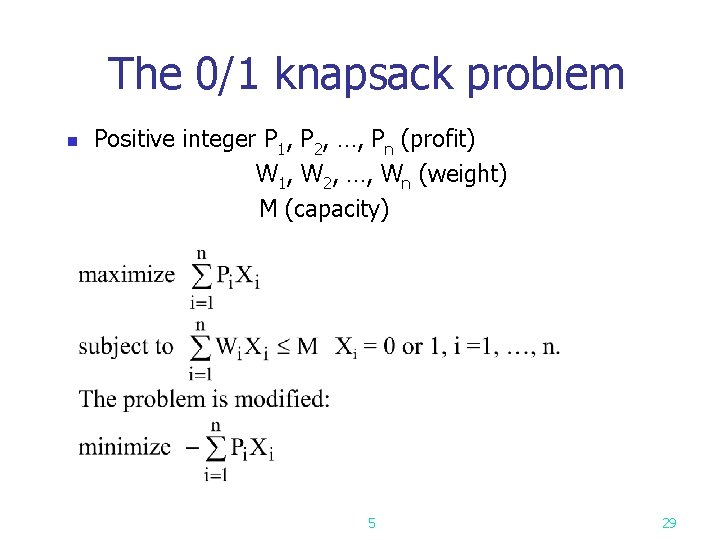
The 0/1 knapsack problem n Positive integer P 1, P 2, …, Pn (profit) W 1, W 2, …, Wn (weight) M (capacity) 5 29
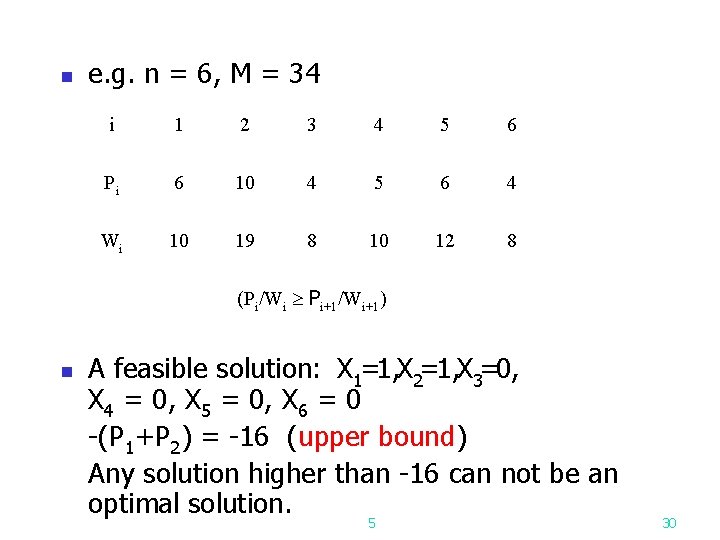
n e. g. n = 6, M = 34 i 1 2 3 4 5 6 Pi 6 10 4 5 6 4 Wi 10 19 8 10 12 8 (Pi/Wi Pi+1/Wi+1) n A feasible solution: X 1=1, X 2=1, X 3=0, X 4 = 0, X 5 = 0, X 6 = 0 -(P 1+P 2) = -16 (upper bound) Any solution higher than -16 can not be an optimal solution. 5 30
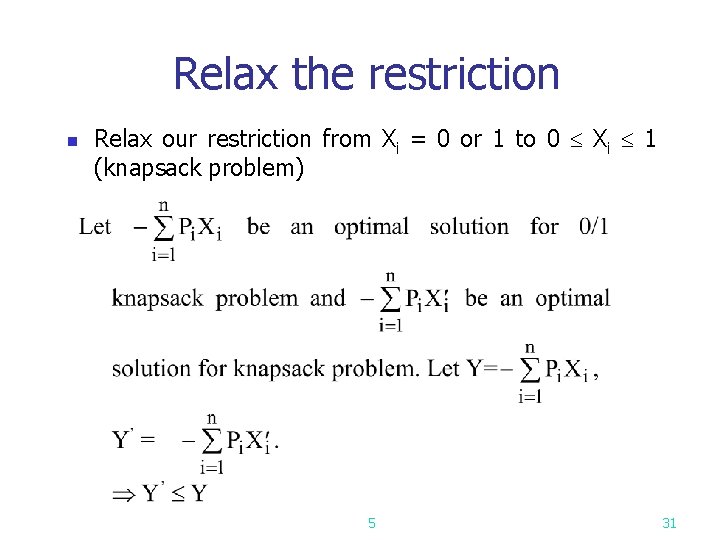
Relax the restriction n Relax our restriction from Xi = 0 or 1 to 0 Xi 1 (knapsack problem) 5 31
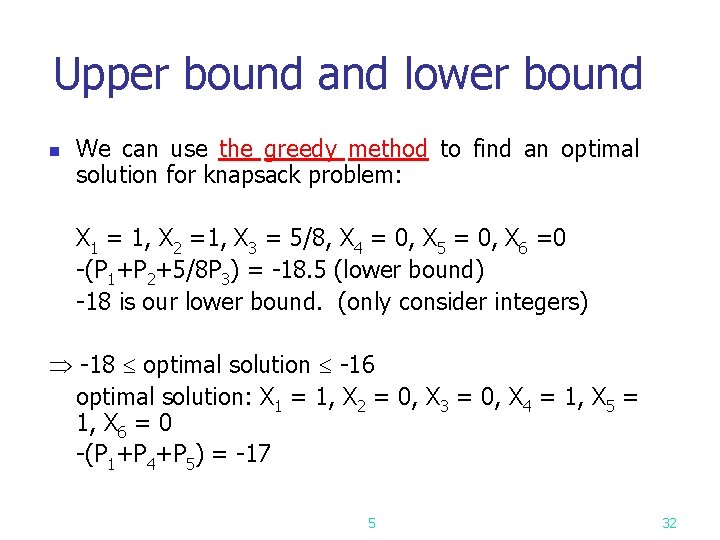
Upper bound and lower bound n We can use the greedy method to find an optimal solution for knapsack problem: X 1 = 1, X 2 =1, X 3 = 5/8, X 4 = 0, X 5 = 0, X 6 =0 -(P 1+P 2+5/8 P 3) = -18. 5 (lower bound) -18 is our lower bound. (only consider integers) -18 optimal solution -16 optimal solution: X 1 = 1, X 2 = 0, X 3 = 0, X 4 = 1, X 5 = 1, X 6 = 0 -(P 1+P 4+P 5) = -17 5 32
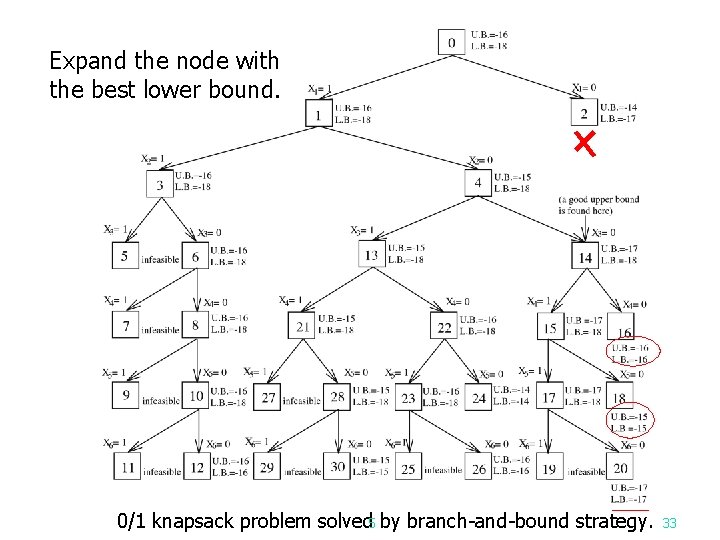
Expand the node with the best lower bound. 0/1 knapsack problem solved 5 by branch-and-bound strategy. 33
The A* algorithm n n n Used to solve optimization problems. Using the best-first strategy. If a feasible solution (goal node) is obtained, then it is optimal and we can stop. Cost function of node n : f(n) = g(n) + h(n) g(n): cost from root to node n. h(n): estimated cost from node n to a goal node. h*(n): “real” cost from node n to a goal node. If we guarantee h(n) h*(n), then f(n) = g(n) + h(n) g(n)+h*(n) = f*(n) 5 34
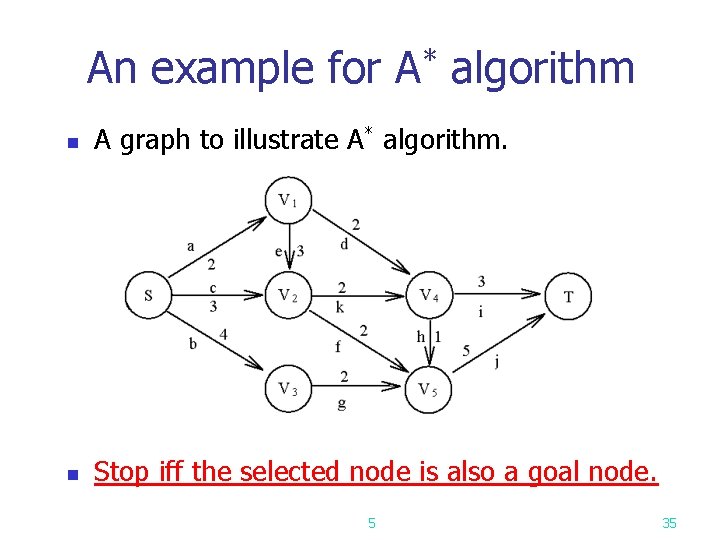
An example for A* algorithm n A graph to illustrate A* algorithm. n Stop iff the selected node is also a goal node. 5 35
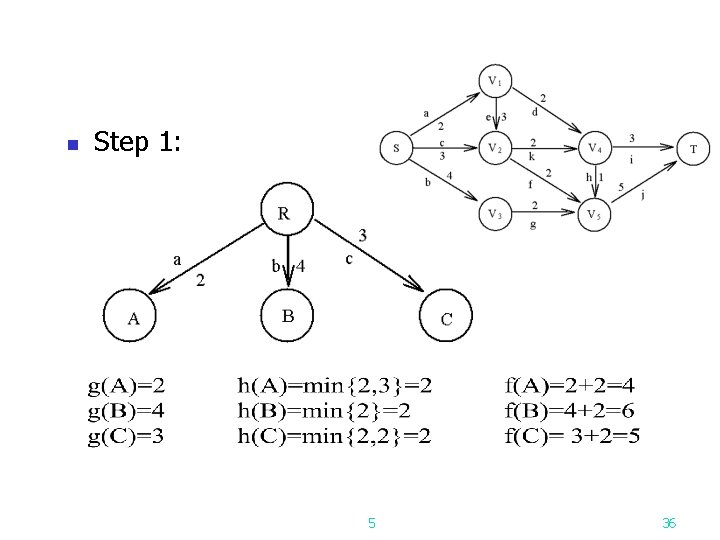
n Step 1: 5 36
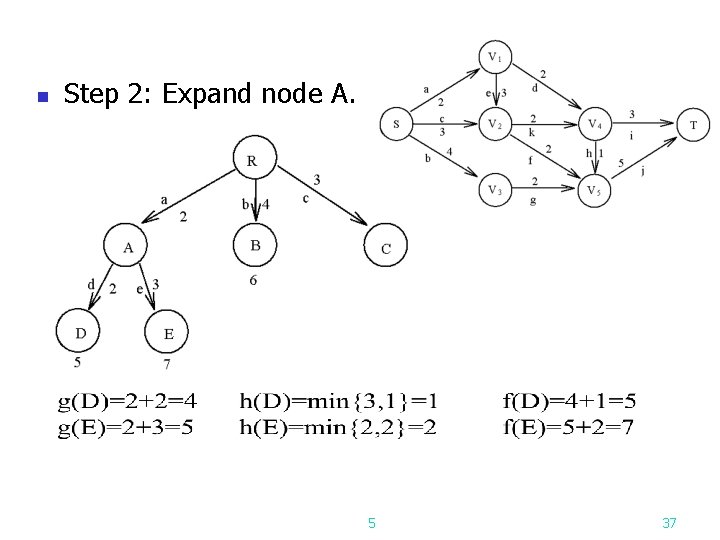
n Step 2: Expand node A. 5 37
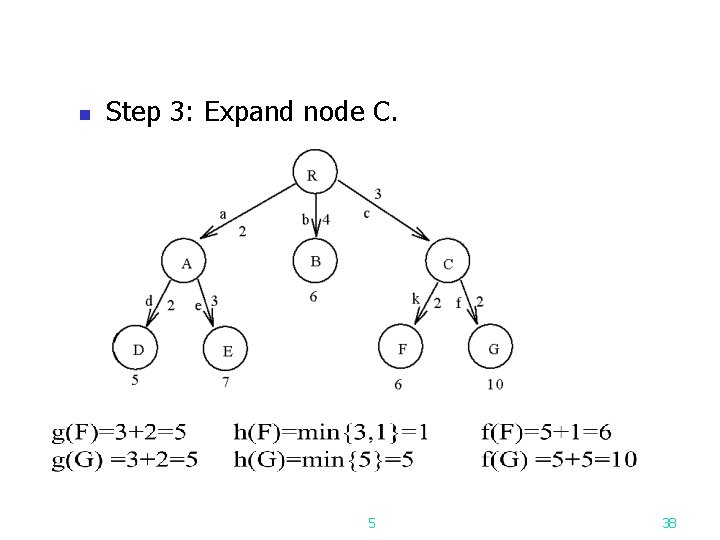
n Step 3: Expand node C. 5 38
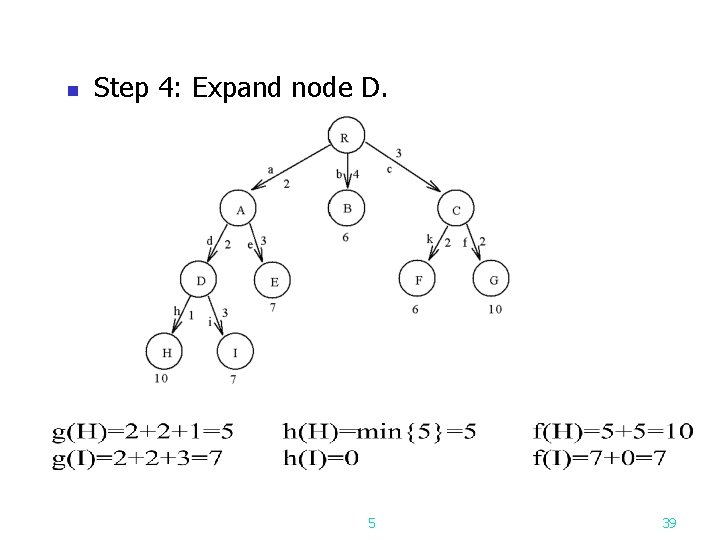
n Step 4: Expand node D. 5 39
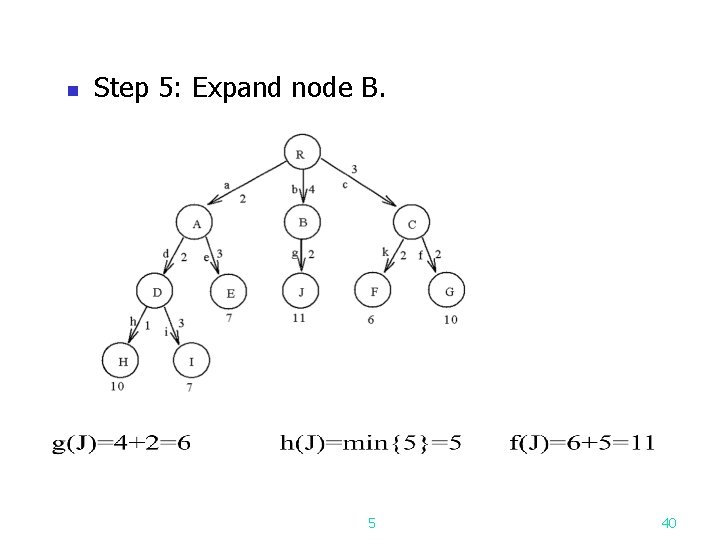
n Step 5: Expand node B. 5 40
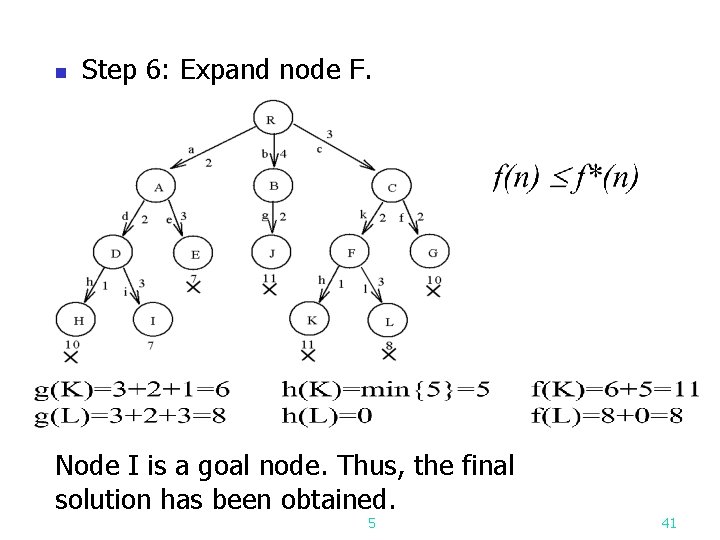
n Step 6: Expand node F. Node I is a goal node. Thus, the final solution has been obtained. 5 41
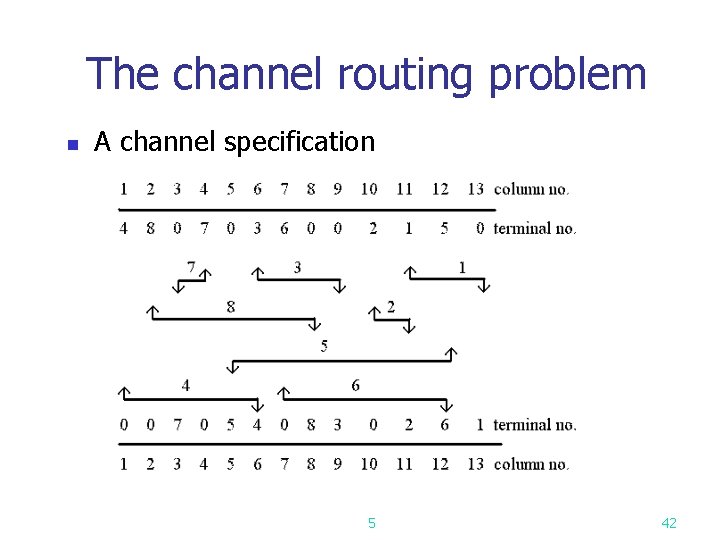
The channel routing problem n A channel specification 5 42
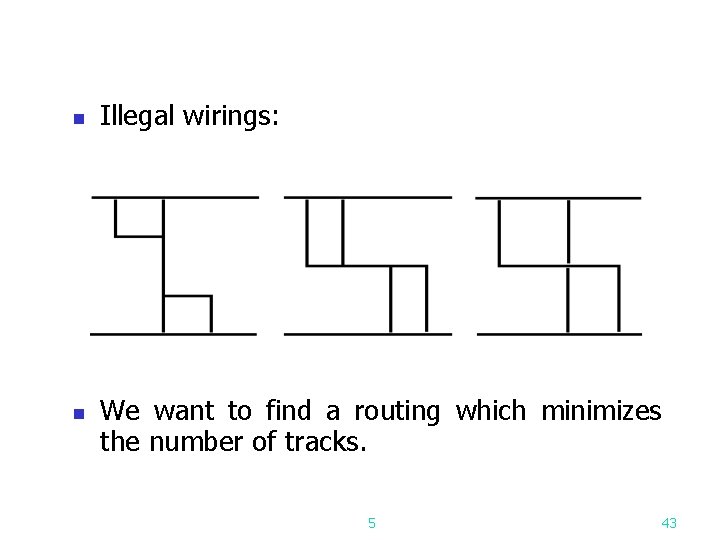
n n Illegal wirings: We want to find a routing which minimizes the number of tracks. 5 43
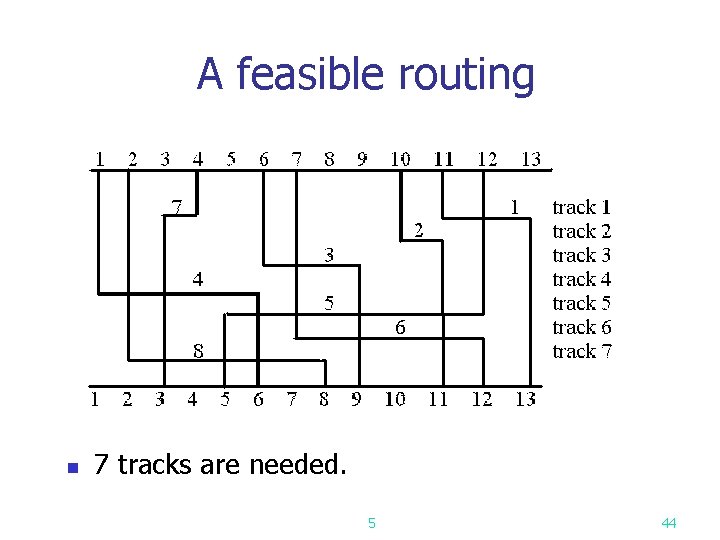
A feasible routing n 7 tracks are needed. 5 44
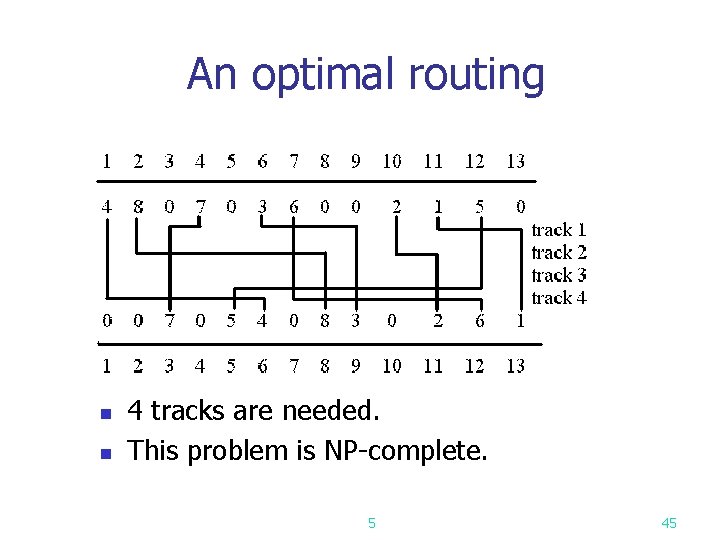
An optimal routing n n 4 tracks are needed. This problem is NP-complete. 5 45
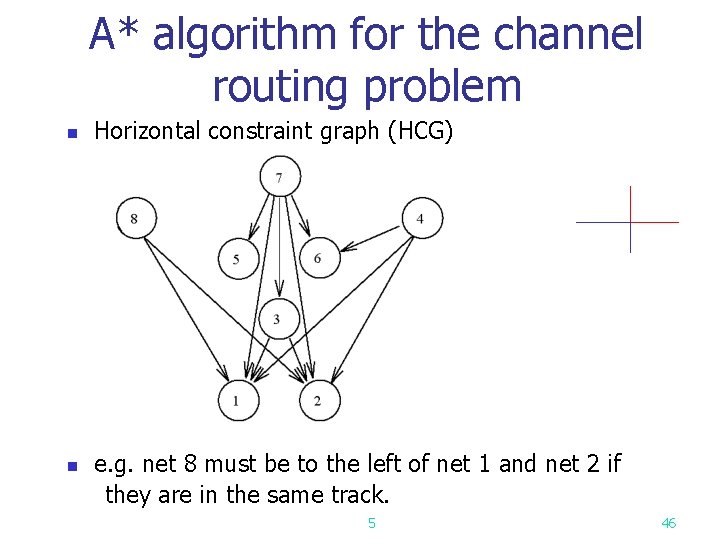
A* algorithm for the channel routing problem n n Horizontal constraint graph (HCG) e. g. net 8 must be to the left of net 1 and net 2 if they are in the same track. 5 46
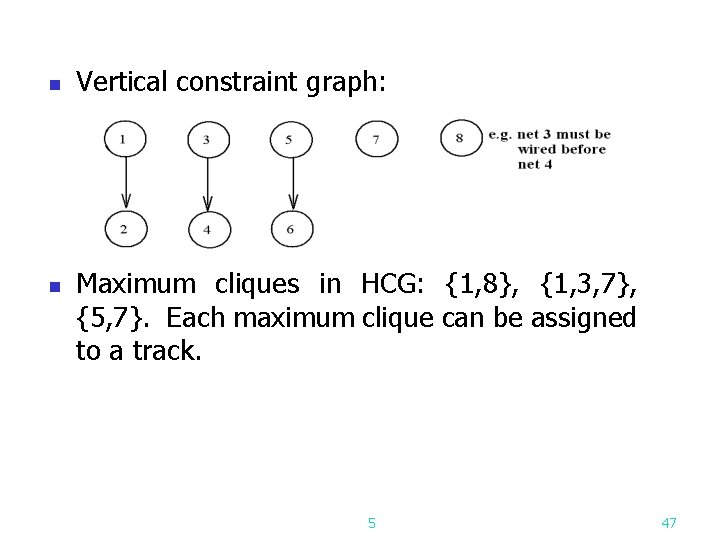
n n Vertical constraint graph: Maximum cliques in HCG: {1, 8}, {1, 3, 7}, {5, 7}. Each maximum clique can be assigned to a track. 5 47
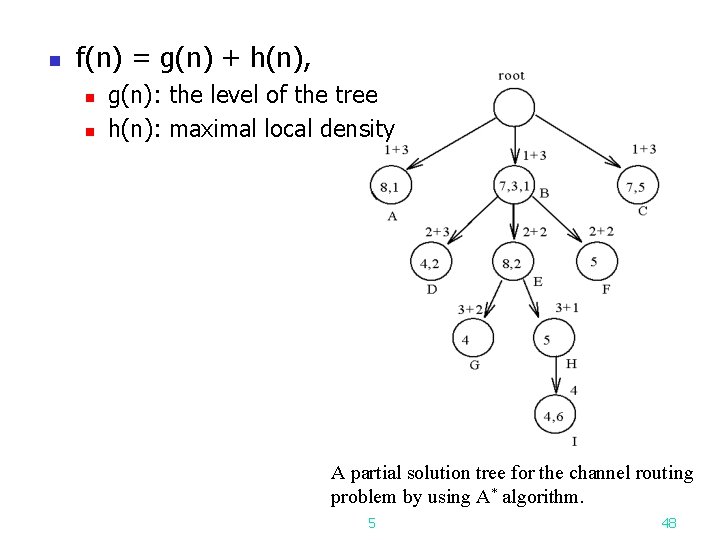
n f(n) = g(n) + h(n), n n g(n): the level of the tree h(n): maximal local density A partial solution tree for the channel routing problem by using A* algorithm. 5 48
- Slides: 48