
Chapter 5 Toward Independence Preview No the school





- Slides: 49
Chapter 5 Toward Independence
Preview • No, the school is not going make you pay. DO NOT SPREAD THIS!! • Based on your reactions to the “fees”, answer questions 1 & 3 on your paper
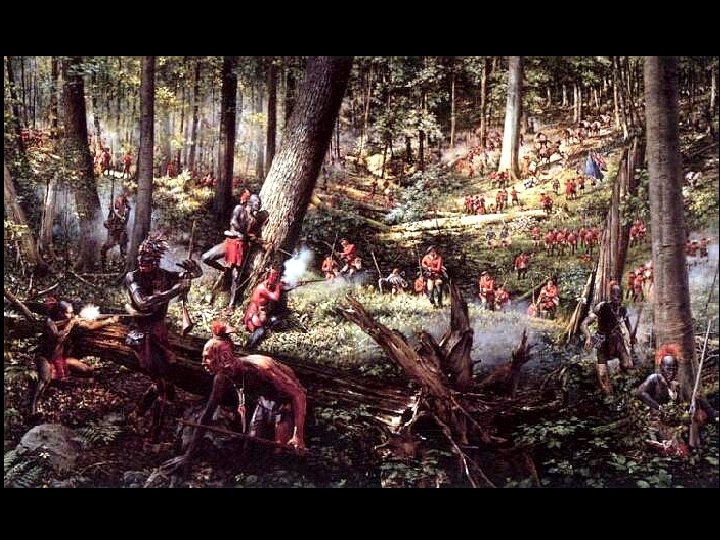
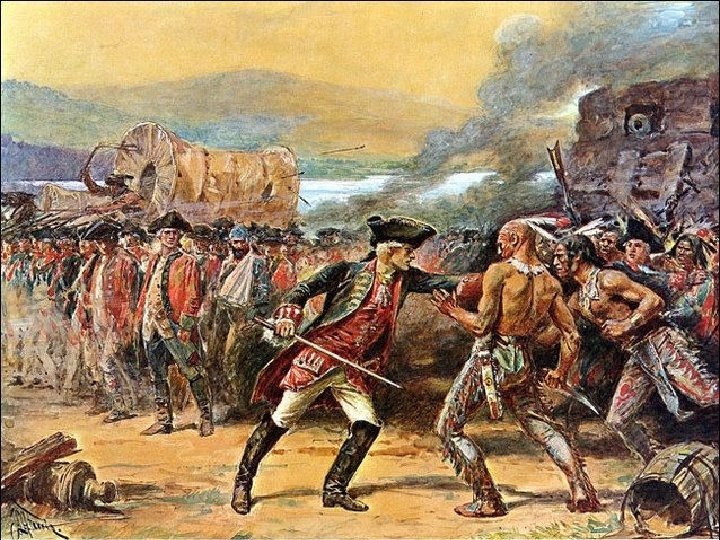
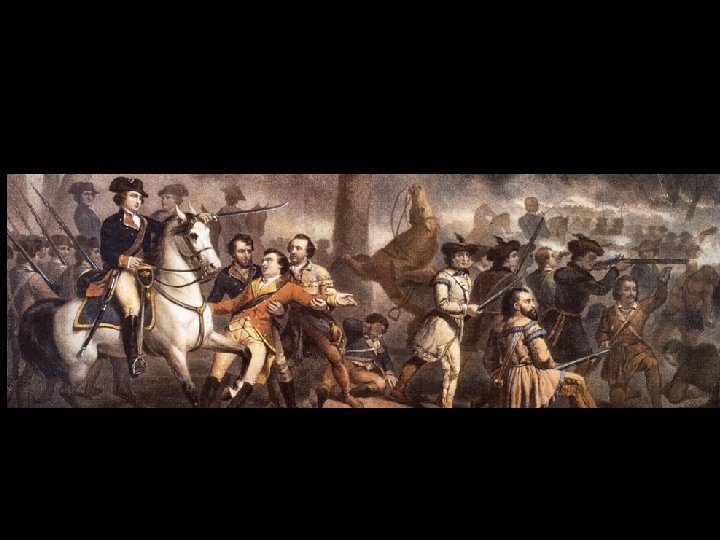
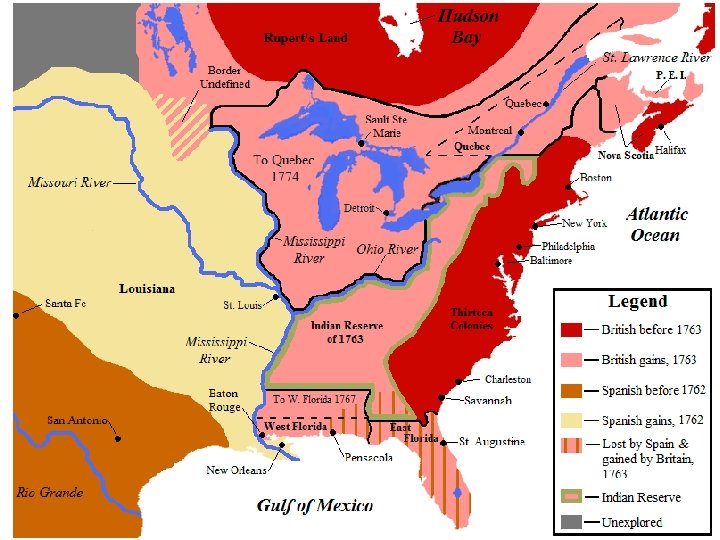
5. 2 – Before 1763 • The British government mostly left the colonists alone to solve their own problems. – Americans had the freedom to run their own affairs – more than those who lived in Europe • Conflict in the Ohio Valley – A dispute between the French and British over land caused a militia (including a 22 -year-old named George Washington) to be called to fight.
• The French and Indian War – This conflict was fought between the British/Colonists/Indians and the French/Indians. – Britain won the war and gained Canada and the land west of the Appalachian mountains. – Britain taxed the colonists to repay their war debt. • And now, some pictures!
5. 3 – Early British Actions • The Proclamation of 1763 – The Proclamation of 1763 created an invisible line down the Appalachian Mountains to divide colonists(east) and Native Americans(west) to prevent conflict. – Colonists argued the land east of the Appalachians was already settled and farmers could find new land west of the mountains. – To protest the Proclamation of 1763 colonists continued to settle the land west of the Appalachian Mountains.
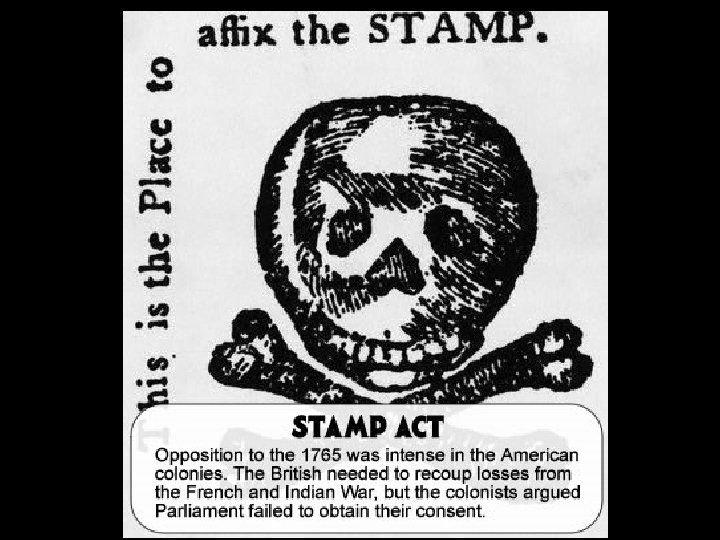
• The Stamp Act - 1765 – The Stamp Act required colonists to buy a stamp for every piece of paper they used. – The Stamp Act was opposed because colonists had no representation in Parliament to vote on such taxes, it was seen as a violation of their rights as British subjects. – Colonists refused to buy stamps, attacked tax collector’s homes and used violence to protest.
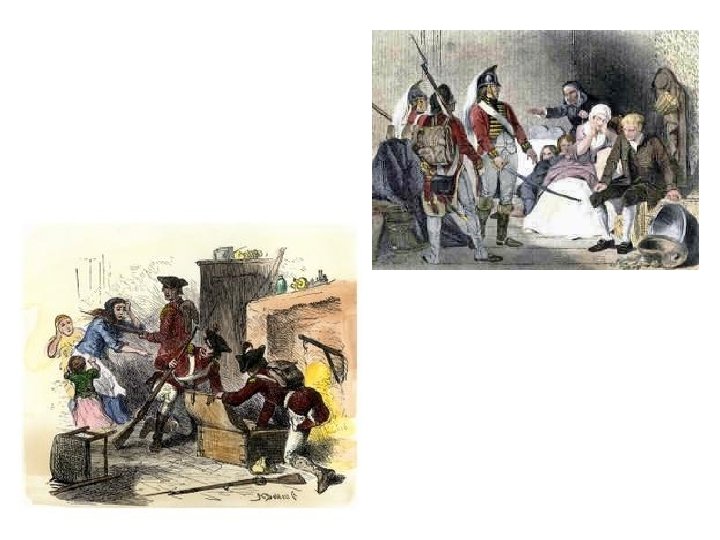
• The Quartering Act - 1765 – The Quartering Act required colonists to provide British troops with housing and supplies. – The Colonists opposed the Quartering Act because it cost money to house and supply the troops. – Colonial assemblies decided to not fund the troops. Colonists protested the costs by refusing to house the soldiers.
• The Sugar Act - 1765 – The Sugar Act placed a three cent tax on foreign sugar and increased taxes on coffee, indigo and wine. – This act was opposed because it caused economic hardships throughout the colonies by restricting trade with foreign countries. – They smuggled foreign sugar, bribed customs officials, and arranged a boycott of British goods.
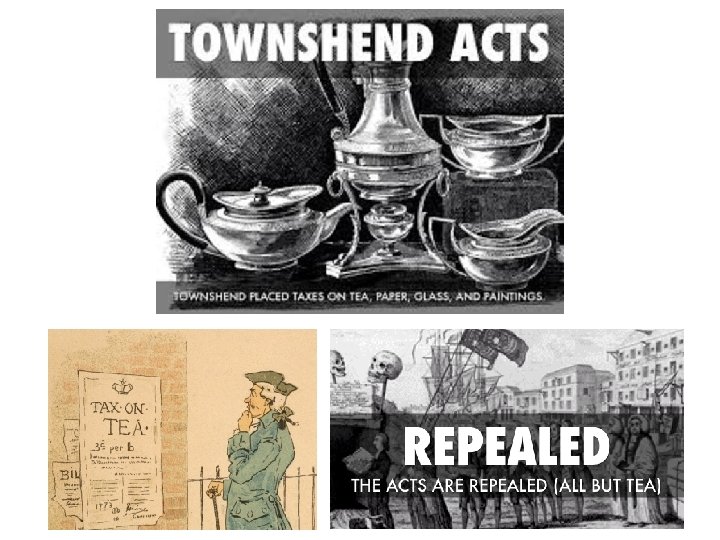
5. 4 – The Townshend Acts • The Townshend Acts - 1767 – The Townshend Acts placed a tax on items such as glass, paint, paper, and tea. – Colonists opposed the Townshend Acts because they had not voted to pass the new taxes. – The colonists wrote letters of protest, and boycotted British imports, and bought only American made goods. Britain repealed the act because of the boycott.
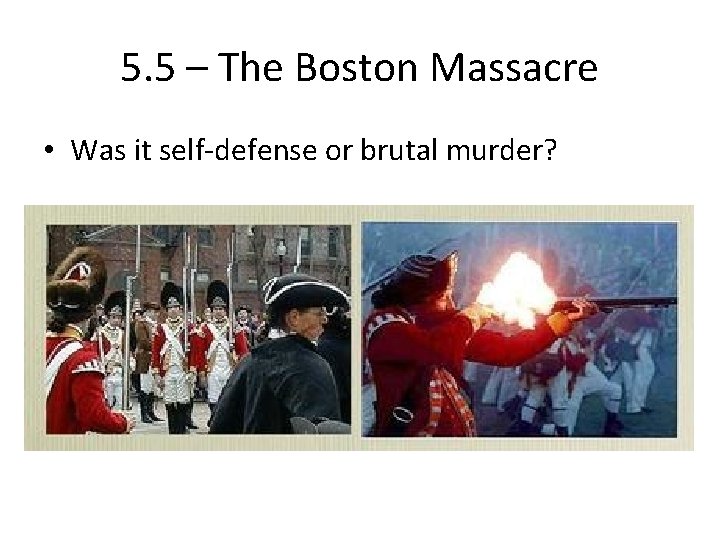
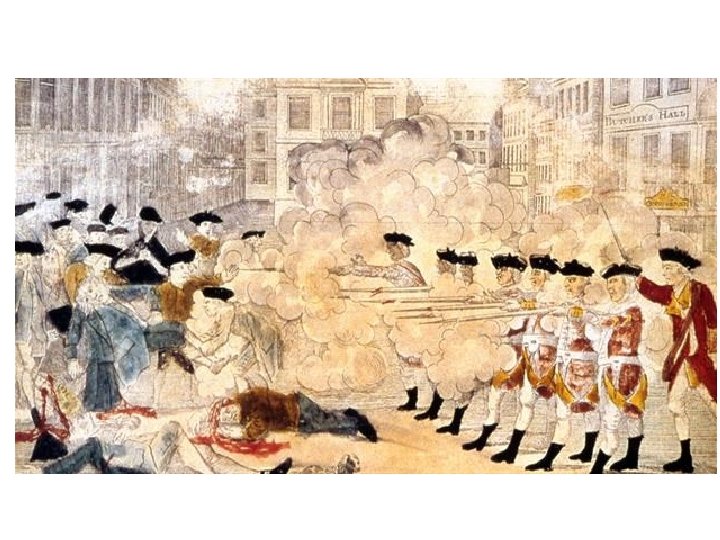
5. 5 – The Boston Massacre • Was it self-defense or brutal murder?
• Trouble in Boston before the incident – Name-calling: “lobsterbacks” – Sam Adams training his dog to pester them • Soldiers forbidden from retaliation – How much can a human take?
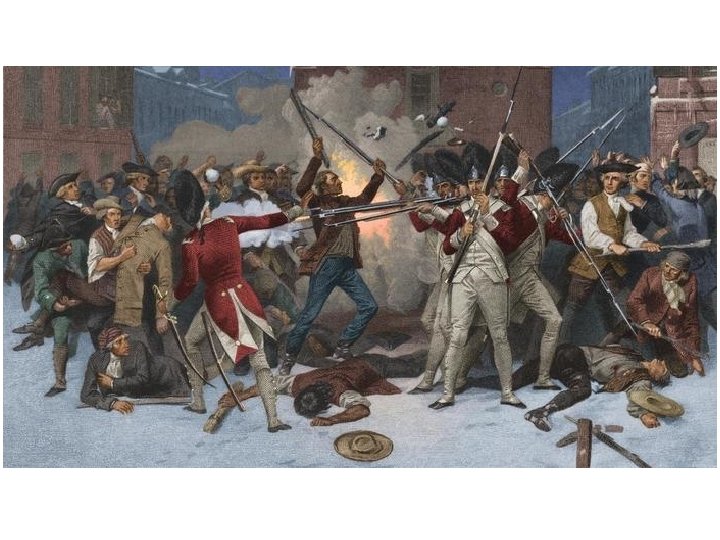
• The truth – A mob threw snow, ice balls, and rocks at soldiers – Who yelled “Fire!”? – Troops panicked and opened fire – 5 were dead, 10 were injured • Patriot John Adams, a lawyer and cousin of Samuel Adams, DEFENDED the British soldiers and WON THE CASE!
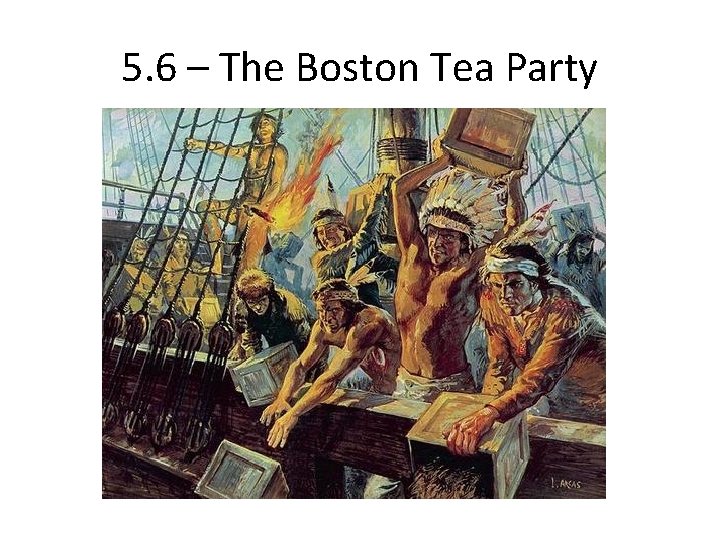
5. 6 – The Boston Tea Party
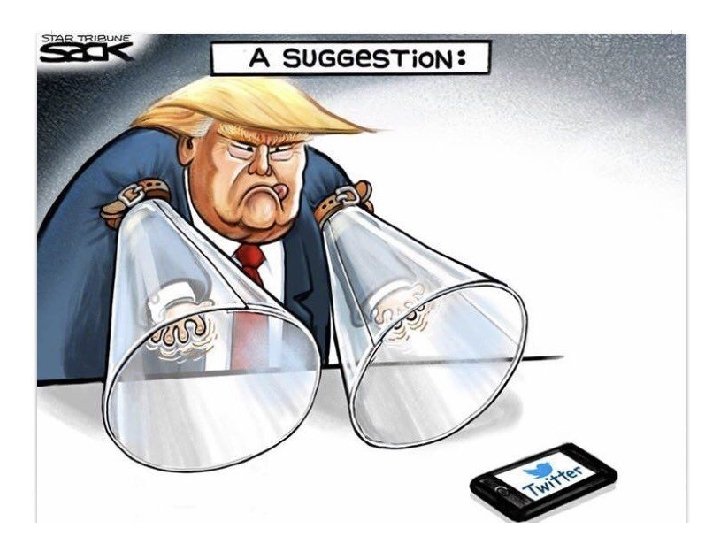
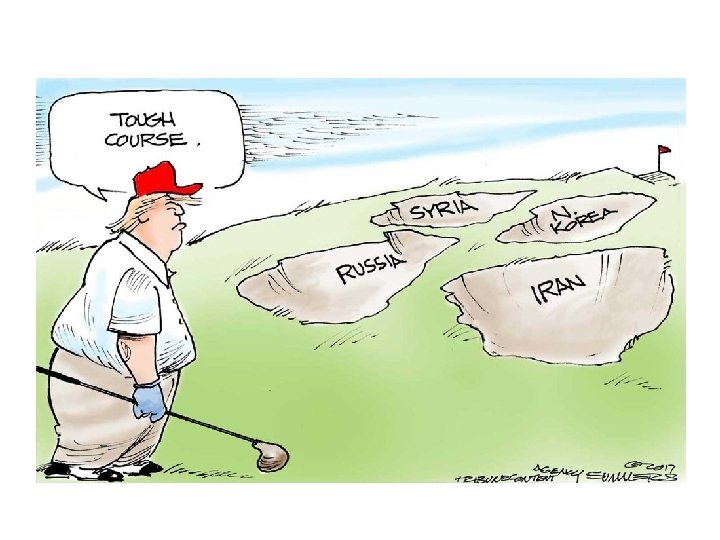
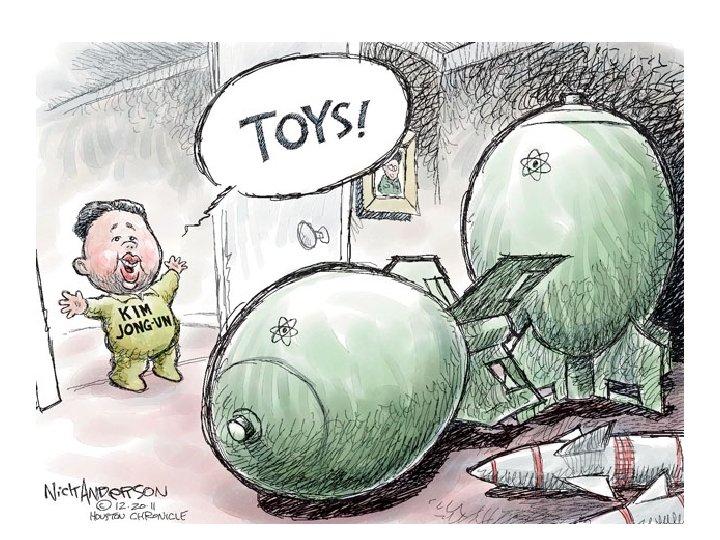
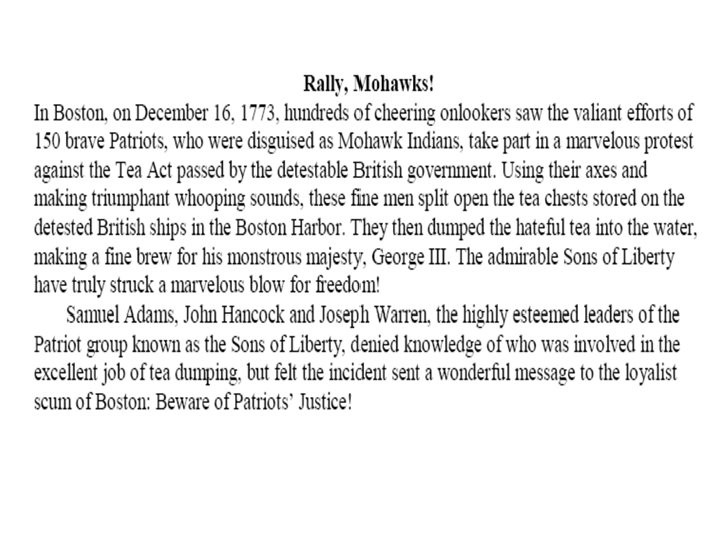
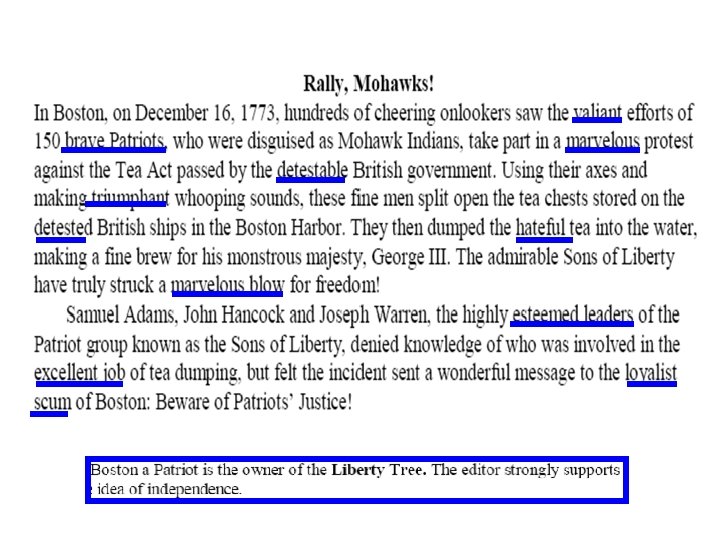
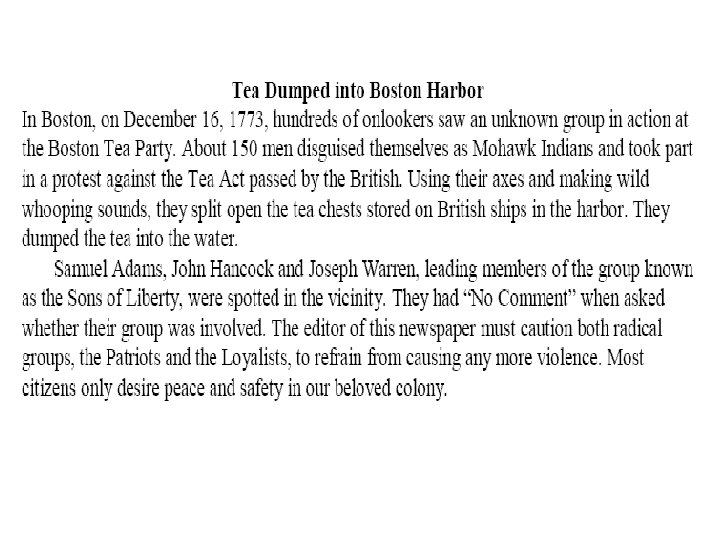
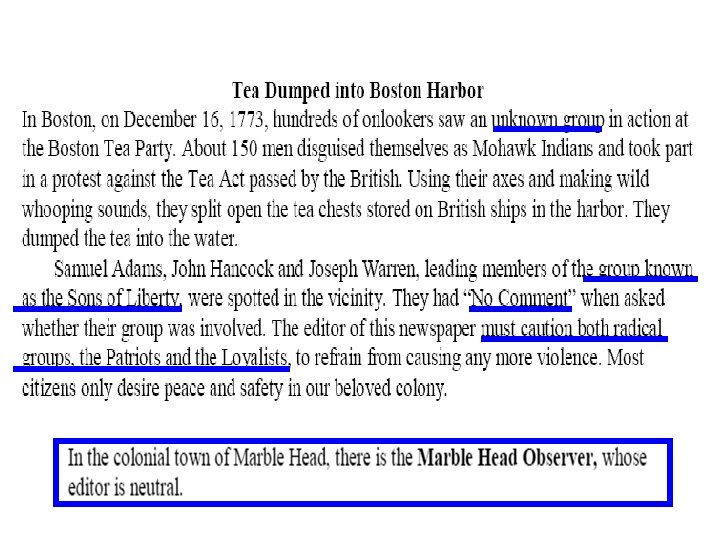
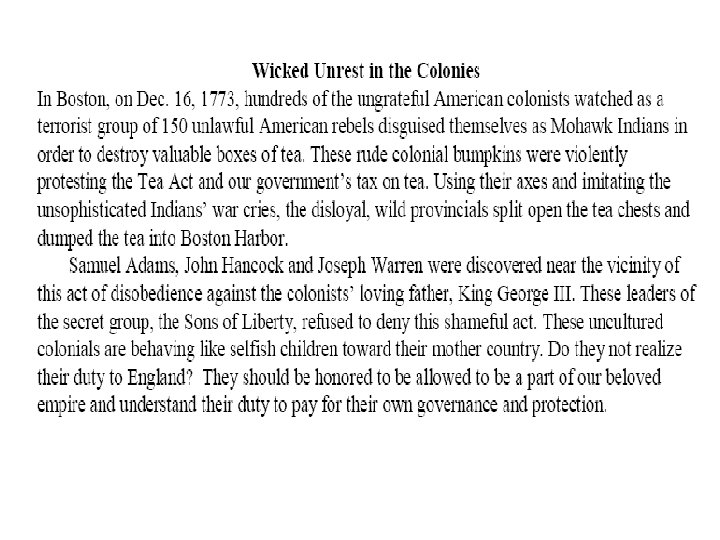
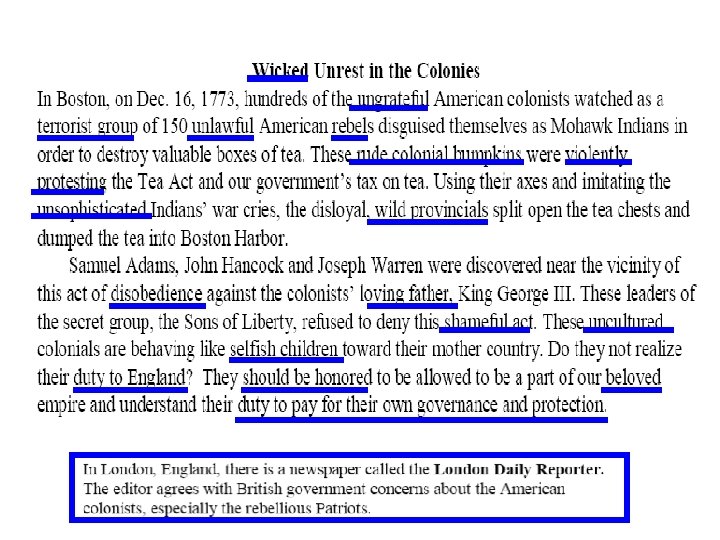
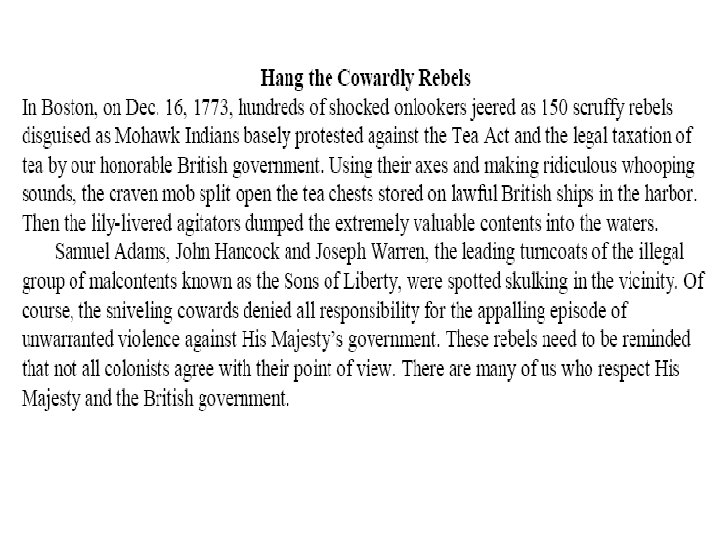
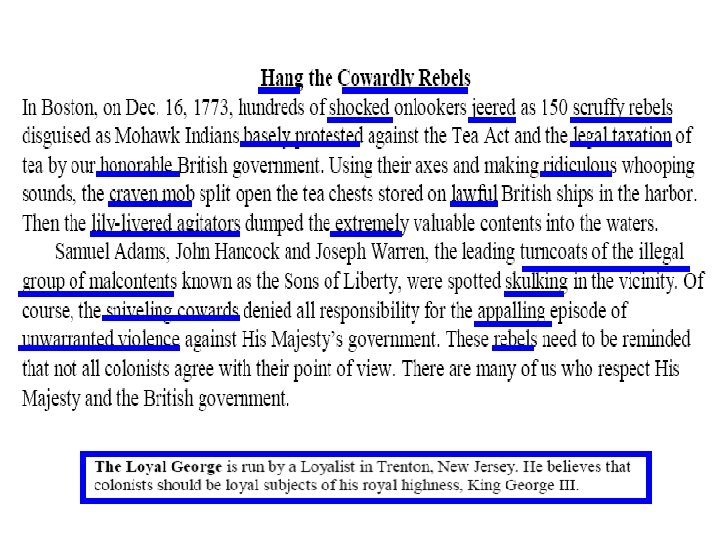
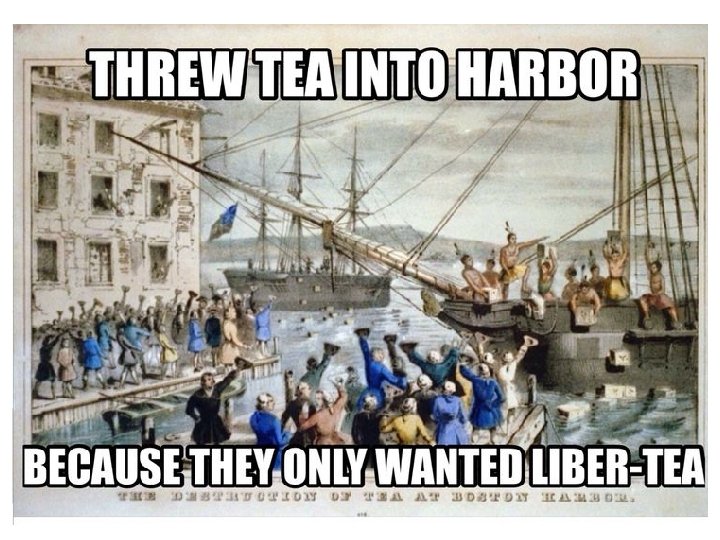
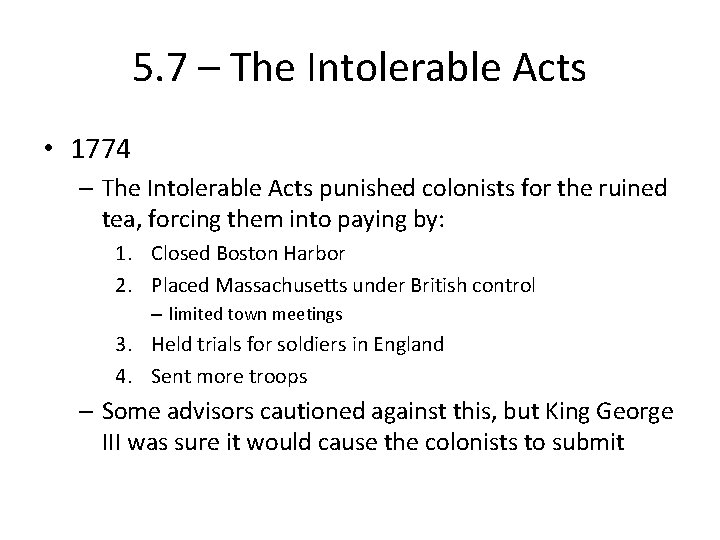
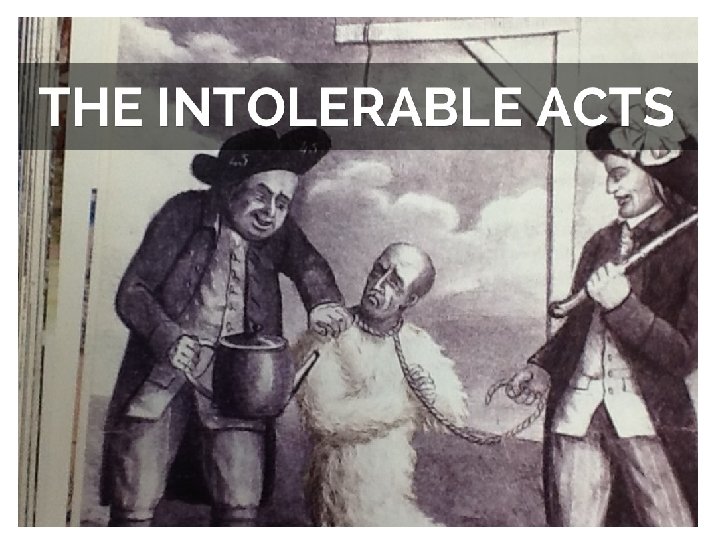
• The Tea Act - 1773 – The Tea Act lowered the cost of tea in the colonies and gave the British East India Co. a monopoly on tea trade. – Colonists saw the Tea Act as another attempt by Britain to tax the colonies without their consent. – Patriots protested the Tea Act by dumping 90, 000 pounds of tea into Boston Harbor. This event is known as the Boston Tea Party. • 4 media examples on the next 4 slides:
5. 7 – The Intolerable Acts • 1774 – The Intolerable Acts punished colonists for the ruined tea, forcing them into paying by: 1. Closed Boston Harbor 2. Placed Massachusetts under British control – limited town meetings 3. Held trials for soldiers in England 4. Sent more troops – Some advisors cautioned against this, but King George III was sure it would cause the colonists to submit
• The Colonies Begin to Unite – Colonists opposed the Intolerable Acts because they viewed the acts as an attack on all of the colonies not just Massachusetts. – Colonists refused to pay for the tea, and instead called for a congress, or meeting, of delegates with the intent of finding a PEACEFUL solution to the conflicts with Great Britain.
• The First Continental Congress – 50 leaders from 12 colonies met in Philadelphia. – Some Patriots (Patrick Henry, Sam and John Adams) spoke for independence, but many wanted to stay with Britain. – Together, they were united in a love of liberty and hatred of tyranny, so they wrote a letter to the King (George III) and voiced their complaints and threatened to boycotted British goods. – If they were ignored, they promised reconvene in May…
• The Colonies form Militias – To enforce the boycott, militias were created. These volunteers, called “Minutemen” were ready and able to fight in 60 seconds. – Across the colonies, British forts were robbed of gunpowder and cannons. – Instead of forcing the colonials to submit, the Intolerable Acts only pushed them to the brink of war
5. 8 – Lexington and Concord • Instead of reading and considering the complaints of the colonists, King George ignored them altogether. • The First Blow at Lexington – Spies informed on the colonists, and where they were storing a cache of weapons. General Gage sent men to catch them by surprise.
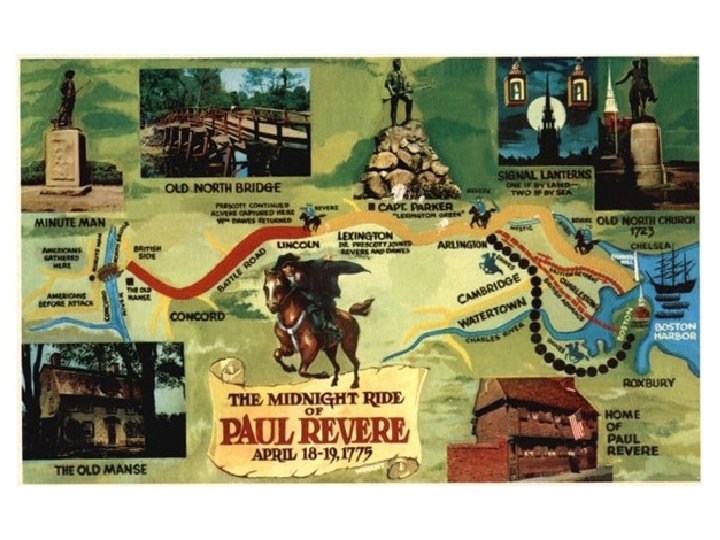
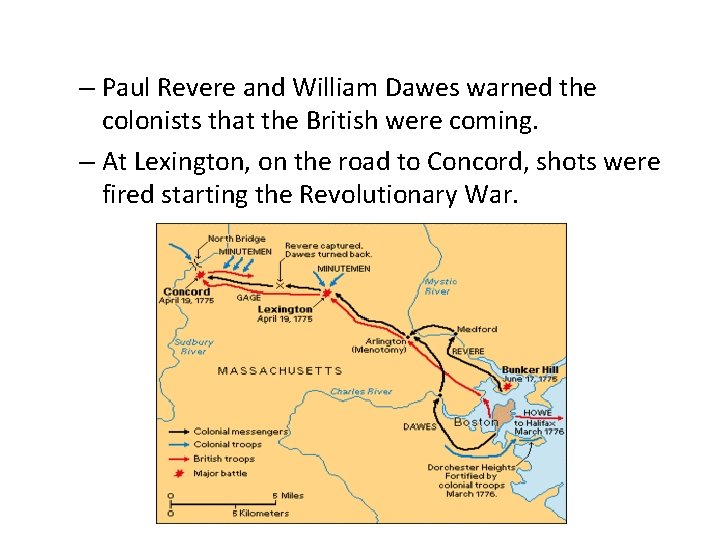
– Paul Revere and William Dawes warned the colonists that the British were coming. – At Lexington, on the road to Concord, shots were fired starting the Revolutionary War.
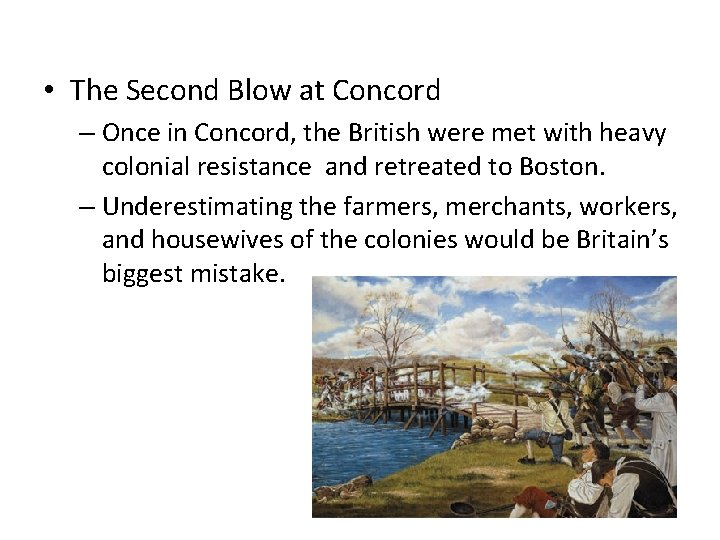
• The Second Blow at Concord – Once in Concord, the British were met with heavy colonial resistance and retreated to Boston. – Underestimating the farmers, merchants, workers, and housewives of the colonies would be Britain’s biggest mistake.
End