
Chapter 5 Tissues are composed of similar cells
- Slides: 16
Chapter 5 - Tissues are composed of similar cells, specialized to carry out a particular function. Epithelial Tissues: Found throughout the body. NOT JUST SKIN. Covers organs Forms inner lining of body cavities Lines hollow organs- always has apical (free) surface exposed to outside/ open space
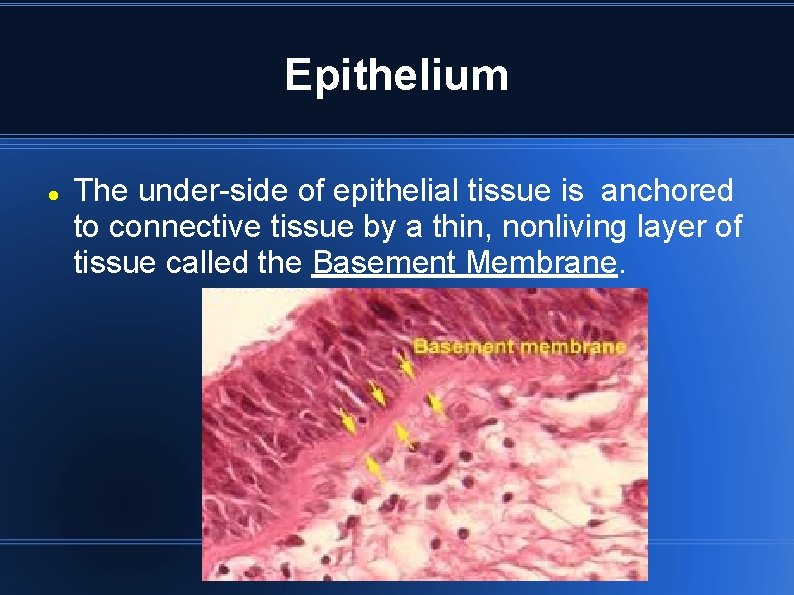
Epithelium The under-side of epithelial tissue is anchored to connective tissue by a thin, nonliving layer of tissue called the Basement Membrane.
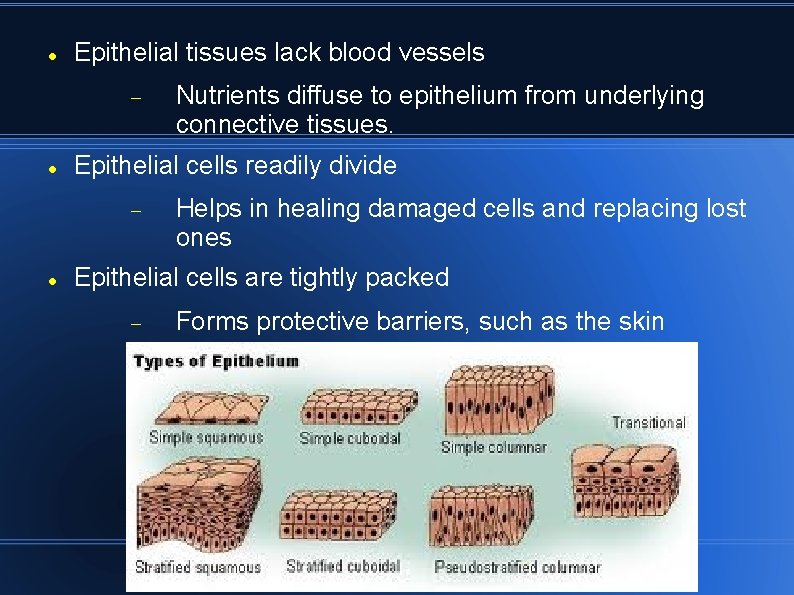
Epithelial tissues lack blood vessels Epithelial cells readily divide Nutrients diffuse to epithelium from underlying connective tissues. Helps in healing damaged cells and replacing lost ones Epithelial cells are tightly packed Forms protective barriers, such as the skin
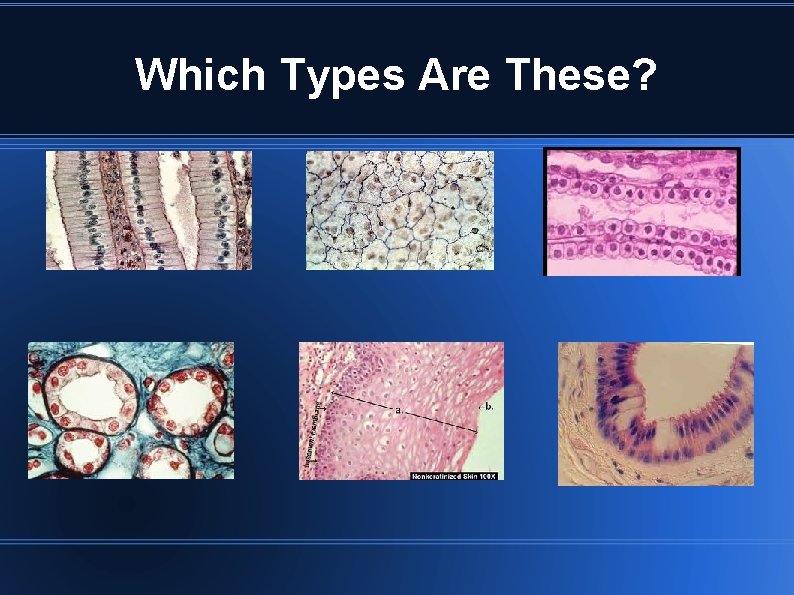
The Many Types of Epithelium Squamous: (Squished) Flat, thin Cuboidal: cube-shaped cells Columnar: (Column-like) tall, elongated Stratified: Having two or more layers of cells
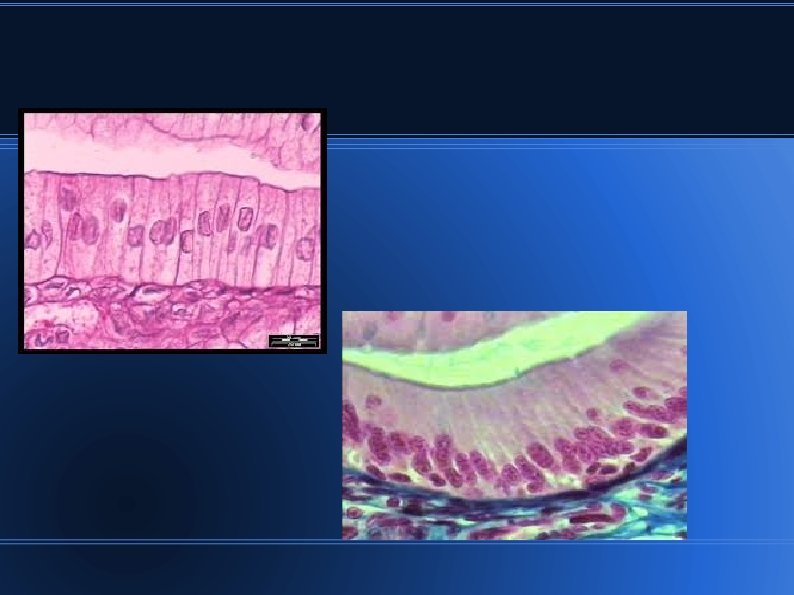
Which Types Are These?
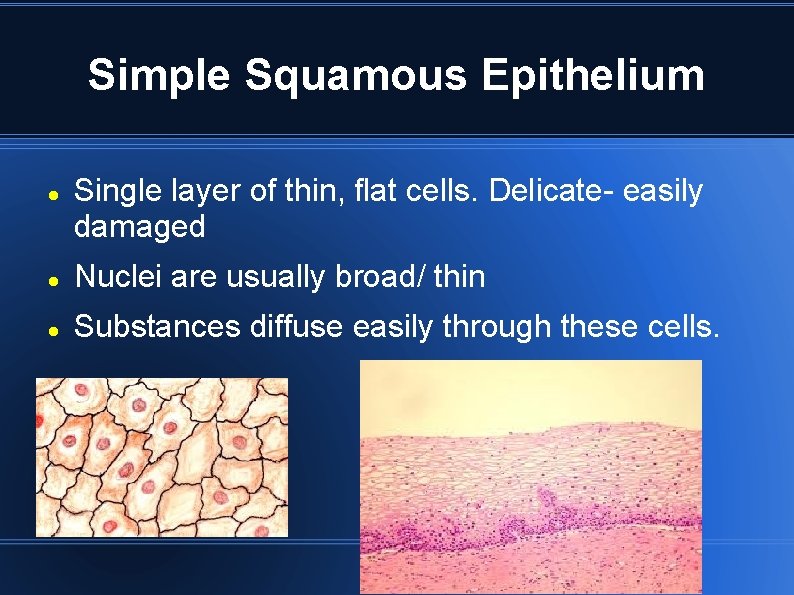
Simple Squamous Epithelium Single layer of thin, flat cells. Delicate- easily damaged Nuclei are usually broad/ thin Substances diffuse easily through these cells.
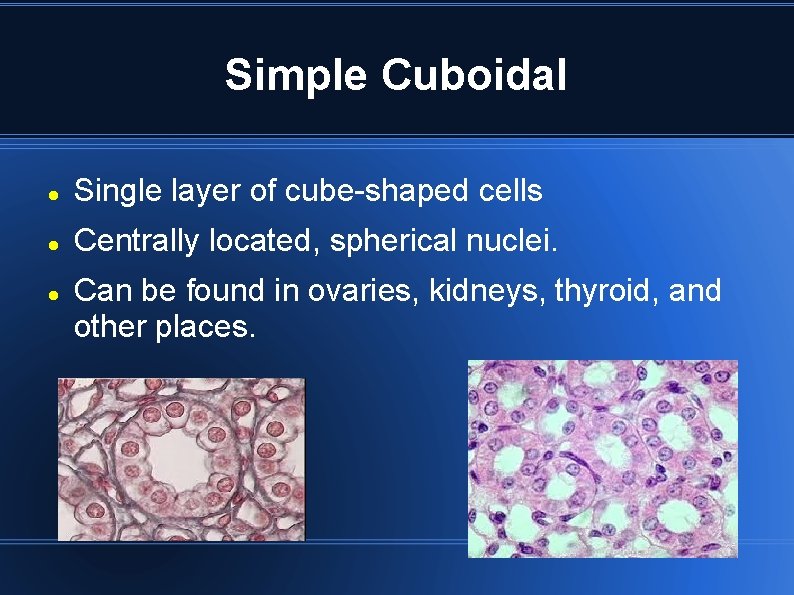
Simple Cuboidal Single layer of cube-shaped cells Centrally located, spherical nuclei. Can be found in ovaries, kidneys, thyroid, and other places.
Simple Columnar Epithelium Single layer of cells, longer than they are wide. May be ciliated. (Looks like they are wearing a party hat. ) Cilia aid in transporting materials across the tissue surface Some have microvilli. Look like cilia, but function to increase surface area/ absorption. Lines most organs of the digestive tract. Specialized for absorption.
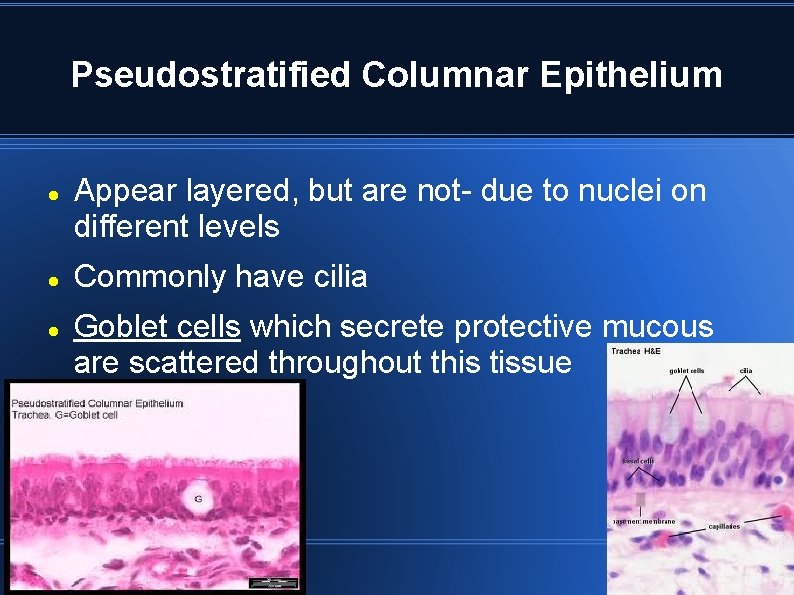
Pseudostratified Columnar Epithelium Appear layered, but are not- due to nuclei on different levels Commonly have cilia Goblet cells which secrete protective mucous are scattered throughout this tissue
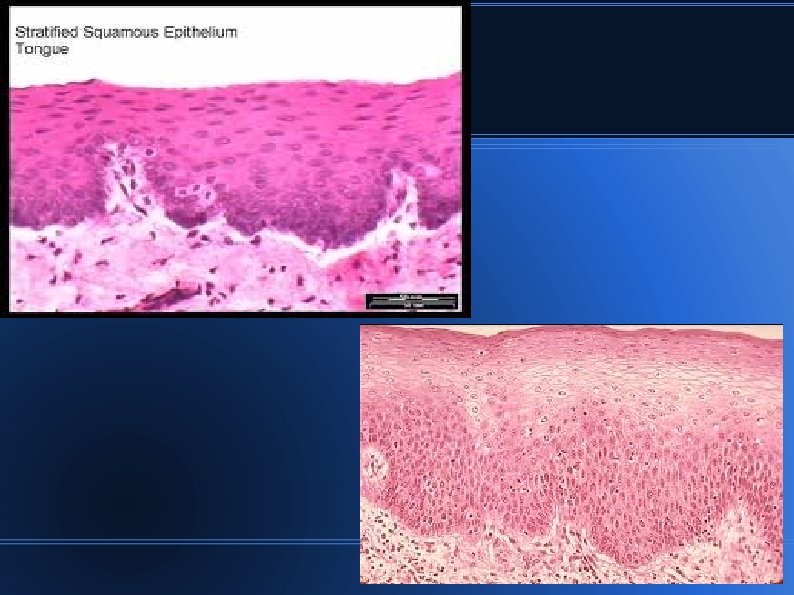
Statified Squamous Cells divide at basement membrane and push older ones to surface. This is how skin works **In naming stratified cells, the appearance of the top layer is used. **
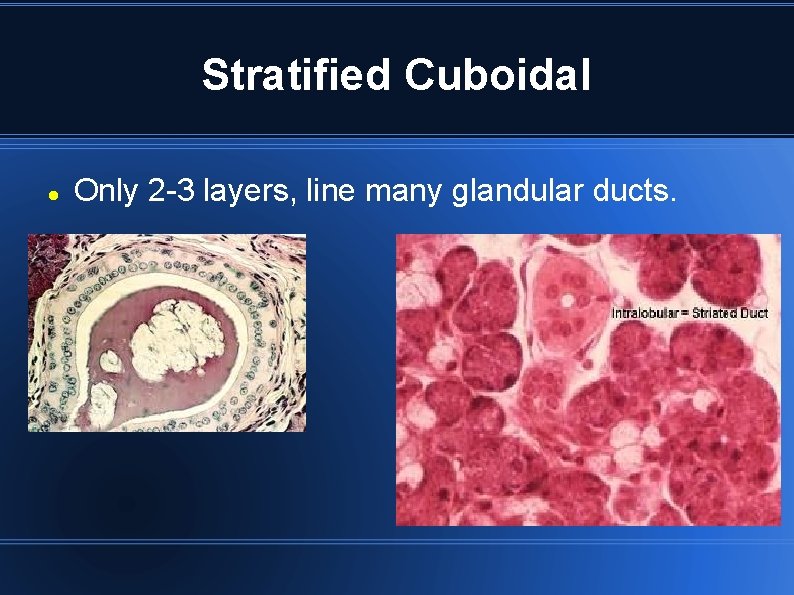
Stratified Cuboidal Only 2 -3 layers, line many glandular ducts.
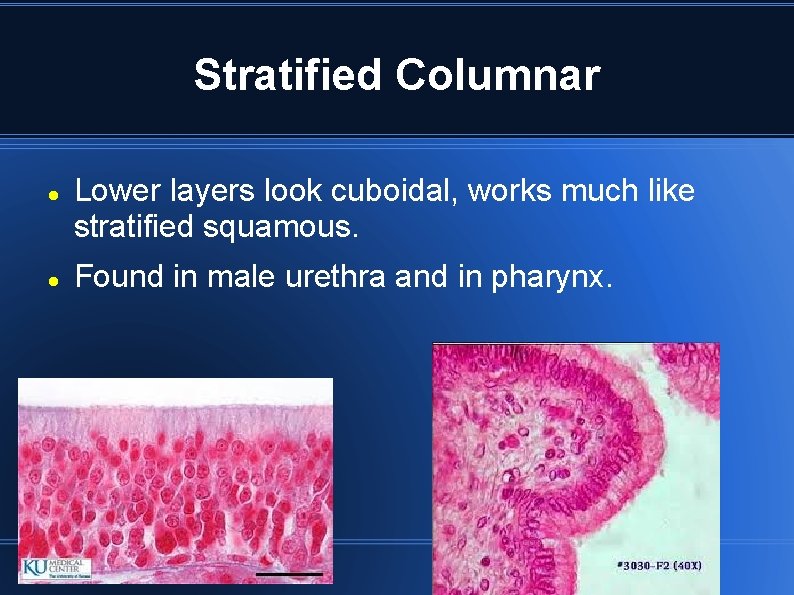
Stratified Columnar Lower layers look cuboidal, works much like stratified squamous. Found in male urethra and in pharynx.
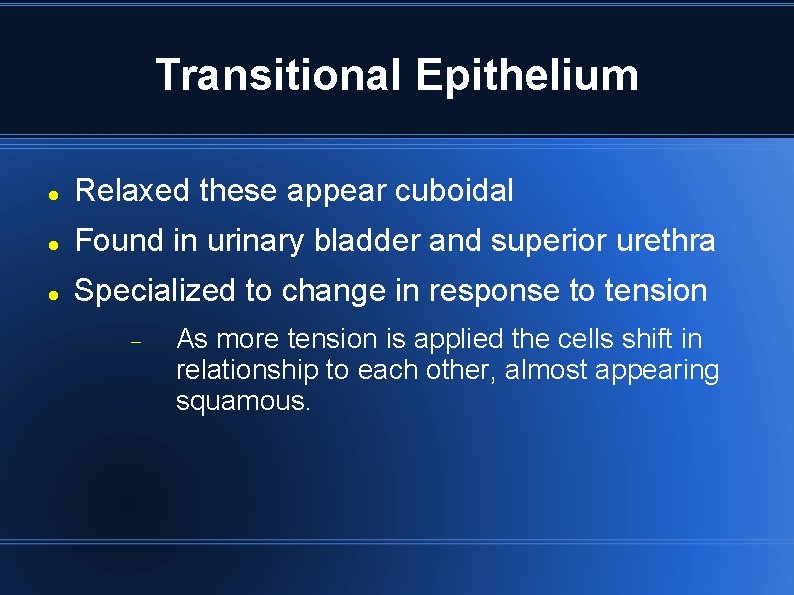
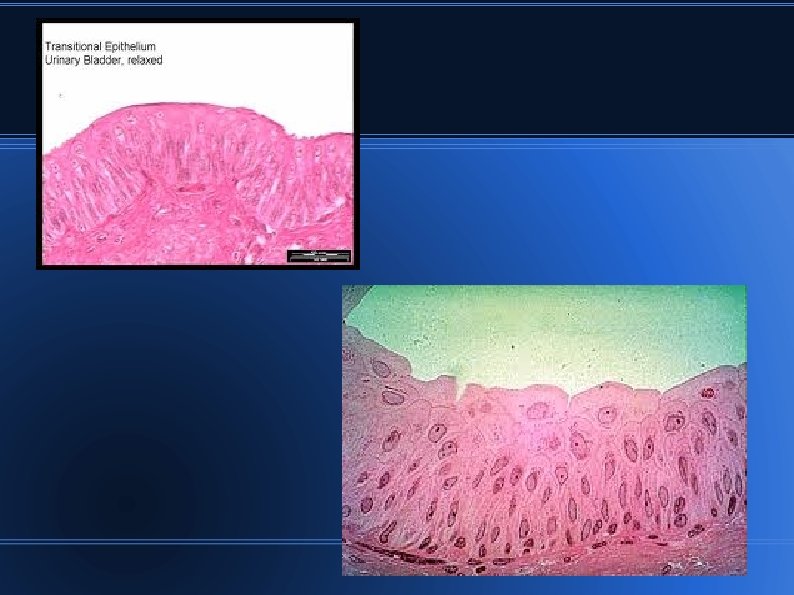
Transitional Epithelium Relaxed these appear cuboidal Found in urinary bladder and superior urethra Specialized to change in response to tension As more tension is applied the cells shift in relationship to each other, almost appearing squamous.