
Chapter 5 The Structure and Function of Macromolecules


- Slides: 59
Chapter 5: The Structure and Function of Macromolecules
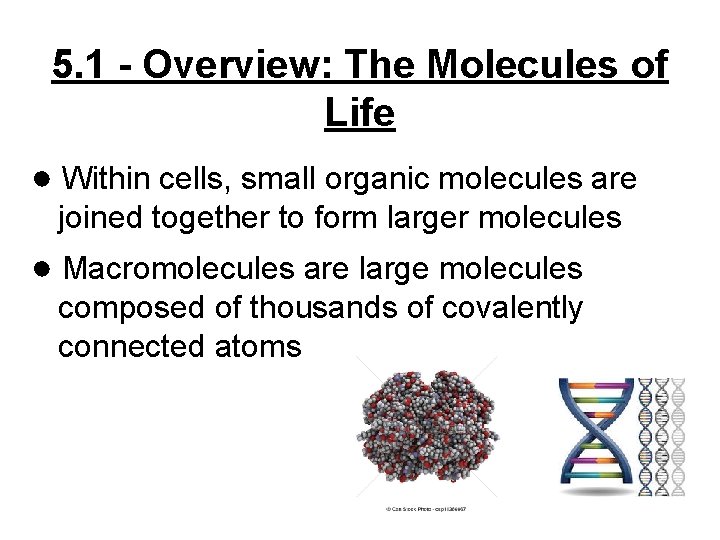
5. 1 - Overview: The Molecules of Life ● Within cells, small organic molecules are joined together to form larger molecules ● Macromolecules are large molecules composed of thousands of covalently connected atoms
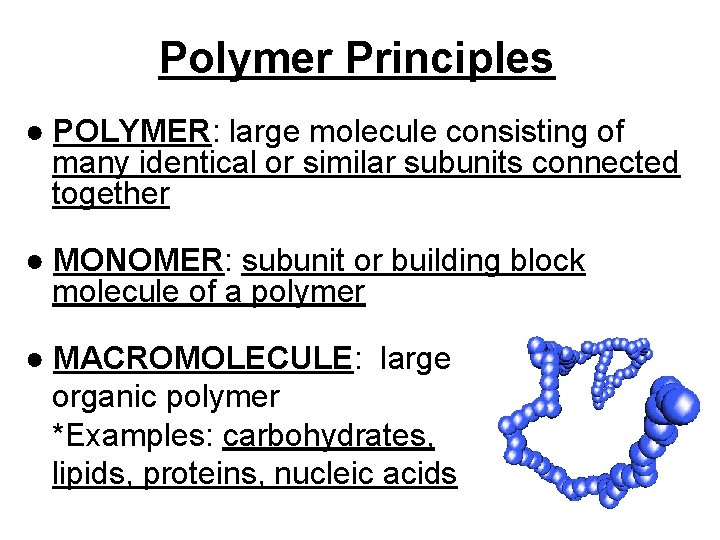
Polymer Principles ● POLYMER: large molecule consisting of many identical or similar subunits connected together ● MONOMER: subunit or building block molecule of a polymer ● MACROMOLECULE: large organic polymer *Examples: carbohydrates, lipids, proteins, nucleic acids
The Diversity of Polymers ● Each cell has thousands of different kinds of 1 2 macromolecules 3 H HO ● Macromolecules vary among cells of an organism, vary more within a species, and vary even more between species ● An immense variety of polymers can be built from a small set of monomers ● Despite this great diversity, molecular structure & function can be grouped into 4 main categories (carbs, lipids, proteins, nucleic acids)
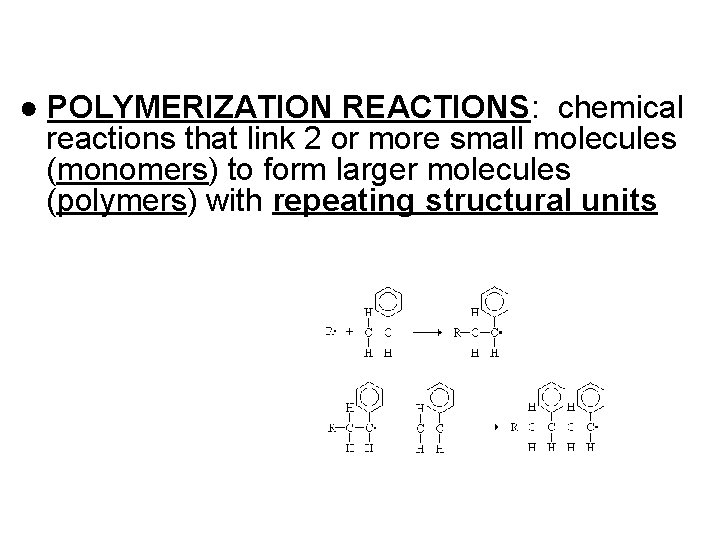
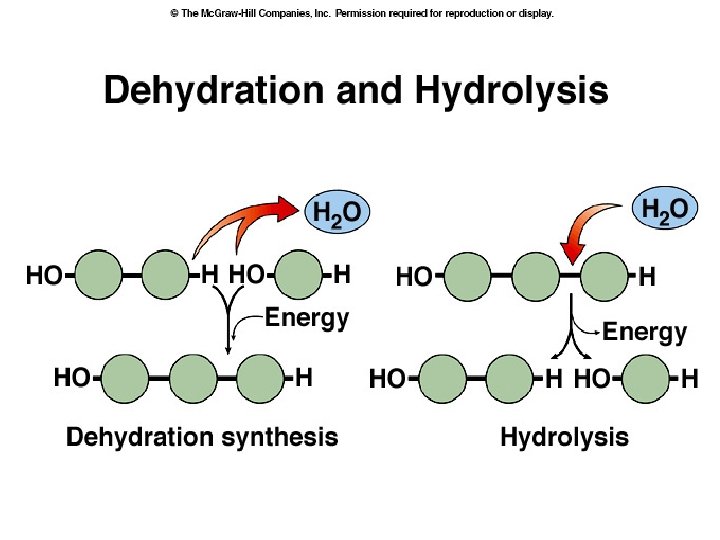
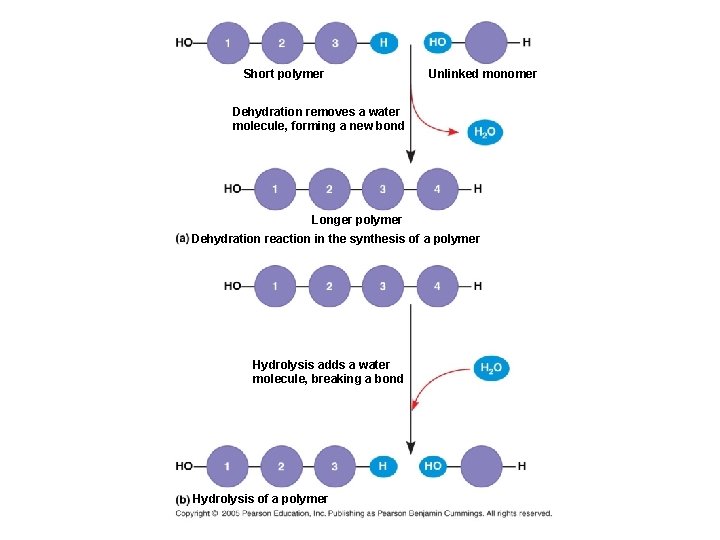
● POLYMERIZATION REACTIONS: chemical reactions that link 2 or more small molecules (monomers) to form larger molecules (polymers) with repeating structural units
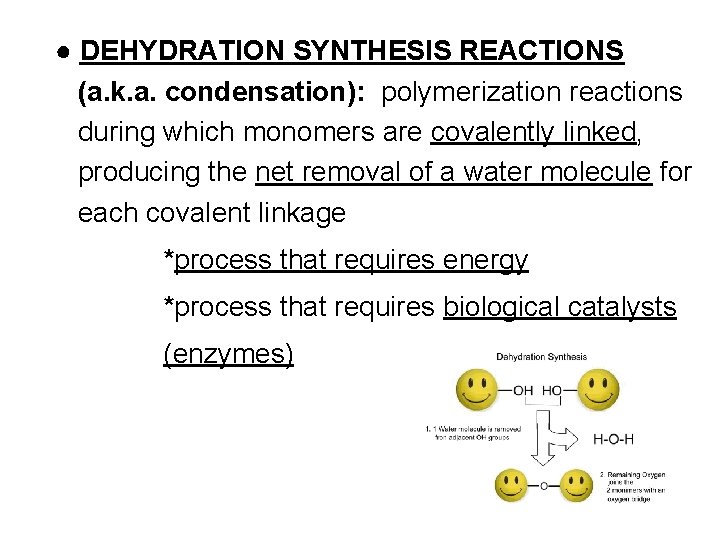
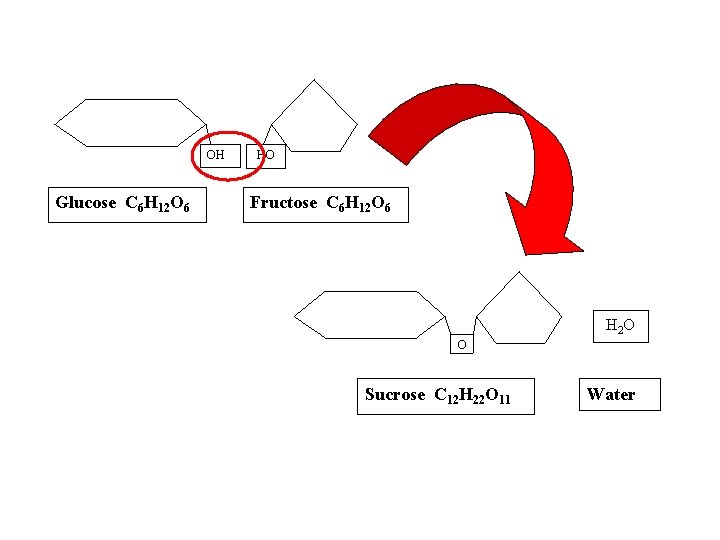
● DEHYDRATION SYNTHESIS REACTIONS (a. k. a. condensation): polymerization reactions during which monomers are covalently linked, producing the net removal of a water molecule for each covalent linkage *process that requires energy *process that requires biological catalysts (enzymes)
OH Glucose C 6 H 12 O 6 HO Fructose C 6 H 12 O 6 H 2 O O Sucrose C 12 H 22 O 11 Water
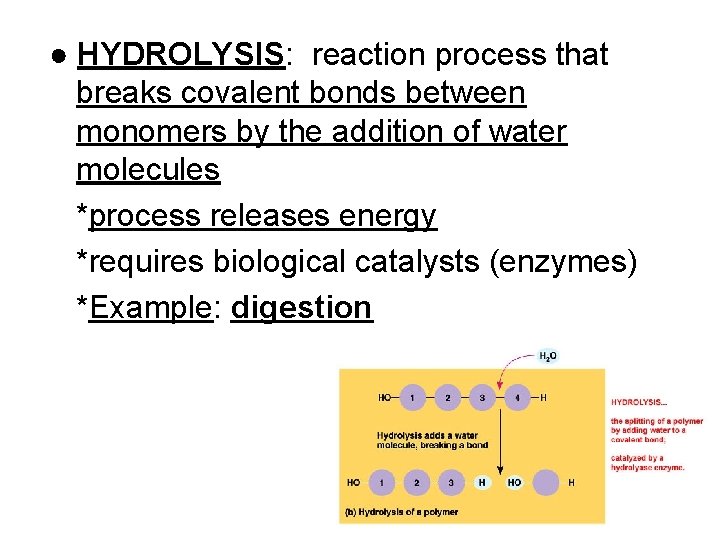
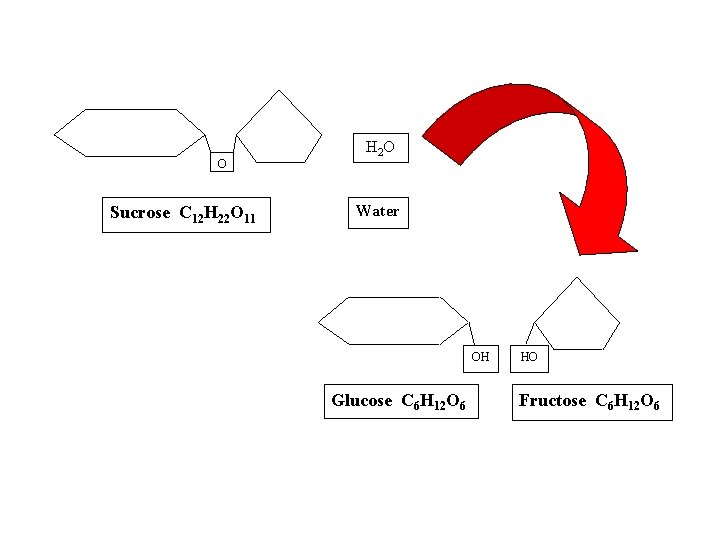
● HYDROLYSIS: reaction process that breaks covalent bonds between monomers by the addition of water molecules *process releases energy *requires biological catalysts (enzymes) *Example: digestion
O Sucrose C 12 H 22 O 11 H 2 O Water OH Glucose C 6 H 12 O 6 HO Fructose C 6 H 12 O 6
Short polymer Unlinked monomer Dehydration removes a water molecule, forming a new bond Longer polymer Dehydration reaction in the synthesis of a polymer Hydrolysis adds a water molecule, breaking a bond Hydrolysis of a polymer
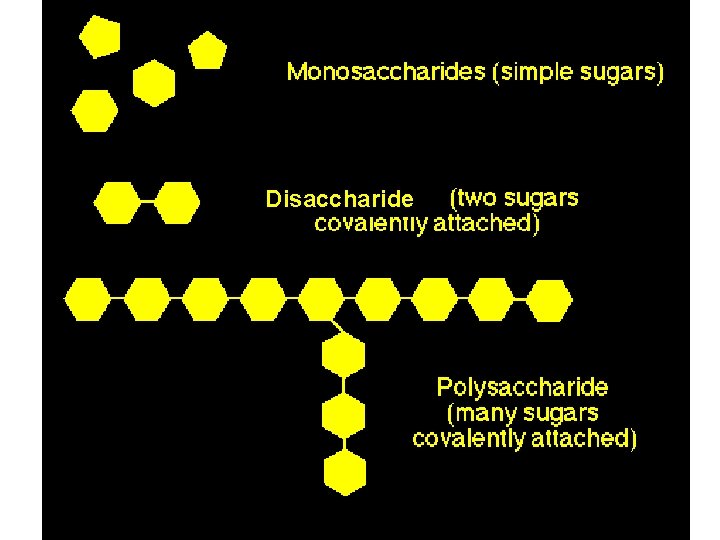
5. 2 – Carbohydrates ● carbohydrates include: sugars & polymers of sugars ● carbs include: -monosaccharides (single sugars) -disaccharides (double sugars) -polysaccharides (long chains of mono. )
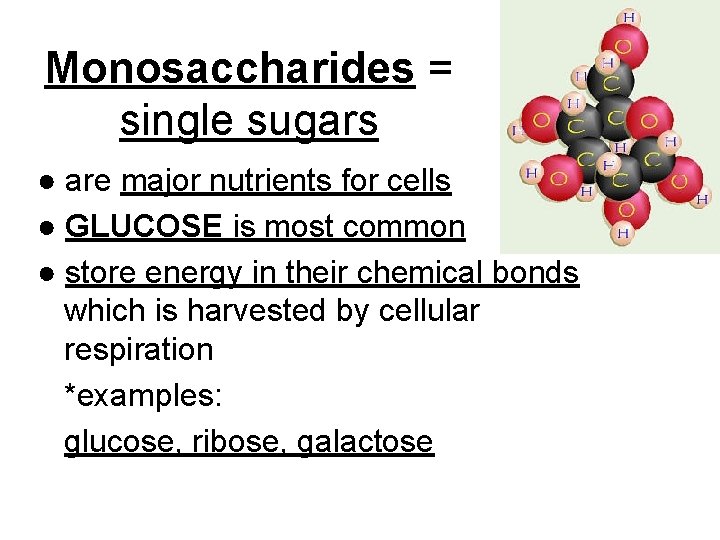
Monosaccharides = single sugars ● are major nutrients for cells ● GLUCOSE is most common ● store energy in their chemical bonds which is harvested by cellular respiration *examples: glucose, ribose, galactose
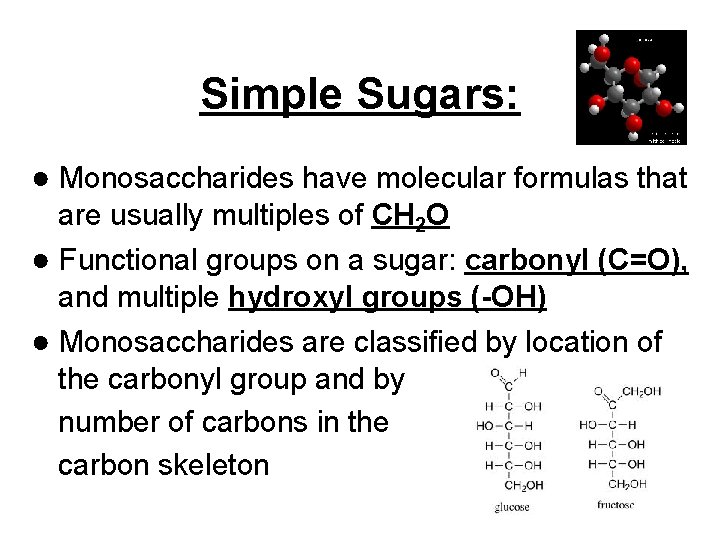
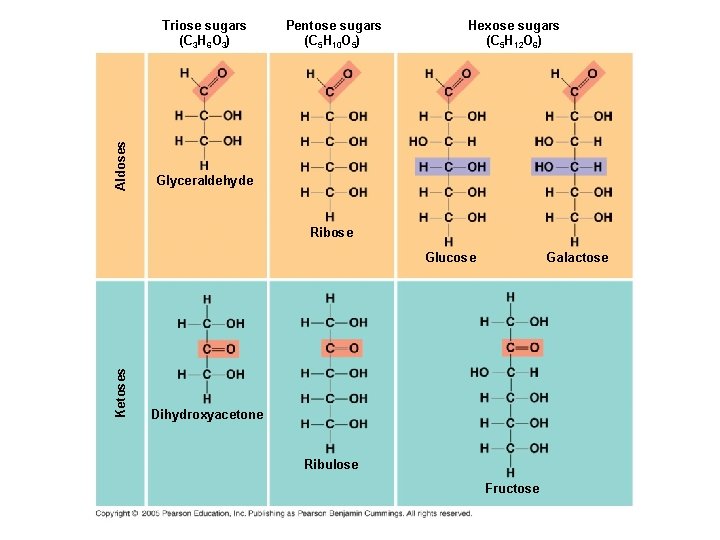
Simple Sugars: ● Monosaccharides have molecular formulas that are usually multiples of CH 2 O ● Functional groups on a sugar: carbonyl (C=O), and multiple hydroxyl groups (-OH) ● Monosaccharides are classified by location of the carbonyl group and by number of carbons in the carbon skeleton
Aldoses Triose sugars (C 3 H 6 O 3) Pentose sugars (C 5 H 10 O 5) Hexose sugars (C 5 H 12 O 6) Glyceraldehyde Ribose Galactose Ketoses Glucose Dihydroxyacetone Ribulose Fructose
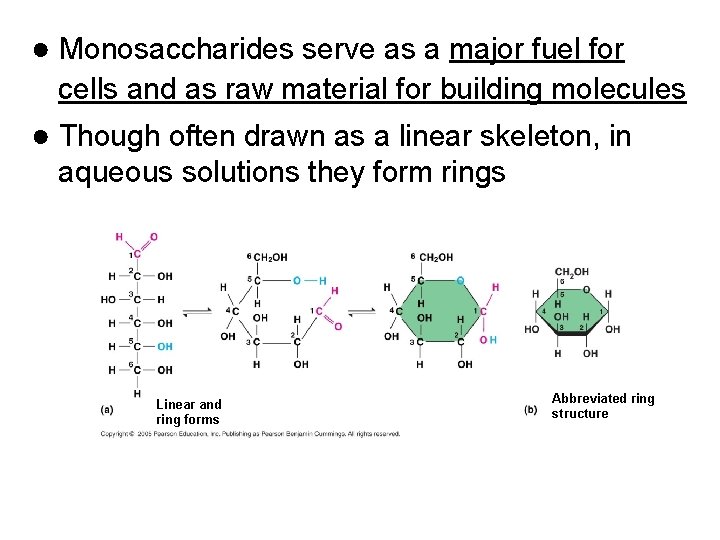
● Monosaccharides serve as a major fuel for cells and as raw material for building molecules ● Though often drawn as a linear skeleton, in aqueous solutions they form rings Linear and ring forms Abbreviated ring structure
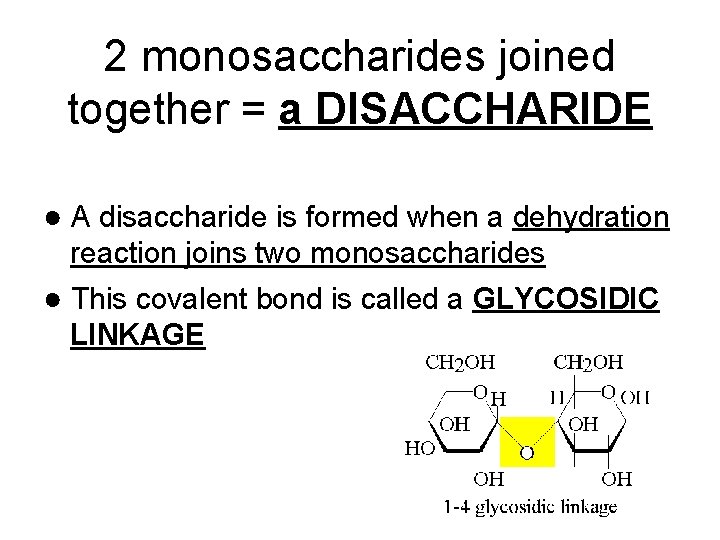
2 monosaccharides joined together = a DISACCHARIDE ● A disaccharide is formed when a dehydration reaction joins two monosaccharides ● This covalent bond is called a GLYCOSIDIC LINKAGE
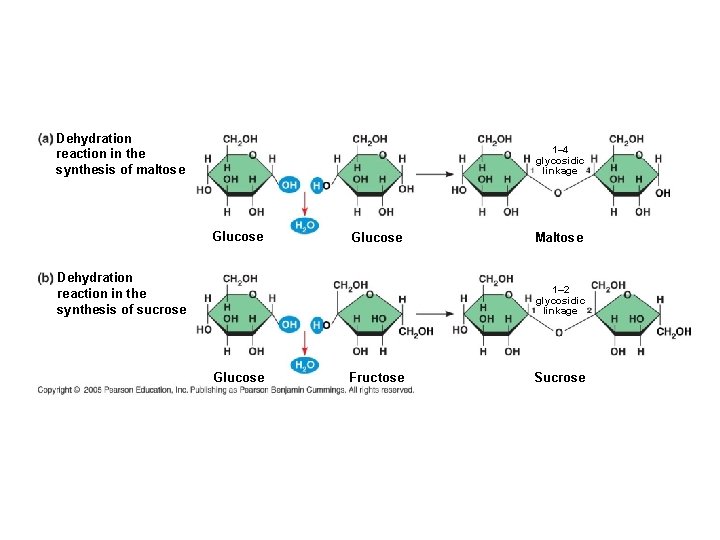
Dehydration reaction in the synthesis of maltose 1– 4 glycosidic linkage Glucose Dehydration reaction in the synthesis of sucrose Maltose 1– 2 glycosidic linkage Glucose Fructose Sucrose
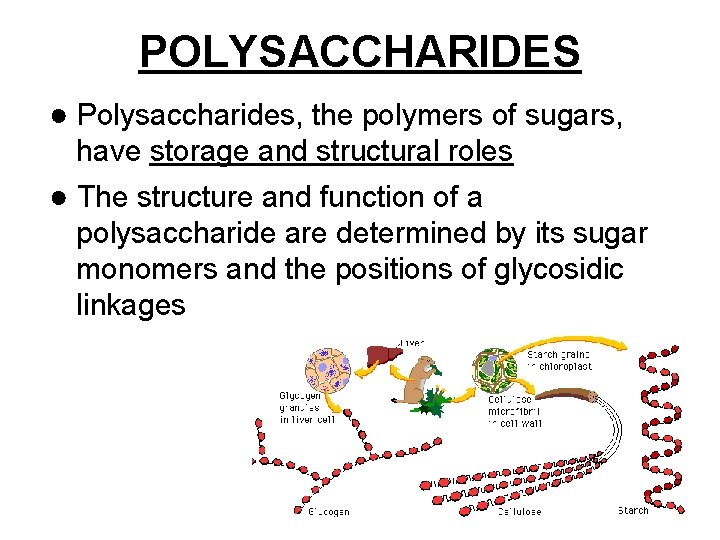
POLYSACCHARIDES ● Polysaccharides, the polymers of sugars, have storage and structural roles ● The structure and function of a polysaccharide are determined by its sugar monomers and the positions of glycosidic linkages
Polysaccharides = hundreds or thousands of monosaccharides ● formed by linking monomers in enzymemediated DEHYDRATION SYNTHESIS REACTIONS. ● Monomers held together by covalent bonds called GLYCOSIDIC LINKAGES.
Disaccharide
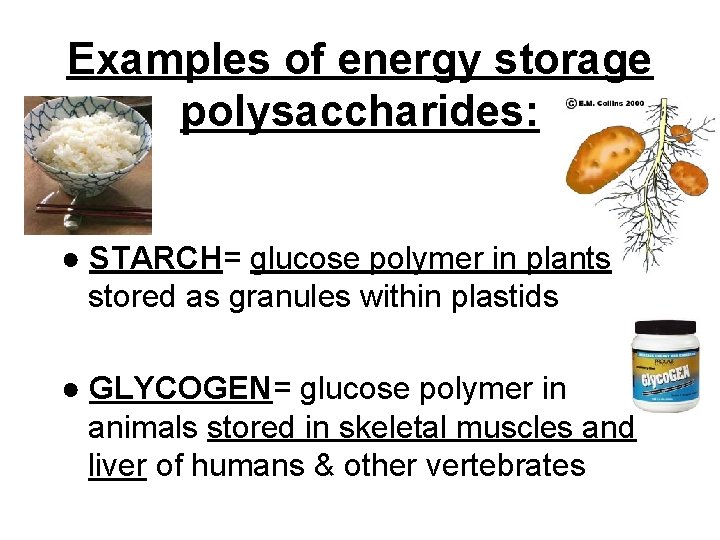
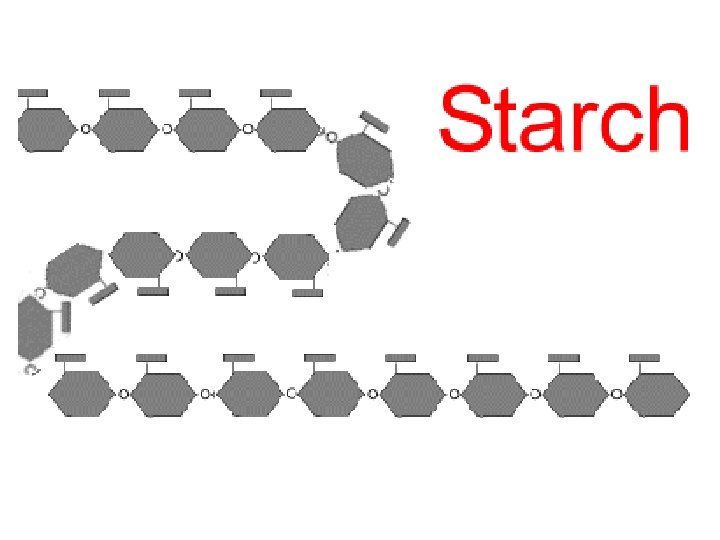
Examples of energy storage polysaccharides: ● STARCH= glucose polymer in plants stored as granules within plastids ● GLYCOGEN= glucose polymer in animals stored in skeletal muscles and liver of humans & other vertebrates
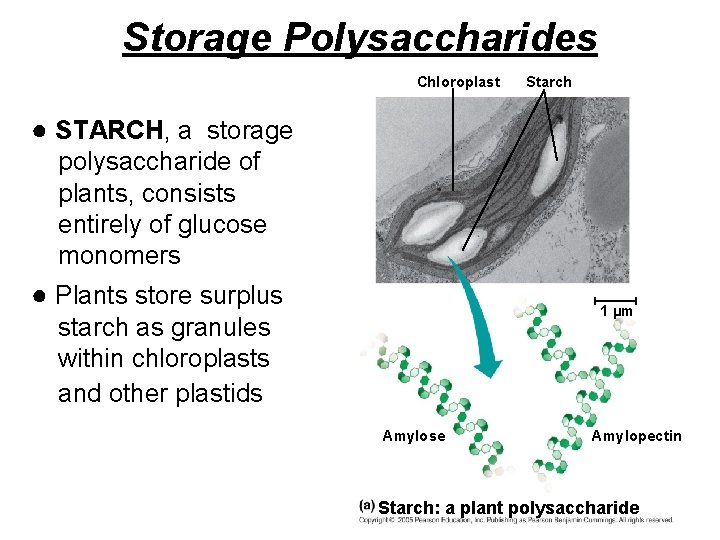
Storage Polysaccharides Chloroplast Starch ● STARCH, a storage polysaccharide of plants, consists entirely of glucose monomers ● Plants store surplus 1 µm starch as granules within chloroplasts and other plastids Amylose Amylopectin Starch: a plant polysaccharide
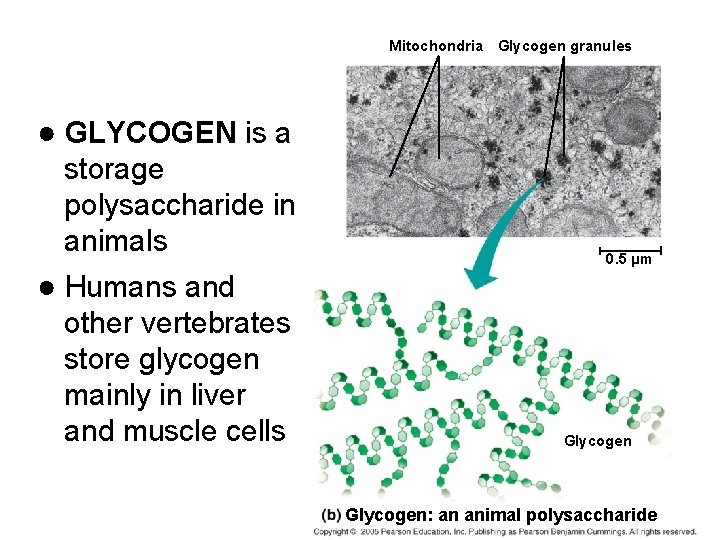
Mitochondria Glycogen granules ● GLYCOGEN is a storage polysaccharide in animals 0. 5 µm ● Humans and other vertebrates store glycogen mainly in liver and muscle cells Glycogen: an animal polysaccharide
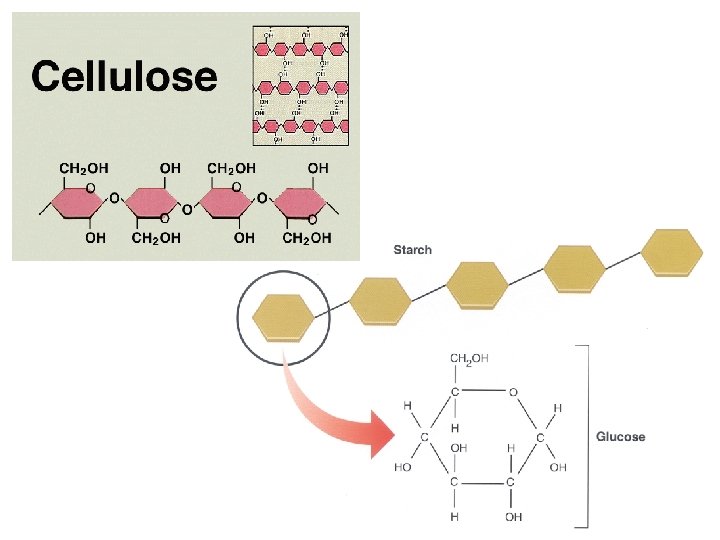
Examples of structural support polysaccharides: ● CELLULOSE = major structural component of plant cell walls that cannot be digested by most organisms because of missing enzyme
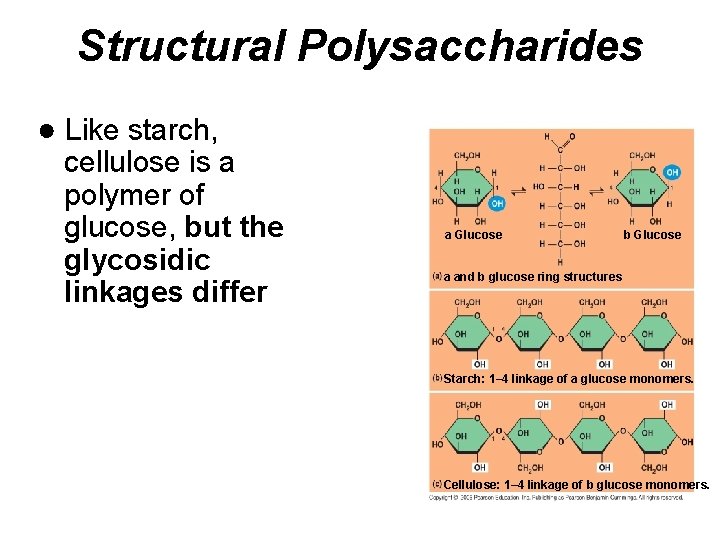
Structural Polysaccharides ● Like starch, cellulose is a polymer of glucose, but the glycosidic linkages differ a Glucose b Glucose a and b glucose ring structures Starch: 1– 4 linkage of a glucose monomers. Cellulose: 1– 4 linkage of b glucose monomers.
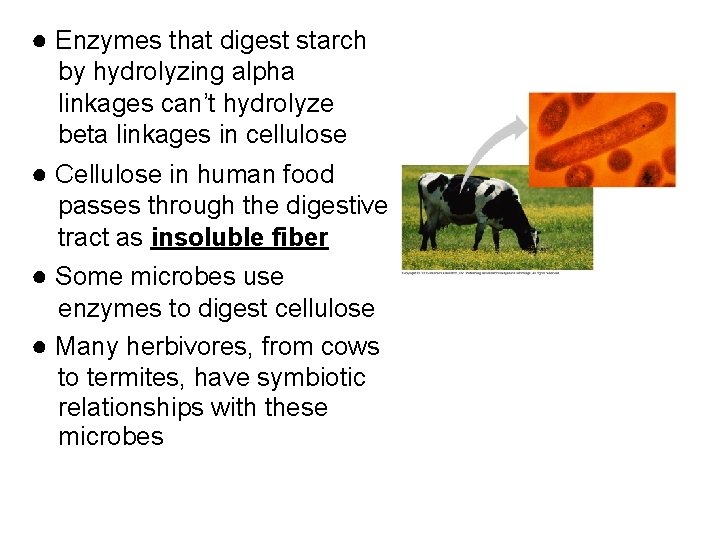
● Enzymes that digest starch by hydrolyzing alpha linkages can’t hydrolyze beta linkages in cellulose ● Cellulose in human food passes through the digestive tract as insoluble fiber ● Some microbes use enzymes to digest cellulose ● Many herbivores, from cows to termites, have symbiotic relationships with these microbes
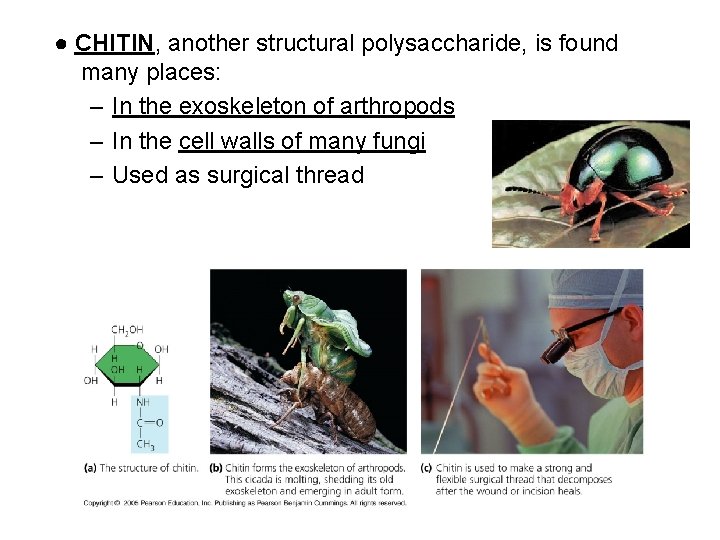
● CHITIN, another structural polysaccharide, is found many places: – In the exoskeleton of arthropods – In the cell walls of many fungi – Used as surgical thread
5. 3 - LIPIDS: ● Lipids are the one class of large biological molecules that do not form polymers ● The unifying feature of lipids is having little or no affinity for water (hydrophobic) ● Lipids are hydrophobic because they consist mostly of hydrocarbons, which form nonpolar covalent bonds
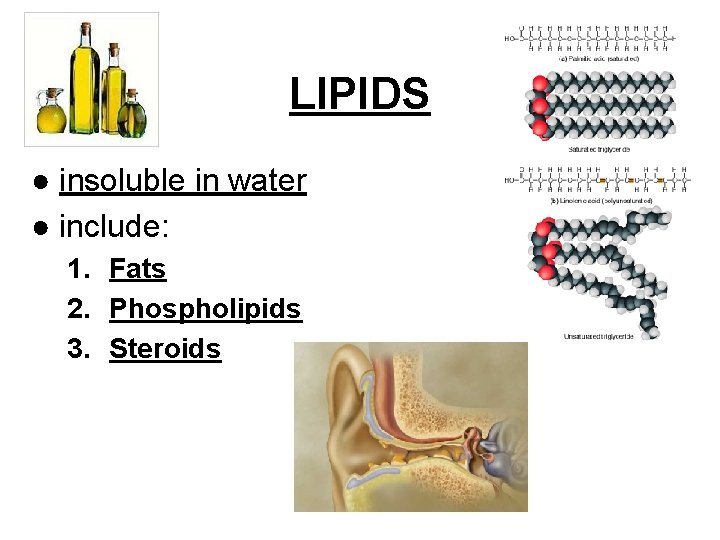
LIPIDS ● insoluble in water ● include: 1. Fats 2. Phospholipids 3. Steroids
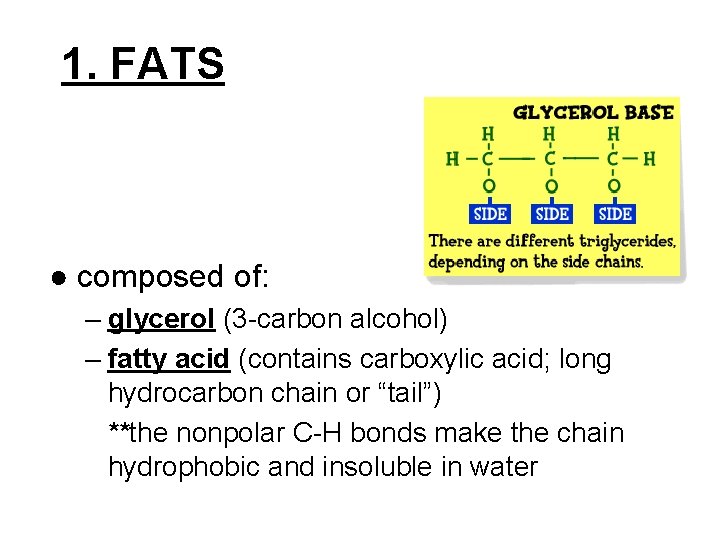
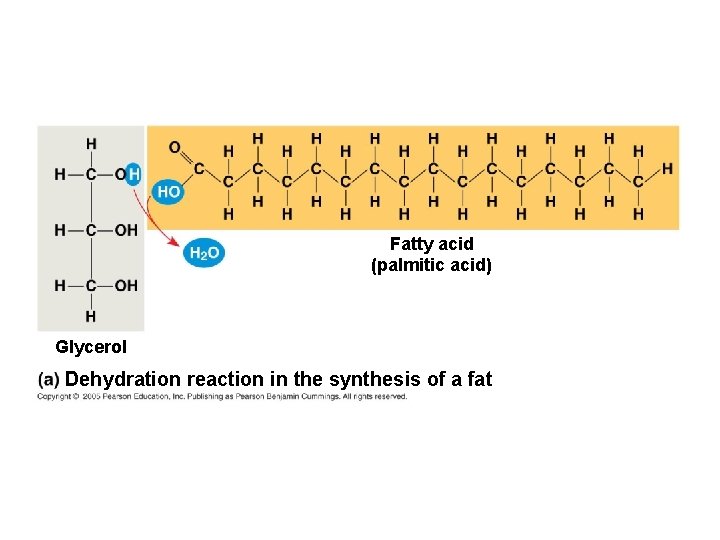
1. FATS ● composed of: – glycerol (3 -carbon alcohol) – fatty acid (contains carboxylic acid; long hydrocarbon chain or “tail”) **the nonpolar C-H bonds make the chain hydrophobic and insoluble in water
Fatty acid (palmitic acid) Glycerol Dehydration reaction in the synthesis of a fat
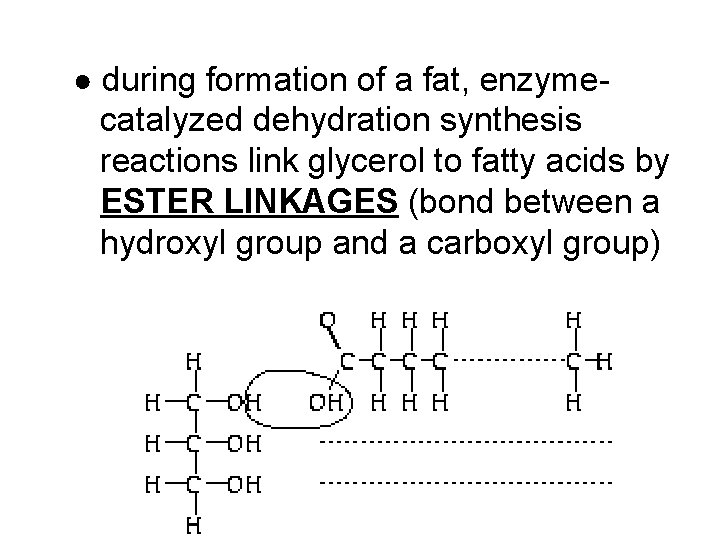
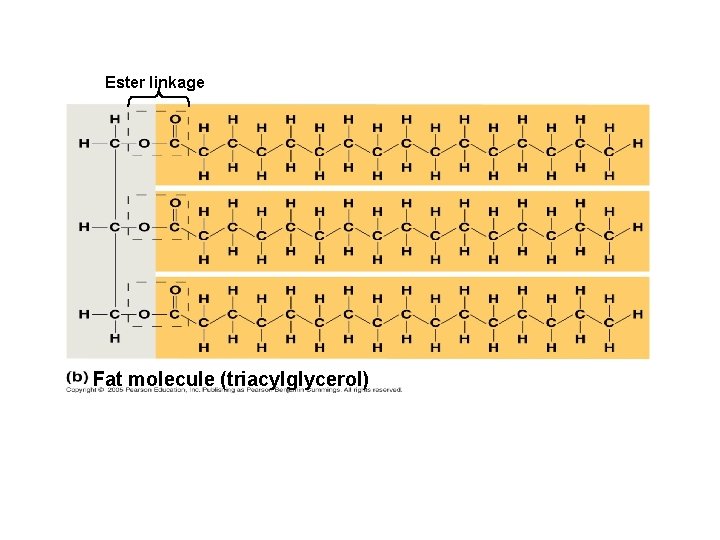
● during formation of a fat, enzyme- catalyzed dehydration synthesis reactions link glycerol to fatty acids by ESTER LINKAGES (bond between a hydroxyl group and a carboxyl group)
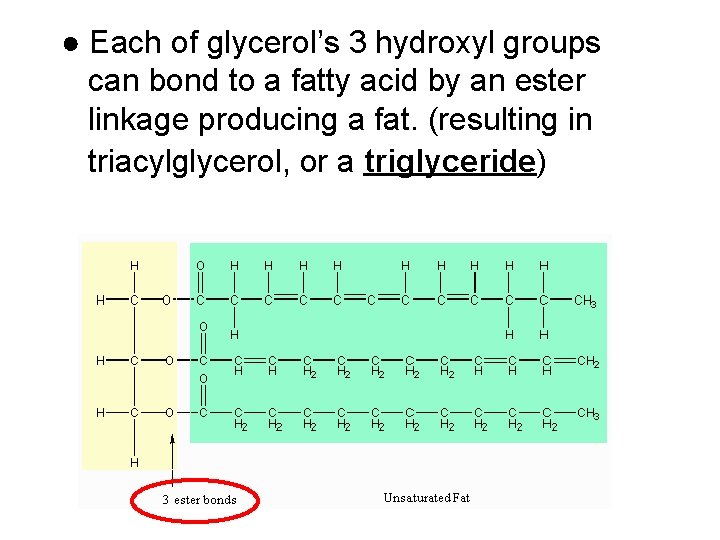
● Each of glycerol’s 3 hydroxyl groups can bond to a fatty acid by an ester linkage producing a fat. (resulting in triacylglycerol, or a triglyceride)
Ester linkage Fat molecule (triacylglycerol)
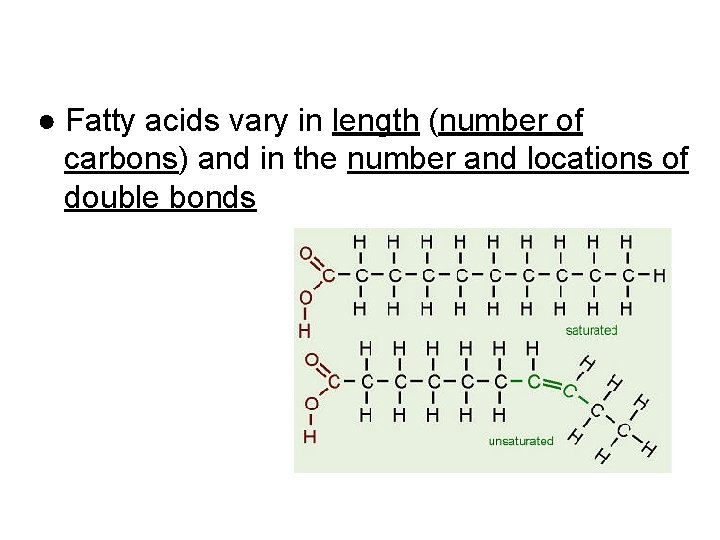
● Fatty acids vary in length (number of carbons) and in the number and locations of double bonds
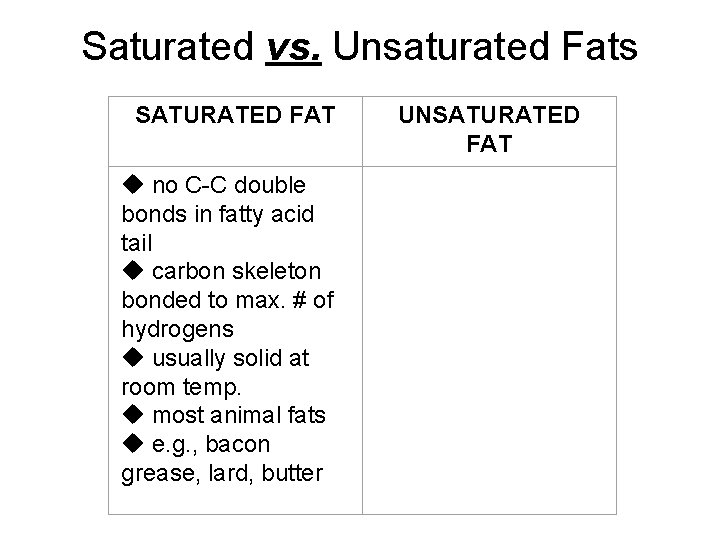
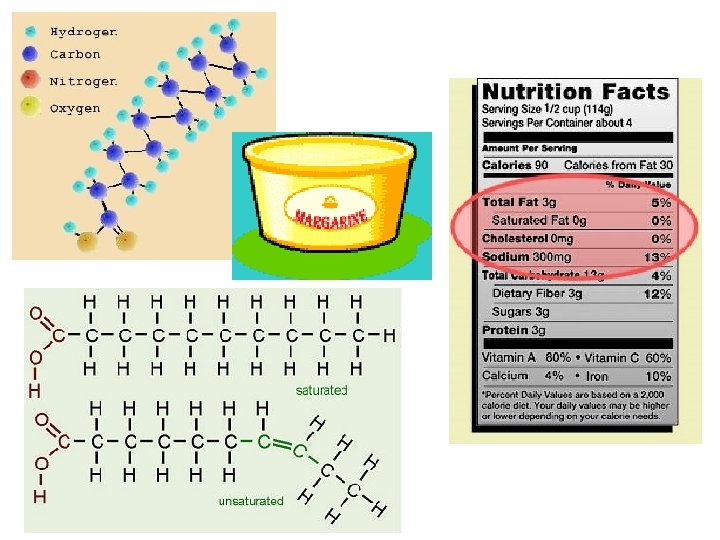
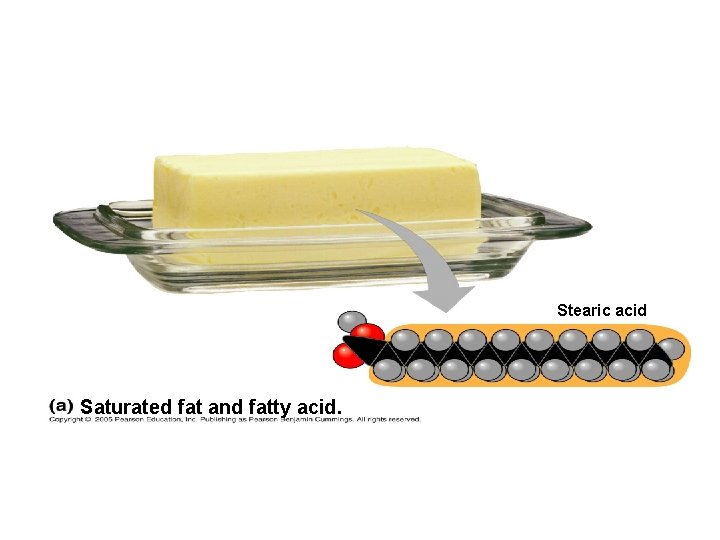
Saturated vs. Unsaturated Fats SATURATED FAT no C-C double bonds in fatty acid tail carbon skeleton bonded to max. # of hydrogens usually solid at room temp. most animal fats e. g. , bacon grease, lard, butter UNSATURATED FAT
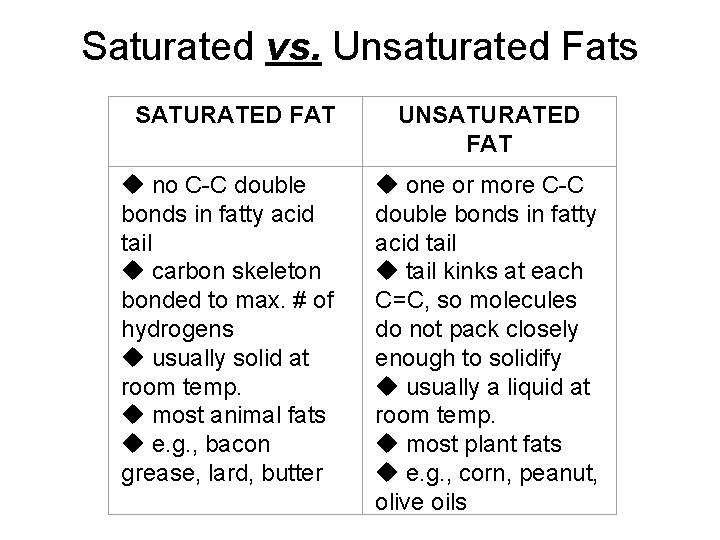
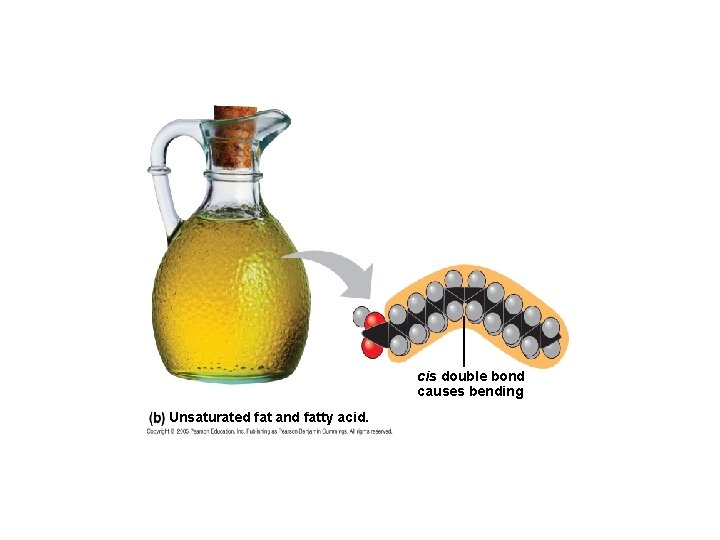
Saturated vs. Unsaturated Fats SATURATED FAT no C-C double bonds in fatty acid tail carbon skeleton bonded to max. # of hydrogens usually solid at room temp. most animal fats e. g. , bacon grease, lard, butter UNSATURATED FAT one or more C-C double bonds in fatty acid tail kinks at each C=C, so molecules do not pack closely enough to solidify usually a liquid at room temp. most plant fats e. g. , corn, peanut, olive oils
Stearic acid Saturated fat and fatty acid.
cis double bond causes bending Unsaturated fat and fatty acid.
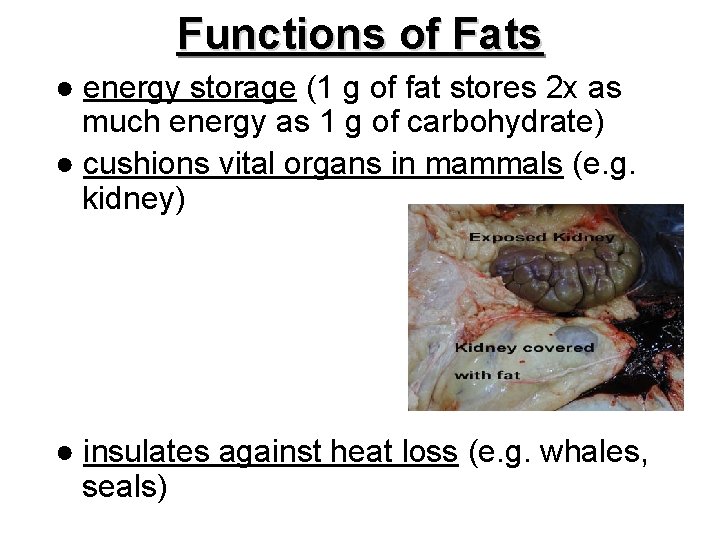
Functions of Fats ● energy storage (1 g of fat stores 2 x as much energy as 1 g of carbohydrate) ● cushions vital organs in mammals (e. g. kidney) ● insulates against heat loss (e. g. whales, seals)
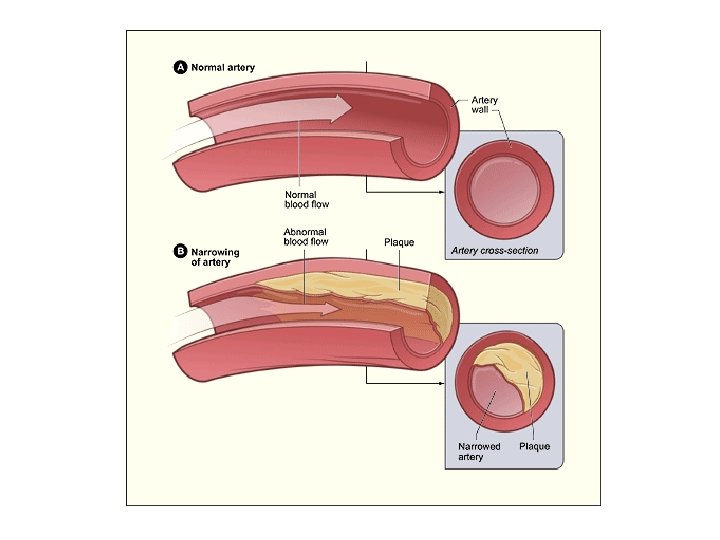
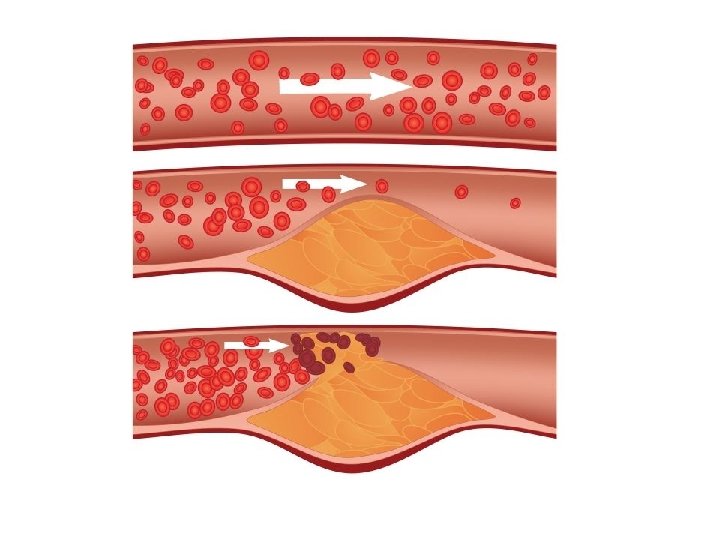
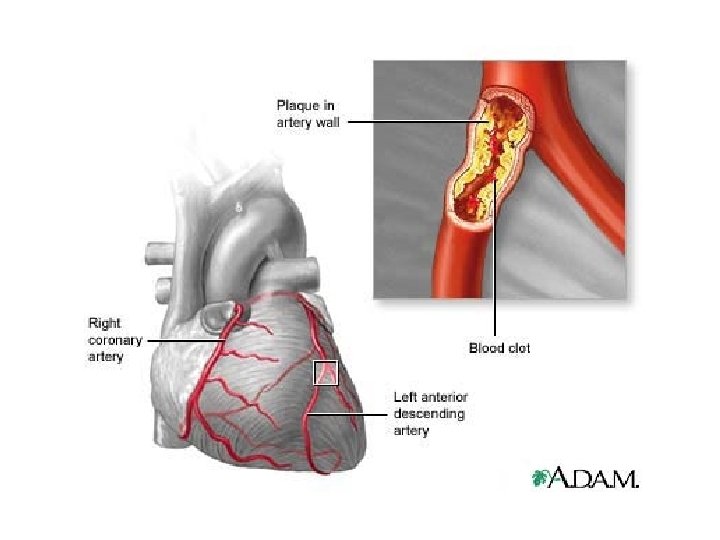
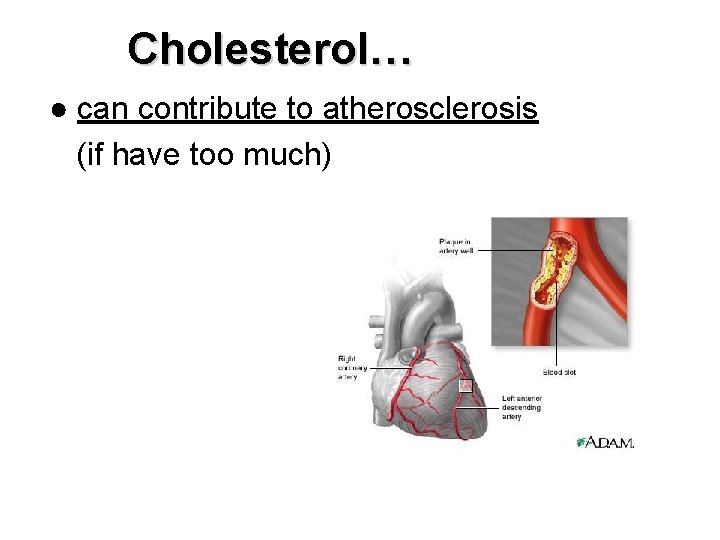
What if too much fat in the diet…? ● a diet rich in saturated fats in one factor that contributes to cardiovascular disease known as atherosclerosis ● atherosclerosis: plaque deposits develop within walls of blood vessels, causing inward bulges that impede blood flow
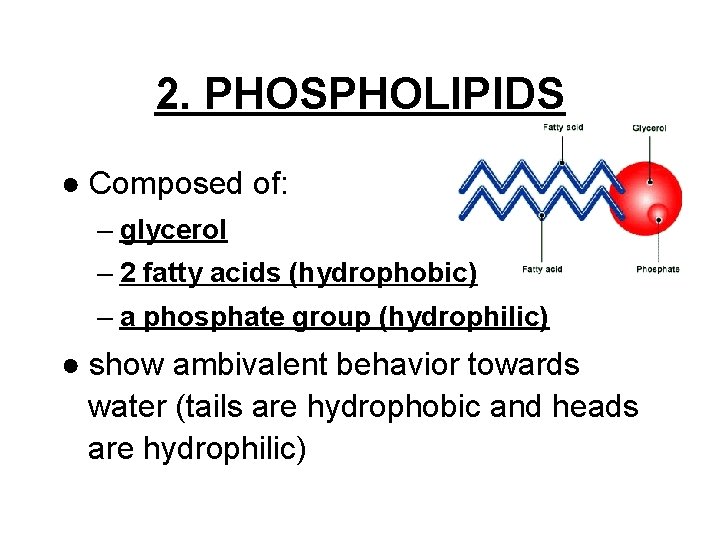
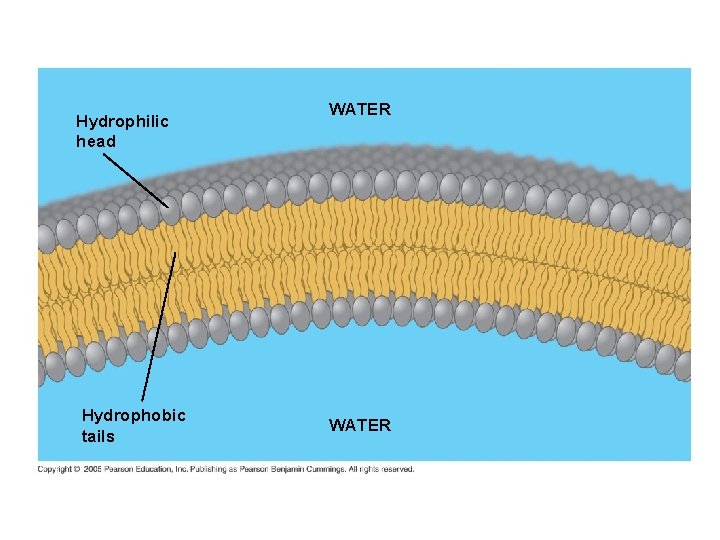
2. PHOSPHOLIPIDS ● Composed of: – glycerol – 2 fatty acids (hydrophobic) – a phosphate group (hydrophilic) ● show ambivalent behavior towards water (tails are hydrophobic and heads are hydrophilic)
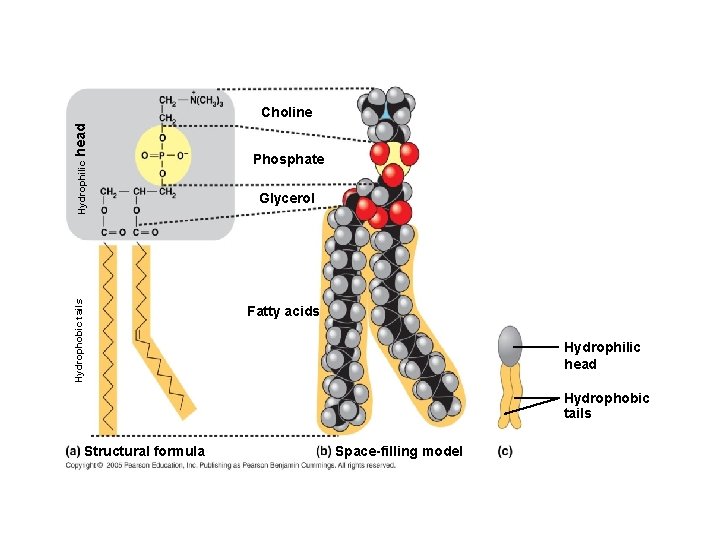
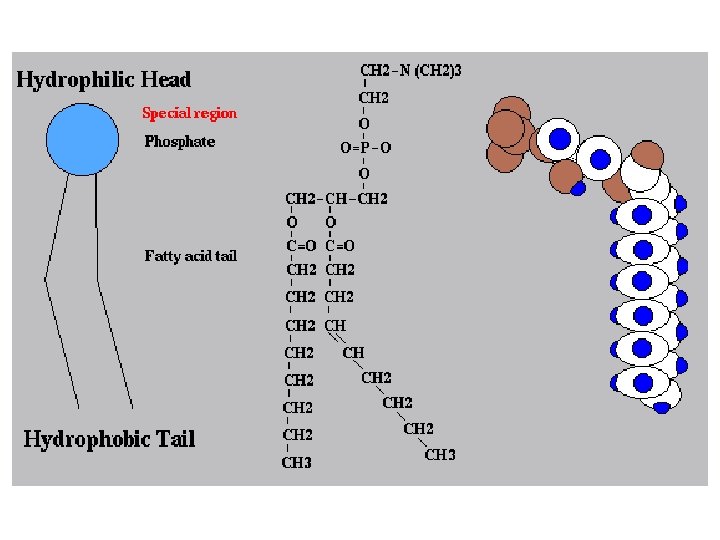
Hydrophobic tails Hydrophilic head Choline Phosphate Glycerol Fatty acids Hydrophilic head Hydrophobic tails Structural formula Space-filling model
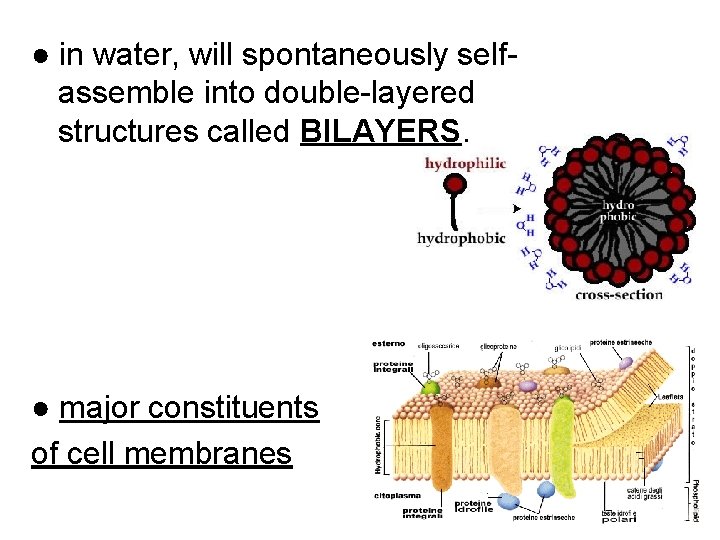
● in water, will spontaneously selfassemble into double-layered structures called BILAYERS. ● major constituents of cell membranes
Hydrophilic head Hydrophobic tails WATER
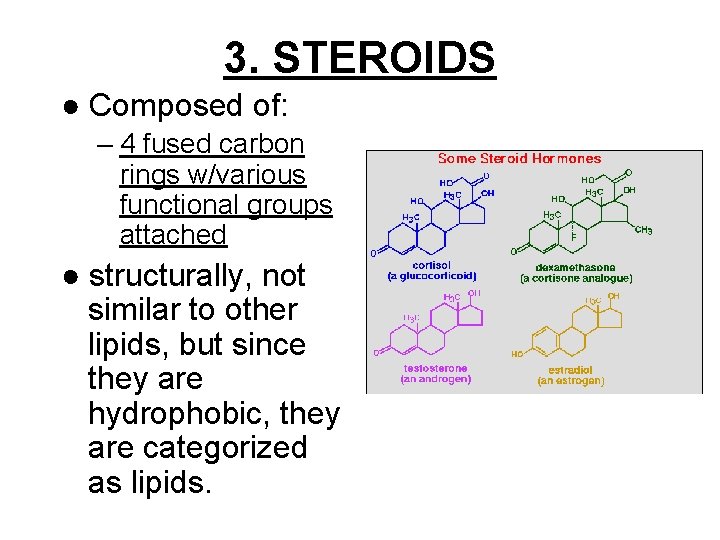
3. STEROIDS ● Composed of: – 4 fused carbon rings w/various functional groups attached ● structurally, not similar to other lipids, but since they are hydrophobic, they are categorized as lipids.
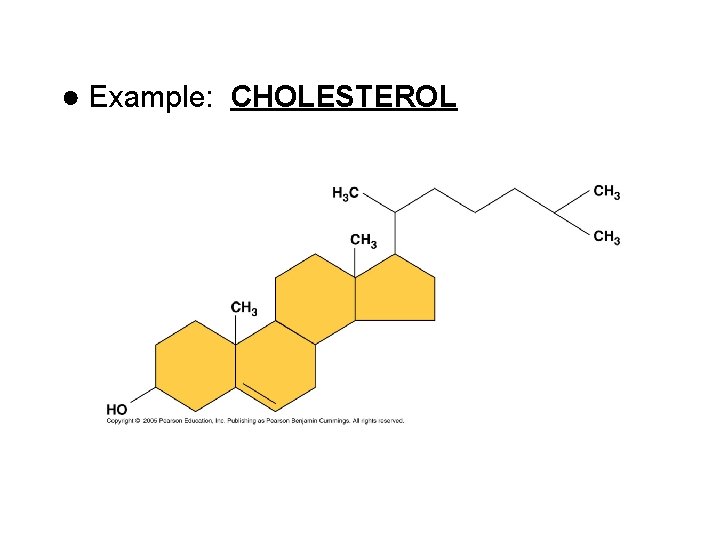
● Example: CHOLESTEROL
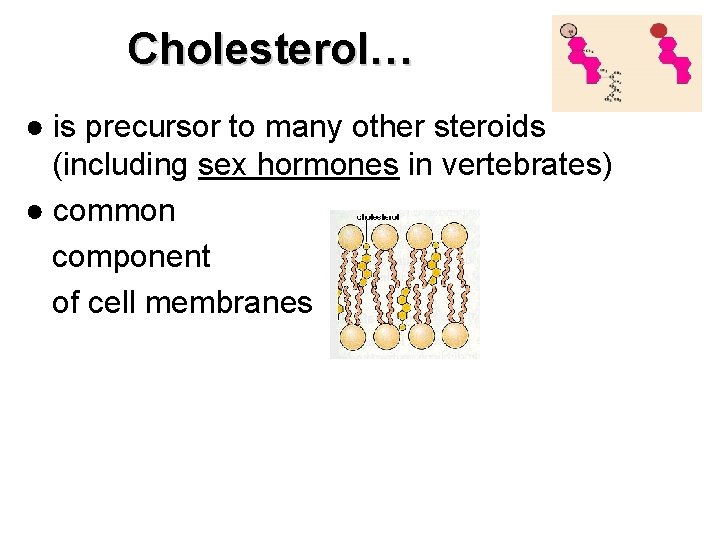
Cholesterol… ● is precursor to many other steroids (including sex hormones in vertebrates) ● common component of cell membranes
Cholesterol… ● can contribute to atherosclerosis (if have too much)