
Chapter 5 The Structure and Function of Macromolecules
- Slides: 27
Chapter 5 The Structure and Function of Macromolecules Proteins
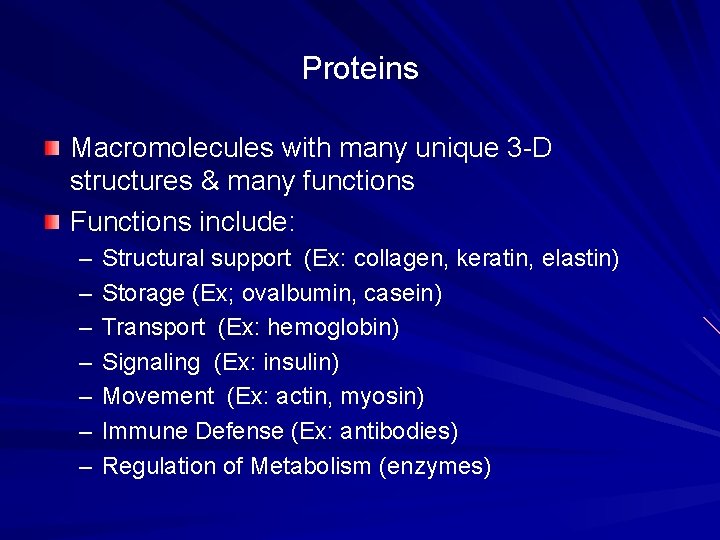
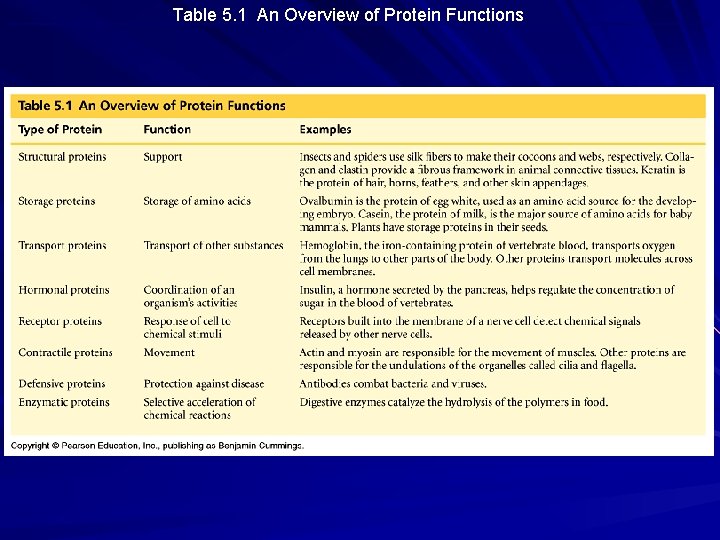
Proteins Macromolecules with many unique 3 -D structures & many functions Functions include: – – – – Structural support (Ex: collagen, keratin, elastin) Storage (Ex; ovalbumin, casein) Transport (Ex: hemoglobin) Signaling (Ex: insulin) Movement (Ex: actin, myosin) Immune Defense (Ex: antibodies) Regulation of Metabolism (enzymes)
Table 5. 1 An Overview of Protein Functions
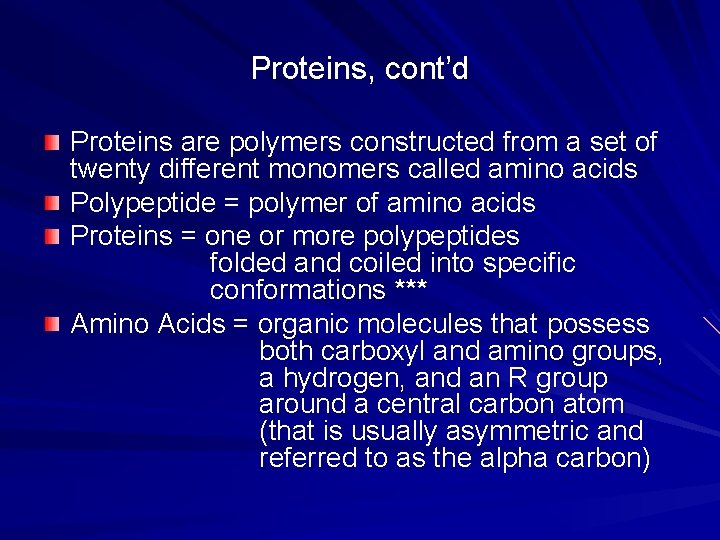
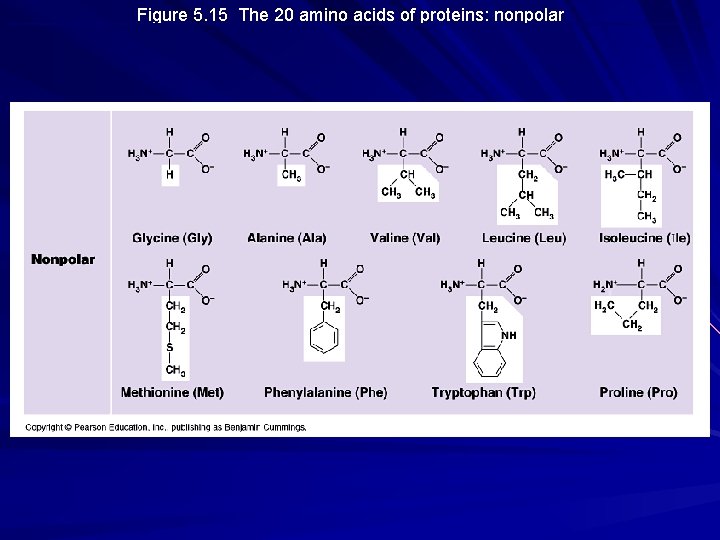
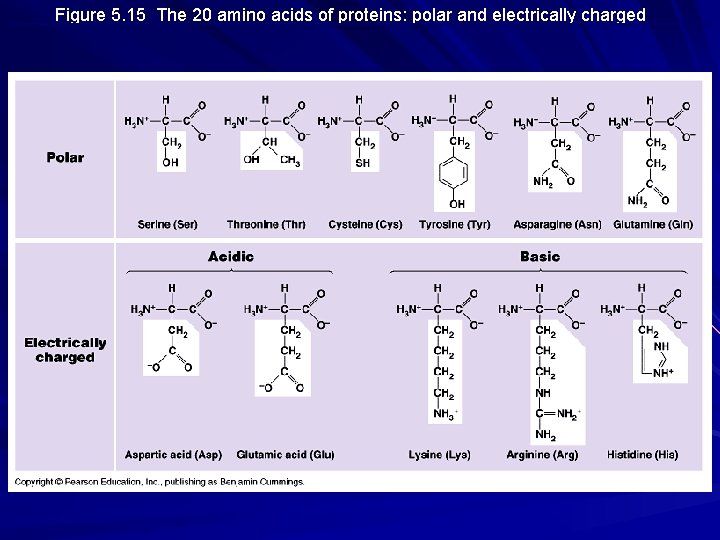
Proteins, cont’d Proteins are polymers constructed from a set of twenty different monomers called amino acids Polypeptide = polymer of amino acids Proteins = one or more polypeptides folded and coiled into specific conformations *** Amino Acids = organic molecules that possess both carboxyl and amino groups, a hydrogen, and an R group around a central carbon atom (that is usually asymmetric and referred to as the alpha carbon)
Figure 5. 15 The 20 amino acids of proteins: nonpolar
Figure 5. 15 The 20 amino acids of proteins: polar and electrically charged
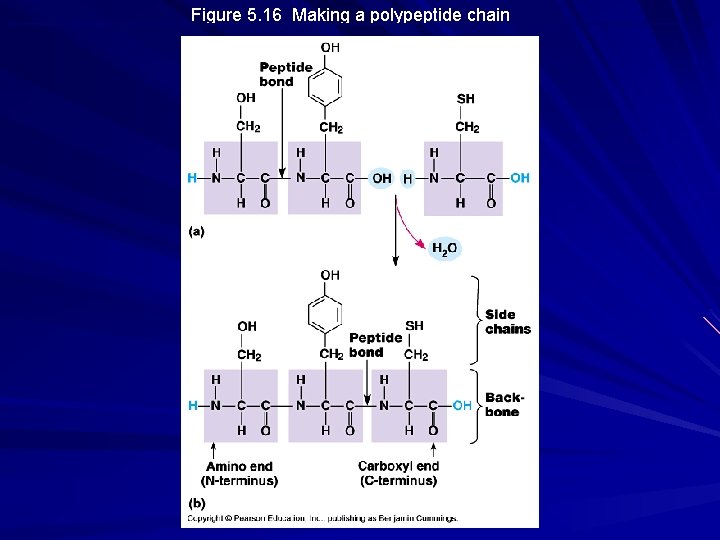
Figure 5. 16 Making a polypeptide chain
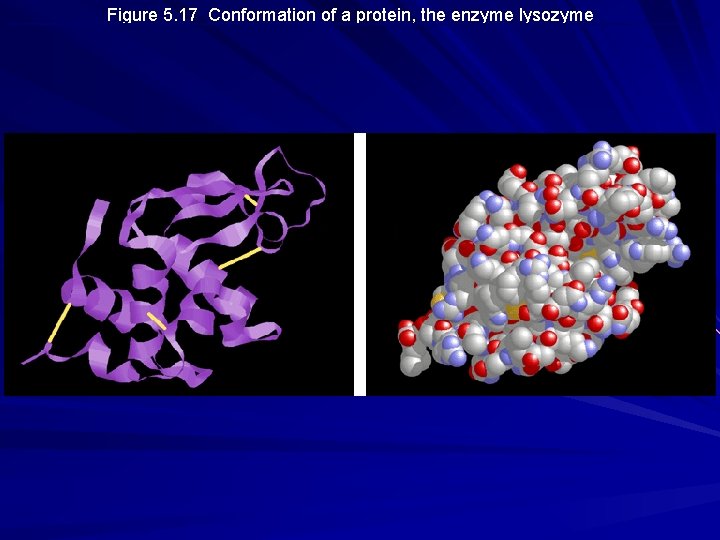
Proteins, cont’d Polypeptide ≠ protein A protein is precisely twisted, folded, and coiled into a molecule of unique shape Amino acid sequence determines what the ultimate 3 -D conformation will be A protein’s conformation determines how the protein will function Ribbon and space-filling models are often used to illustrate protein conformations
Figure 5. 17 Conformation of a protein, the enzyme lysozyme
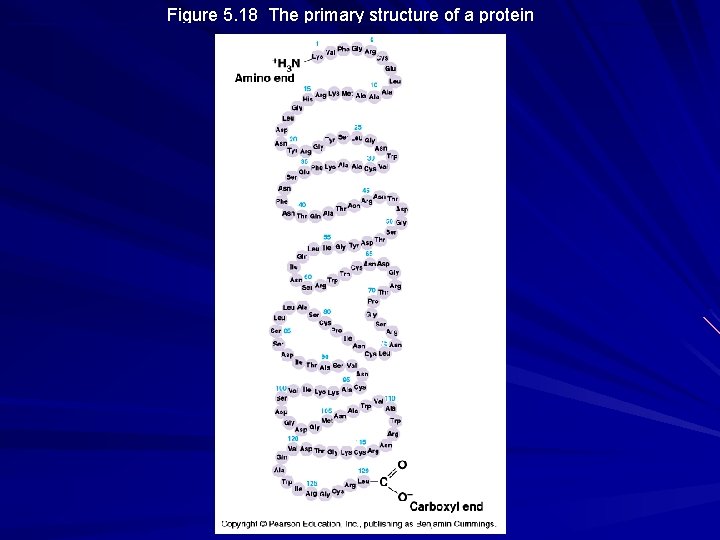
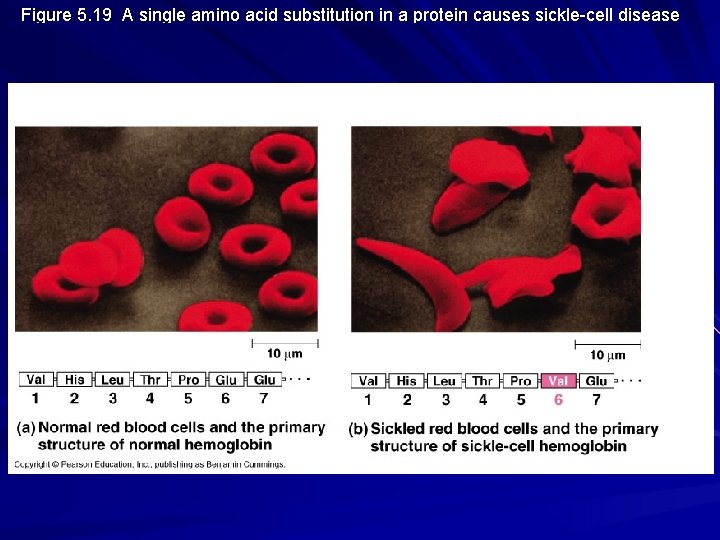
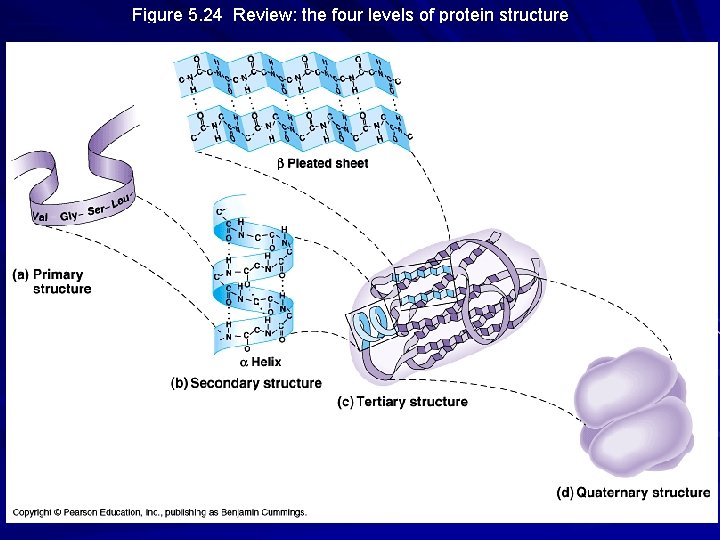
Protein Structure Four levels to protein structure: primary, secondary, tertiary, and quaternary Primary Structure (1 o structure) = amino acid sequence Even slight changes in primary structure can lead to significant changes in conformation (Ex: sickle cell hemoglobin)
Protein Structure, cont’d Frederick Sanger A pioneer in determining primary structure of proteins • Determined the sequence of insulin • Used different digestive enzymes to cut proteins into fragments, chromatography to separate the fragments, and chemical methods to determine the sequences of fragments • Searched for overlapping sequences of fragments generated by digesting with different enzymes and put the puzzle together
Figure 5. 18 The primary structure of a protein
Figure 5. 19 A single amino acid substitution in a protein causes sickle-cell disease
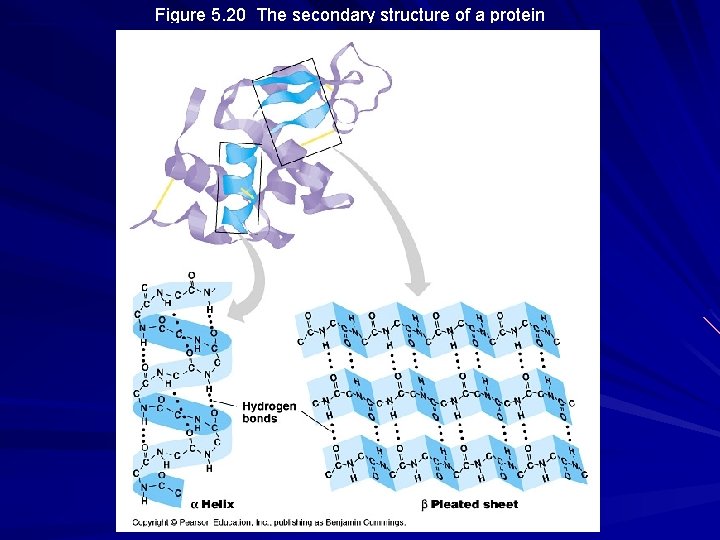
Protein Structure, cont’d Secondary Structure (2 o structure) – A regular coiled or folded pattern that exists in polypeptides due to hydrogen bonding of the polypeptide backbone (oxygen from the carbonyl group and hydrogen from an amino group) – Note that R groups are not involved in the hydrogen bonding that occurs in the secondary structure*** a helix / hydrogen bonding between every fourth amino acid pleated sheet / hydrogen bonds between parallel folds of the polypeptide
Figure 5. 20 The secondary structure of a protein
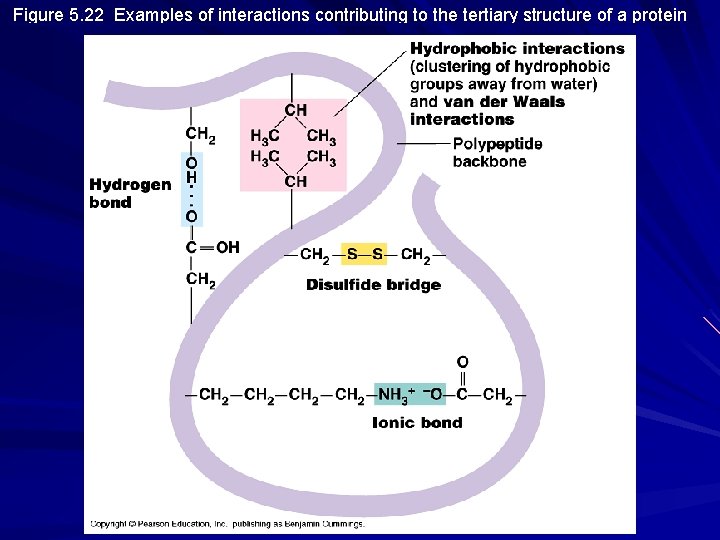
Protein Structure, cont’d Tertiary Structure (3 o structure) – Irregular contortions due to interactions between side chains (R groups) – Hydrophobic interactions / van der Waals interactions / nonpolar stays with nonpolar – Hydrogen bonds between R groups – Ionic interactions between + and – charged side chains – Disulfide bridges between two cysteine sulfhydryls / note this is a strong covalent bond
Figure 5. 22 Examples of interactions contributing to the tertiary structure of a protein
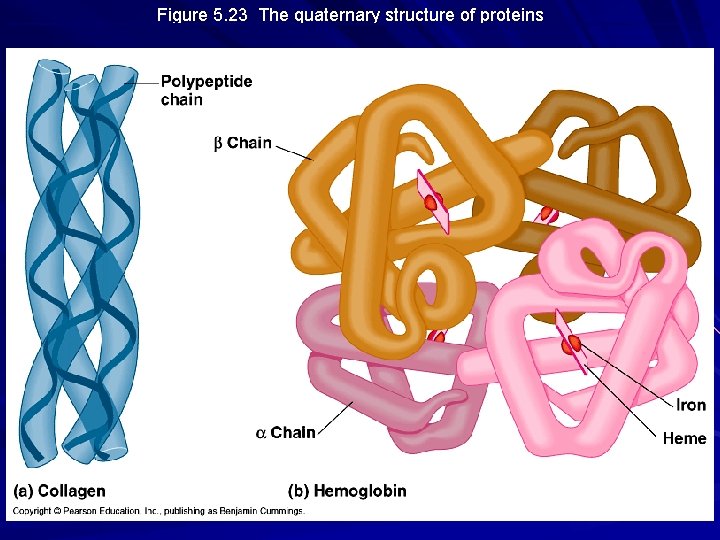
Protein Structure, cont’d Quaternary Structure (4 o structure) – Overall protein structure resulting from two or more polypeptide chains joining to form a functional protein – Ex: hemoglobin = 2 a and 2 chains collagen = triple helix (accounts for 40% of protein found in the human body)
Figure 5. 23 The quaternary structure of proteins
Figure 5. 24 Review: the four levels of protein structure
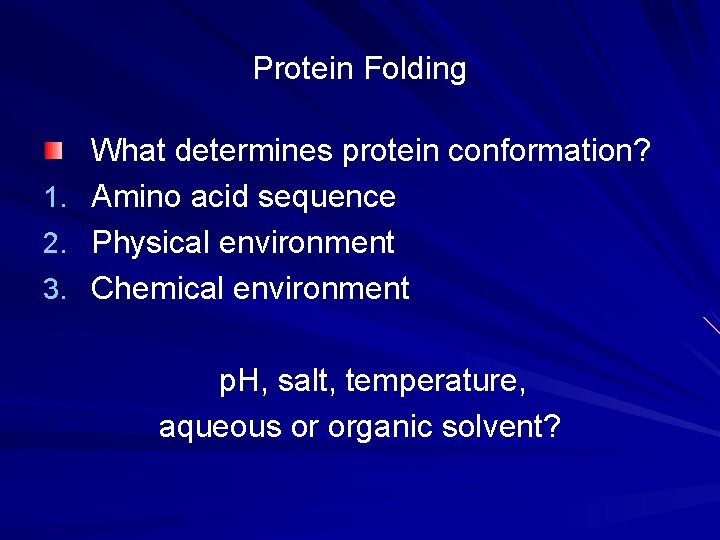
Protein Folding 1. 2. 3. What determines protein conformation? Amino acid sequence Physical environment Chemical environment p. H, salt, temperature, aqueous or organic solvent?
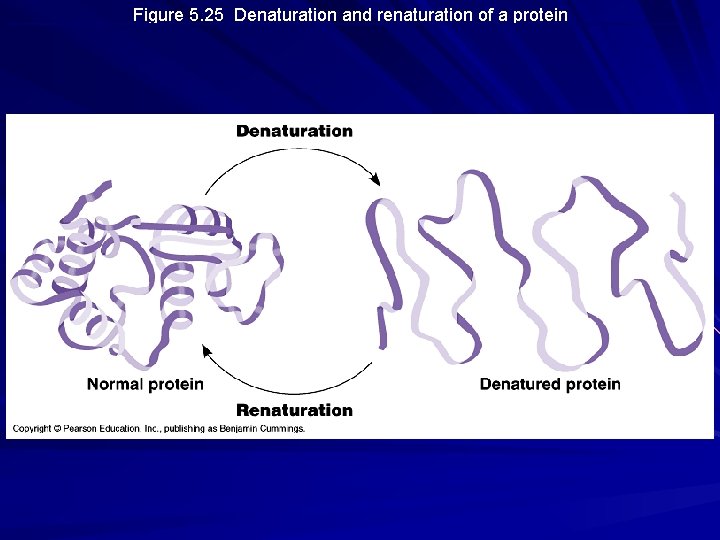
Protein Folding, cont’d Denaturation = protein loses its native conformation, typically inactivates proteins Some examples: egg white on cooking, turning protein inside out when placed in an organic solvent, etc. Many proteins can return to their native conformation when placed back in their normal environment, but this is not always the case
Figure 5. 25 Denaturation and renaturation of a protein
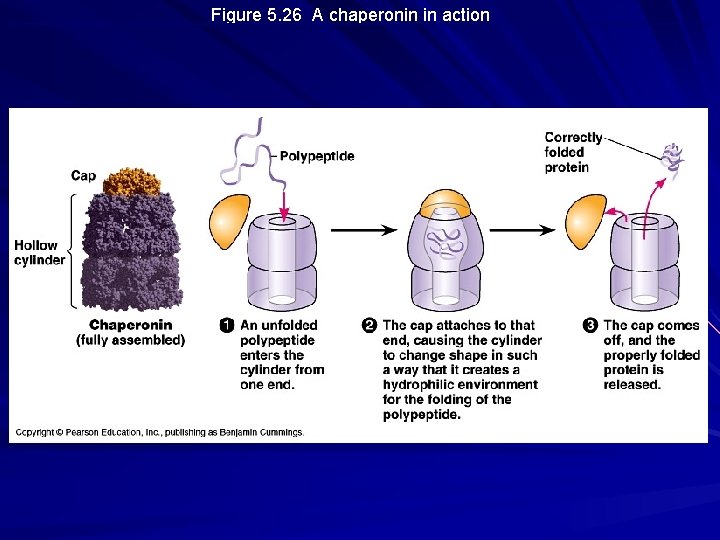
Chaperones Many proteins may have a distinct set of folding steps to pass through on their way to becoming a functional protein Chaperones = protein molecules that assist the proper folding of other proteins / may work by protecting new polypeptide from “bad influences” in the cytoplasmic environment Protein folding patterns are still a bit of a mystery!
Figure 5. 26 A chaperonin in action
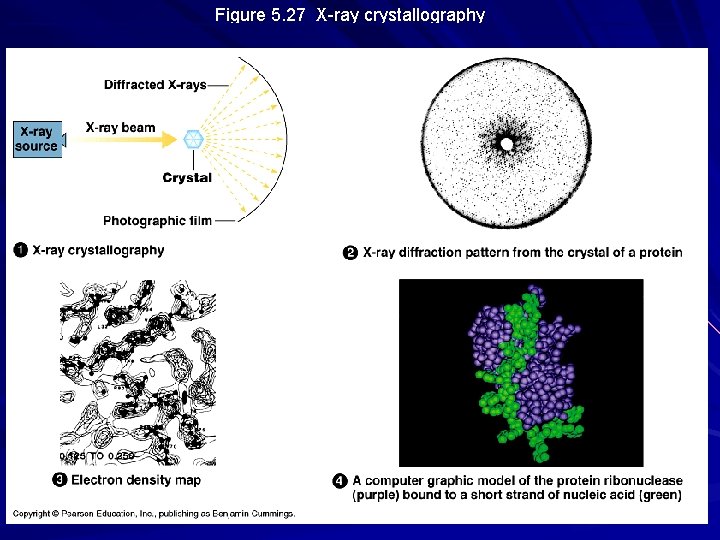
Determining Protein Structure X-ray crystallography depends on the diffraction of an X-ray beam by the individual atoms in a crystal Trick is to get good crystals!
Figure 5. 27 X-ray crystallography