
Chapter 5 The Structure and Function of Large



- Slides: 45
Chapter 5 The Structure and Function of Large Biological Molecules 1
You Must Know • • • The role of dehydration synthesis in the formation of organic compounds and hydrolysis in the digestion of organic compounds. How to recognize the 4 biologically important organic compounds (carbs, lipids, proteins, nucleic acids) by their structural formulas. The cellular functions of all four organic compounds. The 4 structural levels of proteins How proteins reach their final shape (conformation) and the denaturing impact that heat and p. H can have on protein structure 2
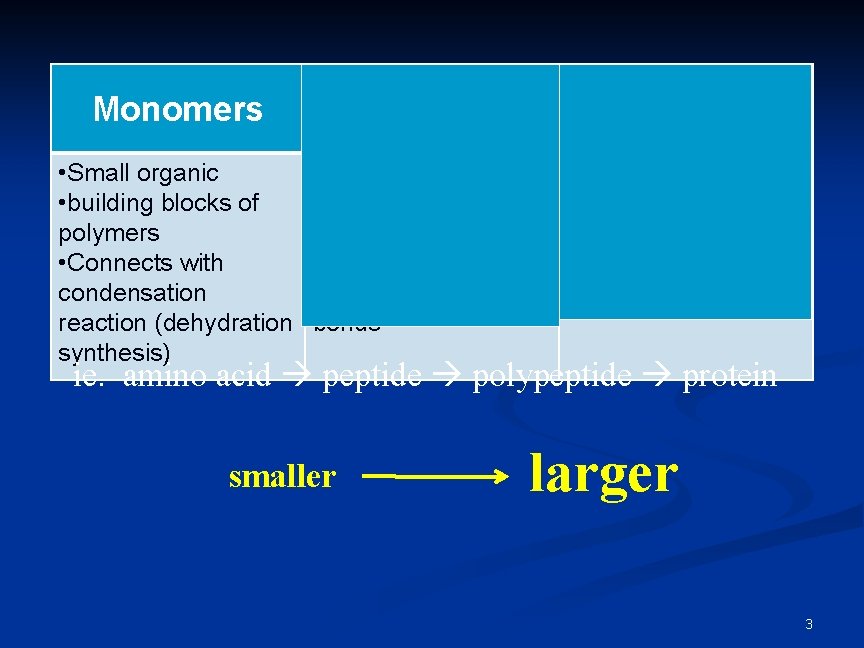
Macromolecul es Monomers Polymers • Small organic • building blocks of polymers • Connects with condensation reaction (dehydration synthesis) • Long molecules of monomers • With many identical or similar blocks linked by covalent bonds • Giant molecules • 2 or more polymers bonded together ie. amino acid peptide polypeptide protein smaller larger 3
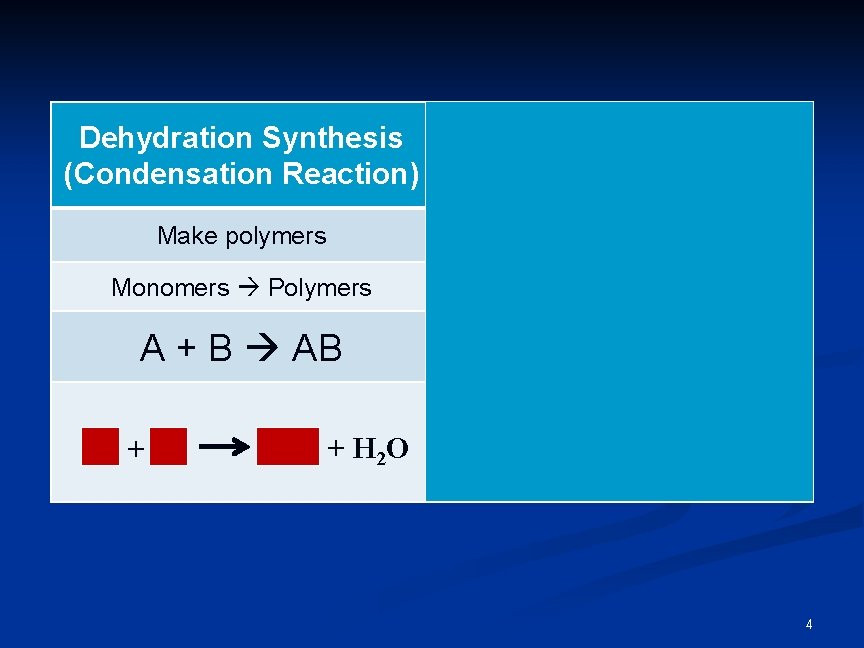
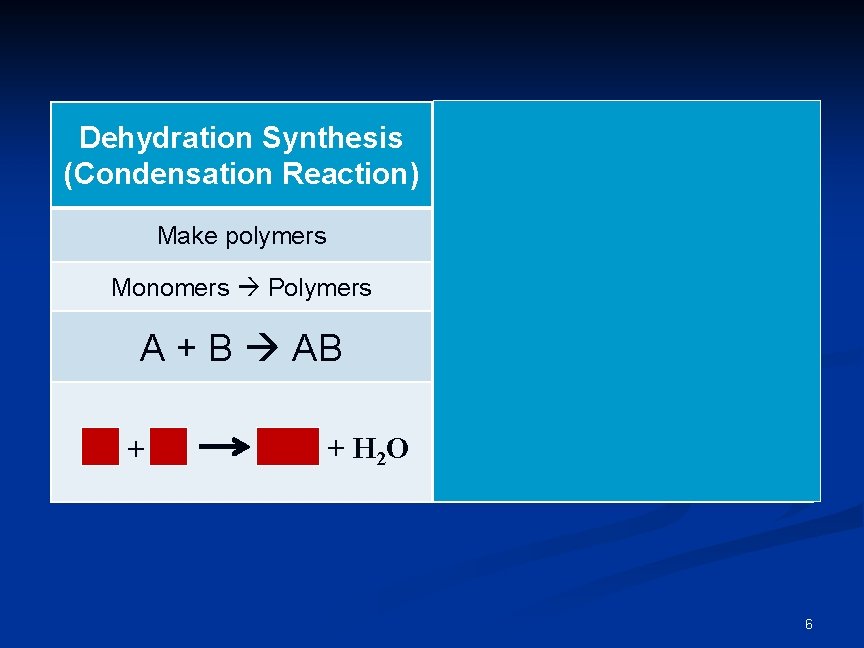
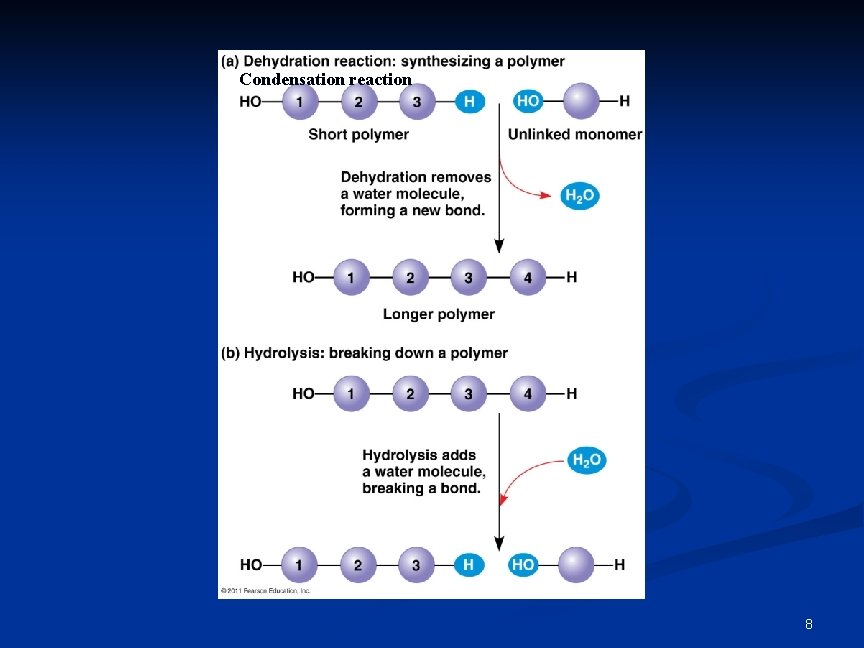
Dehydration Synthesis (Condensation Reaction) Hydrolysis Make polymers Breakdown polymers Monomers Polymers Monomers A + B AB AB A + B + + H 2 O + 4
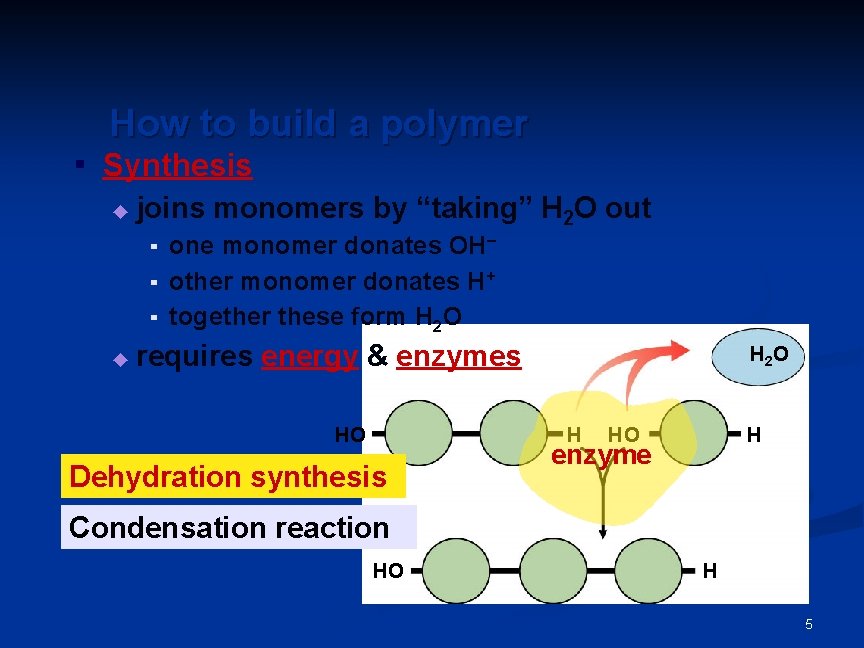
How to build a polymer ▪ Synthesis ◆ joins monomers by “taking” H 2 O out ▪ one monomer donates OH– ▪ other monomer donates H+ ▪ together these form H 2 O ◆ requires energy & enzymes HO H 2 O H Dehydration synthesis HO H enzyme Condensation reaction HO H 5
Dehydration Synthesis (Condensation Reaction) Hydrolysis Make polymers Breakdown polymers Monomers Polymers Monomers A + B AB AB A + B + + H 2 O + 6
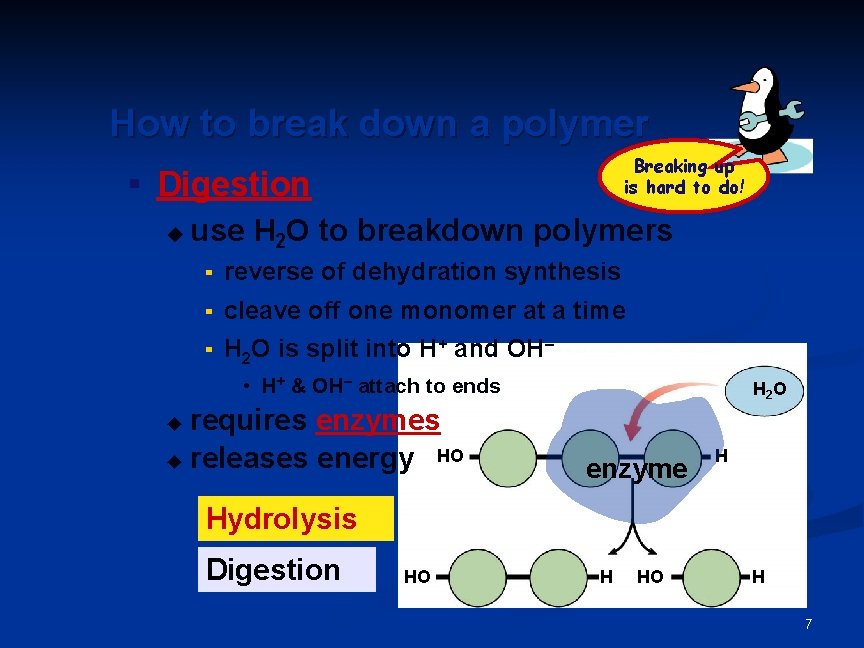
How to break down a polymer Breaking up is hard to do! ▪ Digestion ◆ use H 2 O to breakdown polymers ▪ reverse of dehydration synthesis ▪ cleave off one monomer at a time ▪ H 2 O is split into H+ and OH– • H+ & OH– attach to ends requires enzymes ◆ releases energy HO H 2 O ◆ enzyme H Hydrolysis Digestion HO H 7
Condensation reaction 8
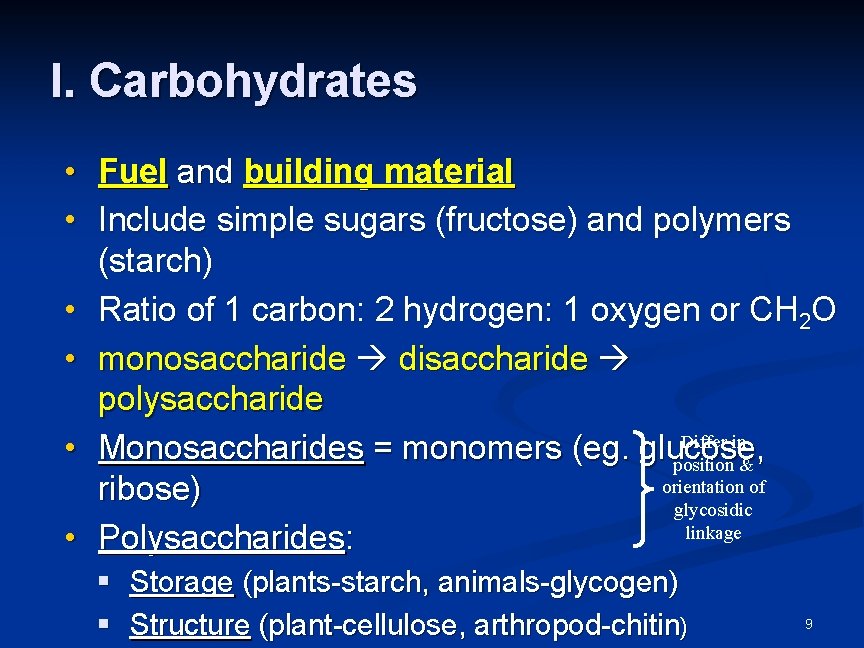
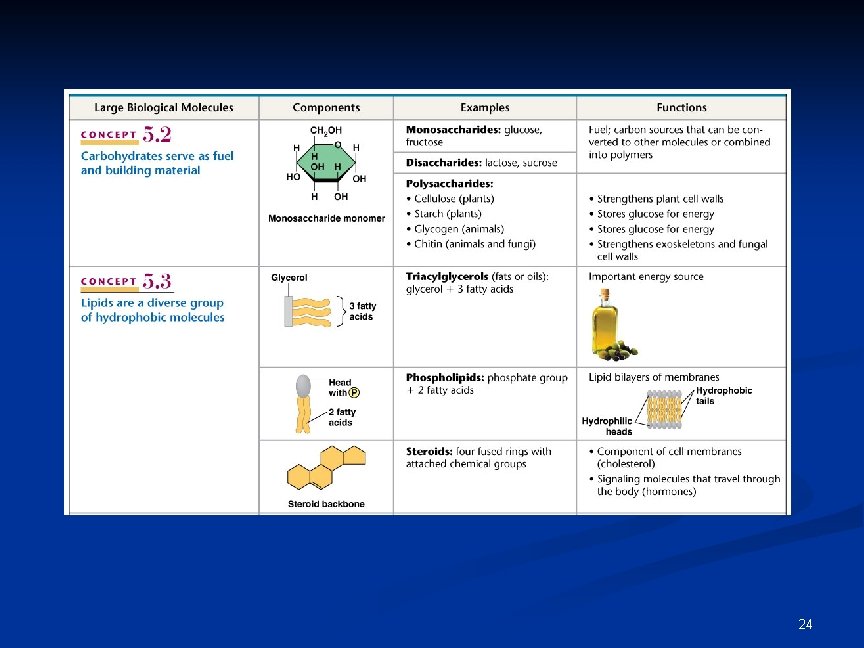
I. Carbohydrates • • • Fuel and building material Include simple sugars (fructose) and polymers (starch) Ratio of 1 carbon: 2 hydrogen: 1 oxygen or CH 2 O monosaccharide disaccharide polysaccharide Differ in Monosaccharides = monomers (eg. glucose, position & orientation of ribose) glycosidic linkage Polysaccharides: § Storage (plants-starch, animals-glycogen) § Structure (plant-cellulose, arthropod-chitin) 9
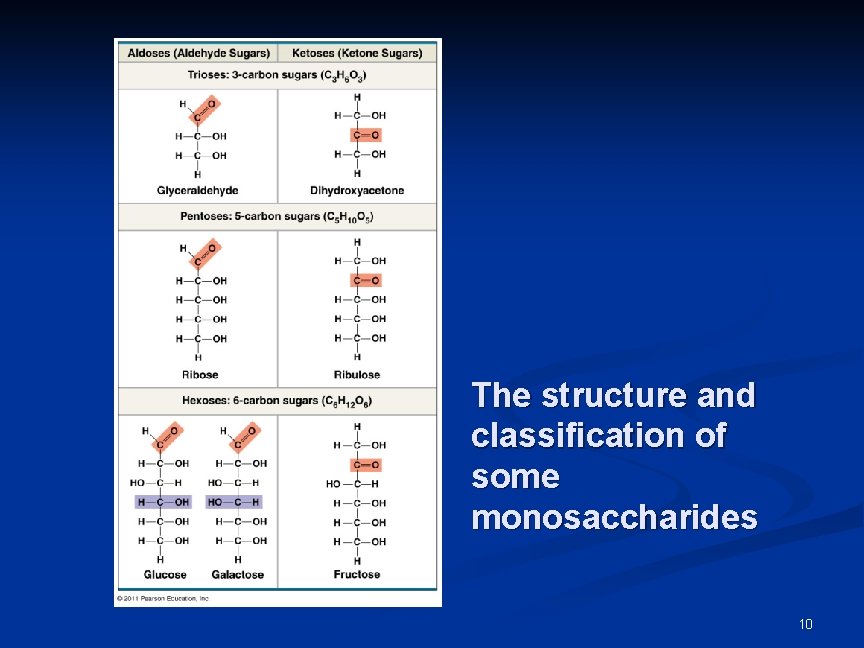
The structure and classification of some monosaccharides 10
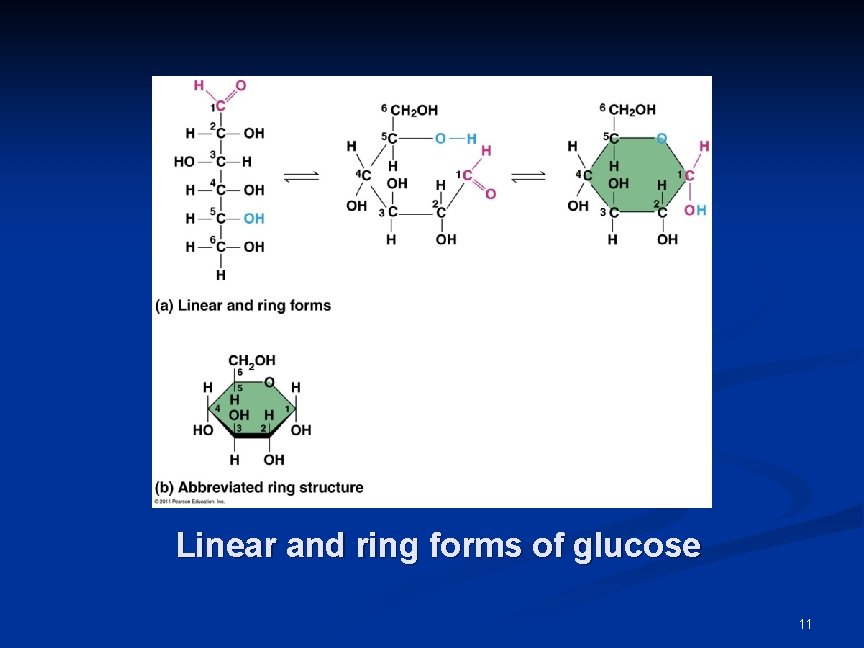
Linear and ring forms of glucose 11
Carbohydrate synthesis 12
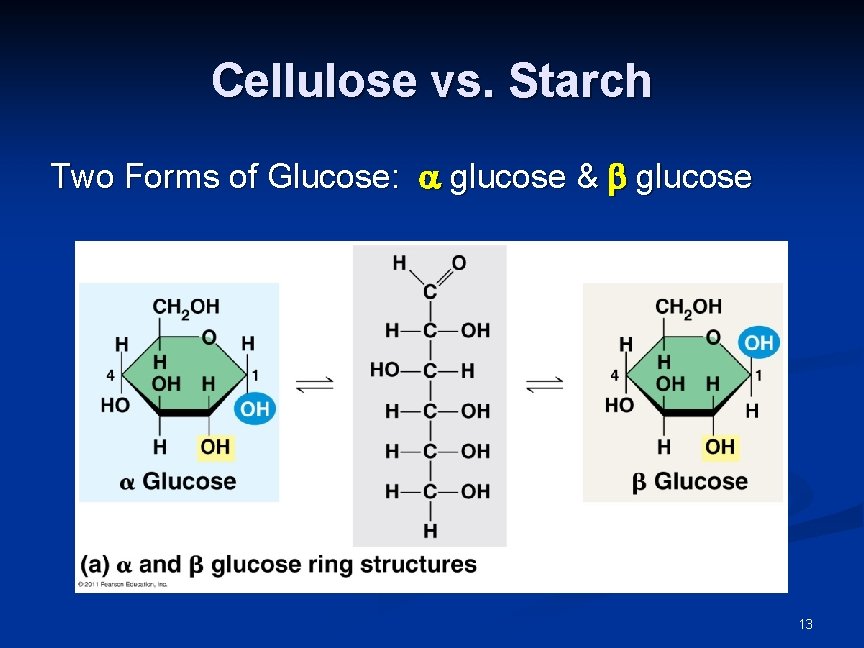
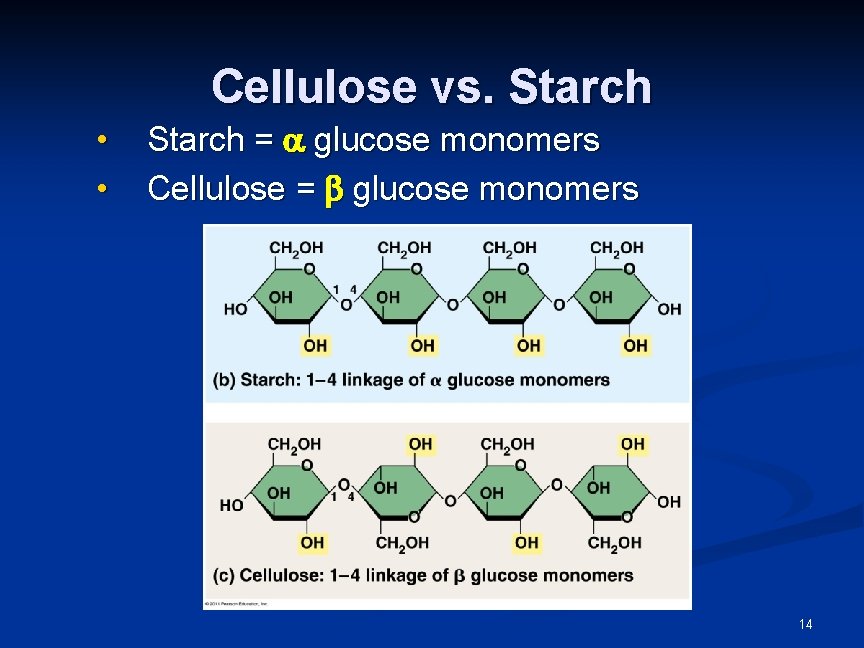
Cellulose vs. Starch Two Forms of Glucose: glucose & glucose 13
Cellulose vs. Starch • • Starch = glucose monomers Cellulose = glucose monomers 14
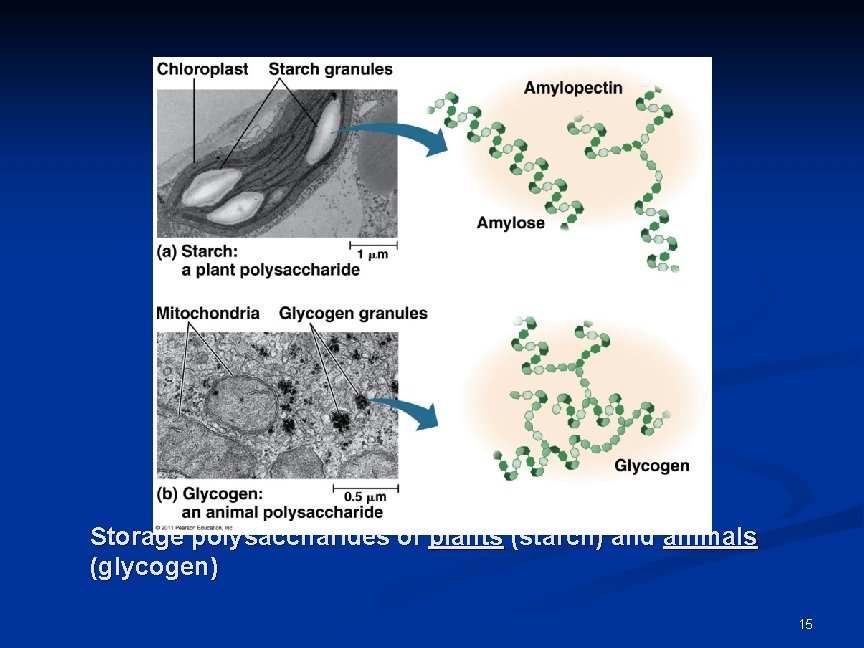
Storage polysaccharides of plants (starch) and animals (glycogen) 15
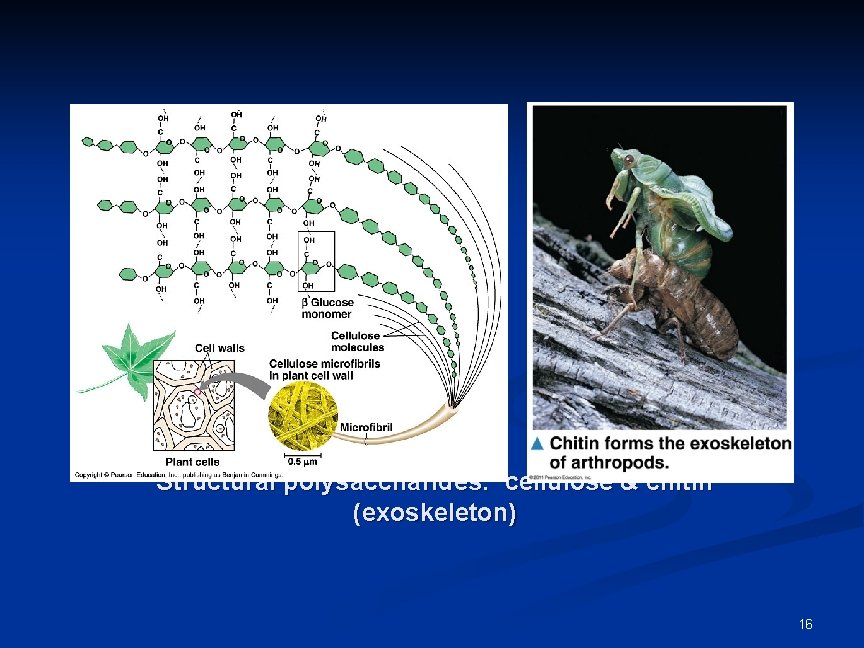
Structural polysaccharides: cellulose & chitin (exoskeleton) 16
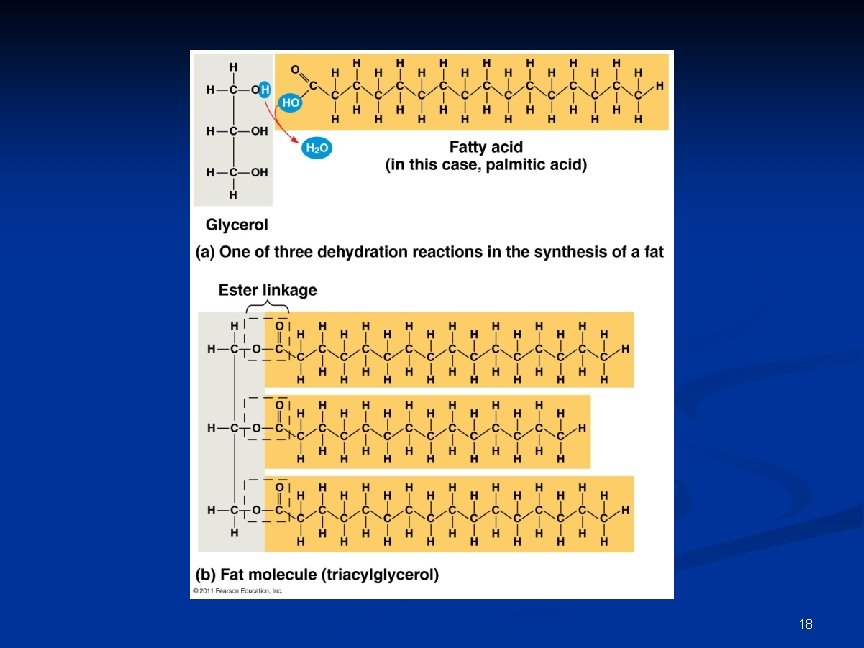
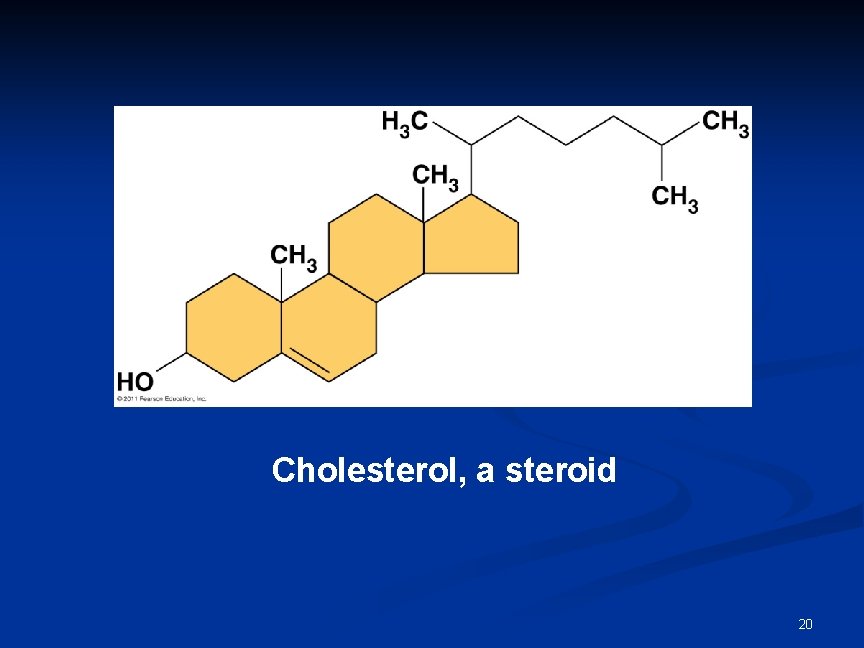
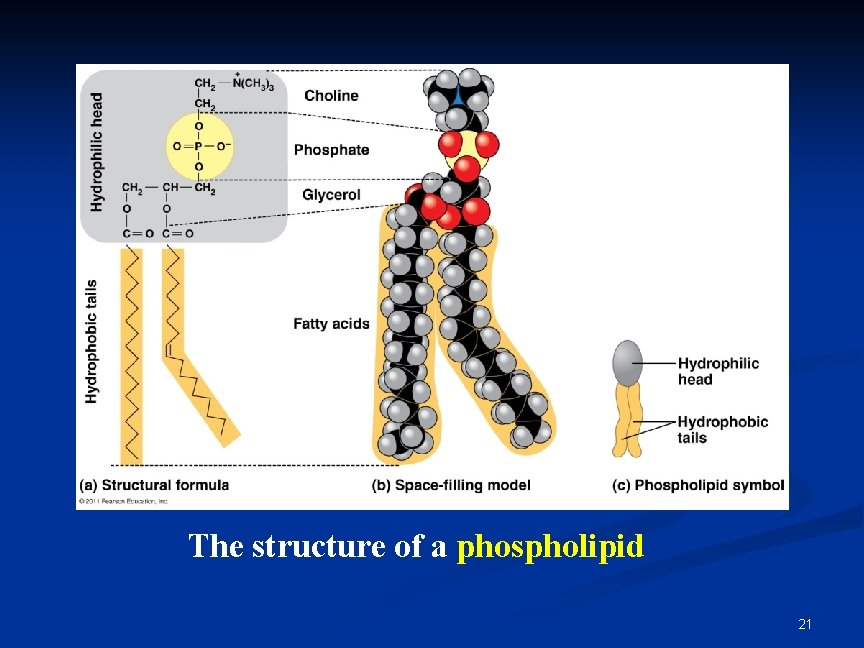
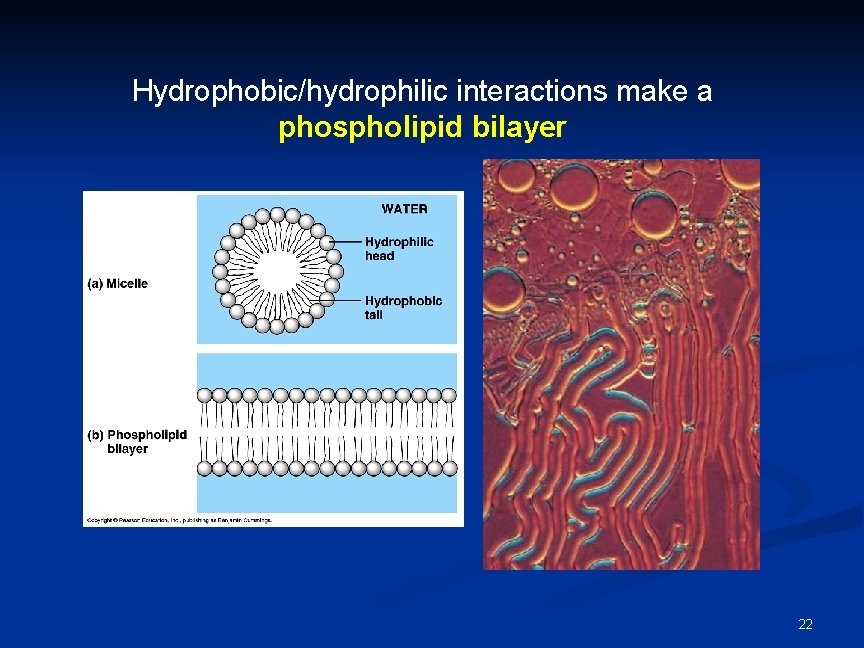
II. Lipids A. Fats (triglyceride): store energy n n Glycerol + 3 Fatty Acids saturated, unsaturated, polyunsaturated B. Steroids: Steroids cholesterol and hormones C. Phospholipids: lipid bilayer of cell membrane n hydrophilic head, hydrophobic tails Hydrophilic head Hydrophobic tail 17
18
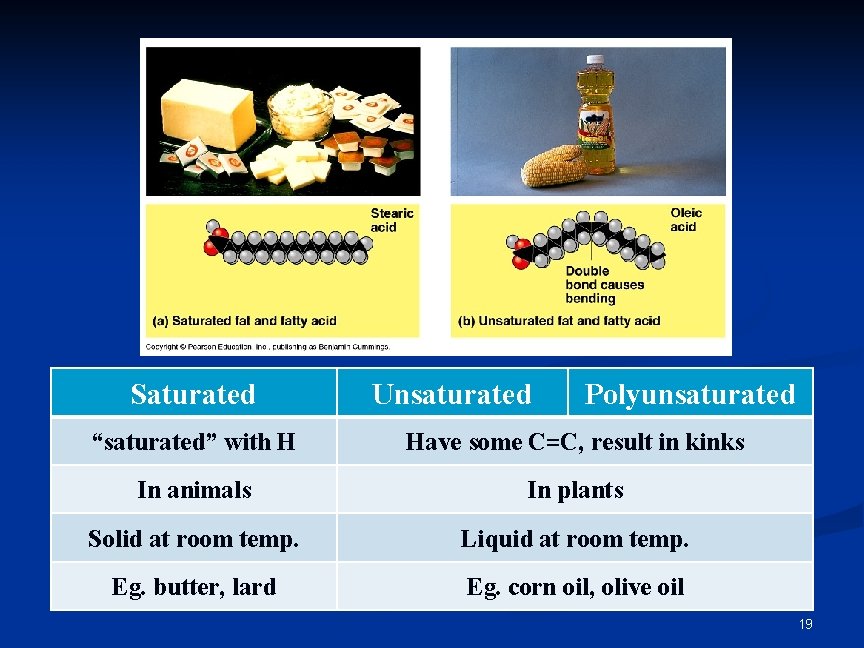
Saturated Unsaturated Polyunsaturated “saturated” with H Have some C=C, result in kinks In animals In plants Solid at room temp. Liquid at room temp. Eg. butter, lard Eg. corn oil, olive oil 19
Cholesterol, a steroid 20
The structure of a phospholipid 21
Hydrophobic/hydrophilic interactions make a phospholipid bilayer 22
24
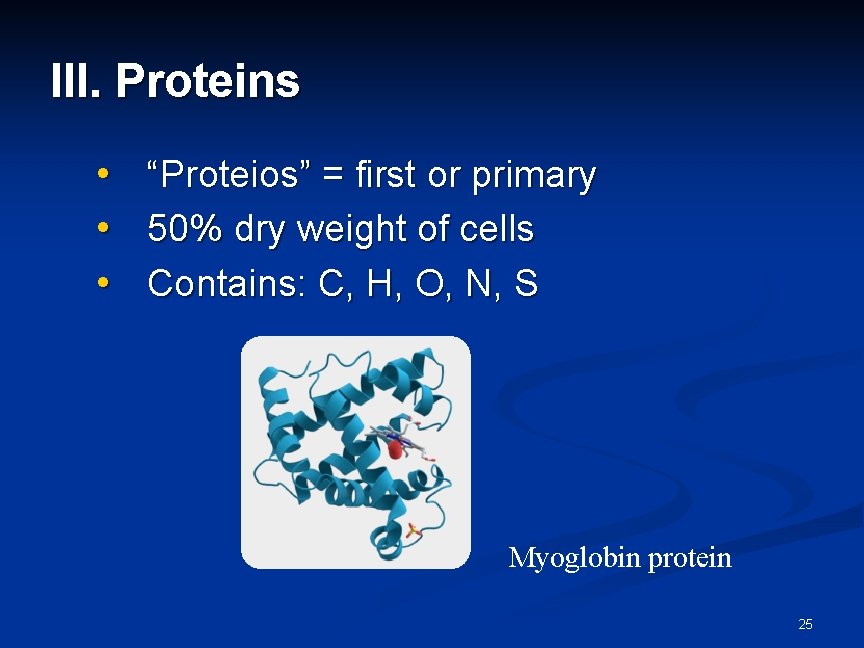
III. Proteins • • • “Proteios” = first or primary 50% dry weight of cells Contains: C, H, O, N, S Myoglobin protein 25
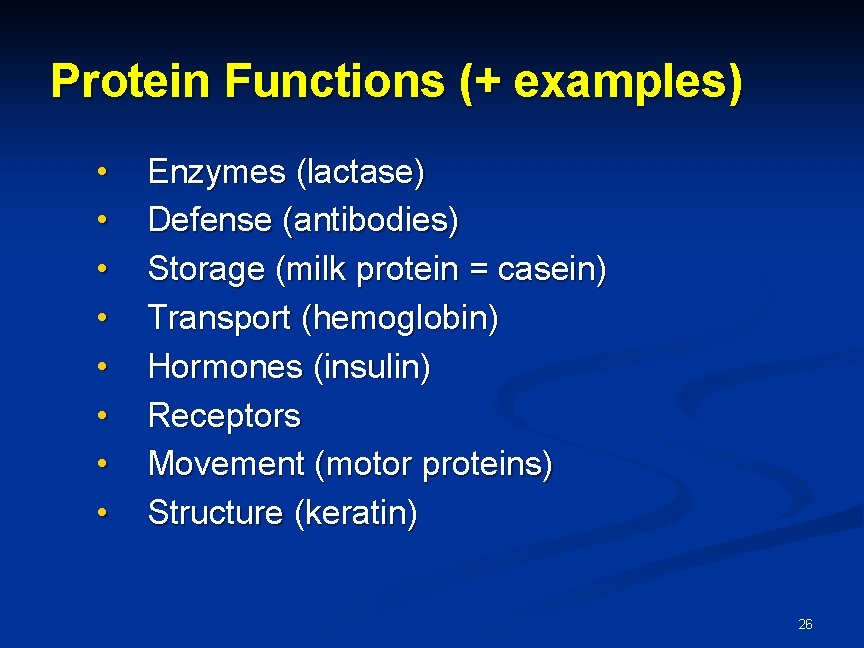
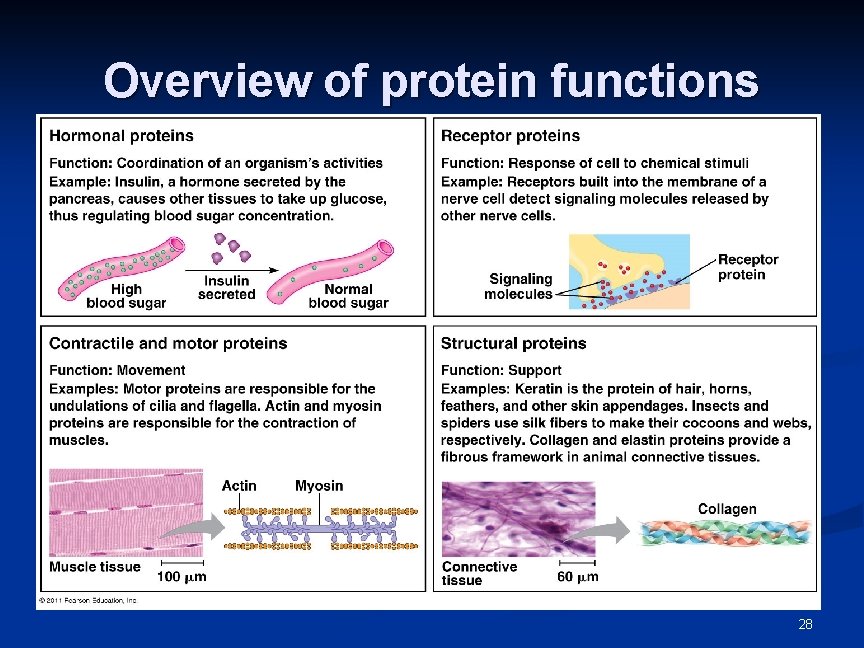
Protein Functions (+ examples) • • Enzymes (lactase) Defense (antibodies) Storage (milk protein = casein) Transport (hemoglobin) Hormones (insulin) Receptors Movement (motor proteins) Structure (keratin) 26
Overview of protein functions 27
Overview of protein functions 28
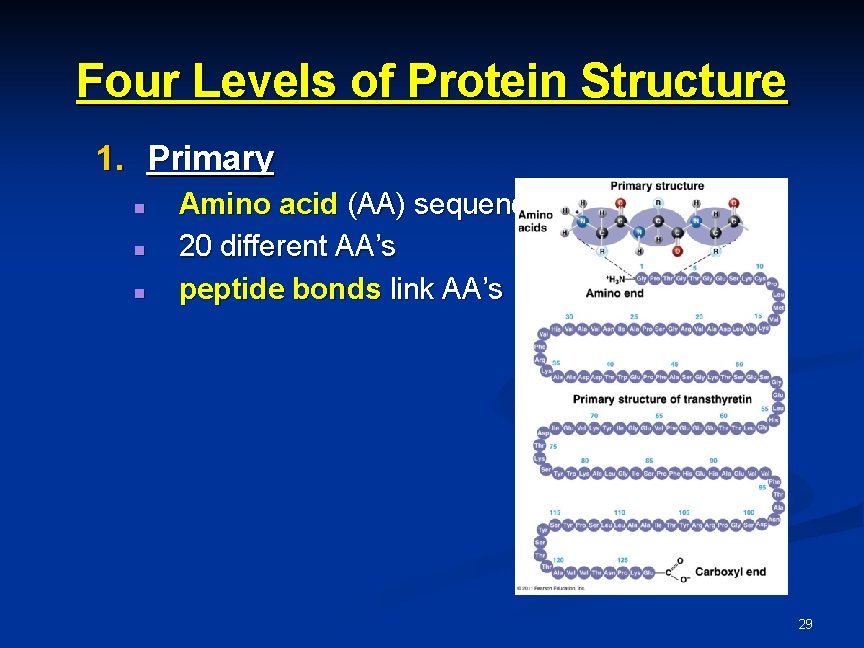
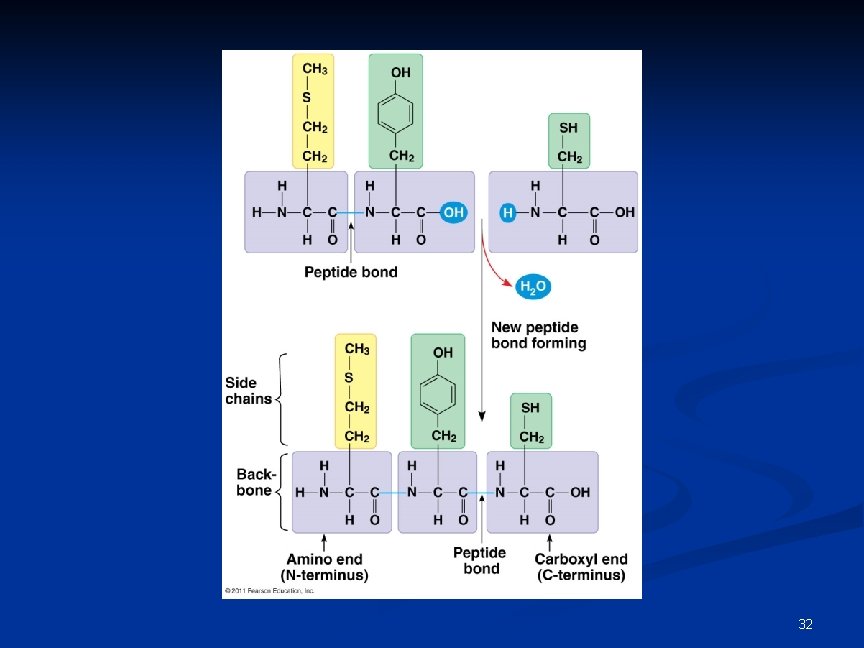
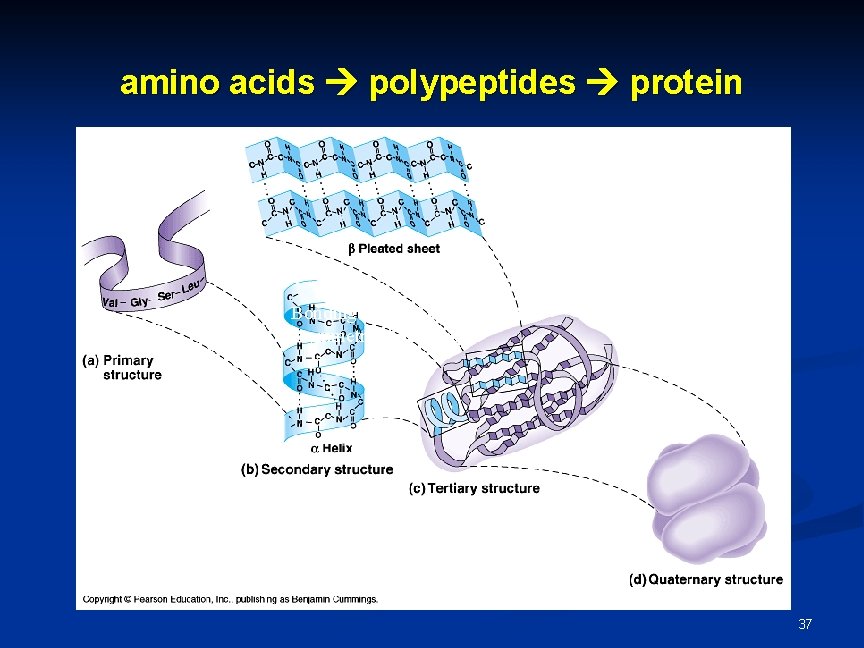
Four Levels of Protein Structure 1. Primary n n n Amino acid (AA) sequence 20 different AA’s peptide bonds link AA’s 29
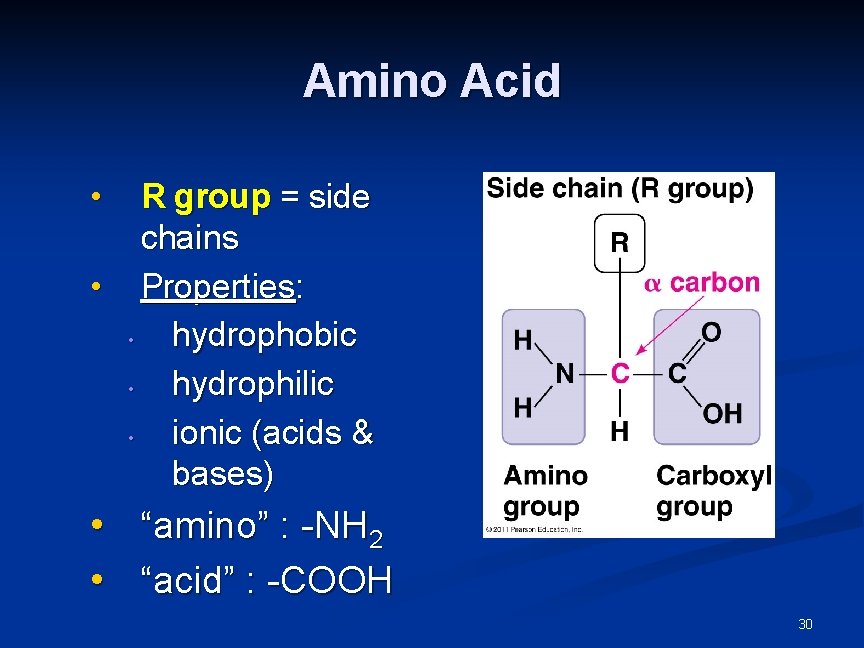
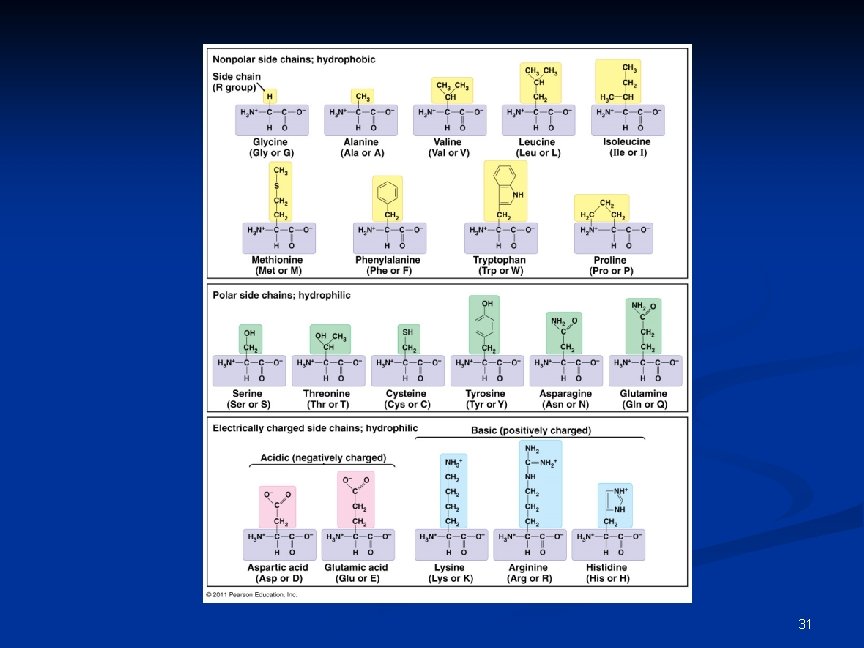
Amino Acid • R group = side chains • Properties: • hydrophobic • hydrophilic • ionic (acids & bases) • “amino” : -NH 2 • “acid” : -COOH 30
31
32
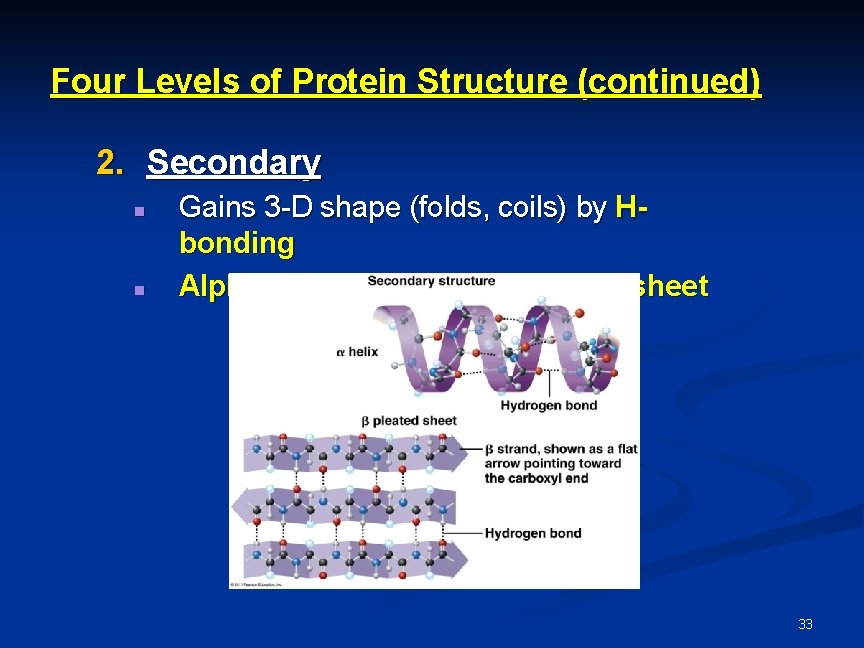
Four Levels of Protein Structure (continued) 2. Secondary n n Gains 3 -D shape (folds, coils) by Hbonding Alpha (α) helix, Beta (β) pleated sheet 33
Basic Principles of Protein Folding A. Hydrophobic AA buried in interior of protein (hydrophobic interactions) B. Hydrophilic AA exposed on surface of protein (hydrogen bonds) C. Acidic + Basic AA form salt bridges (ionic bonds). D. Cysteines can form disulfide bonds. 34
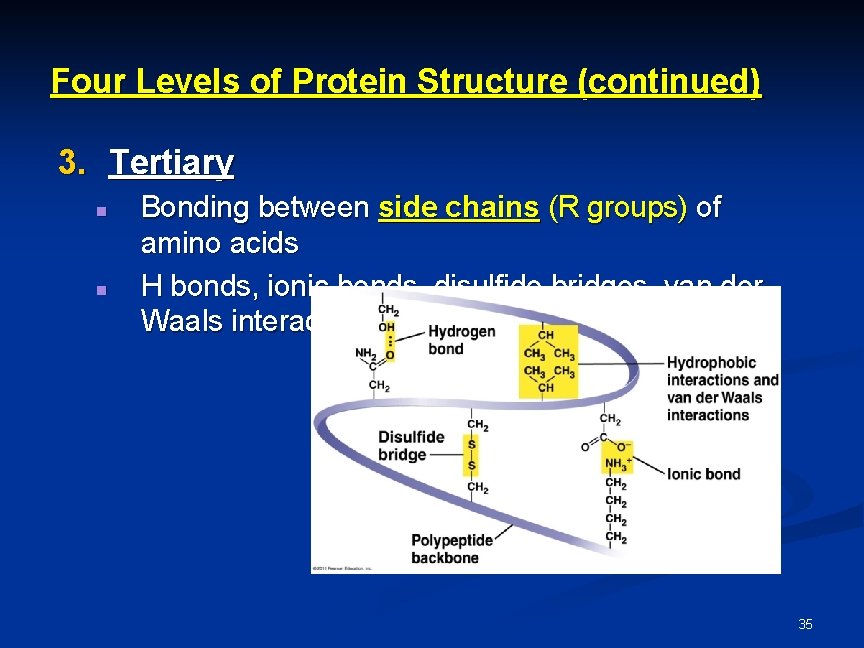
Four Levels of Protein Structure (continued) 3. Tertiary n n Bonding between side chains (R groups) of amino acids H bonds, ionic bonds, disulfide bridges, van der Waals interactions 35
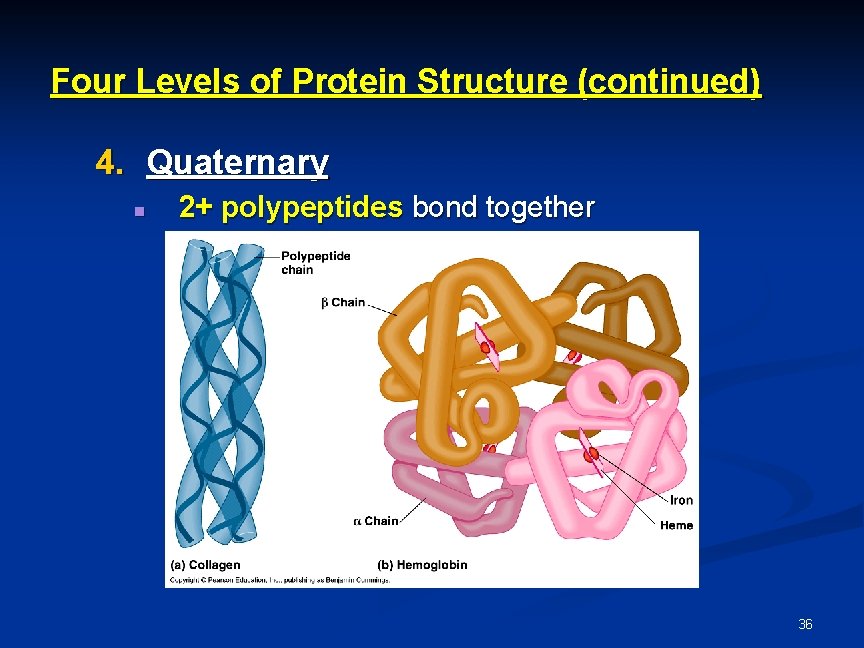
Four Levels of Protein Structure (continued) 4. Quaternary n 2+ polypeptides bond together 36
amino acids polypeptides protein Bonding (ionic & H) can create asymmetrical attractions 37
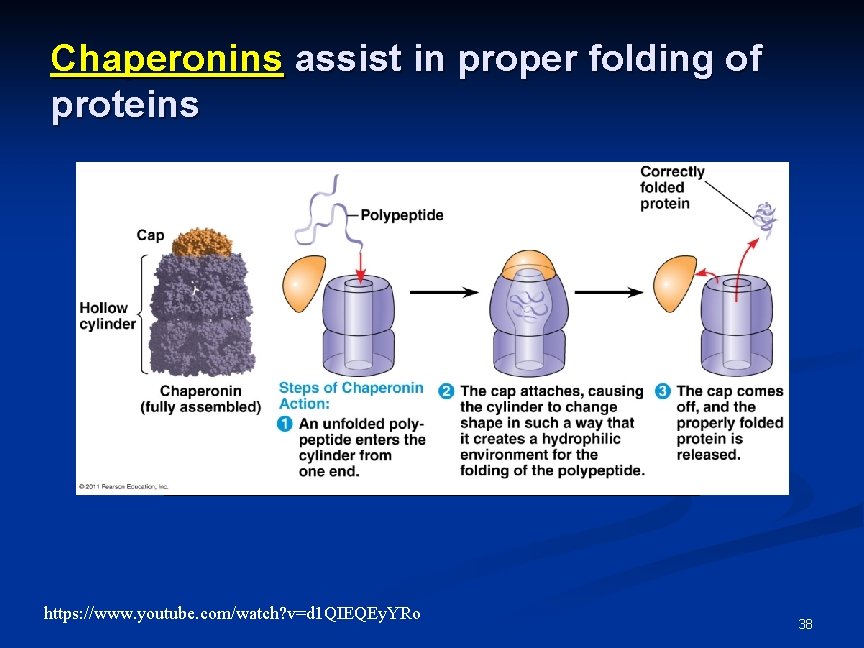
Chaperonins assist in proper folding of proteins https: //www. youtube. com/watch? v=d 1 QIEQEy. YRo 38
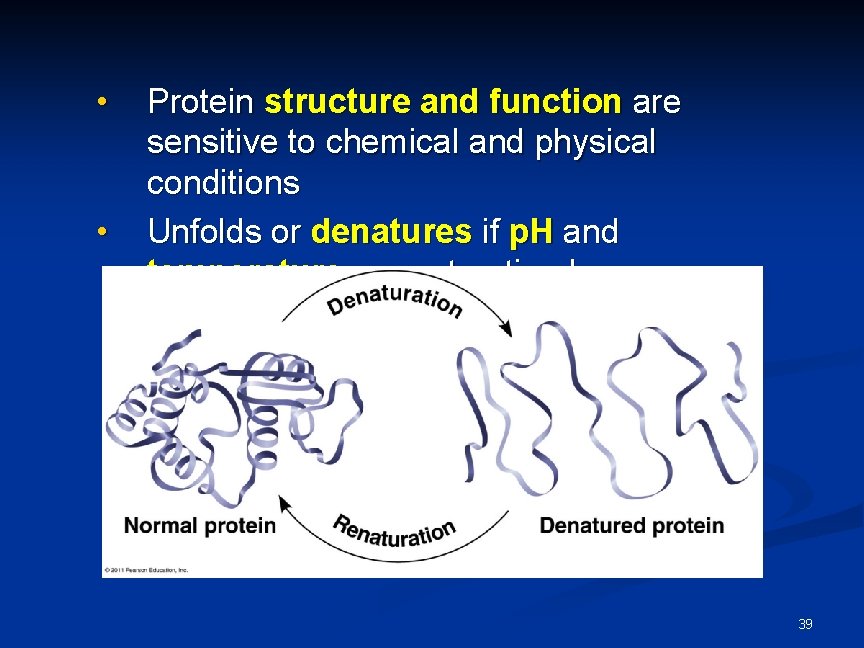
• • Protein structure and function are sensitive to chemical and physical conditions Unfolds or denatures if p. H and temperature are not optimal 39
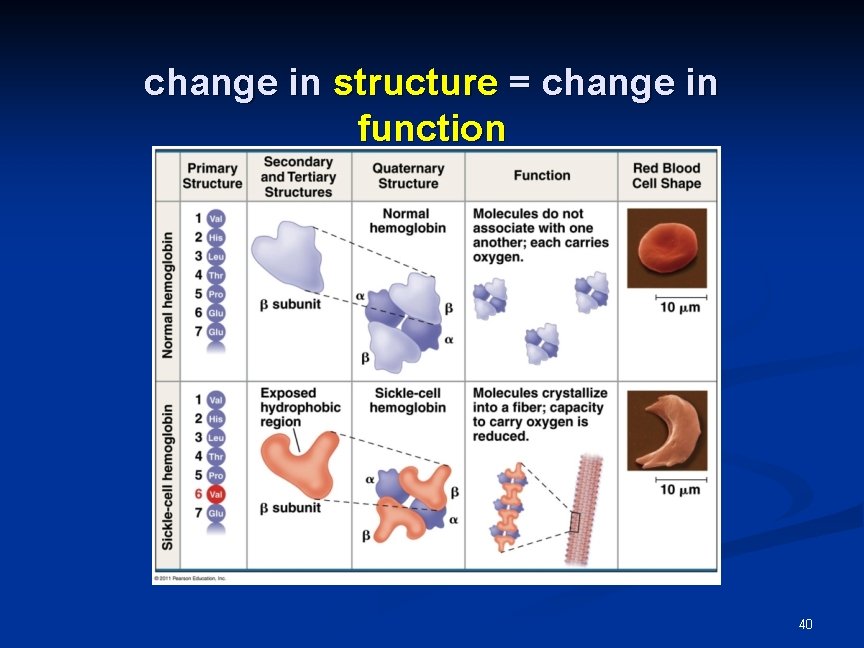
change in structure = change in function 40
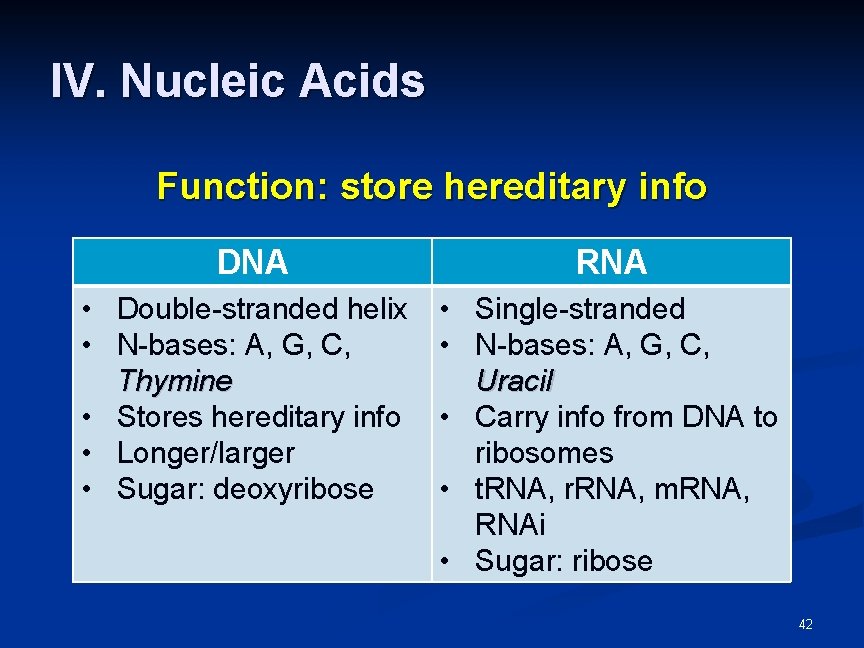
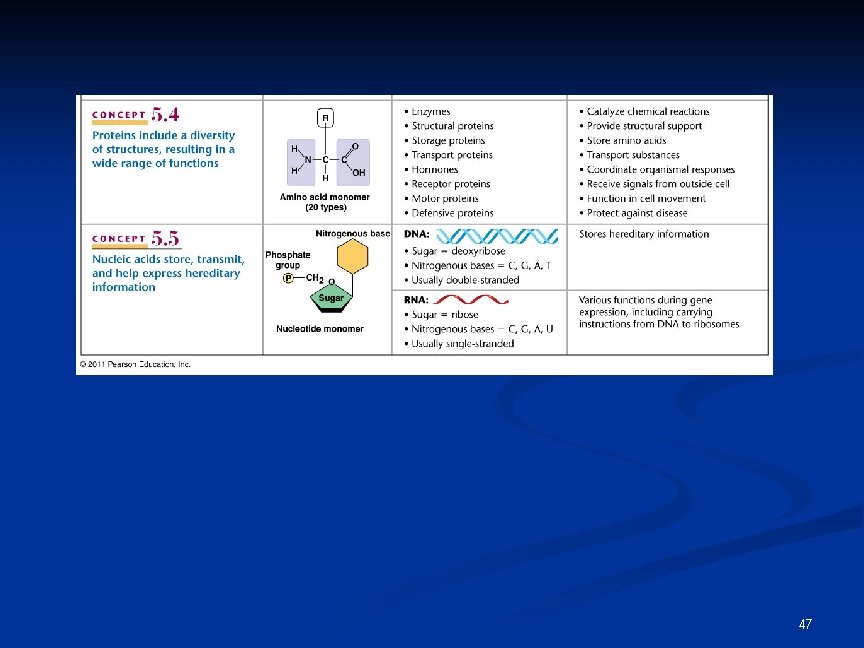
IV. Nucleic Acids Function: store hereditary info DNA RNA • Double-stranded helix • N-bases: A, G, C, Thymine • Stores hereditary info • Longer/larger • Sugar: deoxyribose • Single-stranded • N-bases: A, G, C, Uracil • Carry info from DNA to ribosomes • t. RNA, r. RNA, m. RNA, RNAi • Sugar: ribose 42
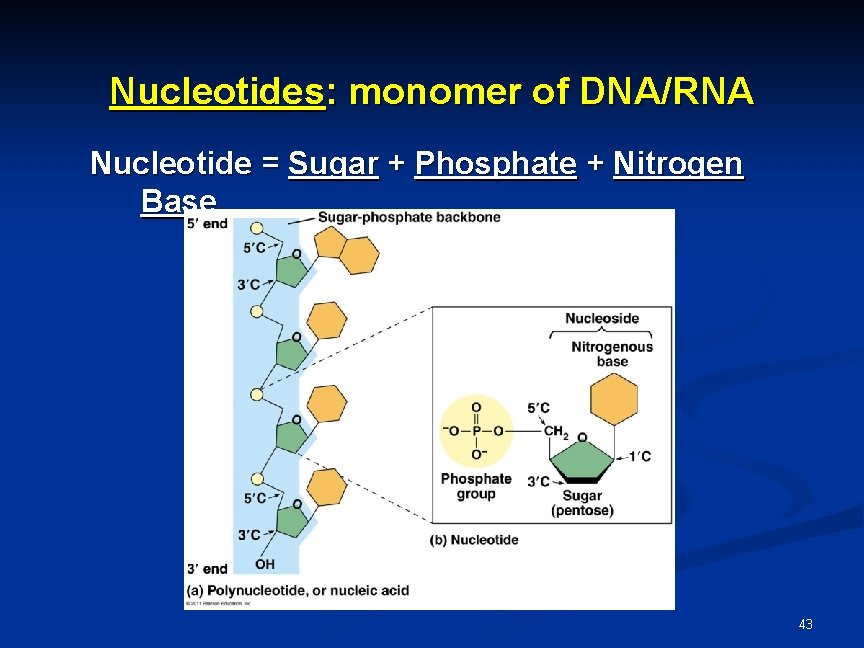
Nucleotides: monomer of DNA/RNA Nucleotide = Sugar + Phosphate + Nitrogen Base 43
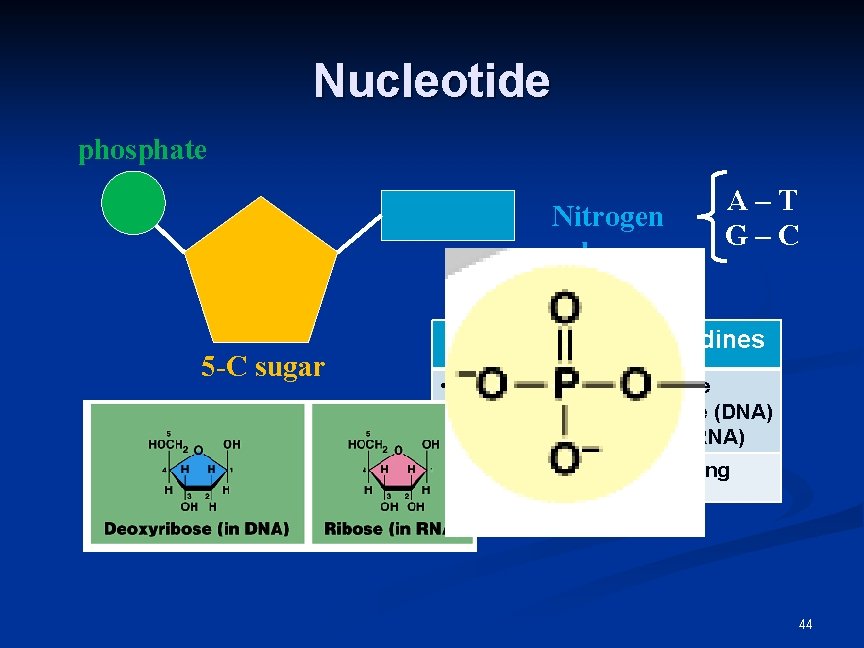
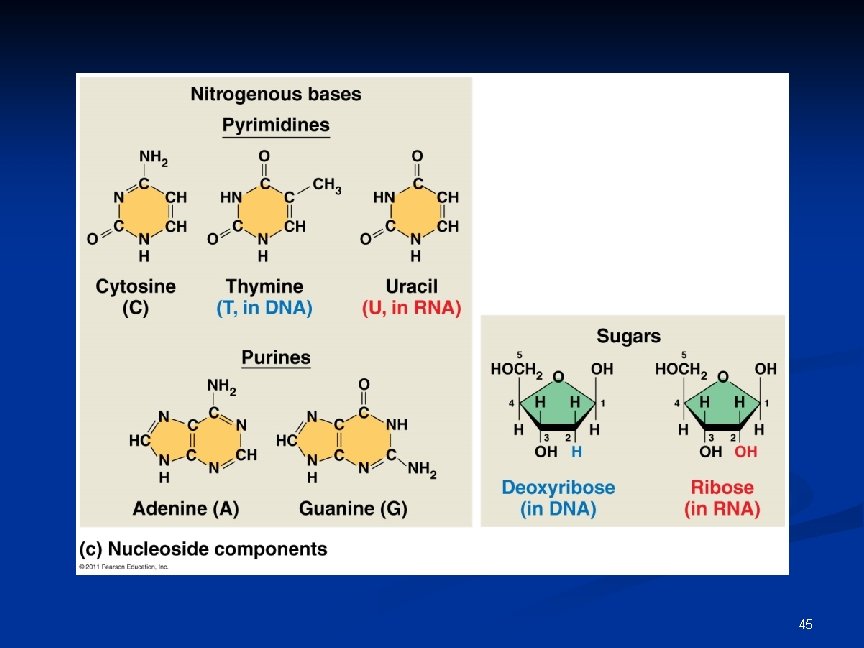
Nucleotide phosphate Nitrogen base 5 -C sugar Purines A–T G–C Pyrimidines • Adenine • Guanine • Cytosine • Thymine (DNA) • Uracil (RNA) • Double ring • Single ring 44
45
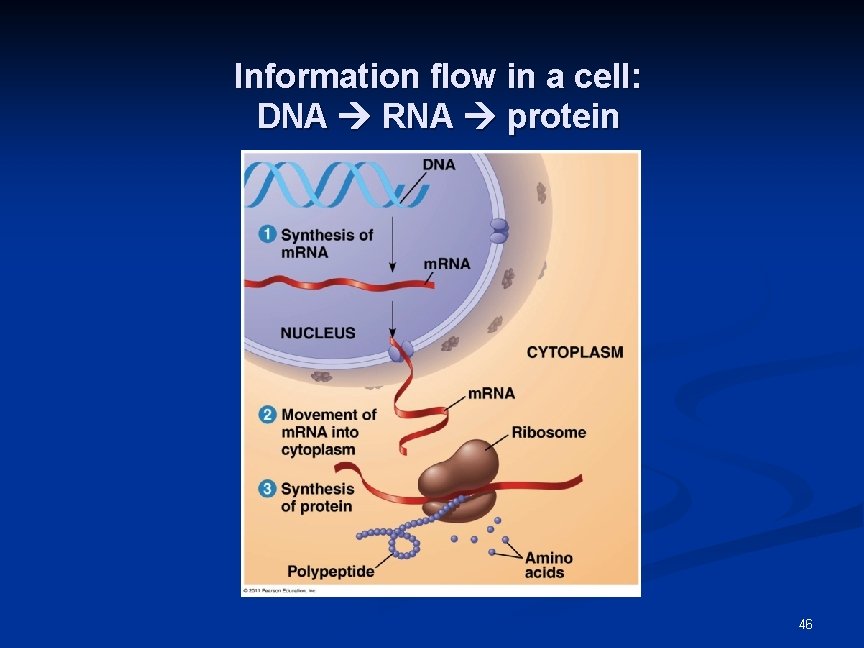
Information flow in a cell: DNA RNA protein 46
47