
Chapter 5 The Skeletal System Part II III

- Slides: 26
Chapter 5 The Skeletal System Part II & III pp. 124 -155 Axial & Appendicular Skeletons
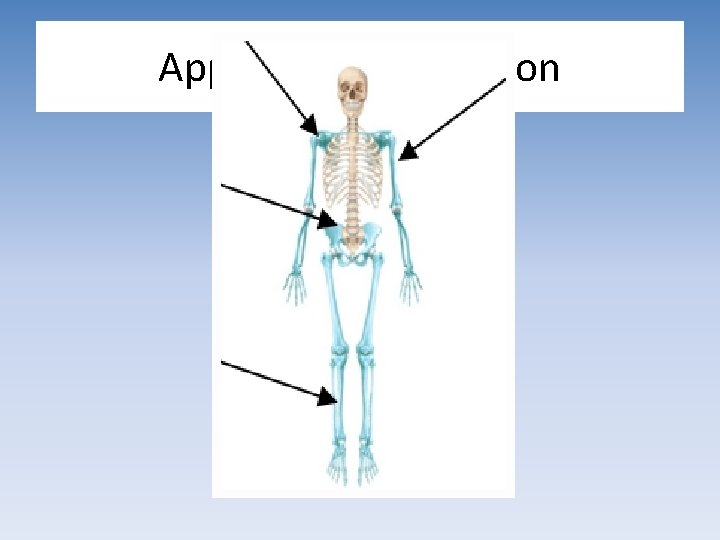
Human Skeleton • Our skeleton is subdivided into two sections – Axial – Appendicular
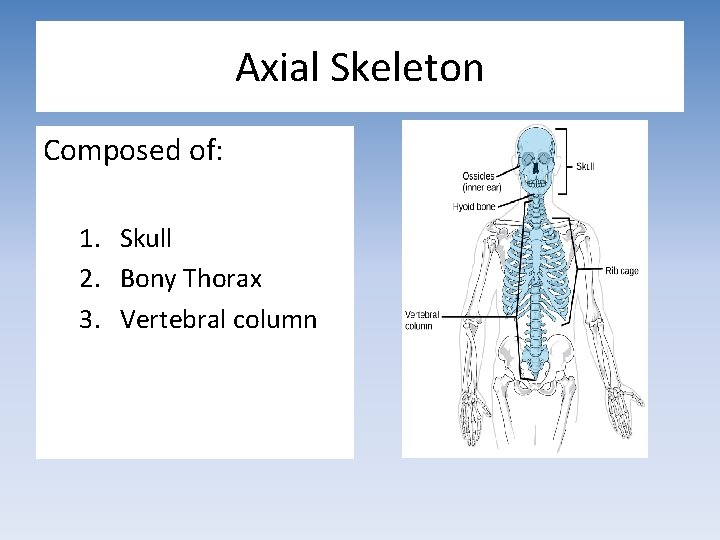
Axial Skeleton Composed of: 1. Skull 2. Bony Thorax 3. Vertebral column
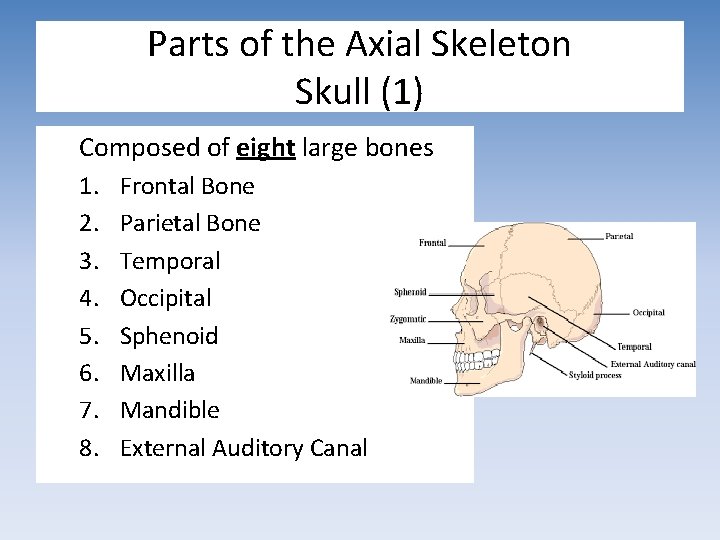
Parts of the Axial Skeleton Skull (1) Composed of eight large bones 1. 2. 3. 4. 5. 6. 7. 8. Frontal Bone Parietal Bone Temporal Occipital Sphenoid Maxilla Mandible External Auditory Canal
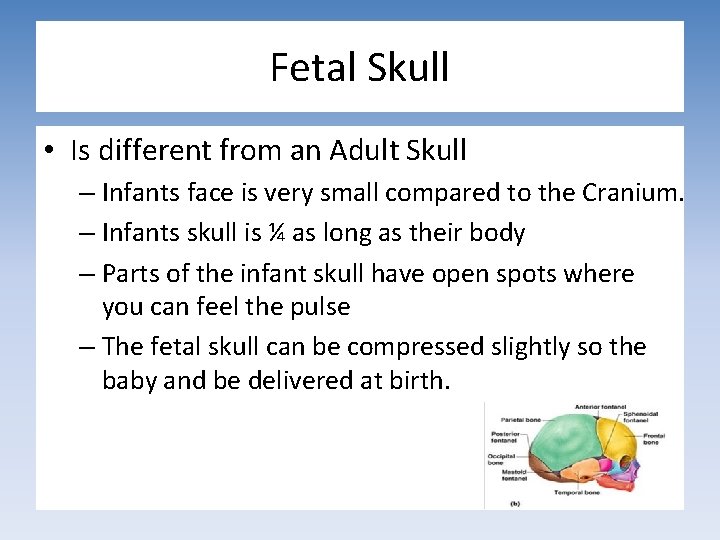
Fetal Skull • Is different from an Adult Skull – Infants face is very small compared to the Cranium. – Infants skull is ¼ as long as their body – Parts of the infant skull have open spots where you can feel the pulse – The fetal skull can be compressed slightly so the baby and be delivered at birth.
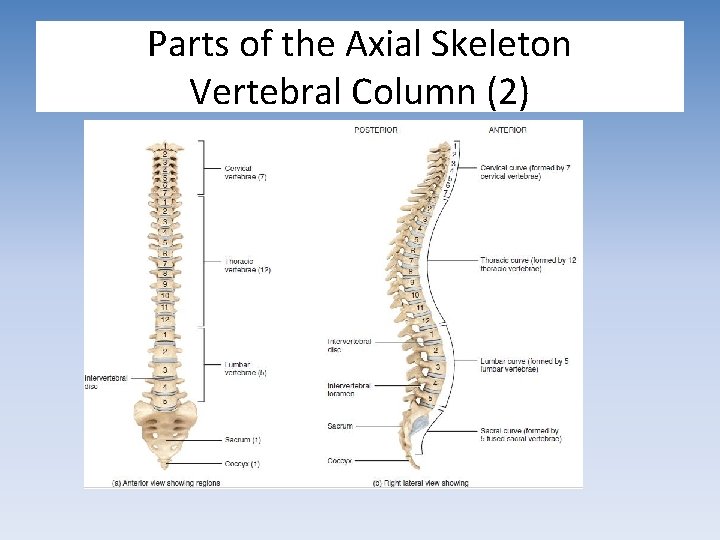
Parts of the Axial Skeleton Vertebral Column (2)
Parts of the Axial Skeleton Vertebral Column (2) cont. • Twenty-six irregular shaped bones make up the Vertebral Column Provides the Axial support for the body • Extends from the skull to the pelvis • Houses your Spinal Cord • This is where you can “break your back” and become paralyzed.
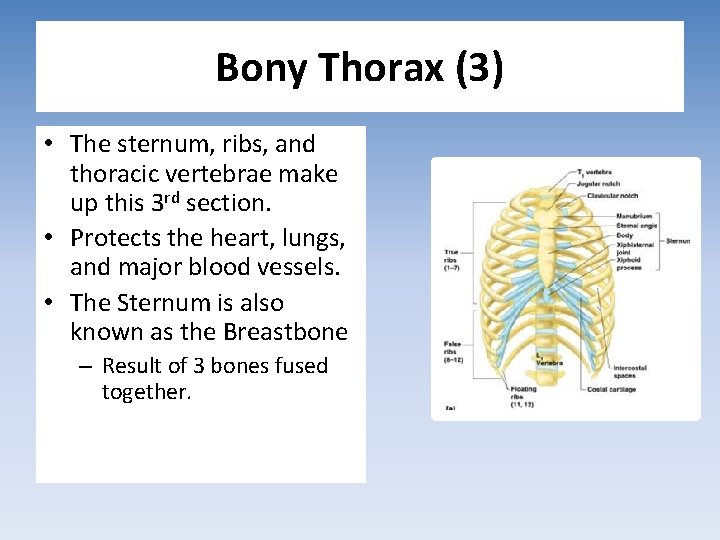
Bony Thorax (3) • The sternum, ribs, and thoracic vertebrae make up this 3 rd section. • Protects the heart, lungs, and major blood vessels. • The Sternum is also known as the Breastbone – Result of 3 bones fused together.
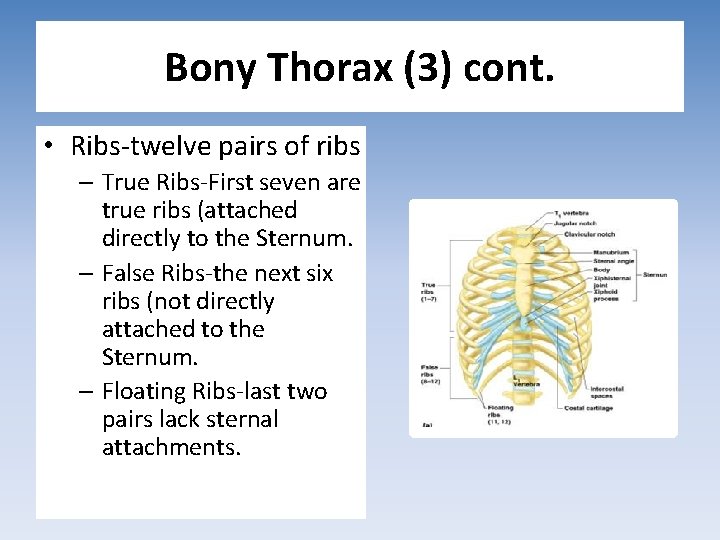
Bony Thorax (3) cont. • Ribs-twelve pairs of ribs – True Ribs-First seven are true ribs (attached directly to the Sternum. – False Ribs-the next six ribs (not directly attached to the Sternum. – Floating Ribs-last two pairs lack sternal attachments.
Appendicular Skeleton
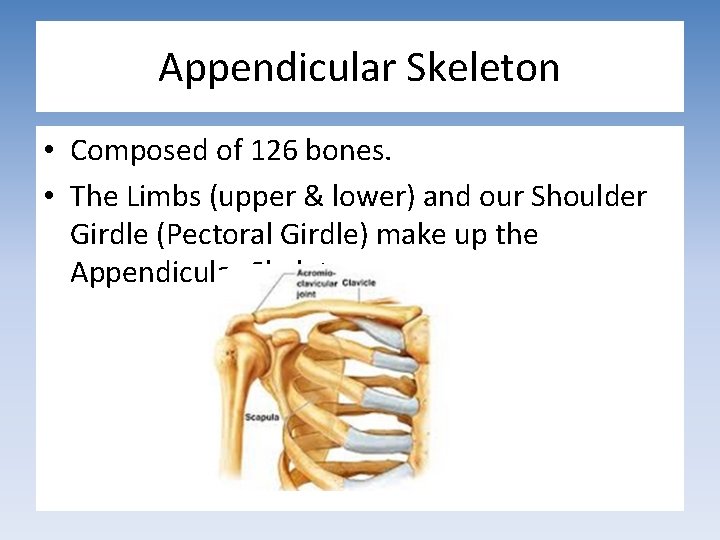
Appendicular Skeleton • Composed of 126 bones. • The Limbs (upper & lower) and our Shoulder Girdle (Pectoral Girdle) make up the Appendicular Skeleton
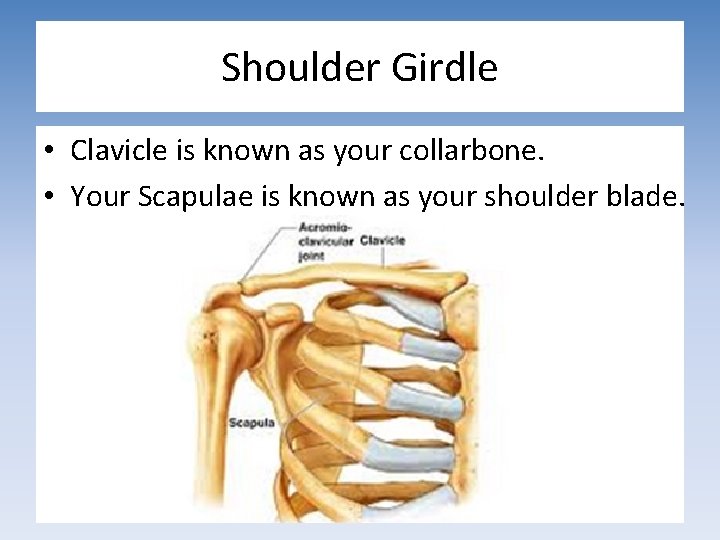
Shoulder Girdle • Clavicle is known as your collarbone. • Your Scapulae is known as your shoulder blade.
Bones of the Upper Limbs • 30 bones make up each of the Upper Limbs which includes the Arm, Forearm, and Hand.
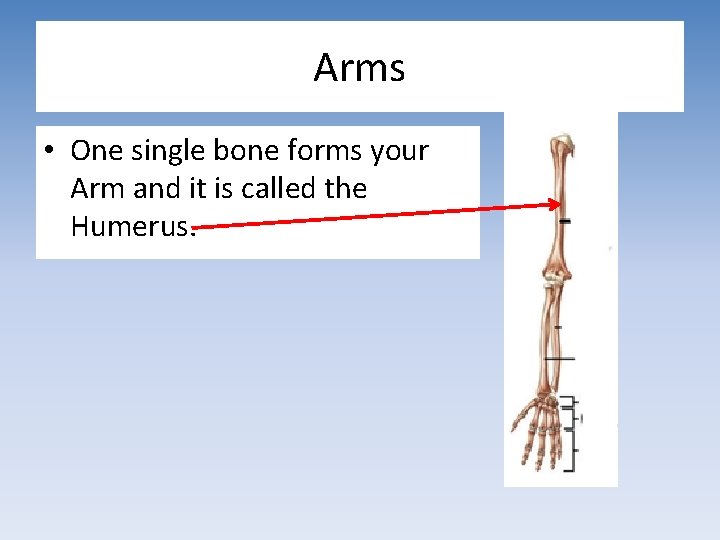
Arms • One single bone forms your Arm and it is called the Humerus.
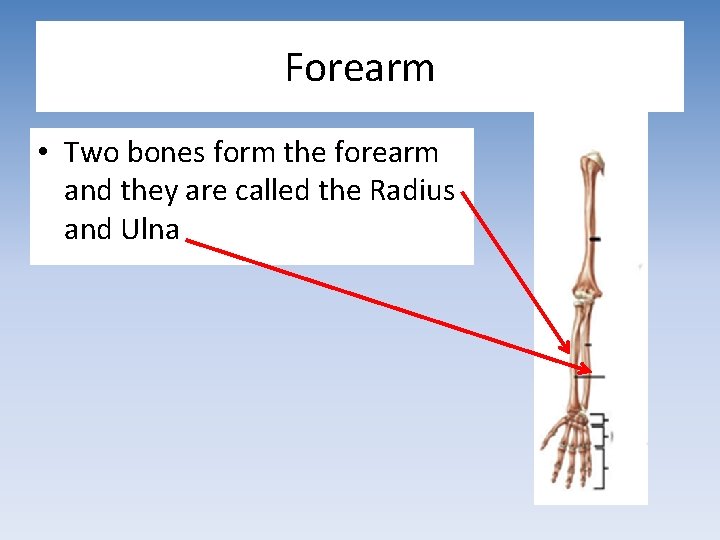
Forearm • Two bones form the forearm and they are called the Radius and Ulna
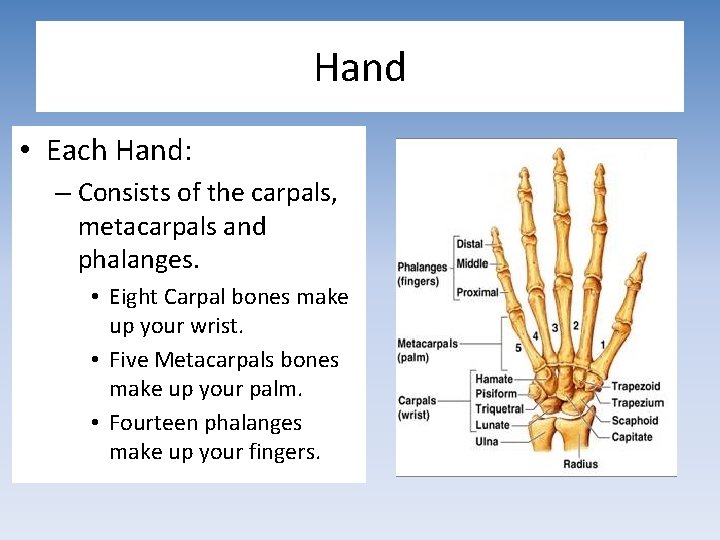
Hand • Each Hand: – Consists of the carpals, metacarpals and phalanges. • Eight Carpal bones make up your wrist. • Five Metacarpals bones make up your palm. • Fourteen phalanges make up your fingers.
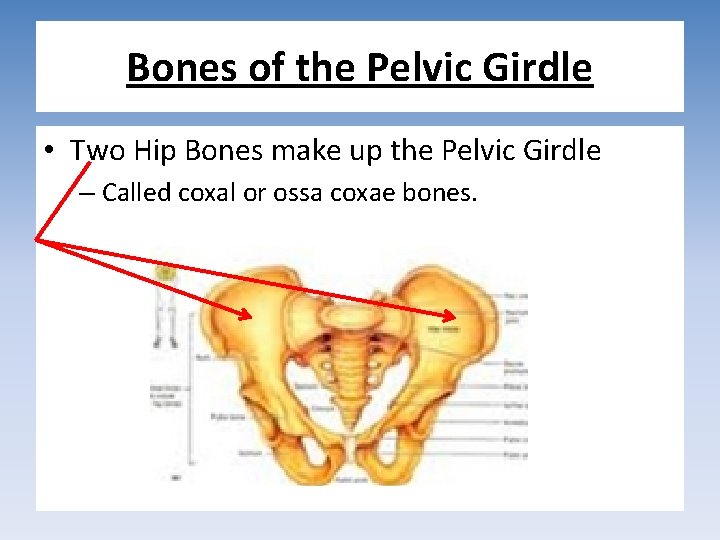
Bones of the Pelvic Girdle • Two Hip Bones make up the Pelvic Girdle – Called coxal or ossa coxae bones.
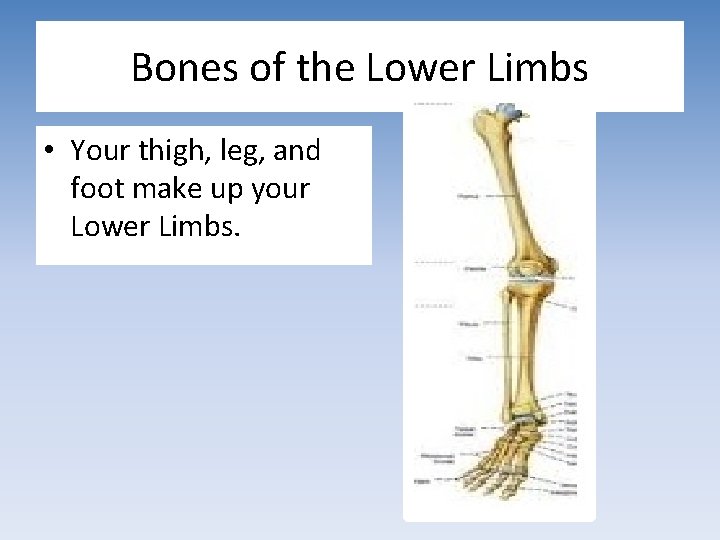
Bones of the Lower Limbs • Your thigh, leg, and foot make up your Lower Limbs.
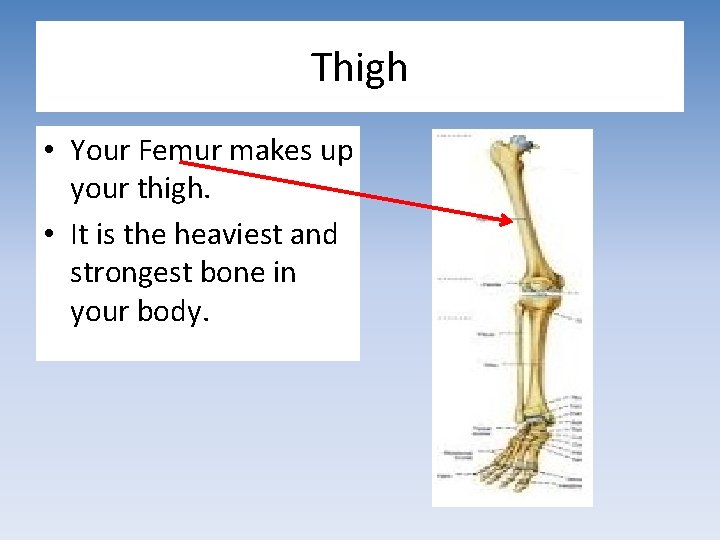
Thigh • Your Femur makes up your thigh. • It is the heaviest and strongest bone in your body.
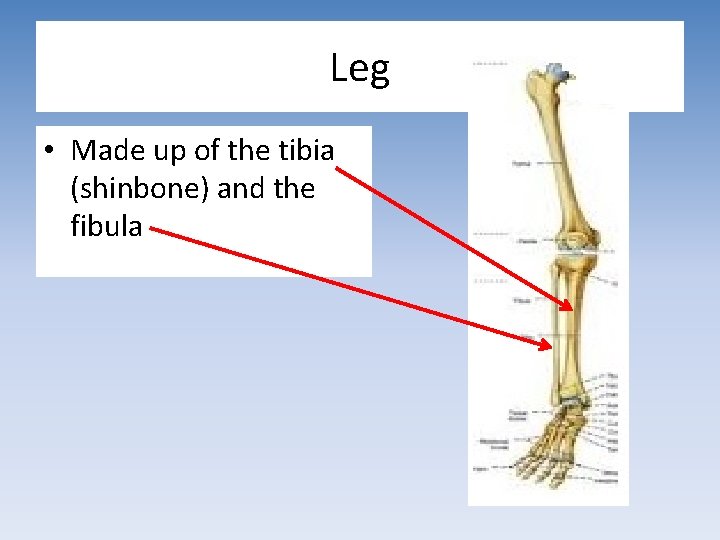
Leg • Made up of the tibia (shinbone) and the fibula
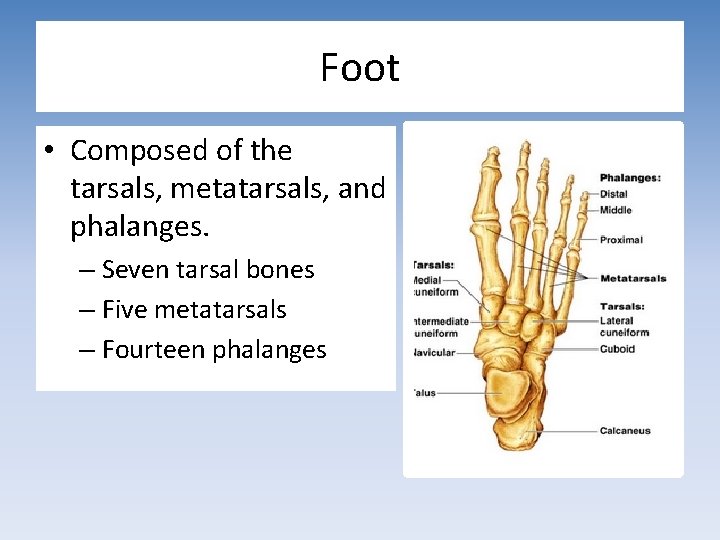
Foot • Composed of the tarsals, metatarsals, and phalanges. – Seven tarsal bones – Five metatarsals – Fourteen phalanges
Joints • Every bone (with the exception of one) forms a joint with at least one other bone. • Joints are also known as articulations – Form two important functions 1. Hold the bones together 2. Give your skeleton Mobility (so you can move).
Disorders of Joints caused by Inflammation • Arthritis is a term that describes over 100 different inflammatory or degenerative diseases that damage joints.
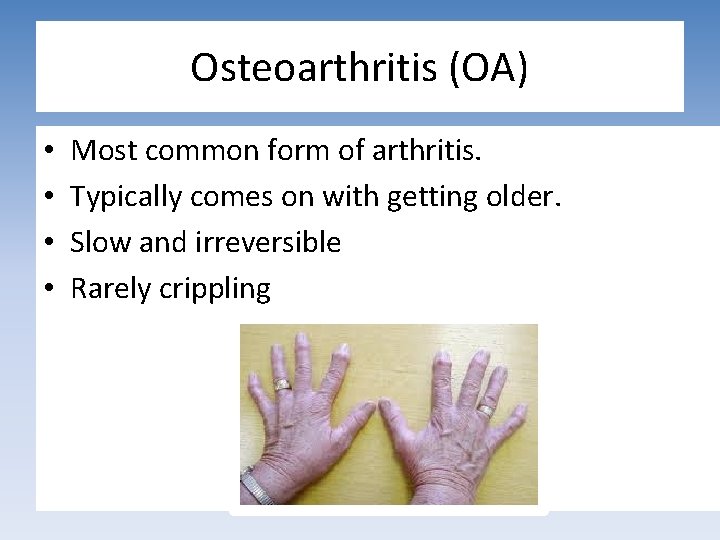
Osteoarthritis (OA) • • Most common form of arthritis. Typically comes on with getting older. Slow and irreversible Rarely crippling
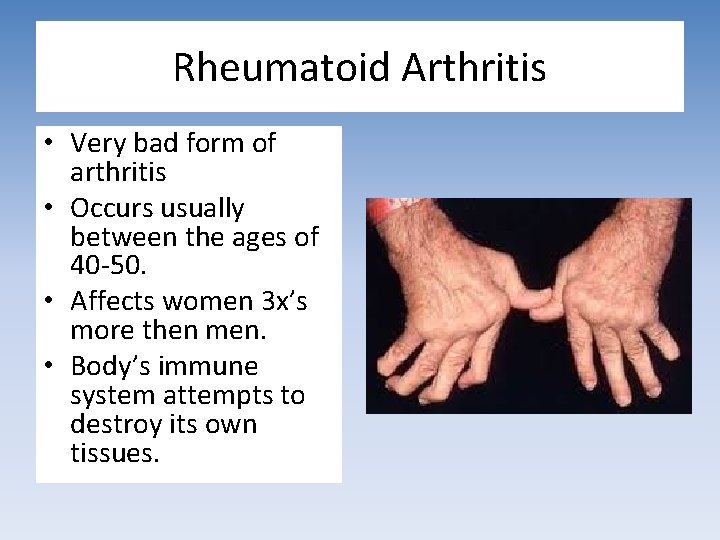
Rheumatoid Arthritis • Very bad form of arthritis • Occurs usually between the ages of 40 -50. • Affects women 3 x’s more then men. • Body’s immune system attempts to destroy its own tissues.
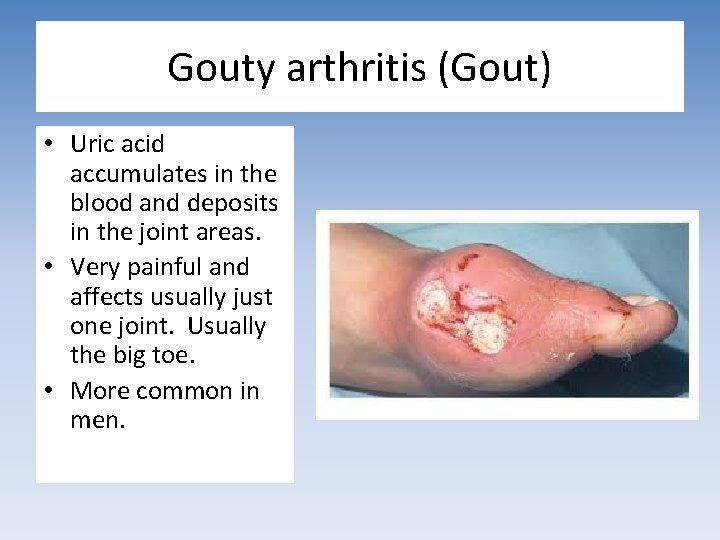
Gouty arthritis (Gout) • Uric acid accumulates in the blood and deposits in the joint areas. • Very painful and affects usually just one joint. Usually the big toe. • More common in men.