
Chapter 5 The Skeletal System Lecture Presentation by
Chapter 5 The Skeletal System Lecture Presentation by Patty Bostwick-Taylor Florence-Darlington Technical College © 2015 Pearson Education, Inc.
The Skeletal System § Two subdivisions of the skeleton 1. Axial skeleton 2. Appendicular skeleton § Parts of the skeletal system § Bones (skeleton) § Joints § Cartilages § Ligaments © 2015 Pearson Education, Inc.
Functions of Bones § Support the body § Protect soft organs § Skull and vertebrae protect brain and spinal cord § Rib cage protects thoracic cavity organs § Attached skeletal muscles allow movement § Store minerals and fats § Calcium and phosphorus § Fat in the internal marrow cavity § Blood cell formation (hematopoiesis) © 2015 Pearson Education, Inc.
Bones of the Human Body § The adult skeleton has 206 bones § Two basic types of bone tissue 1. Compact bone § Dense, smooth, and homogeneous 2. Spongy bone § Small needle-like pieces of bone § Many open spaces © 2015 Pearson Education, Inc.
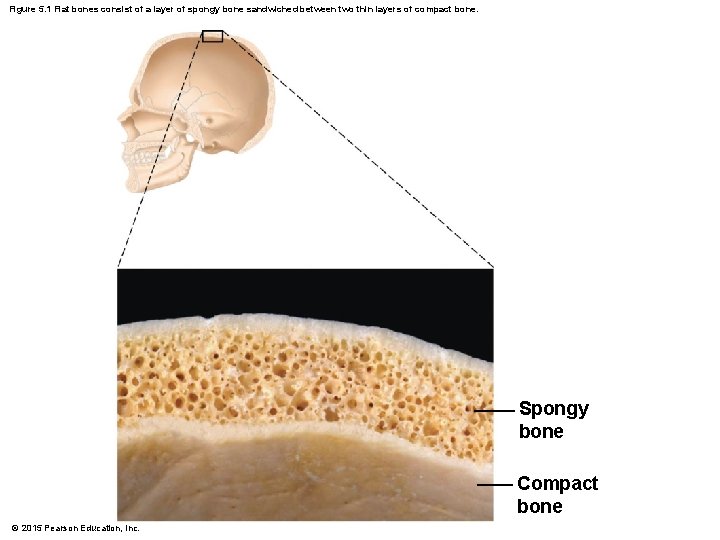
Figure 5. 1 Flat bones consist of a layer of spongy bone sandwiched between two thin layers of compact bone. Spongy bone Compact bone © 2015 Pearson Education, Inc.
Classification of Bones § Bones are classified on the basis of shape, as: § Long § Short § Flat § Irregular © 2015 Pearson Education, Inc.
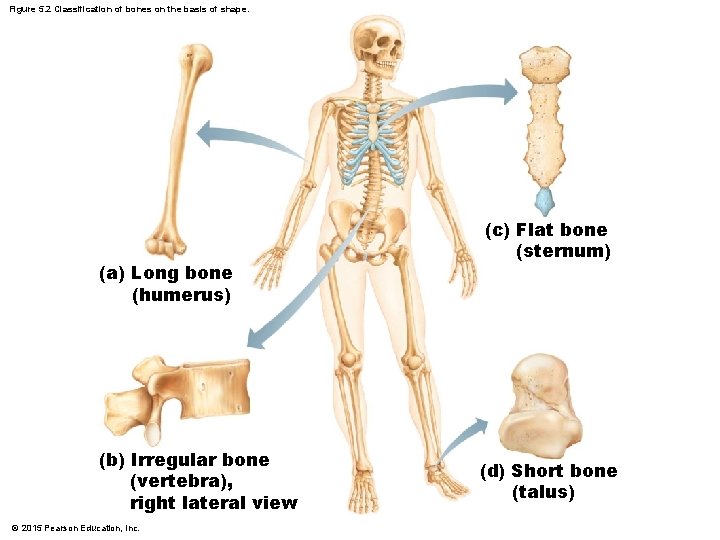
Figure 5. 2 Classification of bones on the basis of shape. (a) Long bone (humerus) (b) Irregular bone (vertebra), right lateral view © 2015 Pearson Education, Inc. (c) Flat bone (sternum) (d) Short bone (talus)
Classification of Bones § Long bones § Typically longer than they are wide § Shaft with heads situated at both ends § Contain mostly compact bone § All of the bones of the limbs (except wrist, ankle, and kneecap bones) are long bones § Examples: § Femur § Humerus © 2015 Pearson Education, Inc.
Classification of Bones § Short bones § Generally cube-shaped § Contain mostly spongy bone § Include bones of the wrist and ankle § Sesamoid bones are a type of short bone that form within tendons (patella) § Examples: § Carpals § Tarsals © 2015 Pearson Education, Inc.
Classification of Bones § Flat bones § Thin, flattened, and usually curved § Two thin layers of compact bone surround a layer of spongy bone § Examples: § Skull § Ribs § Sternum © 2015 Pearson Education, Inc.
Classification of Bones § Irregular bones § Irregular shape § Do not fit into other bone classification categories § Examples: § Vertebrae § Hip bones © 2015 Pearson Education, Inc.
Anatomy of a Long Bone § Diaphysis § Shaft § Makes up most of bone’s length § Composed of compact bone § Periosteum § Outside covering of the diaphysis § Fibrous connective tissue membrane § Perforating (Sharpey’s) fibers secure periosteum to underlying bone © 2015 Pearson Education, Inc.
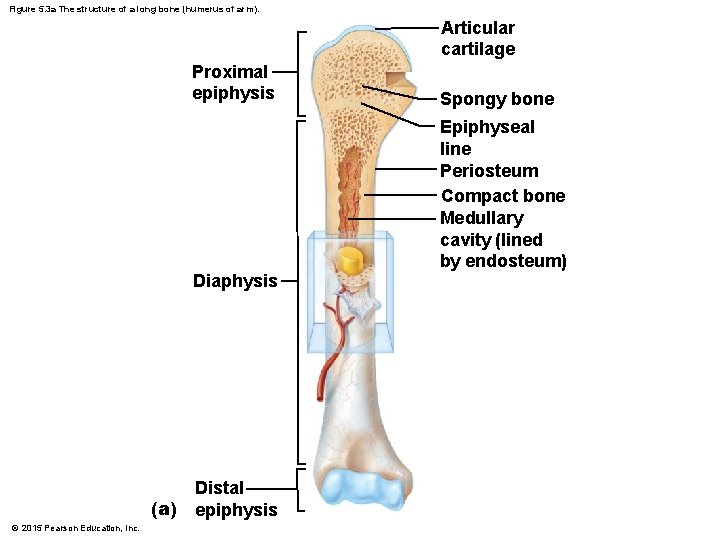
Figure 5. 3 a The structure of a long bone (humerus of arm). Articular cartilage Proximal epiphysis Diaphysis (a) © 2015 Pearson Education, Inc. Distal epiphysis Spongy bone Epiphyseal line Periosteum Compact bone Medullary cavity (lined by endosteum)
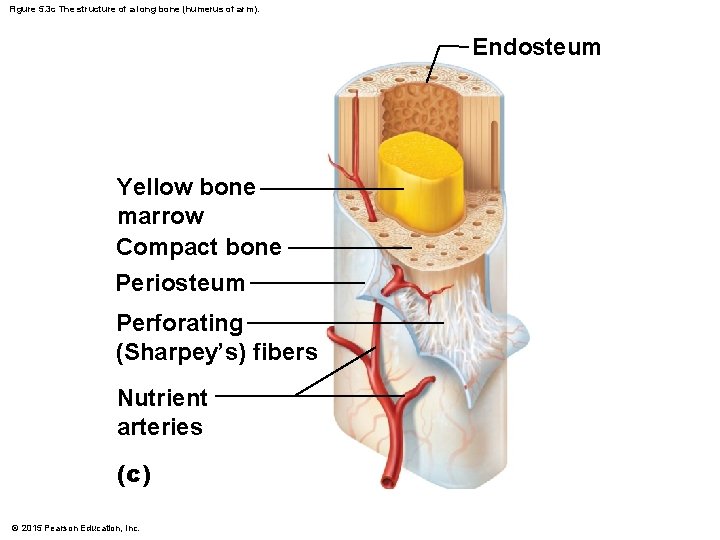
Figure 5. 3 c The structure of a long bone (humerus of arm). Endosteum Yellow bone marrow Compact bone Periosteum Perforating (Sharpey’s) fibers Nutrient arteries (c) © 2015 Pearson Education, Inc.
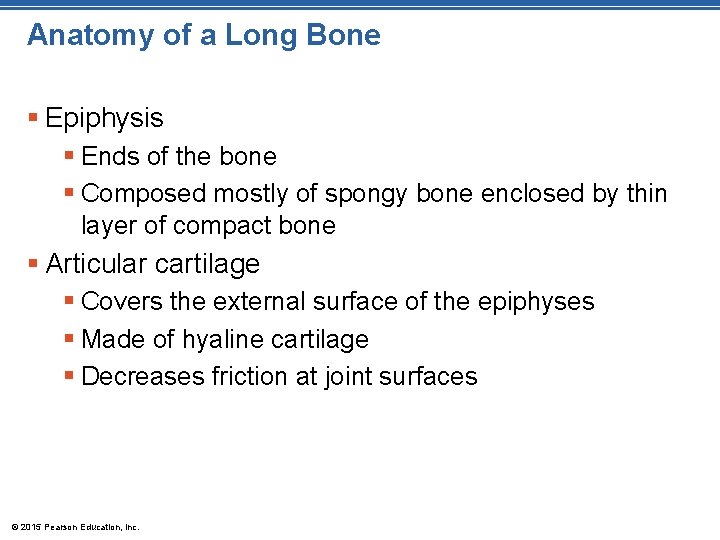
Anatomy of a Long Bone § Epiphysis § Ends of the bone § Composed mostly of spongy bone enclosed by thin layer of compact bone § Articular cartilage § Covers the external surface of the epiphyses § Made of hyaline cartilage § Decreases friction at joint surfaces © 2015 Pearson Education, Inc.
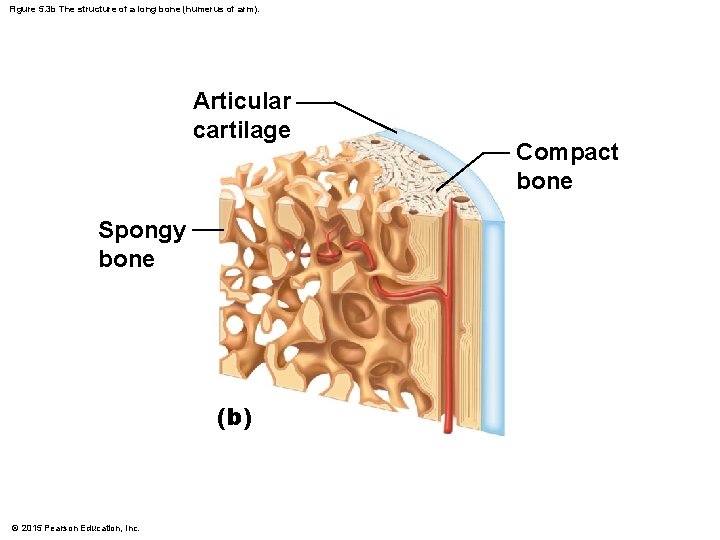
Figure 5. 3 b The structure of a long bone (humerus of arm). Articular cartilage Spongy bone (b) © 2015 Pearson Education, Inc. Compact bone
Anatomy of a Long Bone § Epiphyseal plate § Flat plate of hyaline cartilage seen in young, growing bone § Causes lengthwise growth of a long bone § Epiphyseal line § Remnant of the epiphyseal plate § Seen in adult bones © 2015 Pearson Education, Inc.
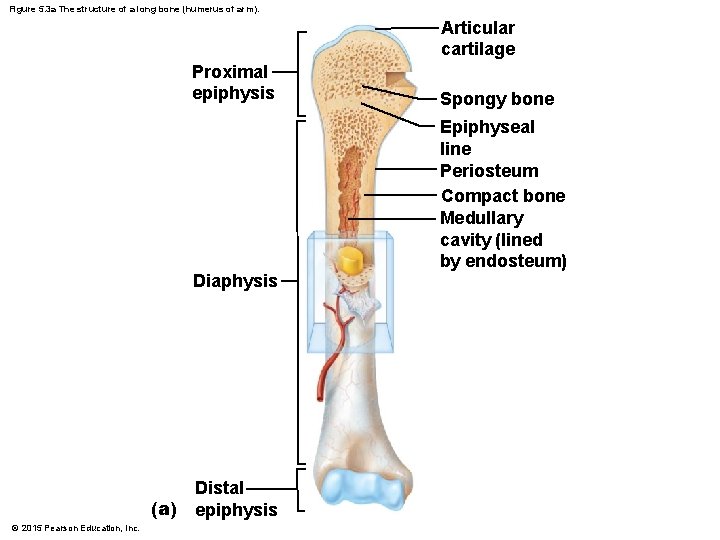
Figure 5. 3 a The structure of a long bone (humerus of arm). Articular cartilage Proximal epiphysis Diaphysis (a) © 2015 Pearson Education, Inc. Distal epiphysis Spongy bone Epiphyseal line Periosteum Compact bone Medullary cavity (lined by endosteum)
Anatomy of a Long Bone § Marrow (medullary) cavity § Cavity inside the shaft § Contains yellow marrow (mostly fat) in adults § Contains red marrow for blood cell formation in infants § In adults, red marrow is situated in cavities of spongy bone and epiphyses of some long bones © 2015 Pearson Education, Inc.
Bone Markings § Surface features of bones § Sites of attachments for muscles, tendons, and ligaments § Passages for nerves and blood vessels § Categories of bone markings § Projections or processes—grow out from the bone surface § Terms often begin with “T” § Depressions or cavities—indentations § Terms often begin with “F” © 2015 Pearson Education, Inc.
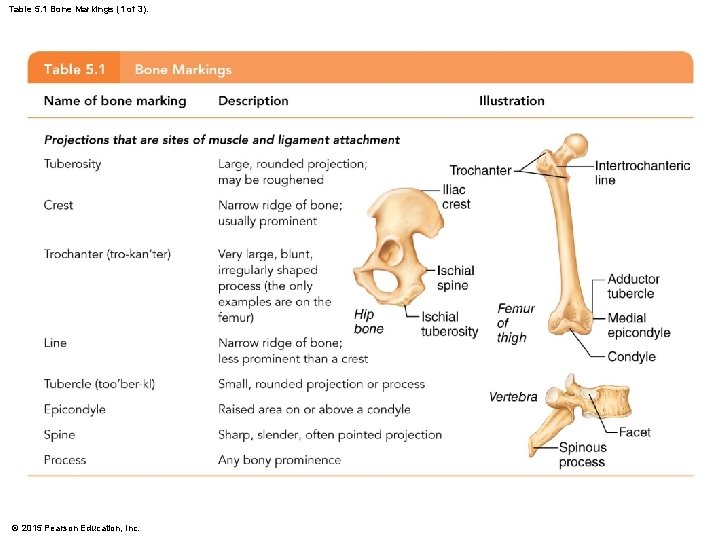
Table 5. 1 Bone Markings (1 of 3). © 2015 Pearson Education, Inc.
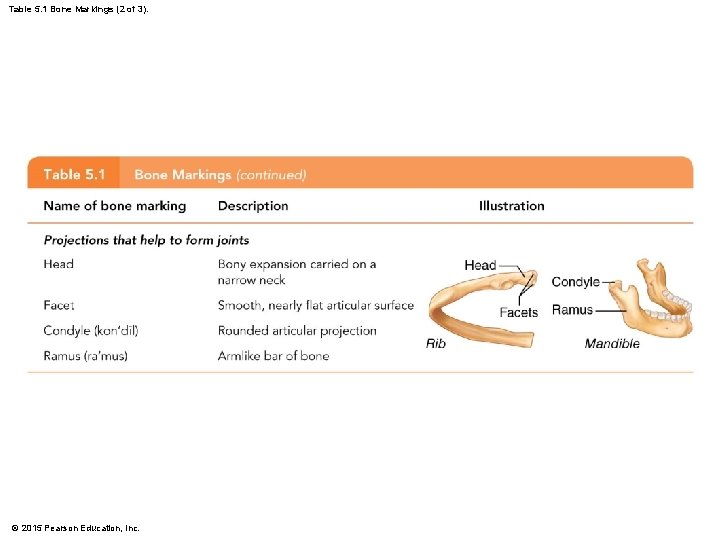
Table 5. 1 Bone Markings (2 of 3). © 2015 Pearson Education, Inc.
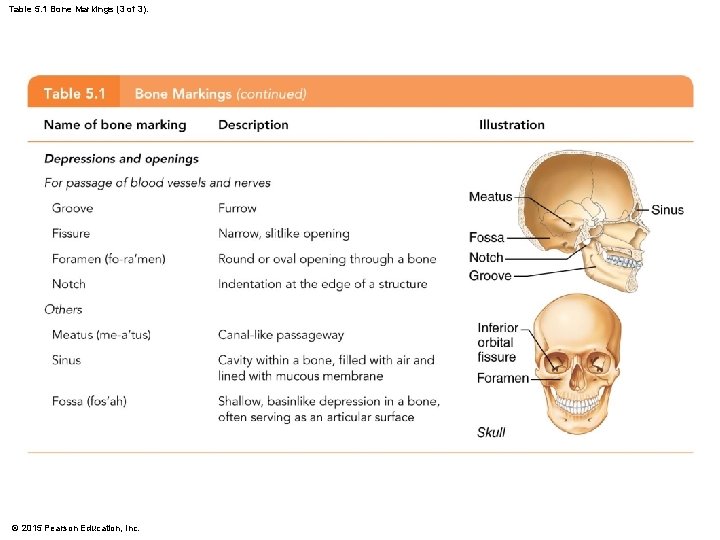
Table 5. 1 Bone Markings (3 of 3). © 2015 Pearson Education, Inc.
Microscopic Anatomy of Compact Bone § Osteocytes are situated within cavities known as lacunae § Lacunae arranged in concentric rings called lamellae § Lamellae are rings situated around the central (Haversian) canal © 2015 Pearson Education, Inc.
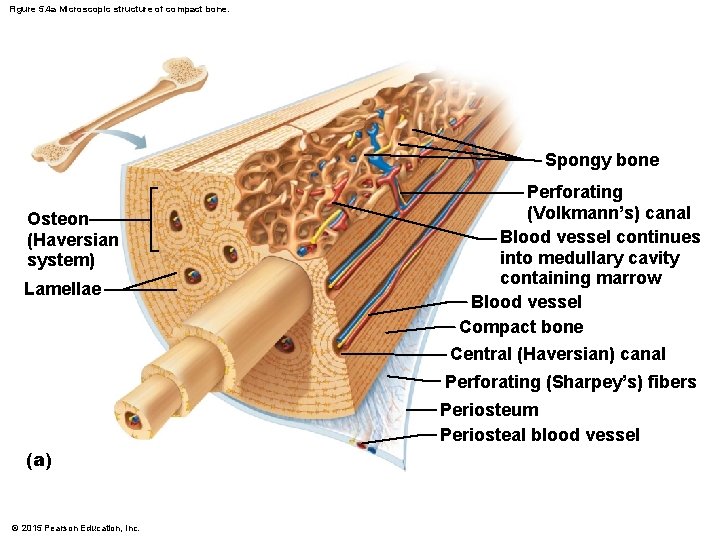
Figure 5. 4 a Microscopic structure of compact bone. Spongy bone Osteon (Haversian system) Lamellae Perforating (Volkmann’s) canal Blood vessel continues into medullary cavity containing marrow Blood vessel Compact bone Central (Haversian) canal Perforating (Sharpey’s) fibers Periosteum Periosteal blood vessel (a) © 2015 Pearson Education, Inc.
Microscopic Anatomy of Bone § Central (Haversian) canal § Opening in the center of an osteon § Runs lengthwise through bone § Carries blood vessels and nerves § Osteon (Haversian system) § A unit of bone containing central canal and matrix rings © 2015 Pearson Education, Inc.
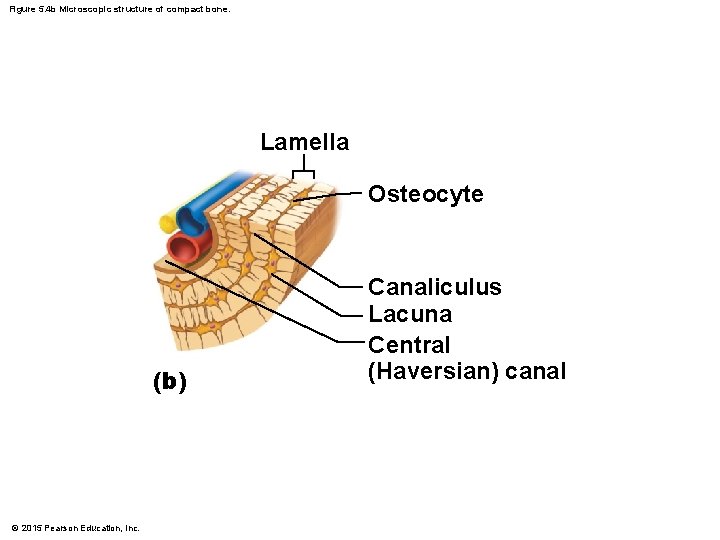
Figure 5. 4 b Microscopic structure of compact bone. Lamella Osteocyte (b) © 2015 Pearson Education, Inc. Canaliculus Lacuna Central (Haversian) canal
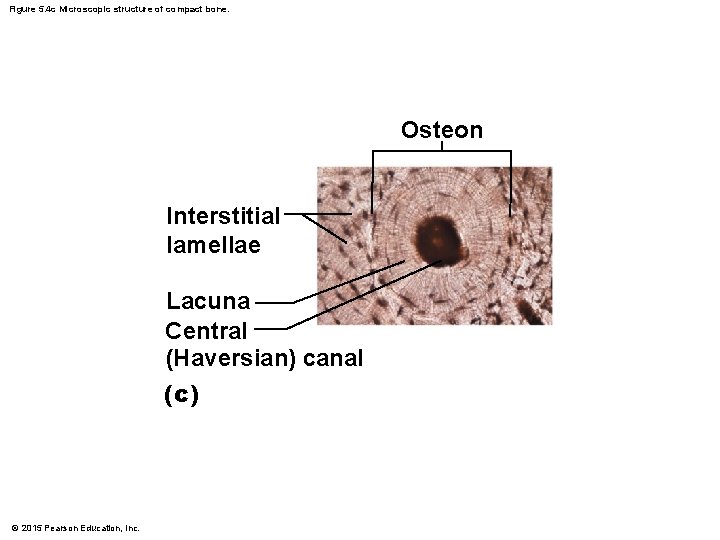
Figure 5. 4 c Microscopic structure of compact bone. Osteon Interstitial lamellae Lacuna Central (Haversian) canal (c) © 2015 Pearson Education, Inc.
Microscopic Anatomy of Bone § Canaliculi § Tiny canals § Radiate from the central canal to lacunae § Form a transport system connecting all bone cells to a nutrient supply § Perforating (Volkmann’s) canal § Canal perpendicular to the central canal § Carries blood vessels and nerves © 2015 Pearson Education, Inc.
Bone Components § Organic parts of the matrix make bone flexible § Calcium salts deposited in the matrix make bone hard © 2015 Pearson Education, Inc.
Bone Formation and Growth § Ossification § Process of bone formation § Occurs on hyaline cartilage models or fibrous membranes § Long bone growth involves two major phases © 2015 Pearson Education, Inc.
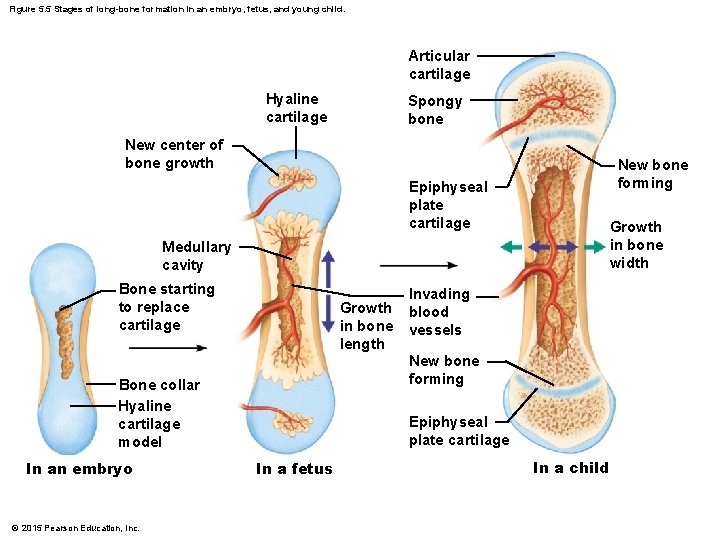
Figure 5. 5 Stages of long-bone formation in an embryo, fetus, and young child. Articular cartilage Hyaline cartilage Spongy bone New center of bone growth New bone forming Epiphyseal plate cartilage Growth in bone width Medullary cavity Bone starting to replace cartilage Growth in bone length New bone forming Bone collar Hyaline cartilage model In an embryo © 2015 Pearson Education, Inc. Invading blood vessels Epiphyseal plate cartilage In a fetus In a child
Bone Formation and Growth Two major phases of ossification in long bones 1. Osteoblasts § Bone-forming cells § Cover hyaline cartilage model 2. Enclosed cartilage is digested away, opening up a medullary cavity © 2015 Pearson Education, Inc.
Bone Formation and Growth § By birth, most cartilage is converted to bone except for two regions in a long bone: 1. Articular cartilages 2. Epiphyseal plates § New cartilage is formed continuously on external face of these two cartilages § Old cartilage is broken down and replaced by bony matrix © 2015 Pearson Education, Inc.
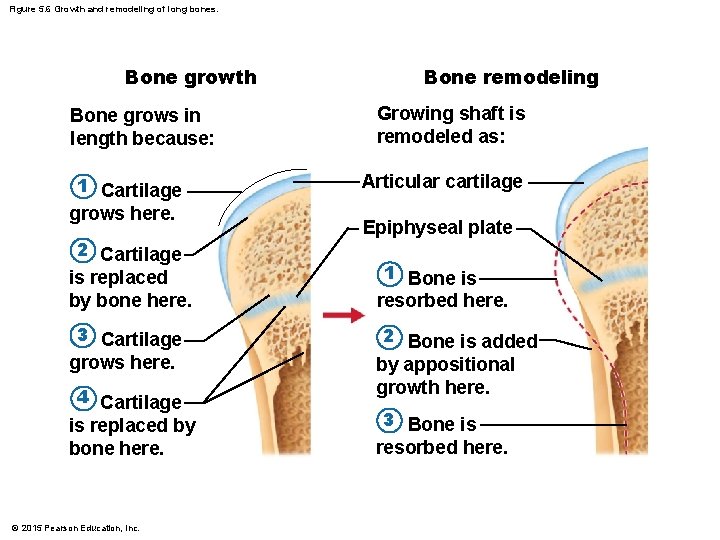
Figure 5. 6 Growth and remodeling of long bones. Bone growth Bone grows in length because: 1 Cartilage grows here. 2 Cartilage is replaced by bone here. 3 Cartilage grows here. 4 Cartilage is replaced by bone here. © 2015 Pearson Education, Inc. Bone remodeling Growing shaft is remodeled as: Articular cartilage Epiphyseal plate 1 Bone is resorbed here. 2 Bone is added by appositional growth here. 3 Bone is resorbed here.
Bone Formation and Growth § Bones grow in length and width § Appositional growth § Growth in diameter § Controlled by hormones such as growth hormone § Epiphyseal plates are converted to bone during adolescence § Growth in length ends © 2015 Pearson Education, Inc.
Bone Remodeling § Bones are lengthened until growth stops § Bones are remodeled throughout life in response to two factors: 1. Blood calcium levels 2. Pull of gravity and muscles on the skeleton © 2015 Pearson Education, Inc.
Bone Remodeling § Parathyroid hormone (PTH) § Released when blood calcium levels are low § Activates osteoclasts (bone-destroying cells) § Osteoclasts break down bone and release calcium ions into the blood § Hypercalcemia (high blood calcium levels) prompts calcium storage to bones © 2015 Pearson Education, Inc.
Bone Fractures § Fracture: break in a bone § Types of bone fractures § Closed (simple) fracture: break that does not penetrate the skin § Open (compound) fracture: broken bone penetrates through the skin © 2015 Pearson Education, Inc.
Bone Fractures § Bone fractures are treated by reduction and immobilization § Closed reduction: bones are manually coaxed into position by physician’s hands § Open reduction: bones are secured with pins or wires during surgery © 2015 Pearson Education, Inc.
Repair of Bone Fractures § Hematoma (blood-filled swelling) is formed § Fibrocartilage callus forms § Cartilage matrix, bony matrix, collagen fibers splint the broken bone § Bony callus replaces the fibrocartilage callus § Osteoblasts and osteoclasts migrate in § Bone remodeling occurs in response to mechanical stresses © 2015 Pearson Education, Inc.
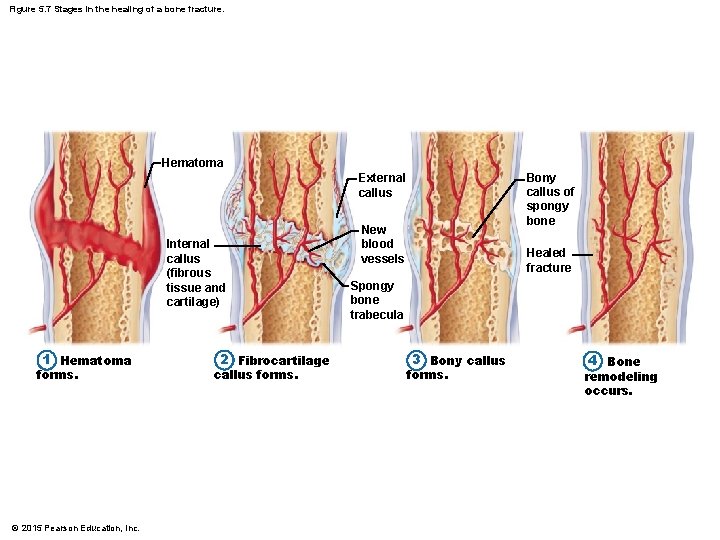
Figure 5. 7 Stages in the healing of a bone fracture. Hematoma Bony callus of spongy bone External callus Internal callus (fibrous tissue and cartilage) 1 Hematoma forms. © 2015 Pearson Education, Inc. 2 Fibrocartilage callus forms. New blood vessels Healed fracture Spongy bone trabecula 3 Bony callus forms. 4 Bone remodeling occurs.
Common Types of Fractures § Comminuted: bone breaks into many fragments § Compression: bone is crushed § Depressed: broken bone portion is pressed inward § Impacted: broken bone ends are forced into each other § Spiral: ragged break occurs when excessive twisting forces are applied to a bone § Greenstick: bone breaks incompletely © 2015 Pearson Education, Inc.
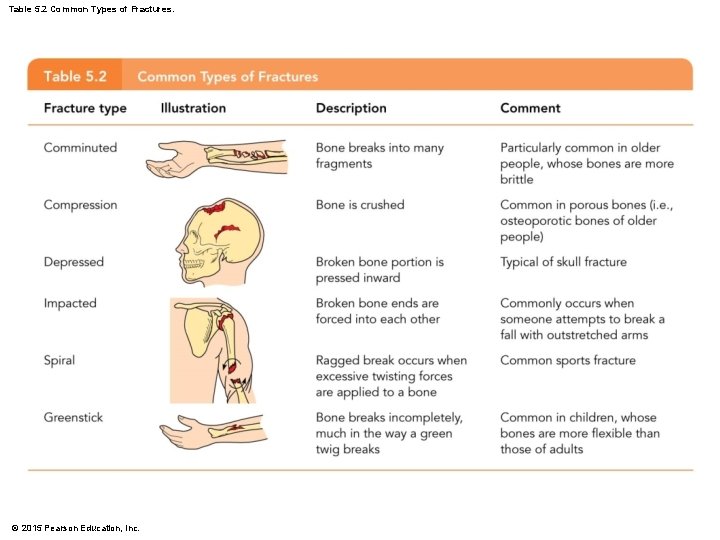
Table 5. 2 Common Types of Fractures. © 2015 Pearson Education, Inc.
The Axial Skeleton § Forms the longitudinal axis of the body § Divided into three parts 1. Skull 2. Vertebral column 3. Bony thorax © 2015 Pearson Education, Inc.
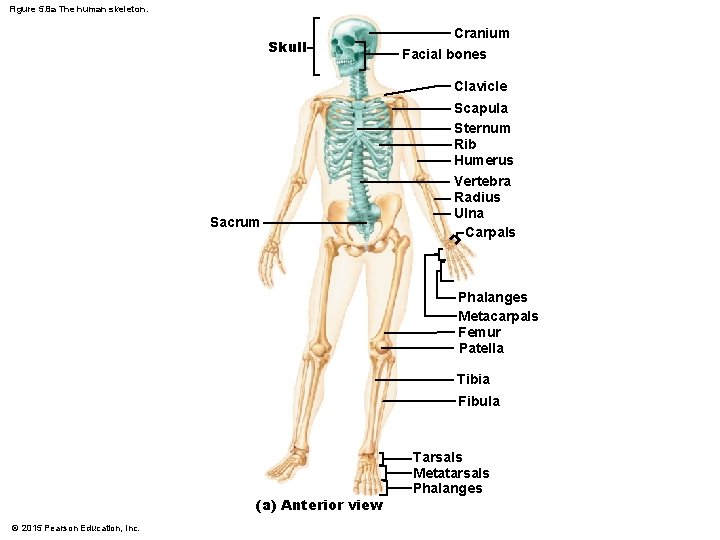
Figure 5. 8 a The human skeleton. Skull Cranium Facial bones Clavicle Sacrum Scapula Sternum Rib Humerus Vertebra Radius Ulna Carpals Phalanges Metacarpals Femur Patella Tibia Fibula (a) Anterior view © 2015 Pearson Education, Inc. Tarsals Metatarsals Phalanges
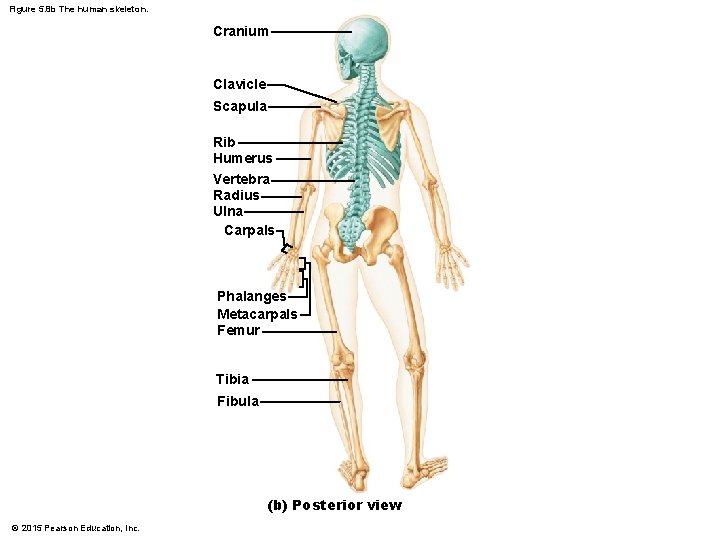
Figure 5. 8 b The human skeleton. Cranium Clavicle Scapula Rib Humerus Vertebra Radius Ulna Carpals Phalanges Metacarpals Femur Tibia Fibula (b) Posterior view © 2015 Pearson Education, Inc.
The Skull § Two sets of bones 1. Cranium bones enclose the brain 2. Facial bones § Hold eyes in anterior position § Allow facial muscles to express feelings § Bones are joined by sutures § Only the mandible is attached by a freely movable joint © 2015 Pearson Education, Inc.
The Skull § 8 cranial bones protect the brain 1. 2. 3. 4. 5– 6. 7– 8. © 2015 Pearson Education, Inc. Frontal bone Occipital bone Ethmoid bone Sphenoid bone Parietal bones (pair) Temporal bones (pair)
The Skull § There are 14 facial bones. All are paired except for the single mandible and vomer. 1– 2. Maxillae 3– 4. Zygomatics 5– 6. Palatines 7– 8. Nasals 9– 10. Lacrimals 11– 12. Inferior nasal conchae 13. Mandible 14. Vomer © 2015 Pearson Education, Inc.
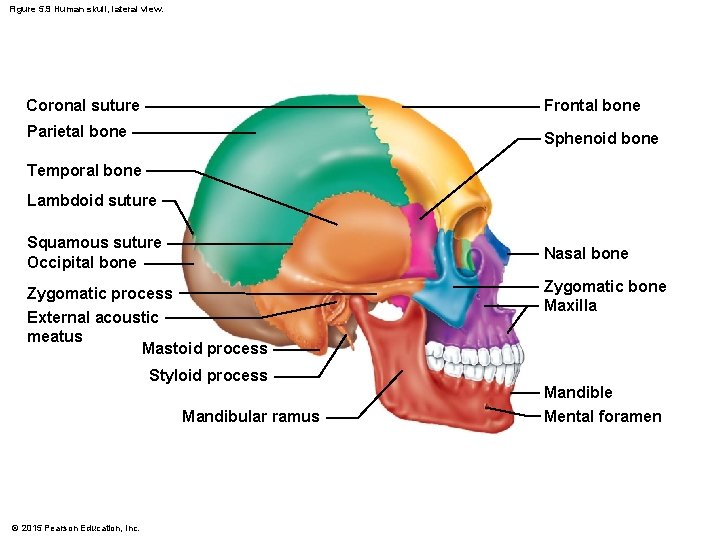
Figure 5. 9 Human skull, lateral view. Coronal suture Frontal bone Parietal bone Sphenoid bone Temporal bone Lambdoid suture Squamous suture Occipital bone Nasal bone Zygomatic process Zygomatic bone Maxilla External acoustic meatus Mastoid process Styloid process Mandibular ramus © 2015 Pearson Education, Inc. Mandible Mental foramen
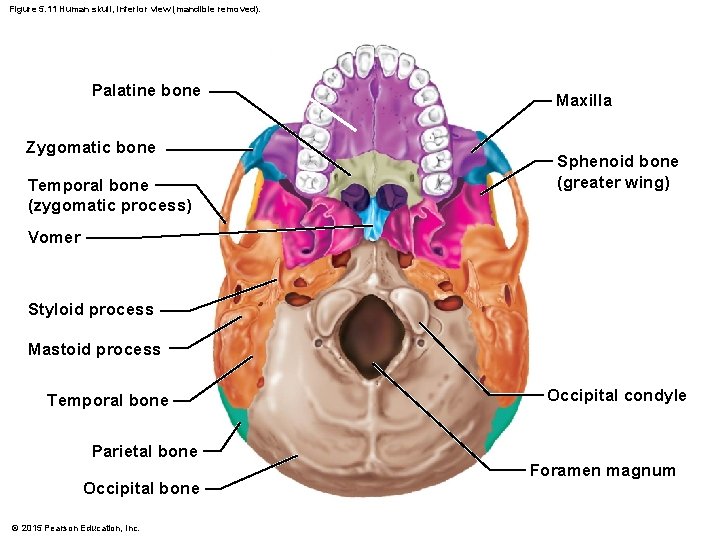
Figure 5. 11 Human skull, inferior view (mandible removed). Palatine bone Zygomatic bone Temporal bone (zygomatic process) Maxilla Sphenoid bone (greater wing) Vomer Styloid process Mastoid process Temporal bone Occipital condyle Parietal bone Occipital bone © 2015 Pearson Education, Inc. Foramen magnum
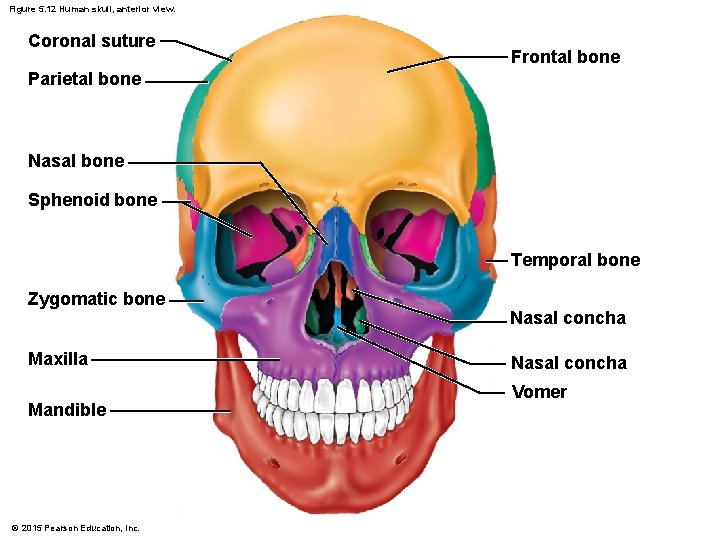
Figure 5. 12 Human skull, anterior view. Coronal suture Frontal bone Parietal bone Nasal bone Sphenoid bone Temporal bone Zygomatic bone Maxilla Mandible © 2015 Pearson Education, Inc. Nasal concha Vomer
The Hyoid Bone § Closely related to mandible and temporal bones § The only bone that does not articulate with another bone § Serves as a movable base for the tongue § Aids in swallowing and speech © 2015 Pearson Education, Inc.
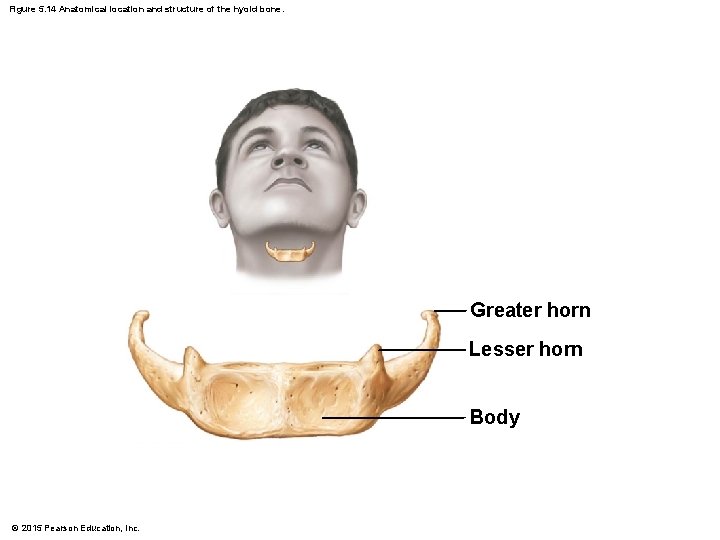
Figure 5. 14 Anatomical location and structure of the hyoid bone. Greater horn Lesser horn Body © 2015 Pearson Education, Inc.
The Fetal Skull § The fetal skull is large compared to the infant’s total body length § Fetal skull is 1/4 body length compared to adult skull, which is 1/8 body length § Fontanels are fibrous membranes connecting the cranial bones § Allow skull compression during birth § Allow the brain to grow during later pregnancy and infancy § Convert to bone within 24 months after birth © 2015 Pearson Education, Inc.
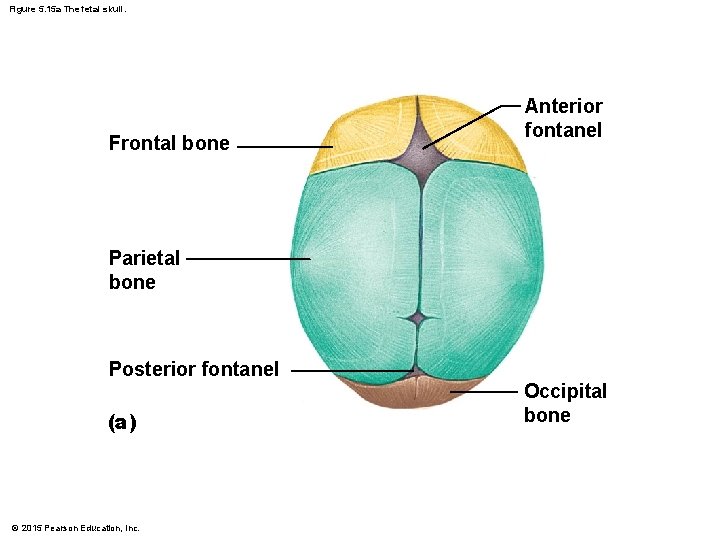
Figure 5. 15 a The fetal skull. Frontal bone Anterior fontanel Parietal bone Posterior fontanel (a) © 2015 Pearson Education, Inc. Occipital bone
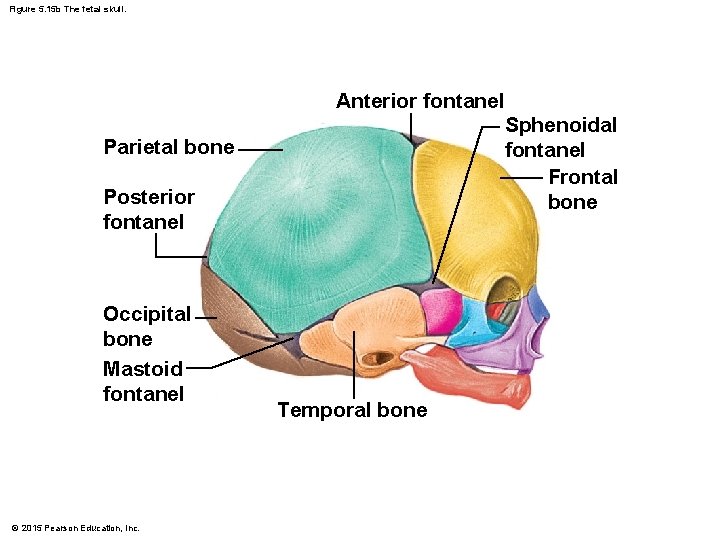
Figure 5. 15 b The fetal skull. Parietal bone Posterior fontanel Occipital bone Mastoid fontanel © 2015 Pearson Education, Inc. Anterior fontanel Sphenoidal fontanel Frontal bone Temporal bone
Vertebral Column (Spine) § Vertebral column provides axial support § Extends from skull to the pelvis § 26 single vertebral bones are separated by intervertebral discs § 7 cervical vertebrae are in the neck § 12 thoracic vertebrae are in the chest region § 5 lumbar vertebrae are associated with the lower back © 2015 Pearson Education, Inc.
Vertebral Column (Spine) § 9 vertebrae fuse to form two composite bones § Sacrum formed by the fusion of 5 vertebrae § Coccyx (tailbone) formed by the fusion of 3 to 5 vertebrae © 2015 Pearson Education, Inc.
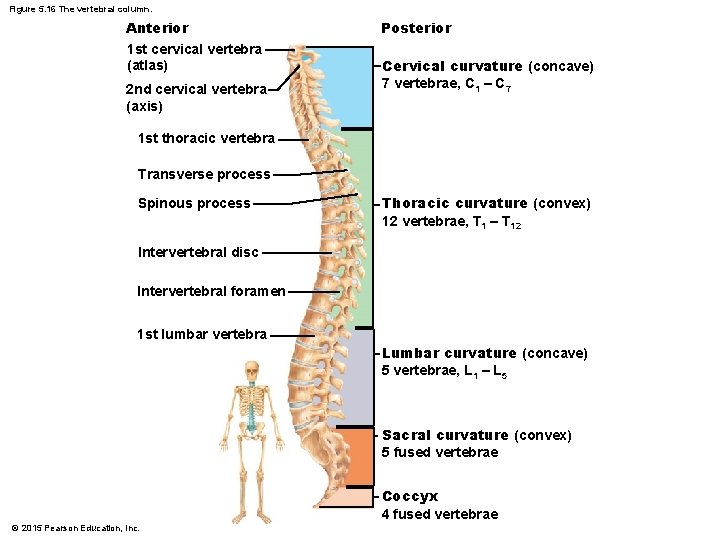
Figure 5. 16 The vertebral column. Anterior 1 st cervical vertebra (atlas) 2 nd cervical vertebra (axis) Posterior Cervical curvature (concave) 7 vertebrae, C 1 – C 7 1 st thoracic vertebra Transverse process Spinous process Thoracic curvature (convex) 12 vertebrae, T 1 – T 12 Intervertebral disc Intervertebral foramen 1 st lumbar vertebra Lumbar curvature (concave) 5 vertebrae, L 1 – L 5 Sacral curvature (convex) 5 fused vertebrae Coccyx 4 fused vertebrae © 2015 Pearson Education, Inc.
Vertebral Column (Spine) § Primary curvatures § Spinal curvatures of the thoracic and sacral regions § Present from birth § Form a C-shaped curvature as in newborns § Secondary curvatures § Spinal curvatures of the cervical and lumbar regions § Develop after birth § Form an S-shaped curvature as in adults © 2015 Pearson Education, Inc.
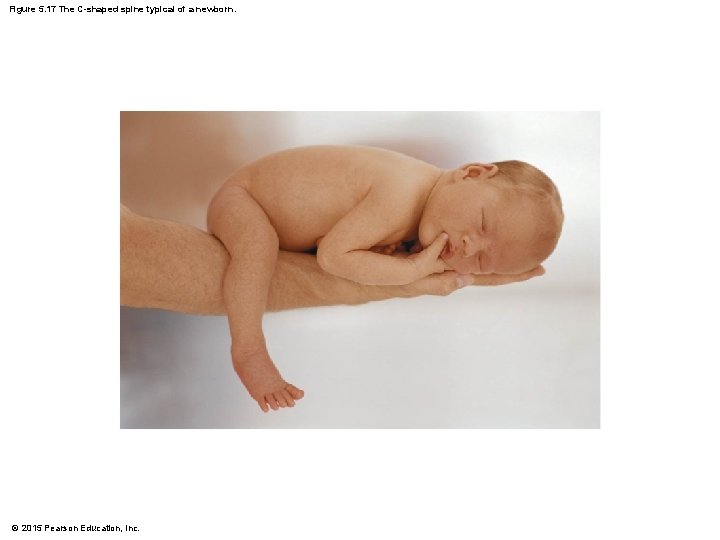
Figure 5. 17 The C-shaped spine typical of a newborn. © 2015 Pearson Education, Inc.
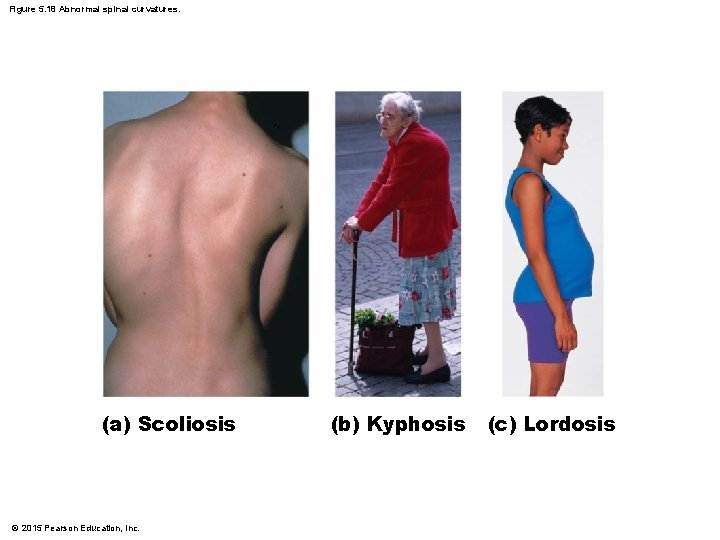
Figure 5. 18 Abnormal spinal curvatures. (a) Scoliosis © 2015 Pearson Education, Inc. (b) Kyphosis (c) Lordosis
Vertebral Column (Spine) § Parts of a typical vertebra § Body (centrum) § Vertebral arch § Pedicle § Lamina § Vertebral foramen § Transverse processes § Spinous process § Superior and inferior articular processes © 2015 Pearson Education, Inc.
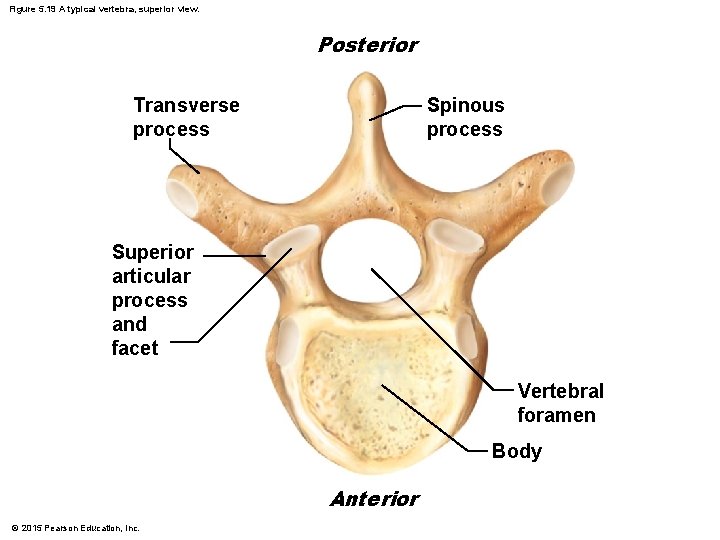
Figure 5. 19 A typical vertebra, superior view. Posterior Transverse process Spinous process Superior articular process and facet Vertebral foramen Body Anterior © 2015 Pearson Education, Inc.
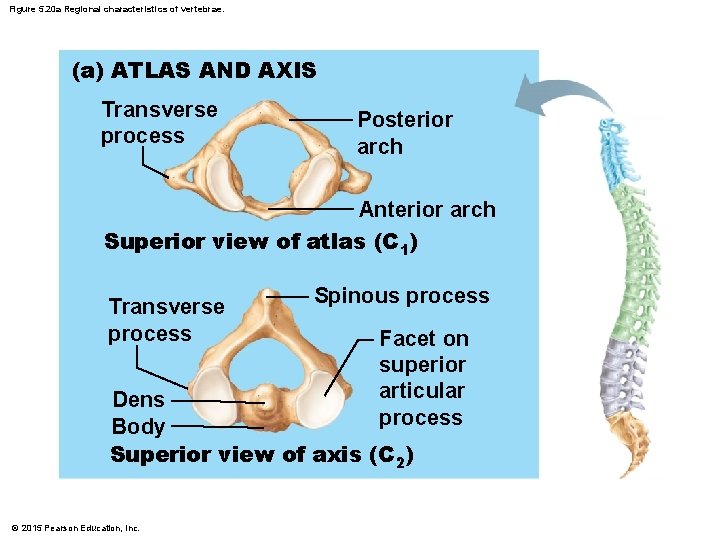
Figure 5. 20 a Regional characteristics of vertebrae. (a) ATLAS AND AXIS Transverse process Posterior arch Anterior arch Superior view of atlas (C 1) Transverse process Spinous process Facet on superior articular process Dens Body Superior view of axis (C 2) © 2015 Pearson Education, Inc.
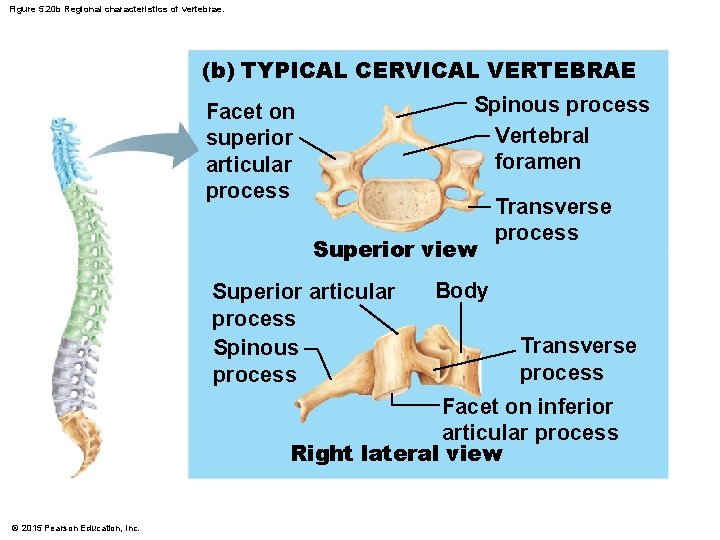
Figure 5. 20 b Regional characteristics of vertebrae. (b) TYPICAL CERVICAL VERTEBRAE Spinous process Vertebral foramen Facet on superior articular process Superior view Superior articular process Spinous process Transverse process Body Transverse process Facet on inferior articular process Right lateral view © 2015 Pearson Education, Inc.
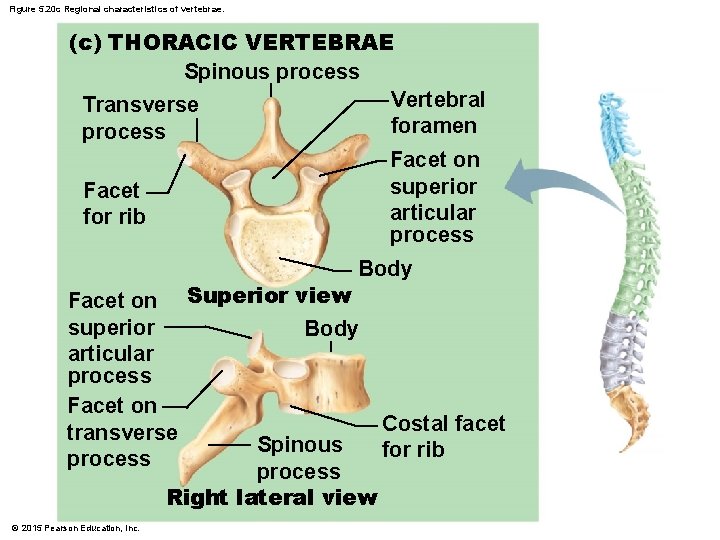
Figure 5. 20 c Regional characteristics of vertebrae. (c) THORACIC VERTEBRAE Spinous process Vertebral Transverse foramen process Facet on superior Facet articular for rib process Body Facet on Superior view superior Body articular process Facet on Costal facet transverse Spinous for rib process Right lateral view © 2015 Pearson Education, Inc.
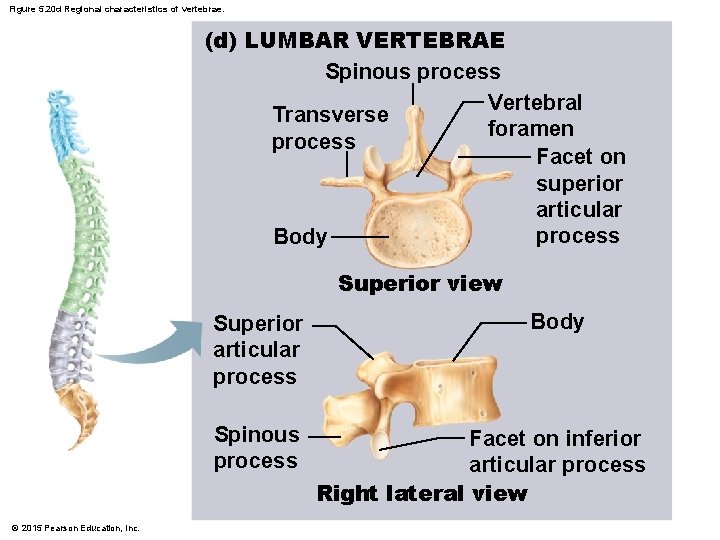
Figure 5. 20 d Regional characteristics of vertebrae. (d) LUMBAR VERTEBRAE Spinous process Vertebral Transverse foramen process Facet on superior articular process Body Superior view Superior articular process Spinous process © 2015 Pearson Education, Inc. Body Facet on inferior articular process Right lateral view
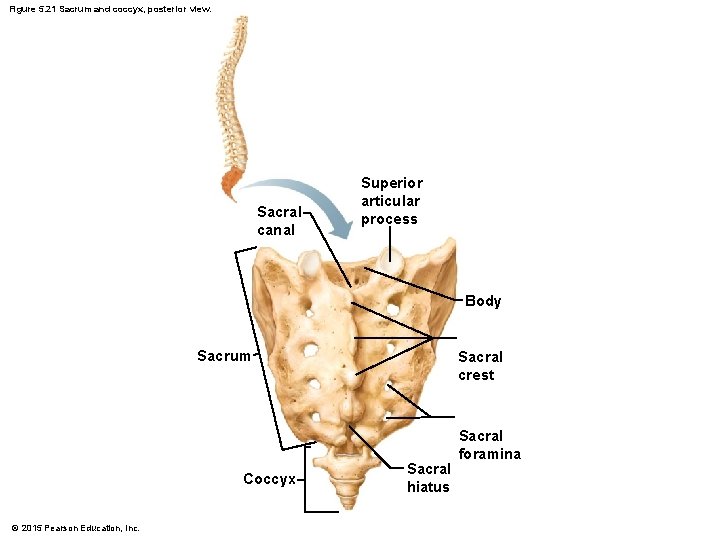
Figure 5. 21 Sacrum and coccyx, posterior view. Sacral canal Superior articular process Body Sacrum Coccyx © 2015 Pearson Education, Inc. Sacral crest Sacral hiatus Sacral foramina
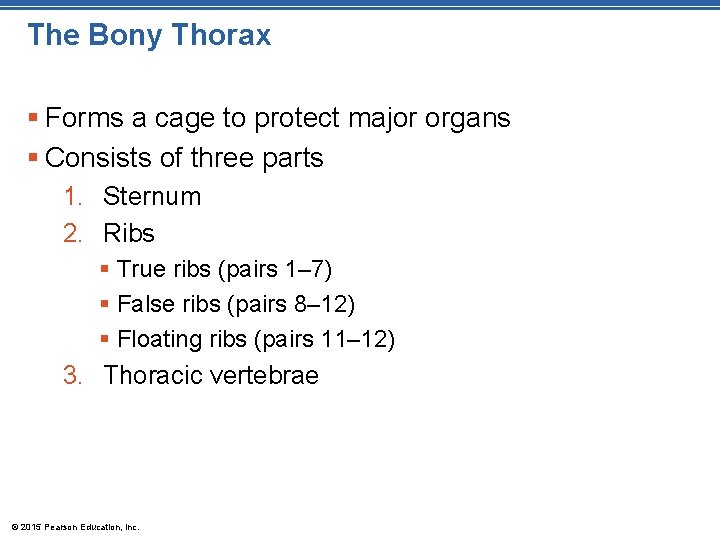
The Bony Thorax § Forms a cage to protect major organs § Consists of three parts 1. Sternum 2. Ribs § True ribs (pairs 1– 7) § False ribs (pairs 8– 12) § Floating ribs (pairs 11– 12) 3. Thoracic vertebrae © 2015 Pearson Education, Inc.
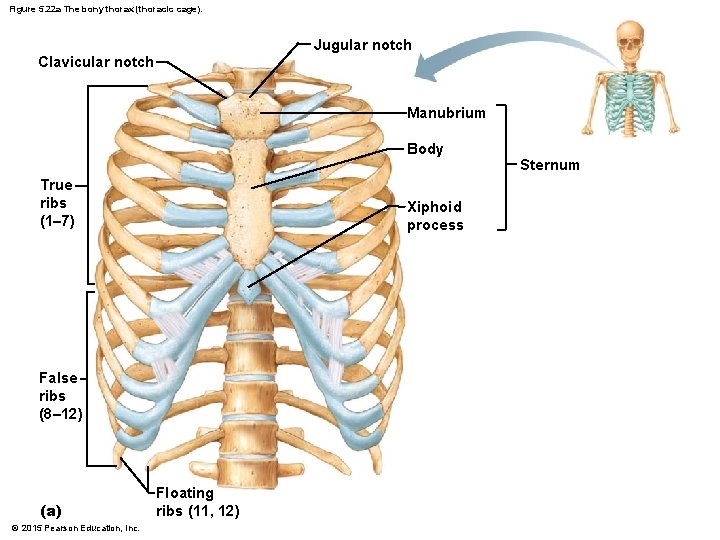
Figure 5. 22 a The bony thorax (thoracic cage). Jugular notch Clavicular notch Manubrium Body True ribs (1– 7) Xiphoid process False ribs (8– 12) (a) © 2015 Pearson Education, Inc. Floating ribs (11, 12) Sternum
The Appendicular Skeleton § Composed of 126 bones § Limbs (appendages) § Pectoral girdle § Pelvic girdle © 2015 Pearson Education, Inc.
The Pectoral (Shoulder) Girdle § Composed of two bones that attach the upper limb to the axial skeletal 1. Scapula 2. Clavicle § Pectoral girdle (2) § Light, poorly reinforced girdle § Allows the upper limb a great deal of freedom © 2015 Pearson Education, Inc.
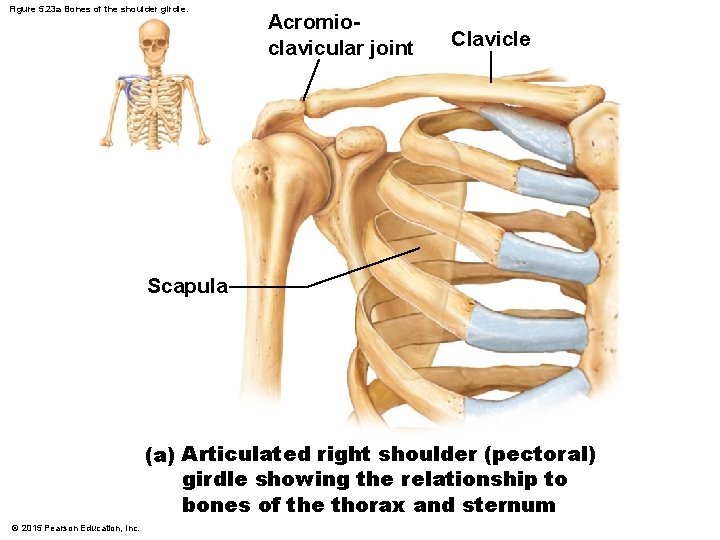
Figure 5. 23 a Bones of the shoulder girdle. Acromioclavicular joint Clavicle Scapula (a) Articulated right shoulder (pectoral) girdle showing the relationship to bones of the thorax and sternum © 2015 Pearson Education, Inc.
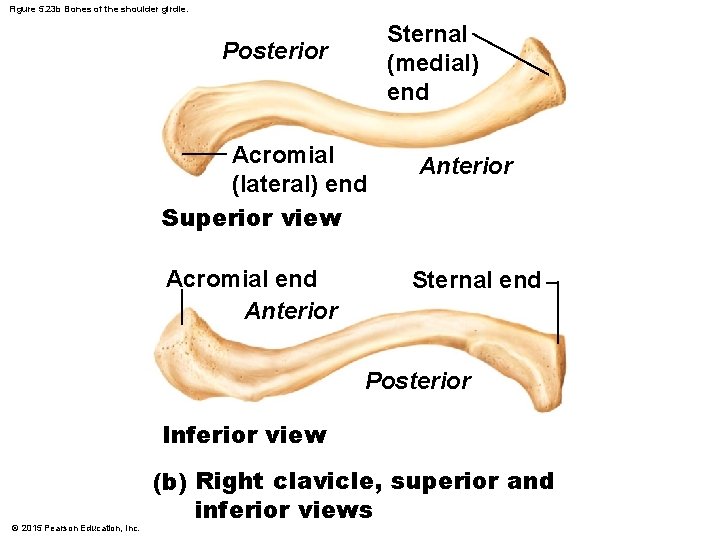
Figure 5. 23 b Bones of the shoulder girdle. Sternal (medial) end Posterior Acromial (lateral) end Superior view Acromial end Anterior Sternal end Posterior Inferior view © 2015 Pearson Education, Inc. (b) Right clavicle, superior and inferior views
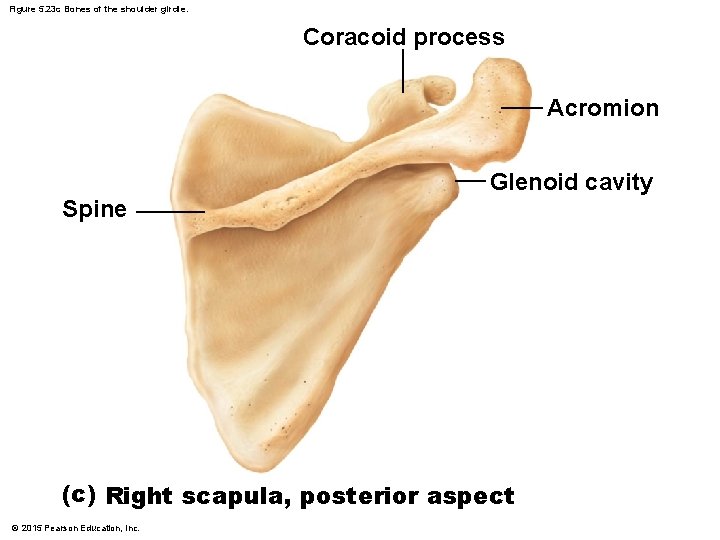
Figure 5. 23 c Bones of the shoulder girdle. Coracoid process Acromion Glenoid cavity Spine (c) Right scapula, posterior aspect © 2015 Pearson Education, Inc.
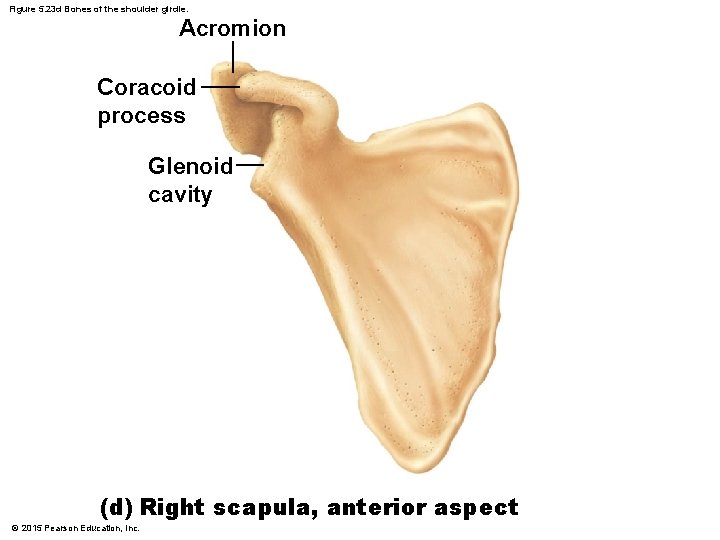
Figure 5. 23 d Bones of the shoulder girdle. Acromion Coracoid process Glenoid cavity (d) Right scapula, anterior aspect © 2015 Pearson Education, Inc.
Bones of the Upper Limbs § Humerus § Forms the arm § Single bone § Proximal end articulation § Head articulates with the glenoid cavity of the scapula § Distal end articulation § Trochlea and capitulum articulate with the bones of the forearm © 2015 Pearson Education, Inc.
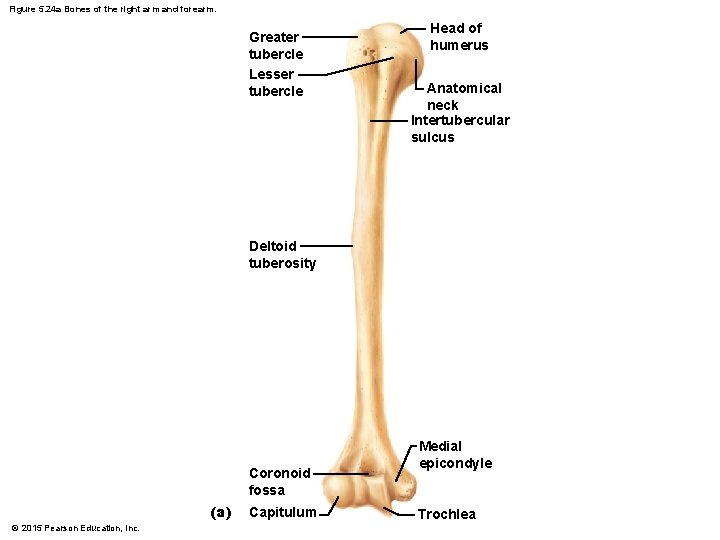
Figure 5. 24 a Bones of the right arm and forearm. Greater tubercle Lesser tubercle Head of humerus Anatomical neck Intertubercular sulcus Deltoid tuberosity Coronoid fossa (a) © 2015 Pearson Education, Inc. Capitulum Medial epicondyle Trochlea
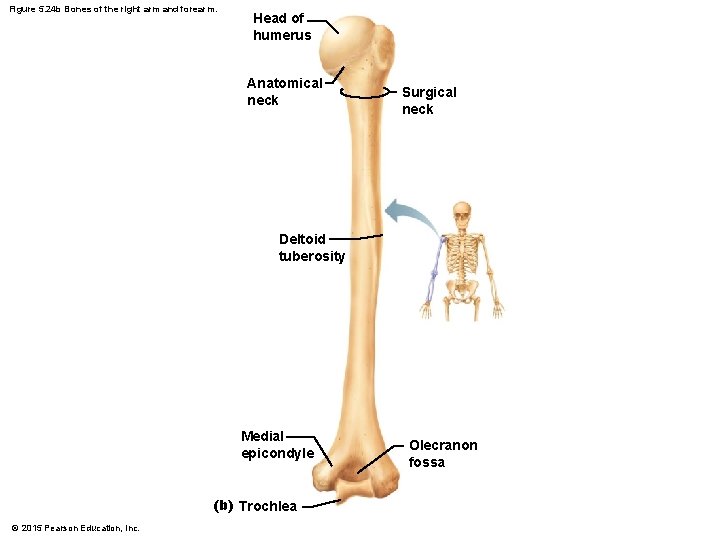
Figure 5. 24 b Bones of the right arm and forearm. Head of humerus Anatomical neck Surgical neck Deltoid tuberosity Medial epicondyle (b) Trochlea © 2015 Pearson Education, Inc. Olecranon fossa
Bones of the Upper Limbs § The forearm has two bones 1. Ulna—medial bone in anatomical position § Proximal end articulation § Coronoid process and olecranon articulate with the humerus 2. Radius—lateral bone in anatomical position § Proximal end articulation § Head articulates with the capitulum of the humerus © 2015 Pearson Education, Inc.
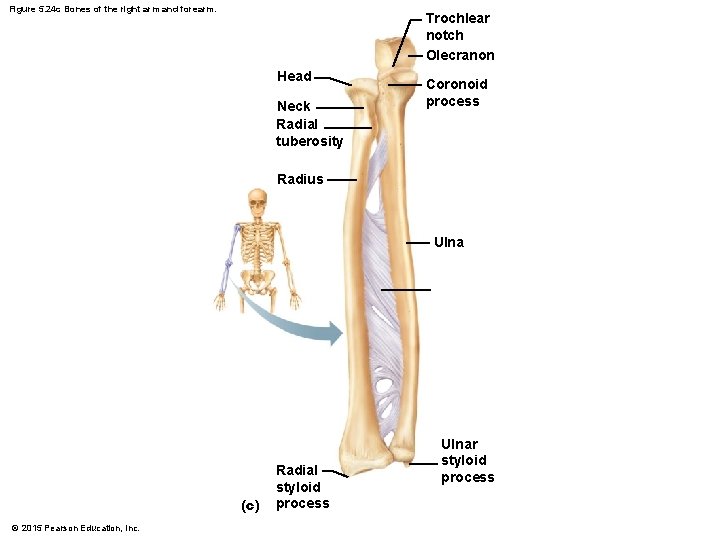
Figure 5. 24 c Bones of the right arm and forearm. Trochlear notch Olecranon Head Neck Radial tuberosity Coronoid process Radius Ulna (c) © 2015 Pearson Education, Inc. Radial styloid process Ulnar styloid process
Bones of the Upper Limbs § Hand § Carpals—wrist § 8 bones arranged in two rows of 4 bones in each hand § Metacarpals—palm § 5 per hand § Phalanges—fingers and thumb § 14 phalanges in each hand § In each finger, there are 3 bones § In the thumb, there are only 2 bones © 2015 Pearson Education, Inc.
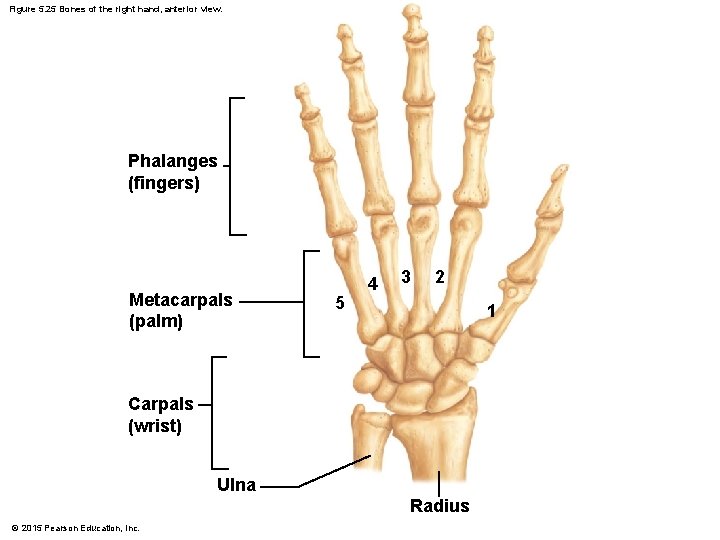
Figure 5. 25 Bones of the right hand, anterior view. Phalanges (fingers) Metacarpals (palm) 5 4 3 2 1 Carpals (wrist) Ulna Radius © 2015 Pearson Education, Inc.
Bones of the Pelvic Girdle § Formed by 2 coxal (ossa coxae) bones § Composed of three pairs of fused bones 1. Ilium 2. Ischium 3. Pubis § Pelvic girdle 2 coxal bones, sacrum § Bony pelvis 2 coxal bones, sacrum, coccyx © 2015 Pearson Education, Inc.
Bones of the Pelvic Girdle § The total weight of the upper body rests on the pelvis § Pelvis protects several organs § Reproductive organs § Urinary bladder § Part of the large intestine © 2015 Pearson Education, Inc.
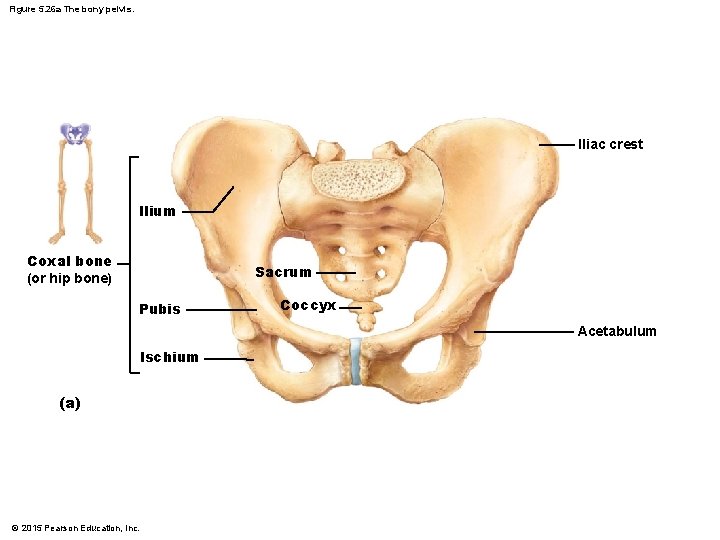
Figure 5. 26 a The bony pelvis. Iliac crest Ilium Coxal bone (or hip bone) Sacrum Pubis Coccyx Acetabulum Ischium (a) © 2015 Pearson Education, Inc.
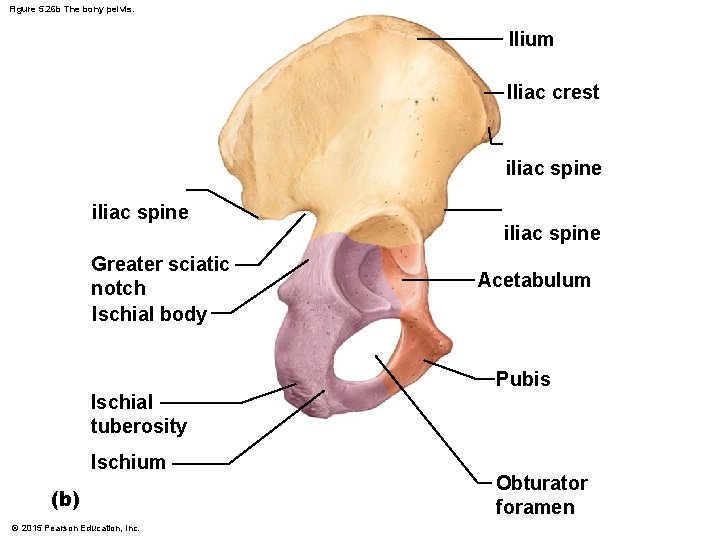
Figure 5. 26 b The bony pelvis. Ilium Iliac crest iliac spine Greater sciatic notch Ischial body iliac spine Acetabulum Pubis Ischial tuberosity Ischium (b) © 2015 Pearson Education, Inc. Obturator foramen
Gender Differences of the Pelvis § The female’s pelvis: § Inlet is larger and more circular § Pelvis as a whole is shallower, and the bones are lighter and thinner § Ilia flare more laterally § Sacrum is shorter and less curved § Ischial spines are shorter and farther apart; thus, the outlet is larger § Pubic arch is more rounded because the angle of the pubic arch is greater © 2015 Pearson Education, Inc.
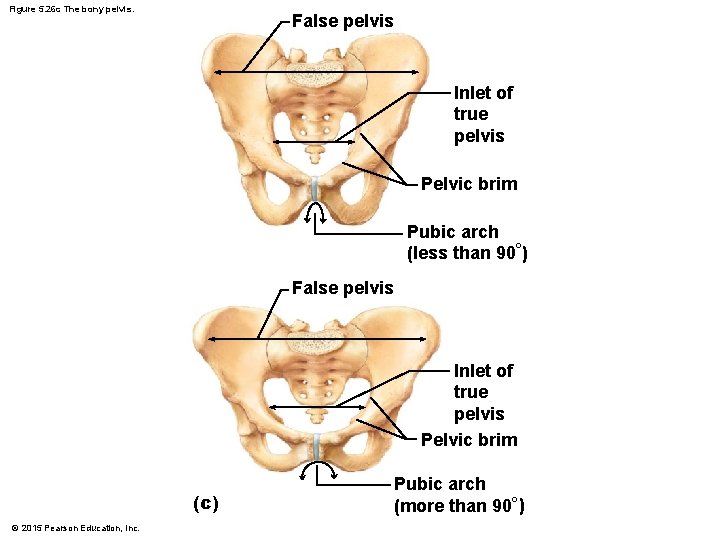
Figure 5. 26 c The bony pelvis. False pelvis Inlet of true pelvis Pelvic brim Pubic arch (less than 90°) False pelvis Inlet of true pelvis Pelvic brim (c) © 2015 Pearson Education, Inc. Pubic arch (more than 90°)
Bones of the Lower Limbs § Femur—thigh bone § The heaviest, strongest bone in the body § Proximal end articulation § Head articulates with the acetabulum of the coxal (hip) bone § Distal end articulation § Lateral and medial condyles articulate with the tibia in the lower leg © 2015 Pearson Education, Inc.
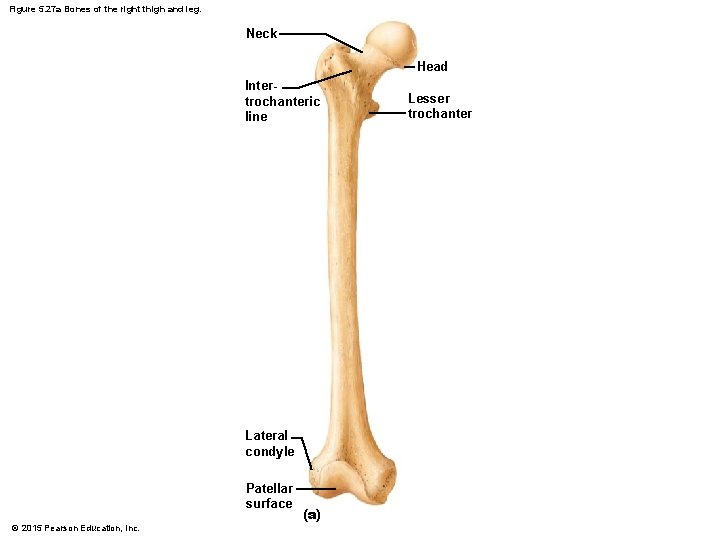
Figure 5. 27 a Bones of the right thigh and leg. Neck Head Intertrochanteric line Lateral condyle Patellar surface © 2015 Pearson Education, Inc. (a) Lesser trochanter
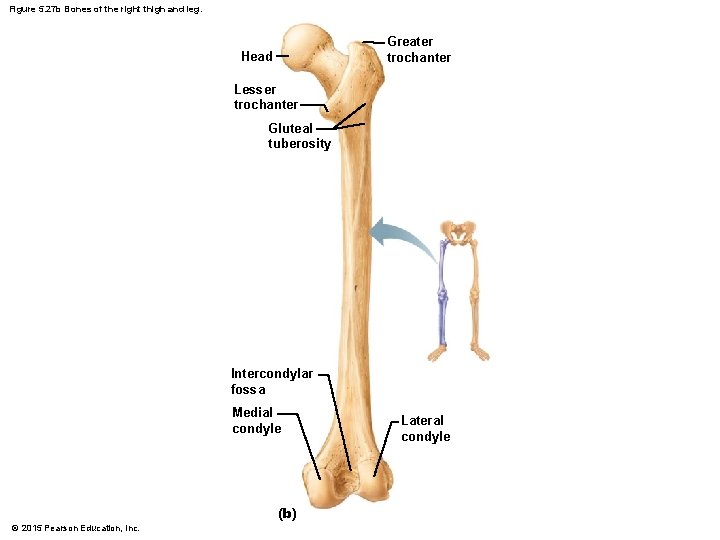
Figure 5. 27 b Bones of the right thigh and leg. Greater trochanter Head Lesser trochanter Gluteal tuberosity Intercondylar fossa Medial condyle (b) © 2015 Pearson Education, Inc. Lateral condyle
Bones of the Lower Limbs § The lower leg has two bones 1. Tibia—shinbone; larger and medially oriented § Proximal end articulation § Medial and lateral condyles articulate with the femur to form the knee joint 2. Fibula—thin and sticklike; lateral to the tibia § Has no role in forming the knee joint © 2015 Pearson Education, Inc.
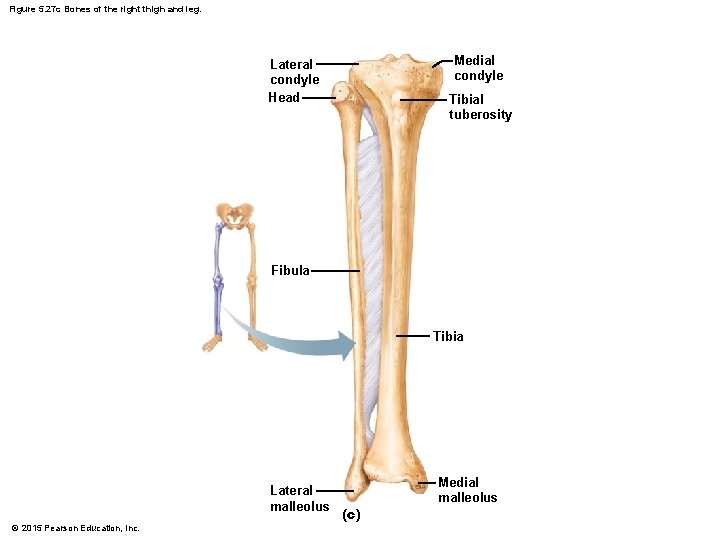
Figure 5. 27 c Bones of the right thigh and leg. Medial condyle Lateral condyle Head Tibial tuberosity Fibula Tibia Lateral malleolus © 2015 Pearson Education, Inc. (c) Medial malleolus
Bones of the Lower Limbs § The foot § Tarsals— 7 bones § Two largest tarsals § Calcaneus (heel bone) § Talus § Metatarsals— 5 bones form the sole of the foot § Phalanges— 14 bones form the toes © 2015 Pearson Education, Inc.
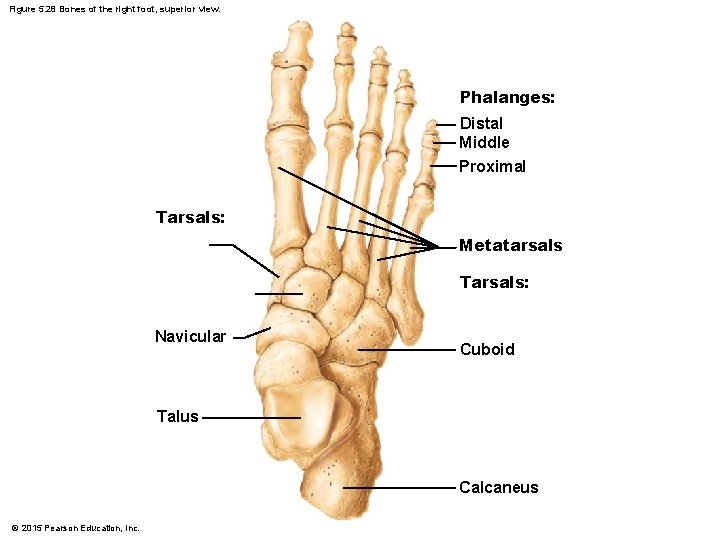
Figure 5. 28 Bones of the right foot, superior view. Phalanges: Distal Middle Proximal Tarsals: Metatarsals Tarsals: Navicular Cuboid Talus Calcaneus © 2015 Pearson Education, Inc.
Joints § Joints are articulations § Two or more bones meet § Functions of joints § Hold bones together § Allow for mobility § Two ways joints are classified § Functionally § Structurally © 2015 Pearson Education, Inc.
Functional Classification of Joints § Synarthroses § Immovable joints § Amphiarthroses § Slightly movable joints § Diarthroses § Freely movable joints © 2015 Pearson Education, Inc.
Structural Classification of Joints § Fibrous joints § Generally immovable § Cartilaginous joints § Immovable or slightly movable § Synovial joints § Freely movable © 2015 Pearson Education, Inc.
Fibrous Joints § Bones united by fibrous tissue § Types § Sutures § Immobile § Syndesmoses § Allow more movement than sutures but still immobile § Example: Distal end of tibia and fibula § Gomphosis § Immobile © 2015 Pearson Education, Inc.
Cartilaginous Joints § Bones connected by fibrocartilage § Types § Synchrondrosis § Immobile § Symphysis § Slightly movable § Example: Pubic symphysis, intervertebral joints © 2015 Pearson Education, Inc.
Synovial Joints § Articulating bones are separated by a joint cavity § Synovial fluid is found in the joint cavity § Four distinguishing features of synovial joints 1. 2. 3. 4. Articular cartilage Articular capsule Joint cavity Reinforcing ligaments © 2015 Pearson Education, Inc.
Synovial Joints § Bursae—flattened fibrous sacs § Lined with synovial membranes § Filled with synovial fluid § Not actually part of the joint § Tendon sheath § Elongated bursa that wraps around a tendon © 2015 Pearson Education, Inc.
Synovial Joints § Types of synovial joints based on shape: § Plane joint § Hinge joint § Pivot joint § Condylar joint § Saddle joint § Ball-and-socket joint © 2015 Pearson Education, Inc.
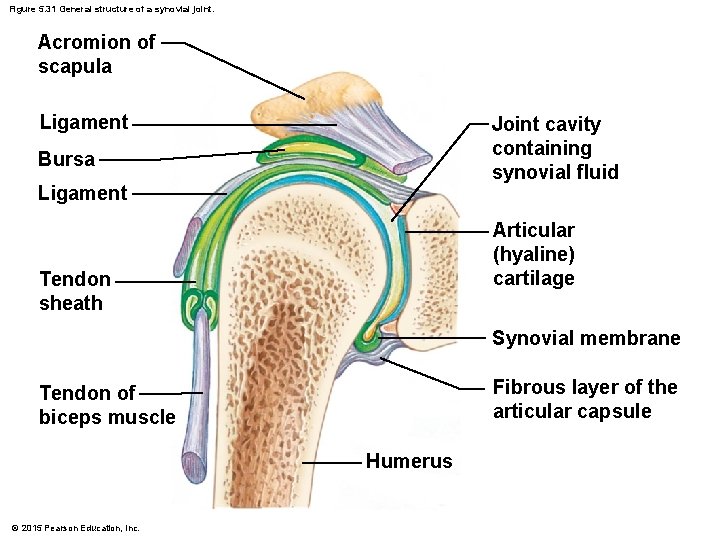
Figure 5. 31 General structure of a synovial joint. Acromion of scapula Ligament Joint cavity containing synovial fluid Bursa Ligament Articular (hyaline) cartilage Tendon sheath Synovial membrane Fibrous layer of the articular capsule Tendon of biceps muscle Humerus © 2015 Pearson Education, Inc.
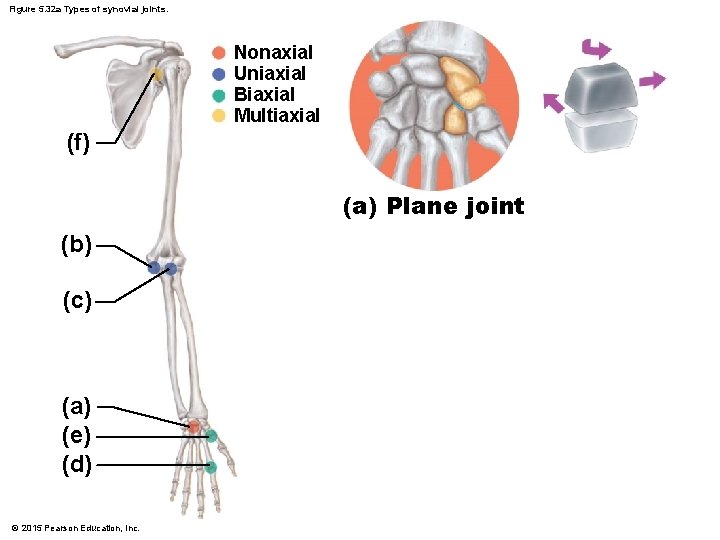
Figure 5. 32 a Types of synovial joints. Nonaxial Uniaxial Biaxial Multiaxial (f) (a) Plane joint (b) (c) (a) (e) (d) © 2015 Pearson Education, Inc.
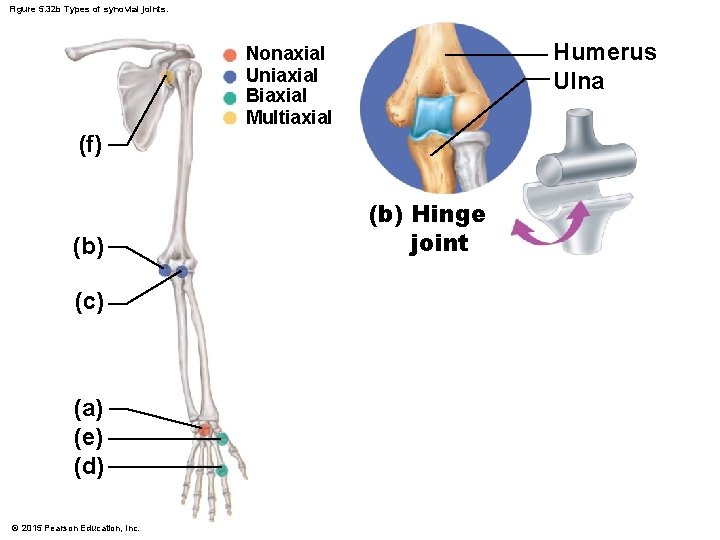
Figure 5. 32 b Types of synovial joints. Humerus Ulna Nonaxial Uniaxial Biaxial Multiaxial (f) (b) (c) (a) (e) (d) © 2015 Pearson Education, Inc. (b) Hinge joint
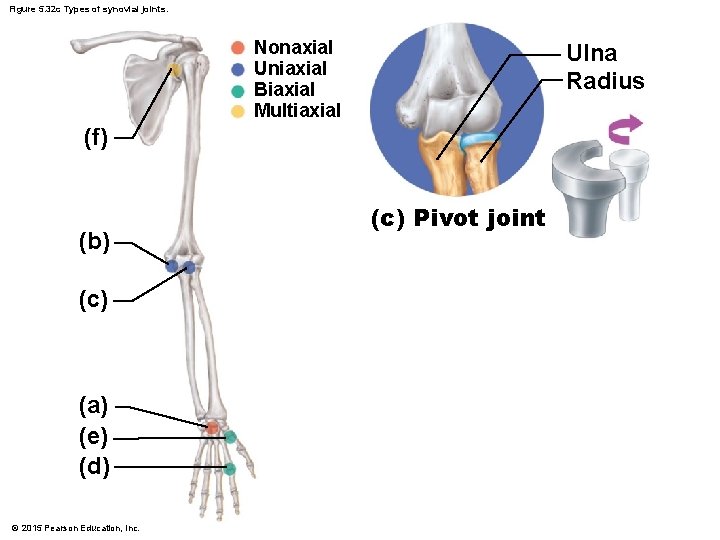
Figure 5. 32 c Types of synovial joints. Nonaxial Uniaxial Biaxial Multiaxial Ulna Radius (f) (b) (c) (a) (e) (d) © 2015 Pearson Education, Inc. (c) Pivot joint
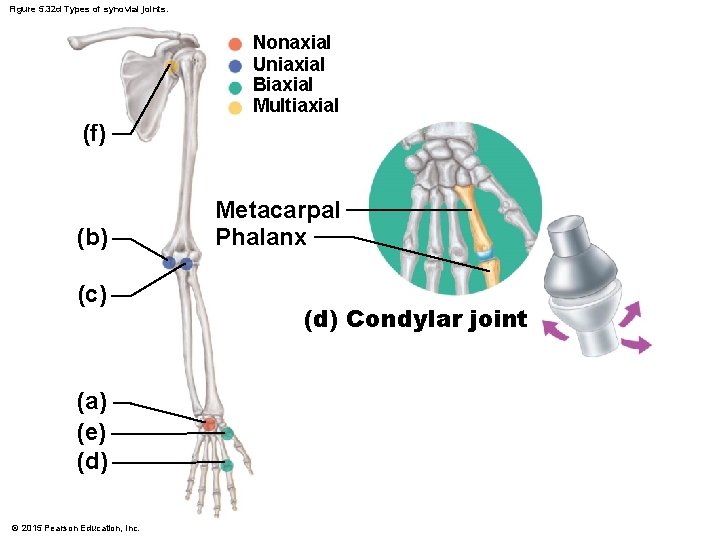
Figure 5. 32 d Types of synovial joints. Nonaxial Uniaxial Biaxial Multiaxial (f) (b) (c) (a) (e) (d) © 2015 Pearson Education, Inc. Metacarpal Phalanx (d) Condylar joint
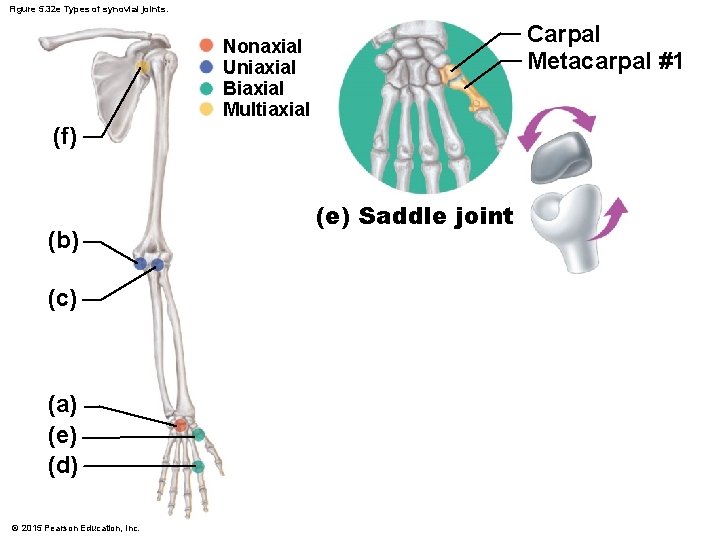
Figure 5. 32 e Types of synovial joints. Carpal Metacarpal #1 Nonaxial Uniaxial Biaxial Multiaxial (f) (b) (c) (a) (e) (d) © 2015 Pearson Education, Inc. (e) Saddle joint
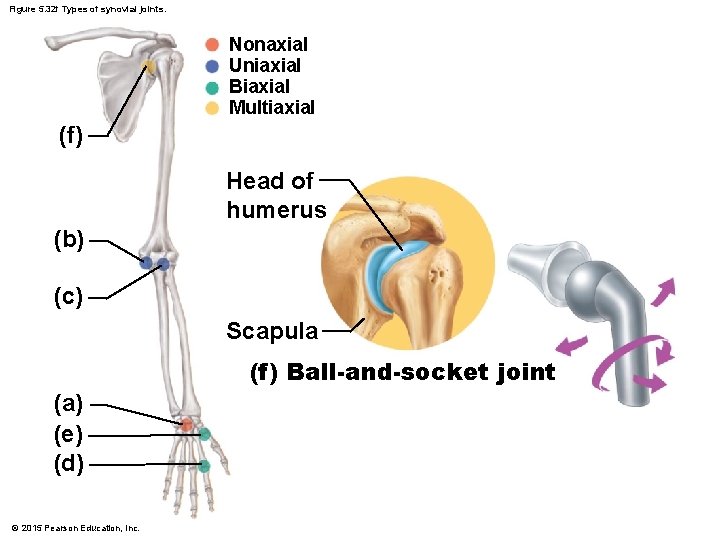
Figure 5. 32 f Types of synovial joints. Nonaxial Uniaxial Biaxial Multiaxial (f) Head of humerus (b) (c) Scapula (f) Ball-and-socket joint (a) (e) (d) © 2015 Pearson Education, Inc.
Inflammatory Conditions Associated with Joints § Bursitis—inflammation of a bursa, usually caused by a blow or friction § Tendonitis—inflammation of tendon sheaths § Arthritis—inflammatory or degenerative diseases of joints § Over 100 different types § The most widespread crippling disease in the United States § Initial symptoms: pain, stiffness, swelling of the joint © 2015 Pearson Education, Inc.
Clinical Forms of Arthritis § Osteoarthritis (OA) § Most common chronic arthritis § Probably related to normal aging processes § Rheumatoid arthritis (RA) § An autoimmune disease—the immune system attacks the joints § Symptoms begin with bilateral inflammation of certain joints § Often leads to deformities © 2015 Pearson Education, Inc.
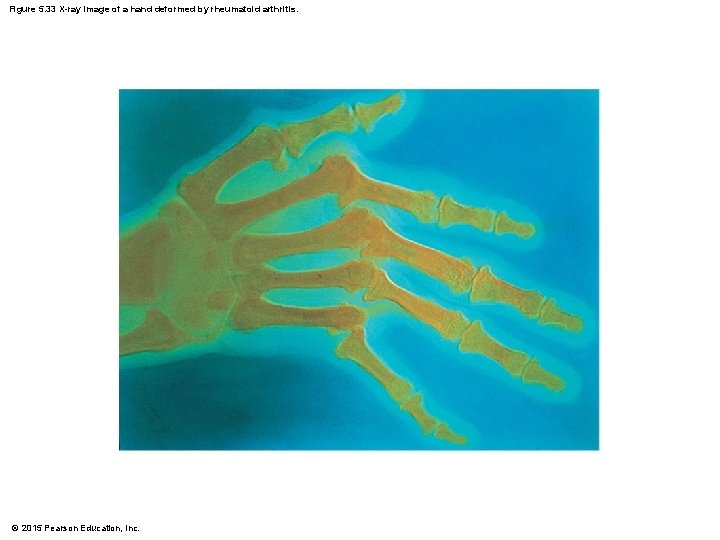
Figure 5. 33 X-ray image of a hand deformed by rheumatoid arthritis. © 2015 Pearson Education, Inc.
Clinical Forms of Arthritis § Gouty arthritis (gout) § Inflammation of joints is caused by a deposition of uric acid crystals from the blood § Can usually be controlled with diet § More common in men © 2015 Pearson Education, Inc.
Developmental Aspects of the Skeletal System § Fontanels § Allow brain growth and ease birth passage § Present in the skull at birth § Completely replaced with bone within 2 years after birth © 2015 Pearson Education, Inc.
Developmental Aspects of the Skeletal System § Growth of cranium after birth is related to brain growth § Increase in size of the facial skeleton follows tooth development and enlargement of the respiratory passageways. © 2015 Pearson Education, Inc.
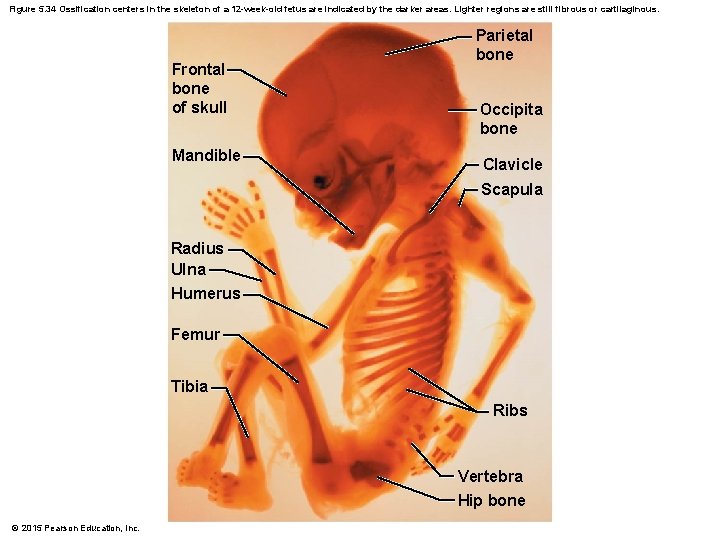
Figure 5. 34 Ossification centers in the skeleton of a 12 -week-old fetus are indicated by the darker areas. Lighter regions are still fibrous or cartilaginous. Frontal bone of skull Mandible Parietal bone Occipita bone Clavicle Scapula Radius Ulna Humerus Femur Tibia Ribs Vertebra Hip bone © 2015 Pearson Education, Inc.
Skeletal Changes Throughout Life § Fetus § Long bones are formed of hyaline cartilage § Flat bones begin as fibrous membranes § Flat and long bone models are converted to bone § Birth § Fontanels remain until around age 2 © 2015 Pearson Education, Inc.
Skeletal Changes Throughout Life § Adolescence § Epiphyseal plates become ossified, and long bone growth ends § Size of cranium in relationship to body § 2 years old—skull is larger in proportion to the body compared to that of an adult § 8 or 9 years old—skull is near adult size and proportion § Between ages 6 and 11, the face grows out from the skull © 2015 Pearson Education, Inc.
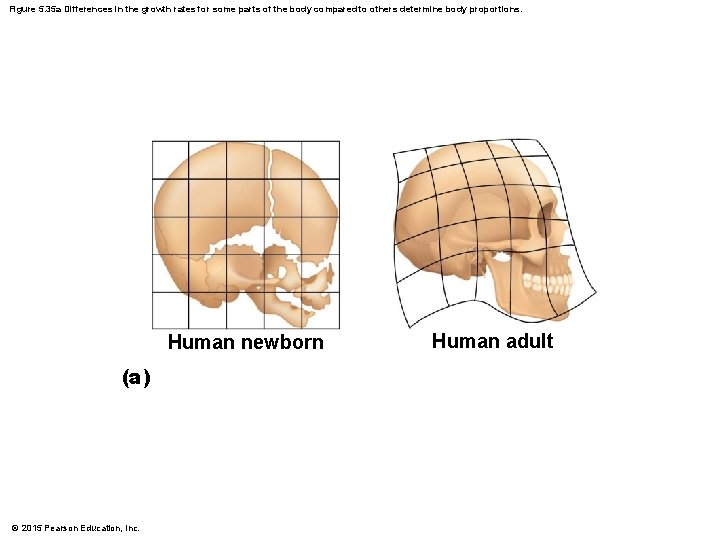
Figure 5. 35 a Differences in the growth rates for some parts of the body compared to others determine body proportions. Human newborn (a) © 2015 Pearson Education, Inc. Human adult
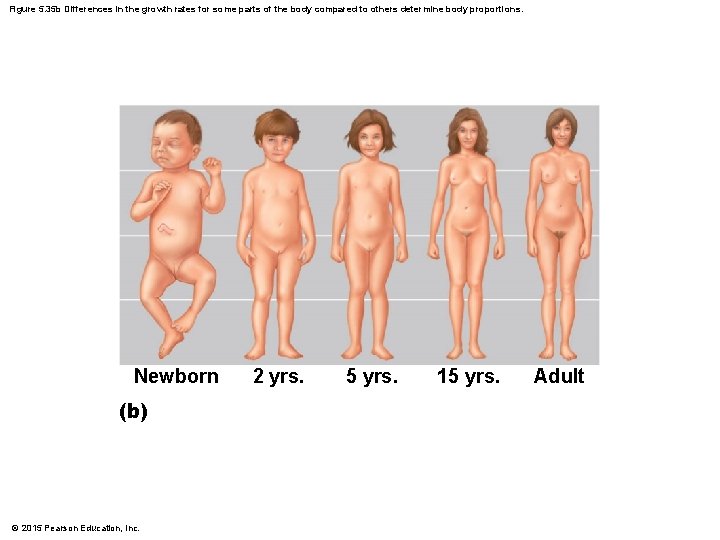
Figure 5. 35 b Differences in the growth rates for some parts of the body compared to others determine body proportions. Newborn (b) © 2015 Pearson Education, Inc. 2 yrs. 5 yrs. 15 yrs. Adult
Skeletal Changes Throughout Life § Curvatures of the spine § Primary curvatures are present at birth and are convex posteriorly § Secondary curvatures are associated with a child’s later development and are convex anteriorly § Abnormal spinal curvatures (scoliosis and lordosis) are often congenital © 2015 Pearson Education, Inc.
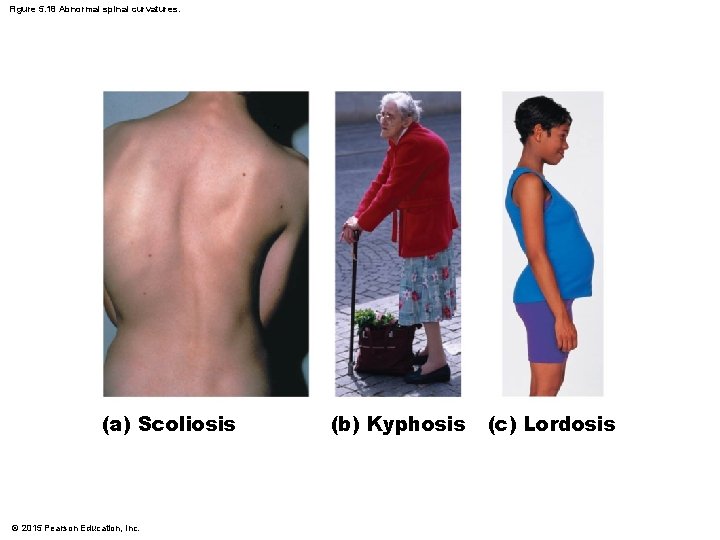
Figure 5. 18 Abnormal spinal curvatures. (a) Scoliosis © 2015 Pearson Education, Inc. (b) Kyphosis (c) Lordosis
Skeletal Changes Throughout Life § Osteoporosis § Bone-thinning disease afflicting § 50 percent of women over age 65 § 20 percent of men over age 70 § Disease makes bones fragile, and bones can easily fracture § Vertebral collapse results in kyphosis (also known as “dowager’s hump”) § Estrogen aids in health and normal density of a female skeleton © 2015 Pearson Education, Inc.
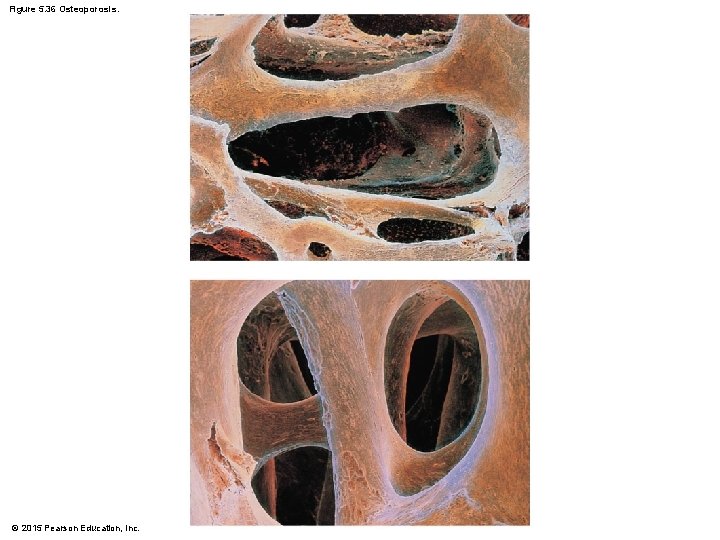
Figure 5. 36 Osteoporosis. © 2015 Pearson Education, Inc.
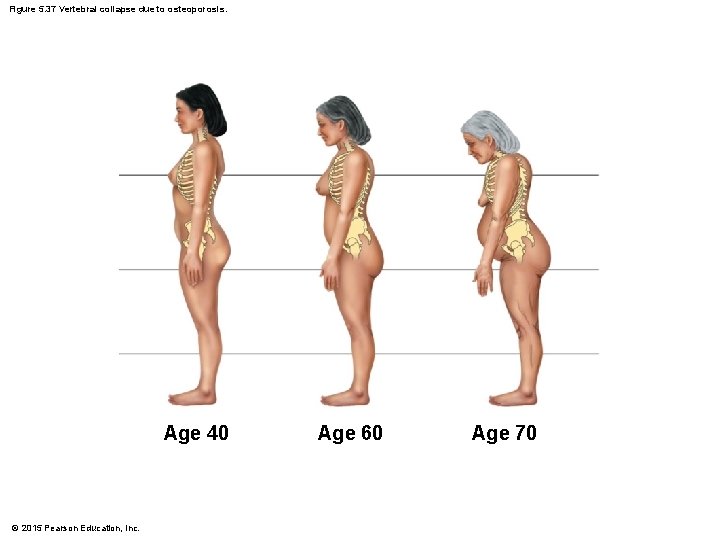
Figure 5. 37 Vertebral collapse due to osteoporosis. Age 40 © 2015 Pearson Education, Inc. Age 60 Age 70
- Slides: 130