
Chapter 5 The Path of Food 1 At
- Slides: 43
Chapter 5 The Path of Food 1
At the end of this unit you should: 1. Be able to describe what the word ‘digestion’ means. 2. Be able to distinguish between the two types of digestion. 3. Be able to discuss the role of the teeth, tongue and stomach in digestion. 4. Be able to describe mechanical and chemical digestion and the difference between them. 5. Know that digestion involves breaking down large molecules into smaller soluble ones. 6. Be able to describe what happens to food when it is broken down. 7. Be able to describe the role and them importance of enzymes in digestion. 2
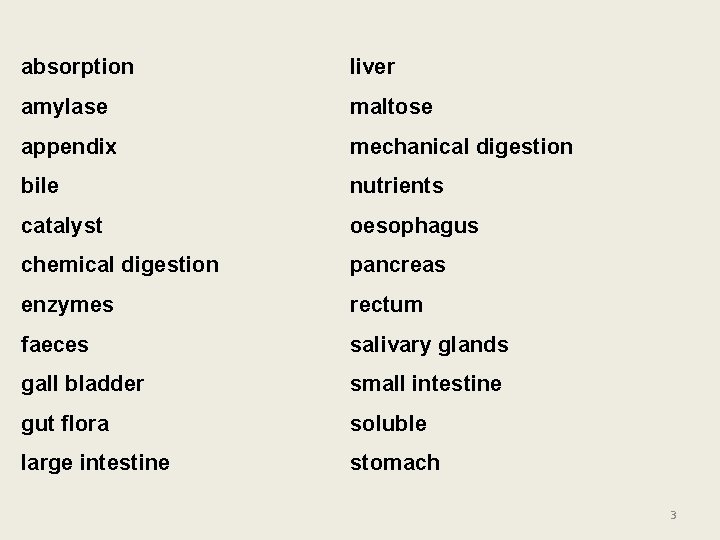
absorption liver amylase maltose appendix mechanical digestion bile nutrients catalyst oesophagus chemical digestion pancreas enzymes rectum faeces salivary glands gall bladder small intestine gut flora soluble large intestine stomach 3
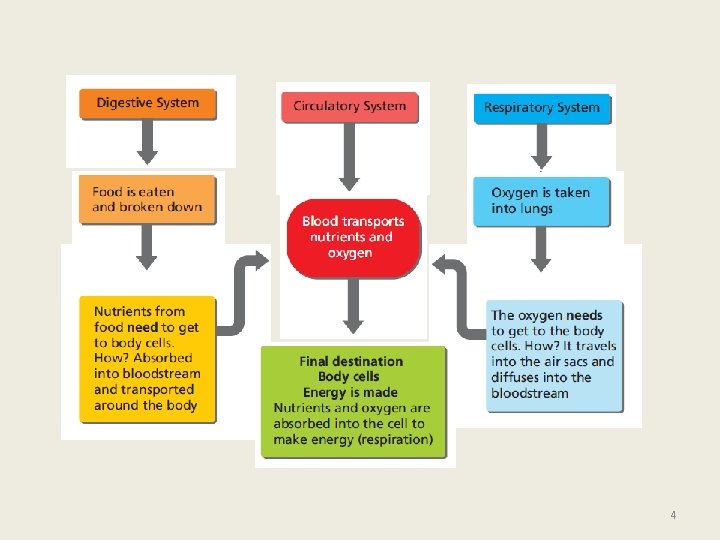
4
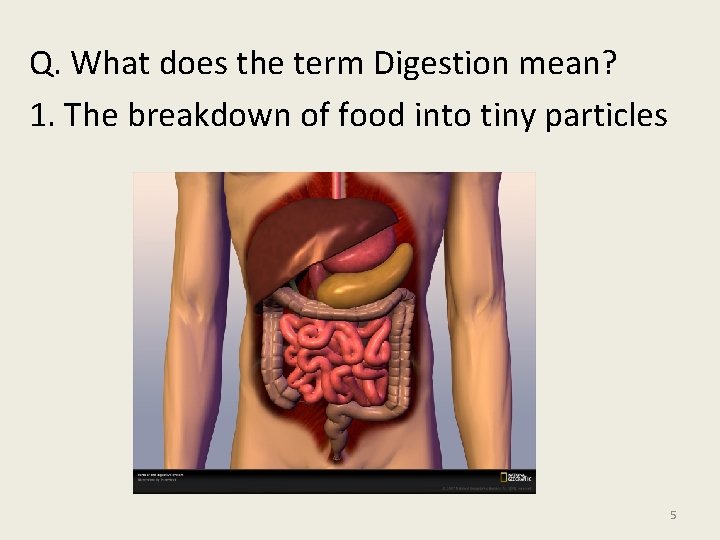
Q. What does the term Digestion mean? 1. The breakdown of food into tiny particles 5
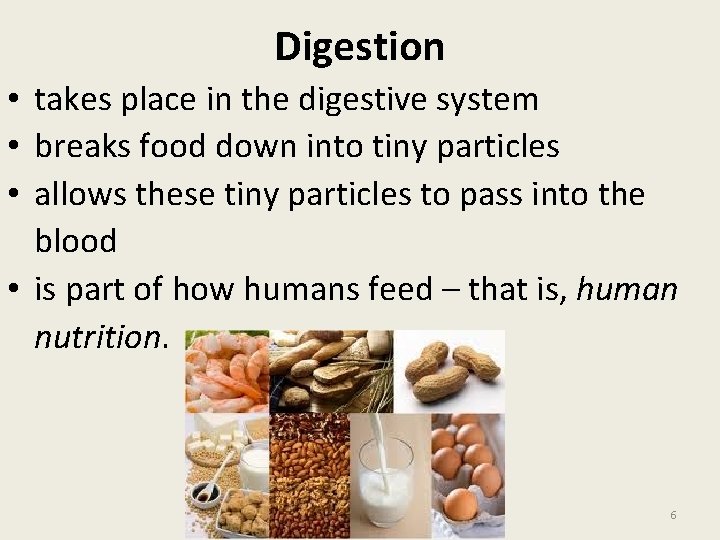
Digestion • takes place in the digestive system • breaks food down into tiny particles • allows these tiny particles to pass into the blood • is part of how humans feed – that is, human nutrition. 6
Stages in Human Nutrition Ingestion Food is taken into the mouth Digestion Food is broken down into smaller soluble pieces Absorption The movement of digested food from the alimentary canal into the blood stream Egestion Removal of undigested /unabsorbed food as faeces 7
• Digestive System 8
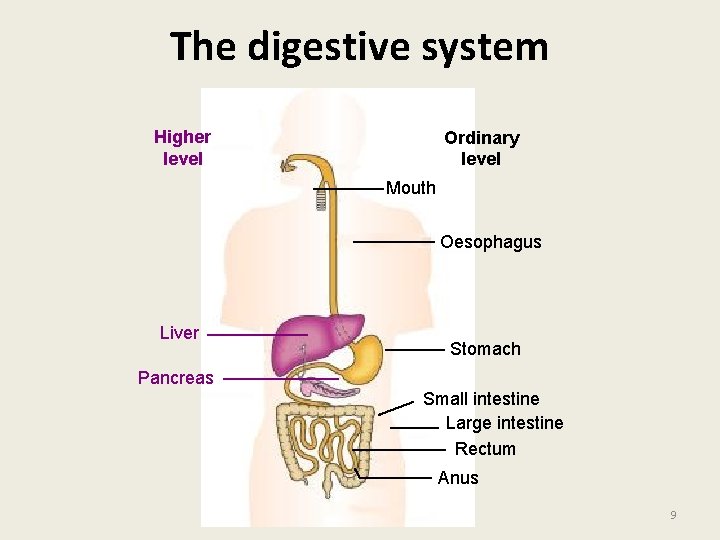
The digestive system Higher level Ordinary level Mouth Oesophagus Liver Stomach Pancreas Small intestine Large intestine Rectum Anus 9
Animation digestion 10
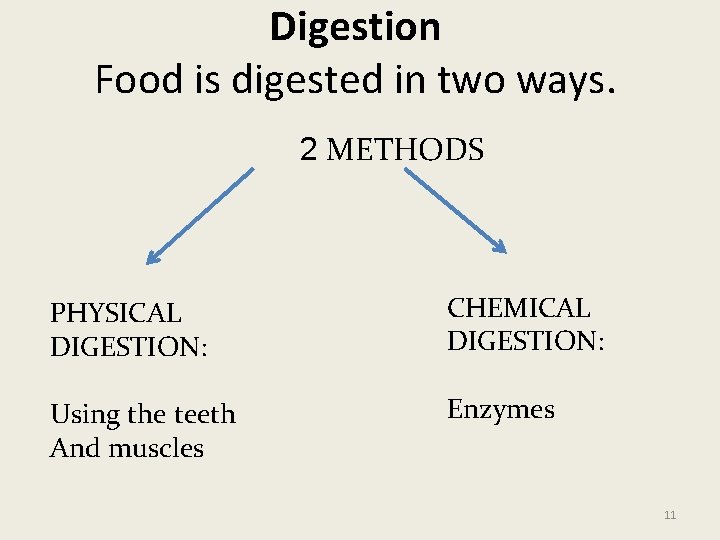
Digestion Food is digested in two ways. 2 METHODS PHYSICAL DIGESTION: CHEMICAL DIGESTION: Using the teeth And muscles Enzymes 11
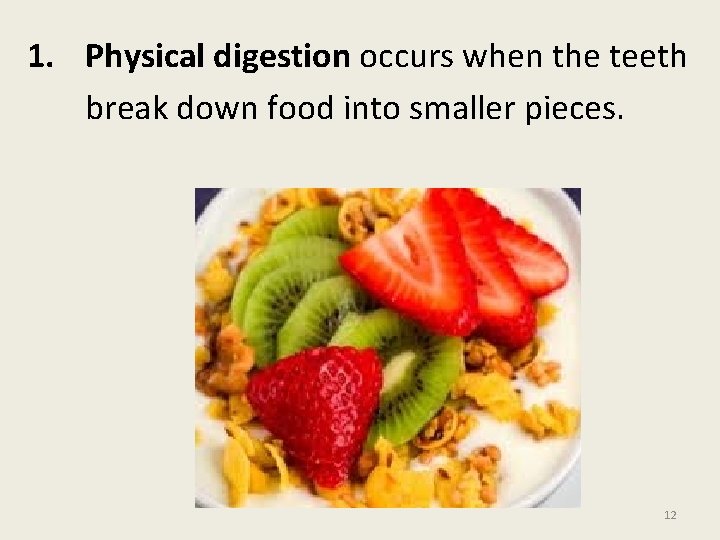
1. Physical digestion occurs when the teeth break down food into smaller pieces. 12
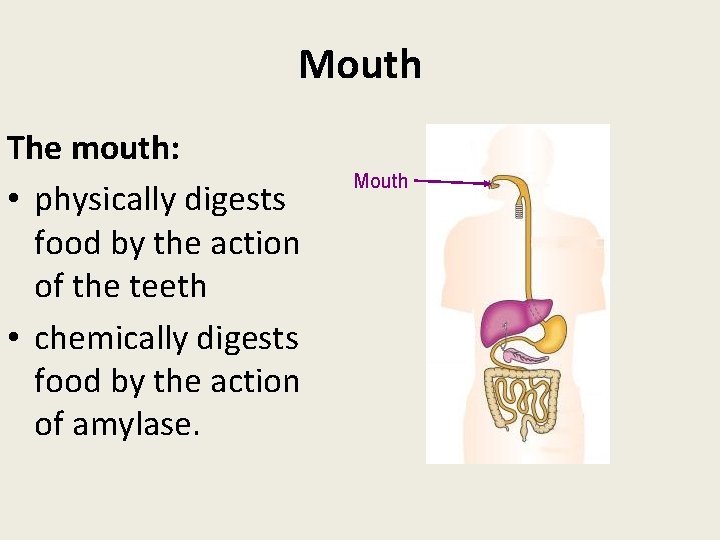
Mouth The mouth: • physically digests food by the action of the teeth • chemically digests food by the action of amylase. Mouth
Teeth 14
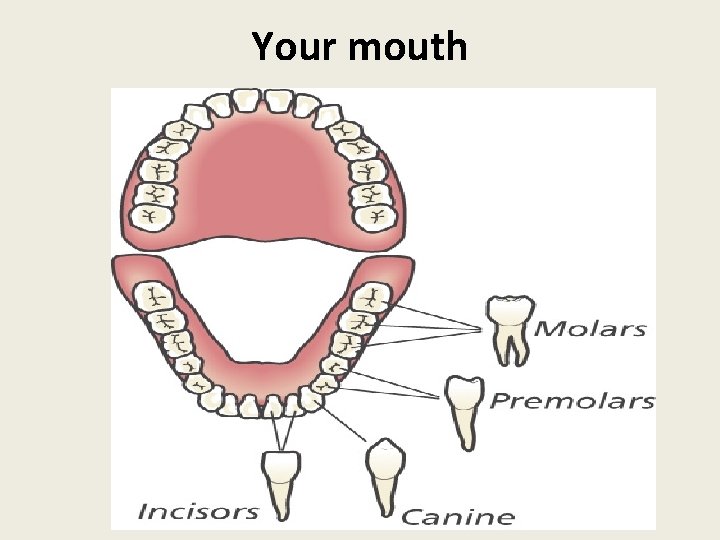
Your mouth
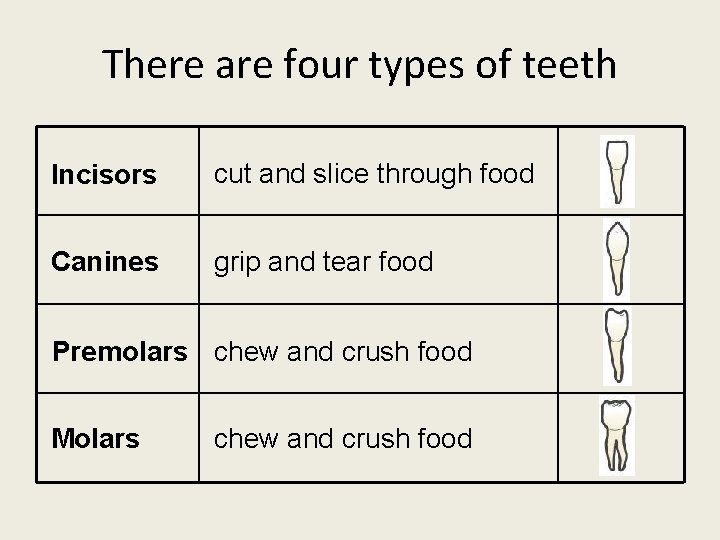
There are four types of teeth Incisors cut and slice through food Canines grip and tear food Premolars chew and crush food Molars chew and crush food
Cleaning your teeth • Teeth are damaged by bacteria in the mouth. These bacteria convert sugar that you eat into acid. The acid attacks and dissolves your teeth. • Brushing your teeth helps to remove the sticky mixture of sugar and bacteria, called plaque. 17
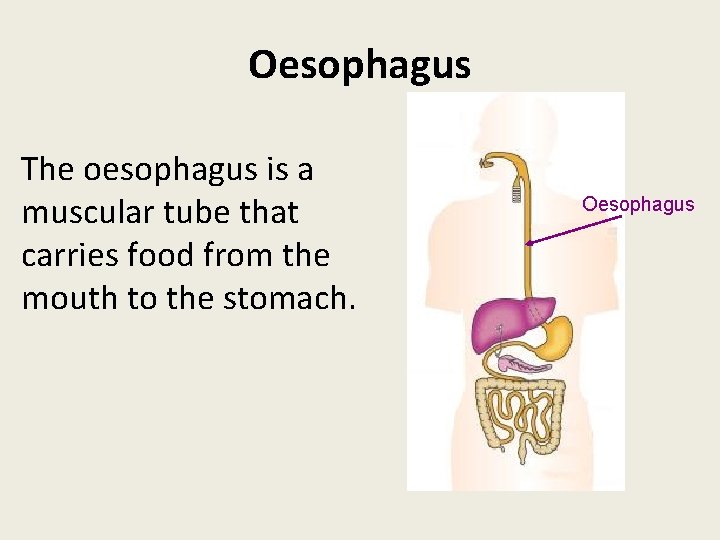
Oesophagus The oesophagus is a muscular tube that carries food from the mouth to the stomach. Oesophagus
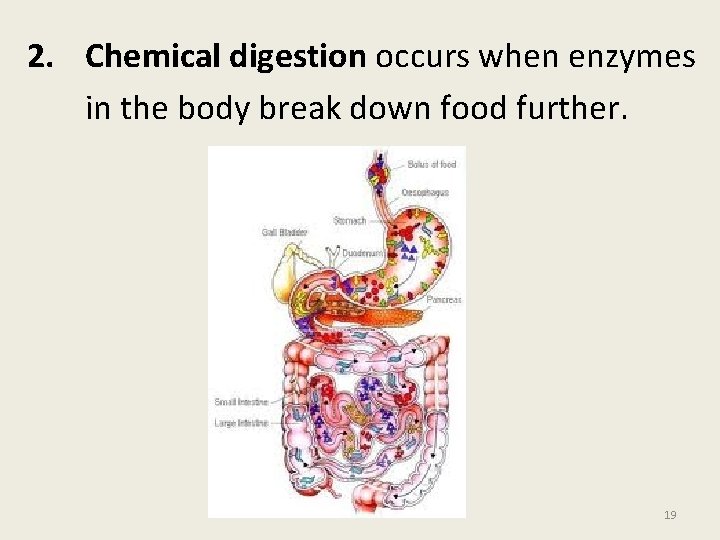
2. Chemical digestion occurs when enzymes in the body break down food further. 19
• Enzymes- a fun introduction 20
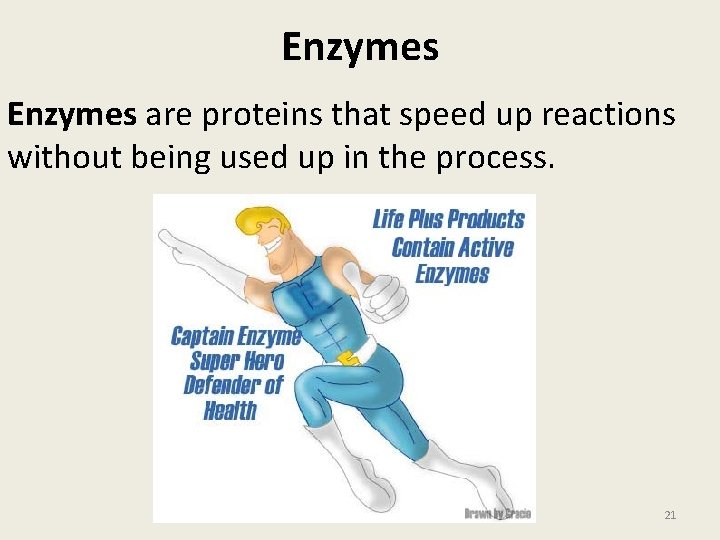
Enzymes are proteins that speed up reactions without being used up in the process. 21
Different enzymes • Humans produce many different enzymes. • Each enzyme speeds up a different reaction. E. g. different enzymes are responsible for: – healing a cut – making your hair grow – breaking down all the different types of food that you eat. 22
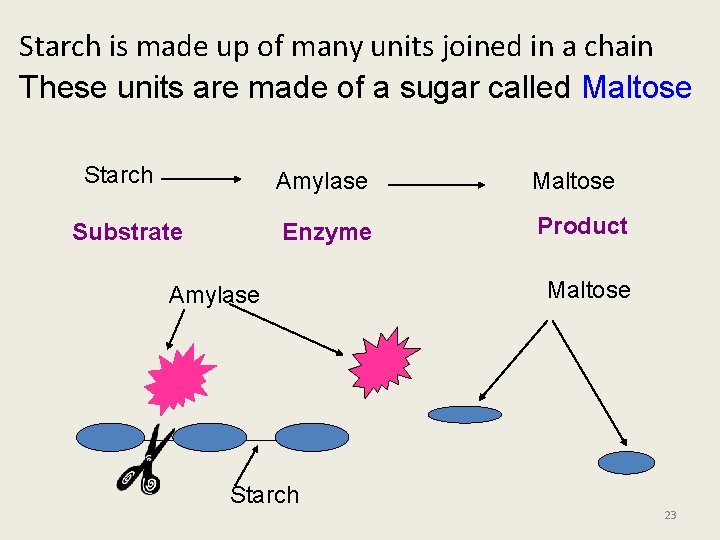
Starch is made up of many units joined in a chain These units are made of a sugar called Maltose Starch Substrate Amylase Maltose Enzyme Product Amylase Starch Maltose 23
• Saliva contains the enzyme amylase. 24
• The Enzymes Song 25
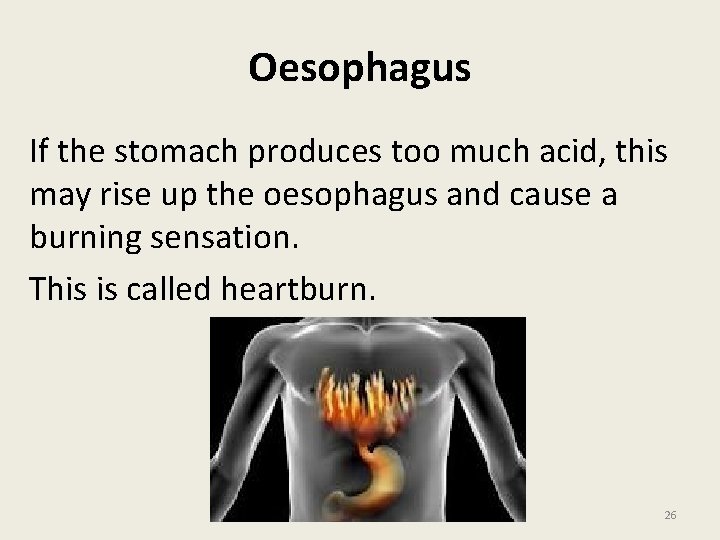
Oesophagus If the stomach produces too much acid, this may rise up the oesophagus and cause a burning sensation. This is called heartburn. 26
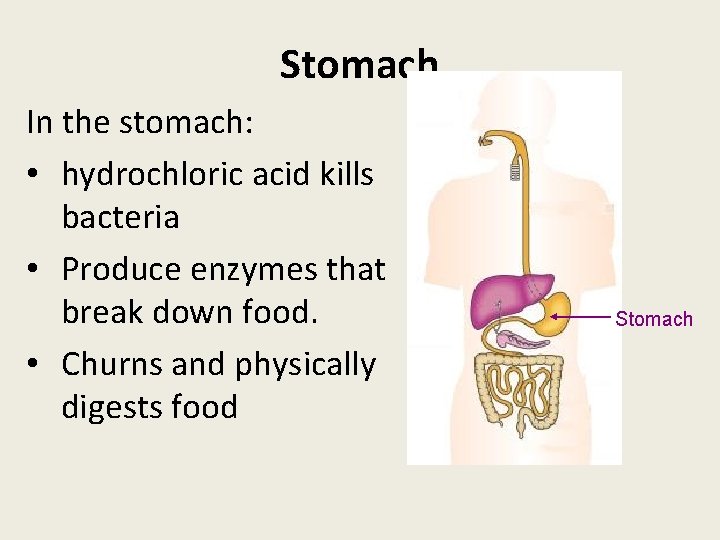
Stomach In the stomach: • hydrochloric acid kills bacteria • Produce enzymes that break down food. • Churns and physically digests food Stomach
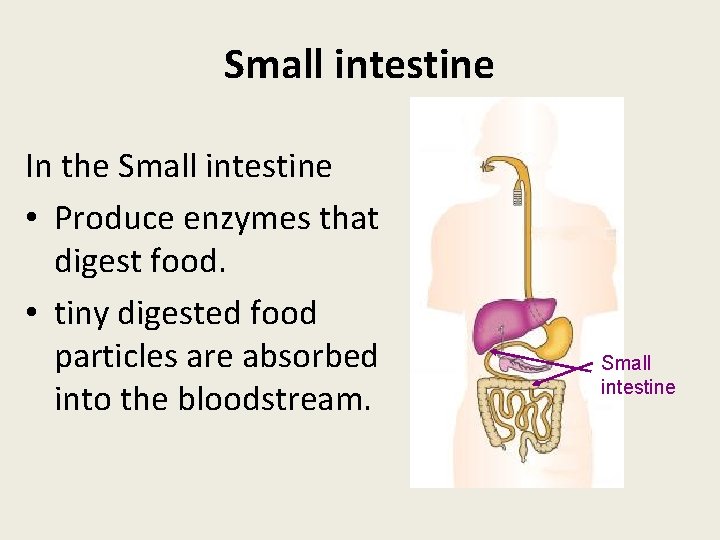
Small intestine In the Small intestine • Produce enzymes that digest food. • tiny digested food particles are absorbed into the bloodstream. Small intestine
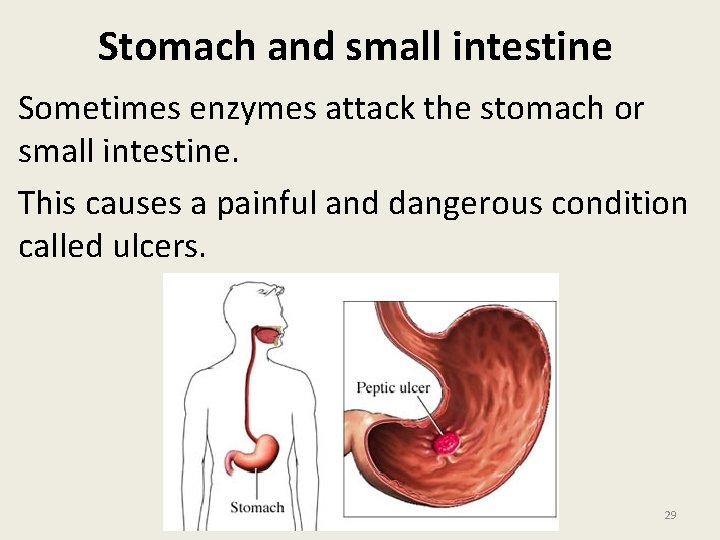
Stomach and small intestine Sometimes enzymes attack the stomach or small intestine. This causes a painful and dangerous condition called ulcers. 29
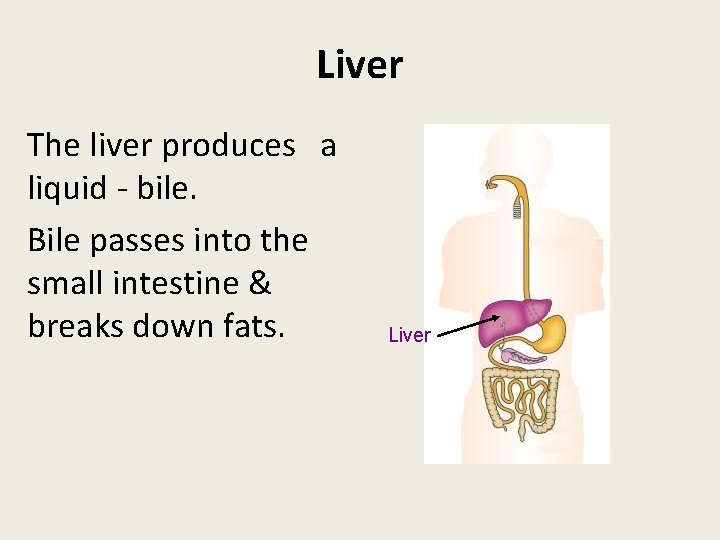
Liver The liver produces a liquid - bile. Bile passes into the small intestine & breaks down fats. Liver
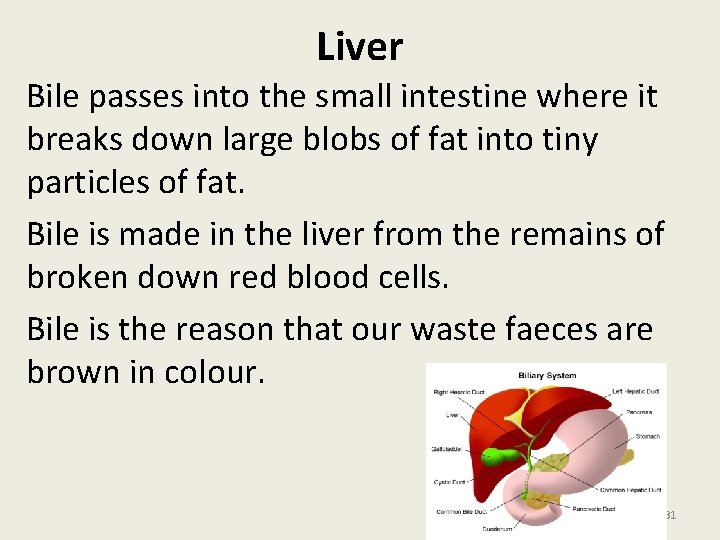
Liver Bile passes into the small intestine where it breaks down large blobs of fat into tiny particles of fat. Bile is made in the liver from the remains of broken down red blood cells. Bile is the reason that our waste faeces are brown in colour. 31
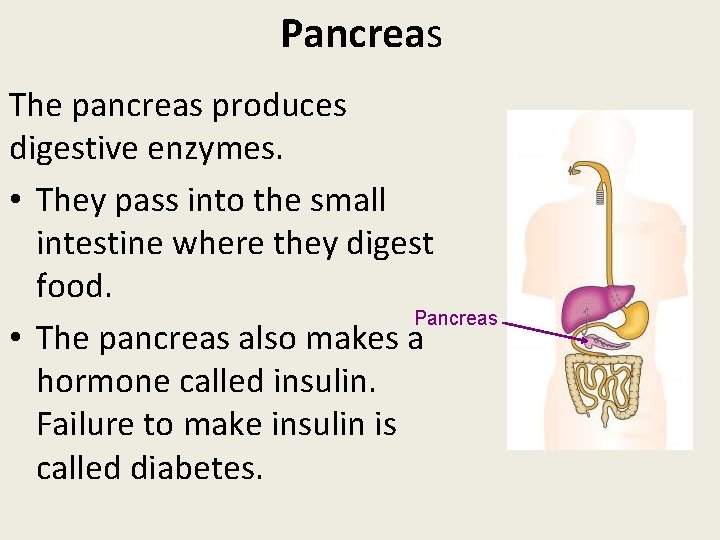
Pancreas The pancreas produces digestive enzymes. • They pass into the small intestine where they digest food. Pancreas • The pancreas also makes a hormone called insulin. Failure to make insulin is called diabetes.
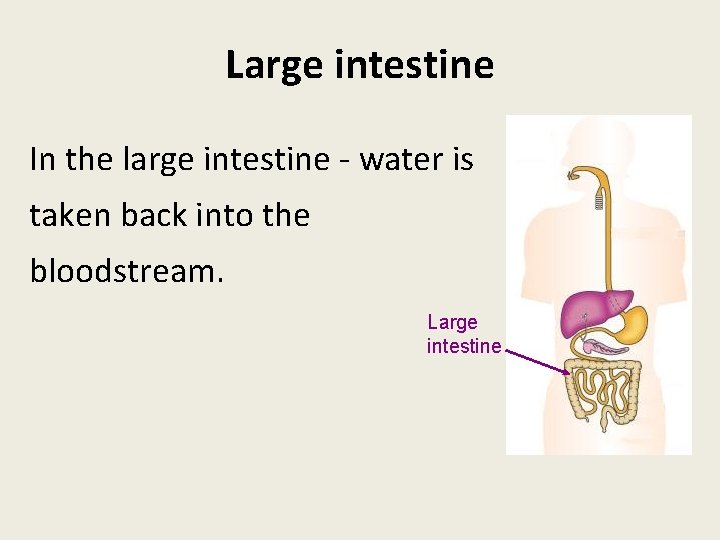
Large intestine In the large intestine - water is taken back into the bloodstream. Large intestine
Large intestine • If too much water is absorbed from your large intestine, then the waste becomes too solid. This causes constipation. • If too little water is absorbed, the waste is too liquid. This is called diarrhoea. 34
• Digestion Song 35
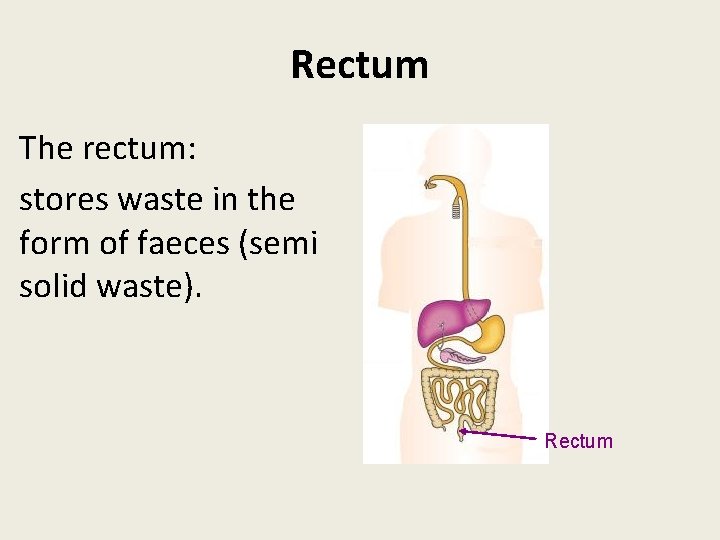
Rectum The rectum: stores waste in the form of faeces (semi solid waste). Rectum
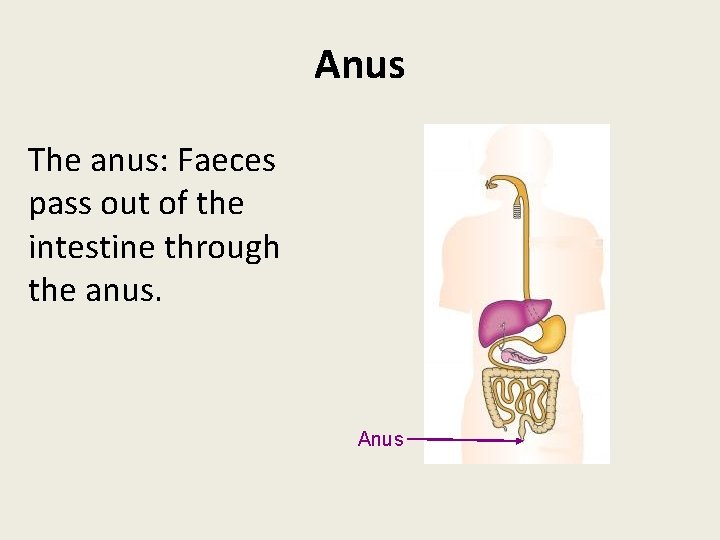
Anus The anus: Faeces pass out of the intestine through the anus. Anus
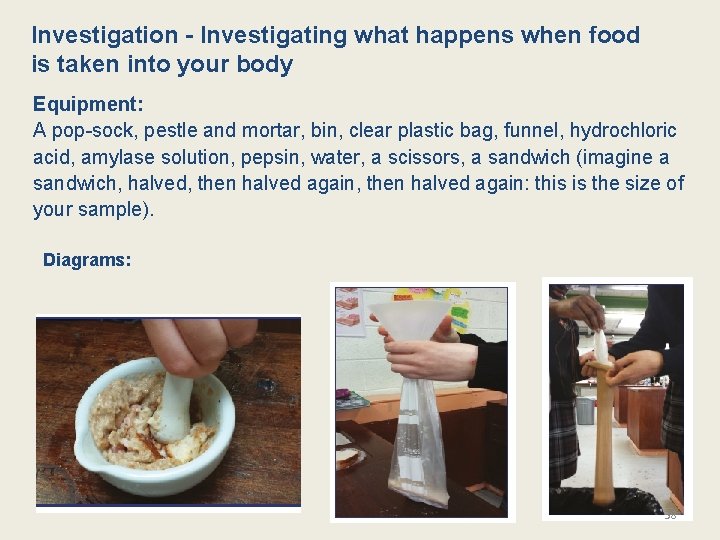
Investigation - Investigating what happens when food is taken into your body Equipment: A pop-sock, pestle and mortar, bin, clear plastic bag, funnel, hydrochloric acid, amylase solution, pepsin, water, a scissors, a sandwich (imagine a sandwich, halved, then halved again: this is the size of your sample). Diagrams: 38
Questions: 1. Working with a partner, match up each body part in the digestion list below with an everyday object in the equipment list that could represent it. (More than one body part can be matched with the equipment list. ) Digestion list: • Intestines • teeth • tongue • mouth • toilet • stomach • oesophagus Equipment list: Pop-sock pestle and mortar clear plastic bag bin funnel 39
Questions 2. Now that you have the equipment list linked to the digestive system and understand the need for the chemicals, plan an investigation to show what happens when food (your sandwich sample) enters your body. Plan should follow the path of digestion – mouth, oesophagus, stomach, small intestine, large intestine, colon, anus. 3. Where would you find hydrochloric acid in your body? In the stomach. 4. What does the amylase solution represent? The enzyme found in our mouths and start of small intestines. 40
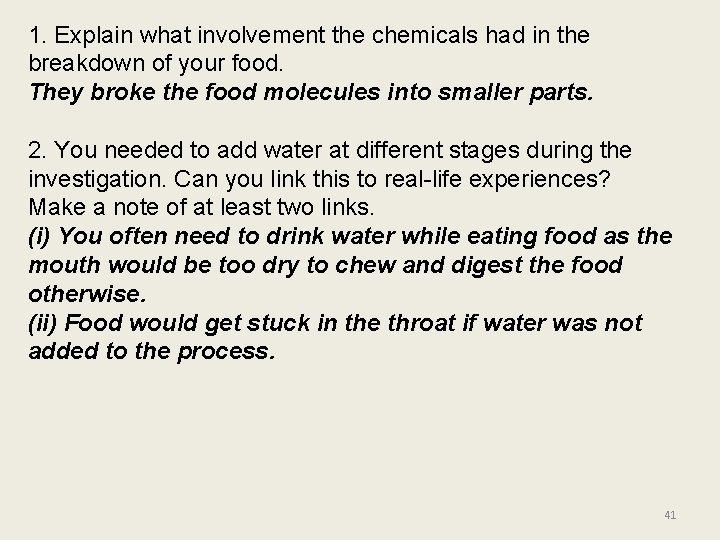
1. Explain what involvement the chemicals had in the breakdown of your food. They broke the food molecules into smaller parts. 2. You needed to add water at different stages during the investigation. Can you link this to real-life experiences? Make a note of at least two links. (i) You often need to drink water while eating food as the mouth would be too dry to chew and digest the food otherwise. (ii) Food would get stuck in the throat if water was not added to the process. 41
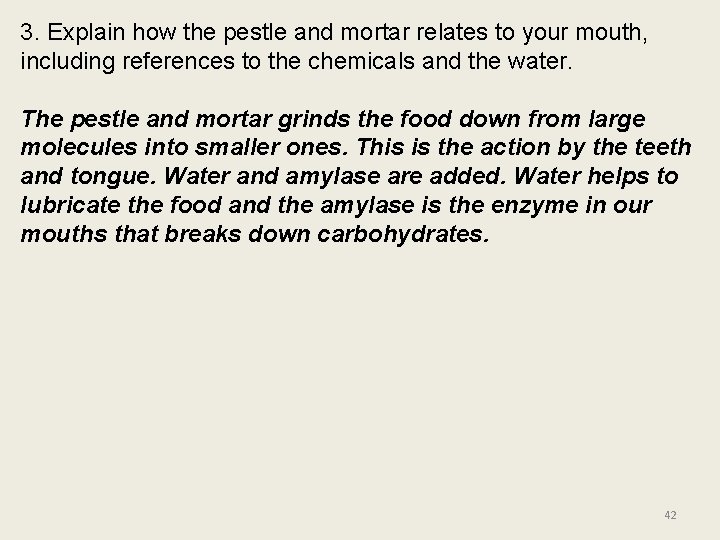
3. Explain how the pestle and mortar relates to your mouth, including references to the chemicals and the water. The pestle and mortar grinds the food down from large molecules into smaller ones. This is the action by the teeth and tongue. Water and amylase are added. Water helps to lubricate the food and the amylase is the enzyme in our mouths that breaks down carbohydrates. 42
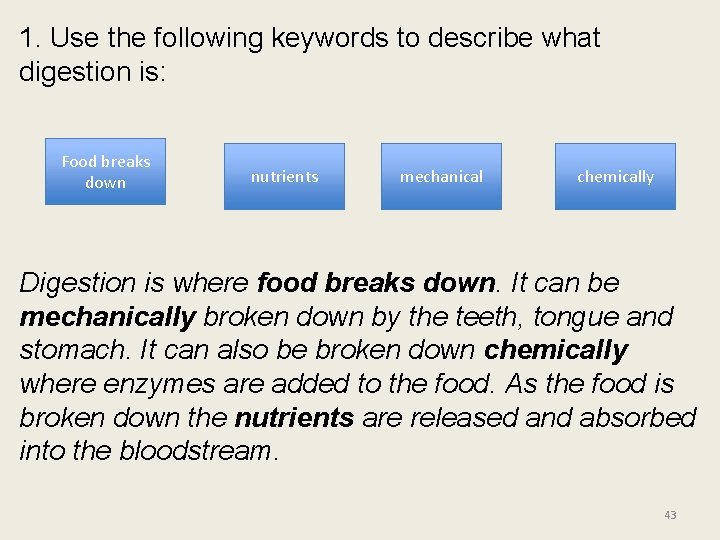
1. Use the following keywords to describe what digestion is: Food breaks down nutrients mechanical chemically Digestion is where food breaks down. It can be mechanically broken down by the teeth, tongue and stomach. It can also be broken down chemically where enzymes are added to the food. As the food is broken down the nutrients are released and absorbed into the bloodstream. 43