
Chapter 5 The Network Layer Computer Networks Fifth

- Slides: 19
Chapter 5 The Network Layer Computer Networks, Fifth Edition by Andrew Tanenbaum and David
Network Layer Design Isues • • • Store-and-Forward Packet Switching Services Provided to the Transport Layer Implementation of Connectionless Service Implementation of Connection-Oriented Service Comparison of Virtual-Circuit and Datagram Subnets Computer Networks, Fifth Edition by Andrew Tanenbaum and David
Routing Algorithms • • • The Optimality Principle Shortest Path Routing Flooding Distance Vector Routing Link State Routing Hierarchical Routing Broadcast Routing Multicast Routing for Mobile Hosts Routing in Ad Hoc Networks Computer Networks, Fifth Edition by Andrew Tanenbaum and David
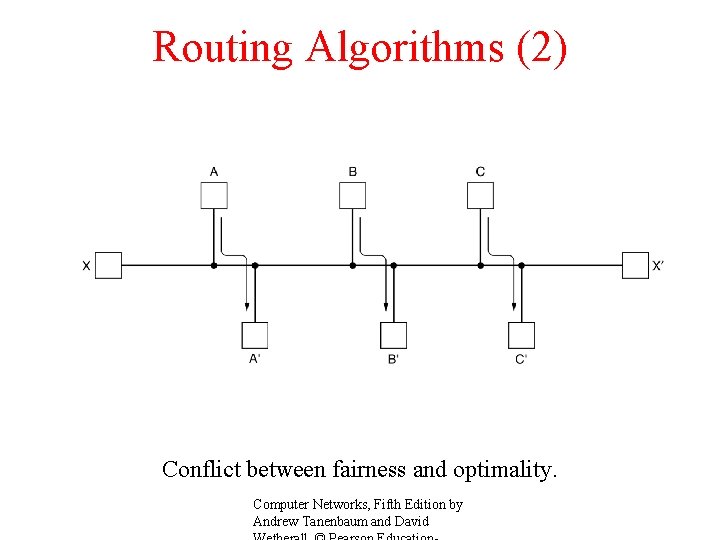
Routing Algorithms (2) Conflict between fairness and optimality. Computer Networks, Fifth Edition by Andrew Tanenbaum and David
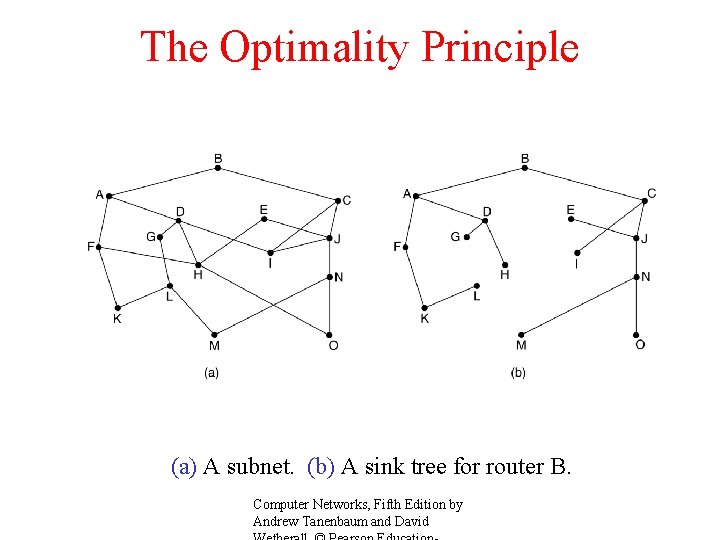
The Optimality Principle (a) A subnet. (b) A sink tree for router B. Computer Networks, Fifth Edition by Andrew Tanenbaum and David
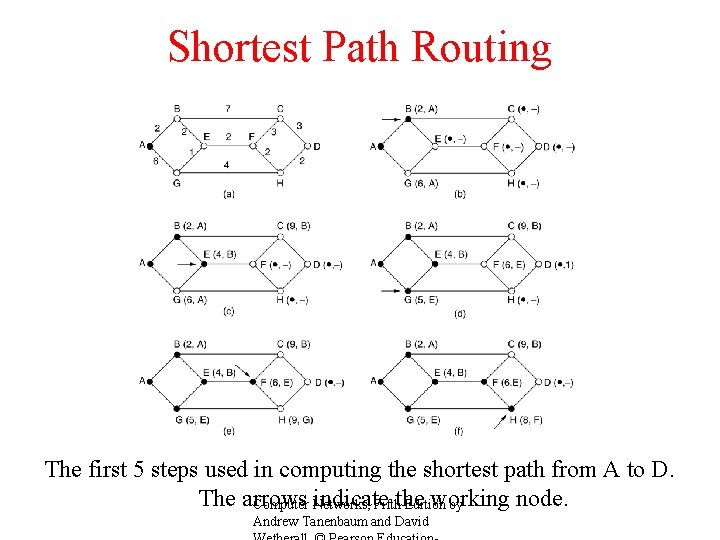
Shortest Path Routing The first 5 steps used in computing the shortest path from A to D. The arrows indicate working node. Computer Networks, Fifththe Edition by Andrew Tanenbaum and David
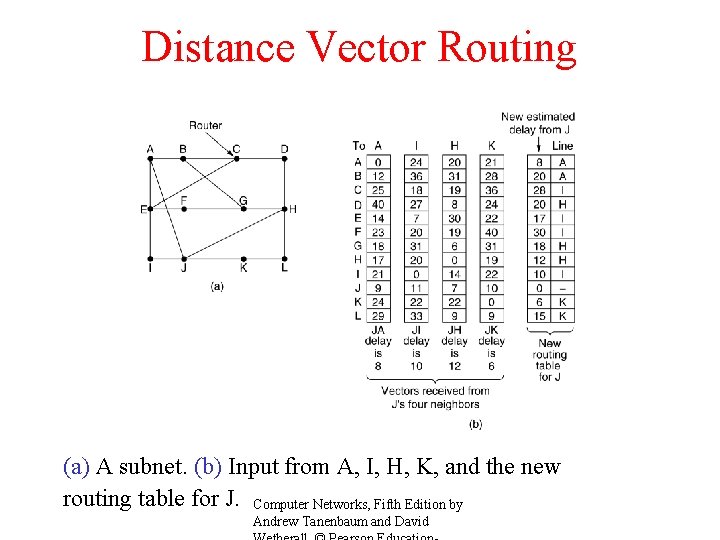
Distance Vector Routing (a) A subnet. (b) Input from A, I, H, K, and the new routing table for J. Computer Networks, Fifth Edition by Andrew Tanenbaum and David
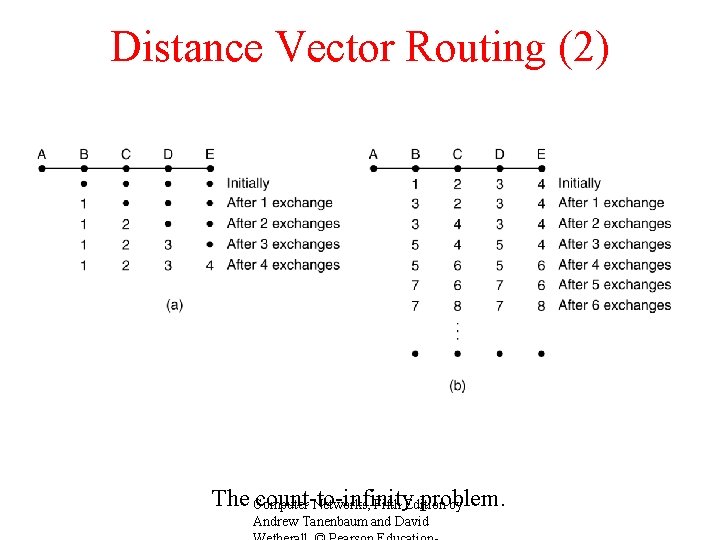
Distance Vector Routing (2) The Computer count-to-infinity problem. Networks, Fifth Edition by Andrew Tanenbaum and David
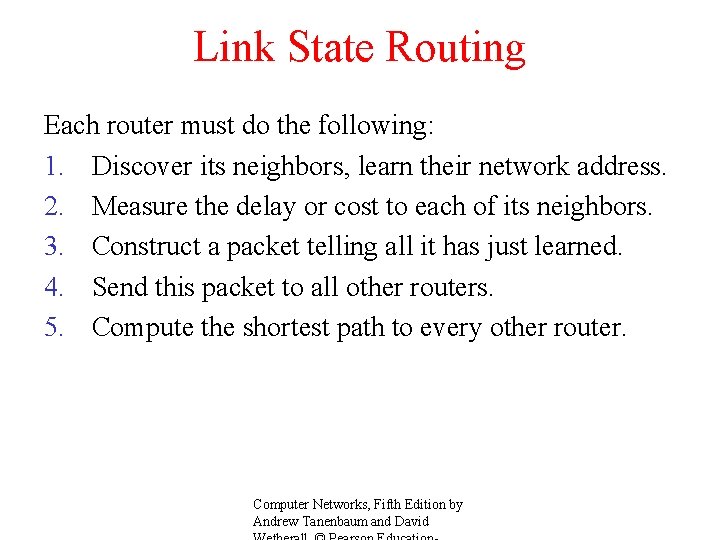
Link State Routing Each router must do the following: 1. Discover its neighbors, learn their network address. 2. Measure the delay or cost to each of its neighbors. 3. Construct a packet telling all it has just learned. 4. Send this packet to all other routers. 5. Compute the shortest path to every other router. Computer Networks, Fifth Edition by Andrew Tanenbaum and David
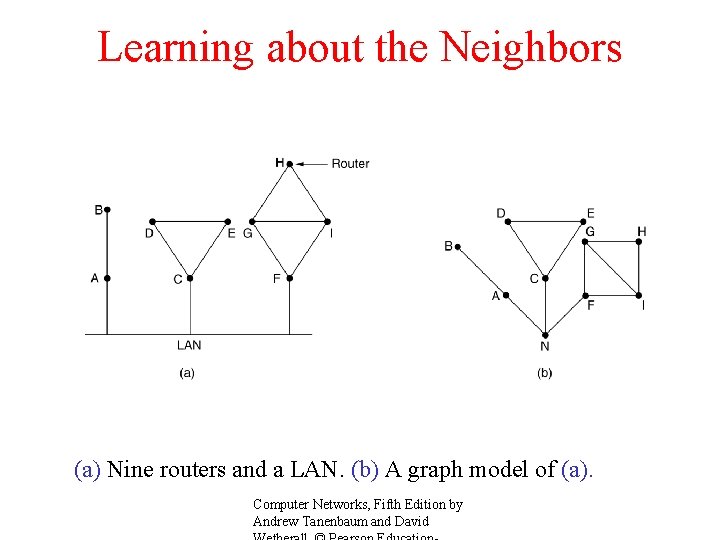
Learning about the Neighbors (a) Nine routers and a LAN. (b) A graph model of (a). Computer Networks, Fifth Edition by Andrew Tanenbaum and David
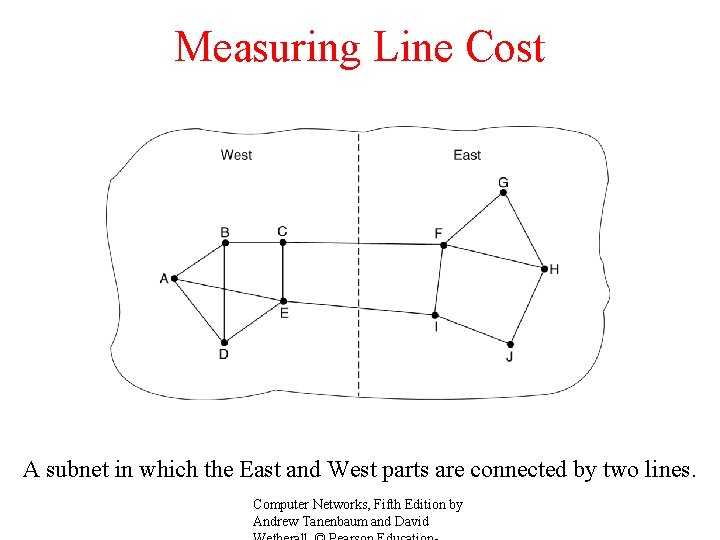
Measuring Line Cost A subnet in which the East and West parts are connected by two lines. Computer Networks, Fifth Edition by Andrew Tanenbaum and David
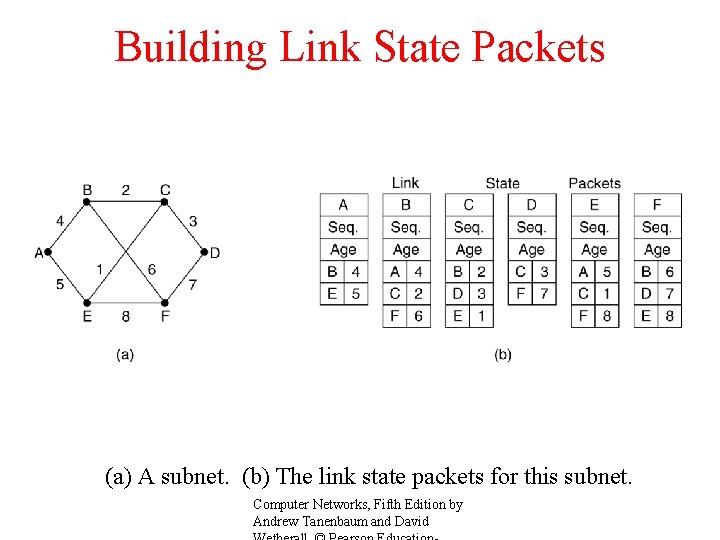
Building Link State Packets (a) A subnet. (b) The link state packets for this subnet. Computer Networks, Fifth Edition by Andrew Tanenbaum and David
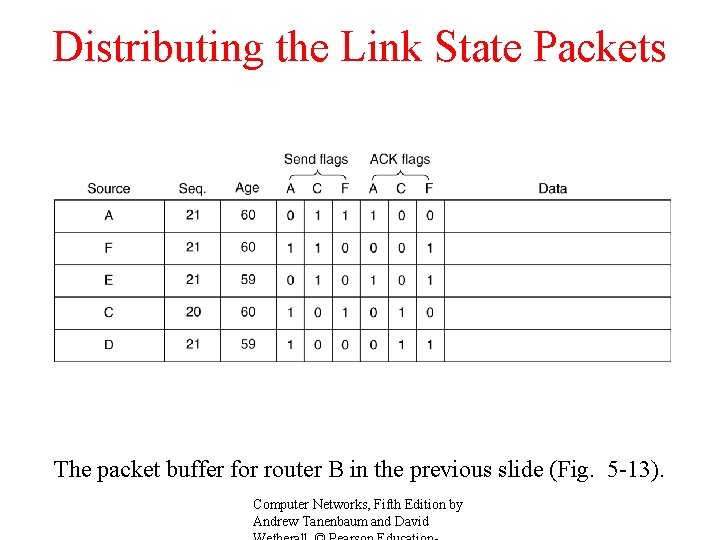
Distributing the Link State Packets The packet buffer for router B in the previous slide (Fig. 5 -13). Computer Networks, Fifth Edition by Andrew Tanenbaum and David
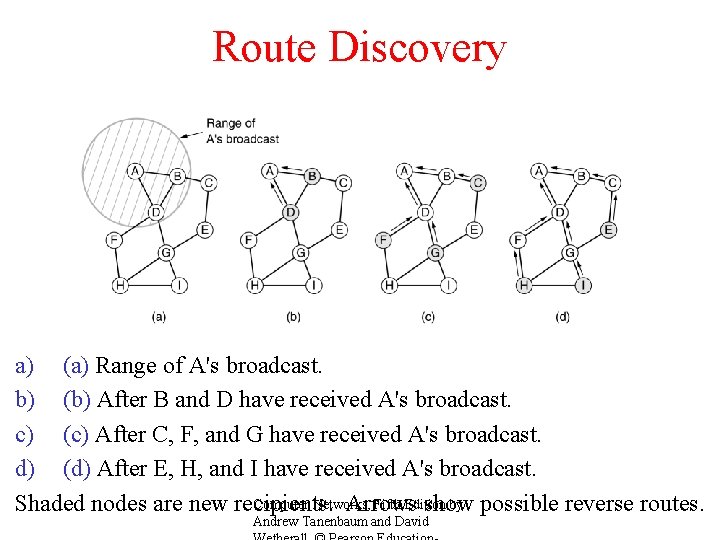
Route Discovery a) (a) Range of A's broadcast. b) (b) After B and D have received A's broadcast. c) (c) After C, F, and G have received A's broadcast. d) (d) After E, H, and I have received A's broadcast. Computer Networks, Fifth Edition by possible reverse routes. Shaded nodes are new recipients. Arrows show Andrew Tanenbaum and David
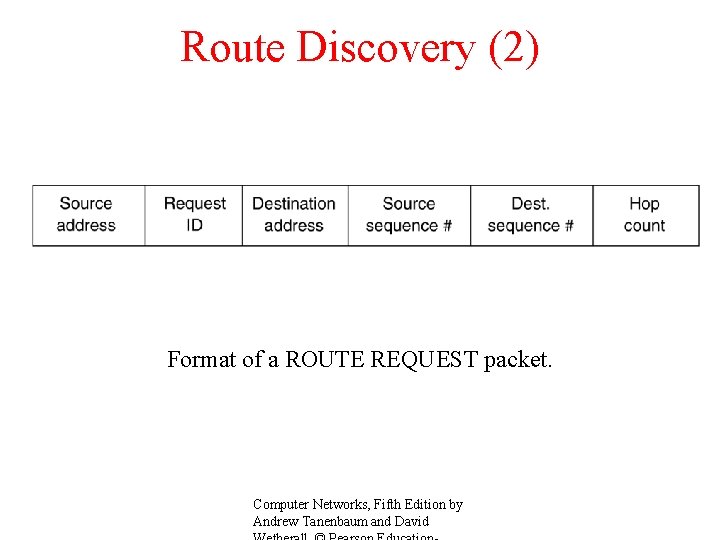
Route Discovery (2) Format of a ROUTE REQUEST packet. Computer Networks, Fifth Edition by Andrew Tanenbaum and David
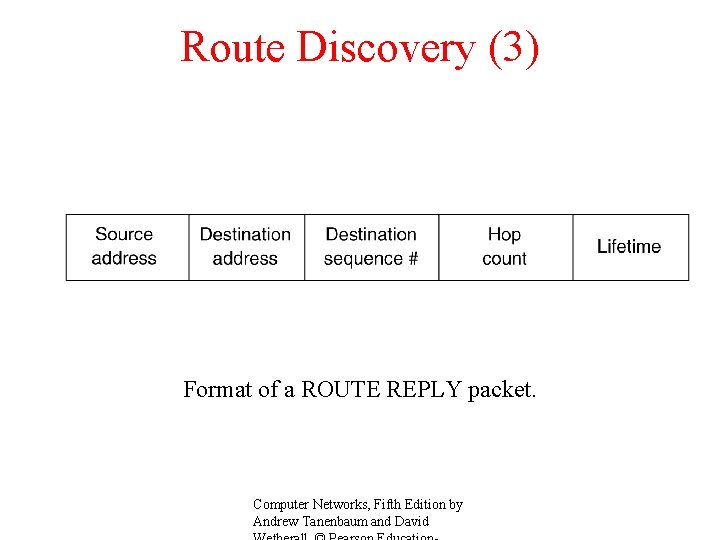
Route Discovery (3) Format of a ROUTE REPLY packet. Computer Networks, Fifth Edition by Andrew Tanenbaum and David
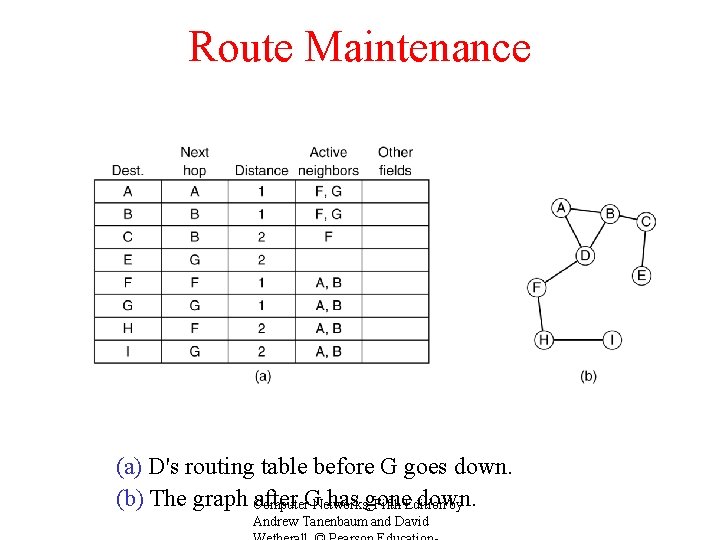
Route Maintenance (a) D's routing table before G goes down. (b) The graph Computer after GNetworks, has gone down. Fifth Edition by Andrew Tanenbaum and David
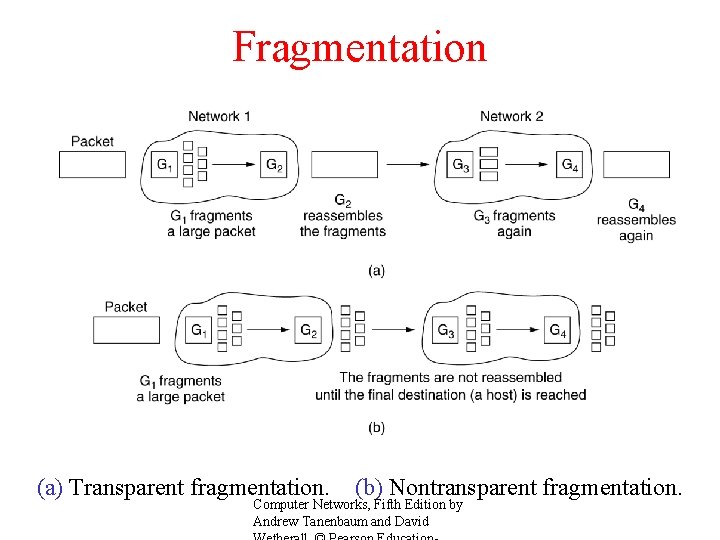
Fragmentation (a) Transparent fragmentation. (b) Nontransparent fragmentation. Computer Networks, Fifth Edition by Andrew Tanenbaum and David
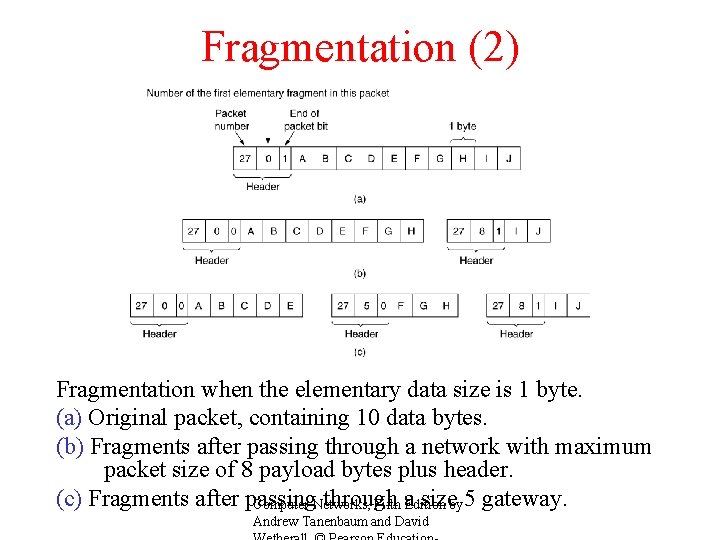
Fragmentation (2) Fragmentation when the elementary data size is 1 byte. (a) Original packet, containing 10 data bytes. (b) Fragments after passing through a network with maximum packet size of 8 payload bytes plus header. (c) Fragments after passing through sizeby 5 gateway. Computer Networks, Fifth a Edition Andrew Tanenbaum and David