
Chapter 5 The Microbial World Primary Producers Autotrophs
Chapter 5 The Microbial World
Primary Producers • Autotrophs- That convert inorganic carbon, usually in the form of CO 2 in to organic compounds.
Prokaryotes • Cells enclosed by a protective cell wall. • Lack a nucleus and membrane bound organelles. • Some have circular DNA (plasmids).
Domain Bacteria • • • Prokarya Have many shapes Coccus- spherical Bacillus- rod-shaped Spirillum- spiral
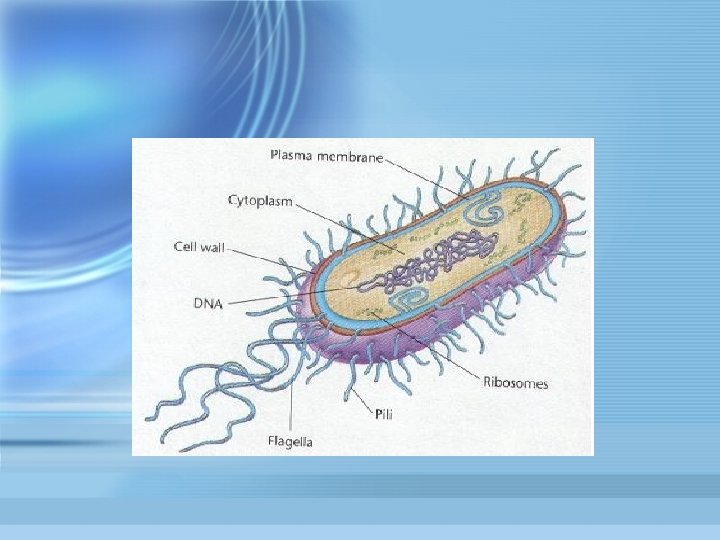
Bacteria Structure • All Bacteria have a cell wall. • Some bacteria have capsules that are covered with a slimy mucous for extra protection.
Interesting fact • 250, 000 bacteria would fit on the period at the end of this sentence.
• Bacteria grow in great numbers where detritus (dead organic matter) is present. • Decay bacteria- break down organic matter and recycle it into the environment. • Some are even used to clean up oil spills on the water.
Cyanobacteria • Once called blue-green algae. • They are photosynthetic. • Contain the pigments chlorophyll a- green phycocyanin- blue phyoerythrin- red They were among the first organisms on earth and contributed to the oxygen in the atmosphere.
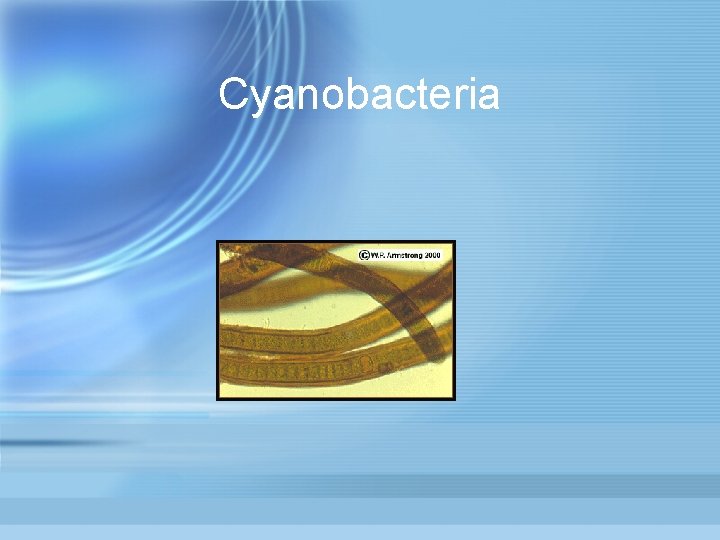
Cyanobacteria
Stromatolites • Massive calcareous (calcium carbonate) mounds formed by cyanobacteria.
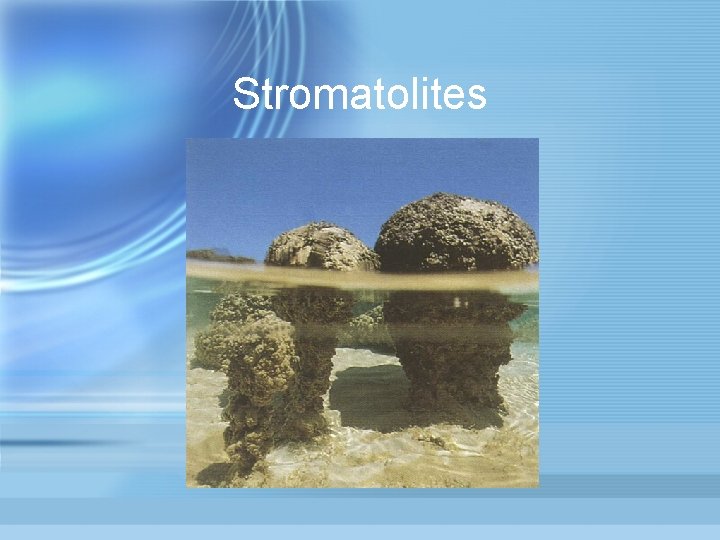
Stromatolites
• Cyanobacteria can be found in a variety of environments even in polar bear hair!
• Endolithic- burrow into rocks and coral skeletons. • Planktonic- species can reproduce rapidly and cause red tides. (Give swimmers rashes.
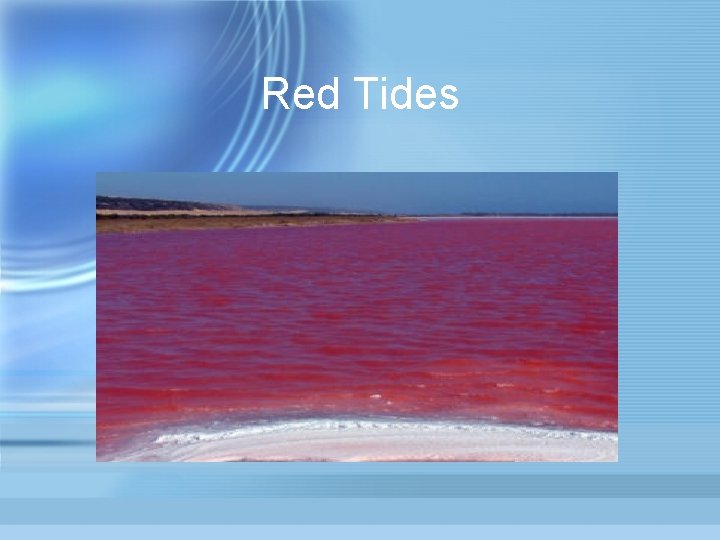
Red Tides
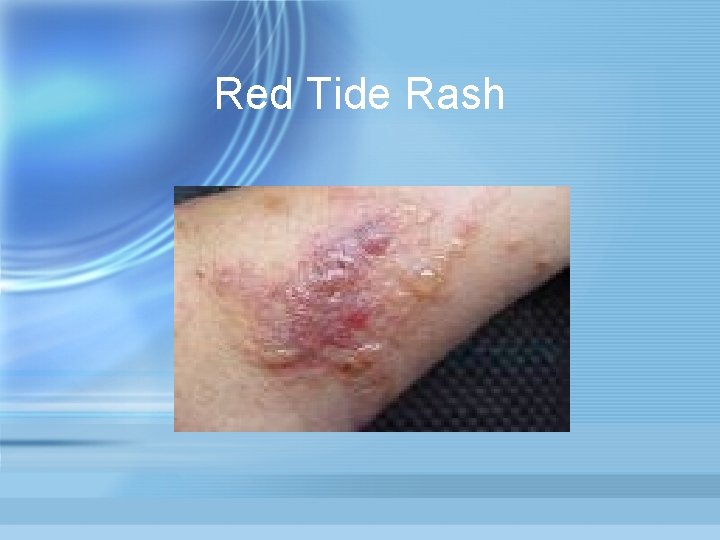
Red Tide Rash
• Epiphytes- bacteria that live on algae or plants. • Endophytes- bacteria that live in algae or plants.
Domain Archaea • Simplest and most primitive life forms. • Live in extreme environments like hydrothermal vents, the Dead Sea, and anaerobic environments. • Also found in other habitats.
• Archaeabacteria are classified by their nucleic acids. (DNA and RNA)
Metabolism • Some bacteria are autotrophicphotosynthesize or chemosynthesize. • Some are heterotrophic- respirate after consuming or decomposing. – Ex: Some anaerobic bacteria grow in sediments devoid of oxygen called-anoxic sediments.
• Some benthic bacteria are nitrogen fixers and convert Nitrogen gas N 2 into Ammonia (NH 4) and Nitrates (NO 3) for later use by primary producers.
- Slides: 21