
Chapter 5 The Lipids Fats Oils Phospholipids and
- Slides: 31
Chapter 5 The Lipids: Fats, Oils, Phospholipids, and Sterols Nutrition: Concepts & Controversies, 12 e Sizer/Whitney
Learning Objectives § Describe how and where dietary lipids are broken down and absorbed during digestion and how they are transported throughout the body. § Describe the significance of the blood tests for HDL and LDL cholesterol. § Describe the roles of omega-3 and omega-6 fatty acids in the body, and discuss which may be too low in some people’s diets and how they can increase their intakes.
Learning Objectives § Develop a diet plan that provides enough of the right kinds of fats within calorie limits. § Discuss evidence for the benefits and drawbacks of specific dietary fats in terms of their potential effects on human health.
Introduction § Diet moderate in fats § Lipids are necessary and valuable § Lipids can harm health § Three classes of lipids § Triglycerides § Phospholipids § Sterols
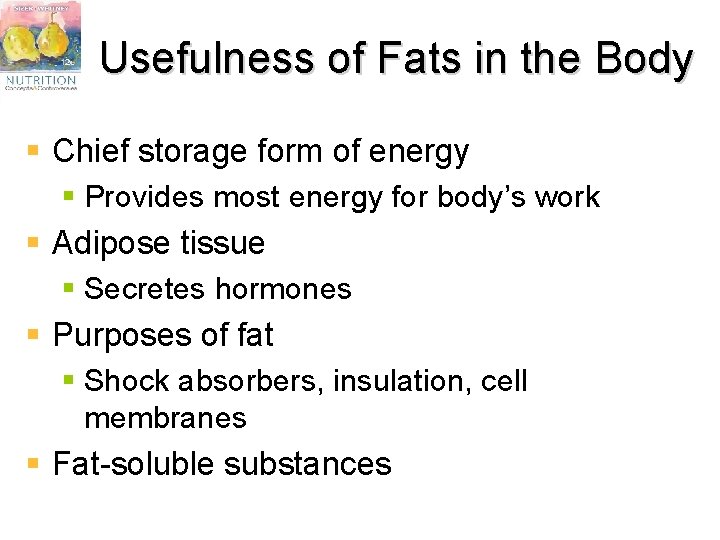
Usefulness of Fats in the Body § Chief storage form of energy § Provides most energy for body’s work § Adipose tissue § Secretes hormones § Purposes of fat § Shock absorbers, insulation, cell membranes § Fat-soluble substances
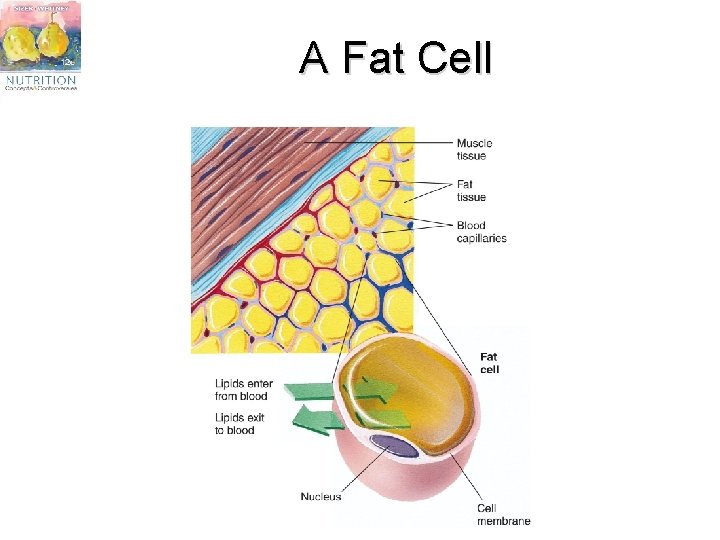
A Fat Cell
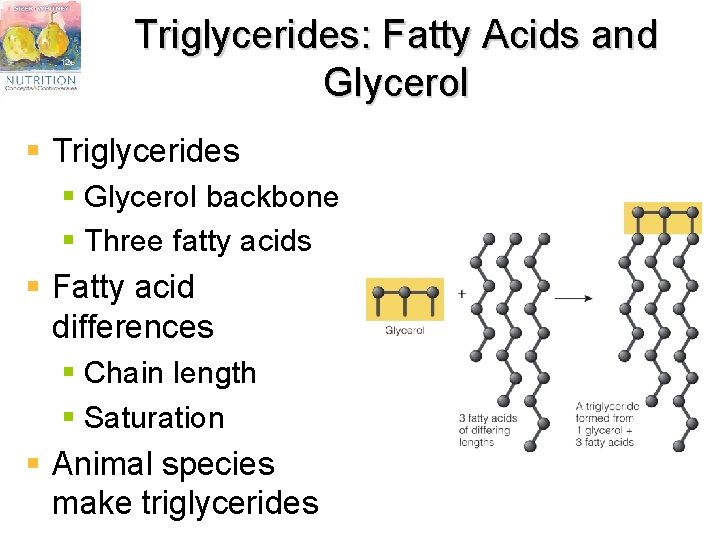
Triglycerides: Fatty Acids and Glycerol § Triglycerides § Glycerol backbone § Three fatty acids § Fatty acid differences § Chain length § Saturation § Animal species make triglycerides
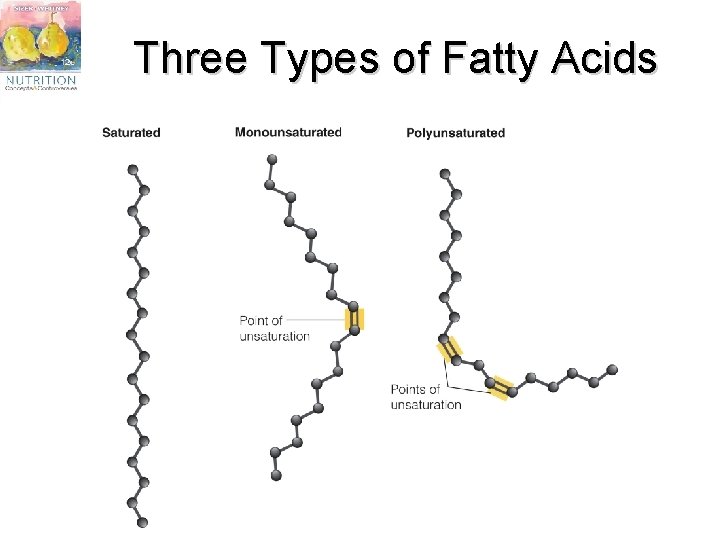
Saturated Versus Unsaturated Fatty Acids § Saturation § Hydrogen atoms § Levels of saturation § Saturated § Unsaturated § Polyunsaturated § Monounsaturated
Three Types of Fatty Acids
Phospholipids and Sterols § Phospholipids § Glycerol, two fatty acids, and a phosphorus molecule § Soluble in water and fat § Emulsifier § Sterols § Roles in the body § Plant sterols
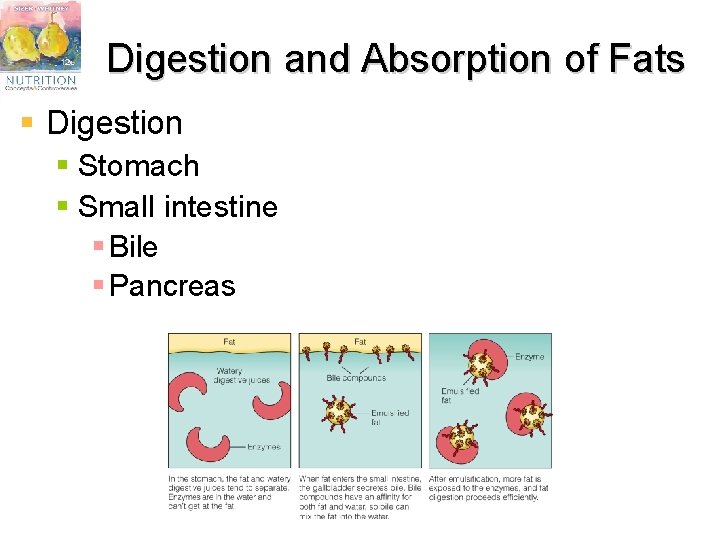
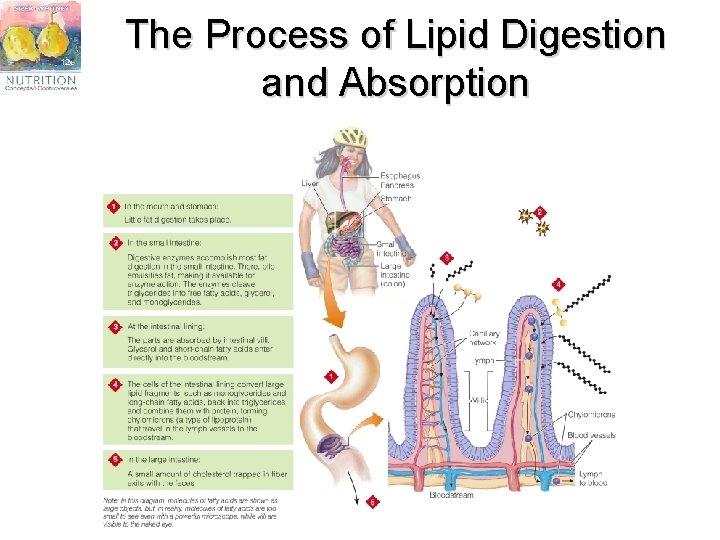
Digestion and Absorption of Fats § Digestion § Stomach § Small intestine § Bile § Pancreas
The Process of Lipid Digestion and Absorption
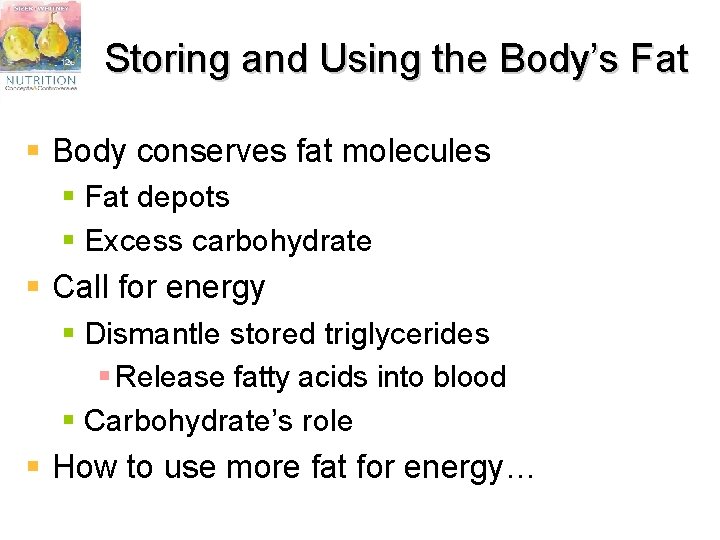
Storing and Using the Body’s Fat § Body conserves fat molecules § Fat depots § Excess carbohydrate § Call for energy § Dismantle stored triglycerides § Release fatty acids into blood § Carbohydrate’s role § How to use more fat for energy…
Dietary Fat, Cholesterol, and Health § Heart and artery disease § Saturated and trans fats § Beneficial fats § Cancer § Diet high in saturated fats § Obesity § Overconsumption of calories
Lipoproteins and Heart Disease Risk § Lipoprotein movement in the body § Liver § Types of lipoproteins § Chylomicrons § Very-low-density lipoproteins (VLDL) § Low-density lipoproteins (LDL) § High-density lipoproteins (HDL)
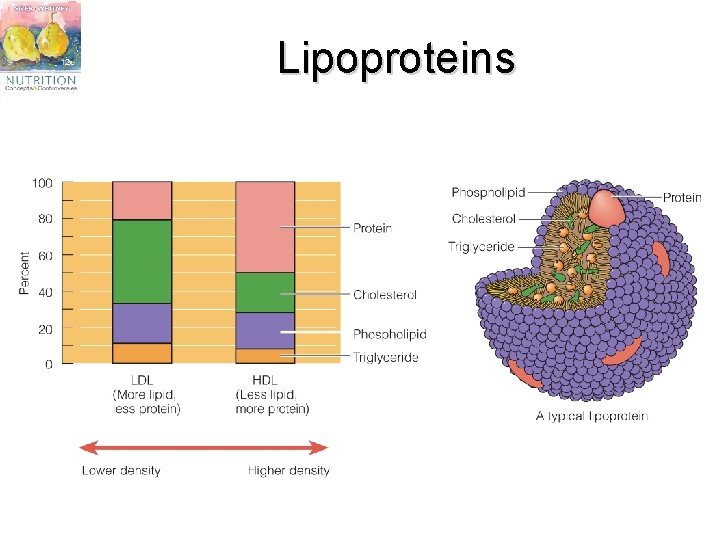
Lipoproteins
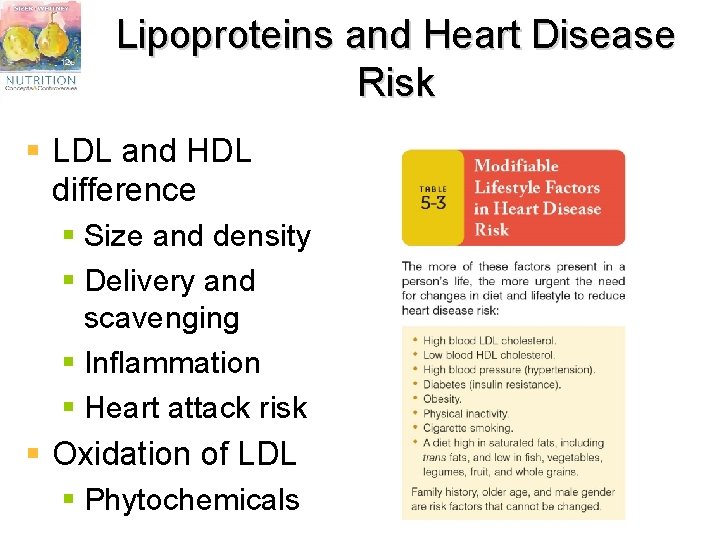
Lipoproteins and Heart Disease Risk § LDL and HDL difference § Size and density § Delivery and scavenging § Inflammation § Heart attack risk § Oxidation of LDL § Phytochemicals
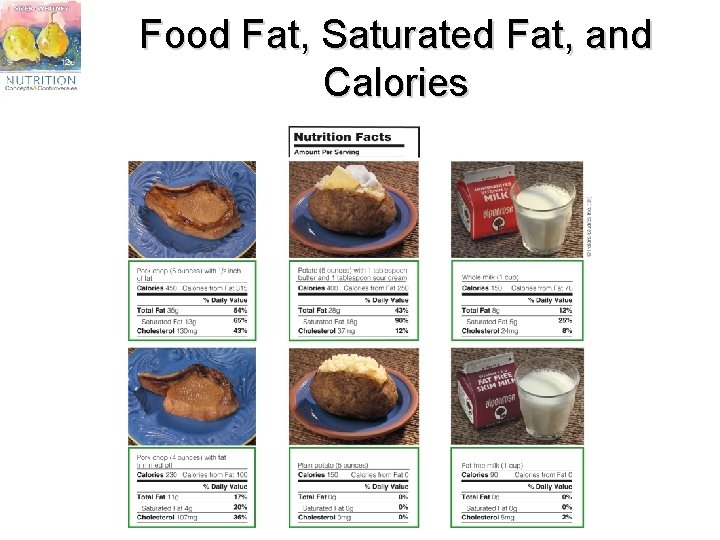
Food Fat, Saturated Fat, and Calories
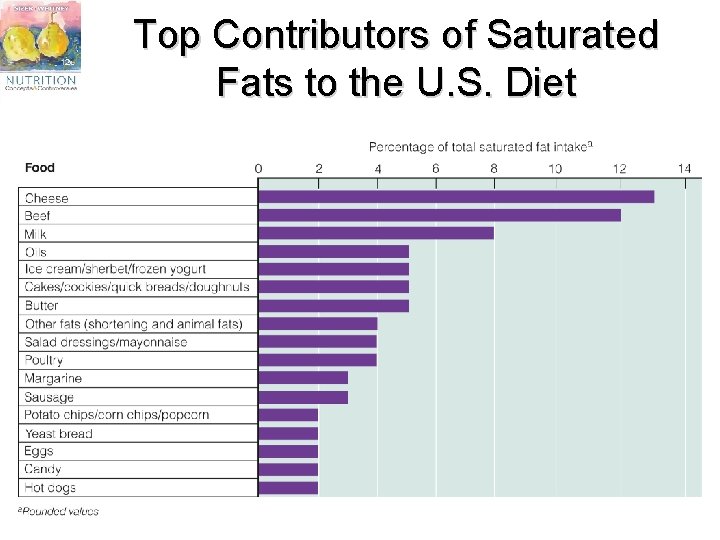
Top Contributors of Saturated Fats to the U. S. Diet
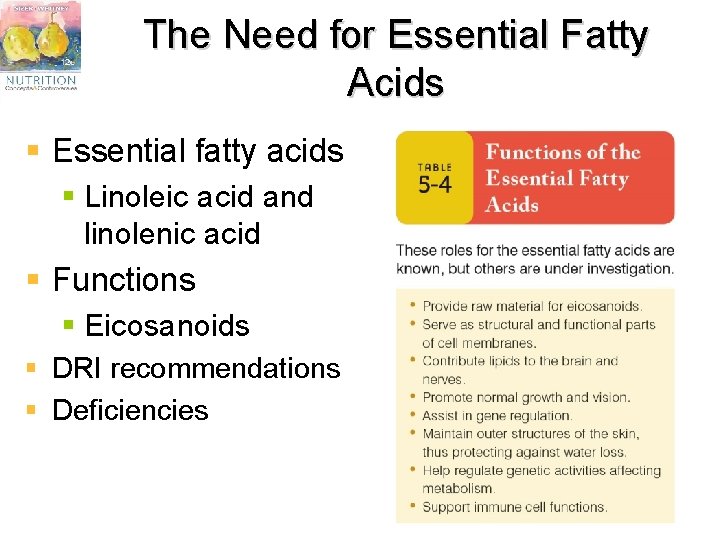
The Need for Essential Fatty Acids § Essential fatty acids § Linoleic acid and linolenic acid § Functions § Eicosanoids § DRI recommendations § Deficiencies
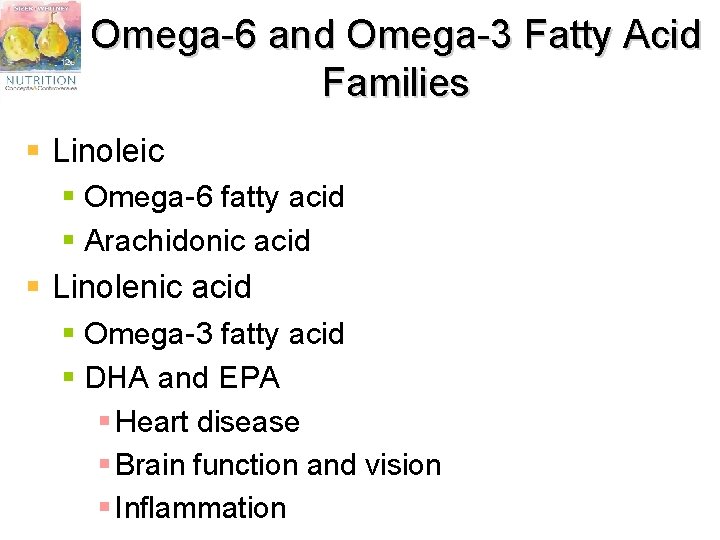
Omega-6 and Omega-3 Fatty Acid Families § Linoleic § Omega-6 fatty acid § Arachidonic acid § Linolenic acid § Omega-3 fatty acid § DHA and EPA § Heart disease § Brain function and vision § Inflammation
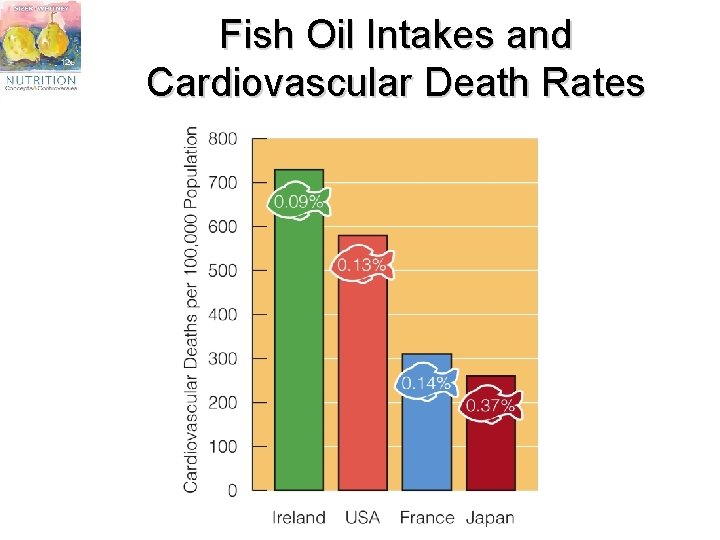
Fish Oil Intakes and Cardiovascular Death Rates
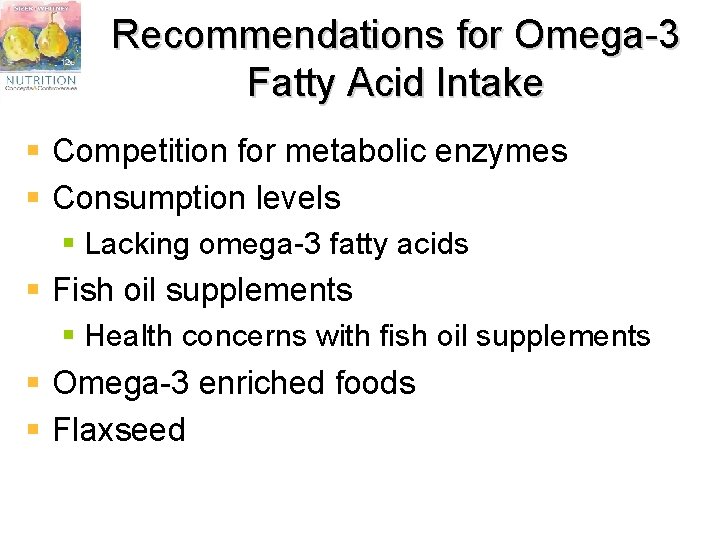
Recommendations for Omega-3 Fatty Acid Intake § Competition for metabolic enzymes § Consumption levels § Lacking omega-3 fatty acids § Fish oil supplements § Health concerns with fish oil supplements § Omega-3 enriched foods § Flaxseed
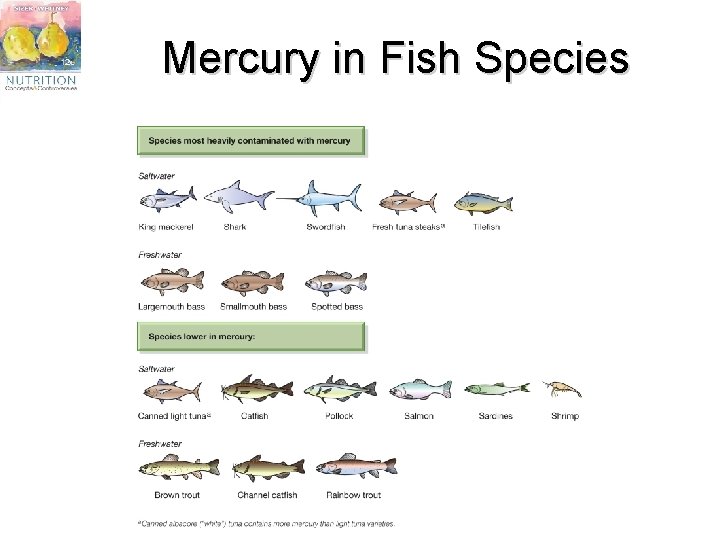
Mercury in Fish Species
Effects of Processing on Unsaturated Fats § Hydrogenation § Effects on fats § Oxidation of unsaturated oils § Hydrogenation of oils § Benefits of hydrogenation § Nutrient losses § Alternatives to hydrogenation
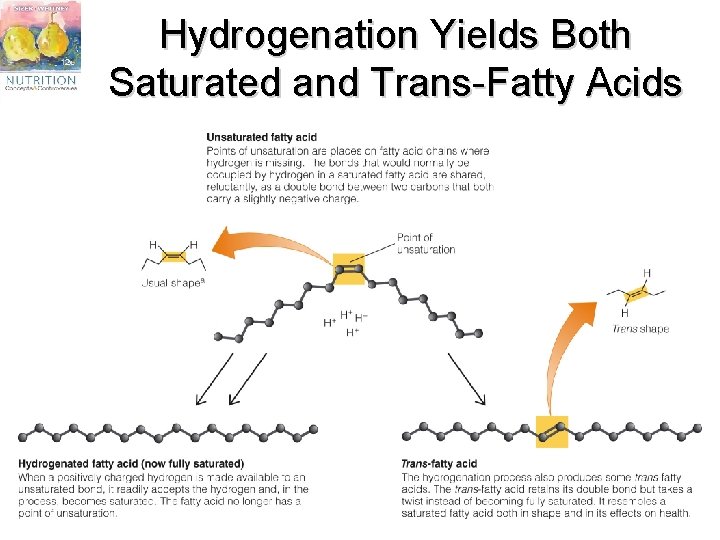
Hydrogenation Yields Both Saturated and Trans-Fatty Acids
Effects of Processing on Unsaturated Fats § Trans-fatty acids § Polyunsaturated fats § Change in chemical structure § Health effects § LDL and HDL cholesterol § Similarities with saturated fat § Trans fat in foods
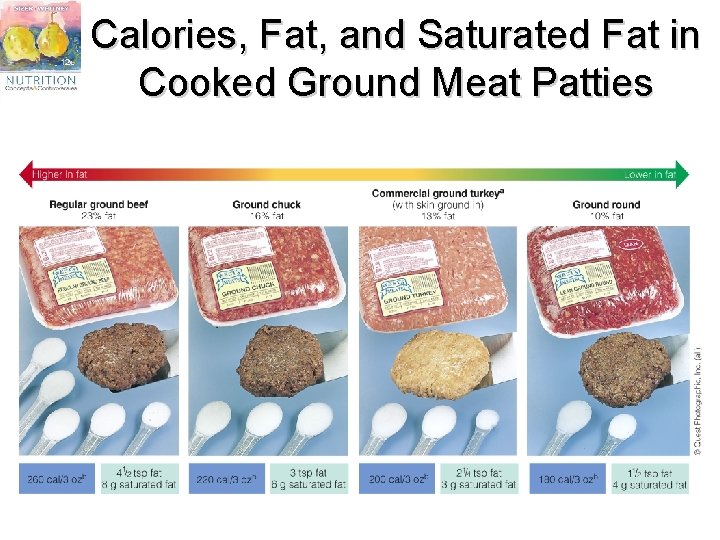
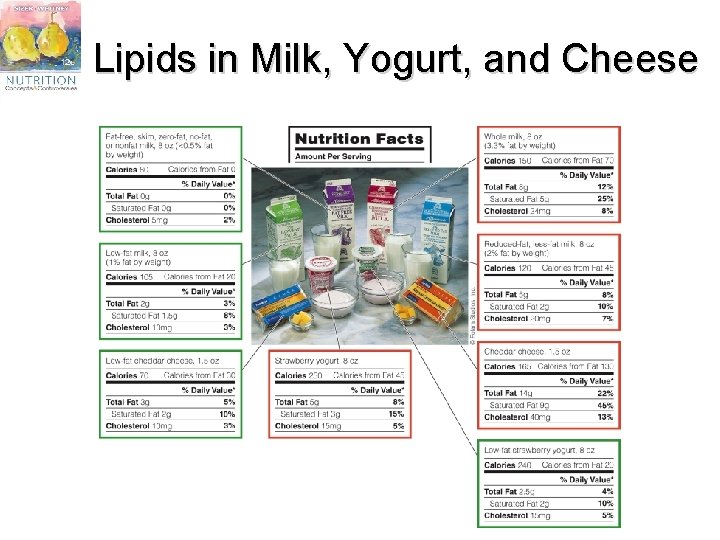
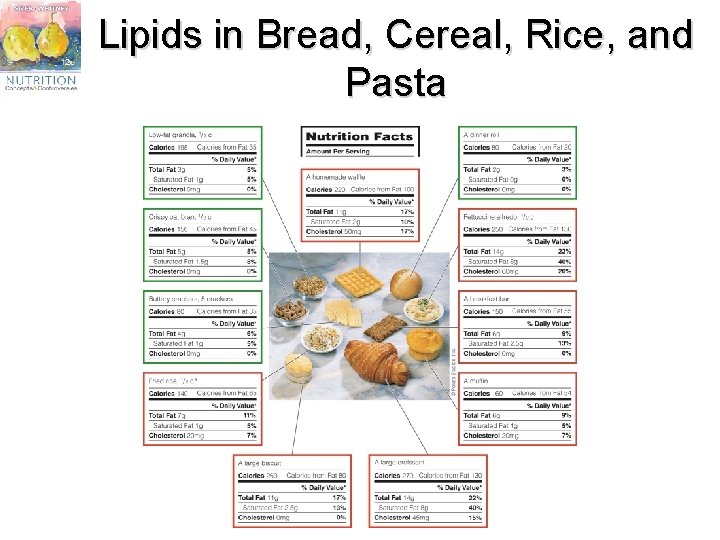
Fat in the Diet § Meat, poultry, fish, dried peas & beans, eggs, & nuts § Four categories for meat § Limit intake to 5 to 7 ounces per day § Choosing low-fat meats § Ground turkey or chicken vs. beef § Milk, yogurt, and cheese § Foods not included in this category § Grains
Calories, Fat, and Saturated Fat in Cooked Ground Meat Patties
Lipids in Milk, Yogurt, and Cheese
Lipids in Bread, Cereal, Rice, and Pasta