
Chapter 5 The Investment decisionmaking process Learning Objectives
Chapter 5 The Investment decision-making process
Learning Objectives Lead B 2: Explain the steps & pertinent issues in the decision making process. Component B 2): Explain: a) Investment decision-making process b) Discounting c) Capital investments as real options • Origination of proposals, creation of capital budgets, go/no go decisions. • Time value of money. • Comparing annuities. • Profitability index for capital rationing. • Decision to make follow-on investment, abandon or wait (capex as real options).
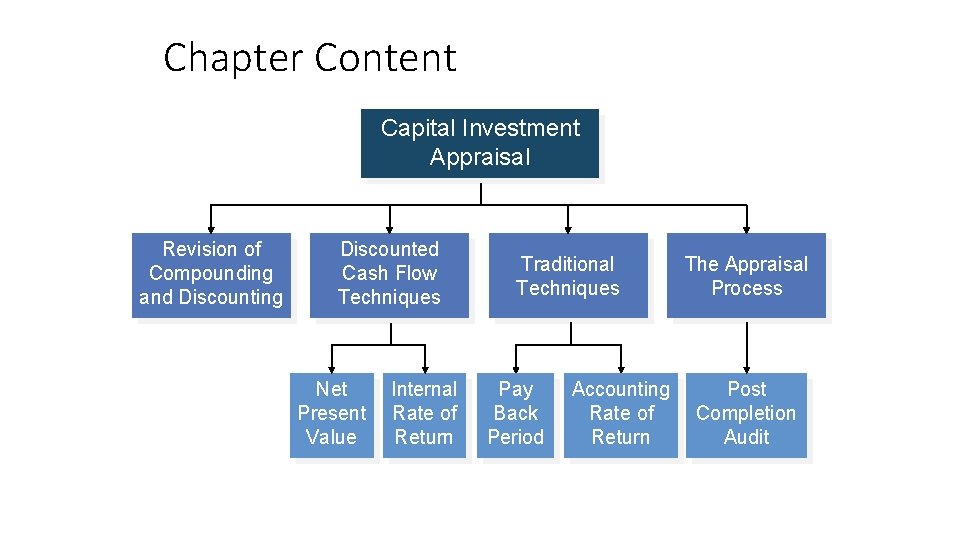
Chapter Content Capital Investment Appraisal Revision of Compounding and Discounting Discounted Cash Flow Techniques Net Present Value Internal Rate of Return Traditional Techniques Pay Back Period Accounting Rate of Return The Appraisal Process Post Completion Audit
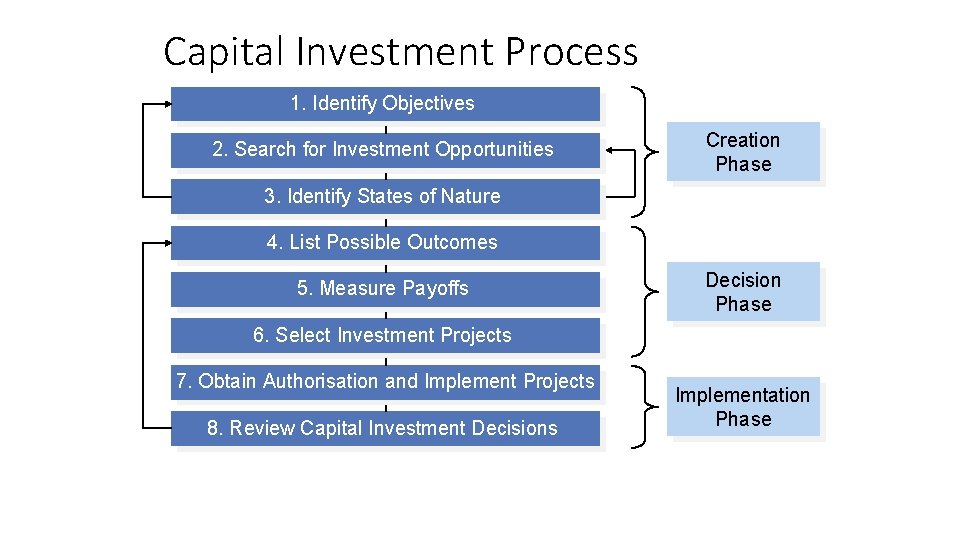
Capital Investment Process 1. Identify Objectives 2. Search for Investment Opportunities Creation Phase 3. Identify States of Nature 4. List Possible Outcomes 5. Measure Payoffs Decision Phase 6. Select Investment Projects 7. Obtain Authorisation and Implement Projects 8. Review Capital Investment Decisions Implementation Phase
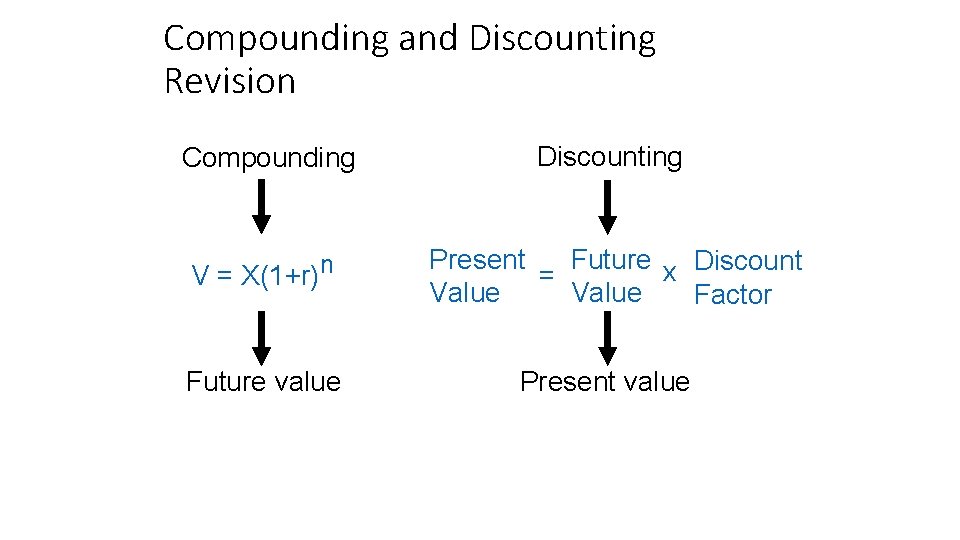
Compounding and Discounting Revision Compounding Discounting V = X(1+r)n Present Future x Discount = Value Factor Future value Present value
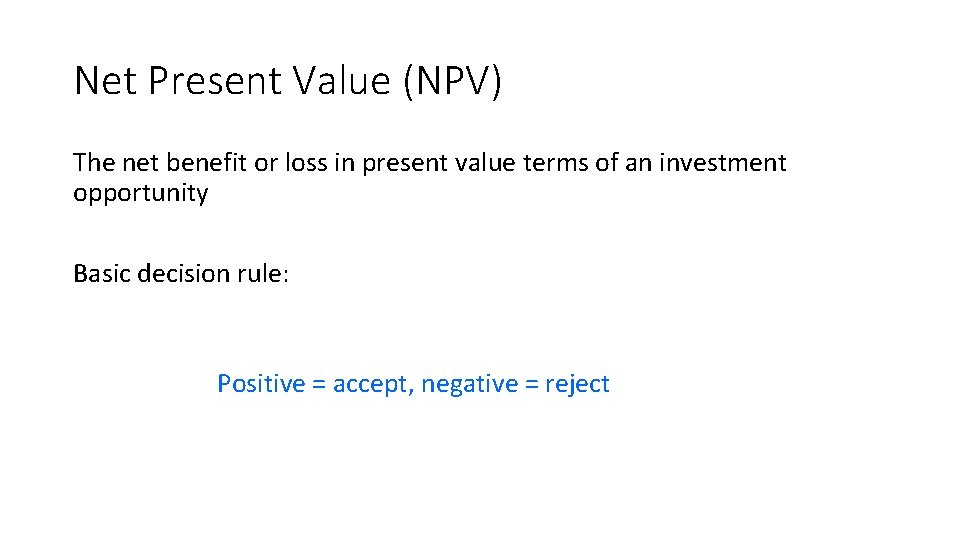
Net Present Value (NPV) The net benefit or loss in present value terms of an investment opportunity Basic decision rule: Positive = accept, negative = reject
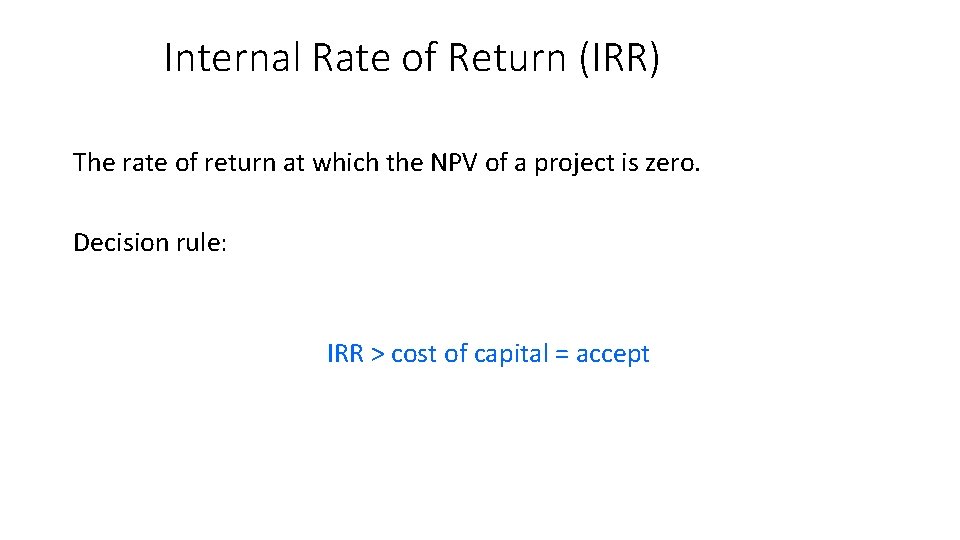
Internal Rate of Return (IRR) The rate of return at which the NPV of a project is zero. Decision rule: IRR > cost of capital = accept
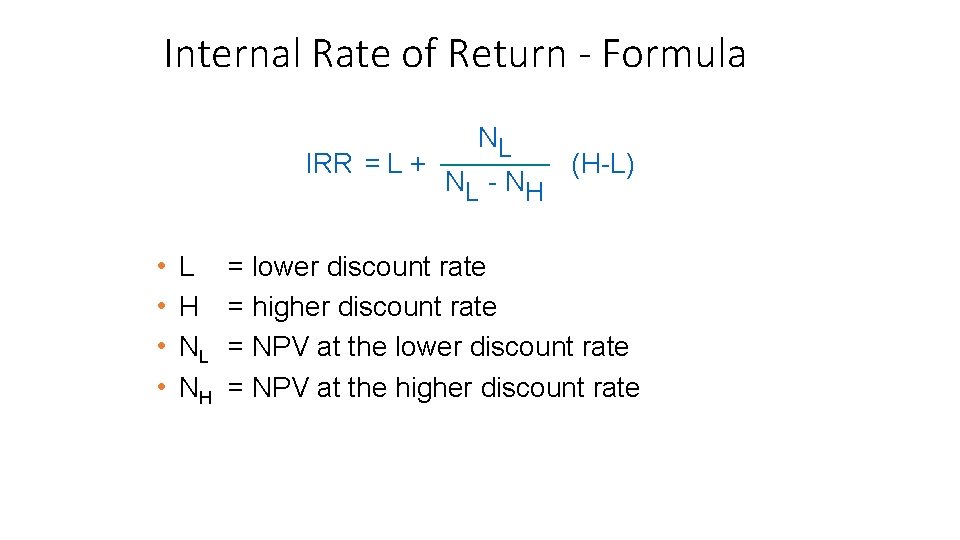
Internal Rate of Return - Formula IRR = L + • • L H NL NL - N H (H-L) = lower discount rate = higher discount rate = NPV at the lower discount rate = NPV at the higher discount rate
- Slides: 8