
Chapter 5 The Free Enterprise System Traits of
- Slides: 50
Chapter 5 The Free Enterprise System
Traits of Private Enterprise Section 5. 1
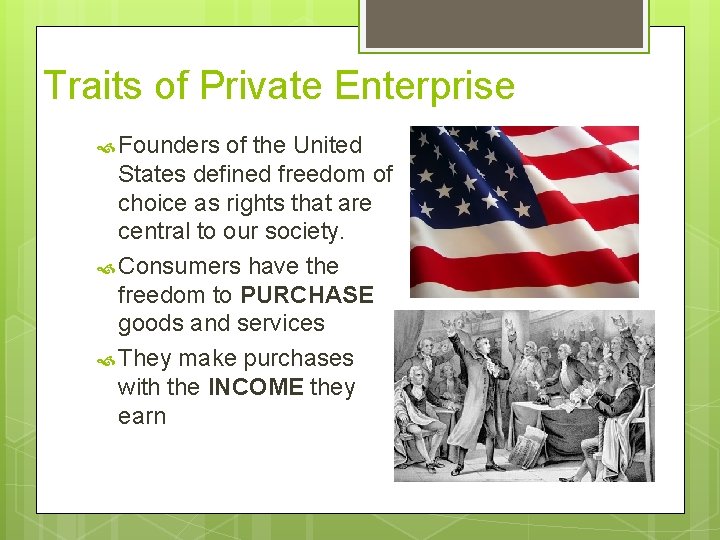
Traits of Private Enterprise Founders of the United States defined freedom of choice as rights that are central to our society. Consumers have the freedom to PURCHASE goods and services They make purchases with the INCOME they earn
Traits of Private Enterprise Business ownership by ordinary people Also known as Free Enterprise People are encouraged to start and operate their own businesses
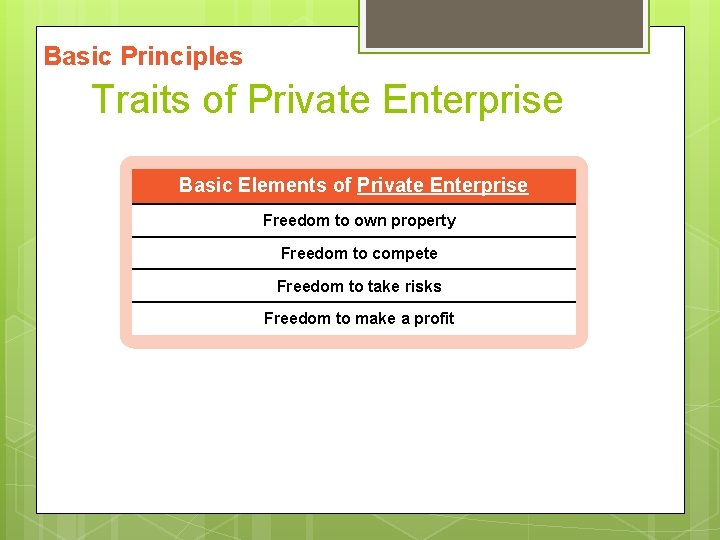
Basic Principles Traits of Private Enterprise Basic Elements of Private Enterprise Freedom to own property Freedom to compete Freedom to take risks Freedom to make a profit
Freedom of Ownership Buy what you want and do what you want with it as long as its not prohibited by law Free to own personal property such as cars, computers, and homes Free to own natural resources oil and land
Business Ownership Can own a business in two ways 1. Start and run your own business: entrepreneurs 2. Invest: Stockholders
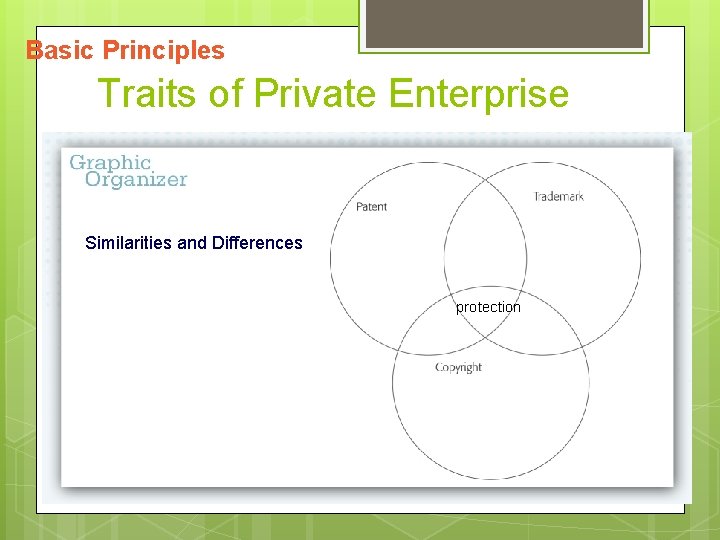
Intellectual Property Rights Patents: exclusive rights to make, use, or sell that invention for 20 years Trademark: word, name, symbol, sound or colors that identifies a good or service and cannot be used by anyone but the owner Copyright: anything that is authored by an individual (ie: books, music, art)
Basic Principles Traits of Private Enterprise Similarities and Differences protection
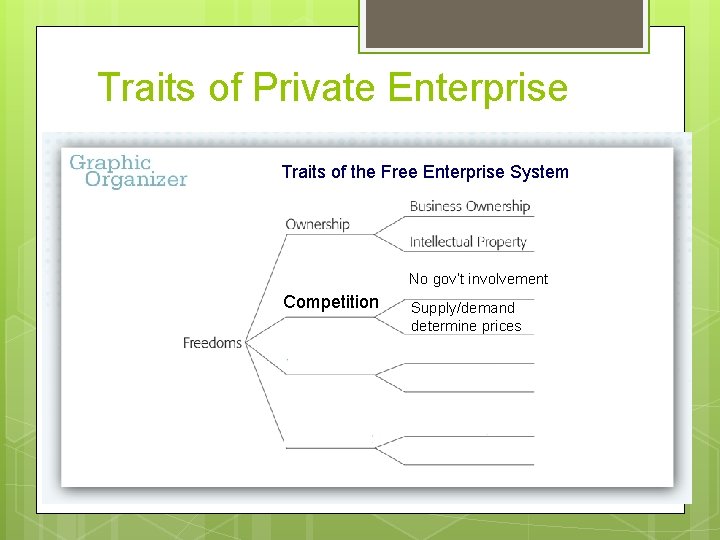
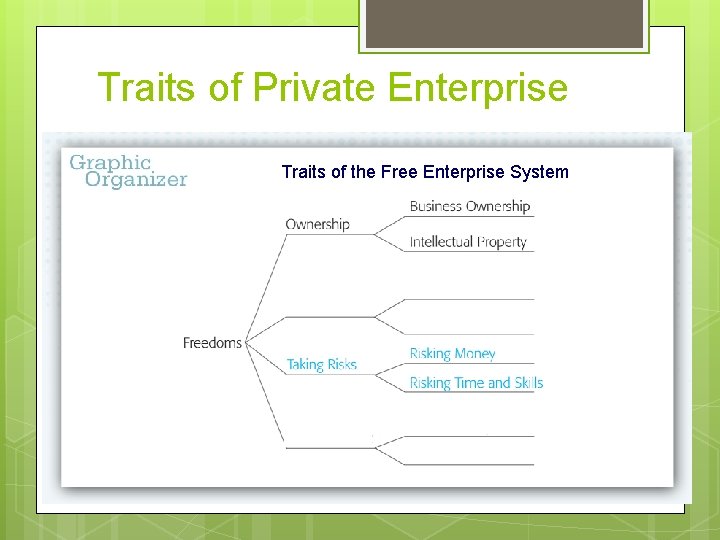
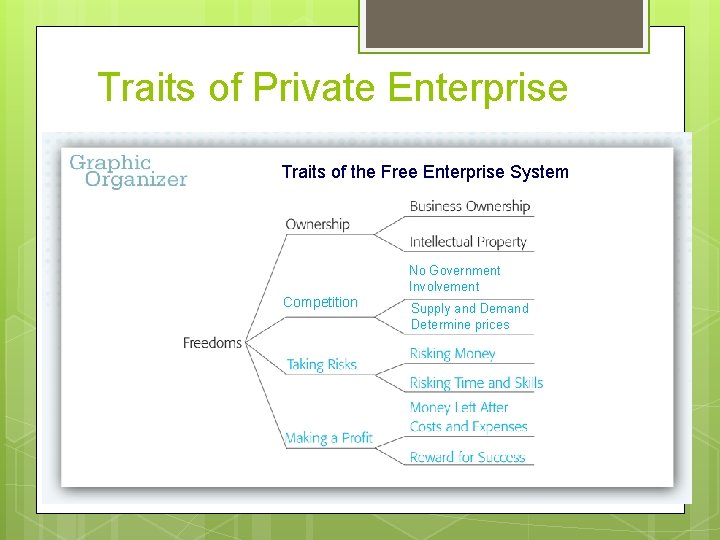
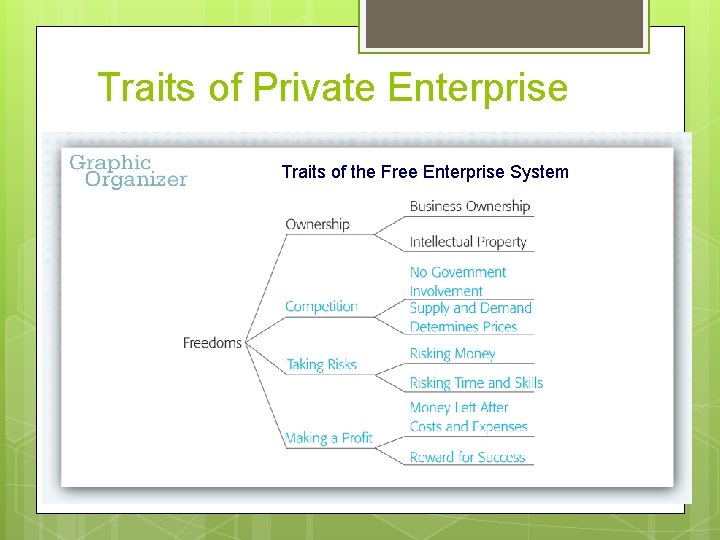
Traits of Private Enterprise Traits of the Free Enterprise System No gov’t involvement Competition Supply/demand determine prices
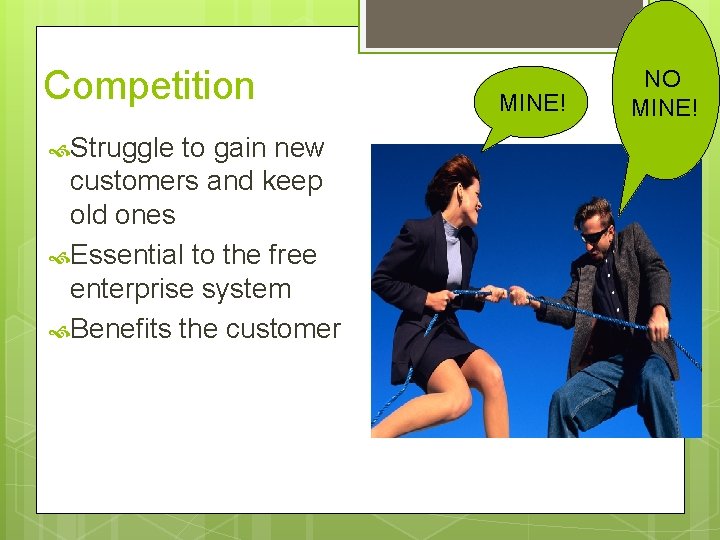
Competition Struggle to gain new customers and keep old ones Essential to the free enterprise system Benefits the customer MINE! NO MINE!
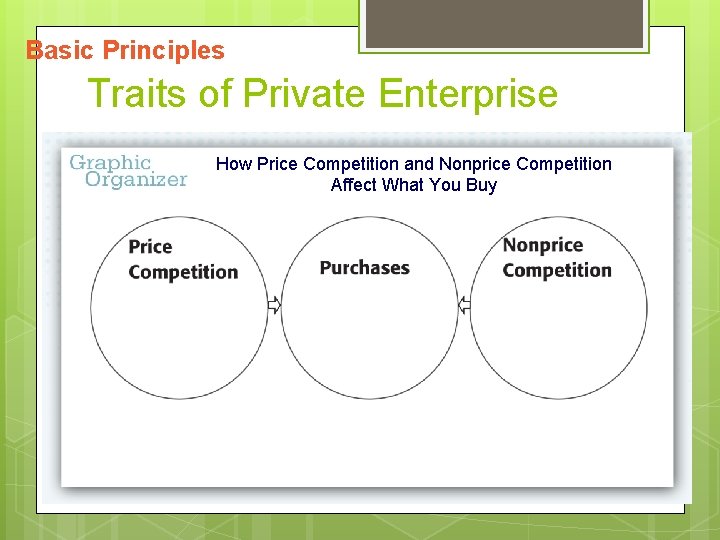
Price and Non. Price Competition All other things equal, the consumer will buy the product with the lowest price Non-Price Competition based on factors that are not price such as quality, services, location, reputation
Basic Principles Traits of Private Enterprise How Price Competition and Nonprice Competition Affect What You Buy
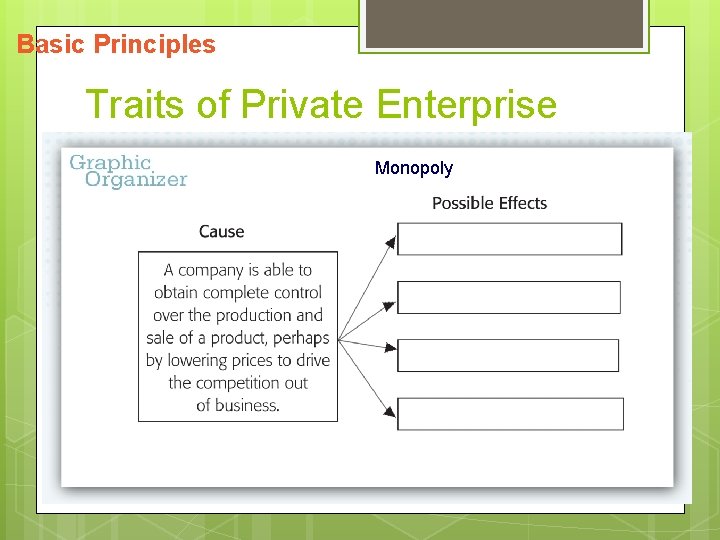
Monopolies No competition and one company controls the market for a given product Not permitted in a free enterprise system Prevents competition
Examples of Monopolies Microsoft Case (2000) Federal Judge declared Microsoft’s Windows operating system was a monopoly It’s technological dominance was said to have stifled innovation Ruling stated Window’s dominance was harmful to the free enterprise system
Basic Principles Traits of Private Enterprise Monopoly
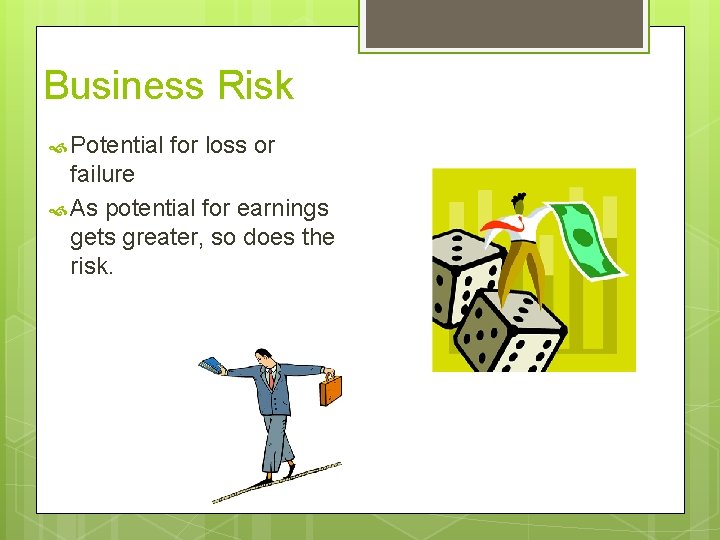
Business Risk Potential for loss or failure As potential for earnings gets greater, so does the risk.
Traits of Private Enterprise Traits of the Free Enterprise System
Profit: money earned from conducting business after all costs and expenses have been paid Range of profit is usually 1%-5% The remaining 95%99% pays costs, expenses and business taxes
Economic Cost of Unprofitable Firms Lay off employees Investors lose money Pay less money to government in taxes
Economic Benefits of Successful Firms Hire more employees Investors earn money Pay more money to the government in taxes Attract competition
Traits of Private Enterprise Traits of the Free Enterprise System No Government Involvement Competition Supply and Demand Determine prices
Supply and Demand Supply: the amount of goods producers are willing to make and sell Price and quantity supplied move in the same direction Demand: consumer willingness and ability to buy products Price and demand move in opposite directions
Surpluses Occurs when supply exceeds demand If price seems too high to consumers they will not buy
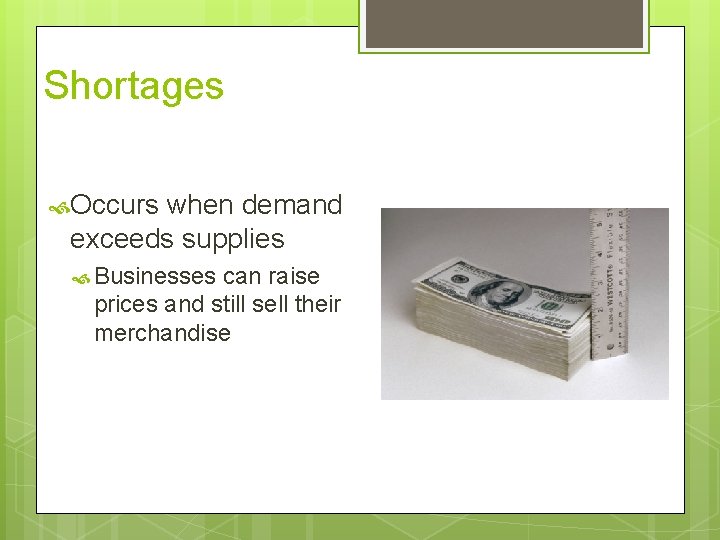
Shortages Occurs when demand exceeds supplies Businesses can raise prices and still sell their merchandise
Equilibrium Occurs when the amount of a product being supplied is equal to the amount being demanded Everyone wins
Traits of Private Enterprise Traits of the Free Enterprise System
Business Opportunities Section 5. 2
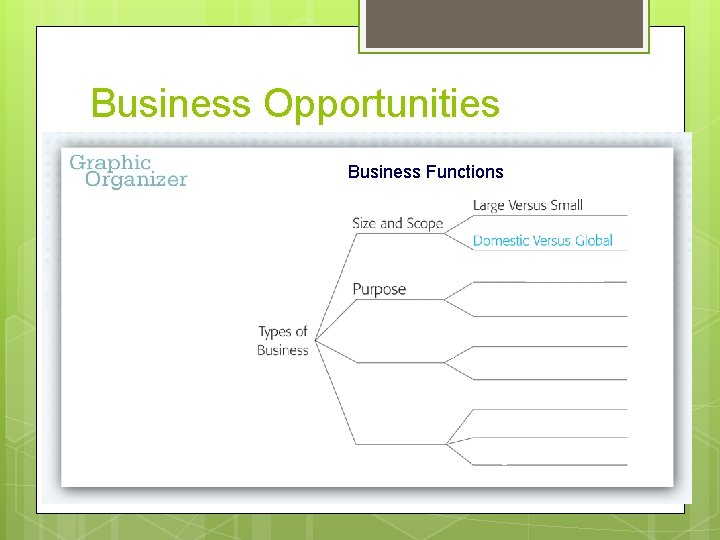
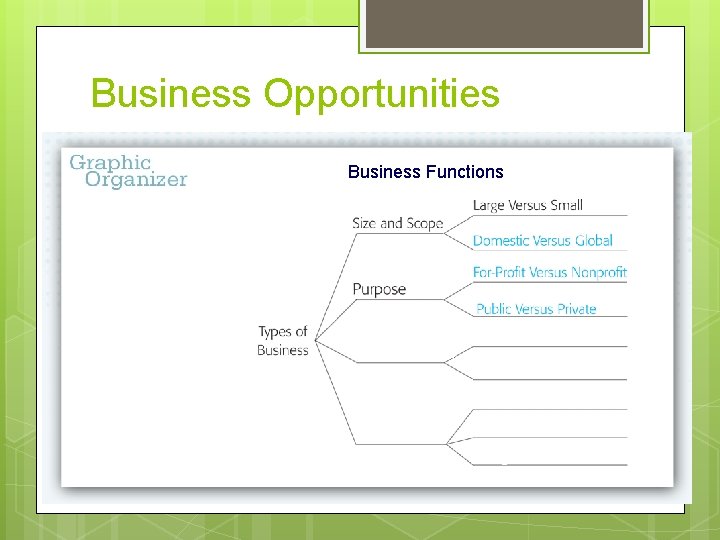
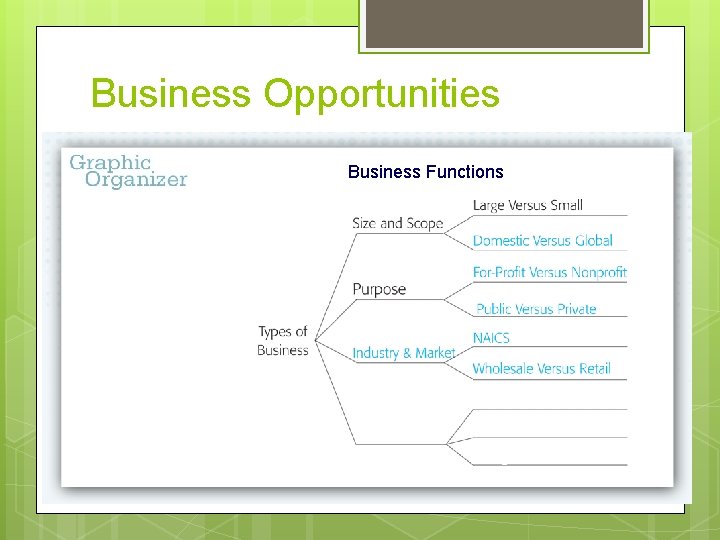
Size and Scope Size: large or small business Scope: extent of its business operation Serve a small neighborhood or serve globally
Size and Scope Small Businesses: Operated only by one or a few individuals Generally less than 100 employees Large Businesses: Typically employs 1000 people National Companies
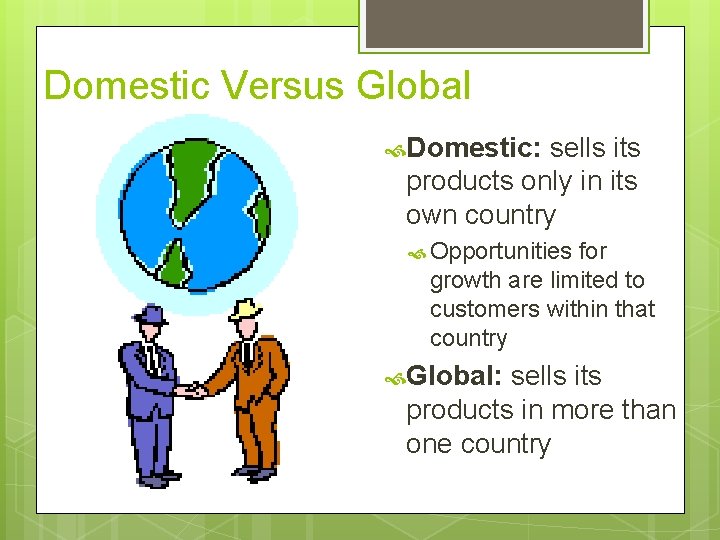
Domestic Versus Global Domestic: sells its products only in its own country Opportunities for growth are limited to customers within that country Global: sells its products in more than one country
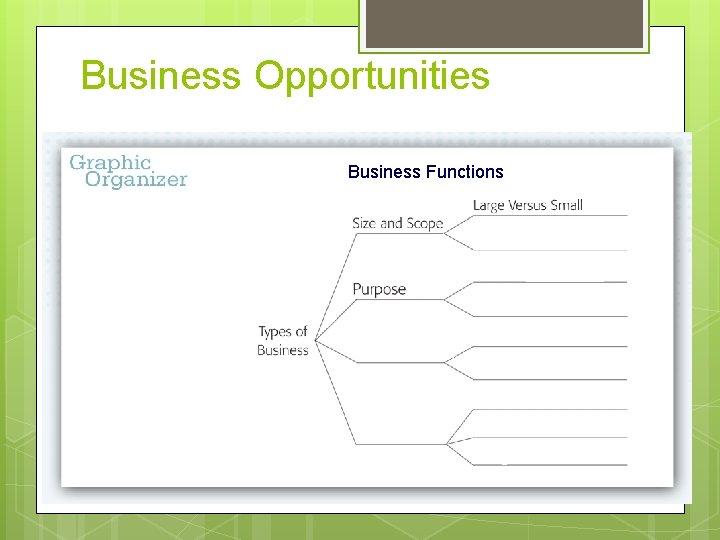
Business Opportunities Business Functions
For-Profit Versus Non. Profit Organization For-Profit: seeks to make a profit from its operations Non. Profit: functions like a business but uses the money it makes to fund the cause identified by its charter Generate revenue through gifts and donations
Public Sector Versus Private Sector Public: government financed agencies Private: businesses not associated with government agencies
Business Opportunities Business Functions
Industry and Markets Business are classified according to: The industry they represent The products they sell The markets they target Industry: group of establishments primarily engaged in producing or handling the same product or group of products or in rendering the same services
Consumer, Industrial, and Service Markets Consumer: consists of customers who buy goods for personal use Industrial: consists of business customers who buy goods for use in their operations Service: function in both consumer and industrial market
Business Opportunities Business Functions
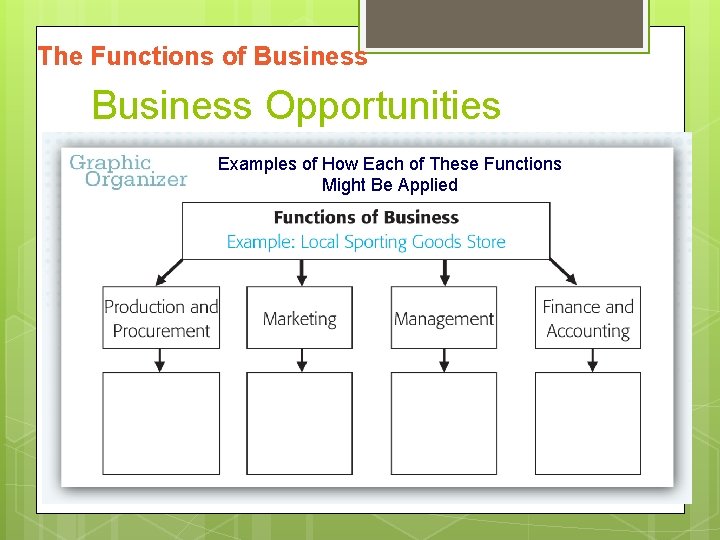
4 FUNCTIONS OF BUSINESS Production & Procurement 2. Marketing 3. Management 4. Finance & Accounting 1.
Production: process of creating, expanding, manufacturing, or improving on goods and services
Procurement Buying and reselling goods that have already been produced Example: Supermarket
5 “Rights” of Merchandising “Marketing” The right goods At the right time In the right place At the right price In the right amount
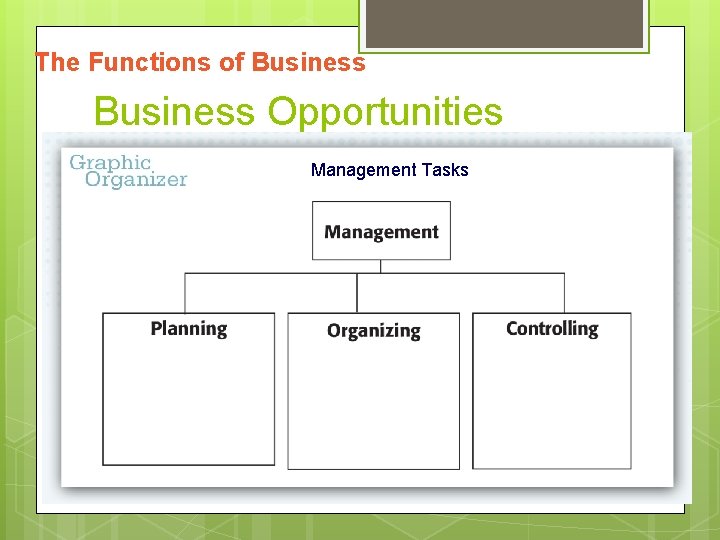
Management Management: process of achieving company goals by effective use of resources through planning, organizing, and controlling Planning: establishing company objectives and how to meet them Organizing: specific operations Controlling: overseeing and analyzing budgets
The Functions of Business Opportunities Management Tasks
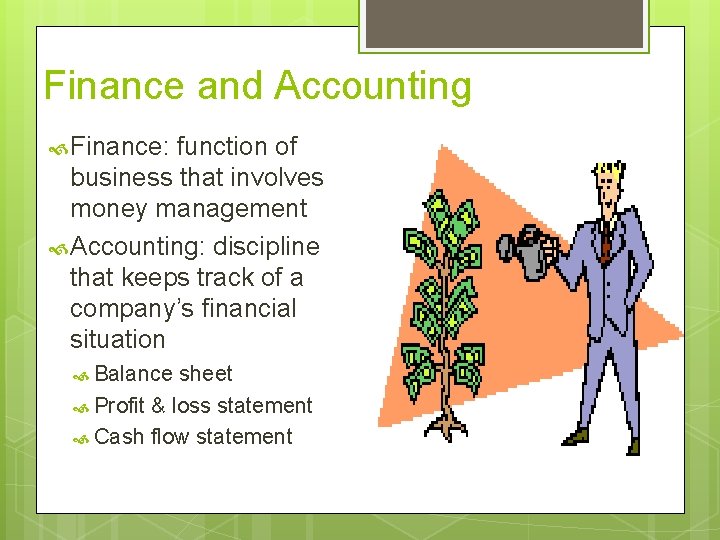
Finance and Accounting Finance: function of business that involves money management Accounting: discipline that keeps track of a company’s financial situation Balance sheet Profit & loss statement Cash flow statement
Balance Sheet Reports a company’s assets, liabilities, and owner’s equity Assets: things a company owns Liabilities: money owed by a business to its creditors
Profit & Loss Statement Reflect the ongoing operations of a firm Sales revenue and investments Costs and expenses of doing business
Financial Statements & SWOT Analysis Financial statements provide important information regarding how well a business is doing financially, therefore they are useful in a SWOT analysis
Business Opportunities Business Functions
The Functions of Business Opportunities Examples of How Each of These Functions Might Be Applied