
Chapter 5 The Cell Cycle and Protein Synthesis
- Slides: 40
Chapter 5 The Cell Cycle and Protein Synthesis
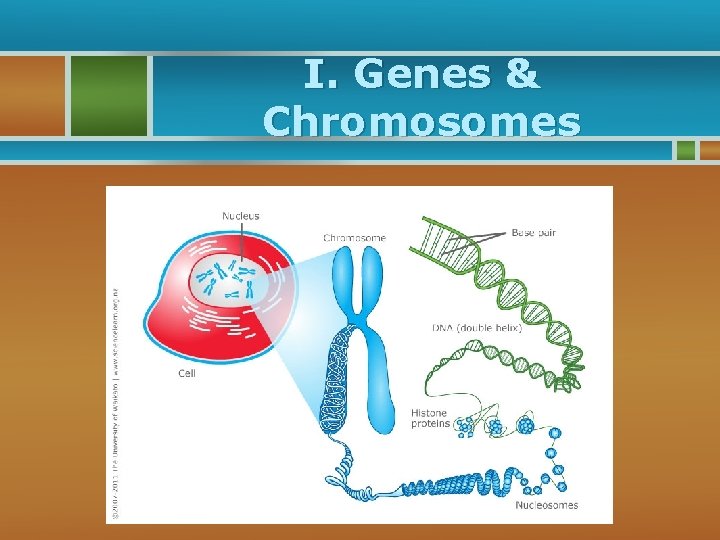
I. Genes & Chromosomes 1. Genes contain the information needed to build cells and cell products. 2. Genes control thousands of traits.
I. Genes & Chromosomes 3. Genes are usually stored in chromosomes. 4. Chromosomes are located in the nucleus. 5. Chromosomes consist of DNA and special proteins.
I. Genes & Chromosomes
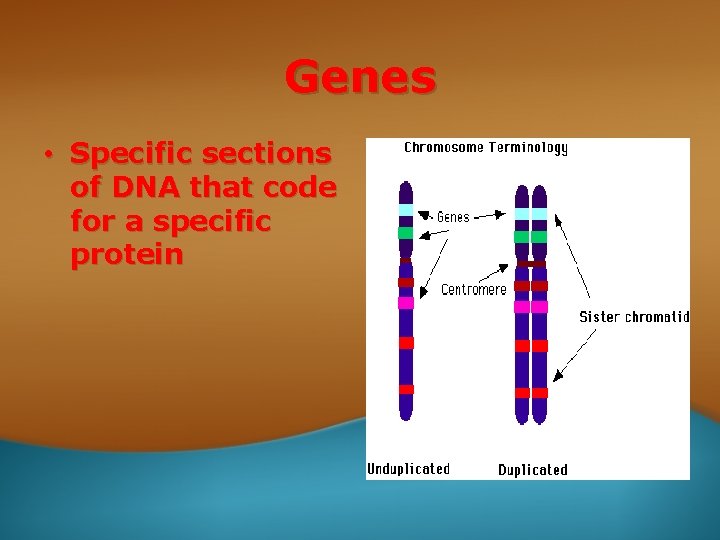
Genes • Specific sections of DNA that code for a specific protein
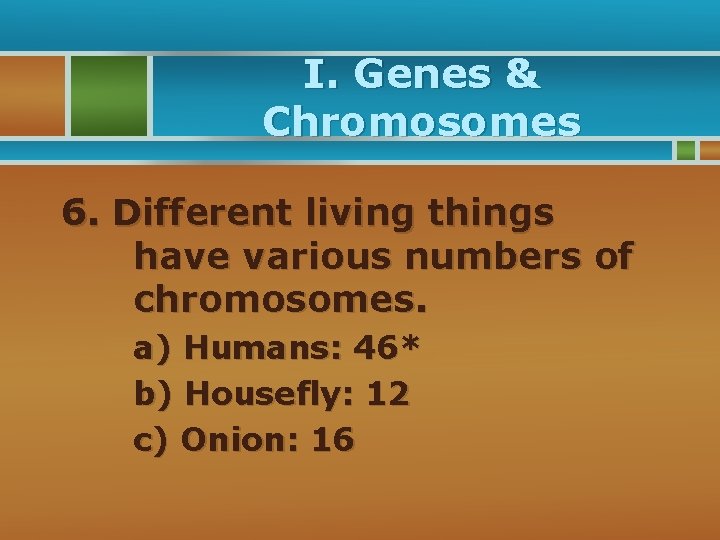
I. Genes & Chromosomes 6. Different living things have various numbers of chromosomes. a) Humans: 46* b) Housefly: 12 c) Onion: 16
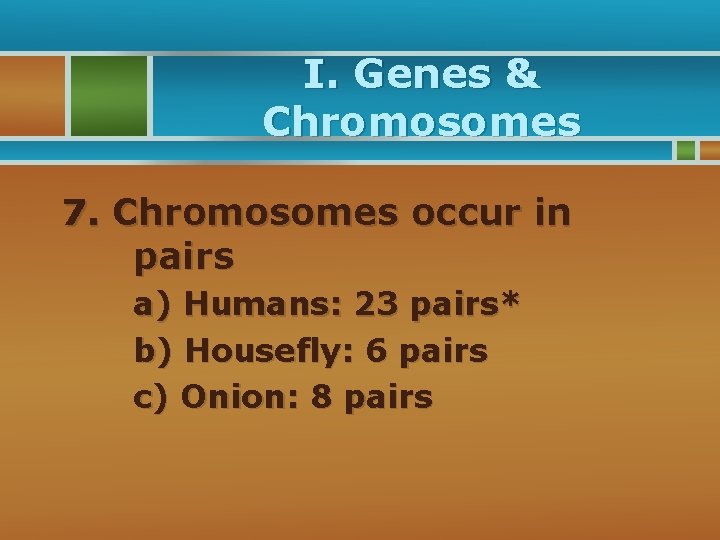
I. Genes & Chromosomes 7. Chromosomes occur in pairs a) Humans: 23 pairs* b) Housefly: 6 pairs c) Onion: 8 pairs
I. Genes & Chromosomes 8. Each member of a chromosome pair has the same type of genes.
Diploid Cell A cell that has pairs of chromosomes
II. Cell Division 1. Occurs when one cell (parent cell) divides to produce two new cells (daughter cells)
II. Cell Division 2. Why would a cell want to divide? a) replace cells * cell death * injury b) growth of organism
II. Cell Division 3. The cell cycle contains three stages a) Interphase
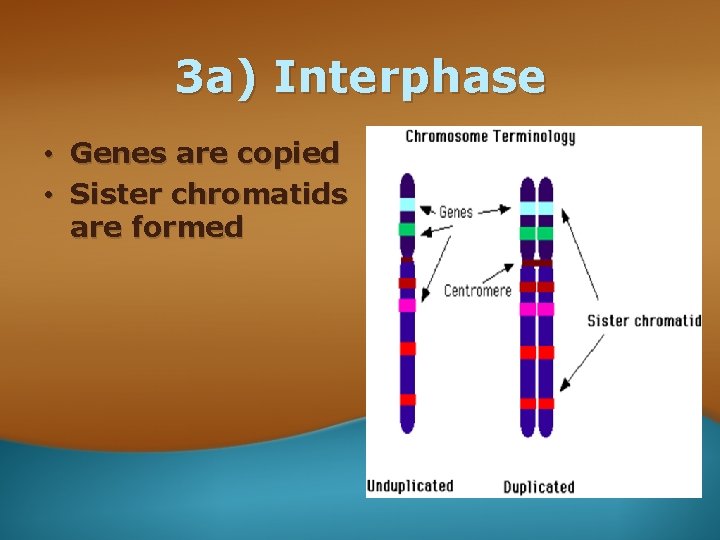
3 a) Interphase • • Genes are copied Sister chromatids are formed
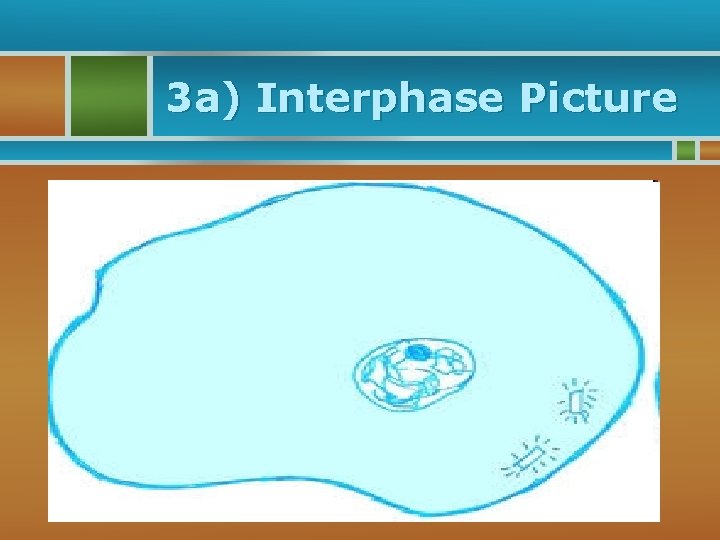
3 a) Interphase Picture
II. Cell Division 3. The cell cycle contains three stages a) Interphase b) Mitosis
3 b) Mitosis • The equal distribution of the parent cell’s duplicated genes between the two new daughter cells • Consists of four phases
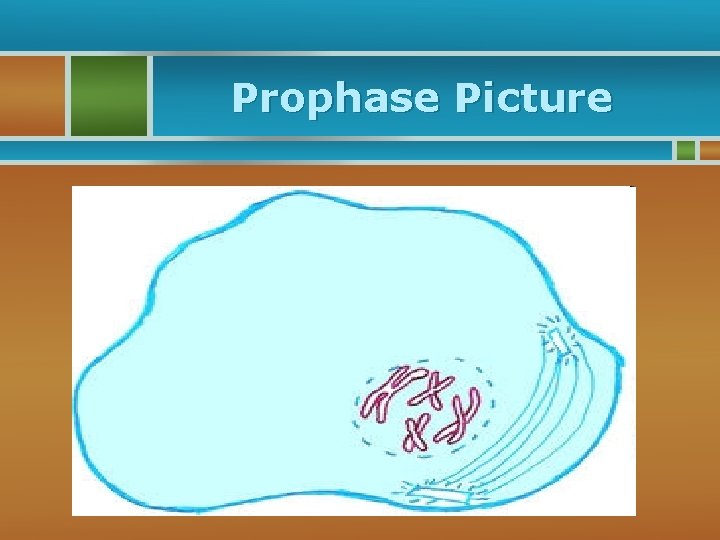
Phase 1 – Prophase • Nuclear membrane disappears • Chromosomes coil up • Sister chromatids appear Xshaped • Spindle forms
Prophase Picture
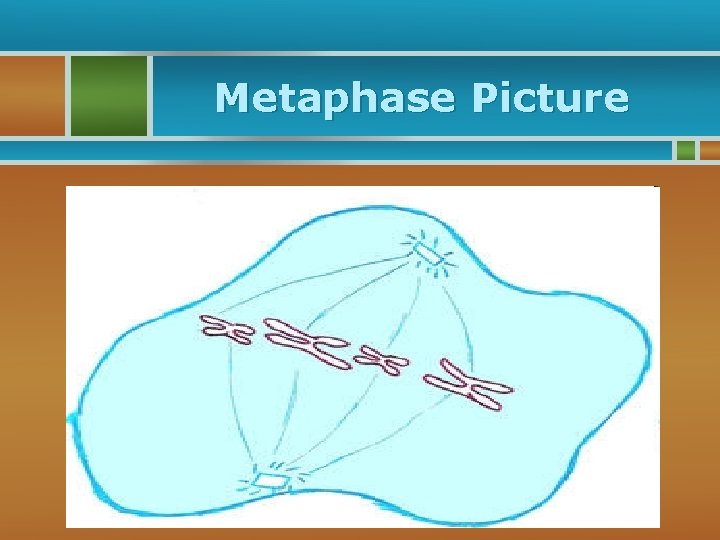
Phase 2 – Metaphase • The sister chromatids are lined up at the center of the spindle
Metaphase Picture
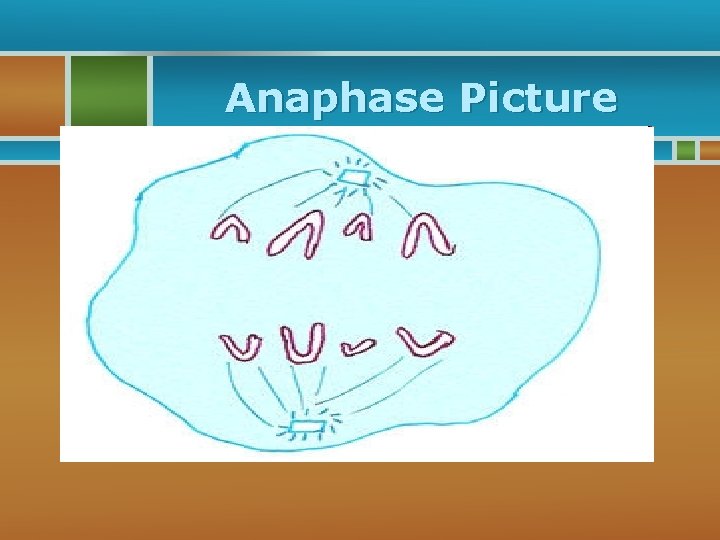
Phase 3 – Anaphase • Each pair of sister chromatids separates into two chromosomes • Daughter chromosomes move to opposite ends of the cell
Anaphase Picture
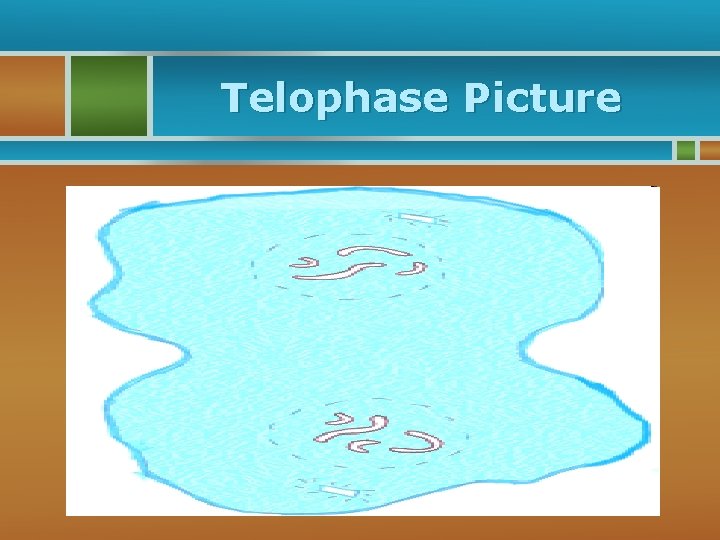
Phase 4 – Telophase • Daughter chromosomes reach ends of spindle and begin to uncoil • New nuclear membranes form, resulting in two new nuclei
Telophase Picture
II. Cell Division 3. The cell cycle contains three stages a) Interphase b) Mitosis c) Cytokinesis
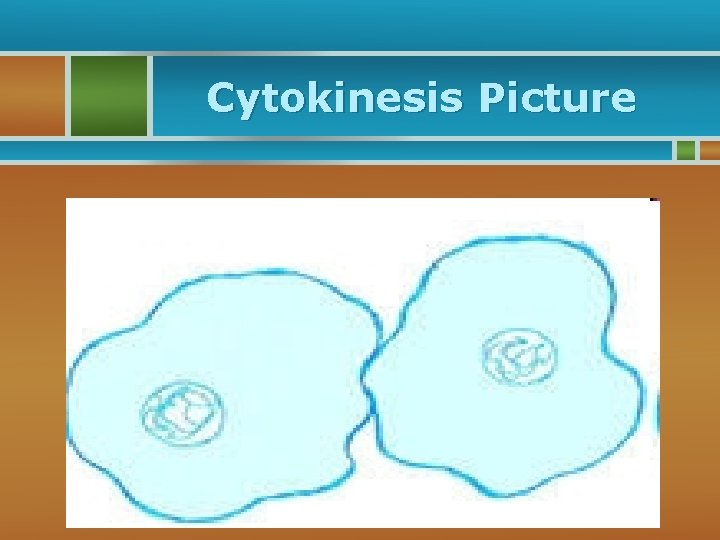
3 c) Cytokinesis • Parent cell divides into two daughter cells • Each cell gets a nucleus, cytoplasm, and some organelles
Cytokinesis Picture
II. Cell Division 4. Each daughter cell has genes identical to those in the parent cell 5. Purpose: replaces dead or worn-out cells
III. Asexual Reproduction 1. Reproduction by mitotic cell division (eukaryotic) 2. Same genetic information as parent cells a) Offspring are identical to parent
III. Asexual Reproduction 3. Examples a)Budding * Seen in yeast * Can result in long chains of cells
III. Asexual Reproduction 3. Examples b) Regeneration * Regrowing missing body parts * Seen in planarian worms
III. Asexual Reproduction 3. Examples c) Spores * Cell surrounded with a protective covering * Produced by mitotic cell division * Each spore can grow into a new organism
IV. Sexual Reproduction 1. Occurs when two org. each give one complete copy of their genes to form a new organism a) Organisms will have 2 genders (male and female)
IV. Sexual Reproduction 2. Uses the process of meiosis a) Involves two cell divisions b) Each daughter cell has just one copy of the genes * Referred to as gametes
Haploid Cell A cell that has only one of each chromosome
2. Meiosis c) Two types of gametes: * Egg produced by females * Sperm produced by males * The sperm and egg each contribute one member of each pair of chromosomes
IV. Sexual Reproduction 3. After meiosis, fertilization occurs a) Combining of gametes
IV. Sexual Reproduction 3. After meiosis, fertilization can occur. a) Egg and sperm unite to form a diploid cell * Referred to as a zygote * Goes through many cycles of mitosis to grow into an adult
V. Offspring 1. Asexual reproduction produces offspring identical to parent 2. Sexual reproduction produces offspring similar to, but different from, the parents