
Chapter 5 Structure and Function of Plasma Membranes
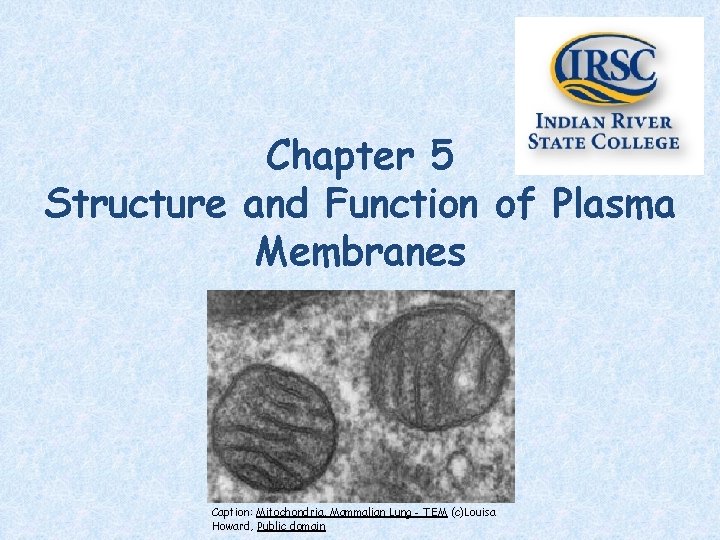
Chapter 5 Structure and Function of Plasma Membranes Caption: Mitochondria, Mammalian Lung - TEM (c)Louisa Howard, Public domain
LEARNING OBJECTIVES The Structure of Membranes • Describe the components of biological membranes. • Explain the fluid mosaic model of membrane structure. Phospholipids: The Membrane’s Foundation • Recall the different components of phospholipids. • Recall how membranes form spontaneously. • Describe the factors involved in membrane fluidity.

FIGURE 5. 2 Download for free at http: //cnx. org/contents/185 cbf 87 -c 72 e-48 f 5 -b 51 e-f 14 f 21 b 5 eabd@10. 61 • The fluid mosaic model of the plasma membrane describes the plasma membrane as a combination of phospholipids, cholesterol, and proteins (mosaic). • Lipids and protein move about the surface of the membrane freely (fluid) • Carbohydrates attached to lipids (glycolipids) and to proteins (glycoproteins) extend from the outward-facing surface of the membrane.

MEMBRANE STRUCTURE • Phospholipids arranged in a bilayer (they are the water). • Globular proteins inserted in the lipid bilayer (they are the surfer, or the boat). Fluid mosaic model Fluid Caption: Large Breaking Wave (c)NOAA, Public domain Mosaic Caption: Mosaic Patterns (c)Ali Harrison, Public domain
MEMBRANE STRUCTURE Cellular membranes have 4 components Phospholipid bilayer • Flexible matrix, barrier to permeability Transmembrane proteins • Integral membrane proteins Interior protein network • Peripheral or Intracellular membrane proteins Cell surface markers • Glycoproteins and glycolipids

FIGURE 5. 7 Download for free at http: //cnx. org/contents/185 cbf 87 -c 72 e-48 f 5 -b 51 e-f 14 f 21 b 5 eabd@10. 61 • The exterior surface of the plasma membrane is not identical to the interior surface of the same membrane. • Communication with tissues vs. intracellular needs • Are your outdoor things similar to your indoor things?
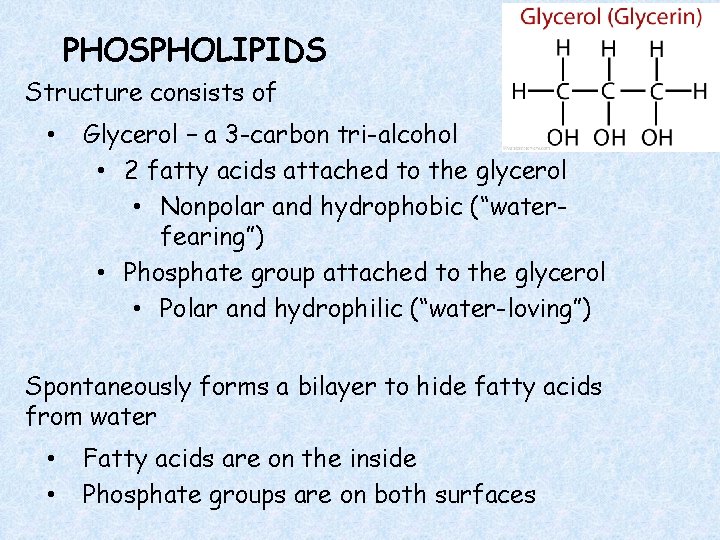
PHOSPHOLIPIDS Structure consists of • Glycerol – a 3 -carbon tri-alcohol • 2 fatty acids attached to the glycerol • Nonpolar and hydrophobic (“waterfearing”) • Phosphate group attached to the glycerol • Polar and hydrophilic (“water-loving”) Spontaneously forms a bilayer to hide fatty acids from water • • Fatty acids are on the inside Phosphate groups are on both surfaces
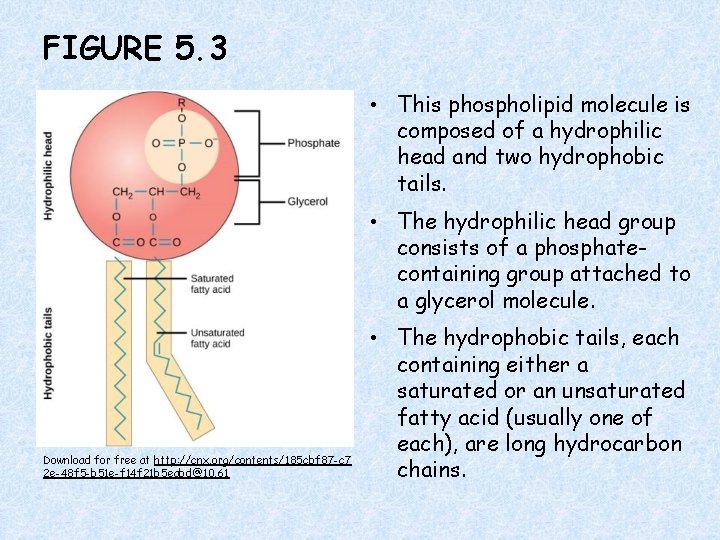
FIGURE 5. 3 • This phospholipid molecule is composed of a hydrophilic head and two hydrophobic tails. • The hydrophilic head group consists of a phosphatecontaining group attached to a glycerol molecule. Download for free at http: //cnx. org/contents/185 cbf 87 -c 7 2 e-48 f 5 -b 51 e-f 14 f 21 b 5 eabd@10. 61 • The hydrophobic tails, each containing either a saturated or an unsaturated fatty acid (usually one of each), are long hydrocarbon chains.
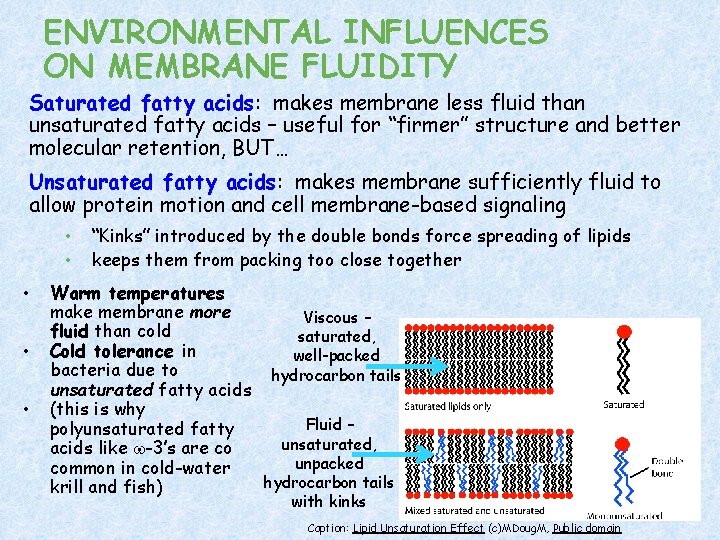
ENVIRONMENTAL INFLUENCES ON MEMBRANE FLUIDITY Saturated fatty acids: makes membrane less fluid than unsaturated fatty acids – useful for “firmer” structure and better molecular retention, BUT… Unsaturated fatty acids: makes membrane sufficiently fluid to allow protein motion and cell membrane-based signaling • • • “Kinks” introduced by the double bonds force spreading of lipids keeps them from packing too close together Warm temperatures make membrane more Viscous – fluid than cold saturated, Cold tolerance in well-packed bacteria due to hydrocarbon tails unsaturated fatty acids (this is why Fluid – polyunsaturated fatty unsaturated, acids like w-3’s are co unpacked common in cold-water hydrocarbon tails krill and fish) with kinks Caption: Lipid Unsaturation Effect (c)MDoug. M, Public domain
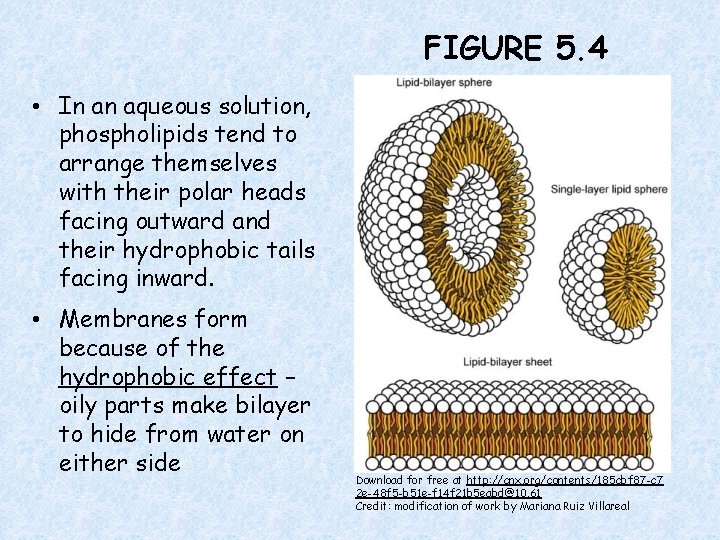
FIGURE 5. 4 • In an aqueous solution, phospholipids tend to arrange themselves with their polar heads facing outward and their hydrophobic tails facing inward. • Membranes form because of the hydrophobic effect – oily parts make bilayer to hide from water on either side Download for free at http: //cnx. org/contents/185 cbf 87 -c 7 2 e-48 f 5 -b 51 e-f 14 f 21 b 5 eabd@10. 61 Credit: modification of work by Mariana Ruiz Villareal

LEARNING OBJECTIVES Proteins: Multifunctional Components • Describe the functions of membrane proteins. • Discuss how proteins can associate with the membrane. • Describe a transmembrane domain. Passive Transport Across Membranes • Compare simple diffusion and facilitated diffusion. • Differentiate between channel proteins and carrier proteins. • Predict the direction of water movement by osmosis.
MEMBRANE PROTEINS Various functions: 1. 2. 3. 4. 5. 6. Transporters Enzymes Cell-surface receptors Cell-surface identity markers Cell-to-cell adhesion proteins Attachments to the cytoskeleton
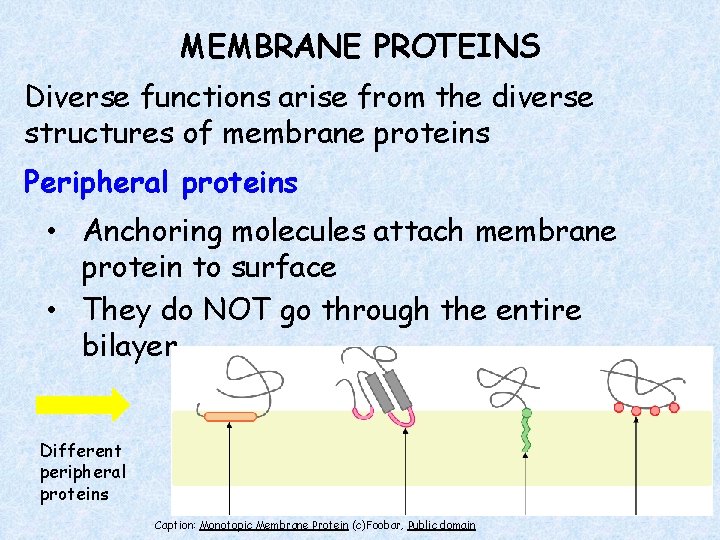
MEMBRANE PROTEINS Diverse functions arise from the diverse structures of membrane proteins Peripheral proteins • Anchoring molecules attach membrane protein to surface • They do NOT go through the entire bilayer Different peripheral proteins Caption: Monotopic Membrane Protein (c)Foobar, Public domain
MEMBRANE PROTEINS Integral membrane proteins Completely span the lipid bilayer (transmembrane proteins) • • • Nonpolar, hydrophobic regions of protein within the interior of bilayer Polar regions of the protein protrude from both sides of the bilayer The transmembrane domain is a segment of hydrophobic amino acids that spans the lipid bilayer arranged in an -helix
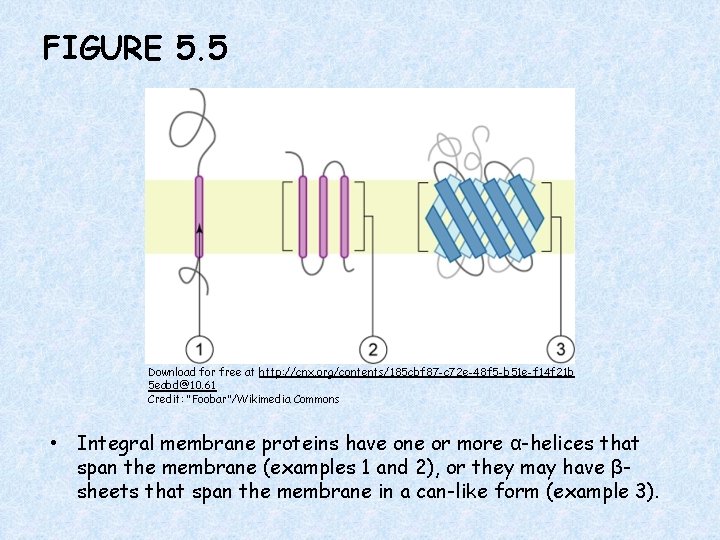
FIGURE 5. 5 Download for free at http: //cnx. org/contents/185 cbf 87 -c 72 e-48 f 5 -b 51 e-f 14 f 21 b 5 eabd@10. 61 Credit: “Foobar”/Wikimedia Commons • Integral membrane proteins have one or more α-helices that span the membrane (examples 1 and 2), or they may have βsheets that span the membrane in a can-like form (example 3).
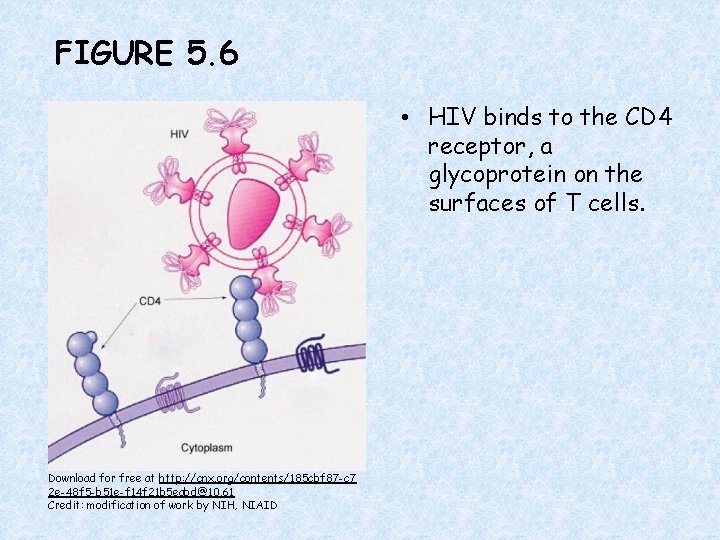
FIGURE 5. 6 • HIV binds to the CD 4 receptor, a glycoprotein on the surfaces of T cells. Download for free at http: //cnx. org/contents/185 cbf 87 -c 7 2 e-48 f 5 -b 51 e-f 14 f 21 b 5 eabd@10. 61 Credit: modification of work by NIH, NIAID
Proteins need only a single transmembrane domain to be anchored in the membrane, but they often have more than one such domain. Pores • Extensive nonpolar regions within a transmembrane protein can create a pore (a hole) through the membrane • Cylinder of sheets in the protein secondary structure ( -barrel) • Interior is polar and allows water and small polar molecules to pass through the membrane
18 PASSIVE TRANSPORT
PASSIVE TRANSPORT Passive Transportation: DOES NOT require energy, goes with the concentration gradient 1. Diffusion 2. Facilitated Diffusion • Channel Proteins • Ion Channels • Gated Channel • Carrier proteins 3. Osmosis
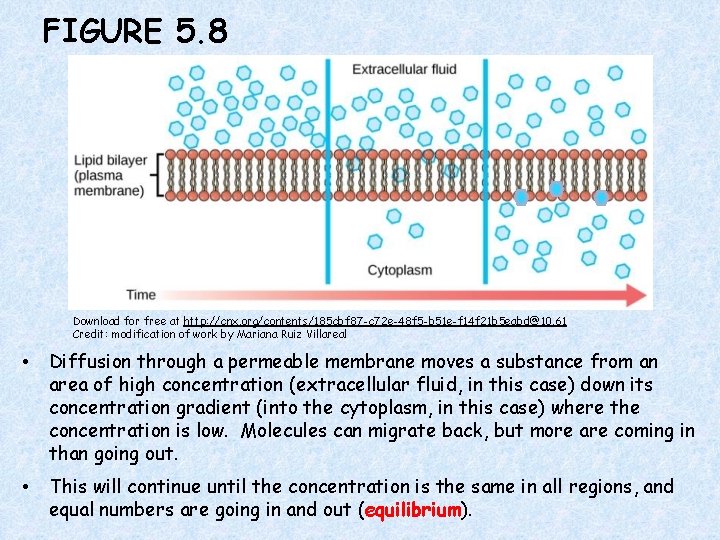
FIGURE 5. 8 Download for free at http: //cnx. org/contents/185 cbf 87 -c 72 e-48 f 5 -b 51 e-f 14 f 21 b 5 eabd@10. 61 Credit: modification of work by Mariana Ruiz Villareal • Diffusion through a permeable membrane moves a substance from an area of high concentration (extracellular fluid, in this case) down its concentration gradient (into the cytoplasm, in this case) where the concentration is low. Molecules can migrate back, but more are coming in than going out. • This will continue until the concentration is the same in all regions, and equal numbers are going in and out (equilibrium).

MEMBRANE IS SELECTIVELY PERMEABLE A major barrier to crossing a biological membrane is the hydrophobic interior that repels polar molecules but nonpolar molecules • • • Nonpolar molecules will move until the concentration is equal on both sides Limited permeability to small polar molecules Very limited permeability to larger polar molecules and ions Caption: 0302 Phospholipid Bilayer (c)Open. Stax, Public domain
MEMBRANE IS SELECTIVELY PERMEABLE Facilitated Diffusion: Molecules that cannot cross membrane easily may move through proteins much faster Move from higher to lower concentration (passive, no energy!) I. Channel proteins • Hydrophilic channel when open (they are regulated) • Example: Ion Channels II. Carrier proteins • Bind specifically to molecules they assist
CHANNEL PROTEINS Ion Channels Allow the passage of ions Gated channels: open or close in response to stimulus (chemical or electrical) 3 conditions determine direction 1. Relative concentration on either side of membrane 2. Voltage differences across membrane 3. Gated channels: channel open or closed
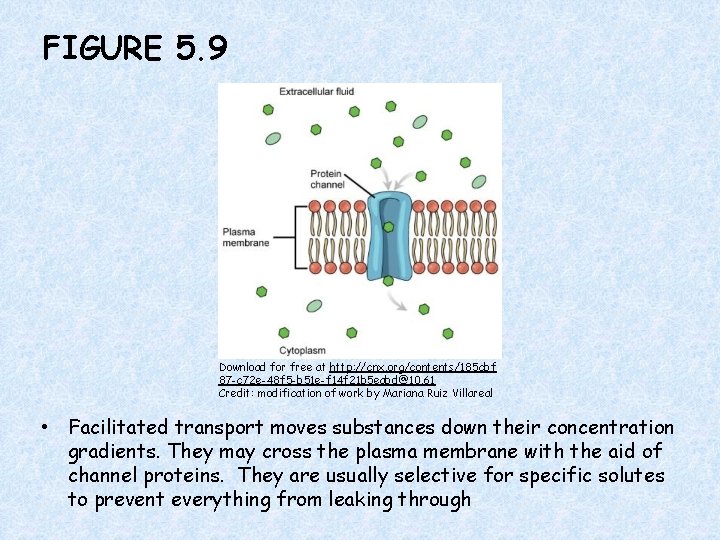
FIGURE 5. 9 Download for free at http: //cnx. org/contents/185 cbf 87 -c 72 e-48 f 5 -b 51 e-f 14 f 21 b 5 eabd@10. 61 Credit: modification of work by Mariana Ruiz Villareal • Facilitated transport moves substances down their concentration gradients. They may cross the plasma membrane with the aid of channel proteins. They are usually selective for specific solutes to prevent everything from leaking through
CARRIER PROTEINS • Help transport ions and some sugars and amino acids • Requires a concentration difference across the membrane • Must bind to the molecule they transport Ø Saturation: rate of transport limited by number of transporters Ø Think people exiting a classroom through only 2 doors versus one door.
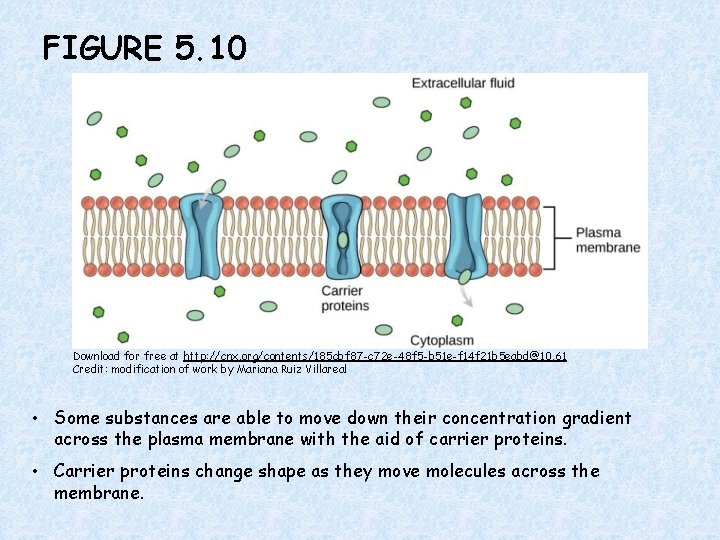
FIGURE 5. 10 Download for free at http: //cnx. org/contents/185 cbf 87 -c 72 e-48 f 5 -b 51 e-f 14 f 21 b 5 eabd@10. 61 Credit: modification of work by Mariana Ruiz Villareal • Some substances are able to move down their concentration gradient across the plasma membrane with the aid of carrier proteins. • Carrier proteins change shape as they move molecules across the membrane.
OSMOSIS Cytoplasm of the cell is an aqueous solution • Water is solvent • Dissolved substances are solutes Osmosis – net diffusion of water across a membrane toward a higher solute concentration a) Water moves from “pure” to “less pure” b) Water moves to dilute a concentrated source of solute
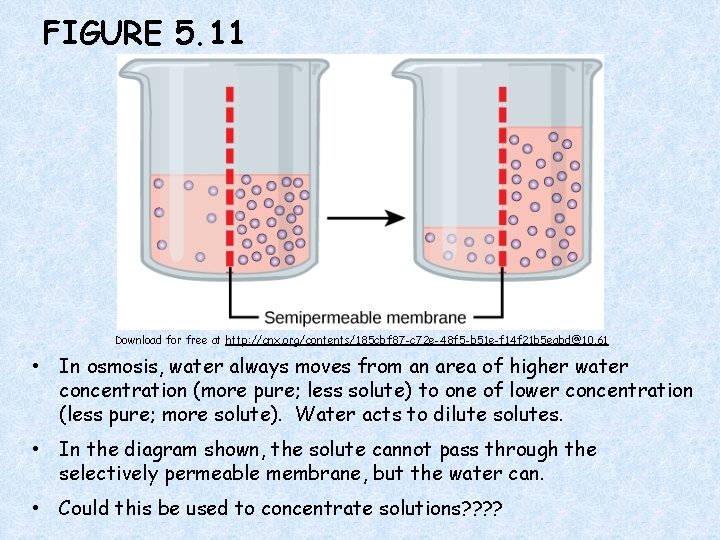
FIGURE 5. 11 Download for free at http: //cnx. org/contents/185 cbf 87 -c 72 e-48 f 5 -b 51 e-f 14 f 21 b 5 eabd@10. 61 • In osmosis, water always moves from an area of higher water concentration (more pure; less solute) to one of lower concentration (less pure; more solute). Water acts to dilute solutes. • In the diagram shown, the solute cannot pass through the selectively permeable membrane, but the water can. • Could this be used to concentrate solutions? ?
OSMOTIC CONCENTRATION When 2 solutions have different osmotic concentrations… a) The Hypertonic Solution has a higher solute concentration b) The Hypotonic Solution has a lower solute concentration When two solutions have the same osmotic concentration, the solutions are isotonic Aquaporins facilitate osmosis, by allowing water to equilibrate at a defined maximal rate
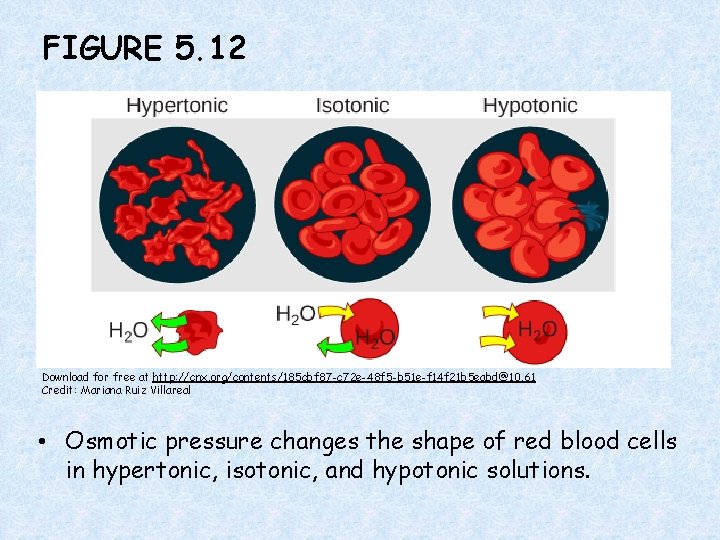
FIGURE 5. 12 Download for free at http: //cnx. org/contents/185 cbf 87 -c 72 e-48 f 5 -b 51 e-f 14 f 21 b 5 eabd@10. 61 Credit: Mariana Ruiz Villareal • Osmotic pressure changes the shape of red blood cells in hypertonic, isotonic, and hypotonic solutions.
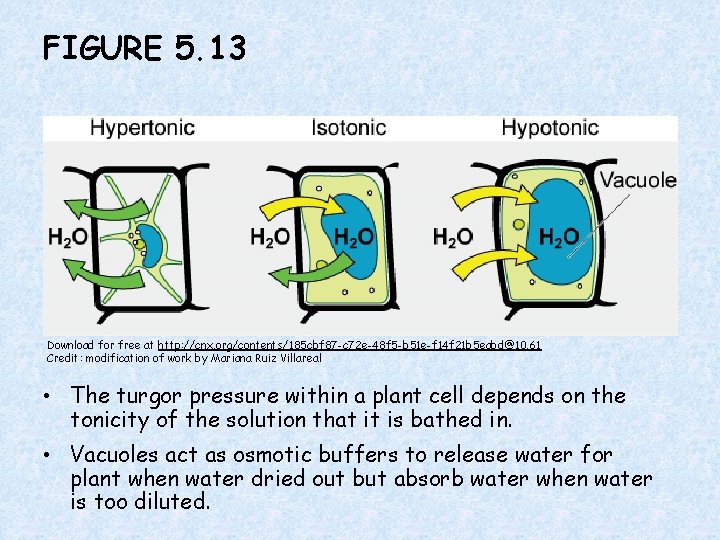
FIGURE 5. 13 Download for free at http: //cnx. org/contents/185 cbf 87 -c 72 e-48 f 5 -b 51 e-f 14 f 21 b 5 eabd@10. 61 Credit: modification of work by Mariana Ruiz Villareal • The turgor pressure within a plant cell depends on the tonicity of the solution that it is bathed in. • Vacuoles act as osmotic buffers to release water for plant when water dried out but absorb water when water is too diluted.
OSMOTIC PRESSURE Force needed to stop osmotic flow • Cell in a hypotonic solution gains water causing cell to swell – creates pressure • If membrane strong enough, cell reaches counterbalance of osmotic pressure driving water in with hydrostatic pressure driving water out v. Cell wall of prokaryotes, fungi, plants, protists • If membrane and cell wall is not strong, the cell may burst under hypotonic conditions v. Cell walls destabilized with penicillins or lysozyme are much more susceptible v. Animal cells must be in isotonic environments
Maintaining Osmotic Balance • Some cells use extrusion in which water is ejected through contractile vacuoles • Isosmotic regulation involves keeping cells isotonic with their environment • • Marine organisms adjust internal concentration to match sea water Terrestrial animals circulate isotonic fluid • Plant cells use turgor pressure to push the cell membrane against the cell wall and keep the cell rigid
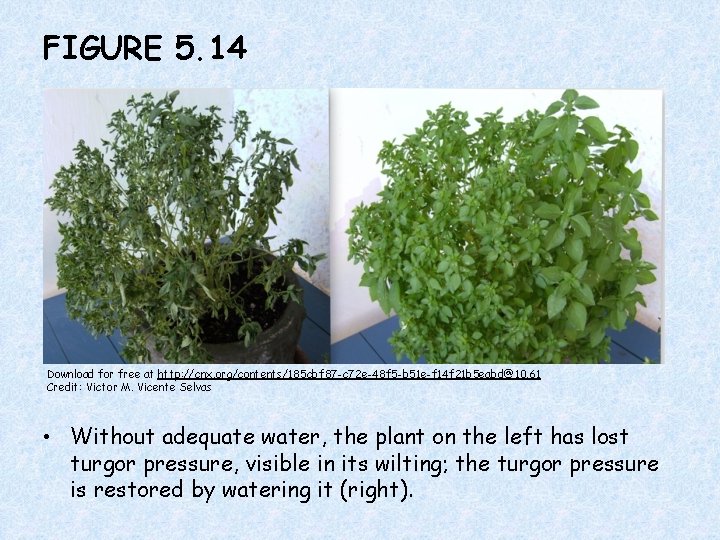
FIGURE 5. 14 Download for free at http: //cnx. org/contents/185 cbf 87 -c 72 e-48 f 5 -b 51 e-f 14 f 21 b 5 eabd@10. 61 Credit: Victor M. Vicente Selvas • Without adequate water, the plant on the left has lost turgor pressure, visible in its wilting; the turgor pressure is restored by watering it (right).
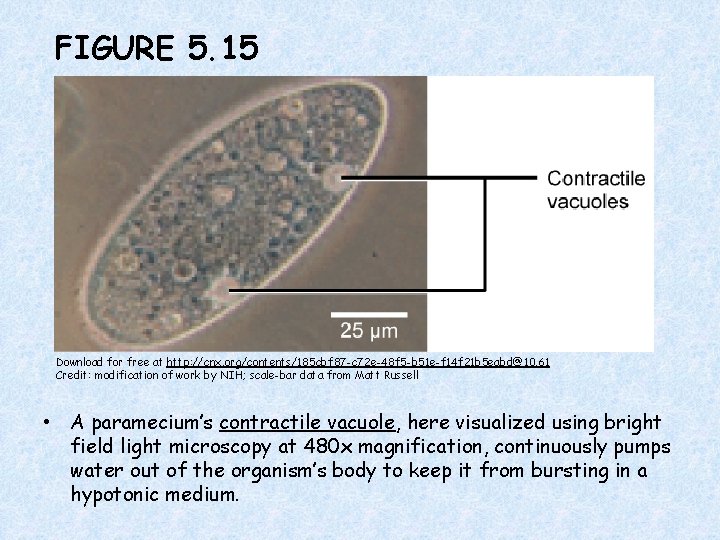
FIGURE 5. 15 Download for free at http: //cnx. org/contents/185 cbf 87 -c 72 e-48 f 5 -b 51 e-f 14 f 21 b 5 eabd@10. 61 Credit: modification of work by NIH; scale-bar data from Matt Russell • A paramecium’s contractile vacuole, here visualized using bright field light microscopy at 480 x magnification, continuously pumps water out of the organism’s body to keep it from bursting in a hypotonic medium.
LEARNING OBJECTIVES Active Transport Across Membranes • Differentiate between active transport and diffusion. • Describe the function of the Na+/K+ pump. • Explain the energetics of coupled transport. Bulk Transport by Endocytosis and Exocytosis • Distinguish between endocytosis and exocytosis. • Describe how endocytosis can be specific.
ACTIVE TRANSPORT
ACTIVE TRANSPORT Active Transportation: requires energy, against concentration gradient 1. Uniport, symport, antiport 2. Na+–K+ Pump 3. Coupled Transport
ACTIVE TRANSPORT • Requires Energy: ATP is used directly or indirectly to fuel active transport • Moves substances from low to high concentration • Requires the use of highly selective carrier proteins
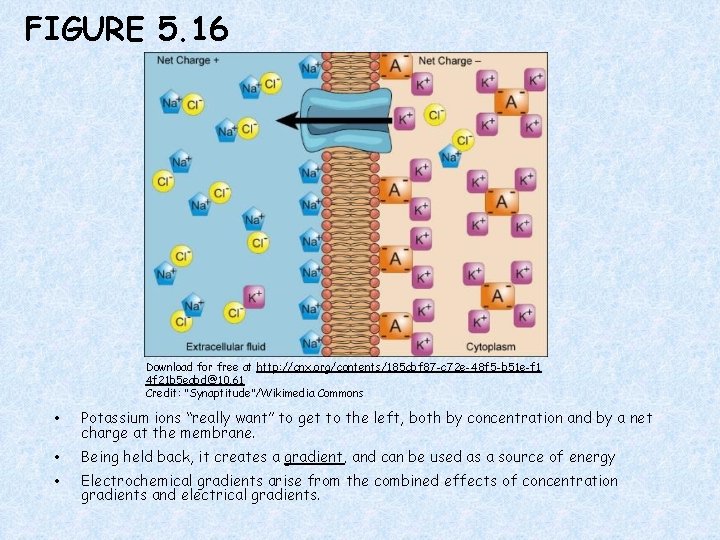
FIGURE 5. 16 Download for free at http: //cnx. org/contents/185 cbf 87 -c 72 e-48 f 5 -b 51 e-f 1 4 f 21 b 5 eabd@10. 61 Credit: “Synaptitude”/Wikimedia Commons • Potassium ions “really want” to get to the left, both by concentration and by a net charge at the membrane. • Being held back, it creates a gradient, and can be used as a source of energy • Electrochemical gradients arise from the combined effects of concentration gradients and electrical gradients.
ACTIVE TRANSPORT Carrier proteins used in active transport include I. Uniporters: move one molecule at a time II. Symporters: move two molecules in the same direction III. Antiporters: move two molecules in opposite directions • Terms can also be used to describe facilitated diffusion carriers (when no energy required)

FIGURE 5. 17 Download for free at http: //cnx. org/contents/185 cbf 87 -c 72 e-48 f 5 -b 51 e-f 14 f 21 b 5 eabd@10. 61 Credit: modification of work by “Lupask”/Wikimedia Commons • A uniporter carries one molecule or ion. • A symporter carries two different molecules or ions, both in the same direction. • An antiporter also carries two different molecules or ions, but in different directions.
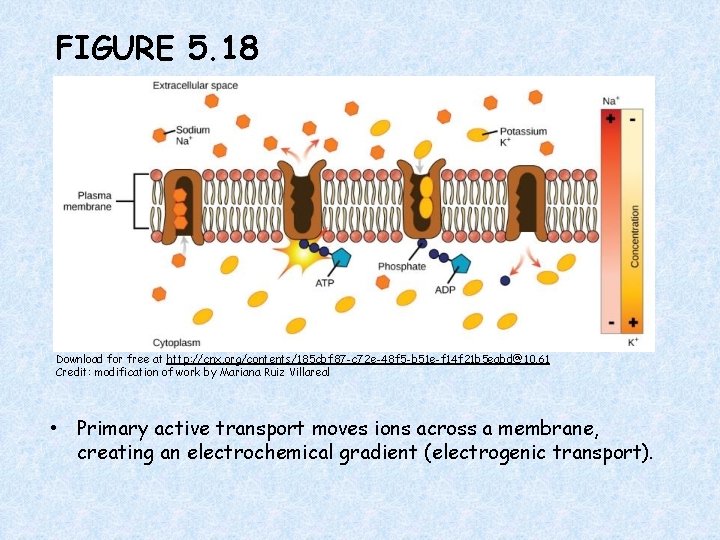
FIGURE 5. 18 Download for free at http: //cnx. org/contents/185 cbf 87 -c 72 e-48 f 5 -b 51 e-f 14 f 21 b 5 eabd@10. 61 Credit: modification of work by Mariana Ruiz Villareal • Primary active transport moves ions across a membrane, creating an electrochemical gradient (electrogenic transport).
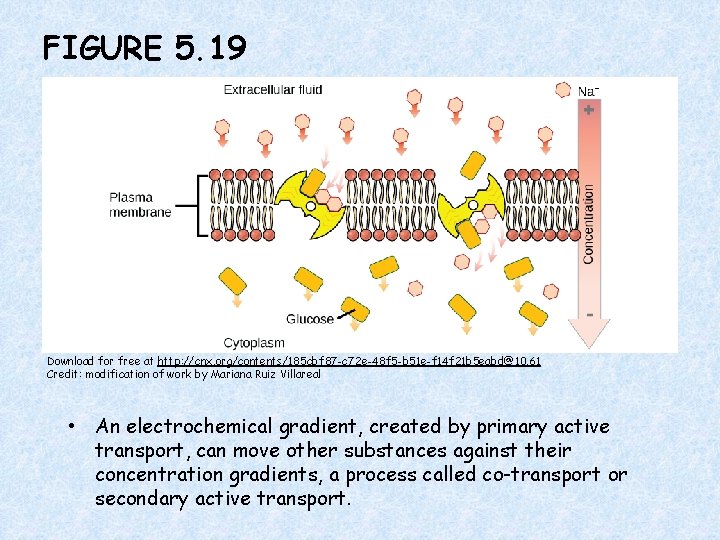
FIGURE 5. 19 Download for free at http: //cnx. org/contents/185 cbf 87 -c 72 e-48 f 5 -b 51 e-f 14 f 21 b 5 eabd@10. 61 Credit: modification of work by Mariana Ruiz Villareal • An electrochemical gradient, created by primary active transport, can move other substances against their concentration gradients, a process called co-transport or secondary active transport.
ACTIVE TRANSPORT Sodium–Potassium (Na+–K+) Pump: Direct use of ATP for active transport Antiporter moves… • 3 Na+ out of the cell • 2 K+ into the cell • Both go against their concentration gradient ATP energy changes conformation of carrier protein • convinces both ions to bind, and traps the easy escape

Antiporter Download for free at http: //cnx. org/contents/185 cbf 87 -c 72 e-48 f 5 -b 51 e-f 14 f 21 b 5 eabd@10. 61

Active Transport Coupled Transport: • Uses ATP indirectly; uses Symporter • Molecules moved against their concentration gradient using energy stored in a gradient of a different molecule Sodium-Glucose Symporter: • Captures the energy from Na+ diffusion to move glucose against a concentration gradient
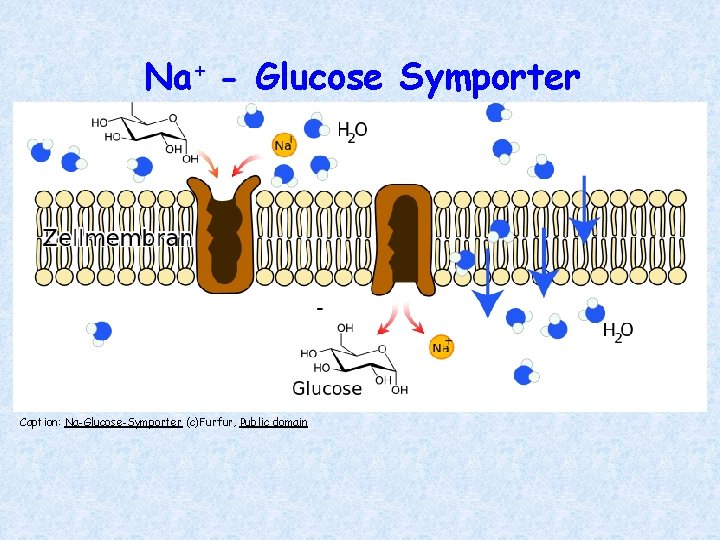
Na+ - Glucose Symporter Caption: Na-Glucose-Symporter (c)Furfur, Public domain
BULK TRANSPORT Endocytosis • Movement of substances into the cell I. Phagocytosis – cell takes in particulate matter II. Pinocytosis – cell takes in only fluid III. Receptor-mediated endocytosis – specific molecules are taken in after they bind to a receptor, formation of clathrin-coated pits and vesicles Exocytosis • Movement of substances out of cell • Requires energy
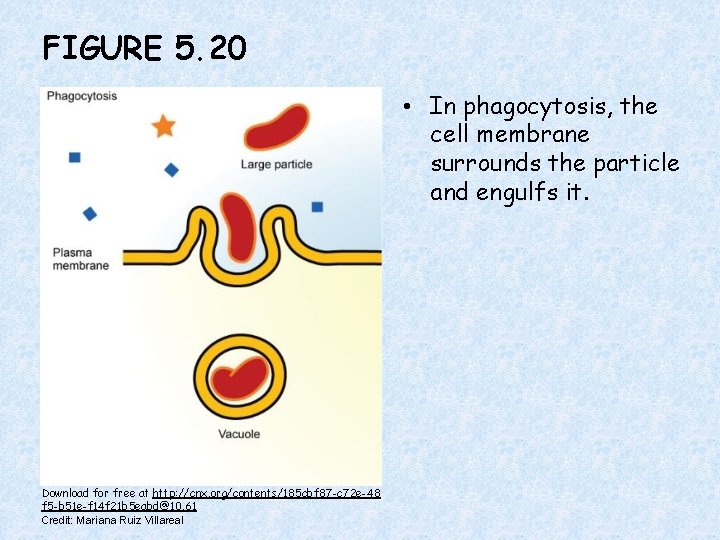
FIGURE 5. 20 • In phagocytosis, the cell membrane surrounds the particle and engulfs it. Download for free at http: //cnx. org/contents/185 cbf 87 -c 72 e-48 f 5 -b 51 e-f 14 f 21 b 5 eabd@10. 61 Credit: Mariana Ruiz Villareal

FIGURE 5. 21 • In pinocytosis, the cell membrane invaginates, surrounds a small volume of fluid, and pinches off. Download for free at http: //cnx. org/contents/185 cbf 87 -c 72 e-4 8 f 5 -b 51 e-f 14 f 21 b 5 eabd@10. 61 Credit: Mariana Ruiz Villareal
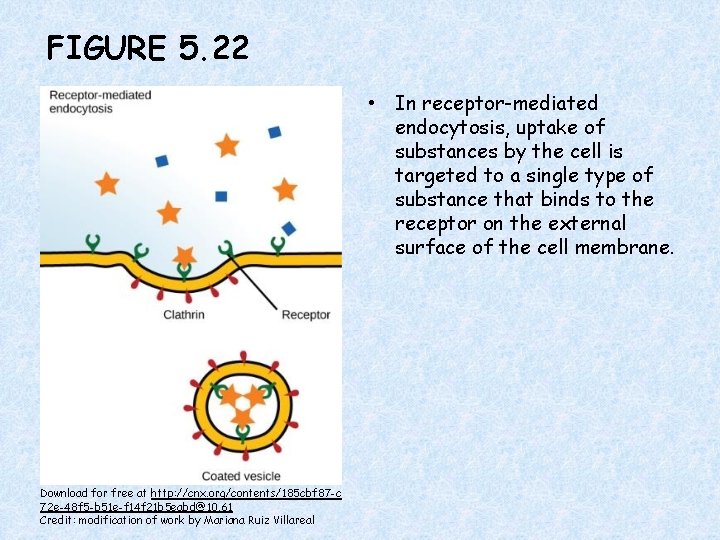
FIGURE 5. 22 • In receptor-mediated endocytosis, uptake of substances by the cell is targeted to a single type of substance that binds to the receptor on the external surface of the cell membrane. Download for free at http: //cnx. org/contents/185 cbf 87 -c 72 e-48 f 5 -b 51 e-f 14 f 21 b 5 eabd@10. 61 Credit: modification of work by Mariana Ruiz Villareal
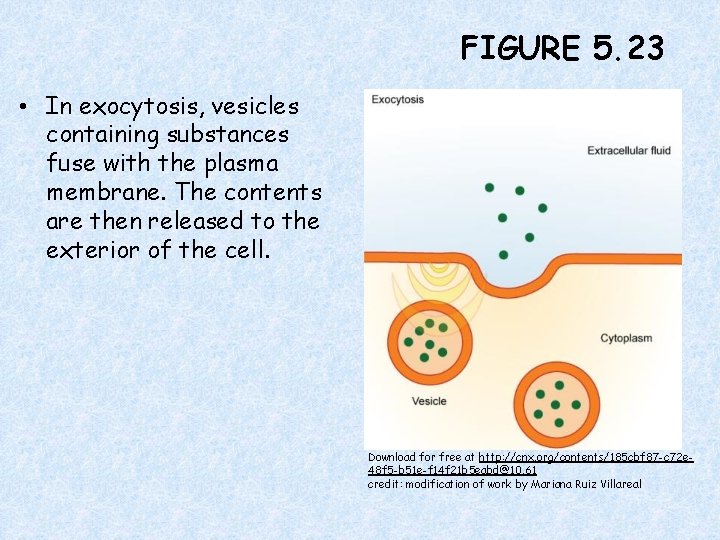
FIGURE 5. 23 • In exocytosis, vesicles containing substances fuse with the plasma membrane. The contents are then released to the exterior of the cell. Download for free at http: //cnx. org/contents/185 cbf 87 -c 72 e 48 f 5 -b 51 e-f 14 f 21 b 5 eabd@10. 61 credit: modification of work by Mariana Ruiz Villareal
- Slides: 53