
Chapter 5 Stereotypes Prejudice and Discrimination Defining Important
- Slides: 11
Chapter 5 Stereotypes, Prejudice, and Discrimination
Defining Important Terms • Racism: Prejudice and discrimination based on a person’s background • Sexism: Prejudice and discrimination based on a person’s gender • Stereotypes: Beliefs that associate a whole group of people with certain traits. • Prejudice: Negative feelings about others because of their connection to a social group. • Discrimination: Negative behaviors directed against persons because of their membership in a particular group.
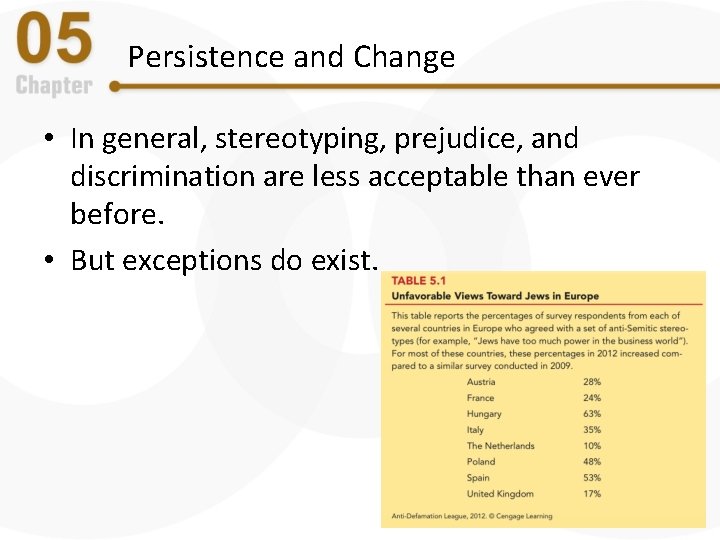
Persistence and Change • In general, stereotyping, prejudice, and discrimination are less acceptable than ever before. • But exceptions do exist.
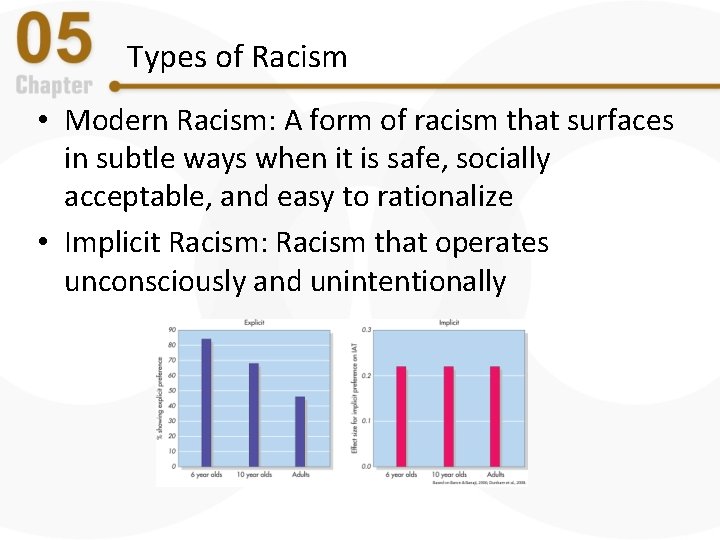
Types of Racism • Modern Racism: A form of racism that surfaces in subtle ways when it is safe, socially acceptable, and easy to rationalize • Implicit Racism: Racism that operates unconsciously and unintentionally
Sexism: Ambivalence and Double Standards • Blatant displays of sexism are less socially acceptable than in the past – But do continue to persist today • Gender stereotypes are distinct in that they are not only descriptive, but also prescriptive – They tell people what they should do or be
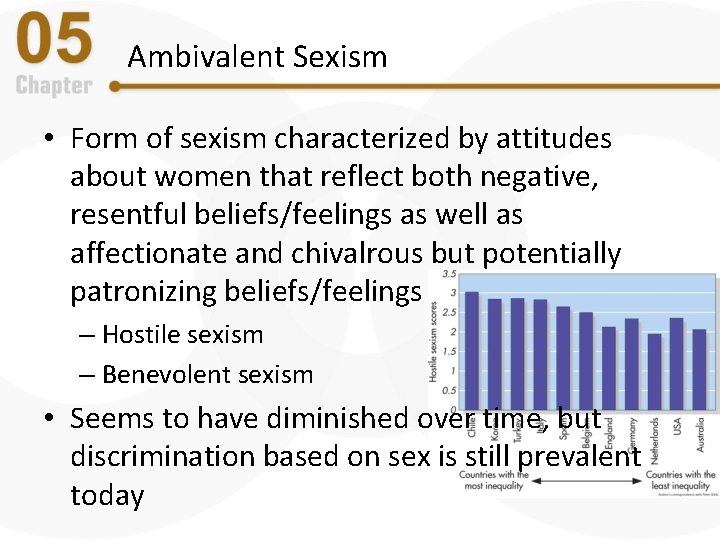
Ambivalent Sexism • Form of sexism characterized by attitudes about women that reflect both negative, resentful beliefs/feelings as well as affectionate and chivalrous but potentially patronizing beliefs/feelings – Hostile sexism – Benevolent sexism • Seems to have diminished over time, but discrimination based on sex is still prevalent today
Stereotype Threat • Stereotype threat is the fear that one will be reduced to a stereotype in the eyes of others. • How can stereotype threat hamper academic achievement? – The reactions to the threat can directly interfere with performance. – The threat can cause individuals to dismiss the domain as no longer relevant to their self-esteem and identity.
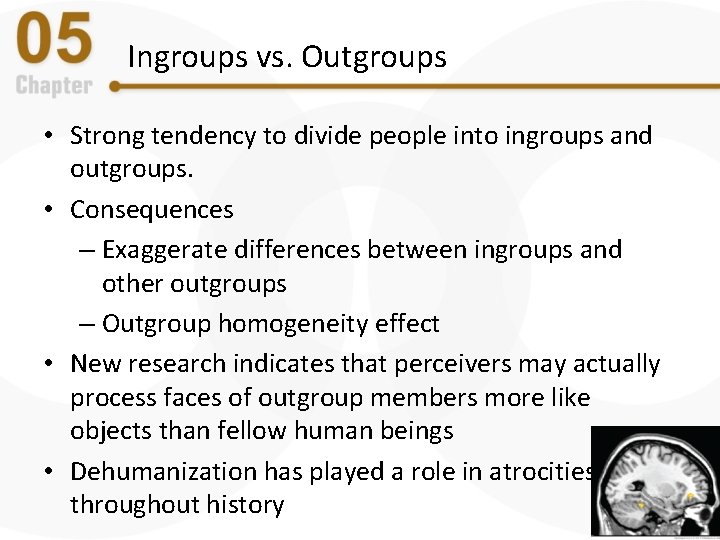
Ingroups vs. Outgroups • Strong tendency to divide people into ingroups and outgroups. • Consequences – Exaggerate differences between ingroups and other outgroups – Outgroup homogeneity effect • New research indicates that perceivers may actually process faces of outgroup members more like objects than fellow human beings • Dehumanization has played a role in atrocities throughout history
Social Identity Theory • Two Basic Predictions: – Threats to one’s self-esteem heighten the need for ingroup favoritism. – Expressions of ingroup favoritism enhance one’s self-esteem.
Confirmation Biases and Self-Fulfilling Prophecies • Stereotypes are often maintained and strengthened through confirmation biases. – Tendency to interpret, seek, and create information to confirm expectations • Stereotypes can cause a perceiver to act in such a way that the stereotyped group member really does behave in a stereotypeconfirming way. – The stereotype creates a “self-fulfilling prophecy. ”
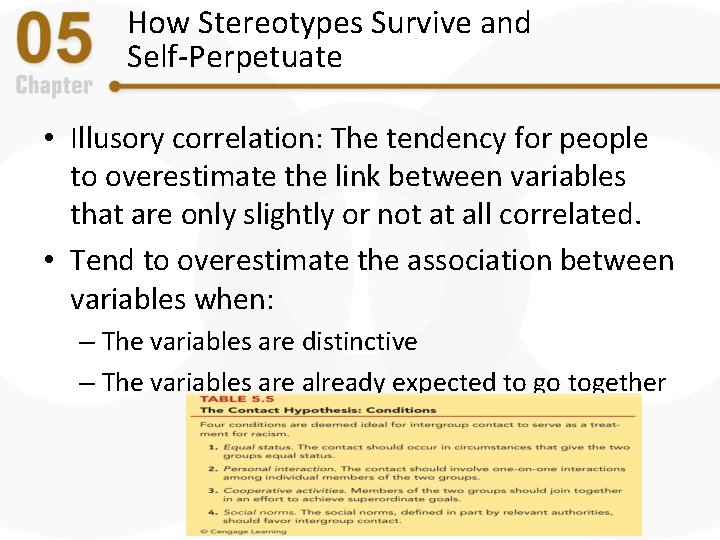
How Stereotypes Survive and Self-Perpetuate • Illusory correlation: The tendency for people to overestimate the link between variables that are only slightly or not at all correlated. • Tend to overestimate the association between variables when: – The variables are distinctive – The variables are already expected to go together