
Chapter 5 States of Consciousness What is Consciousness

- Slides: 50
Chapter 5: States of Consciousness
What is Consciousness? • Consciousness: awareness of ourselves and our environment. • The awareness varies depending on our attention to the task at hand. Ex: driving.
Consciousness and Information Processing • Consciousness describes what we are aware of but many things are processed outside of our “consciousness. ” • Difficult or novel tasks require more conscious attention than well learned tasks. • Consciousness has a limited capacity
Daydreams and Fantasies • Almost everyone daydreams at one point or another. • Young tend to fantasize more than older adults
Why Might Daydreaming Be Helpful and Adaptive for Humans? • • • A way to escape Prepare for future events Aware of unfinished business Increase creativity Substitute for impulsive behavior
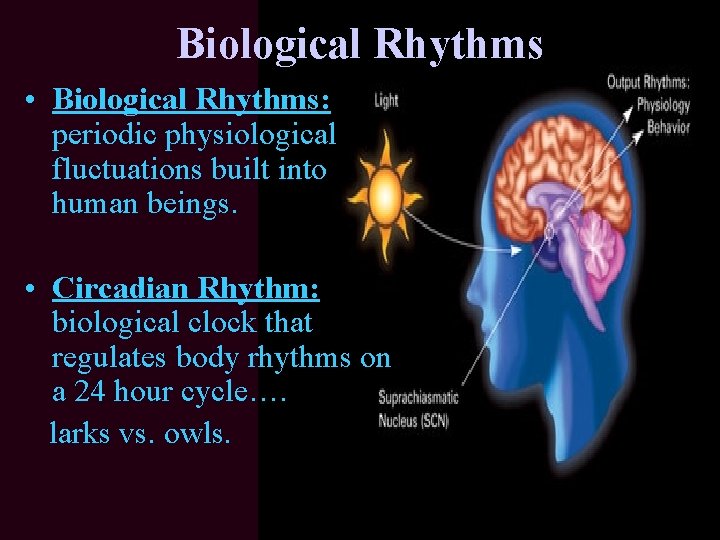
Biological Rhythms • Biological Rhythms: periodic physiological fluctuations built into human beings. • Circadian Rhythm: biological clock that regulates body rhythms on a 24 hour cycle…. larks vs. owls.
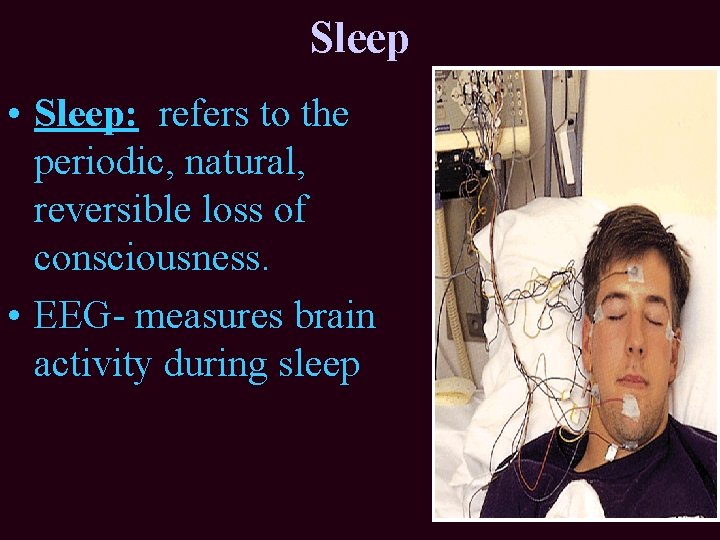
Sleep • Sleep: refers to the periodic, natural, reversible loss of consciousness. • EEG- measures brain activity during sleep
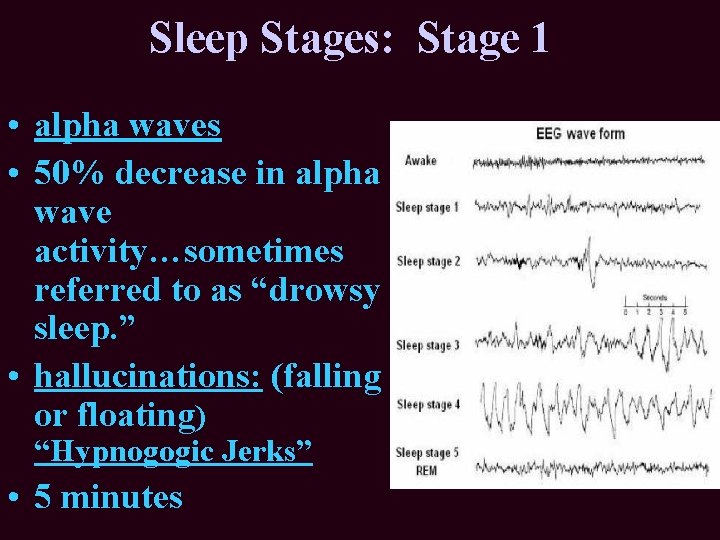
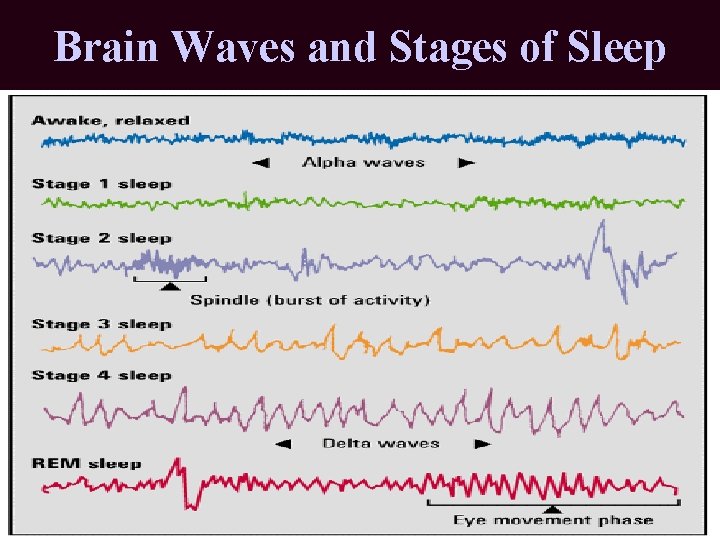
Sleep Stages: Stage 1 • alpha waves • 50% decrease in alpha wave activity…sometimes referred to as “drowsy sleep. ” • hallucinations: (falling or floating) “Hypnogogic Jerks” • 5 minutes
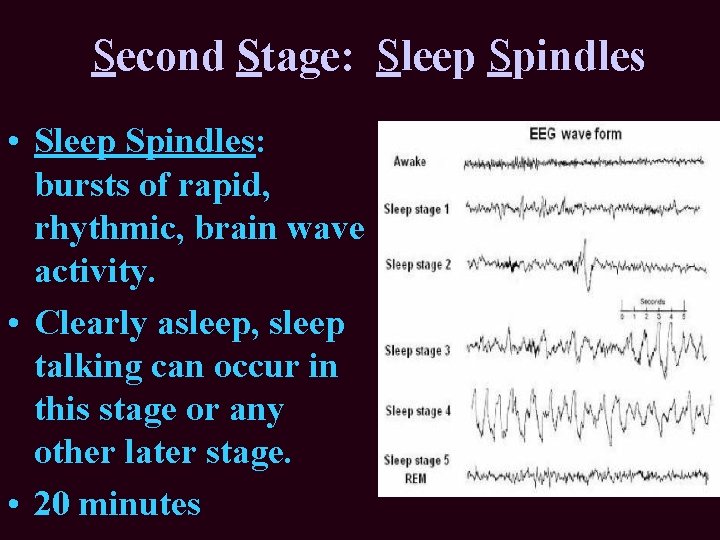
Second Stage: Sleep Spindles • Sleep Spindles: bursts of rapid, rhythmic, brain wave activity. • Clearly asleep, sleep talking can occur in this stage or any other later stage. • 20 minutes
Stage Three: Transition Stage • “slow wave sleep. ” • Delta Waves: (large, slow brain waves associated with deep sleep) begin appearing in stage 3 but are increasingly apparent in Stage 4.
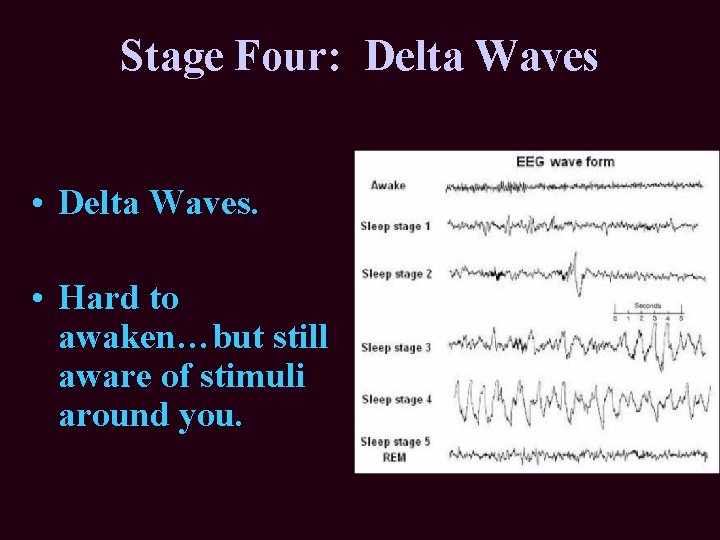
Stage Four: Delta Waves • Delta Waves. • Hard to awaken…but still aware of stimuli around you.
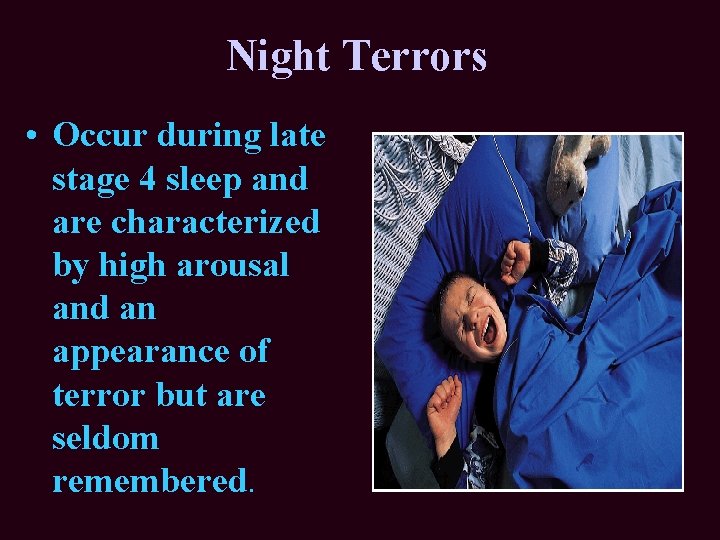
Night Terrors • Occur during late stage 4 sleep and are characterized by high arousal and an appearance of terror but are seldom remembered.
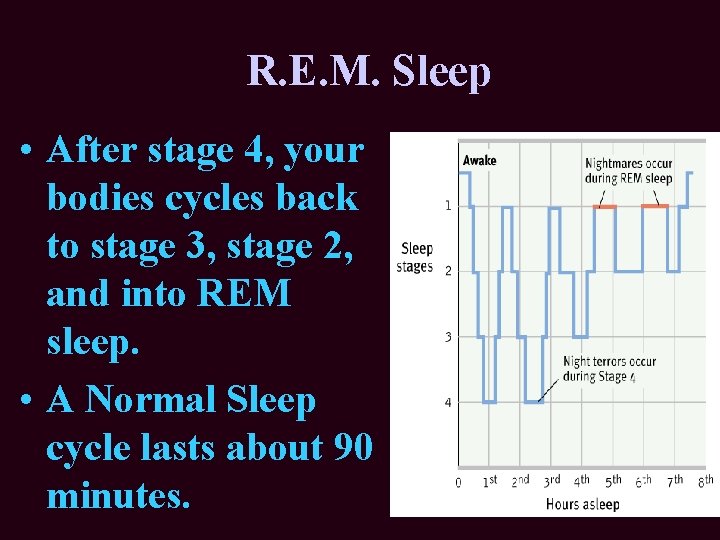
R. E. M. Sleep • After stage 4, your bodies cycles back to stage 3, stage 2, and into REM sleep. • A Normal Sleep cycle lasts about 90 minutes.
Brain Waves and Stages of Sleep
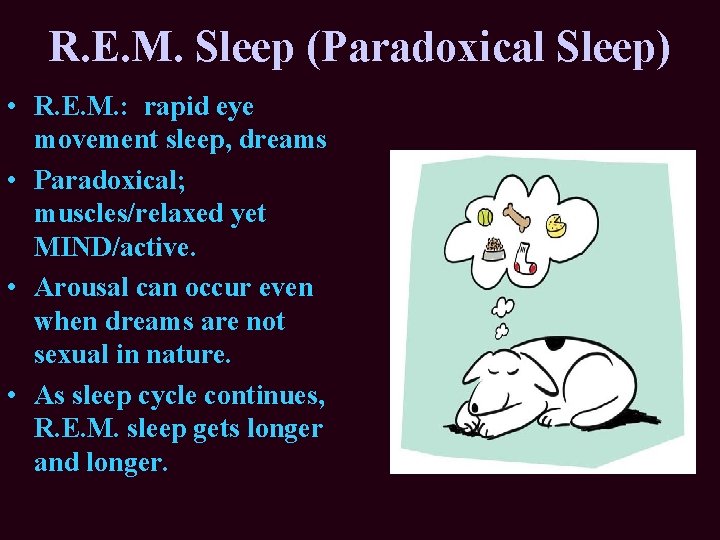
R. E. M. Sleep (Paradoxical Sleep) • R. E. M. : rapid eye movement sleep, dreams • Paradoxical; muscles/relaxed yet MIND/active. • Arousal can occur even when dreams are not sexual in nature. • As sleep cycle continues, R. E. M. sleep gets longer and longer.
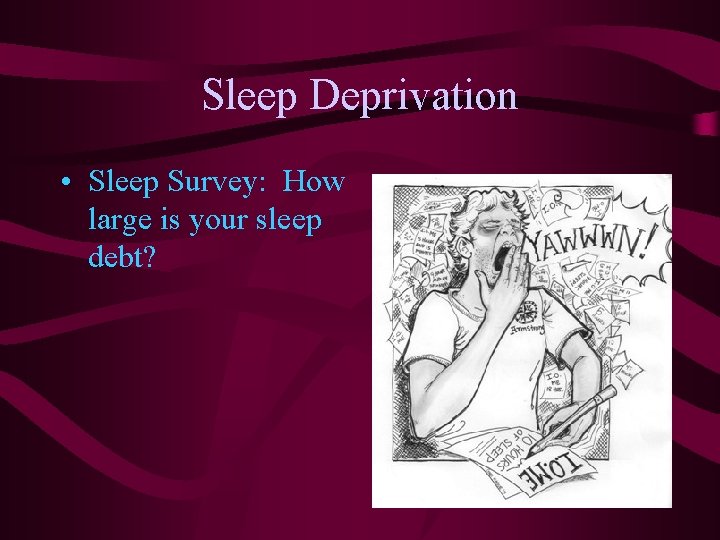
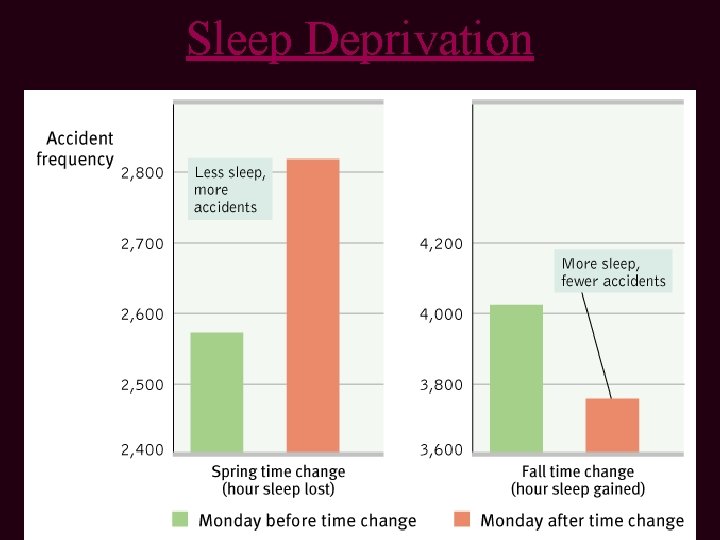
Sleep Deprivation • Sleep Survey: How large is your sleep debt?
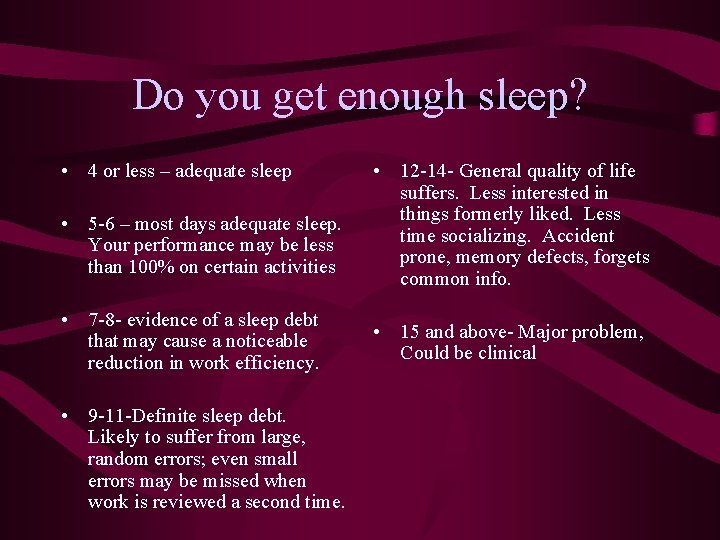
Do you get enough sleep? • 4 or less – adequate sleep • 5 -6 – most days adequate sleep. Your performance may be less than 100% on certain activities • 7 -8 - evidence of a sleep debt that may cause a noticeable reduction in work efficiency. • 9 -11 -Definite sleep debt. Likely to suffer from large, random errors; even small errors may be missed when work is reviewed a second time. • 12 -14 - General quality of life suffers. Less interested in things formerly liked. Less time socializing. Accident prone, memory defects, forgets common info. • 15 and above- Major problem, Could be clinical
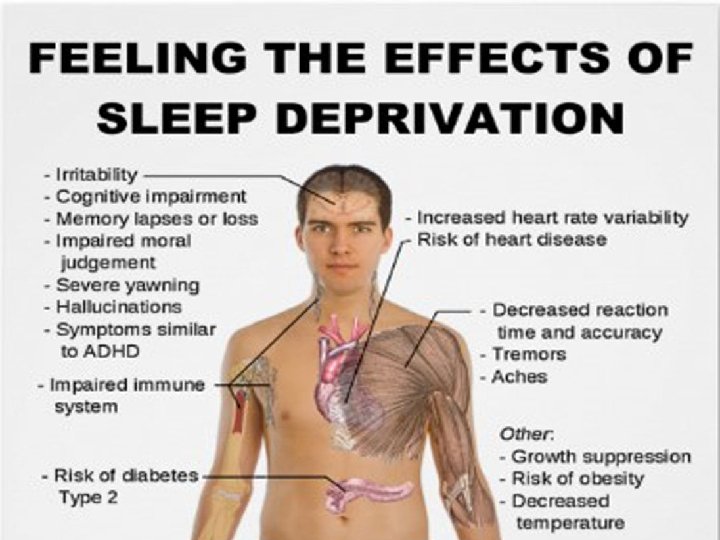
Sleep Deprivation
Sleep Deficiency
How long can you go without sleep? • Randy Gardner – Age 17 – 1947 – Monitored by Stanford Sleep Researchers – 11 days 24 minutes – Video Clip
Should Schools Start Later? • Make a list of pros and cons of a later school start. • Chat with your DP and discuss your points. • Write a summary that reflects your position.
Sleep Theories • Sleep: Do we need it?
Sleep Function • Theories: • 1. Sleep protects • 2. Helps us recuperate • 3. Might help us grow • 4. Memory Consolidation
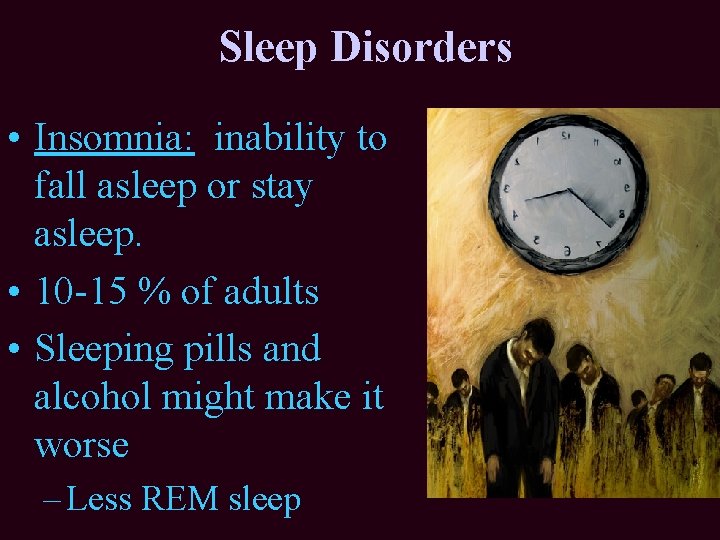
Sleep Disorders • Insomnia: inability to fall asleep or stay asleep. • 10 -15 % of adults • Sleeping pills and alcohol might make it worse – Less REM sleep
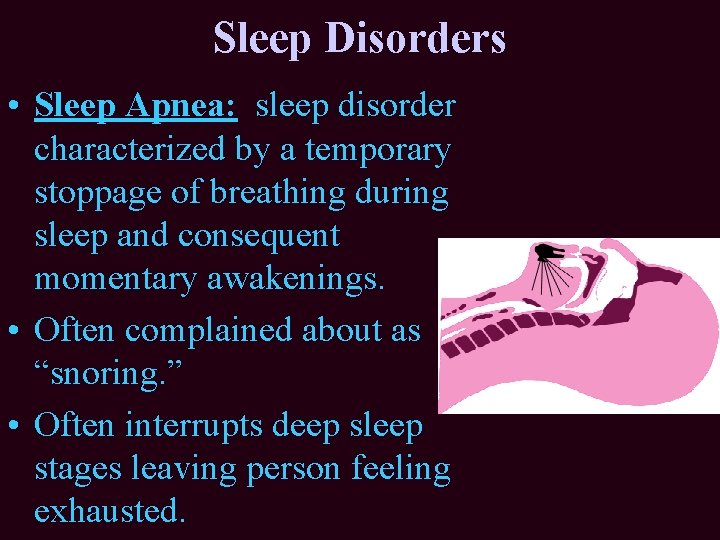
Sleep Disorders • Sleep Apnea: sleep disorder characterized by a temporary stoppage of breathing during sleep and consequent momentary awakenings. • Often complained about as “snoring. ” • Often interrupts deep sleep stages leaving person feeling exhausted.
Dreams
What’s the Meaning Of Dreams? Depends Who You Ask! • Psychoanalytic Theorists like Freud will argue that dreams represent the royal road to the “unconscious. ” Dreams represent unresolved wishes/desires and discharge feelings that would be unacceptable if consciously voiced. • Sigmund Freud- The Interpretation of Dreams (1900) – wish fulfillment – discharge otherwise unacceptable feelings • Manifest Content: represents remembered story line of a dream. • Latent Content: represents underlying meaning of dreams dealing with wishes and drives.
What’s The Meaning of Dreams? Depends Who You Ask? As Information Processing – helps consolidate the day’s memories – Stimulates neural development
What’s The Meaning of Dreams? Depends Who You Ask? • Physiological Function of Dreams: periodic brain activity associated with R. E. M. sleep gives the brain needed activity to make neural connections. Also helps facilitate memory. • Activation-Synthesis Theory: dreams are result of brain’s attempt to make sense of random neural activity. Visual cortex among other areas like the Limbic System are active during R. E. M. sleep. Mind always tries to make sense of stimuli.
What’s The Meaning Of Dreams? Depends Who You Ask! • Dreams As Part of Cognitive Development: all mammals experience R. E. M. sleep and many researchers believe it helps facilitate cognitive development. • R. E. M. Rebound: tendency for R. E. M. sleep to increase following deprivation. May illustrate a biological need for it.
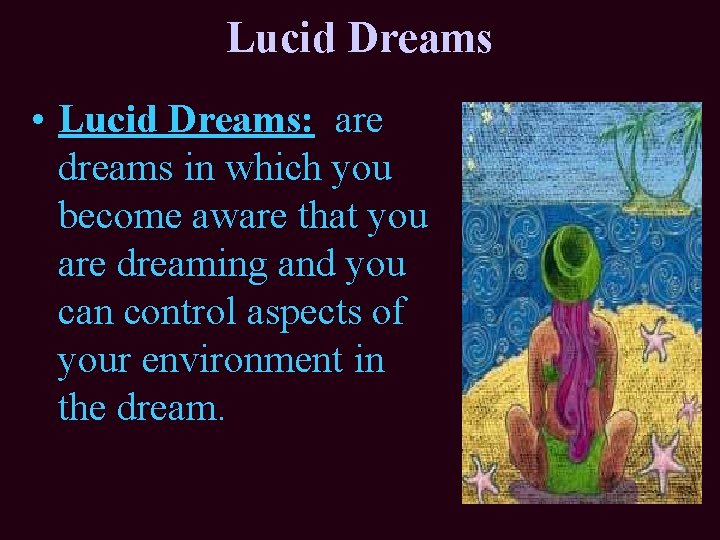
Lucid Dreams • Lucid Dreams: are dreams in which you become aware that you are dreaming and you can control aspects of your environment in the dream.
What do we dream about? • Sex- 1 in 30 for women; 1 in 10 for men • Women dream about men and women; 65% of men's dreams are about men • Most dreams are about events in our daily lives • Previous day’s experiences • Forget things that happen 5 minute before we fall asleep • Do not remember taped info
Have you ever dreamed of…. . ? • • Falling 83% Being attacked 77% School, teacher, studying 71% Sexual experiences 66% Arriving late 64% Eating 62% A loved person dying 57% Being locked up 56%
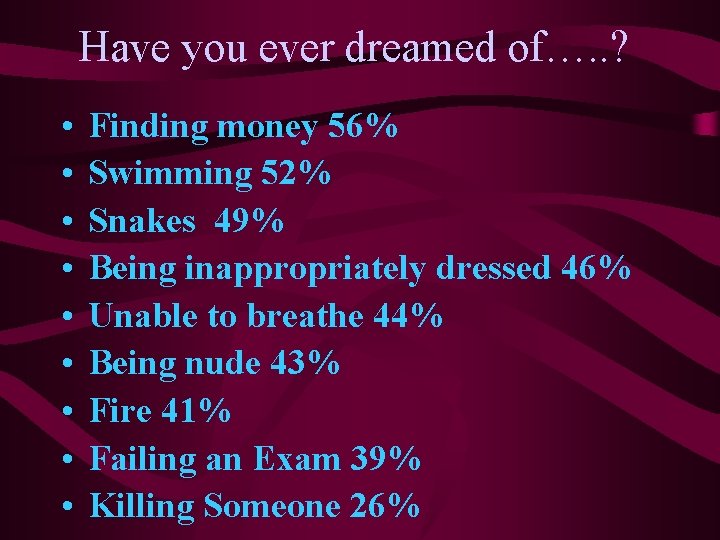
Have you ever dreamed of…. . ? • • • Finding money 56% Swimming 52% Snakes 49% Being inappropriately dressed 46% Unable to breathe 44% Being nude 43% Fire 41% Failing an Exam 39% Killing Someone 26%
Hypnosis
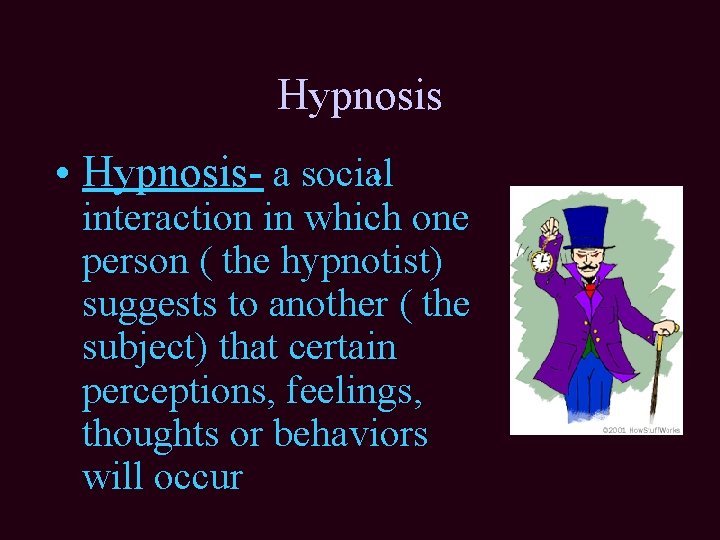
Hypnosis • Hypnosis- a social • interaction in which one person ( the hypnotist) suggests to another ( the subject) that certain perceptions, feelings, thoughts or behaviors will occur
Hypnosis Can anyone Experience Hypnosis? • It depends on the subject’s openness to suggestion
Hypnosis Can Hypnosis Enhance Recall of Forgotten Events? • Hypnosis does not help us recover “accurate memories as far back as birth” • Highly hypnotizable ppl are especially vulnerable to false memory suggestions
Hypnosis Can hypnosis force ppl to act against their will? • An authoritative person in a legitimate context can induce ppl- hypnotized or not- to perform some unlikely acts
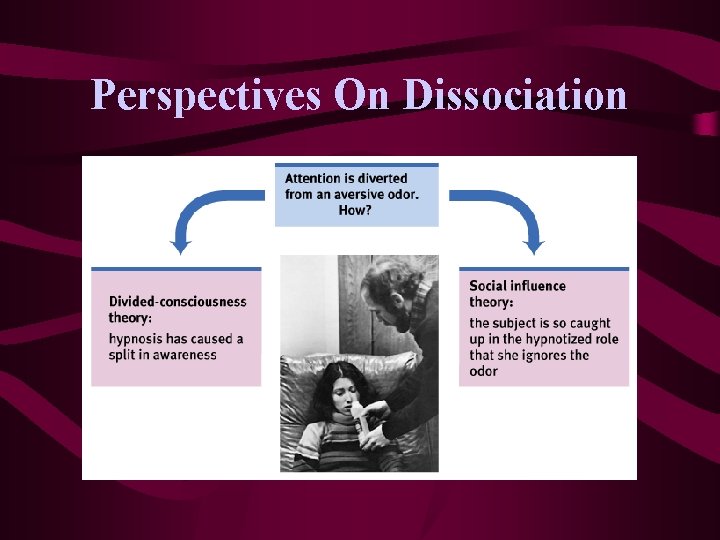
Can Hypnosis Alleviate Pain • YES • 10% of us can become so deeply hypnotized that even major surgery can be performed without anesthesia • Dissociation- a split between levels of consciousness. • Dissociate the sensation of the pain from the emotional suffering • Selective Attention
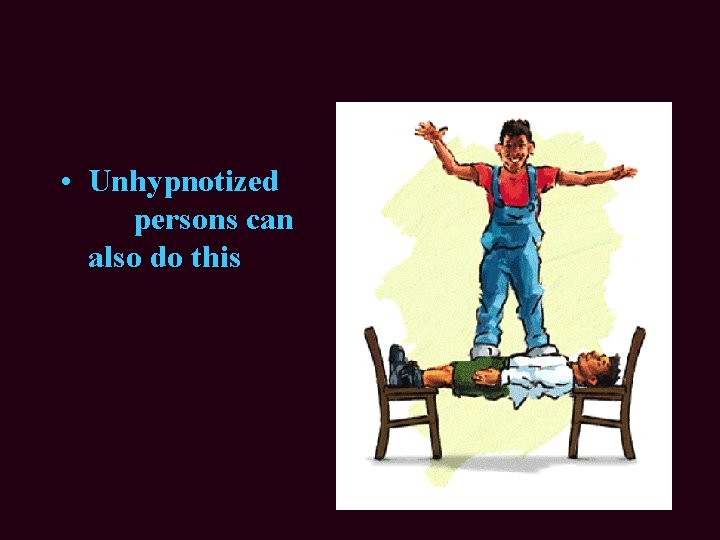
Is Hypnosis an Altered State of Consciousness Hypnosis as a social phenomenon • Behaviors produced through hypnotic procedures can also be produced without them • PPl. do what is expected of them
• Unhypnotized persons can also do this
Is Hypnosis an Altered State of Consciousness Hypnosis As A Divided Consciousness • Explains hypnosis not as a unique “trance state” where the “subconscious” is under control by the hypnotist but rather as a split in awareness caused by the “subjective experience of hypnosis. ” • Hilgard’s Experiment
Perspectives On Dissociation
Hilgard’s Hidden Observer • Hidden Observer: describes hypnotized subject’s awareness of experiences, such as pain, that go unreported during hypnosis. – Is a part of the person that has the experience.
Hypnosis Concepts: Can Hypnosis Have an Effect After The Session? • Posthypnotic Amnesia: supposed inability to recall what one experienced during hypnosis; induced by the hypnotist’s suggestion. “You will no longer remember anything you experienced today. ” • Posthypnotic Suggestion: a suggestion made during a hypnosis session that will be carried out after hypnosis session is over. “You will no longer feel the need to smoke after this session is over. ”
Near Death Experiences
Near Death Experiences • Near Death Experiences: an altered state of consciousness reported after a close brush with death.
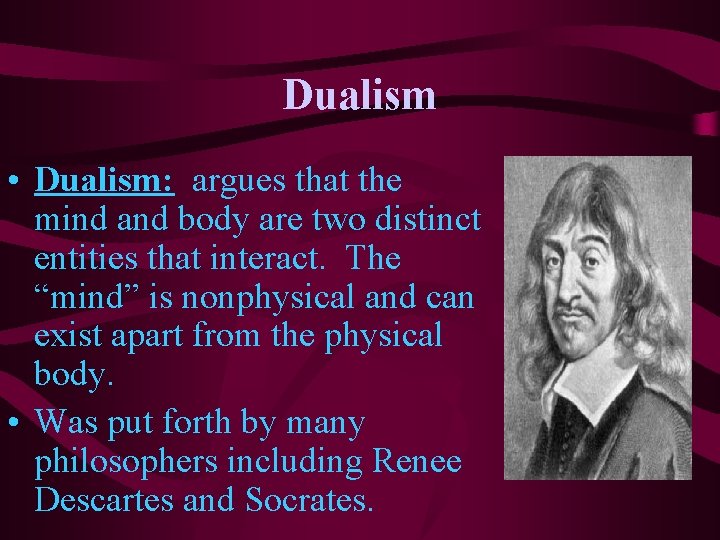
Dualism • Dualism: argues that the mind and body are two distinct entities that interact. The “mind” is nonphysical and can exist apart from the physical body. • Was put forth by many philosophers including Renee Descartes and Socrates.
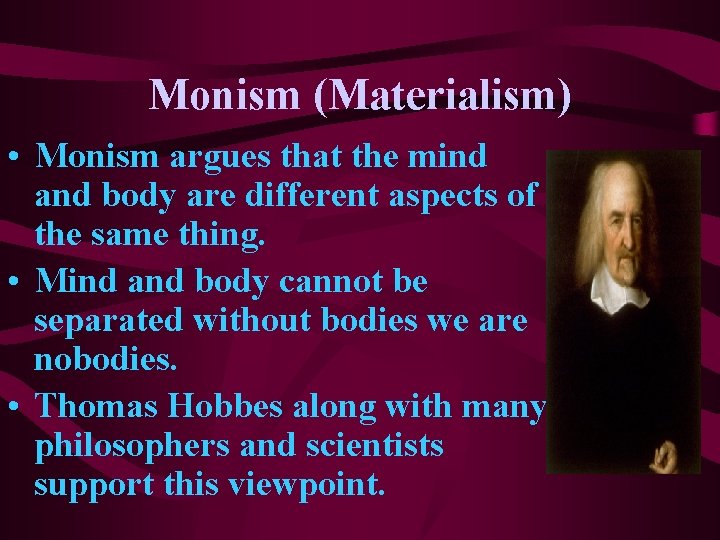
Monism (Materialism) • Monism argues that the mind and body are different aspects of the same thing. • Mind and body cannot be separated without bodies we are nobodies. • Thomas Hobbes along with many philosophers and scientists support this viewpoint.