
CHAPTER 5 SECTION 5 4 EXPONENTIAL FUNCTIONS DIFFERENTIATION




- Slides: 54
CHAPTER 5 SECTION 5. 4 EXPONENTIAL FUNCTIONS: DIFFERENTIATION AND INTEGRATION
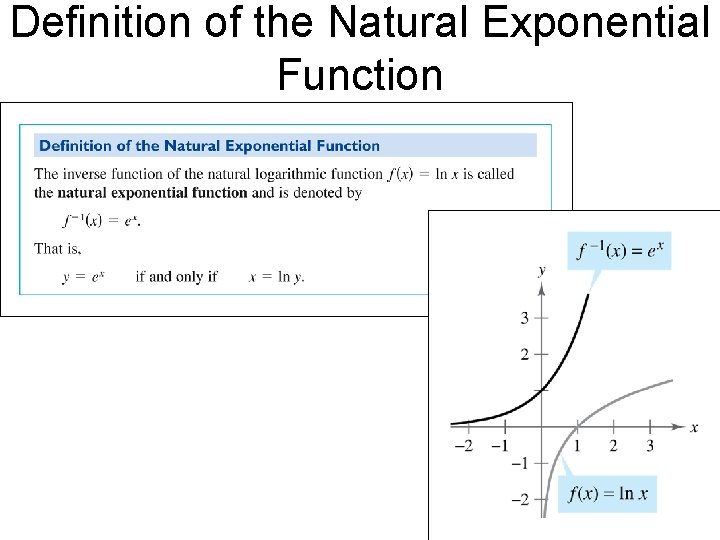
Definition of the Natural Exponential Function
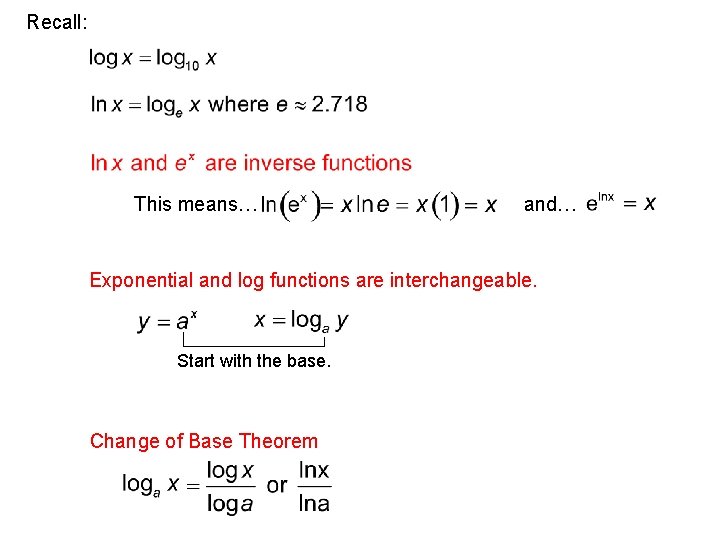
Recall: This means… and… Exponential and log functions are interchangeable. Start with the base. Change of Base Theorem
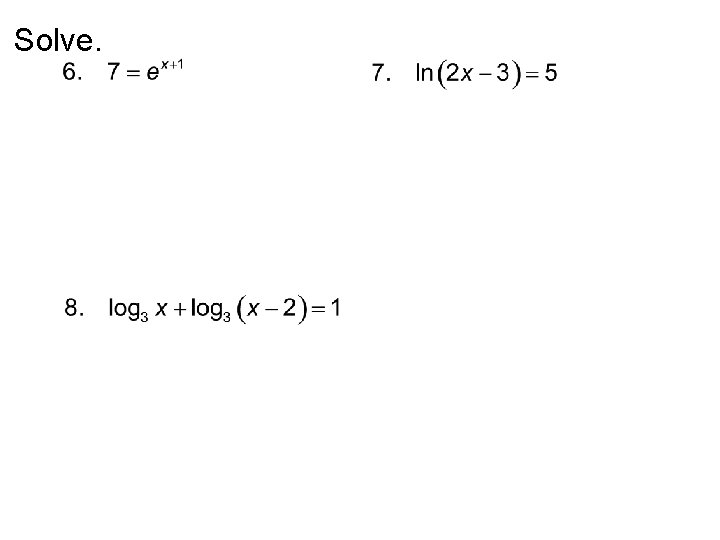
Solve.
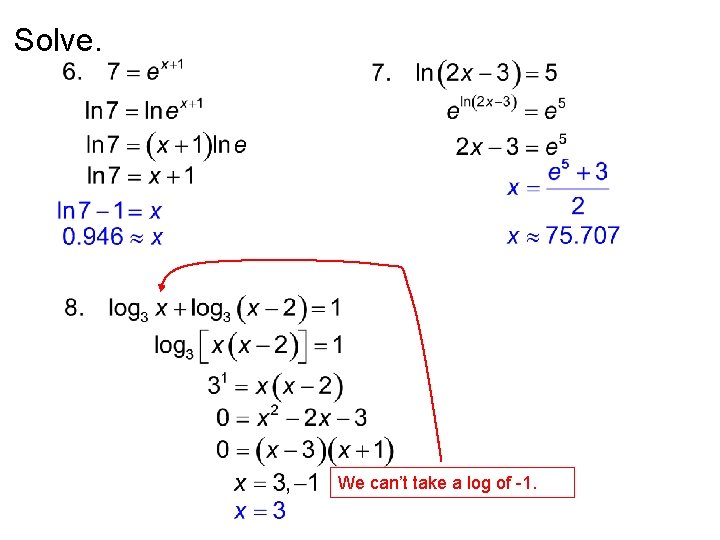
Solve. We can’t take a log of -1.
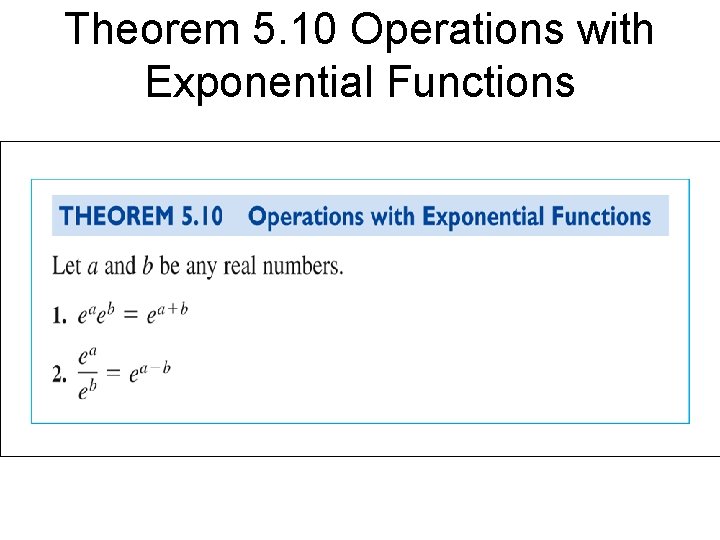
Theorem 5. 10 Operations with Exponential Functions
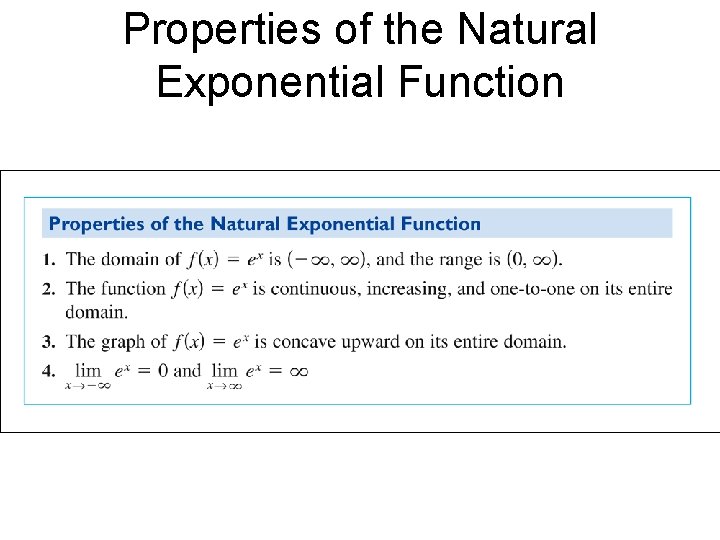
Properties of the Natural Exponential Function
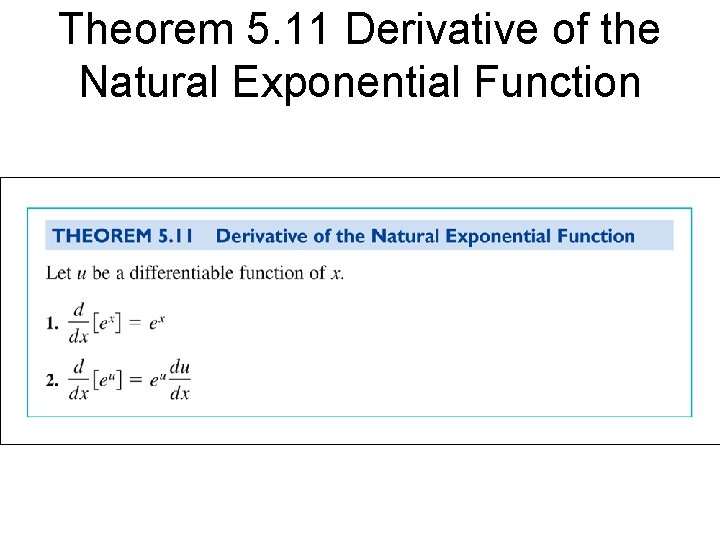
Theorem 5. 11 Derivative of the Natural Exponential Function
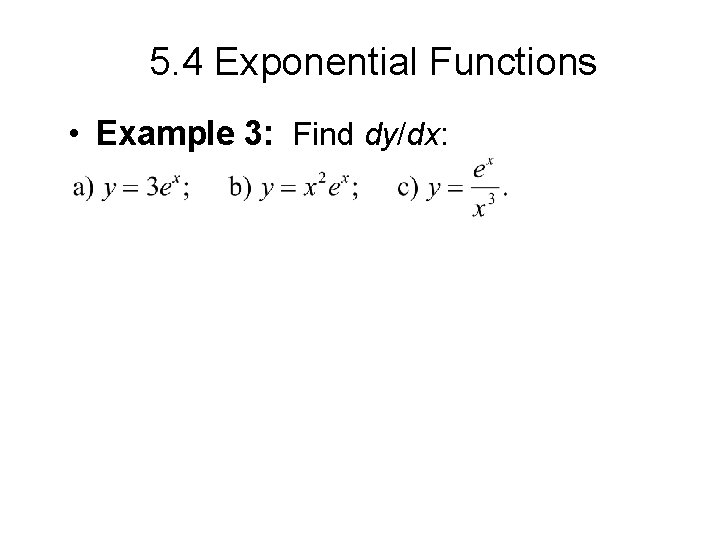
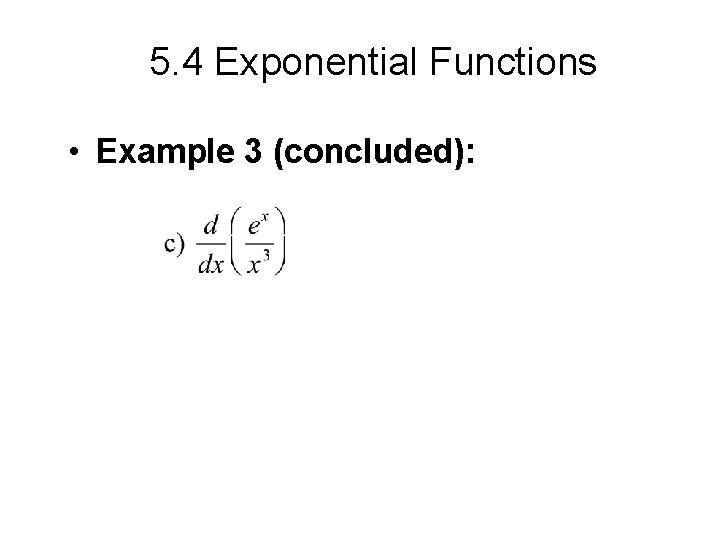
5. 4 Exponential Functions • Example 3: Find dy/dx:
5. 4 Exponential Functions • Example 3 (concluded):
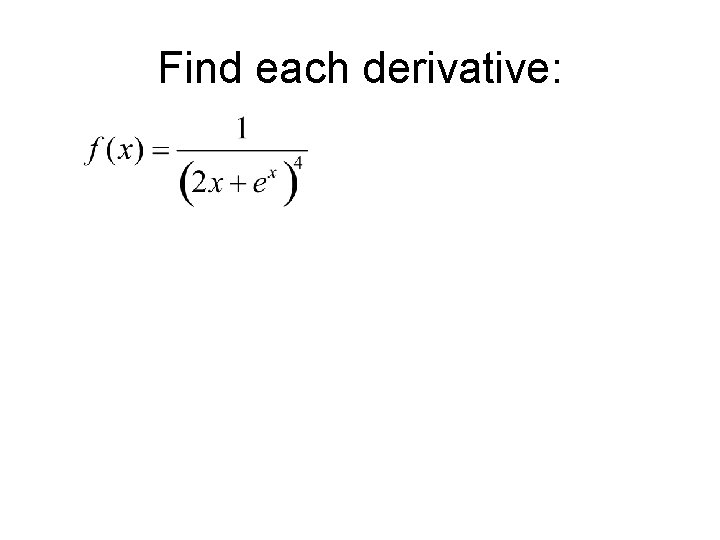
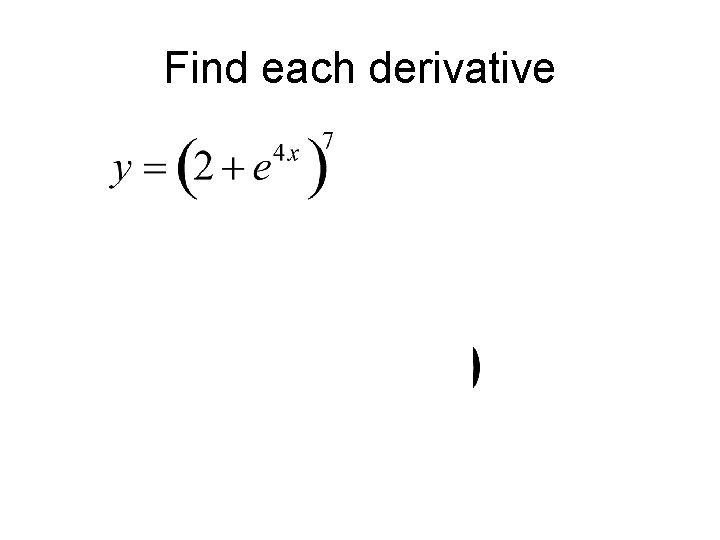
Find each derivative:
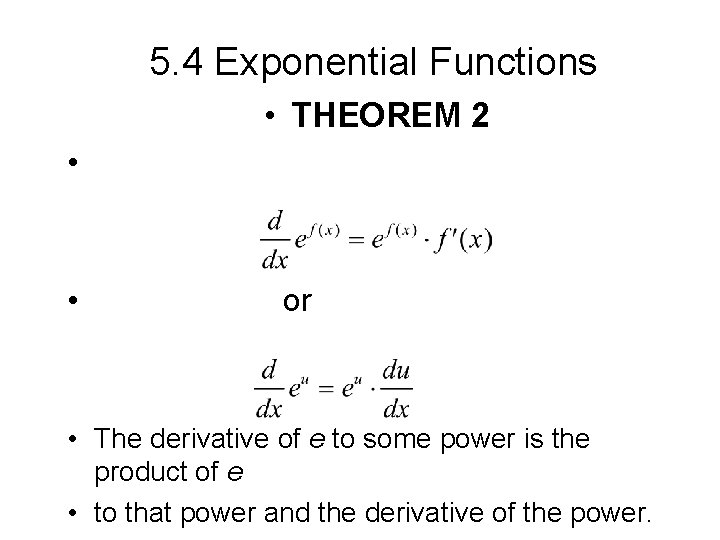
5. 4 Exponential Functions • THEOREM 2 • • or • The derivative of e to some power is the product of e • to that power and the derivative of the power.
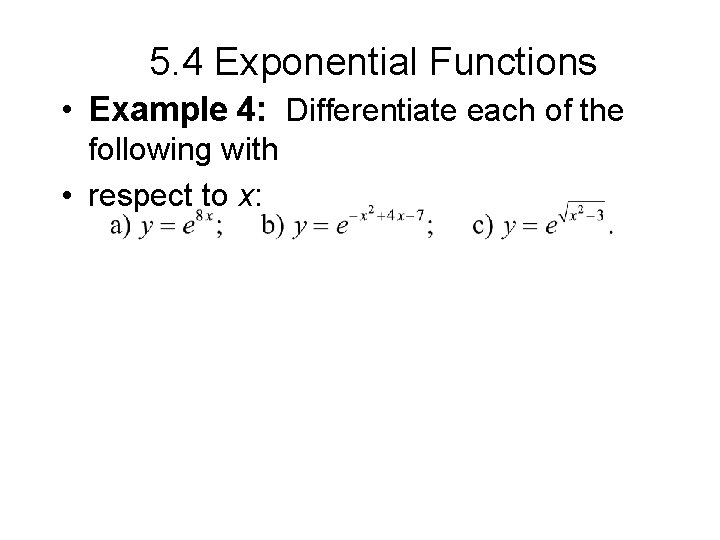
5. 4 Exponential Functions • Example 4: Differentiate each of the following with • respect to x:
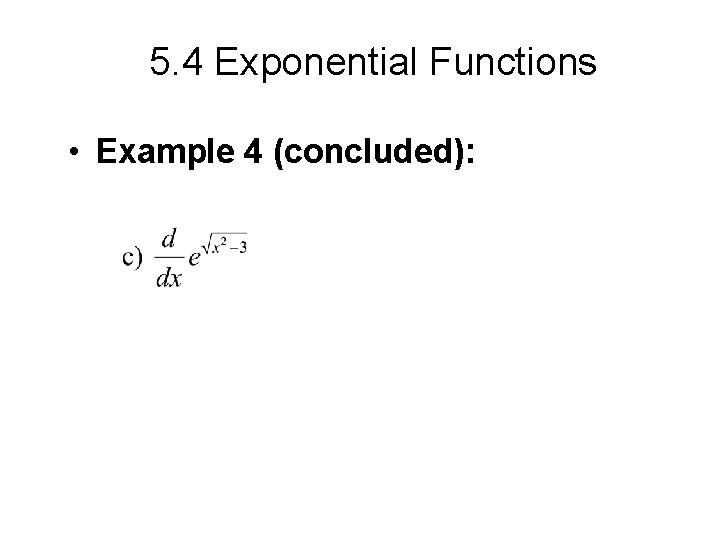
5. 4 Exponential Functions • Example 4 (concluded):
Find each derivative
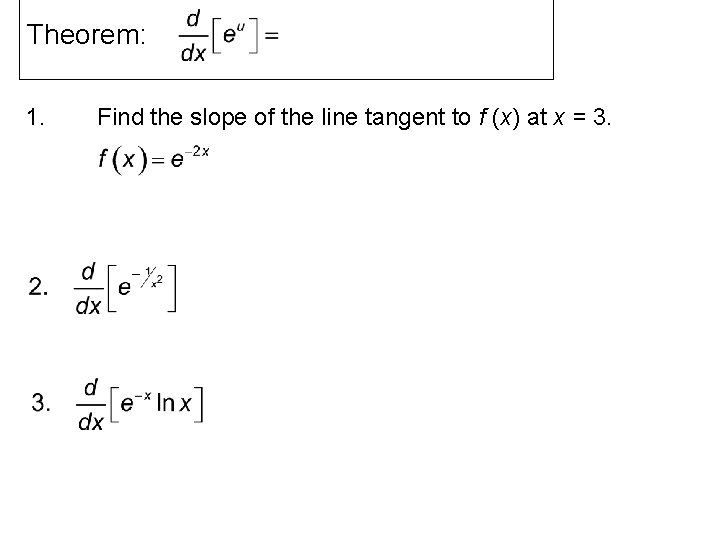
Theorem: 1. Find the slope of the line tangent to f (x) at x = 3.
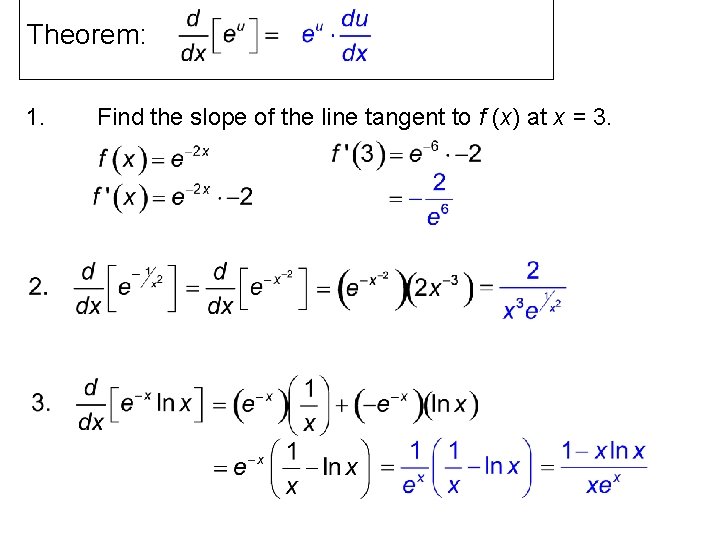
Theorem: 1. Find the slope of the line tangent to f (x) at x = 3.
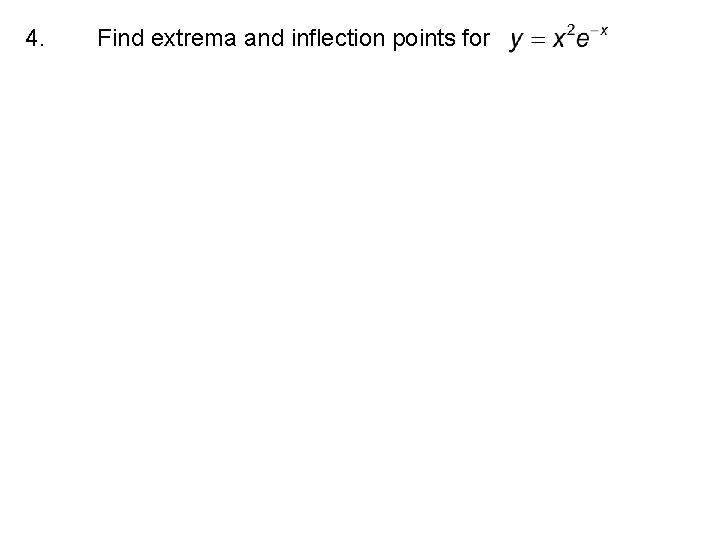
4. Find extrema and inflection points for
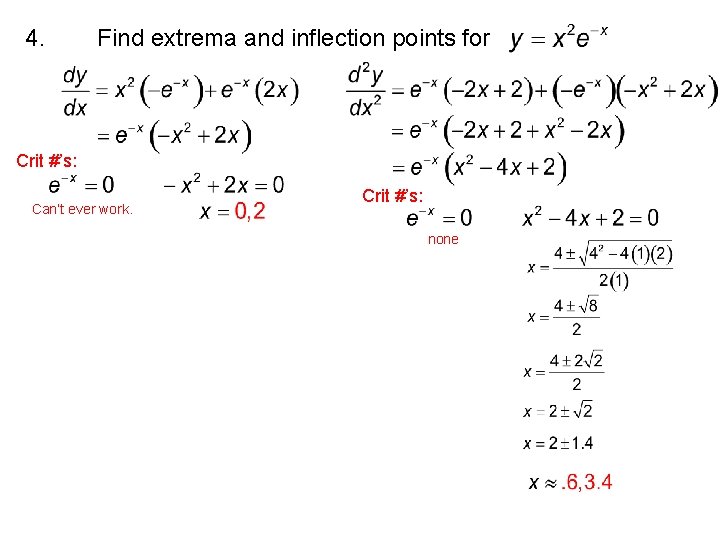
4. Find extrema and inflection points for Crit #’s: Can’t ever work. Crit #’s: none
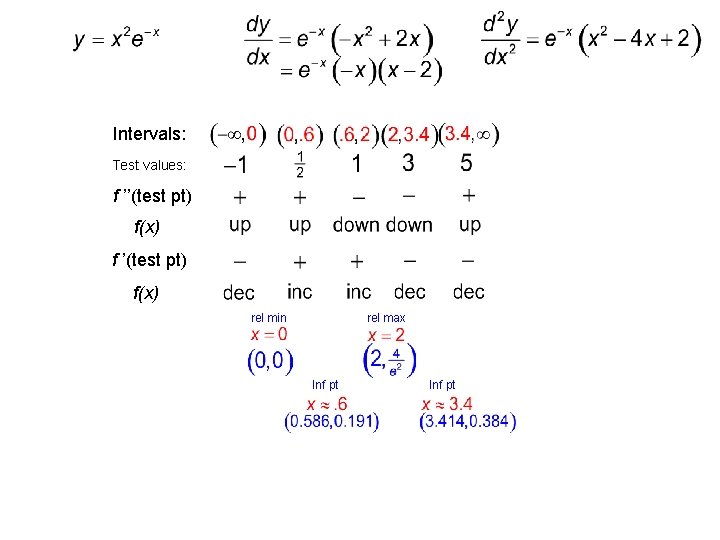
Intervals: Test values: f ’’(test pt) f(x) f ’(test pt) f(x) rel max rel min Inf pt
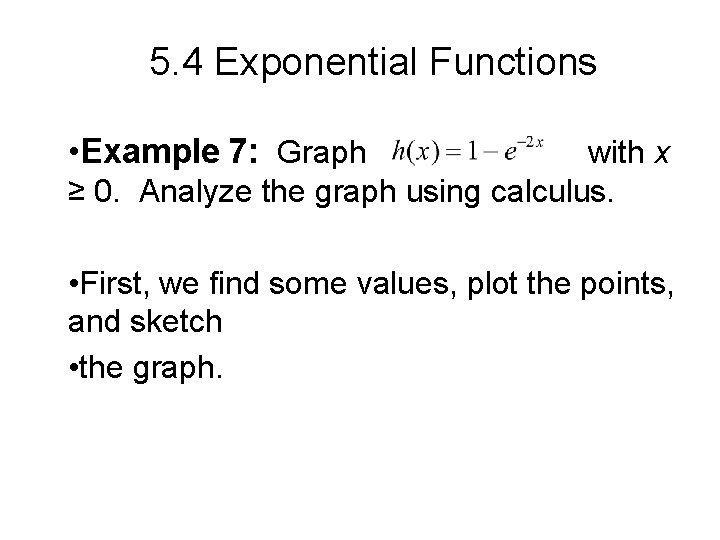
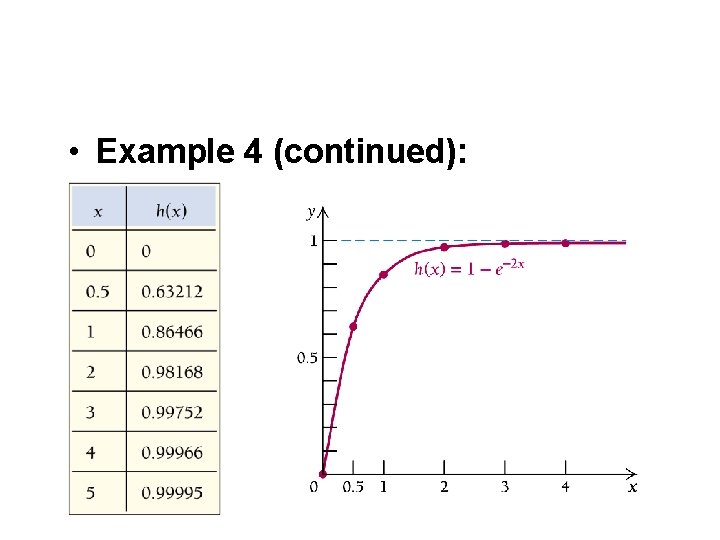
5. 4 Exponential Functions • Example 7: Graph with x ≥ 0. Analyze the graph using calculus. • First, we find some values, plot the points, and sketch • the graph.
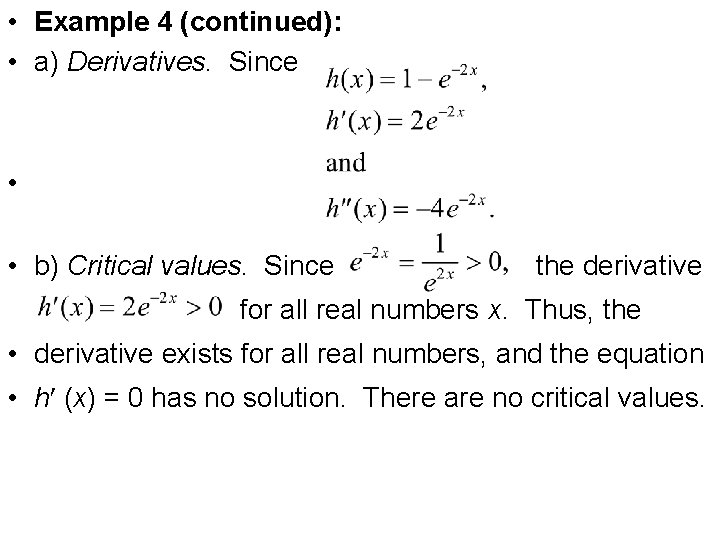
• Example 4 (continued): • a) Derivatives. Since • • b) Critical values. Since the derivative for all real numbers x. Thus, the • derivative exists for all real numbers, and the equation • h (x) = 0 has no solution. There are no critical values.
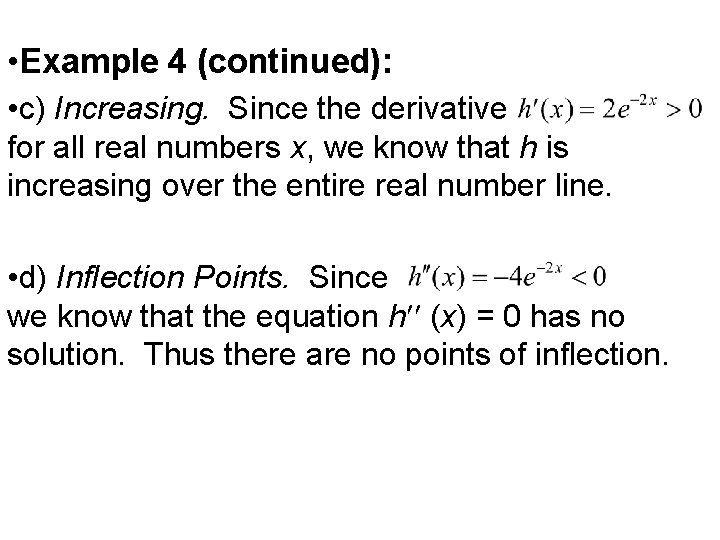
• Example 4 (continued): • c) Increasing. Since the derivative for all real numbers x, we know that h is increasing over the entire real number line. • d) Inflection Points. Since we know that the equation h (x) = 0 has no solution. Thus there are no points of inflection.
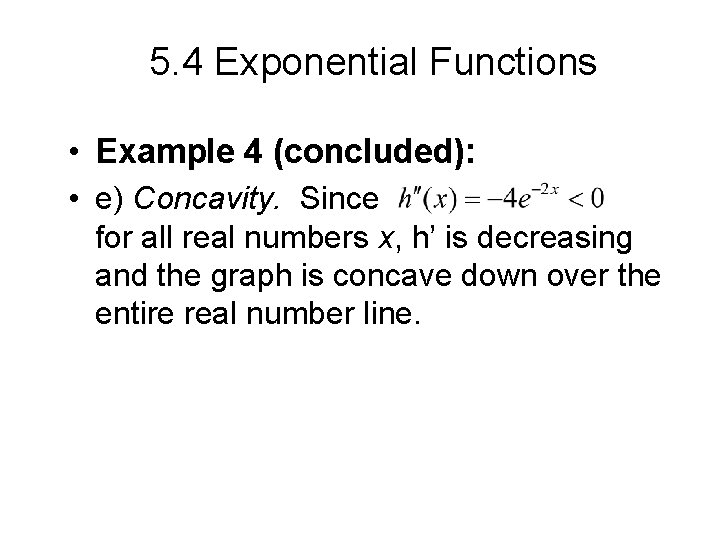
5. 4 Exponential Functions • Example 4 (concluded): • e) Concavity. Since for all real numbers x, h’ is decreasing and the graph is concave down over the entire real number line.
• Example 4 (continued):
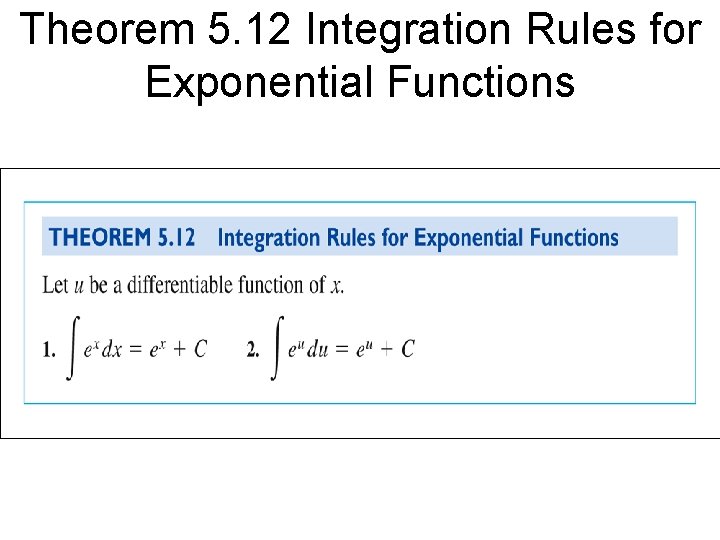
Theorem 5. 12 Integration Rules for Exponential Functions
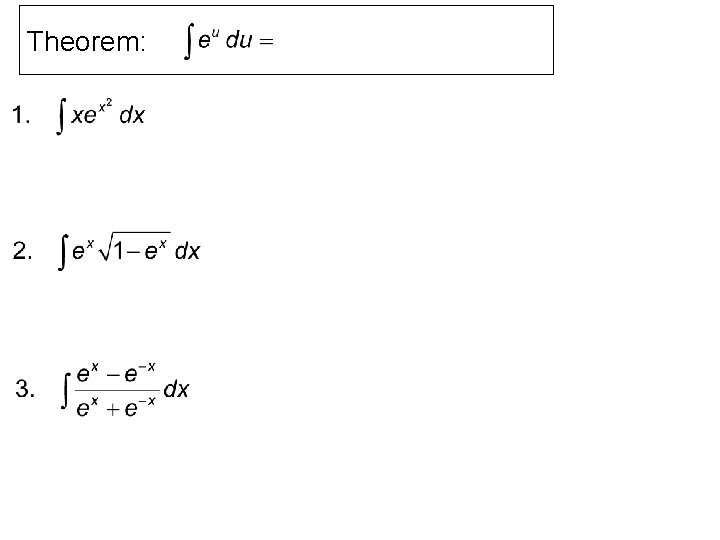
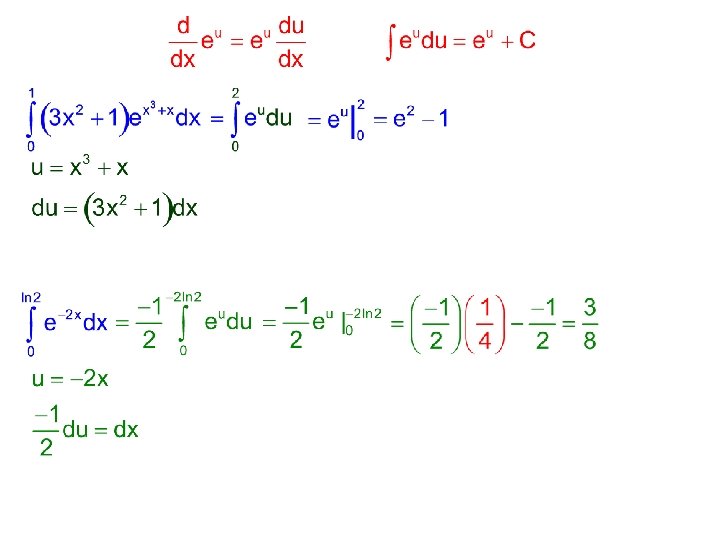
Theorem:
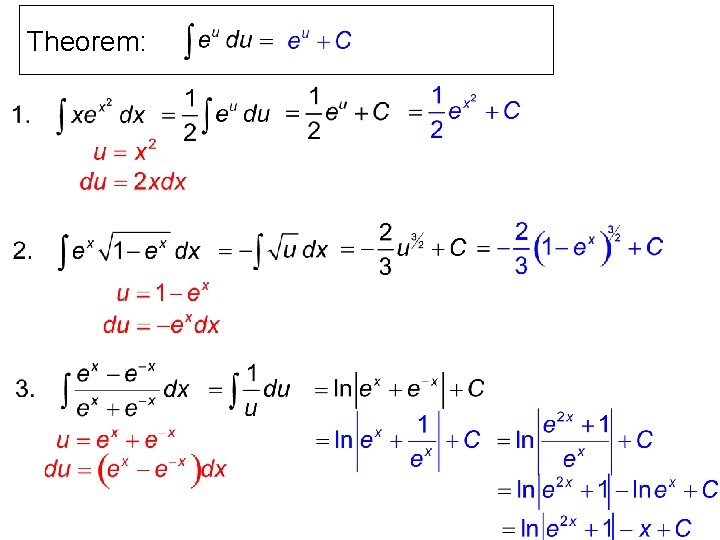
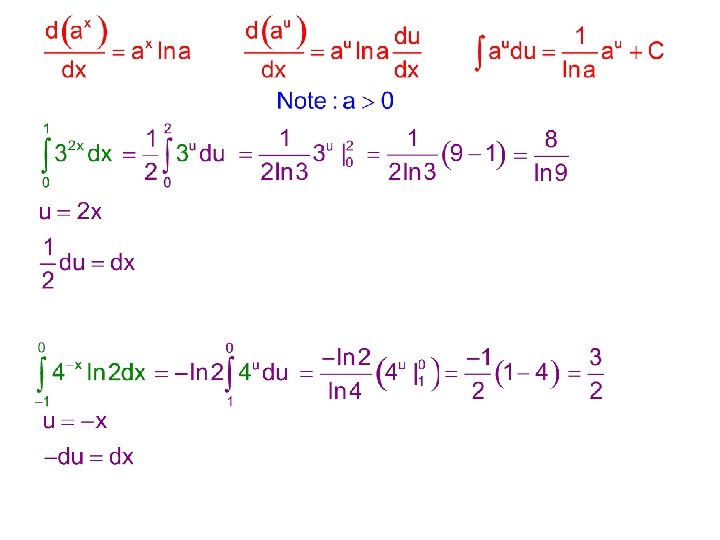
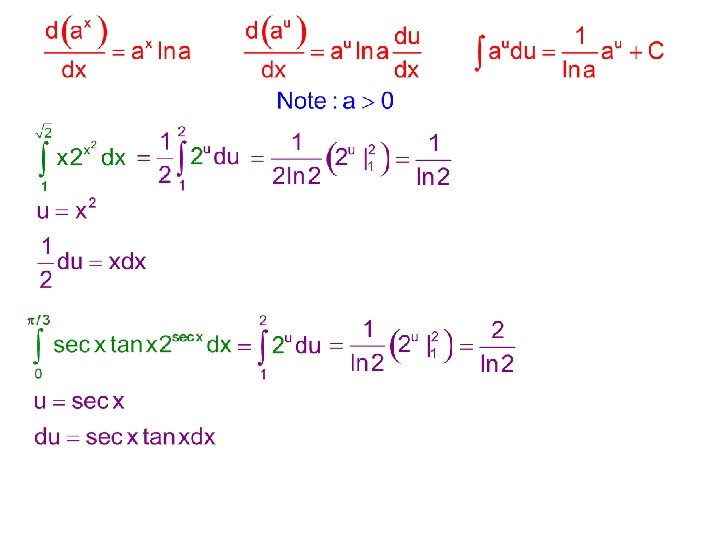
Theorem:
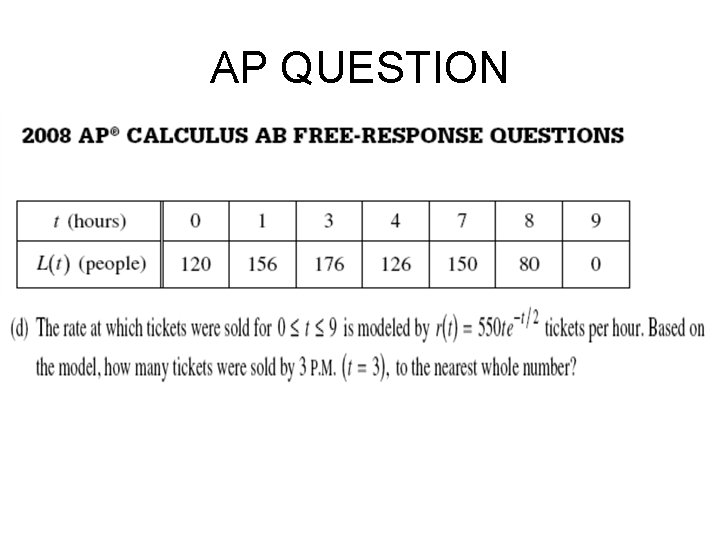
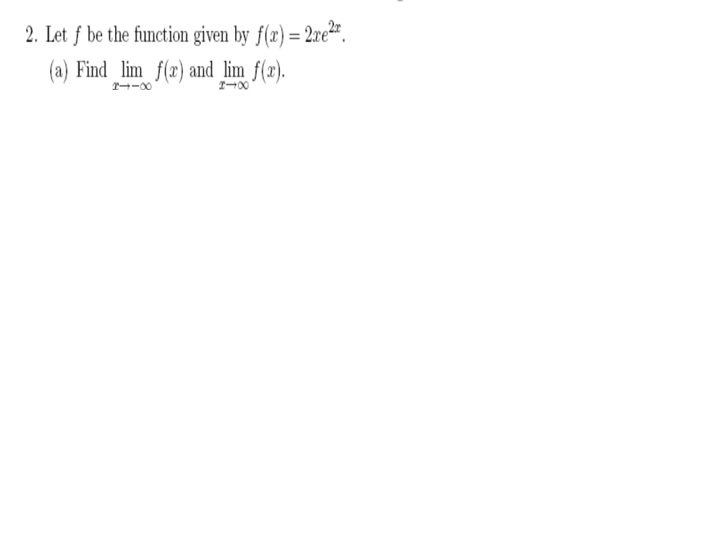
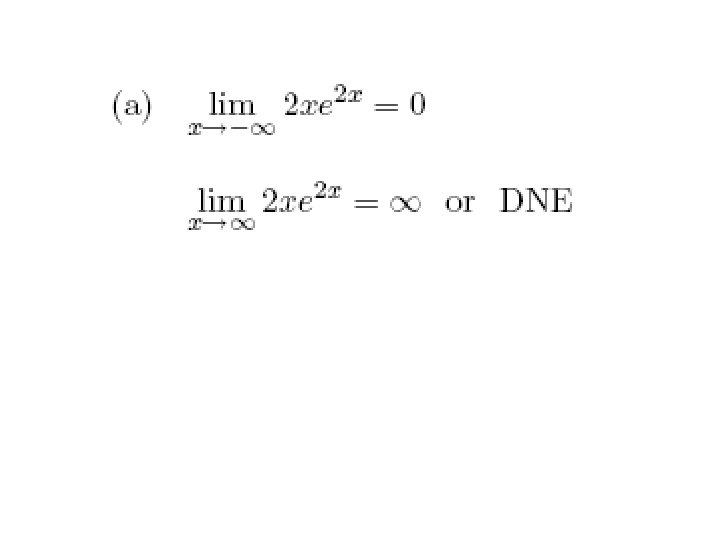
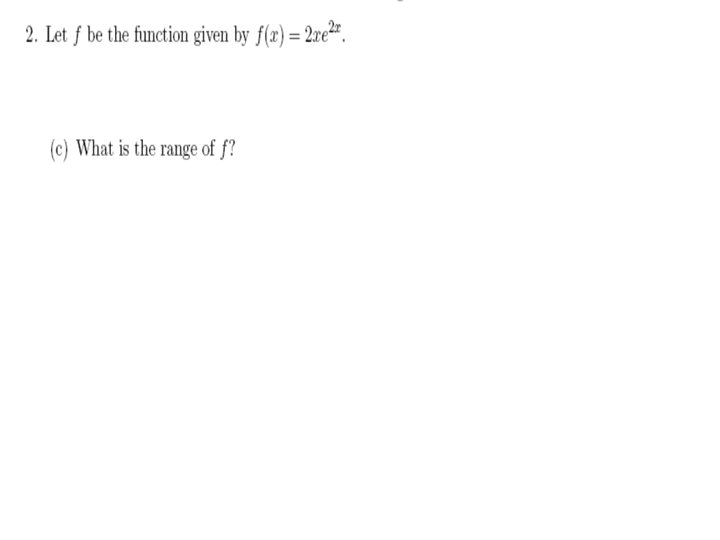
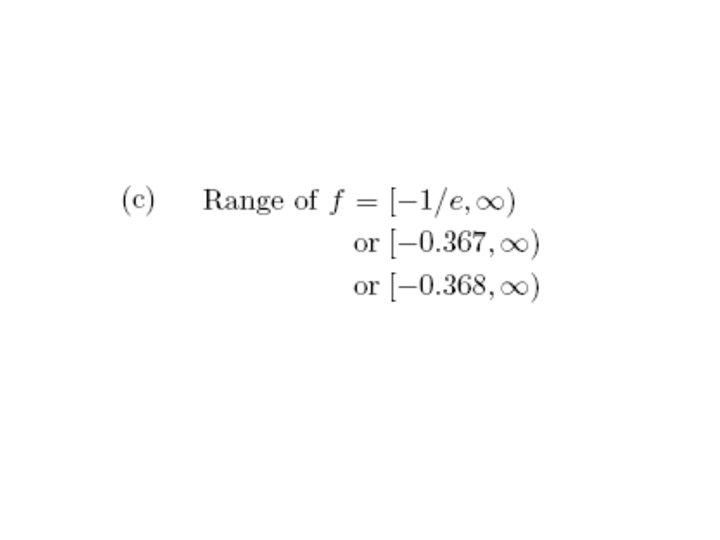
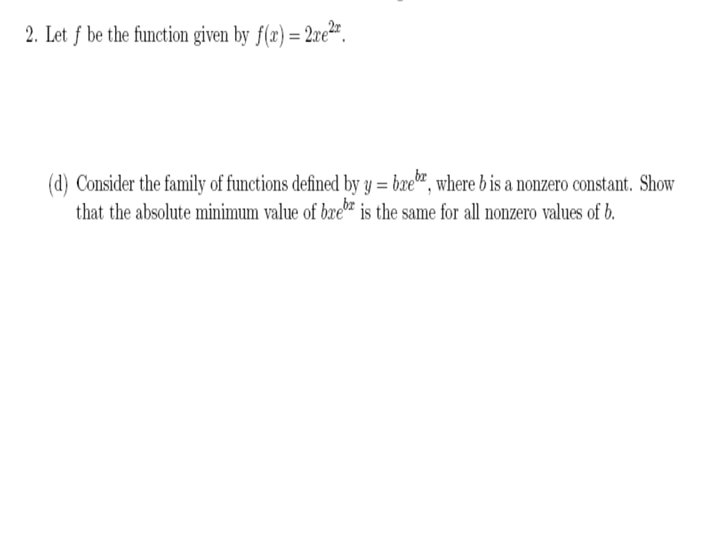
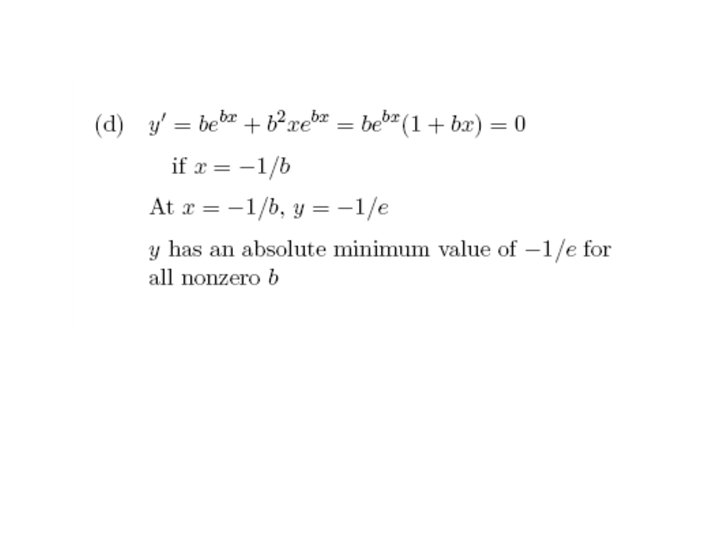
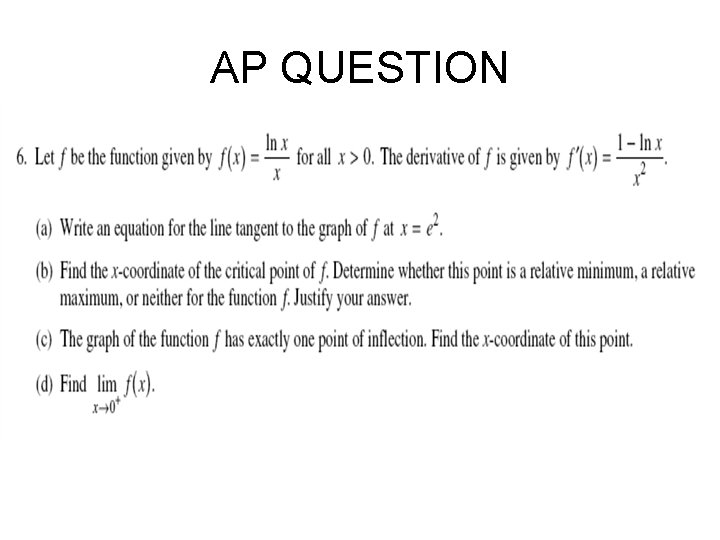
AP QUESTION
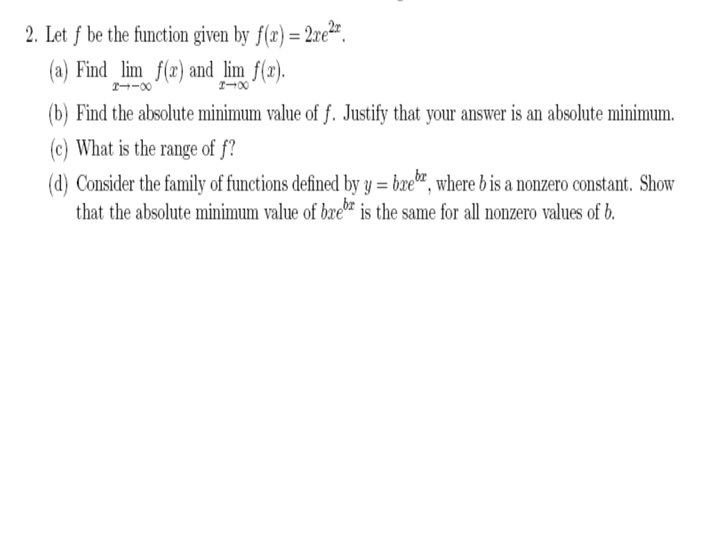
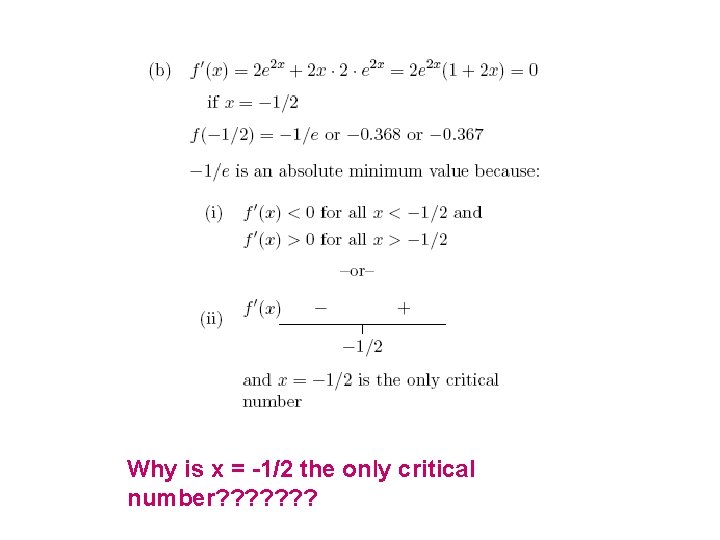
Why is x = -1/2 the only critical number? ? ? ?
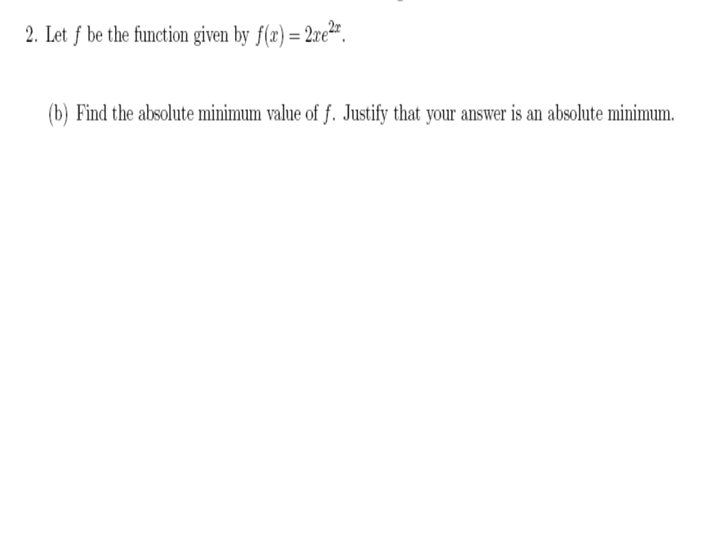
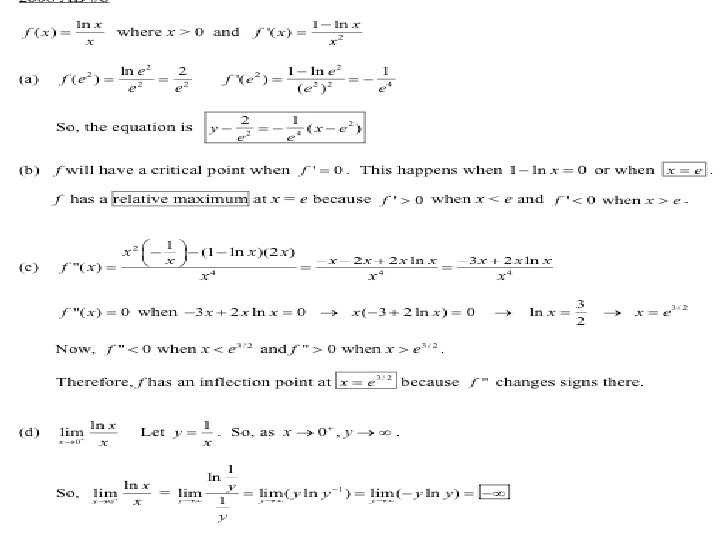
AP QUESTION