
Chapter 5 Section 4 Proteins Mrs Kerstetter Biology
Chapter 5 Section 4 Proteins Mrs. Kerstetter Biology

Proteins = polymer constructed of just 20 kinds of monomers called amino acids. Proteins are macromolecules that contain nitrogen, carbon, hydrogen, and oxygen
Functions of Proteins Functions: 1. Form structures (hair, fur, nails) 2. Make up muscles 3. Long-term nutrient storage 4. Circulate in blood and defend against harmful microorganisms 5. Convey signals or messages 6. Controls chemical reactions in a cell
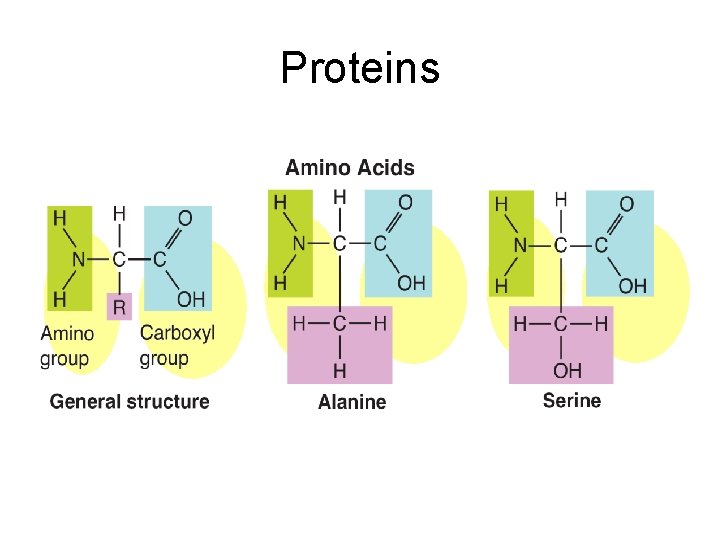
Amino Acids n n Amino acids have a central carbon atom bonded to 4 other groups THREE of those groups are the same in all amino acids n 1. 2. 3. They are: A HYDROGEN atom A CARBOXYL group An AMINO group
Amino Acids n The 4 th group is called the “R group” n R group is responsible for the chemical properties of each amino acid
Proteins
Building a Protein Cells link together amino acids into a chain called a POLYPEPTIDE. n Created by a dehydration reaction between amino group of one amino acid and carboxyl group of next n n Proteins are made of one or more polypeptide chains
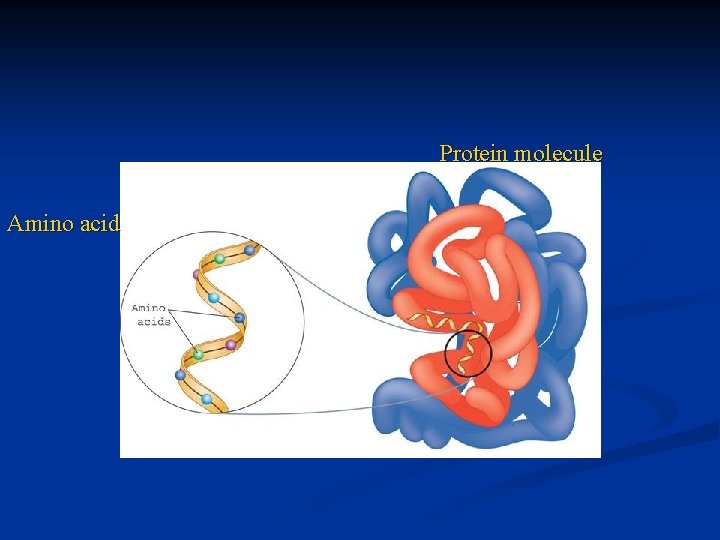
Polypeptide Chains n Most polypeptide chains are at least 100 amino acids in length n Each protein has a unique sequence of amino acids
Protein molecule Amino acid
Protein Shape Proteins that are linked to each other can’t just function… it needs a certain shape n Some side groups form bonds with each other causes folds, twists, and coils n Some shapes influenced by aqueous environment n n Hydrophilic to outside and hydrophobic to inside
Denaturation n n 1. 2. 3. Denaturation is the process of a protein losing its normal shape Caused by changes in: Temperature p. H Some other environmental change A protein that loses its shape also loses the ability to work properly
- Slides: 11