
Chapter 5 Section 2 Land Use Land Use
- Slides: 7
Chapter 5 Section 2 – Land Use
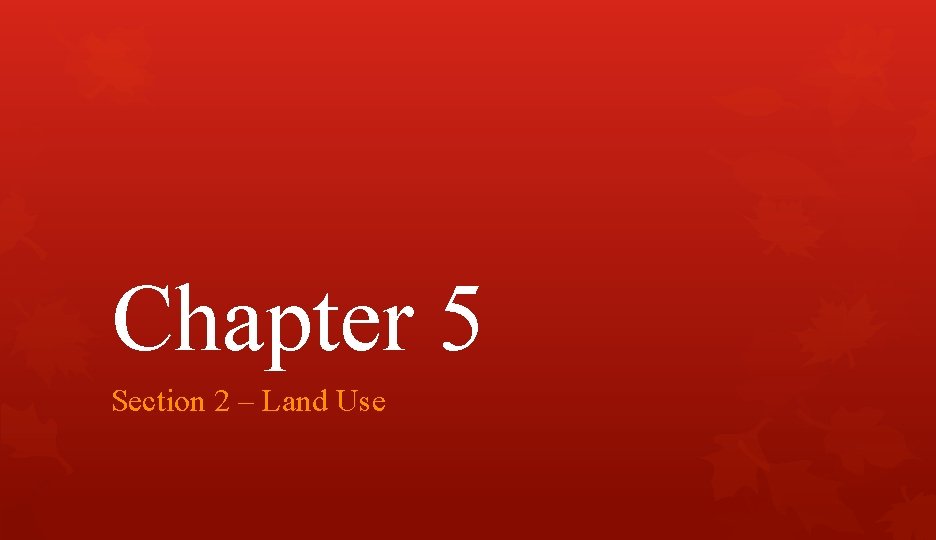
Land Use & Culture Land use depends on a people’s culture and the environment around them (examples: Inuit & Japanese) In similar environments like Georgia and Japan culture decides what is grown
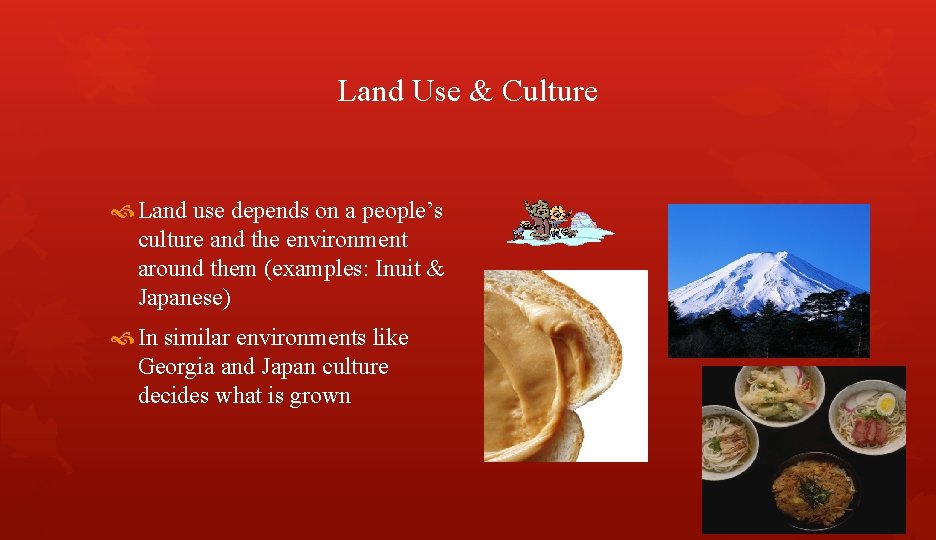
Cultures & Landscape People in the Philippines farm rice on terraces because there is little flat land Western Europe today is covered with farm land, but used to be forests. What happened to the forests?
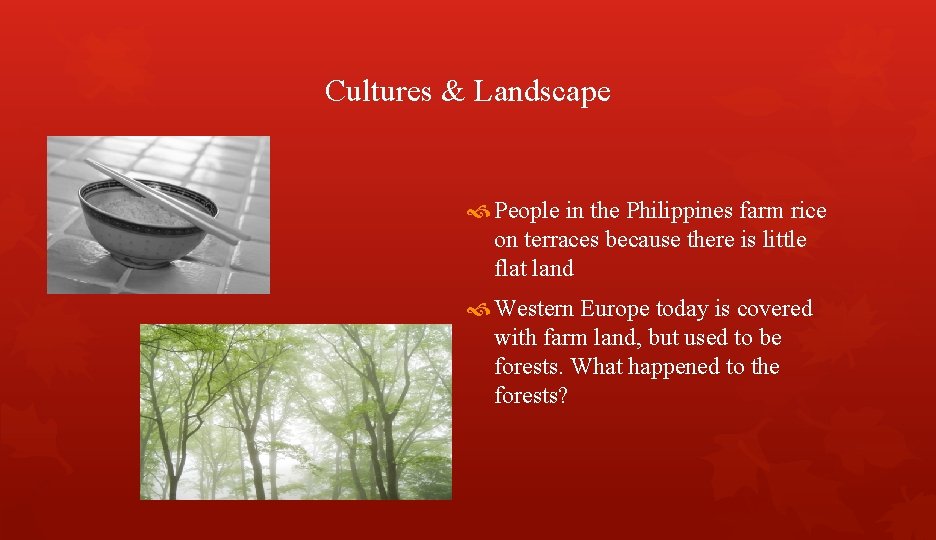
Land Use & Cultural Differences The culture of a place will affect the way different cultures deal with similar problems Both the American southwest and the Middle East are dry and farmers in both places irrigate their crops However, the way they do it is quite different
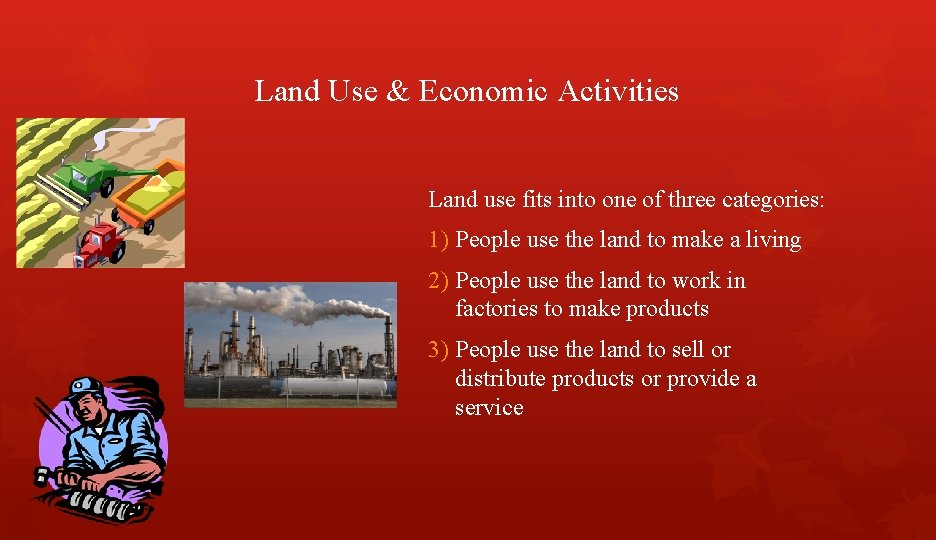
Land Use & Economic Activities Land use fits into one of three categories: 1) People use the land to make a living 2) People use the land to work in factories to make products 3) People use the land to sell or distribute products or provide a service
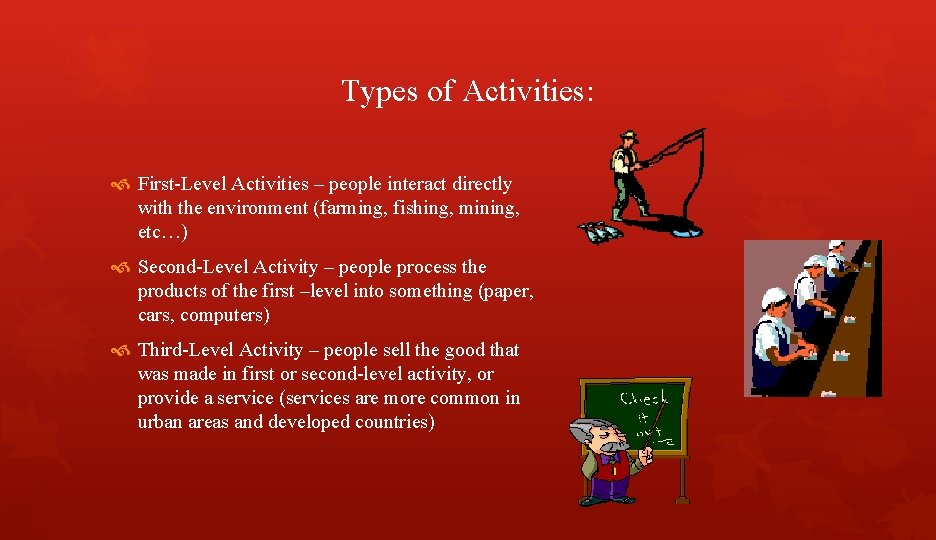
Types of Activities: First-Level Activities – people interact directly with the environment (farming, fishing, mining, etc…) Second-Level Activity – people process the products of the first –level into something (paper, cars, computers) Third-Level Activity – people sell the good that was made in first or second-level activity, or provide a service (services are more common in urban areas and developed countries)
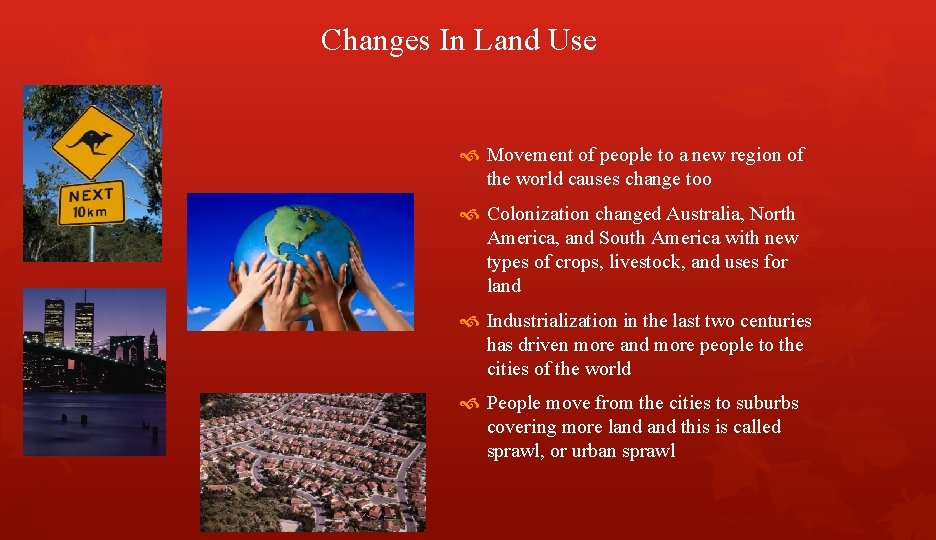
Changes In Land Use Movement of people to a new region of the world causes change too Colonization changed Australia, North America, and South America with new types of crops, livestock, and uses for land Industrialization in the last two centuries has driven more and more people to the cities of the world People move from the cities to suburbs covering more land this is called sprawl, or urban sprawl