
Chapter 5 Renaissance Reformation Sec 1 The Renaissance
- Slides: 36
Chapter 5 Renaissance & Reformation Sec. 1 The Renaissance
I. The Italian Renaissance l Renaissance means rebirth Italian Renaissance was a period of European history that began in Italy and spread throughout Europe. 1. Urban society – powerful city-states Secular – worldly 2. Renaissance was also an age of recovery 3. People began to realize individual ability
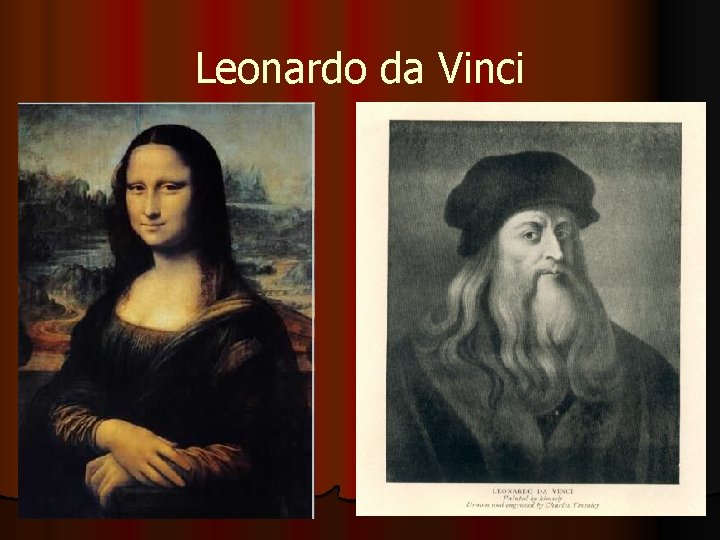
Leonardo da Vinci
II. The Italian States l Lack of a single strong ruler made it possible for northern & central Italy to remain independent. Ex. Milan, Venice, Florence l Italian merchants obtained silks, sugar, spices
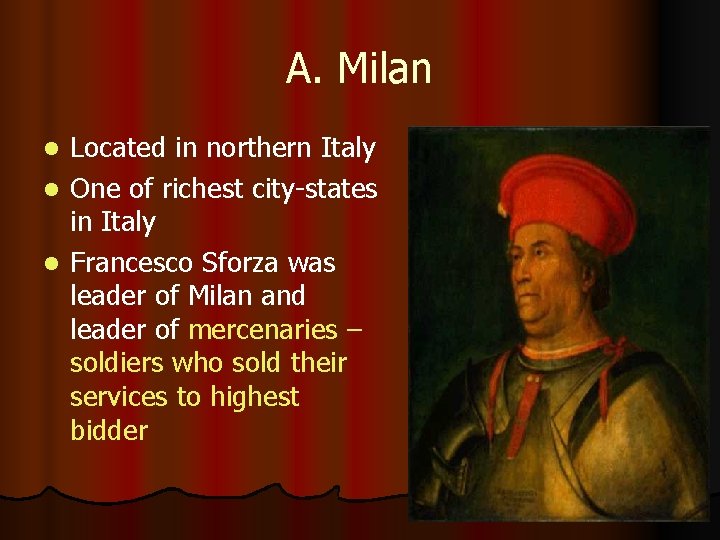
A. Milan Located in northern Italy l One of richest city-states in Italy l Francesco Sforza was leader of Milan and leader of mercenaries – soldiers who sold their services to highest bidder l
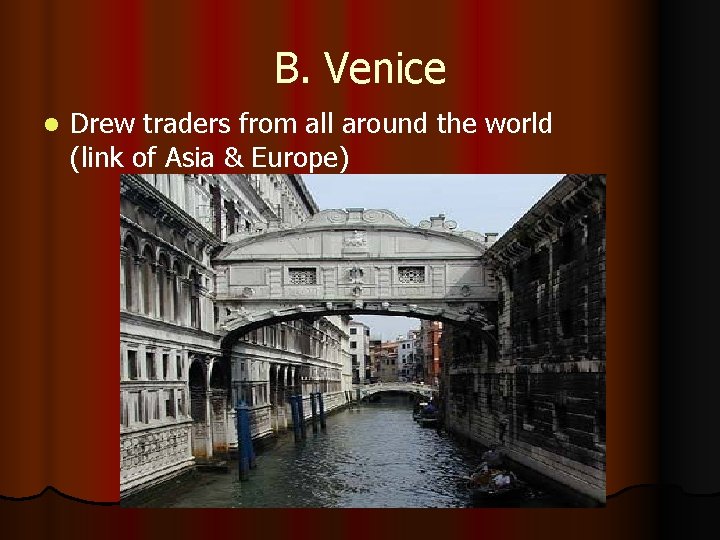
B. Venice l Drew traders from all around the world (link of Asia & Europe)
C. Florence l Cosimo de Medici was leader in 1434, family was wealthy l Lorenzo de Medici later ruled D. Italian Wars • (1494)because of growth, French King Charles VIII led an army to invade Italy 30, 000
D. Italian Wars (cont. ) l Spanish aided Italy. l After 30 yrs. Spanish defeated French
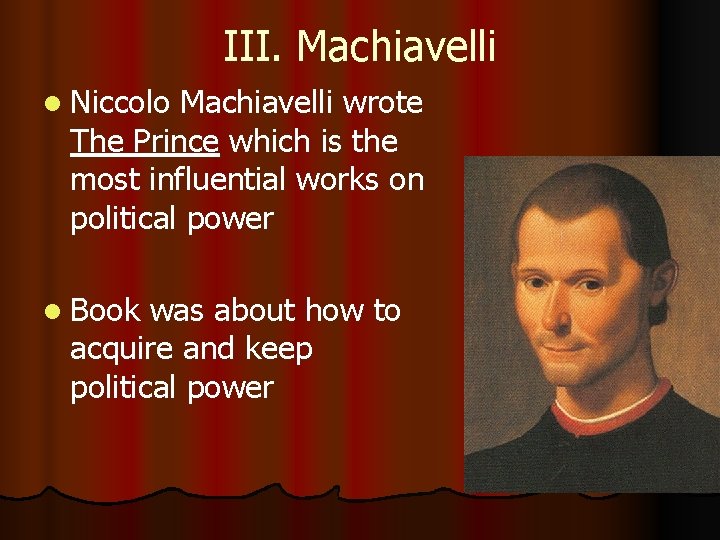
III. Machiavelli l Niccolo Machiavelli wrote The Prince which is the most influential works on political power l Book was about how to acquire and keep political power
IV. Renaissance Society l Society was divided into social classes; Nobility – only 2 -3% of population, held important political posts, and served as advisers to the king Peasants – 85 -90% of population Townspeople – rest of population / made up of merchants & artisans
l Families arranged marriages l Dowry – sum of money given by wife’s family to the husband l women role was to supervise the household l adulthood only came when father granted it
Ch. 5 Sec. 2 The Intellectual and Artistic Renaissance
I. Italian Renaissance Humanism l Humanism was based on the study of classics, literary works of ancient Greece and Rome. l Petrarch, father of Italian Renaissance, fostered the development of humanism
II. Vernacular Literature l Because of humanist emphasis on Latin it led to widespread use in writings of scholars, lawyers, and theologians l Vernacular – language spoken in their own regions. Ex. French, German Dante & Chaucer made popular
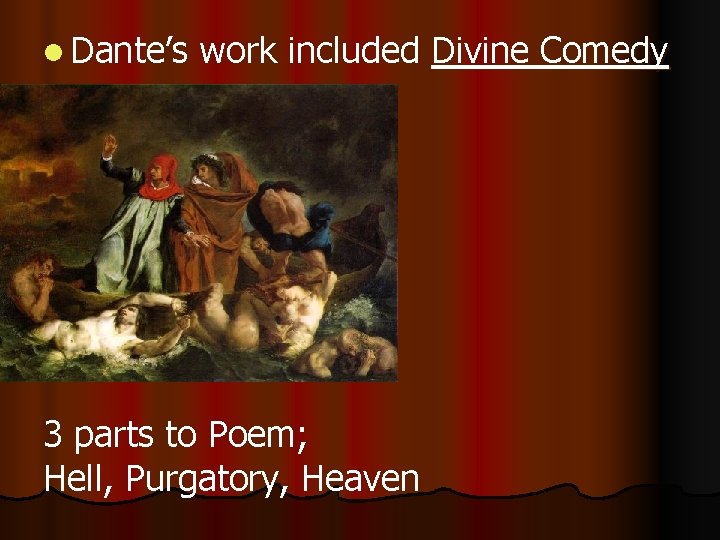
l Dante’s work included Divine Comedy 3 parts to Poem; Hell, Purgatory, Heaven
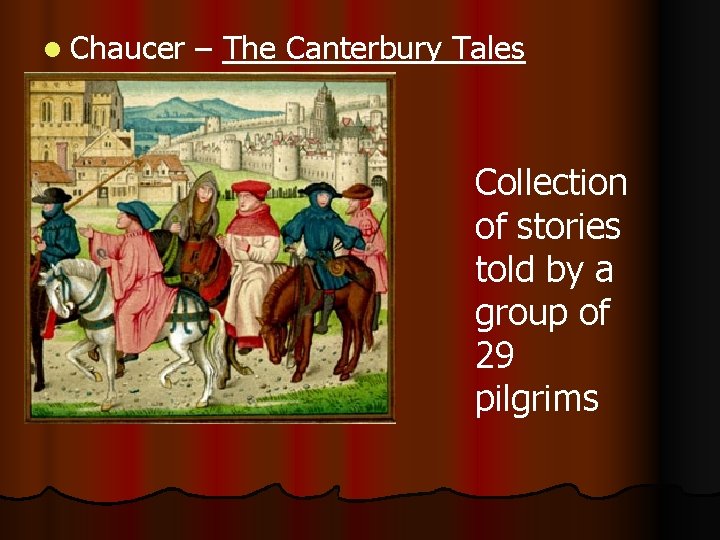
l Chaucer – The Canterbury Tales Collection of stories told by a group of 29 pilgrims
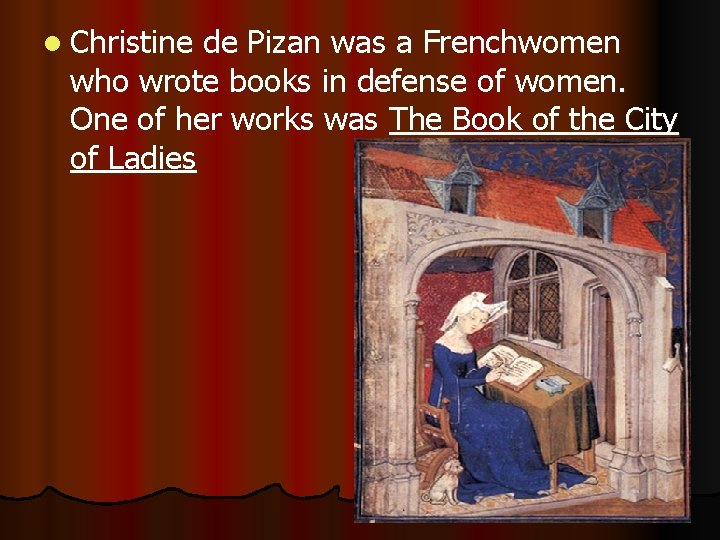
l Christine de Pizan was a Frenchwomen who wrote books in defense of women. One of her works was The Book of the City of Ladies
III. Education in the Renaissance l Renaissance humanists believed education could change human beings wrote books & opened schools believed in Liberal Studies (Arts) l Humanists believed students needed to study history, moral philosophy, eloquence, letters, poetry, math, music
III. Con. l Only a few females attended these schools. IV. Artistic Renaissance l Fresco – painting done on fresh water plaster
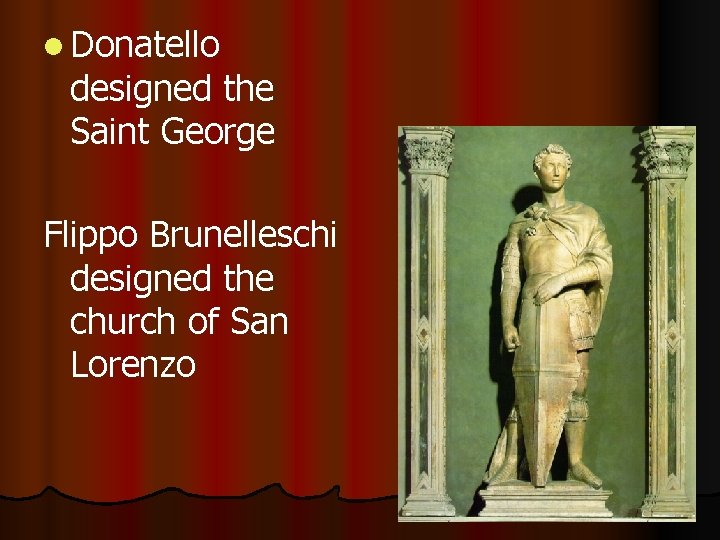
l Donatello designed the Saint George Flippo Brunelleschi designed the church of San Lorenzo
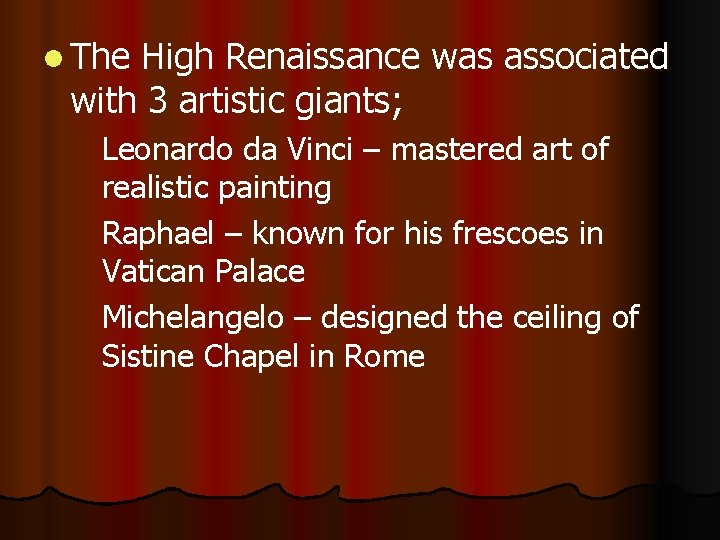
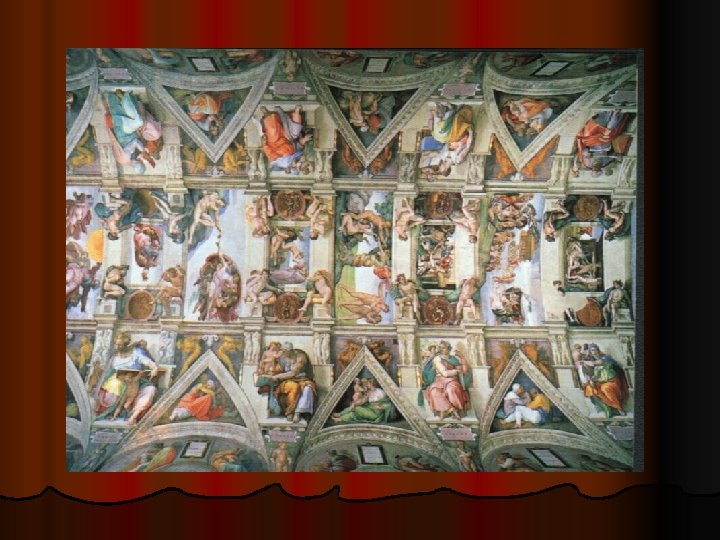
l The High Renaissance was associated with 3 artistic giants; Leonardo da Vinci – mastered art of realistic painting Raphael – known for his frescoes in Vatican Palace Michelangelo – designed the ceiling of Sistine Chapel in Rome
Ch. 5 Sec. 3 The Protestant Reformation
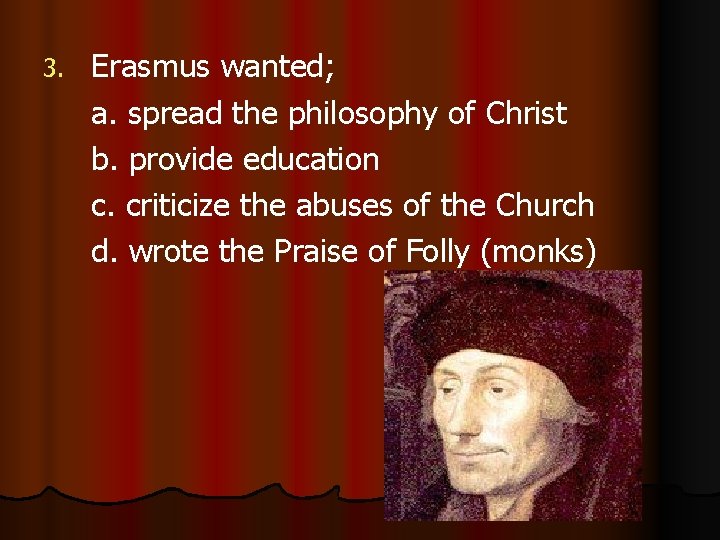
3. Erasmus wanted; a. spread the philosophy of Christ b. provide education c. criticize the abuses of the Church d. wrote the Praise of Folly (monks)
I. Erasmus and Christian Humanism Protestant Reformation – religious reform movement that divided the western Church into Catholic and Protestant groups. Began by Martin Luther 2. Christian Humanism -believed human beings to reason & wanted to improve themselves. -best known was Erasmus 1.
II. Religion on the Eve of the Reformation Corruption – main reason people wanted reform 2. Salvation – acceptance into heaven 3. Indulgence – release from all or part of the punishment for sin 1.
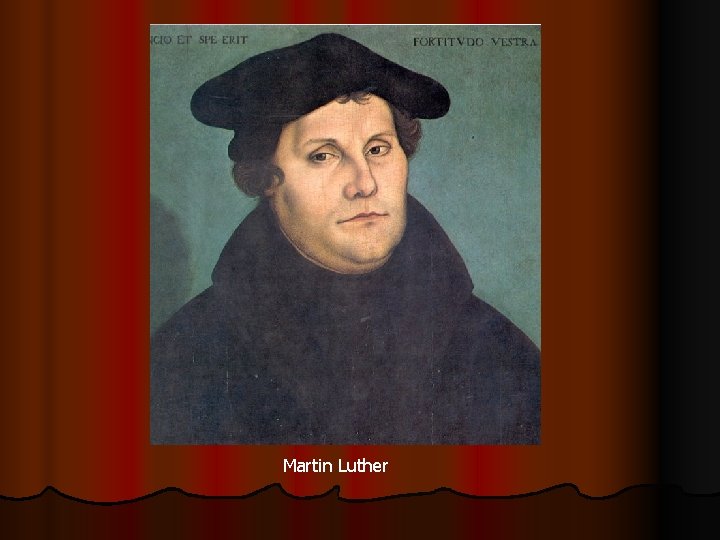
III. Martin Luther – believed that humans were not saved through good works, but through faith in God. 2. Justification – faith alone A. Ninety-five Theses 1. Oct. 31, 1517 Luther posted the 95 Theses. This was an attack on abuses in the sale of indulgences. 1.
Martin Luther
B. Break w/ the Church 1. Luther thrown out of Church Jan. 1521 2. Edict of Worms – Charles V made Luther an outlaw w/in the empire. C. Rise of Lutheranism 1. Luther began to setup services different than that of the Catholic Church 2. Luther’s doctrine became known as Lutheranism.
IV. Politics in the German Reformation Charles V wanted the Hapsburg family to remain in power. 2. Peace of Augsburg-formally accepted the division of Christianity in Germany 1.
Ch. 5 Sec. 4 The Spread of Protestantism and the Catholic Response
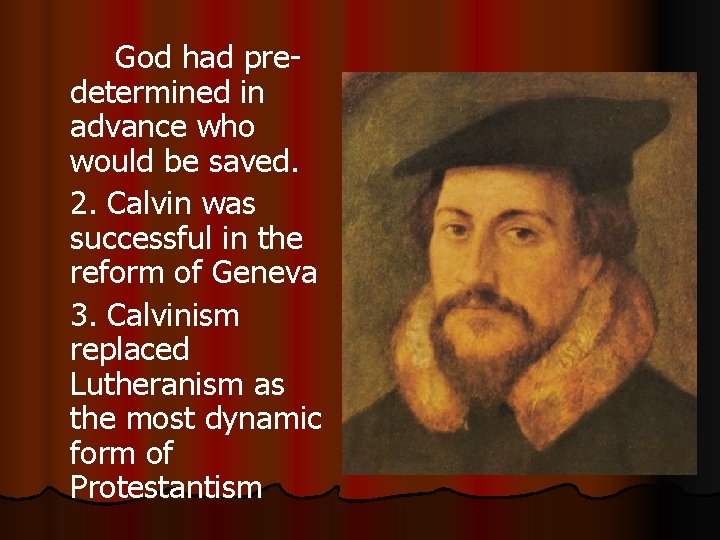
I. Zwinglian Reformation 1. Ulrich Zwingli – introduced religious reforms in Switzerland. Killed in war by Catholics A. Calvin & Calvinism (Protestant) 1. John Calvin took over in Switerland. Calvin believed in justification by faith. - Calvin believed in predestination
God had predetermined in advance who would be saved. 2. Calvin was successful in the reform of Geneva 3. Calvinism replaced Lutheranism as the most dynamic form of Protestantism
B. Reformation in England (political) 1. King Henry a. needed a male heir, wanted to marry Anne Boleyn b. broke away form Catholic Church 2. Catherine of Aragon-wanted to restore England to Roman Catholicism a. those whose opposed the move were burned b. nickname was “Bloody Mary”
C. Anabaptist 1. Reformers who wanted state to play an important role in church affairs 2. believed in separation of church and state. D. Role of Women 1. Protestants believed a women should a. obey her husband b. bear children
E. Catholic Reformation Ignatius of Loyola – founded the Jesuits 2. Reform of papacy (Pope) 1.