
CHAPTER 5 QUIZ 3 REVIEW Nationalism grew in














- Slides: 38
CHAPTER 5 QUIZ 3 REVIEW
� Nationalism grew in the American colonies for all of the following reasons except that � The colonies were isolated from the help of Britain � Private ownership of land gave the Americans a stake in their society � All the colonists had a common heritage from Great Britain � The colonies were accustomed to self-government
All the colonists had a common heritage from Great Britain
� Which law was a direct threat against the colonists’ “power of the purse”? � Proclamation Line � Quartering Act � Stamp Act � Townshend Acts
Townshend Acts
� The first successful example of colonial unity was the _____ Congress. � Albany � First Continental � Stamp Act � Sugar Act
Stamp Act
� What colonial Congress attempted unsuccessfully to unite the colonies during the French and Indian War?
� Albany Cognress
� During what infamous incident did British redcoats kill five unarmed Patriots in 1770?
� Boston Massacre
� A) Samuel Adams � B) John Dickinson � C) George Grenville � D) Patrick Henry � � ___ British minister who attempted to collect new taxes from the colonies
C) George Grenville
� A) Samuel Adams � B) John Dickinson � C) George Grenville � D) Patrick Henry � � ___ orator from Virginia who opposed British tyranny
D) Patrick Henry
� A) Samuel Adams � B) John Dickinson � C) George Grenville � D) Patrick Henry � � ___ leader of the Sons of Liberty
A) Samuel Adams
� A) Samuel Adams � B) John Dickinson � C) George Grenville � D) Patrick Henry � � ___ author of Letters from a Farmer in Pennsylvania to the Inhabitants of the British Colonies
A) Samuel Adams
� A) boycott � B) internal tax � C) “power of the purse” � D) Proclamation Line � E) Quartering Act � F) Sons of Liberty � G) Stamp Act � H) Sugar Act � I) Townshend Acts � � ___ requirement that salaries, taxes and expenditures be scrutinized by elected officials
C) “power of the purse”
� A) boycott � B) internal tax � C) “power of the purse” � D) Proclamation Line � E) Quartering Act � F) Sons of Liberty � G) Stamp Act � H) Sugar Act � I) Townshend Acts � � ___ ban on colonization beyond the Appalachian Mountains
D) Proclamation Line
� A) boycott � B) internal tax � C) “power of the purse” � D) Proclamation Line � E) Quartering Act � F) Sons of Liberty � G) Stamp Act � H) Sugar Act � I) Townshend Acts � � ___ any tax on goods that are produced and consumed entirely within a country
B) internal tax
� A) boycott � B) internal tax � C) “power of the purse” � D) Proclamation Line � E) Quartering Act � F) Sons of Liberty � G) Stamp Act � H) Sugar Act � I) Townshend Acts � � ___ British attempt to tax legal and commercial documents in the colonies
G) Stamp Act
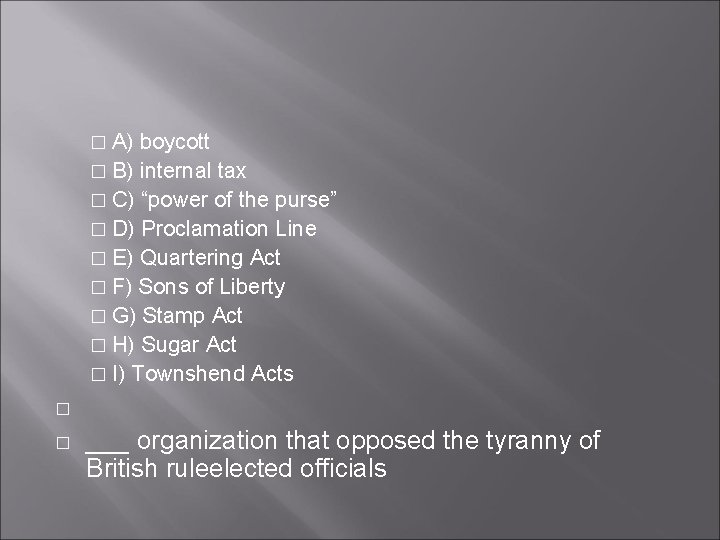
� A) boycott � B) internal tax � C) “power of the purse” � D) Proclamation Line � E) Quartering Act � F) Sons of Liberty � G) Stamp Act � H) Sugar Act � I) Townshend Acts � � ___ organization that opposed the tyranny of British ruleelected officials
F) Sons of Liberty
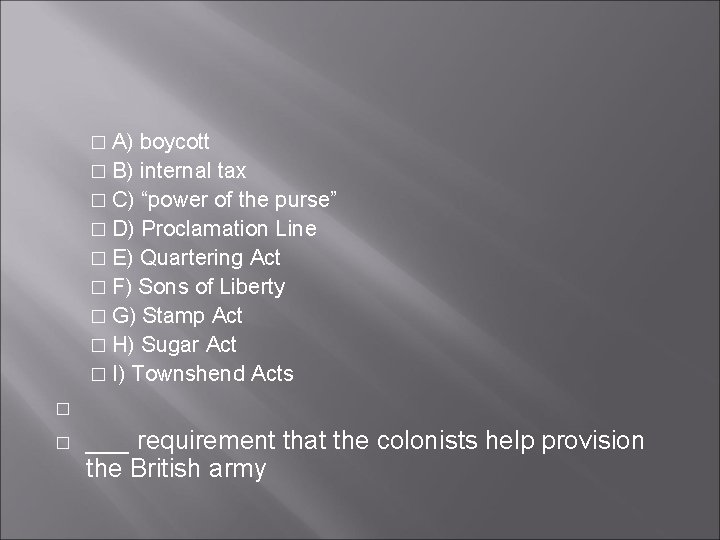
� A) boycott � B) internal tax � C) “power of the purse” � D) Proclamation Line � E) Quartering Act � F) Sons of Liberty � G) Stamp Act � H) Sugar Act � I) Townshend Acts � � ___ requirement that the colonists help provision the British army
E) Quartering Act
� A) boycott � B) internal tax � C) “power of the purse” � D) Proclamation Line � E) Quartering Act � F) Sons of Liberty � G) Stamp Act � H) Sugar Act � I) Townshend Acts � � ___ requirement that salaries, taxes and expenditures be scrutinized by elected officials
� A) boycott � B) internal tax � C) “power of the purse” � D) Proclamation Line � E) Quartering Act � F) Sons of Liberty � G) Stamp Act � H) Sugar Act � I) Townshend Acts � � ___ a repressive series of direct taxes on various colonial goods, such as glass
I) Townshend Acts
� T/F the colonists responded to the Townshend Act with boycotts.
� True
� ___ John Dickinson and Patrick Henry were more upset about the high cost of the British taxes than the British right to tax.
� False