
CHAPTER 5 Project and site organization Project Organization


- Slides: 13
CHAPTER 5 Project and site organization
Project Organization ØThe main task of any organization is to plan, direct and control. ØPoor organization result in poor productivity. ØDefining individual positions of authority and responsibility will lead to an effective operating environment and good productivity. ØSite layout of the project is a very important organization tasks. ØThe assigned location of different job components affects productivity, safety, workers satisfaction, and communication. ØApproximately, 7% of a day is nonproductive because of a non optimal site layout.
• There are four type of organizational structures each of which has their own unique set of influences on the management of the organizations projects. : 1. Functional 2. Project 3. Matrix or composite
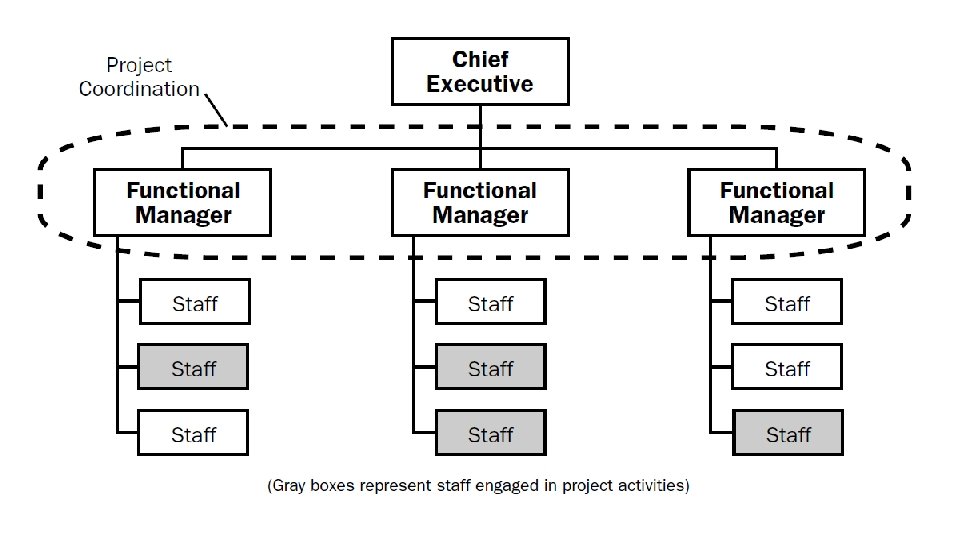
Functional most organizations are divided along functional lines that is each devision is organized by work type such as engineering production or sales. In the functional organizational structure projects are initiated and executed by the divisional managers, who assume the project manager duties in addition to their regular functional roles. they are often given secondary titles such as coordinator of project x. in this structure, project manager usually don’t have a lot of authority to obtain resource or to manage schedules and budgets. They must obtain approvals to utilize resources from other departments which can be a complex undertaking. This is because the functional organization is designed to focus on the provision of the divisional services rather than project deliverables
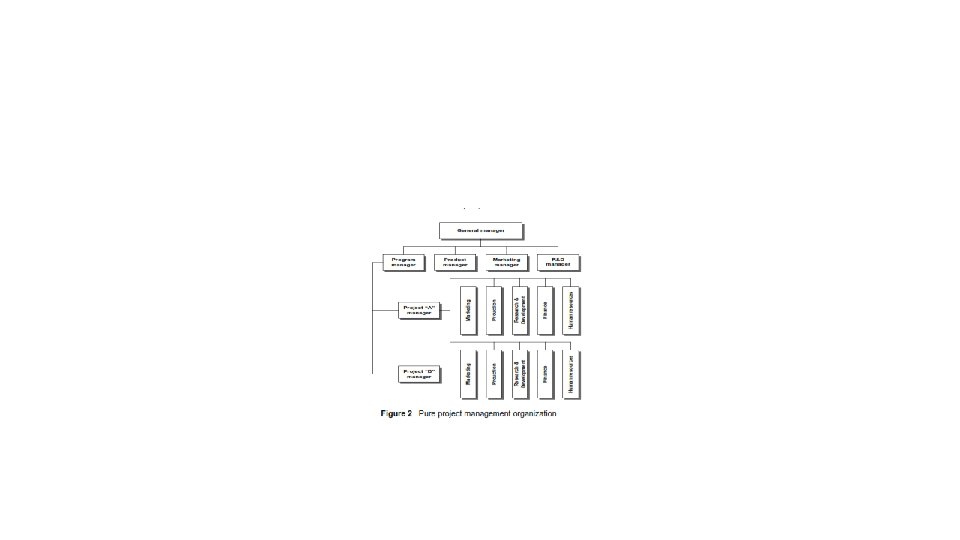
Project oriented on the other end of the scale is the project oriented organization. These companies do most of their work on a project basis and are therefore structured around projects. This includes construction contractors, architectural firms and consultant.
Site management is the day-to-day on site control of a construction project • to prepare the site for the construction, • to keep it within the timescale and budget, • to tackle with any delays or problems • to ensure quality and health and safety • to coordinate communications between all parties involved in the on-site development and with the public.
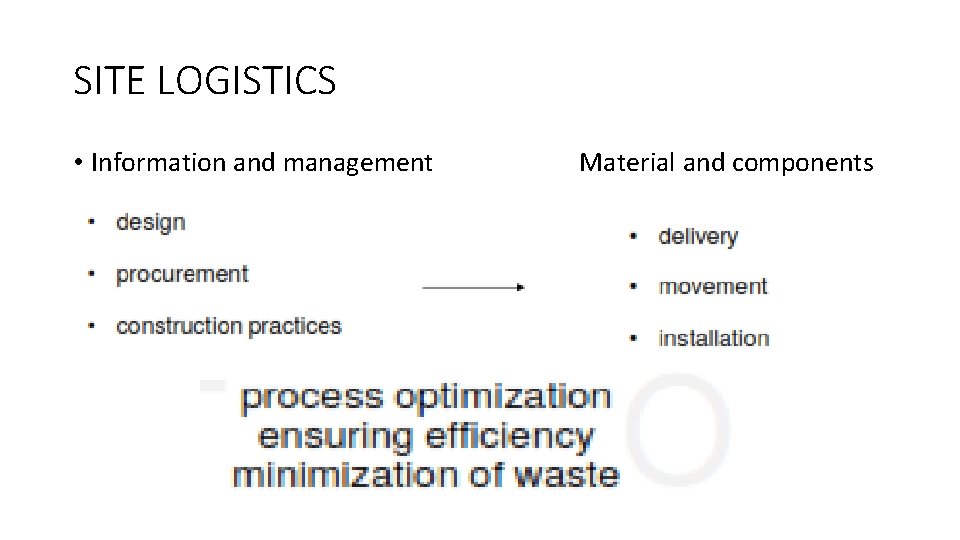
SITE LOGISTICS • Information and management Material and components
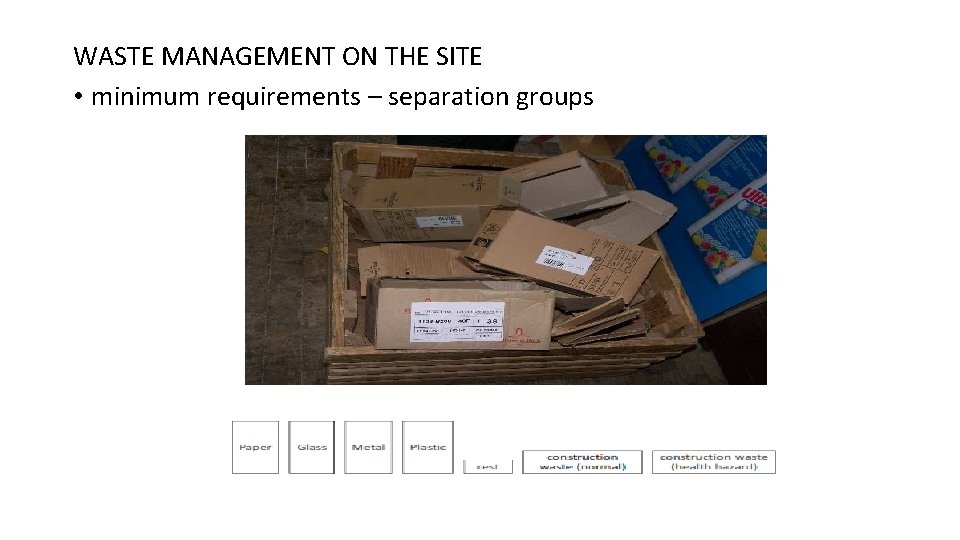
WASTE MANAGEMENT ON THE SITE • minimum requirements – separation groups
CONSTRUCTION SITE COMMUNICATION