
Chapter 5 Product Conceptualization and Definition James R



- Slides: 64
Chapter 5: Product Conceptualization and Definition James R. Burns
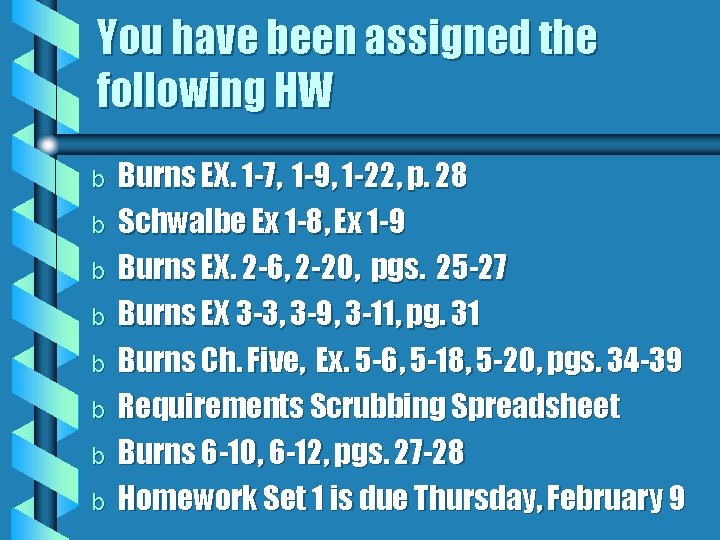
You have been assigned the following HW b b b b Burns EX. 1 -7, 1 -9, 1 -22, p. 28 Schwalbe Ex 1 -8, Ex 1 -9 Burns EX. 2 -6, 2 -20, pgs. 25 -27 Burns EX 3 -3, 3 -9, 3 -11, pg. 31 Burns Ch. Five, Ex. 5 -6, 5 -18, 5 -20, pgs. 34 -39 Requirements Scrubbing Spreadsheet Burns 6 -10, 6 -12, pgs. 27 -28 Homework Set 1 is due Thursday, February 9
Homework: b b Done individually Due February 9, 2017 One week from today Turn-in hardcopy in class
Plan for Today b b Recitation THE FIVE PHASES OF THE PM LIFECYCLE b Who can name these? b REVIEW: Functions/Tasks/Competencies/ Skills of…the Project Manager b Name three…. name three more b b Chapter 5—Burns Strategy & Portfolio Management
Recitation b THE FIVE PHASES OF THE PM LIFECYCLE b Who can name these? b REVIEW: Functions/Tasks/Competencies/ Skills of…the Project Manager b Name three…. name three more b b Name three organizational structure types Discuss what corporate cultures are most conducive to project management
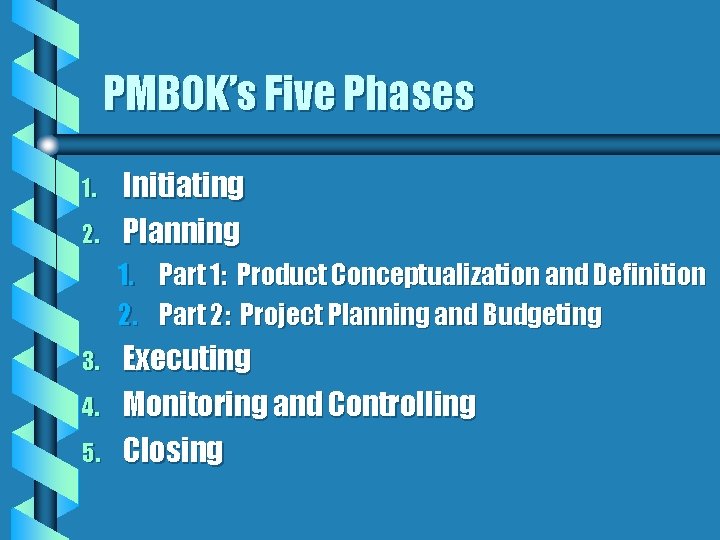
PMBOK’s Five Phases 1. 2. Initiating Planning 1. Part 1: Product Conceptualization and Definition 2. Part 2: Project Planning and Budgeting 3. 4. 5. Executing Monitoring and Controlling Closing
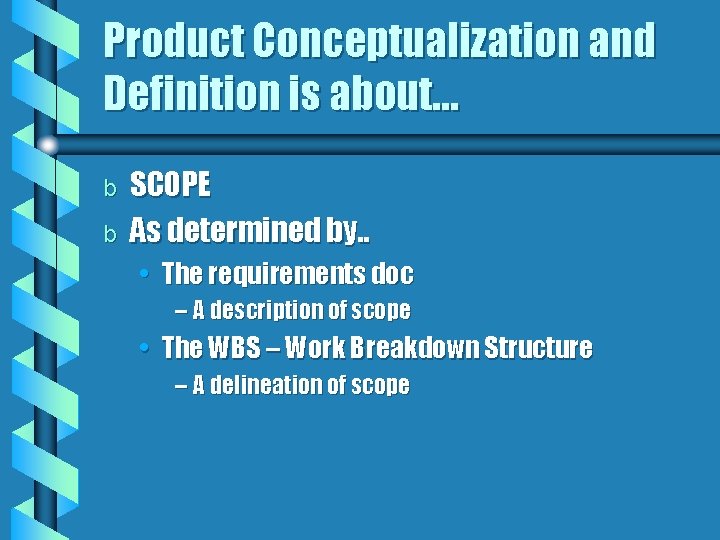
Product Conceptualization and Definition is about… b b SCOPE As determined by. . • The requirements doc – A description of scope • The WBS – Work Breakdown Structure – A delineation of scope
Functions, Tasks, Expectations of the IT Project Manager b b b (coach, mentor, leader, negotiator, assessor, informer, motivator, delegator) Selects project leader, team leader, subordinates Works hardest during the initiating and planning stages Assesses progress during execution and reports on that Negotiates with line managers for required human resources 2/19/2021 Texas Tech University -- J. R. Burns 8
Expectations of the IT Project Manager b b b Interfaces with customer, upper management on behalf of team Negotiates with upper management and customer Keeps everybody informed 2/19/2021 Texas Tech University -- J. R. Burns 9
More Expectations of the IT Project Manager b b Is a positive leader, motivator, coach Knows how to use PM software Knows the technologies employed well Must re-plan the remainder of the project after the completion of each deliverable, each phase 2/19/2021 Texas Tech University -- J. R. Burns 10
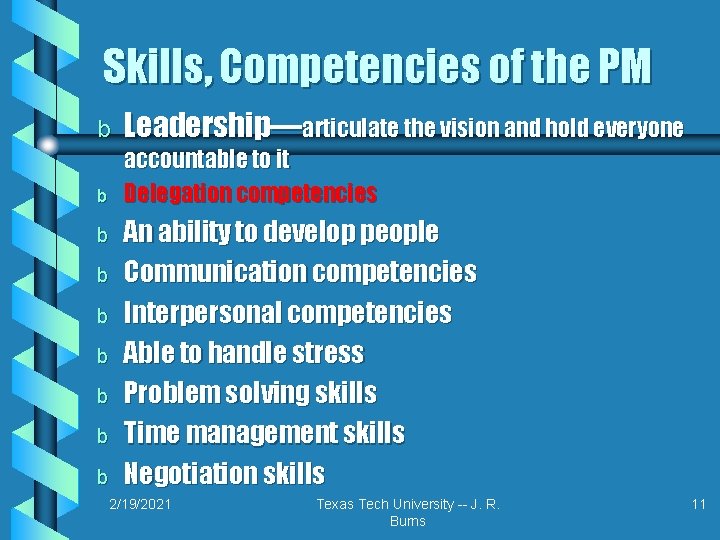
Skills, Competencies of the PM b Leadership—articulate the vision and hold everyone accountable to it Delegation competencies b b b b An ability to develop people Communication competencies Interpersonal competencies Able to handle stress Problem solving skills Time management skills Negotiation skills 2/19/2021 Texas Tech University -- J. R. Burns 11
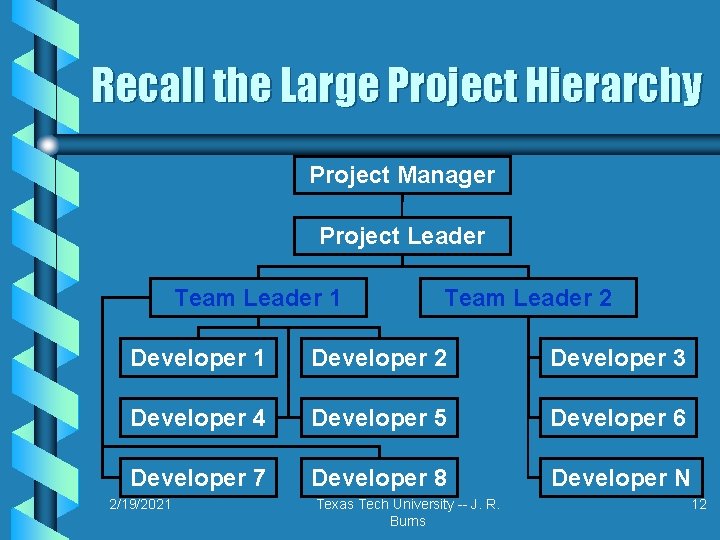
Recall the Large Project Hierarchy Project Manager Project Leader Team Leader 1 Team Leader 2 Developer 1 Developer 2 Developer 3 Developer 4 Developer 5 Developer 6 Developer 7 Developer 8 Developer N 2/19/2021 Texas Tech University -- J. R. Burns 12
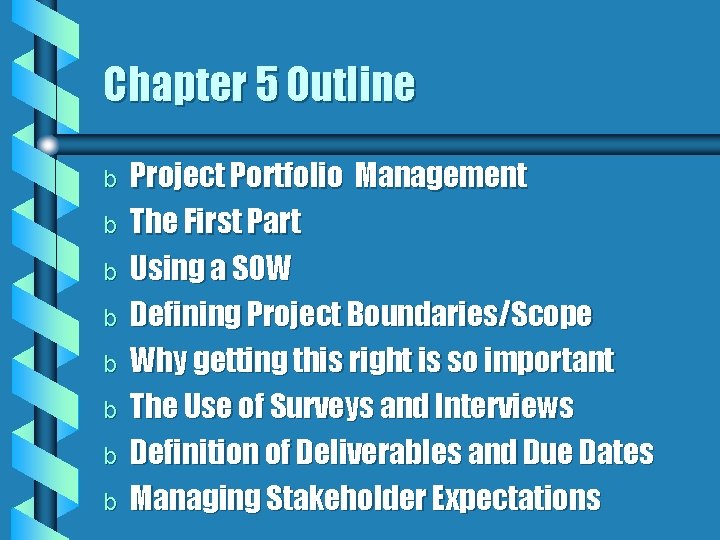
Chapter 5 Outline b b b b Project Portfolio Management The First Part Using a SOW Defining Project Boundaries/Scope Why getting this right is so important The Use of Surveys and Interviews Definition of Deliverables and Due Dates Managing Stakeholder Expectations
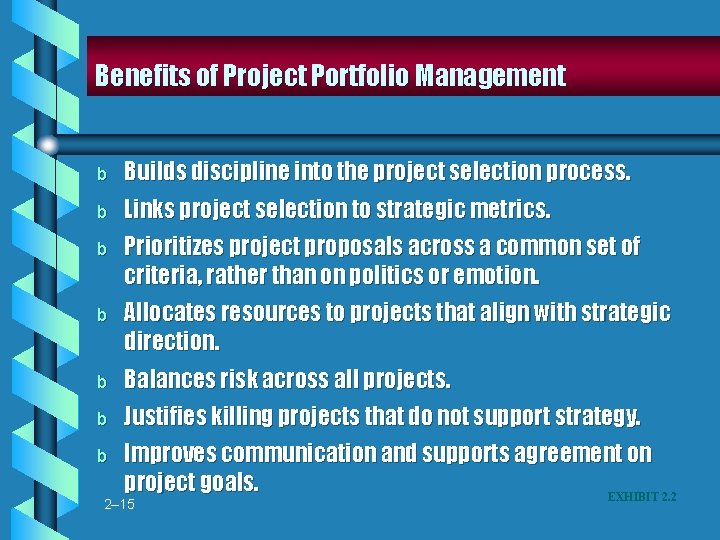
Benefits of Project Portfolio Management b Builds discipline into the project selection process. b Links project selection to strategic metrics. b Prioritizes project proposals across a common set of criteria, rather than on politics or emotion. b Allocates resources to projects that align with strategic direction. b Balances risk across all projects. b Justifies killing projects that do not support strategy. b Improves communication and supports agreement on project goals. EXHIBIT 2. 2 2– 15
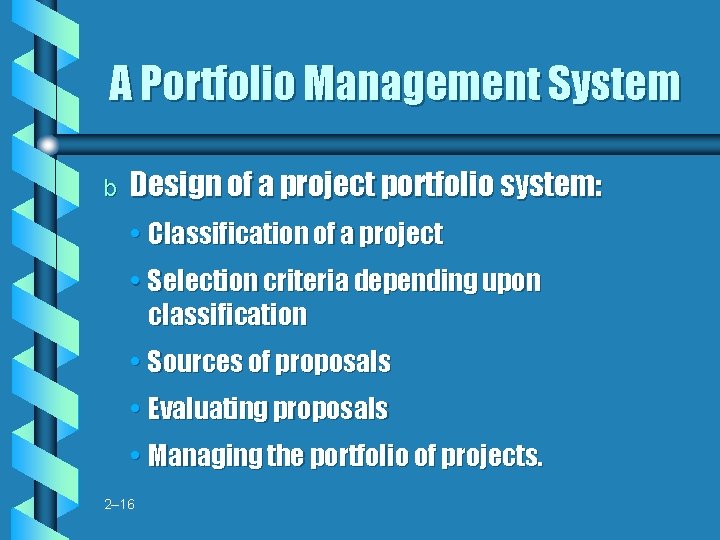
A Portfolio Management System b Design of a project portfolio system: • Classification of a project • Selection criteria depending upon classification • Sources of proposals • Evaluating proposals • Managing the portfolio of projects. 2– 16
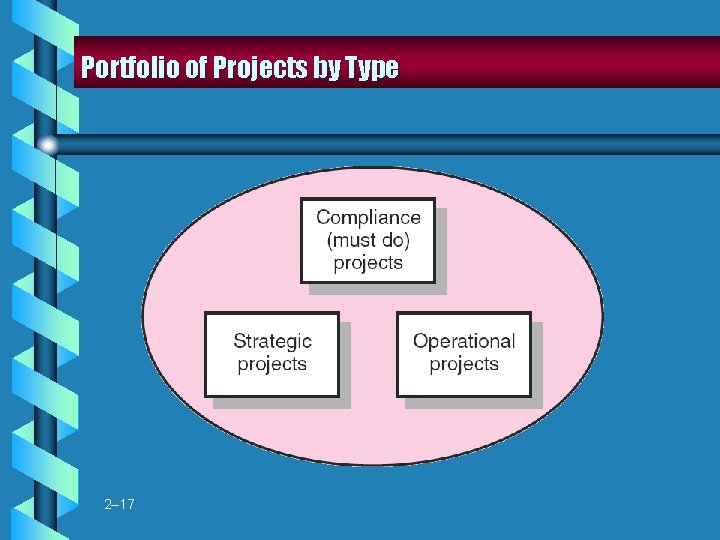
Portfolio of Projects by Type 2– 17
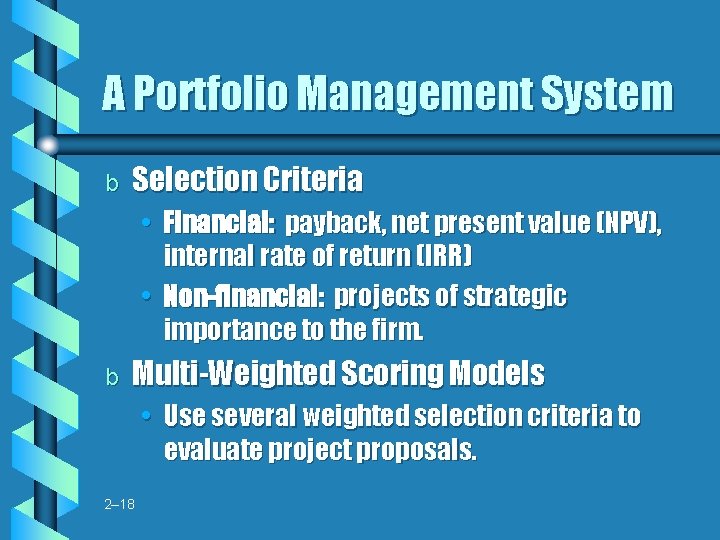
A Portfolio Management System b Selection Criteria • Financial: payback, net present value (NPV), internal rate of return (IRR) • Non-financial: projects of strategic importance to the firm. b Multi-Weighted Scoring Models • Use several weighted selection criteria to evaluate project proposals. 2– 18
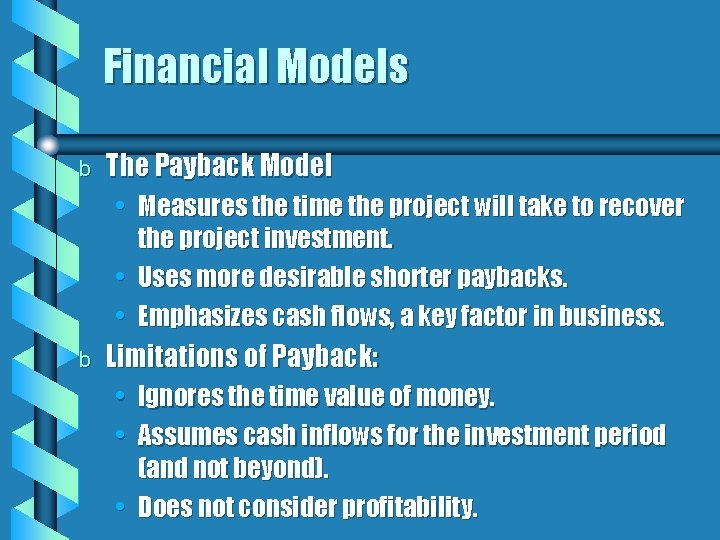
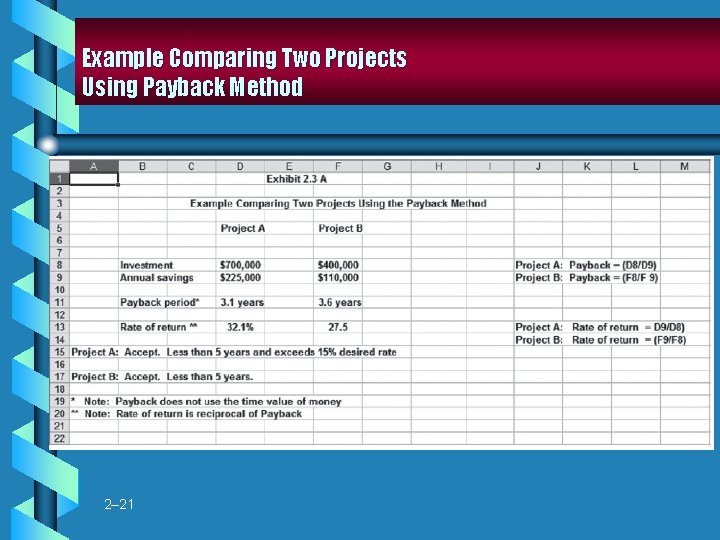
Financial Models b The Payback Model • Measures the time the project will take to recover the project investment. • Uses more desirable shorter paybacks. • Emphasizes cash flows, a key factor in business. b Limitations of Payback: • Ignores the time value of money. • Assumes cash inflows for the investment period (and not beyond). • Does not consider profitability.
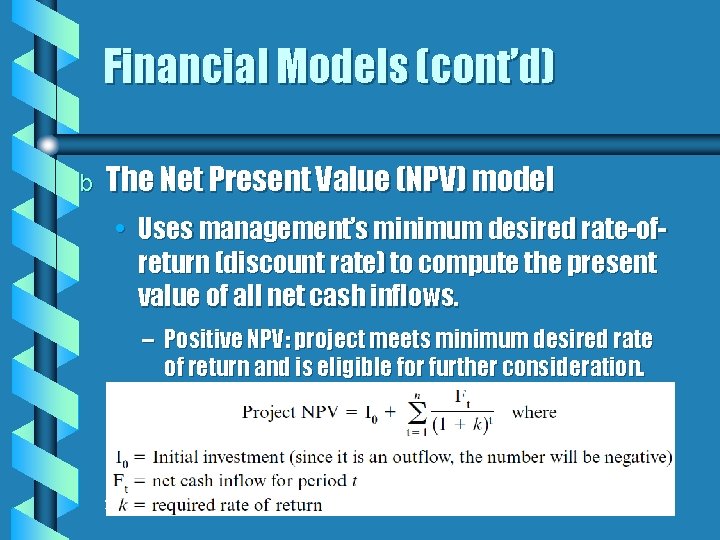
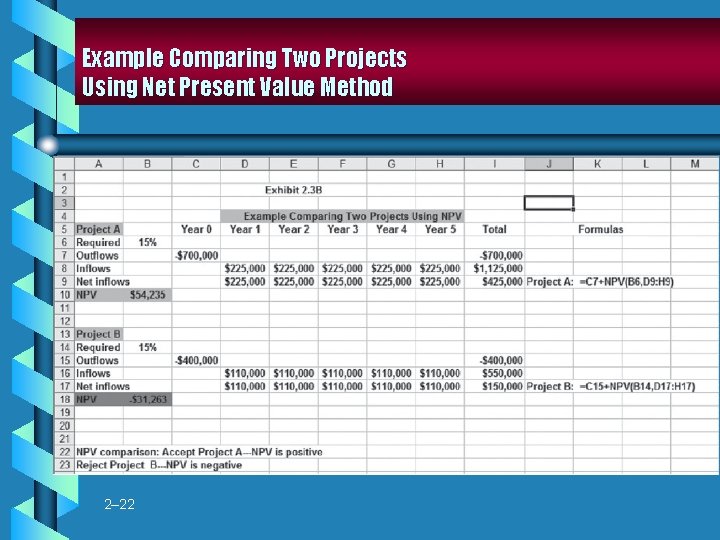
Financial Models (cont’d) b The Net Present Value (NPV) model • Uses management’s minimum desired rate-ofreturn (discount rate) to compute the present value of all net cash inflows. – Positive NPV: project meets minimum desired rate of return and is eligible for further consideration. – Negative NPV: project is rejected. 2– 20
Example Comparing Two Projects Using Payback Method 2– 21
Example Comparing Two Projects Using Net Present Value Method 2– 22
Nonfinancial Strategic Criteria b To capture larger market share b To make it difficult for competitors to enter the market b To develop an enabler product, which by its introduction will increase sales in more profitable products b To develop core technology that will be used in nextgeneration products b To reduce dependency on unreliable suppliers b To prevent government intervention and regulation 2– 23
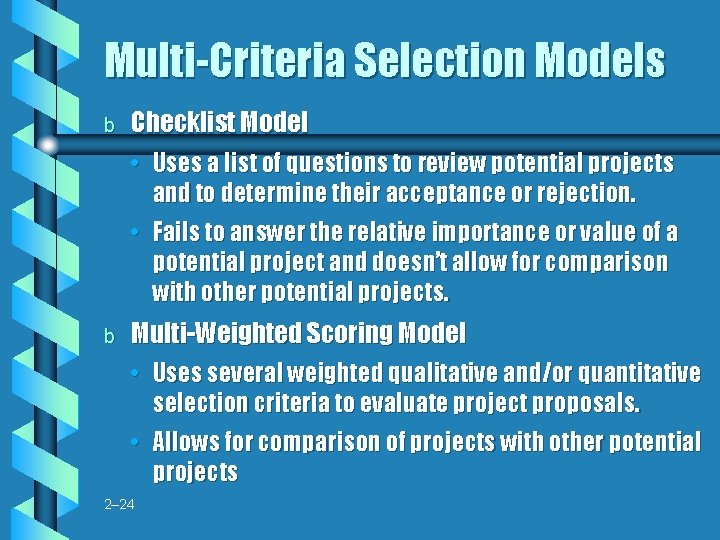
Multi-Criteria Selection Models b Checklist Model • Uses a list of questions to review potential projects and to determine their acceptance or rejection. • Fails to answer the relative importance or value of a potential project and doesn’t allow for comparison with other potential projects. b Multi-Weighted Scoring Model • Uses several weighted qualitative and/or quantitative selection criteria to evaluate project proposals. • Allows for comparison of projects with other potential projects 2– 24
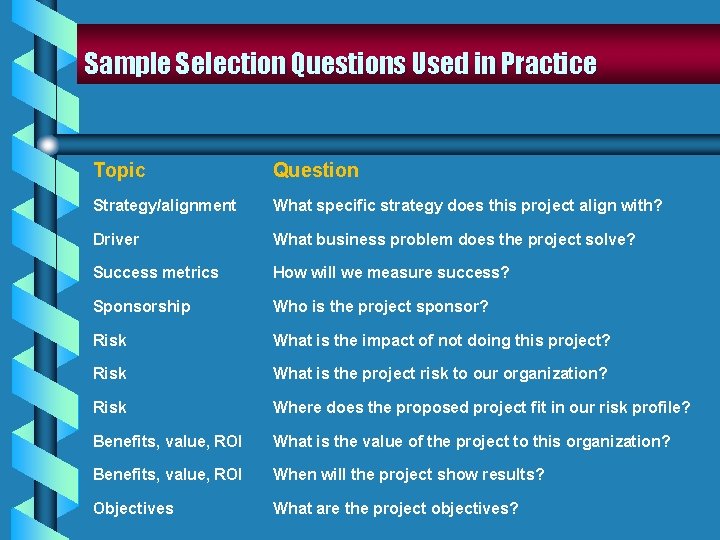
Sample Selection Questions Used in Practice Topic Question Strategy/alignment What specific strategy does this project align with? Driver What business problem does the project solve? Success metrics How will we measure success? Sponsorship Who is the project sponsor? Risk What is the impact of not doing this project? Risk What is the project risk to our organization? Risk Where does the proposed project fit in our risk profile? Benefits, value, ROI What is the value of the project to this organization? Benefits, value, ROI When will the project show results? Objectives What are the project objectives?
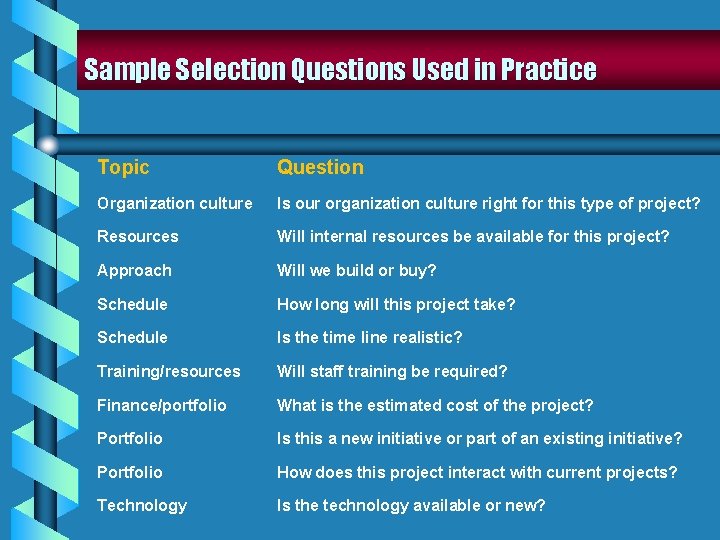
Sample Selection Questions Used in Practice Topic Question Organization culture Is our organization culture right for this type of project? Resources Will internal resources be available for this project? Approach Will we build or buy? Schedule How long will this project take? Schedule Is the time line realistic? Training/resources Will staff training be required? Finance/portfolio What is the estimated cost of the project? Portfolio Is this a new initiative or part of an existing initiative? Portfolio How does this project interact with current projects? Technology Is the technology available or new?
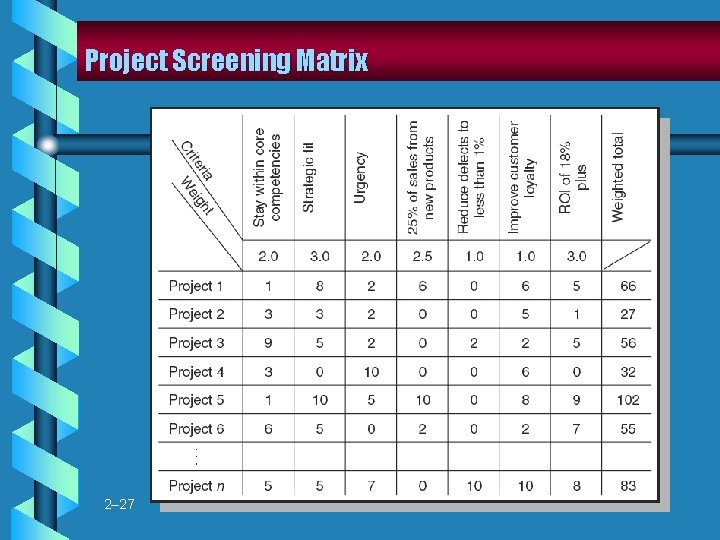
Project Screening Matrix 2– 27
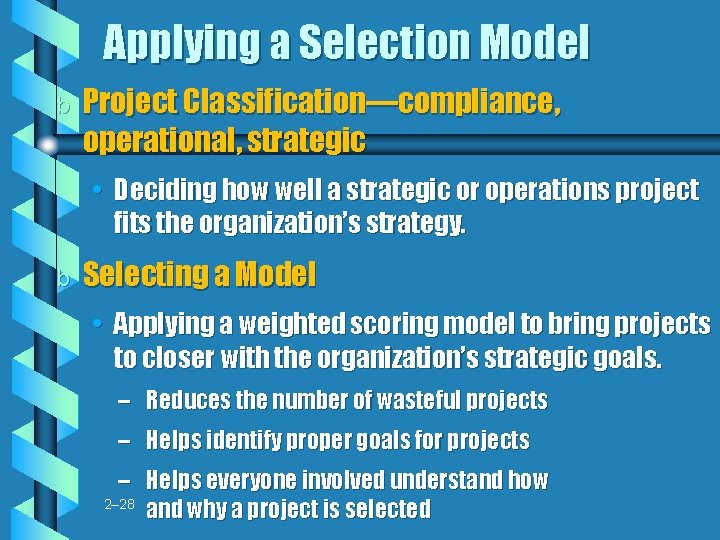
Applying a Selection Model b Project Classification—compliance, operational, strategic • Deciding how well a strategic or operations project fits the organization’s strategy. b Selecting a Model • Applying a weighted scoring model to bring projects to closer with the organization’s strategic goals. – Reduces the number of wasteful projects – Helps identify proper goals for projects – Helps everyone involved understand how 2– 28 and why a project is selected
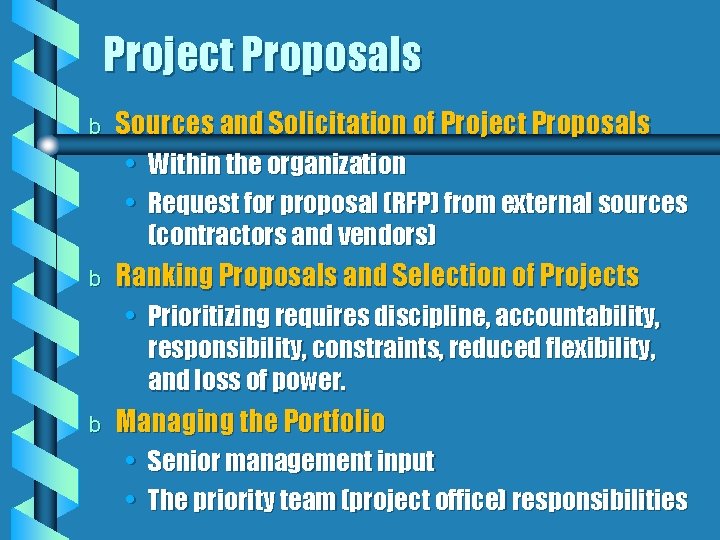
Project Proposals b Sources and Solicitation of Project Proposals • Within the organization • Request for proposal (RFP) from external sources (contractors and vendors) b Ranking Proposals and Selection of Projects • Prioritizing requires discipline, accountability, responsibility, constraints, reduced flexibility, and loss of power. b Managing the Portfolio • Senior management input • The priority team (project office) responsibilities
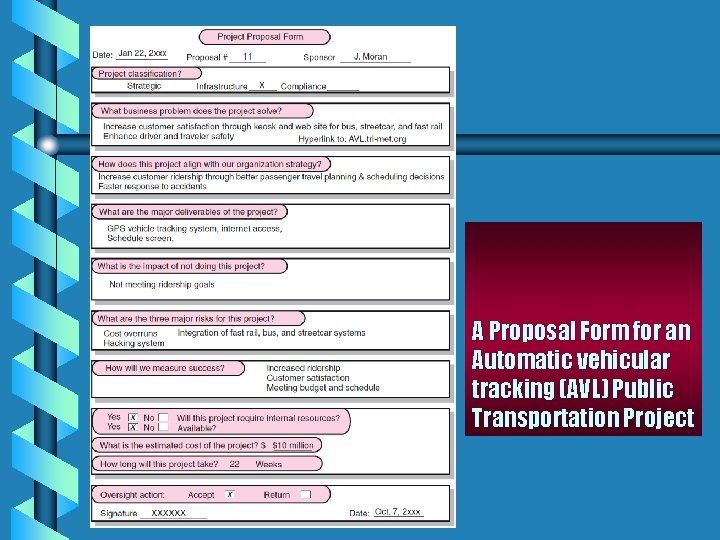
A Proposal Form for an Automatic vehicular tracking (AVL) Public Transportation Project 2– 30
The PLANNING Phase b b Analogous to a missile or rocket If the launch is “bad, ” the project may have to be killed • Just as a rocket that misfires must be detonated
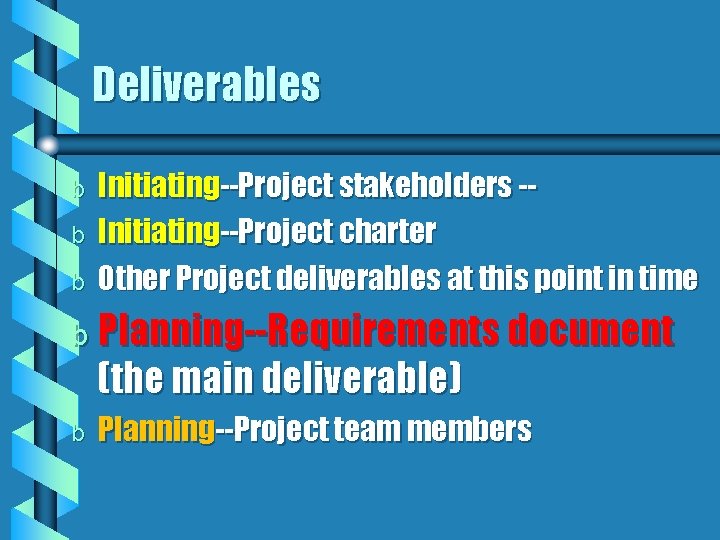
Deliverables b b b Initiating--Project stakeholders -Initiating--Project charter Other Project deliverables at this point in time b Planning--Requirements document (the main deliverable) b Planning--Project team members
Project Stakeholders b b This group must be molded into one in which there is a lot of cohesion If you can’t get cohesion, then you may have to settle for a plurality or majority rule If is most important that everyone knows up front what this project is about Stakeholders who don’t get what they want from the project need to know this up front
Cohesion and Consensus b You’ve got to have this prior to execution or you’ll never get it later on
Requirements document b b b What the problem is What functionality is needed What outputs What inputs What performance What reliability
What kind of meeting is appropriate to begin discussions? b b b A Joint Requirements Definition Session, also known as a JAD Session To create a strongly held shared vision of what the project is all about To hammer out a REQUIREMENTS DOCUMENT
JAD and JRD Sessions b b b They commit top executives to the software planning process They shorten the requirements-specification phase They eliminate features of questionable value They help to get requirements right the first time They help to get the user interface right the first time They reduce organizational infighting
Project Charter b b Template appears in Chapter 5 Advantage here is that the rules are made explicit from the outset Helps remind the PM and team what the goals/objectives are ANNOUNCES THE PROJECT
What does the Project Charter announce? b b b b Project manager Project stakeholders Project scope (Rough cut) Project deliverables Project assumptions Project rules/processes Project governance
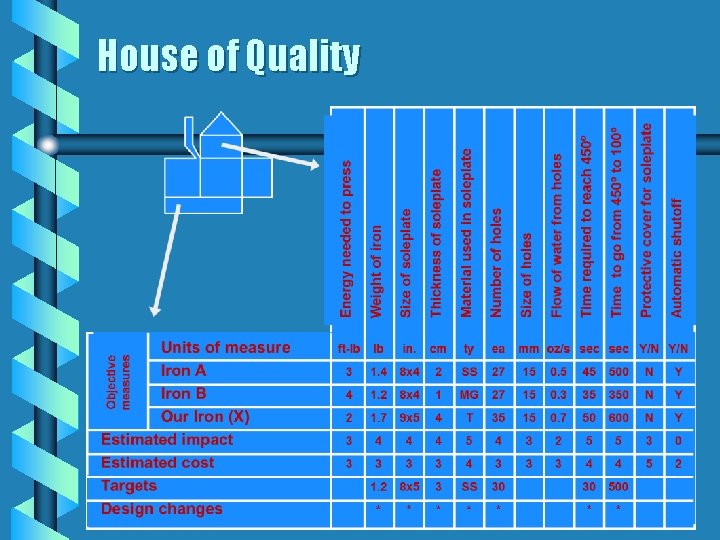
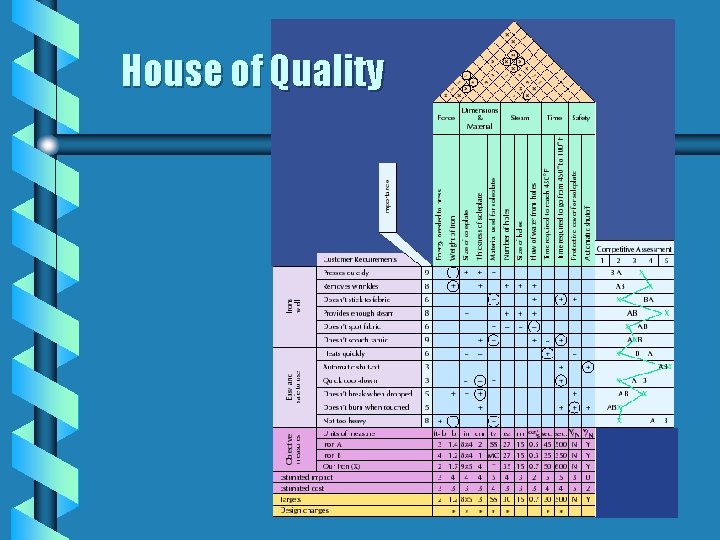
Methodology for Facilitation of a Requirements Planning Session b b b How to determine requirements SWOT Analysis/Brainstorming/Brain-writing Quality Function Deployment • You should have seen this in your ISQS 3344 class. b Goldratt Thinking Process
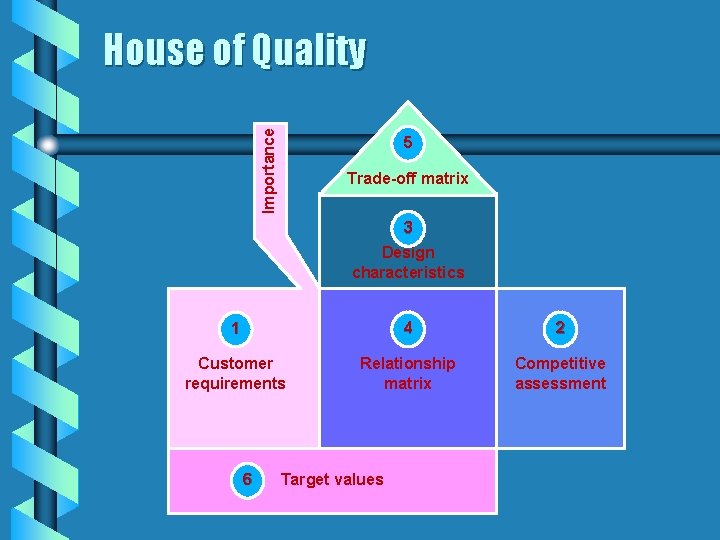
Importance House of Quality 5 Trade-off matrix 3 Design characteristics 1 4 2 Customer requirements Relationship matrix Competitive assessment 6 Target values
House of Quality
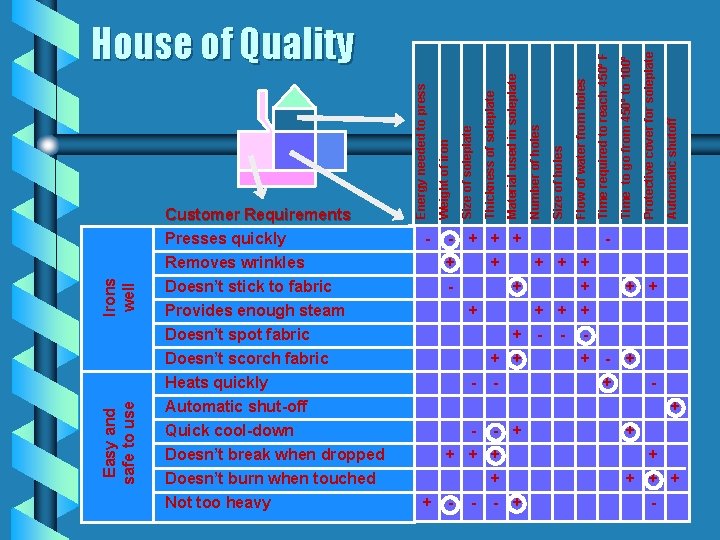
Easy and safe to use Irons well Removes wrinkles Doesn’t stick to fabric Provides enough steam Doesn’t spot fabric Doesn’t scorch fabric Heats quickly Automatic shut-off Quick cool-down Doesn’t break when dropped Doesn’t burn when touched Not too heavy - - + + - Automatic shutoff Protective cover for soleplate Time to go from 450º to 100º Time required to reach 450º F Flow of water from holes Size of holes Number of holes Material used in soleplate Thickness of soleplate Size of soleplate Weight of iron Customer Requirements Presses quickly Energy needed to press House of Quality - + + + + - - + + + - - + + + -
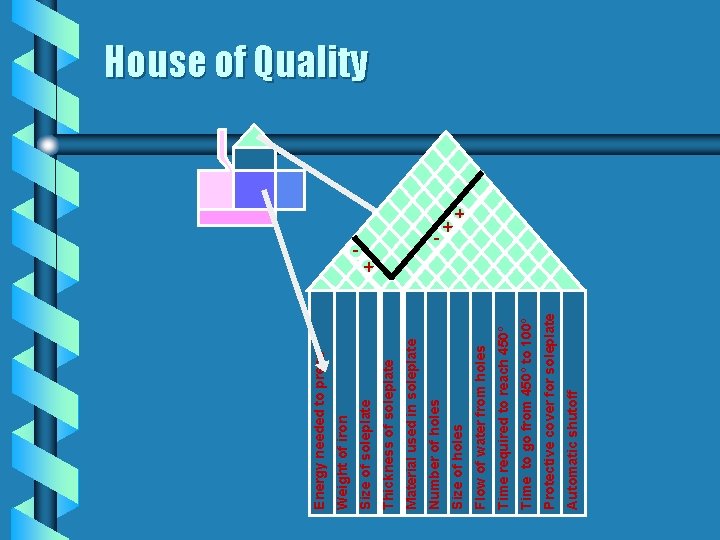
Automatic shutoff Protective cover for soleplate Time to go from 450º to 100º Time required to reach 450º + Flow of water from holes - Size of holes Number of holes Material used in soleplate - Thickness of soleplate Size of soleplate Weight of iron Energy needed to press House of Quality + +
House of Quality
House of Quality
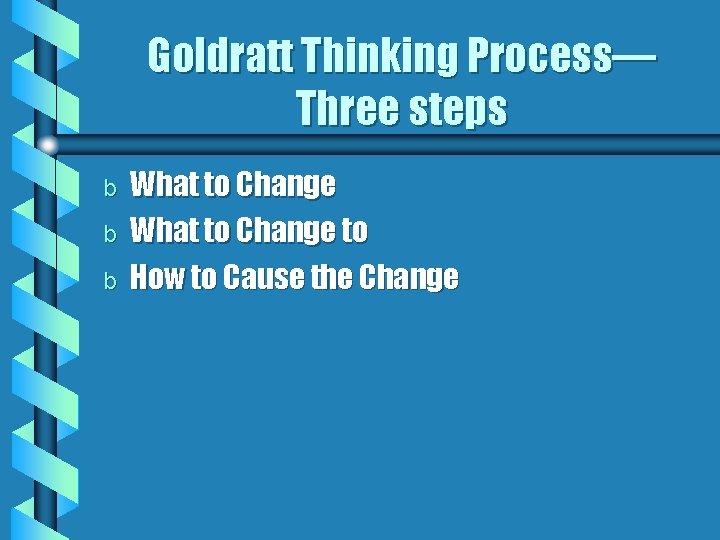
Goldratt Thinking Process— Three steps b b b What to Change to How to Cause the Change
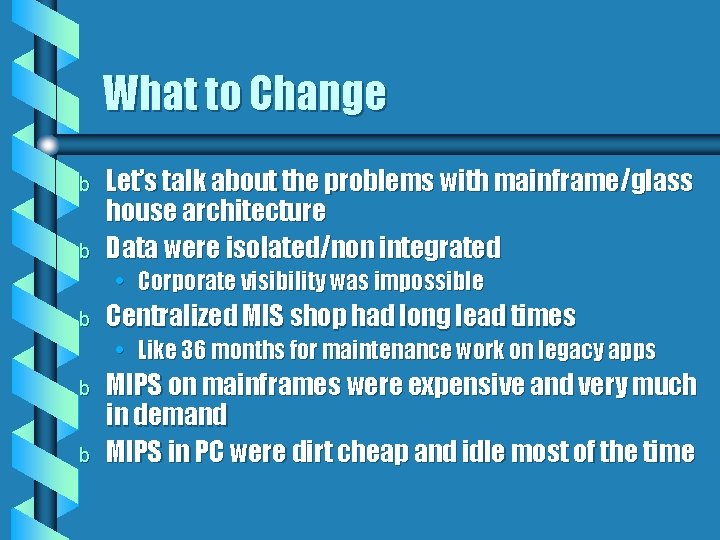
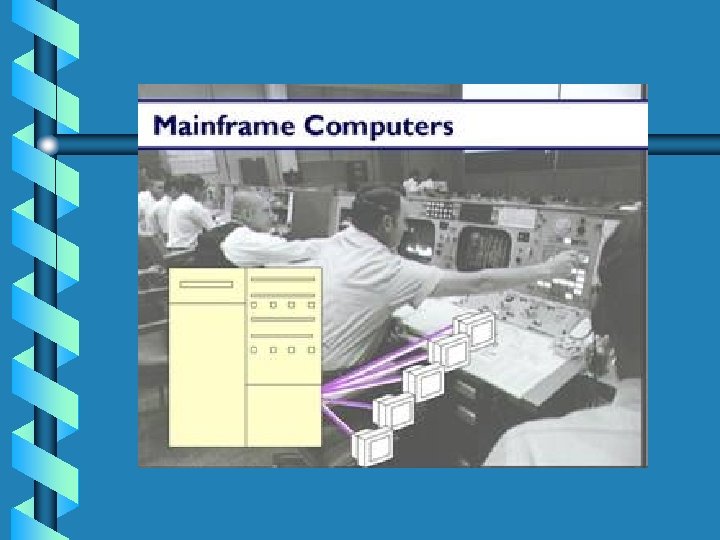
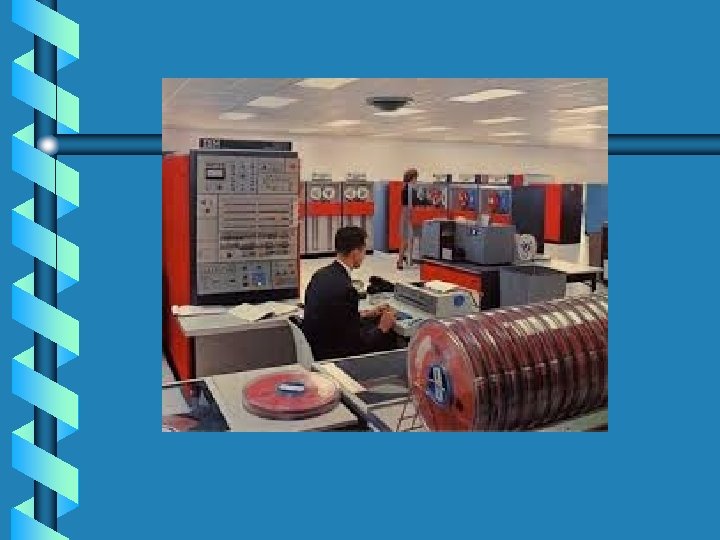
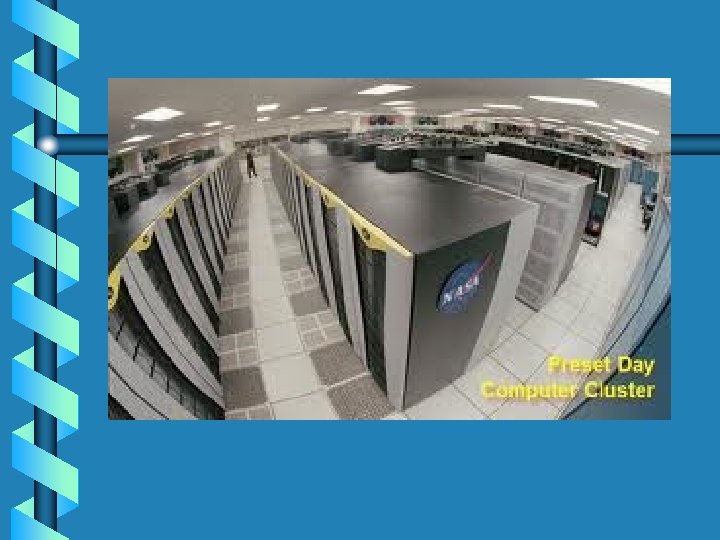
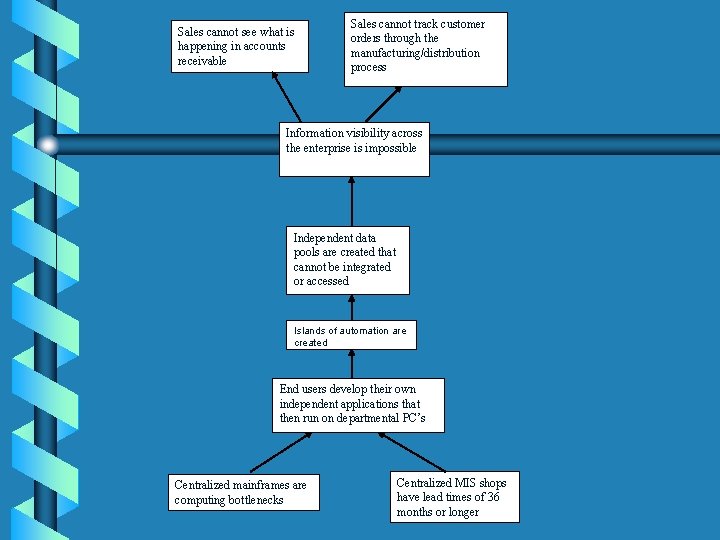
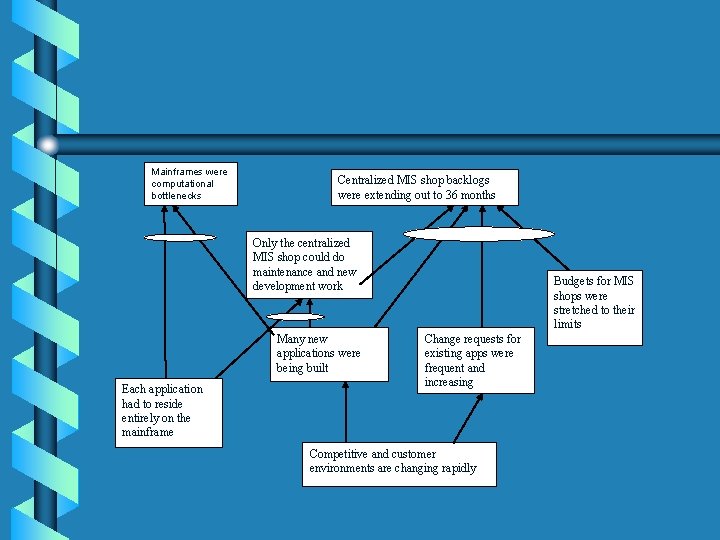
What to Change b b Let’s talk about the problems with mainframe/glass house architecture Data were isolated/non integrated • Corporate visibility was impossible b Centralized MIS shop had long lead times • Like 36 months for maintenance work on legacy apps b b MIPS on mainframes were expensive and very much in demand MIPS in PC were dirt cheap and idle most of the time
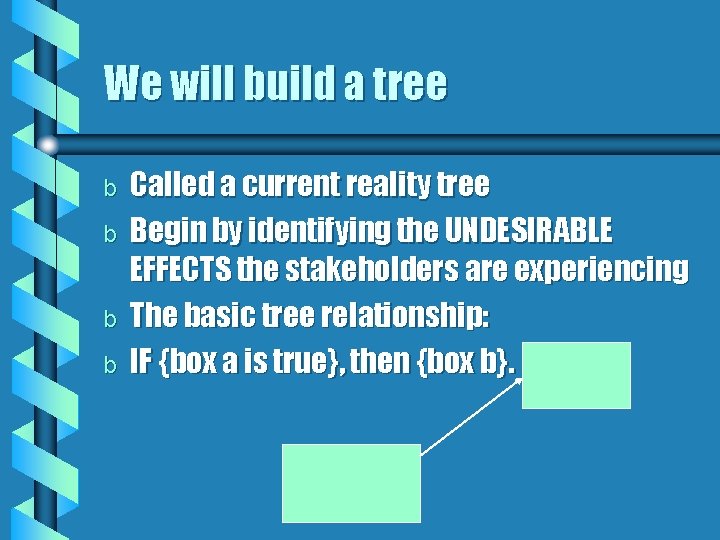
We will build a tree b b Called a current reality tree Begin by identifying the UNDESIRABLE EFFECTS the stakeholders are experiencing The basic tree relationship: IF {box a is true}, then {box b}.
Sales cannot see what is happening in accounts receivable Sales cannot track customer orders through the manufacturing/distribution process Information visibility across the enterprise is impossible Independent data pools are created that cannot be integrated or accessed Islands of automation are created End users develop their own independent applications that then run on departmental PC’s Centralized mainframes are computing bottlenecks Centralized MIS shops have lead times of 36 months or longer
Mainframes were computational bottlenecks Centralized MIS shop backlogs were extending out to 36 months Only the centralized MIS shop could do maintenance and new development work Many new applications were being built Each application had to reside entirely on the mainframe Budgets for MIS shops were stretched to their limits Change requests for existing apps were frequent and increasing Competitive and customer environments are changing rapidly
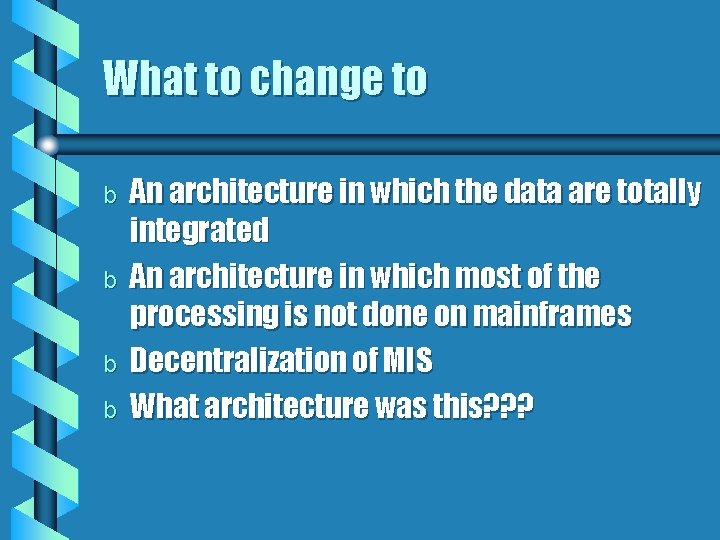
What to change to b b An architecture in which the data are totally integrated An architecture in which most of the processing is not done on mainframes Decentralization of MIS What architecture was this? ? ?
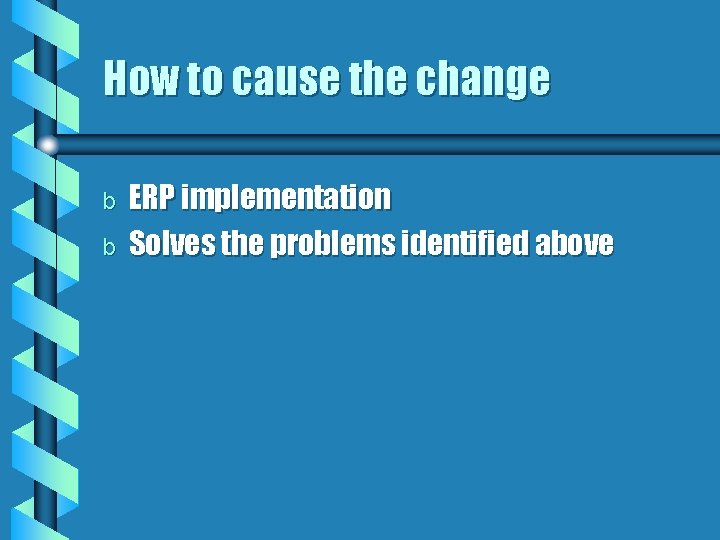
How to cause the change b b ERP implementation Solves the problems identified above
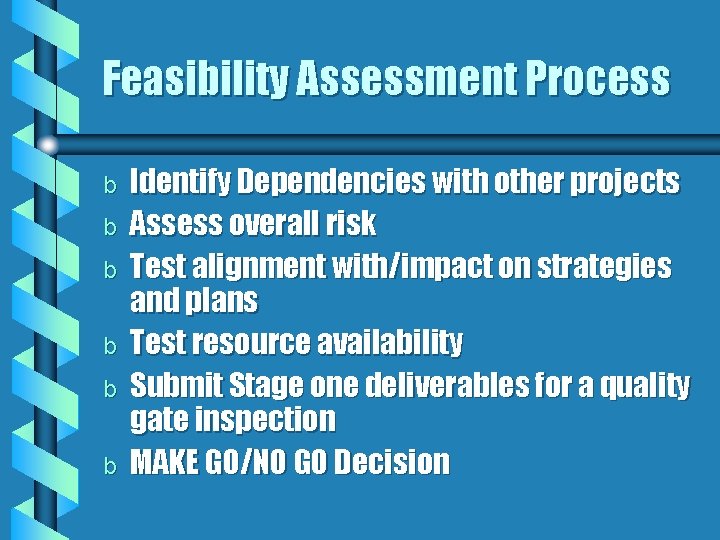
Feasibility Assessment Process b b b Identify Dependencies with other projects Assess overall risk Test alignment with/impact on strategies and plans Test resource availability Submit Stage one deliverables for a quality gate inspection MAKE GO/NO GO Decision
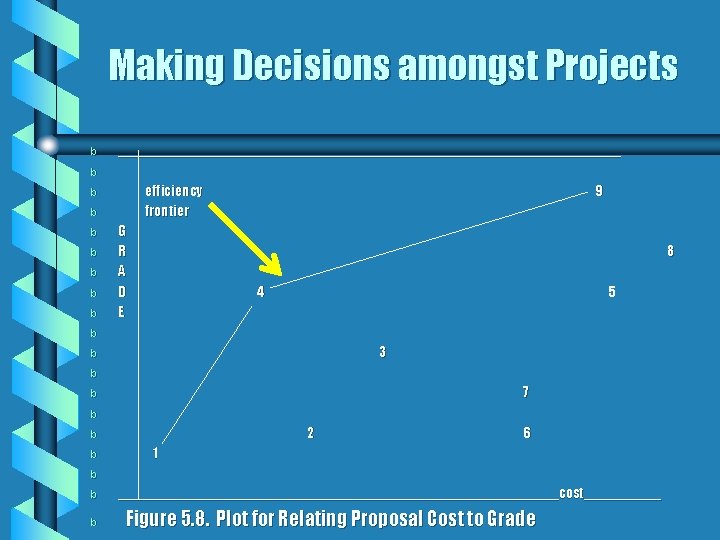
Making Decisions amongst Projects b _________________________________ b efficiency frontier b b b b G R A D E 9 8 4 5 b 3 b b 7 b b 2 b b 6 1 b b b _____________________________cost_____ Figure 5. 8. Plot for Relating Proposal Cost to Grade
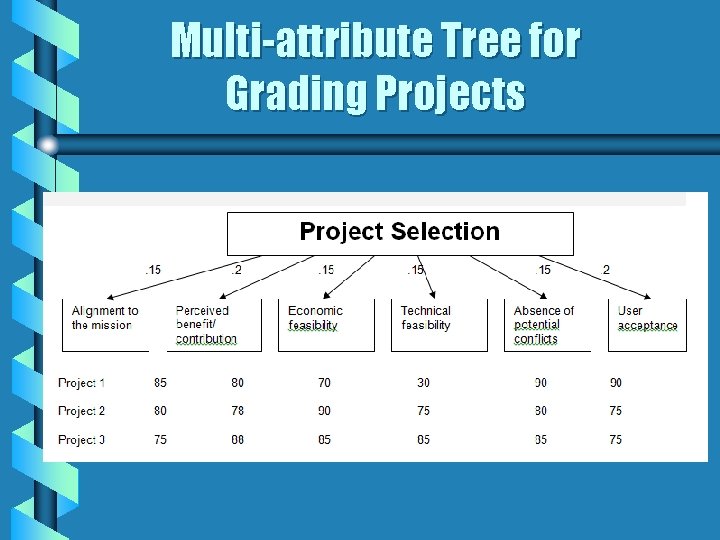
Multi-attribute Tree for Grading Projects
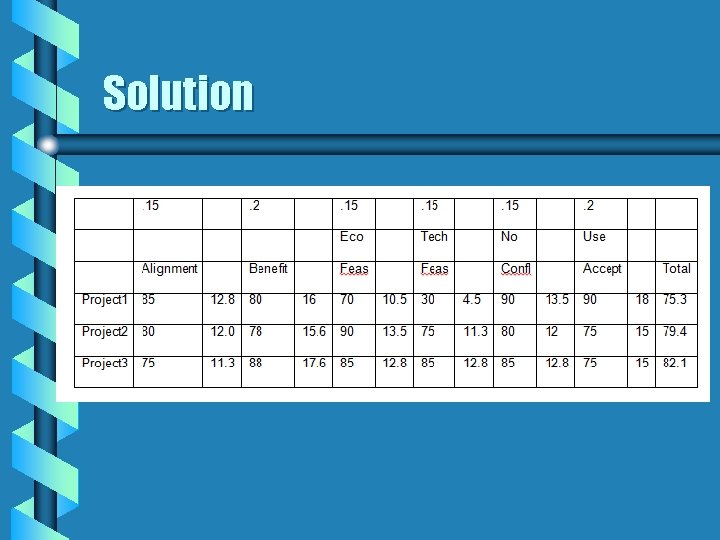
Solution
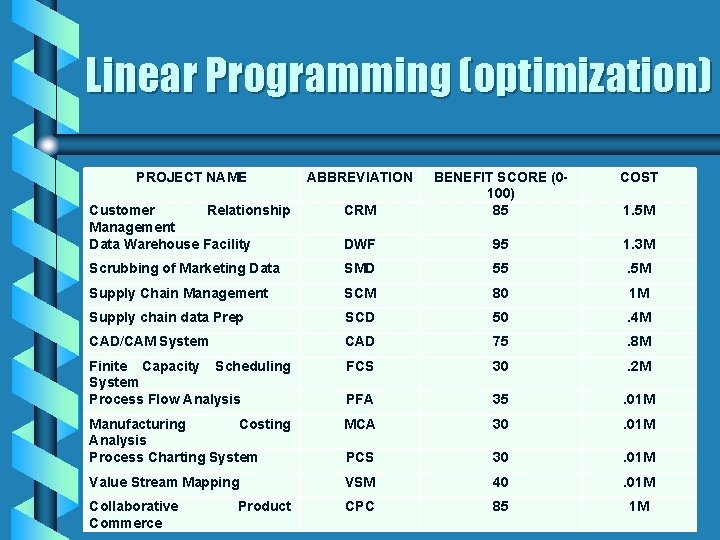
Linear Programming (optimization) PROJECT NAME ABBREVIATION COST CRM BENEFIT SCORE (0100) 85 Customer Relationship Management Data Warehouse Facility DWF 95 1. 3 M Scrubbing of Marketing Data SMD 55 . 5 M Supply Chain Management SCM 80 1 M Supply chain data Prep SCD 50 . 4 M CAD/CAM System CAD 75 . 8 M Finite Capacity Scheduling System Process Flow Analysis FCS 30 . 2 M PFA 35 . 01 M Manufacturing Costing Analysis Process Charting System MCA 30 . 01 M PCS 30 . 01 M Value Stream Mapping VSM 40 . 01 M Collaborative Commerce CPC 85 1 M Product 1. 5 M
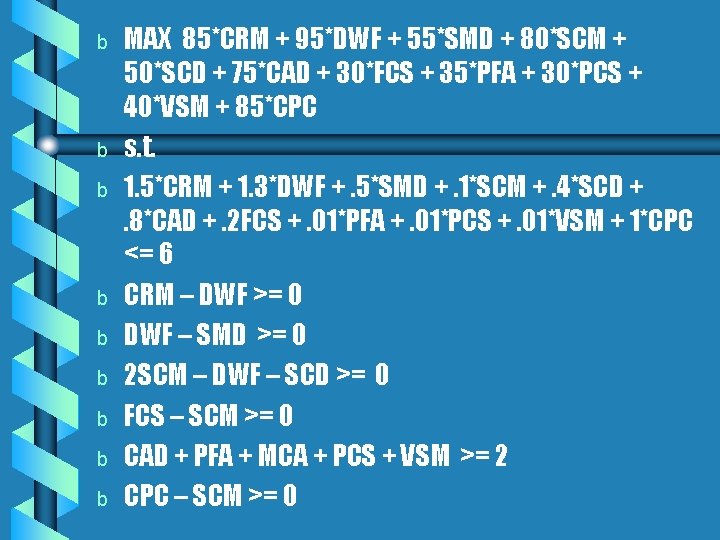
b b b b b MAX 85*CRM + 95*DWF + 55*SMD + 80*SCM + 50*SCD + 75*CAD + 30*FCS + 35*PFA + 30*PCS + 40*VSM + 85*CPC s. t. 1. 5*CRM + 1. 3*DWF +. 5*SMD +. 1*SCM +. 4*SCD +. 8*CAD +. 2 FCS +. 01*PFA +. 01*PCS +. 01*VSM + 1*CPC <= 6 CRM – DWF >= 0 DWF – SMD >= 0 2 SCM – DWF – SCD >= 0 FCS – SCM >= 0 CAD + PFA + MCA + PCS + VSM >= 2 CPC – SCM >= 0
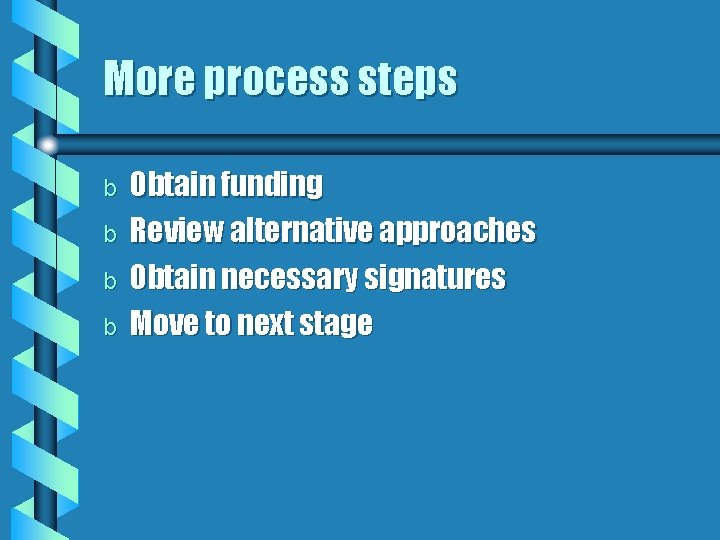
More process steps b b Obtain funding Review alternative approaches Obtain necessary signatures Move to next stage
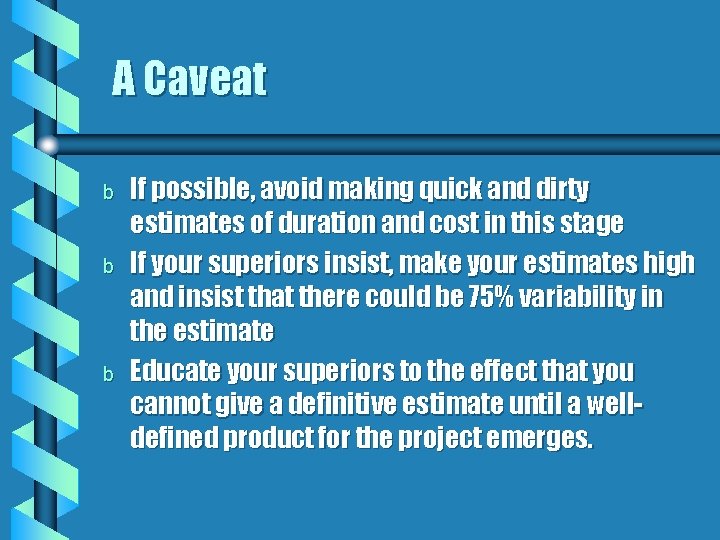
A Caveat b b b If possible, avoid making quick and dirty estimates of duration and cost in this stage If your superiors insist, make your estimates high and insist that there could be 75% variability in the estimate Educate your superiors to the effect that you cannot give a definitive estimate until a welldefined product for the project emerges.
Summary b b b The Planning phase is most important There is a lot of PM involvement PM must • • b Lead communicate Negotiate Decide A most important focus: • Build Consensus