
Chapter 5 Population Ecology Section 1 Population Dynamics

- Slides: 22
Chapter 5: Population Ecology
Section 1: Population Dynamics CLE 3210. 2. 2: Analyze and interpret population data, graphs, or diagrams. Objectives: Describe characteristics of populations; Understand the concepts of carrying capacity and limiting factors; Describe the ways in which populations are distributed.
Population Characteristics l All species occur in groups called populations l There are certain characteristics that all populations have: l Population Density l Population density is the number of organisms per unit area
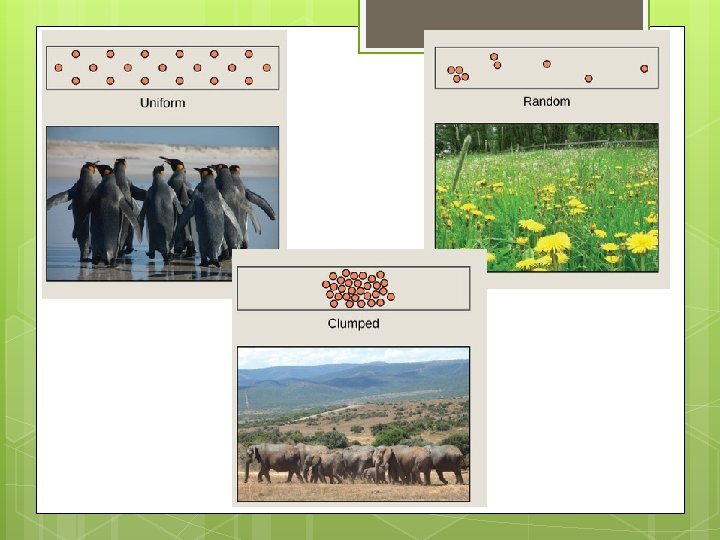
l Spatial Distribution l The pattern of population spacing in an area l 3 Main Types: 1. Uniform Dispersion evenly spaced; black bear 2. Clumped Dispersion clustered together; herds 3. Random Dispersion randomly arranged; deer
l Population Ranges l How far can a species spread? What areas can a species survive in? l No population can survive in all habitats. l Populations are limited by biotic and abiotic factors l. A species might not be able to expand its population range because it cannot survive the abiotic and biotic factors found in the expanded region.
Population-Limiting Factors l Limiting factors keep a population from continuing to increase forever
l Density-Independent Factors l Factors that do not depend on population size; will occur whether or not living things are present l Usually abiotic l Ex: Extreme hot or cold, tornadoes, hurricanes
l Density-dependent factors l An environmental factor that depends on population size l Usually biotic factors l Ex: predation, disease, parasites, competition
l Disease l Outbreaks of disease tend to occur when population size has increased and population density is high…disease is passed easily from one organism to another
l Competition between organisms increases when density increases l When the population increases to a size where resources (food, space) become limited, individuals must compete for the resources
l Parasites l Affects organisms similar to disease…higher density populations will be negatively affected by parasites (will decrease numbers)
Population Growth Rate l Explains how fast a population grows l Must know birth rate (natality) and death rates (mortality ) l Emigration: how many leave (“EXIT”) l Immigration: how many move in
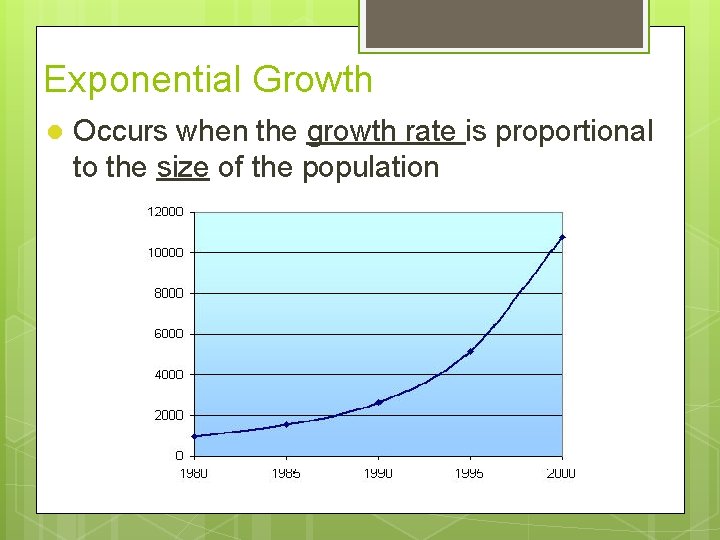
Exponential Growth l Occurs when the growth rate is proportional to the size of the population
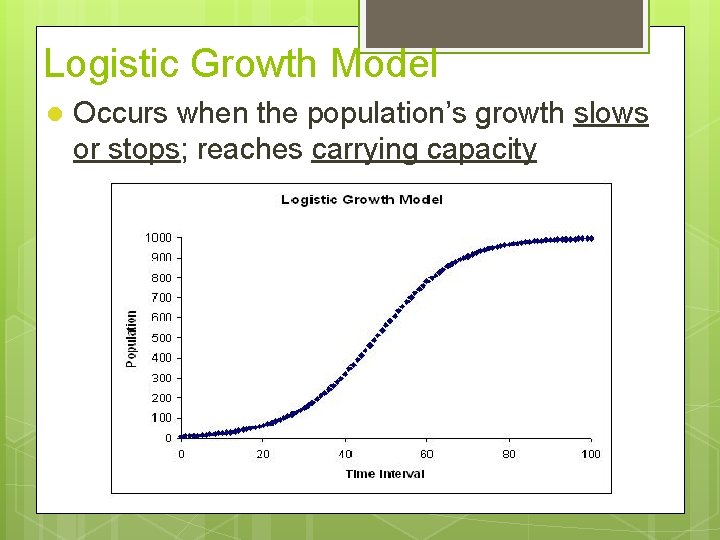
Logistic Growth Model l Occurs when the population’s growth slows or stops; reaches carrying capacity
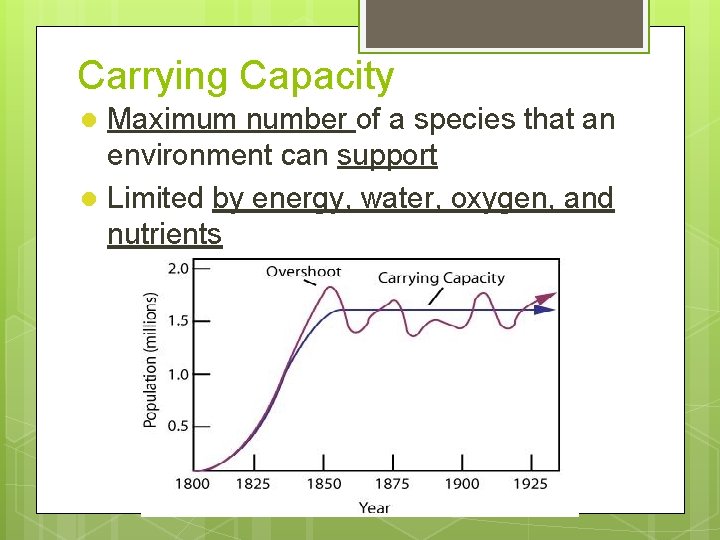
Carrying Capacity Maximum number of a species that an environment can support l Limited by energy, water, oxygen, and nutrients l
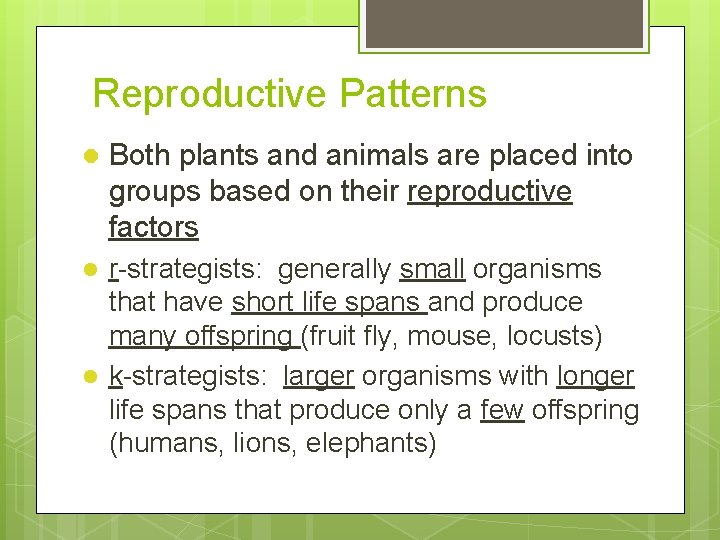
Reproductive Patterns l Both plants and animals are placed into groups based on their reproductive factors r-strategists: generally small organisms that have short life spans and produce many offspring (fruit fly, mouse, locusts) l k-strategists: larger organisms with longer life spans that produce only a few offspring (humans, lions, elephants) l
Section 2: Human Population CLE 3210. 2. 1: Investigate how the dynamic equilibrium of an ecological community is associated with interactions among its organisms Objectives: Explain the trends in human population growth; Compare the age structure of representative nongrowing, slowly growing, and rapidly growing countries; Predict the consequences of continued population growth
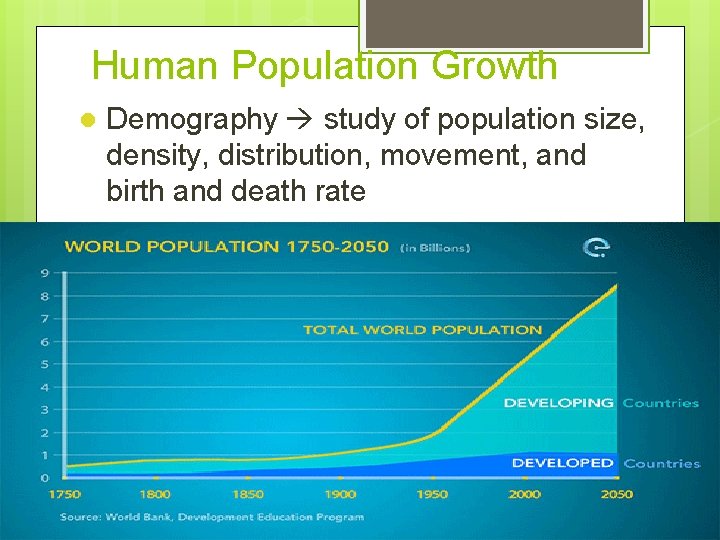
Human Population Growth l Demography study of population size, density, distribution, movement, and birth and death rate
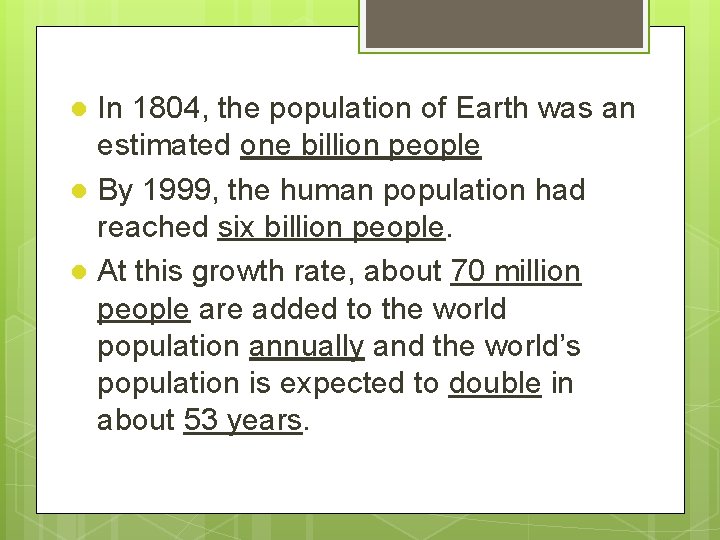
In 1804, the population of Earth was an estimated one billion people l By 1999, the human population had reached six billion people. l At this growth rate, about 70 million people are added to the world population annually and the world’s population is expected to double in about 53 years. l
1 in 7 Billion
l Technological advances have increased human carrying capacity l Ex: agriculture, medicine, shelter