
Chapter 5 Planning and Decision Making MGMT 2008
- Slides: 12
Chapter 5 Planning and Decision Making MGMT 2008 Chuck Williams Copyright © 2008 by Cengage Learning. All rights reserved Designed & Prepared by B-books, Ltd.
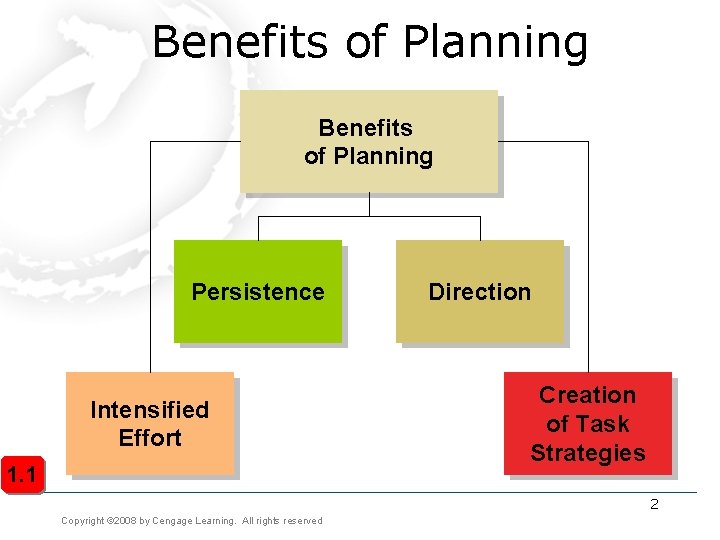
Benefits of Planning Persistence Intensified Effort 1. 1 Direction Creation of Task Strategies 2 Copyright © 2008 by Cengage Learning. All rights reserved
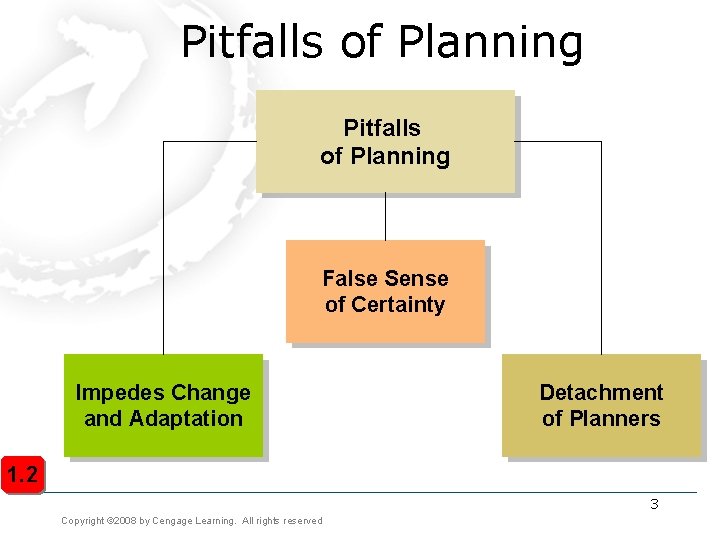
Pitfalls of Planning False Sense of Certainty Impedes Change and Adaptation Detachment of Planners 1. 2 3 Copyright © 2008 by Cengage Learning. All rights reserved
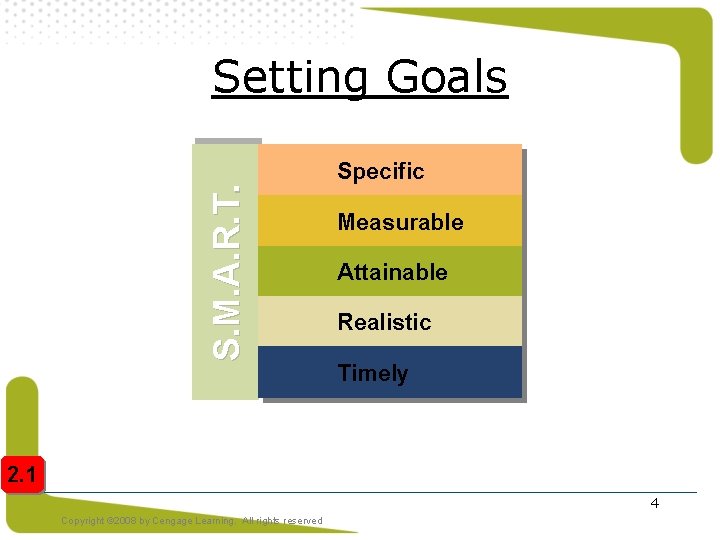
S. M. A. R. T. Setting Goals Specific Measurable Attainable Realistic Timely 2. 1 4 Copyright © 2008 by Cengage Learning. All rights reserved
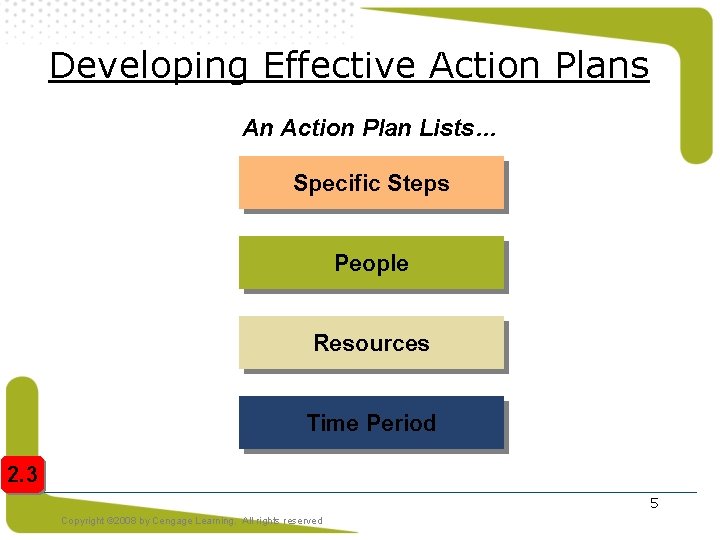
Developing Effective Action Plans An Action Plan Lists… Specific Steps People Resources Time Period 2. 3 5 Copyright © 2008 by Cengage Learning. All rights reserved
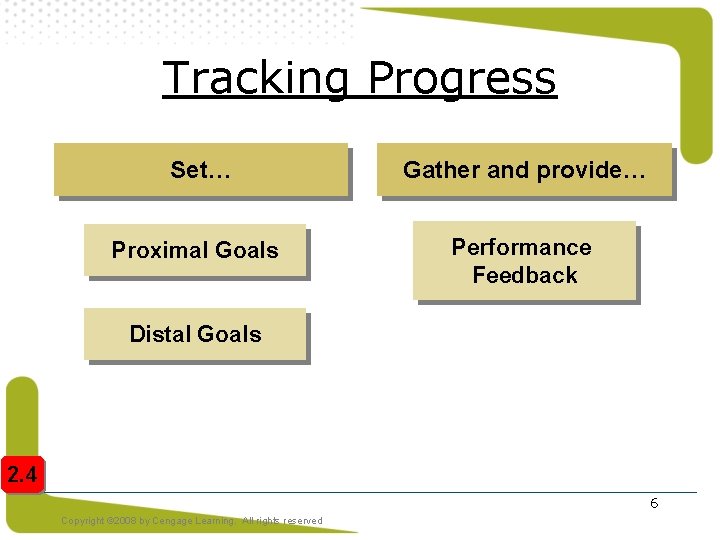
Tracking Progress Set… Gather and provide… Proximal Goals Performance Feedback Distal Goals 2. 4 6 Copyright © 2008 by Cengage Learning. All rights reserved
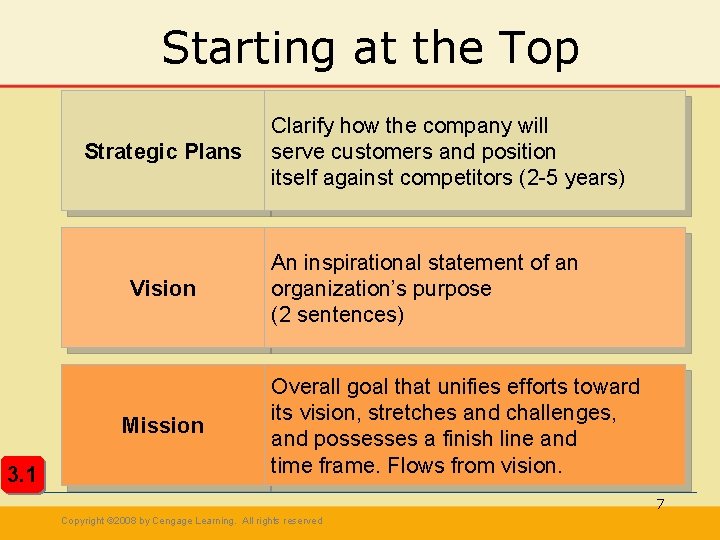
Starting at the Top Strategic Plans Vision Mission 3. 1 Clarify how the company will serve customers and position itself against competitors (2 -5 years) An inspirational statement of an organization’s purpose (2 sentences) Overall goal that unifies efforts toward its vision, stretches and challenges, and possesses a finish line and time frame. Flows from vision. 7 Copyright © 2008 by Cengage Learning. All rights reserved
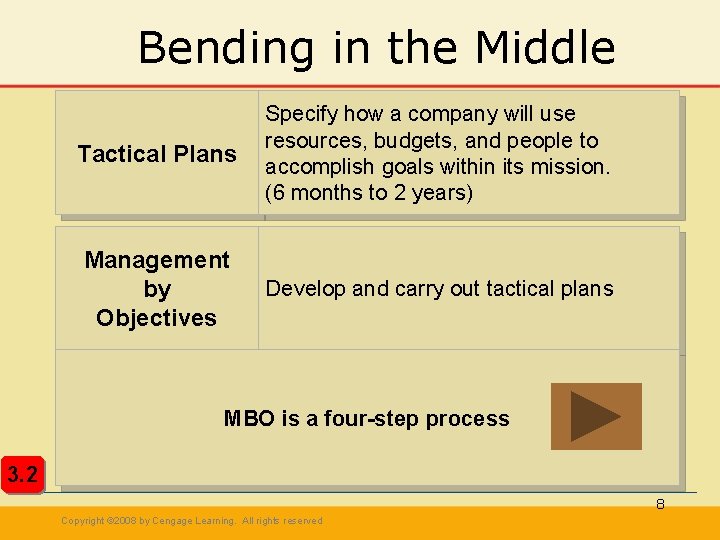
Bending in the Middle Tactical Plans Specify how a company will use resources, budgets, and people to accomplish goals within its mission. (6 months to 2 years) Management by Objectives Develop and carry out tactical plans MBO is a four-step process 3. 2 8 Copyright © 2008 by Cengage Learning. All rights reserved
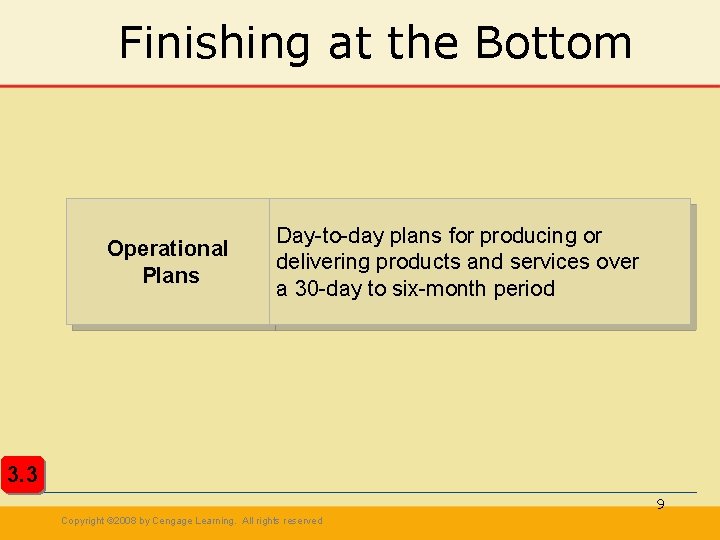
Finishing at the Bottom Operational Plans Day-to-day plans for producing or delivering products and services over a 30 -day to six-month period 3. 3 9 Copyright © 2008 by Cengage Learning. All rights reserved
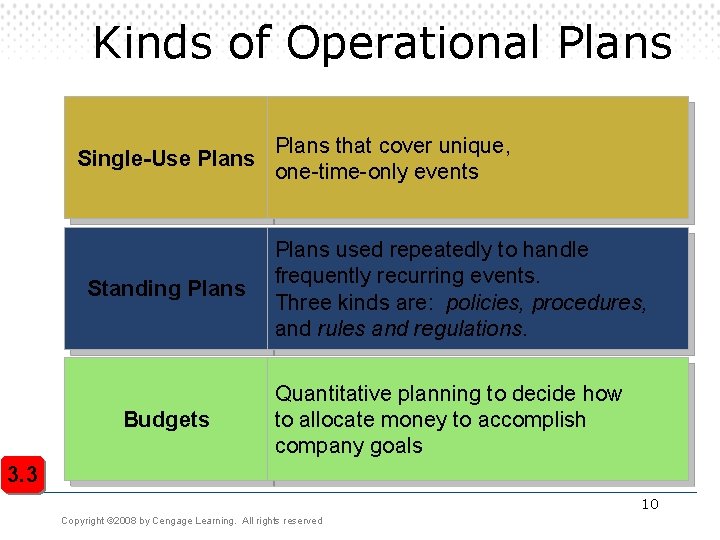
Kinds of Operational Plans Single-Use Plans Standing Plans Budgets Plans that cover unique, one-time-only events Plans used repeatedly to handle frequently recurring events. Three kinds are: policies, procedures, and rules and regulations. Quantitative planning to decide how to allocate money to accomplish company goals 3. 3 10 Copyright © 2008 by Cengage Learning. All rights reserved
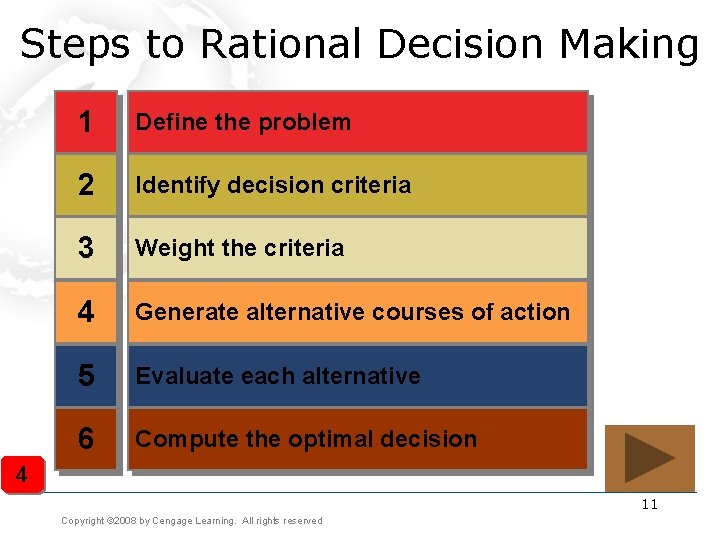
Steps to Rational Decision Making 1 Define the problem 2 Identify decision criteria 3 Weight the criteria 4 Generate alternative courses of action 5 Evaluate each alternative 6 Compute the optimal decision 4 11 Copyright © 2008 by Cengage Learning. All rights reserved
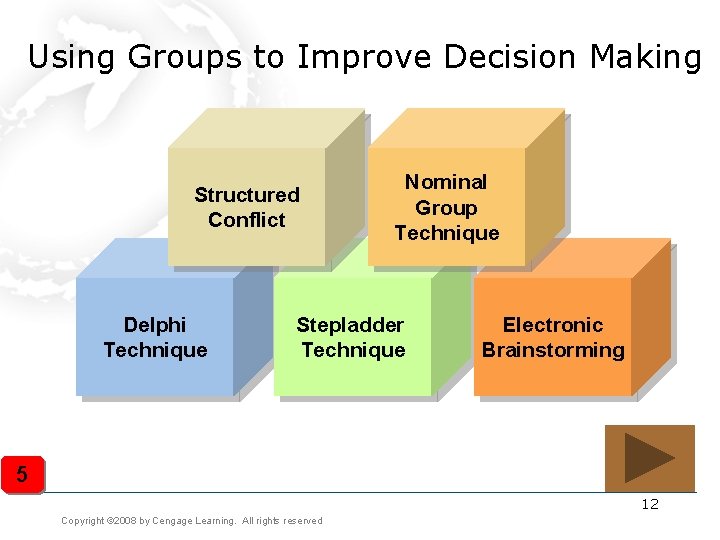
Using Groups to Improve Decision Making Structured Conflict Delphi Technique Nominal Group Technique Stepladder Technique Electronic Brainstorming 5 12 Copyright © 2008 by Cengage Learning. All rights reserved