
Chapter 5 Photosynthesis and Cellular Respiration Energy and
- Slides: 52
Chapter 5 Photosynthesis and Cellular Respiration
Energy and Living Things • All energy in living systems comes from the sun
Metabolism • Using energy to build molecules • Or breaking down molecules for storing energy • Includes photosynthesis and cell respiration
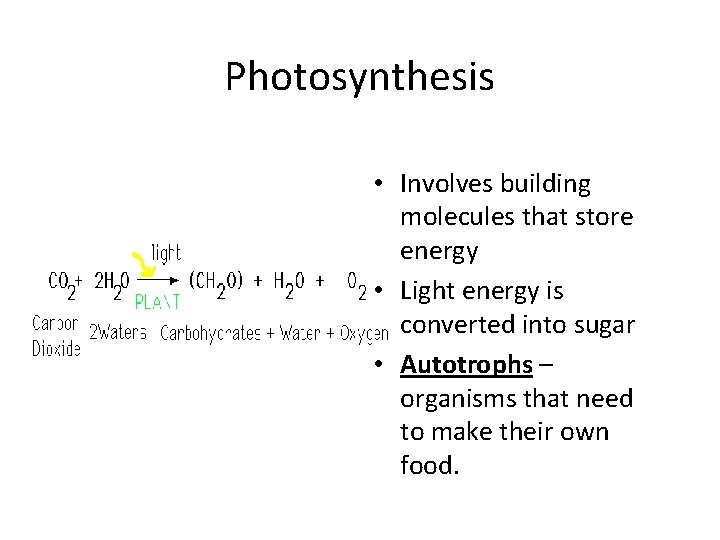
Photosynthesis • Involves building molecules that store energy • Light energy is converted into sugar • Autotrophs – organisms that need to make their own food.
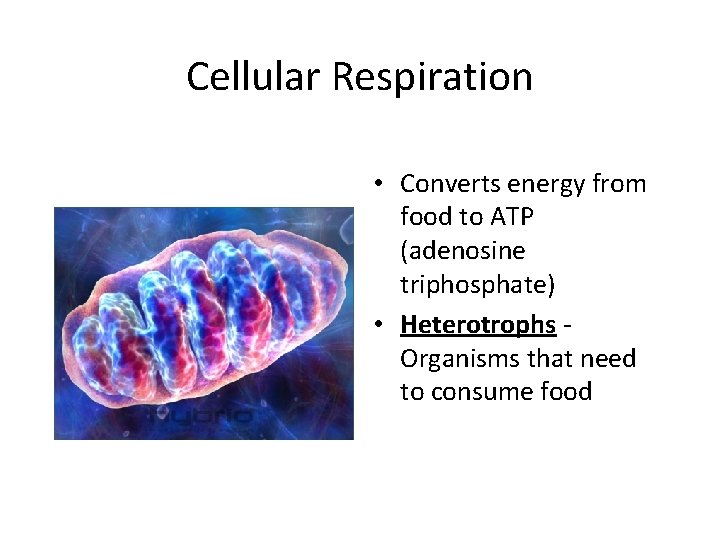
Cellular Respiration • Converts energy from food to ATP (adenosine triphosphate) • Heterotrophs Organisms that need to consume food
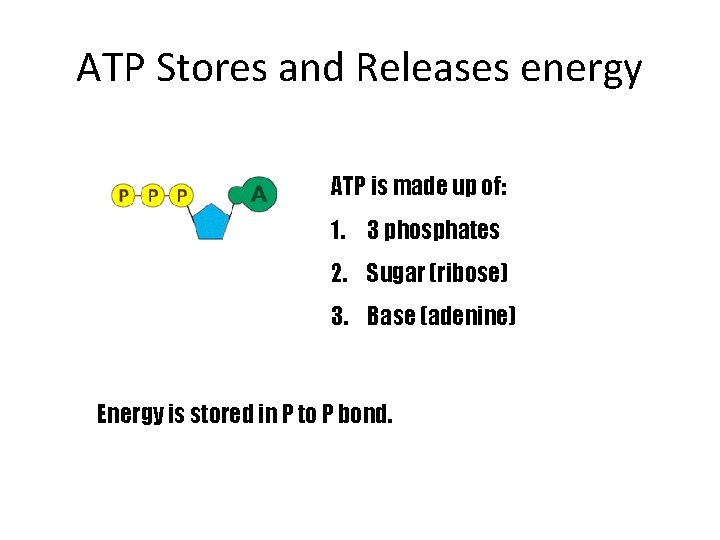
ATP Stores and Releases energy ATP is made up of: 1. 3 phosphates 2. Sugar (ribose) 3. Base (adenine) Energy is stored in P to P bond.
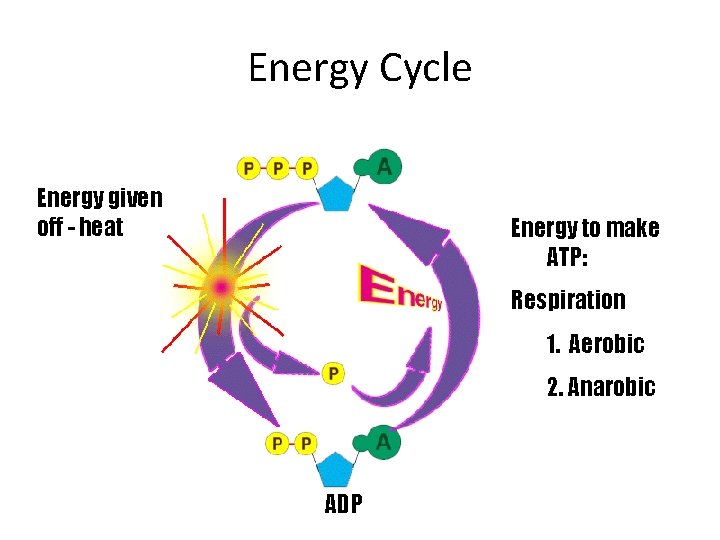
Energy Cycle Energy given off - heat Energy to make ATP: Respiration 1. Aerobic 2. Anarobic ADP
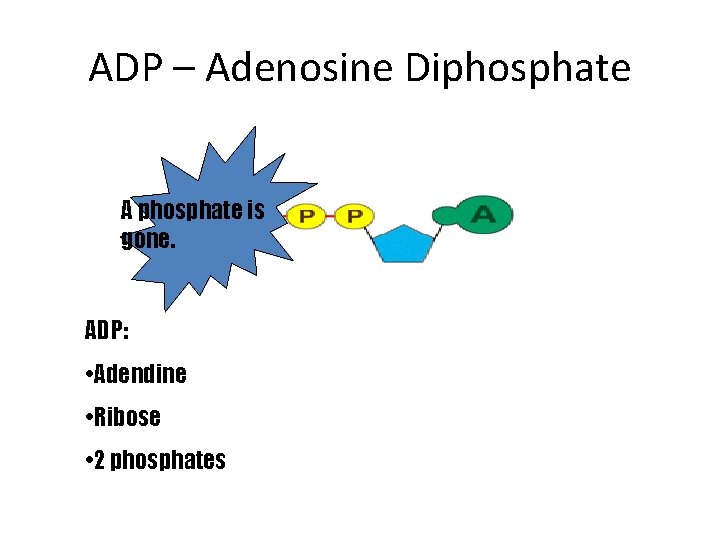
ADP – Adenosine Diphosphate A phosphate is gone. ADP: • Adendine • Ribose • 2 phosphates
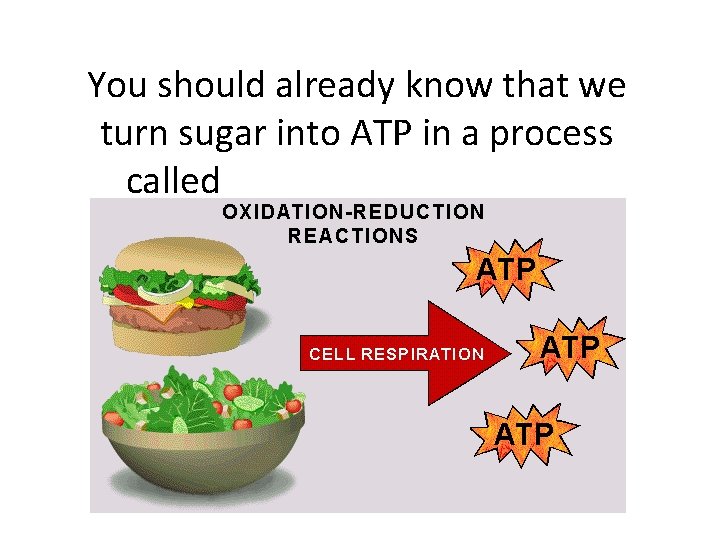
You should already know that we turn sugar into ATP in a process called _________
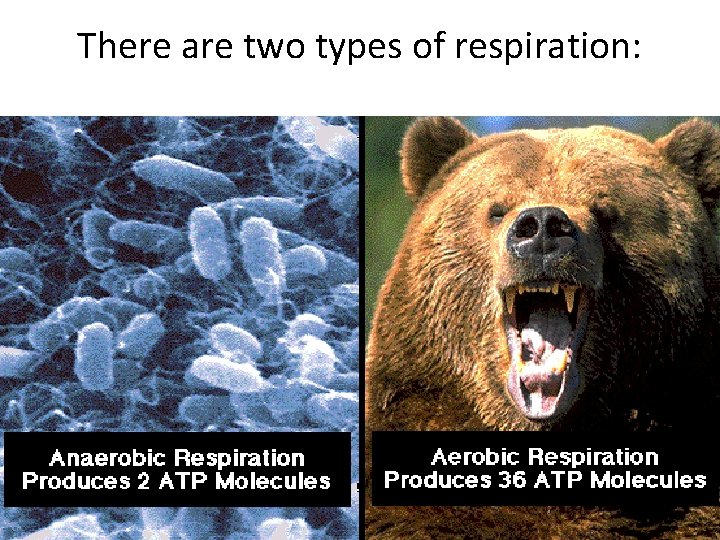
There are two types of respiration:
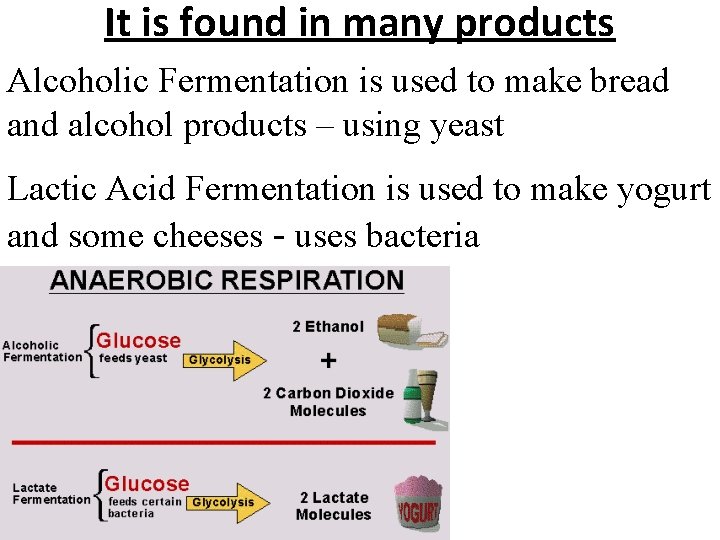
It is found in many products Alcoholic Fermentation is used to make bread and alcohol products – using yeast Lactic Acid Fermentation is used to make yogurt and some cheeses - uses bacteria
Stages of Cellular Respiration Steps of: 1. Glycolysis - Process of turning glucose into 2 molecules of pyruvic acid. This is an anaerobic process – no oxygen needed.
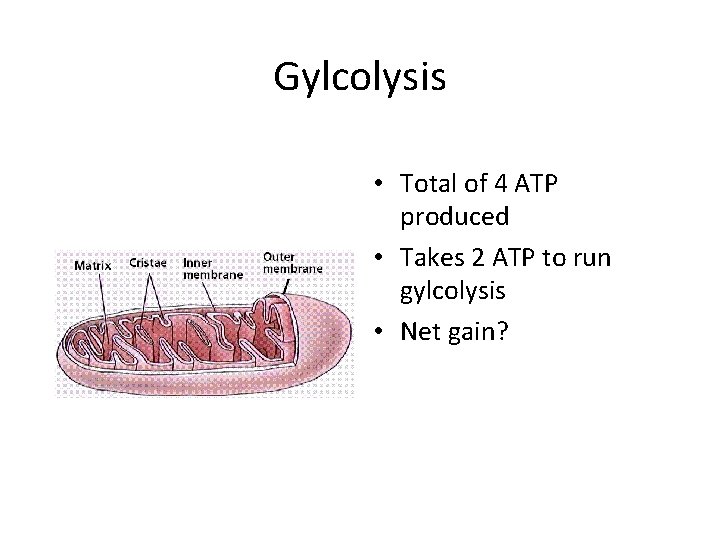
Gylcolysis • Total of 4 ATP produced • Takes 2 ATP to run gylcolysis • Net gain?
Step 2: Fermentation • Alcoholic Fermentation • Pyruvic Acid is broken into : – Ethyl alcohol and CO 2 – Ex. Bacteria and Yeast • Lactic Acid Fermentation • Pyruvic Acid is broken into: • lactic acid • Ex. Sour milk, sore muscles
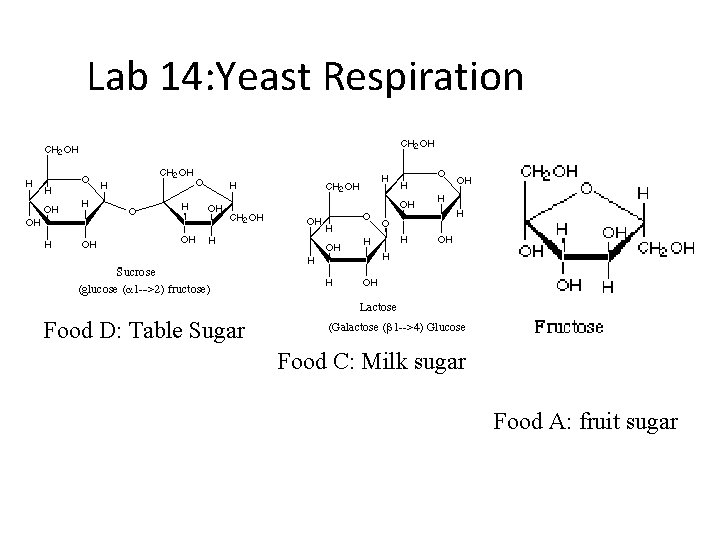
Lab 14: Yeast Respiration Food D: Table Sugar Food C: Milk sugar Food A: fruit sugar
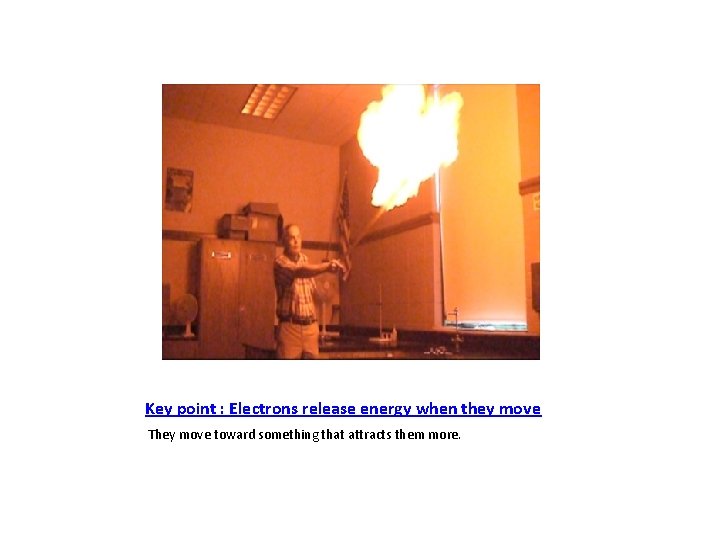
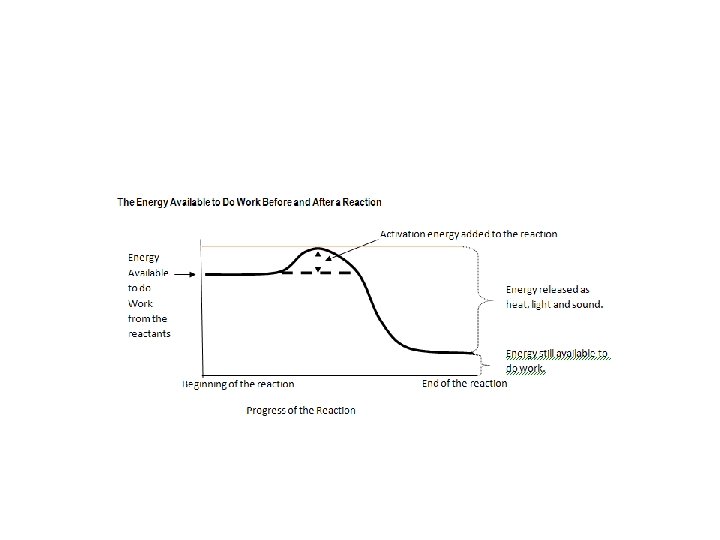
Key point : Electrons release energy when they move They move toward something that attracts them more.
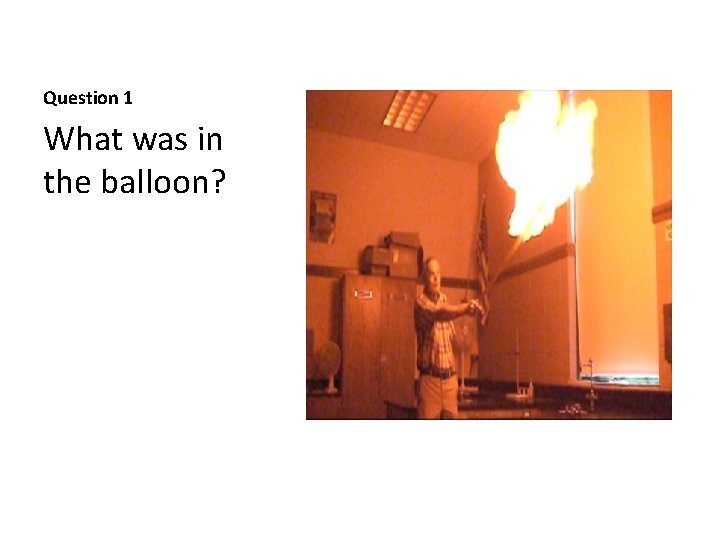
Question 1 What was in the balloon?
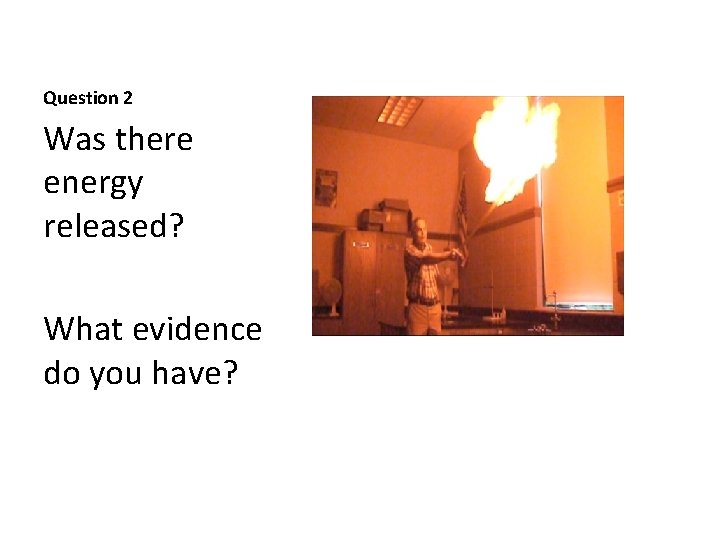
Question 2 Was there energy released? What evidence do you have?
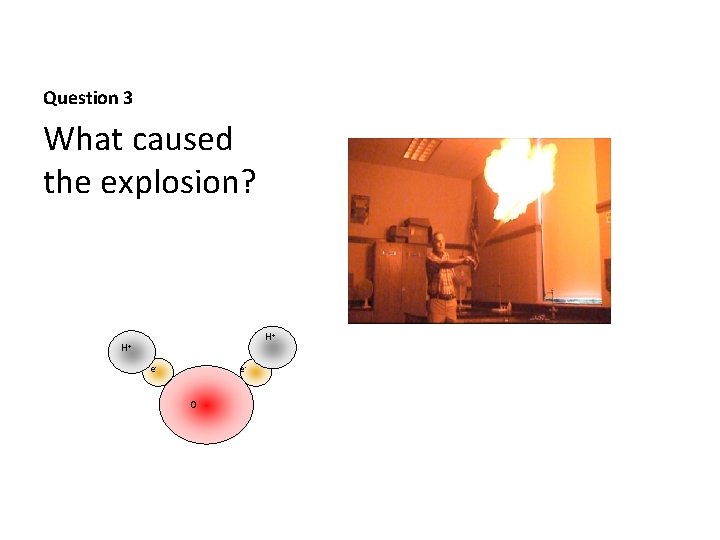
Question 3 What caused the explosion? H+ H+ e- e. O
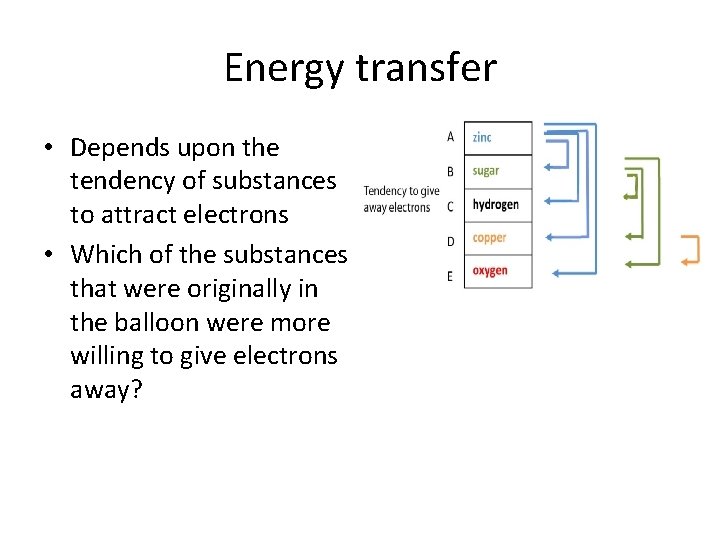
Energy transfer • Depends upon the tendency of substances to attract electrons • Which of the substances that were originally in the balloon were more willing to give electrons away?
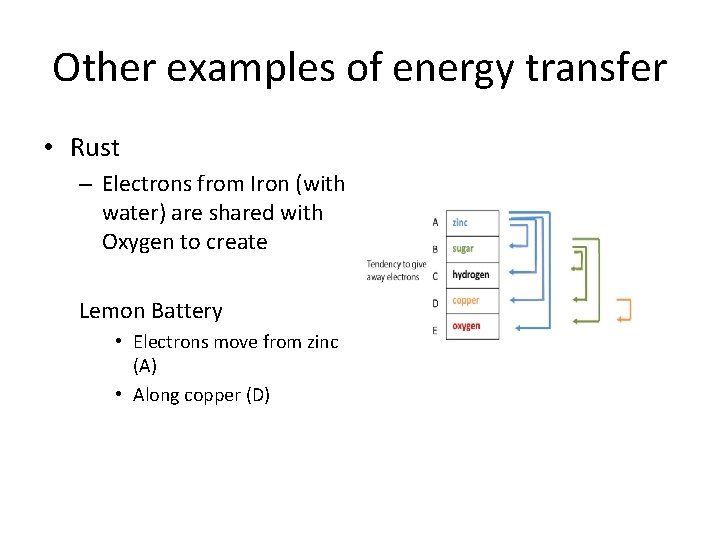
Other examples of energy transfer • Rust – Electrons from Iron (with water) are shared with Oxygen to create Lemon Battery • Electrons move from zinc (A) • Along copper (D)
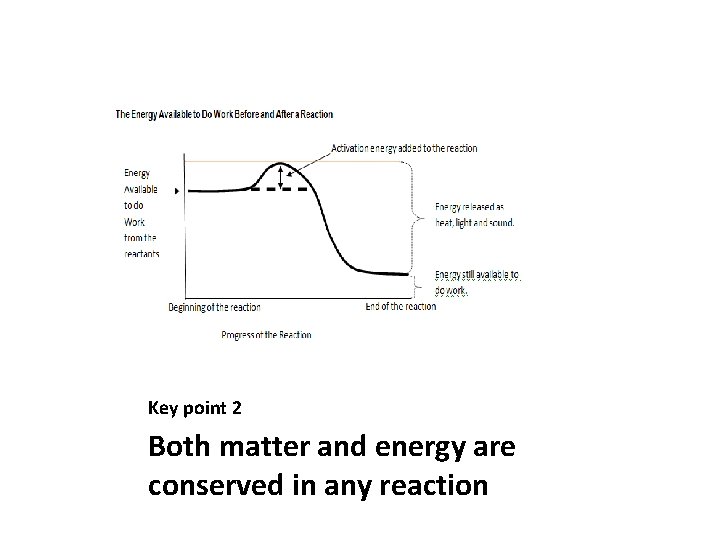
Key point 2 Both matter and energy are conserved in any reaction
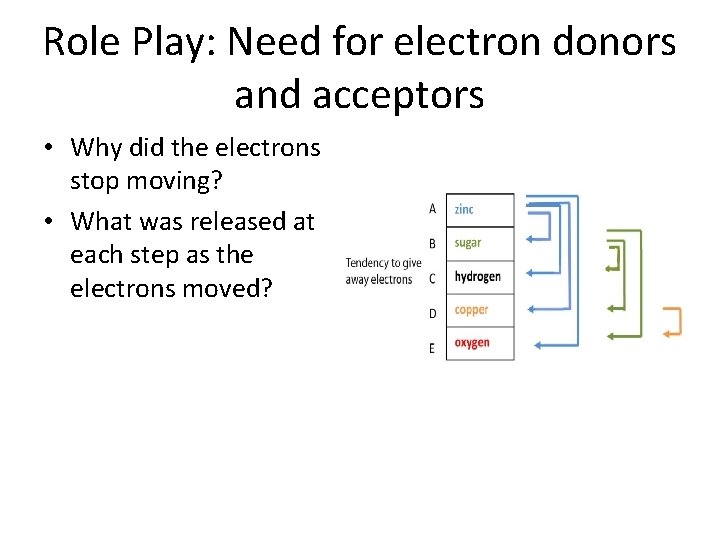
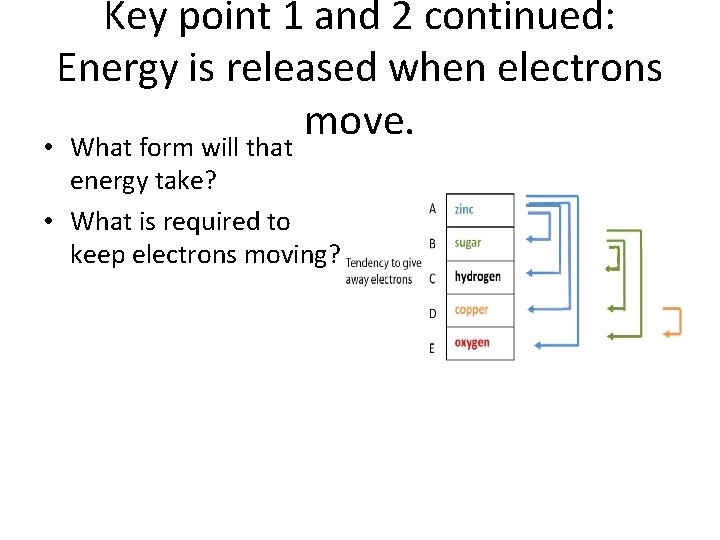
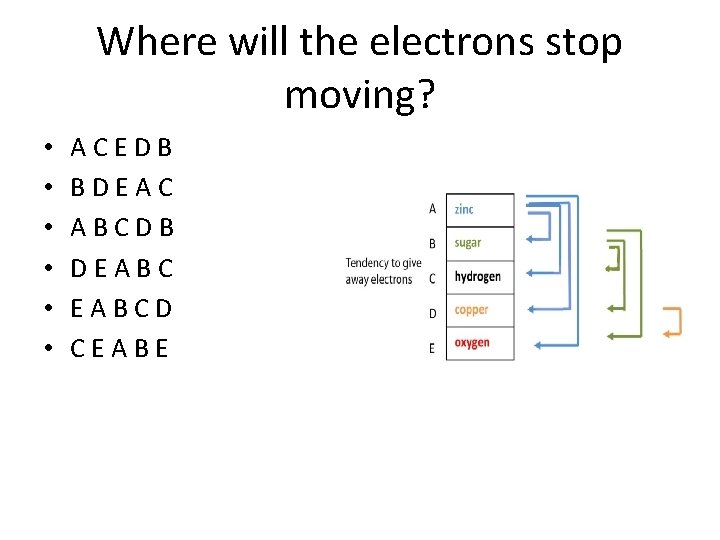
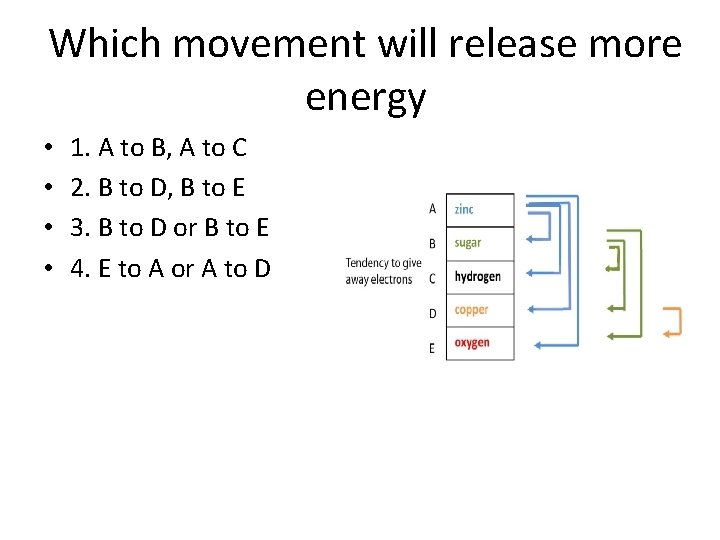
Role Play: Need for electron donors and acceptors • Rules for moving electrons: – Each letter can only have one electron at a time – Electrons can move only to a nearby carrier. – Electrons can move only to a lower energy level.
Role Play: Need for electron donors and acceptors • Why did the electrons stop moving? • What was released at each step as the electrons moved?
Key point 1 and 2 continued: Energy is released when electrons move. • What form will that energy take? • What is required to keep electrons moving?
Where will the electrons stop moving? • • • ACEDB BDEAC ABCDB DEABCD CEABE
Which movement will release more energy • • 1. A to B, A to C 2. B to D, B to E 3. B to D or B to E 4. E to A or A to D
Hydrogen fuel cell • Hydrogen is the electron donor
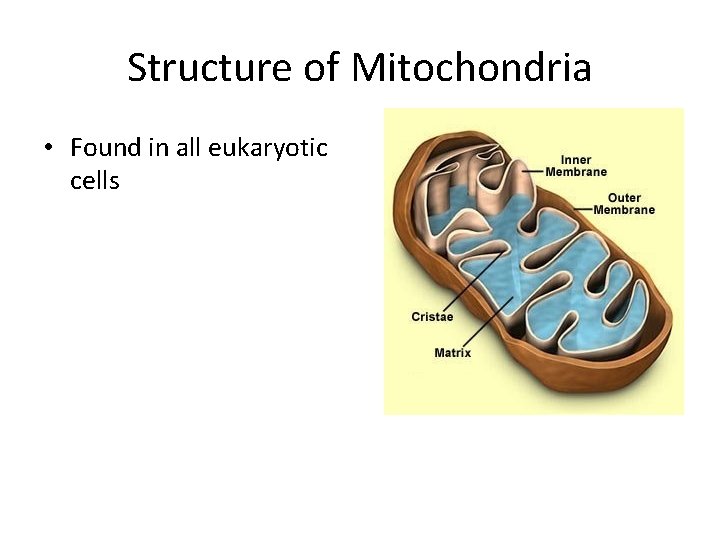
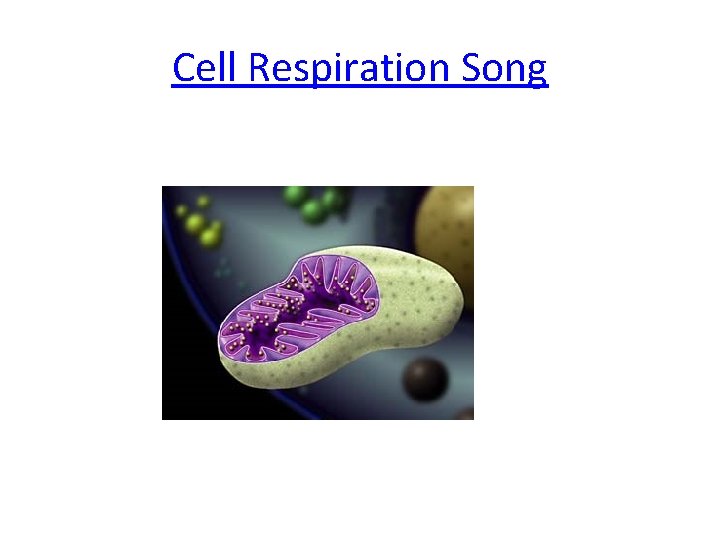
Structure of Mitochondria • Found in all eukaryotic cells
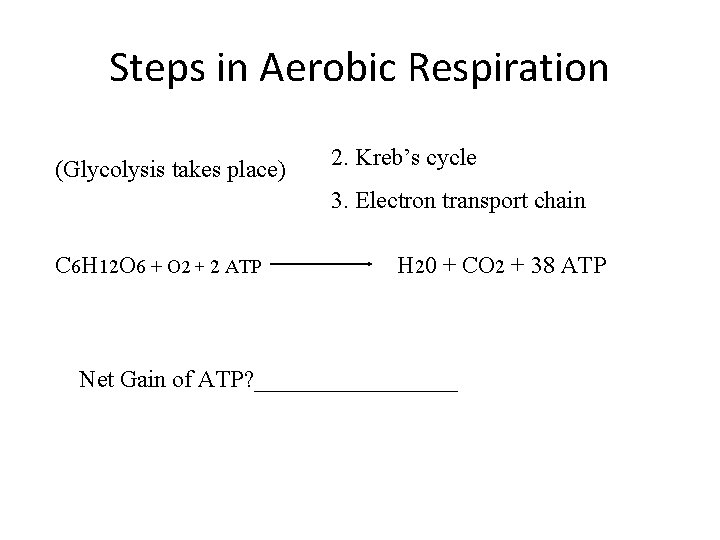
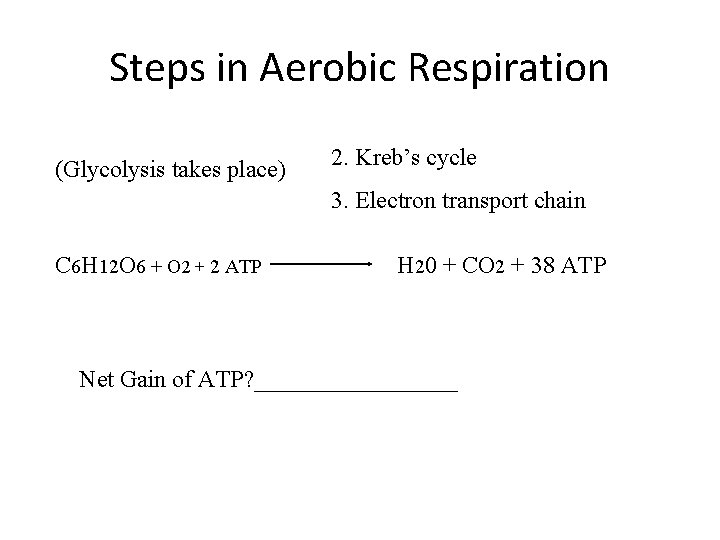
Steps in Aerobic Respiration (Glycolysis takes place) 2. Kreb’s cycle 3. Electron transport chain C 6 H 12 O 6 + O 2 + 2 ATP H 20 + CO 2 + 38 ATP Net Gain of ATP? _________
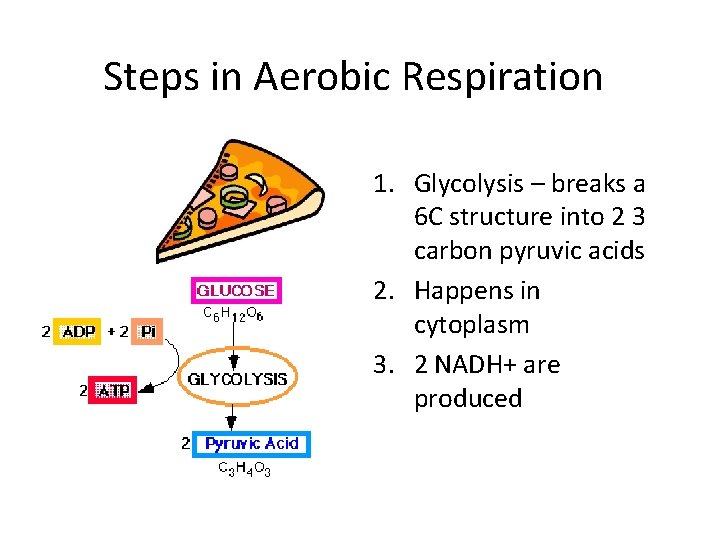
Steps in Aerobic Respiration 1. Glycolysis – breaks a 6 C structure into 2 3 carbon pyruvic acids 2. Happens in cytoplasm 3. 2 NADH+ are produced
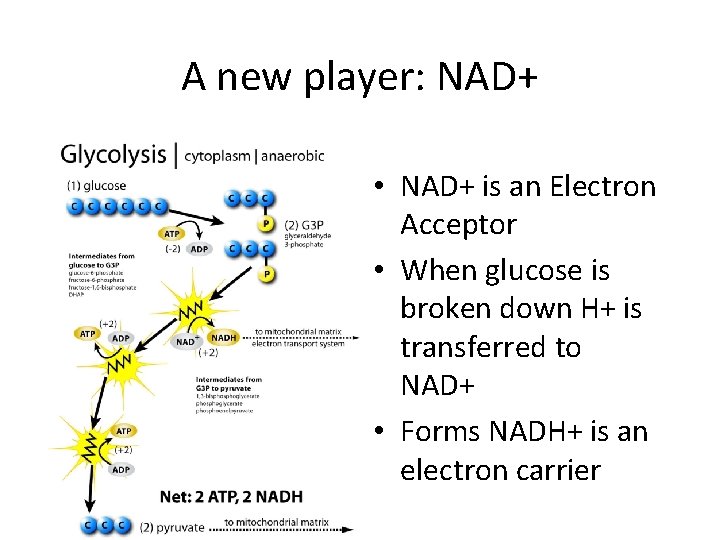
A new player: NAD+ • NAD+ is an Electron Acceptor • When glucose is broken down H+ is transferred to NAD+ • Forms NADH+ is an electron carrier
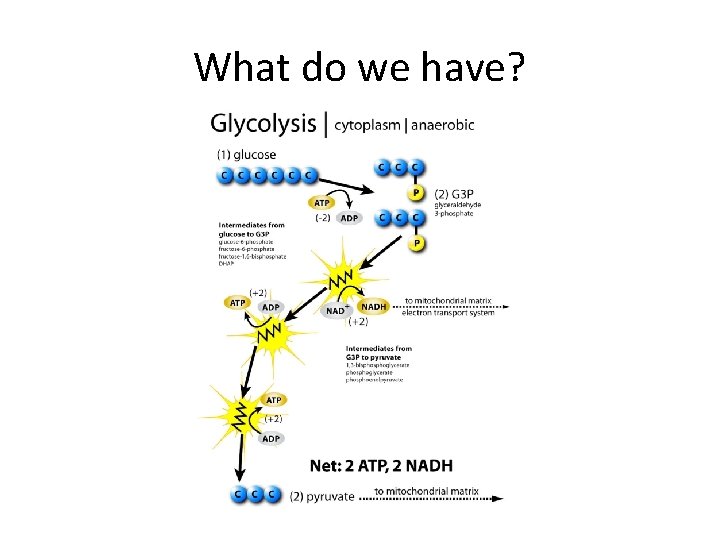
What do we have?
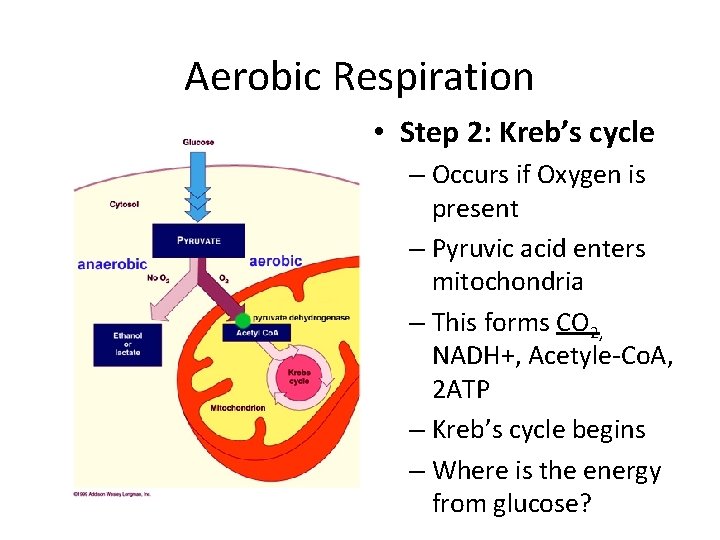
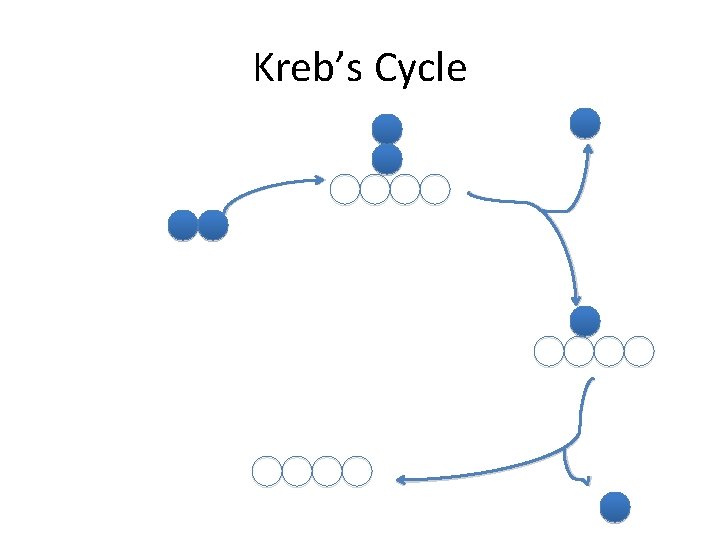
Aerobic Respiration • Step 2: Kreb’s cycle – Occurs if Oxygen is present – Pyruvic acid enters mitochondria – This forms CO 2, NADH+, Acetyle-Co. A, 2 ATP – Kreb’s cycle begins – Where is the energy from glucose?
Kreb’s Cycle
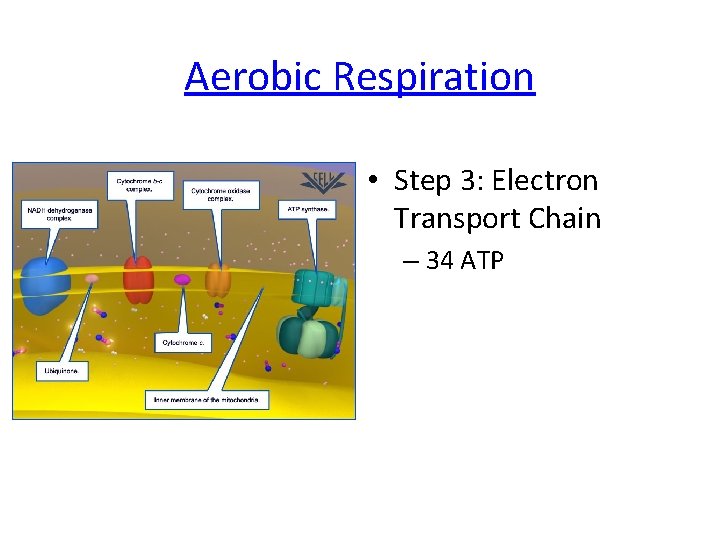
Aerobic Respiration • Step 3: Electron Transport Chain – 34 ATP
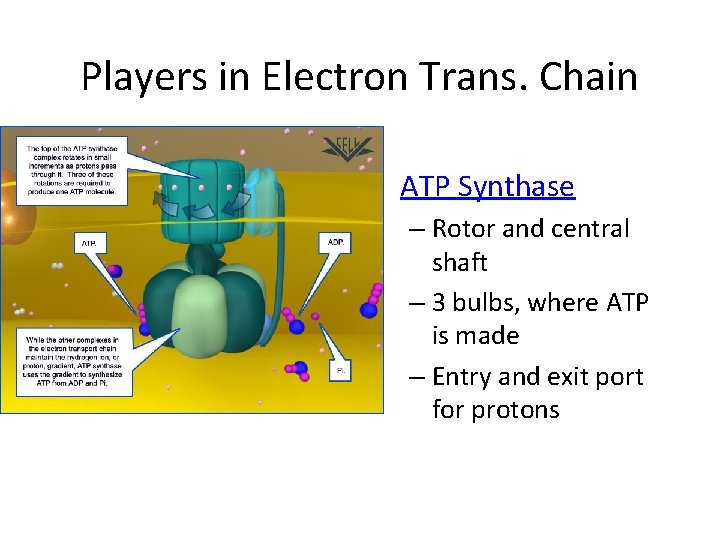
Players in Electron Trans. Chain • ATP Synthase – Rotor and central shaft – 3 bulbs, where ATP is made – Entry and exit port for protons
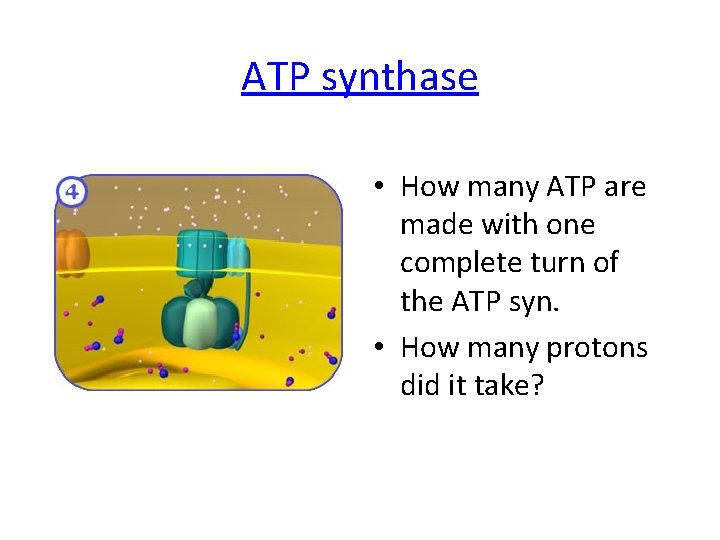
ATP synthase • How many ATP are made with one complete turn of the ATP syn. • How many protons did it take?
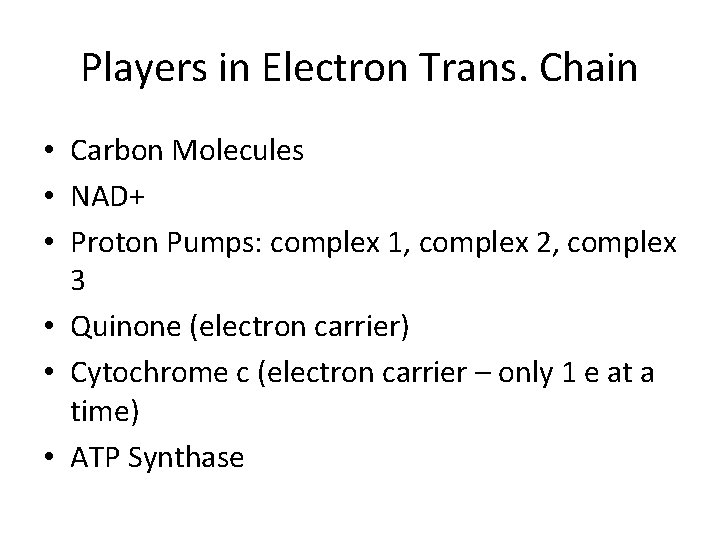
Players in Electron Trans. Chain • Carbon Molecules • NAD+ • Proton Pumps: complex 1, complex 2, complex 3 • Quinone (electron carrier) • Cytochrome c (electron carrier – only 1 e at a time) • ATP Synthase
Steps in Aerobic Respiration (Glycolysis takes place) 2. Kreb’s cycle 3. Electron transport chain C 6 H 12 O 6 + O 2 + 2 ATP H 20 + CO 2 + 38 ATP Net Gain of ATP? _________
Cell Respiration Song
Photosynthesis
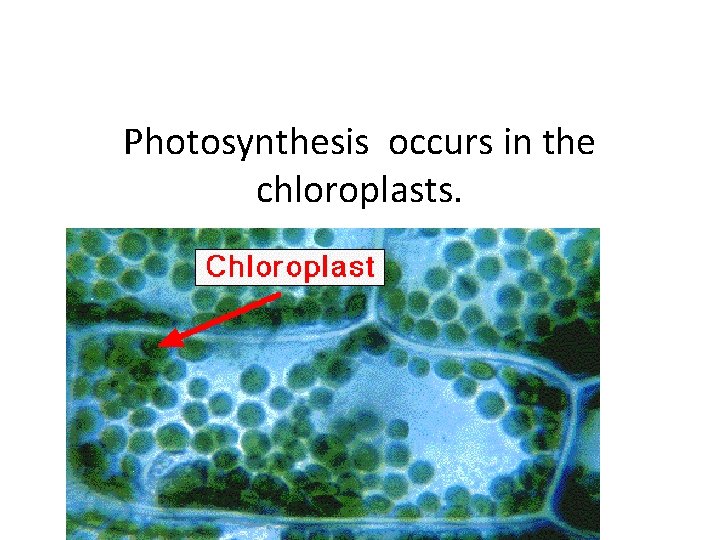
Photosynthesis occurs in the chloroplasts.
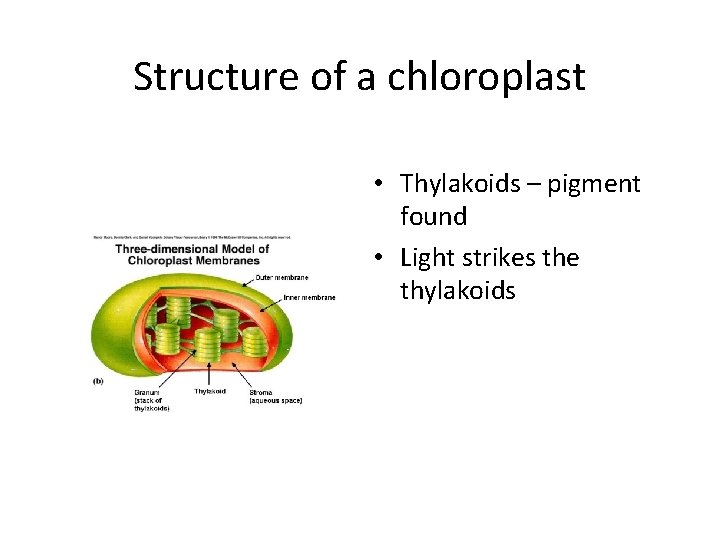
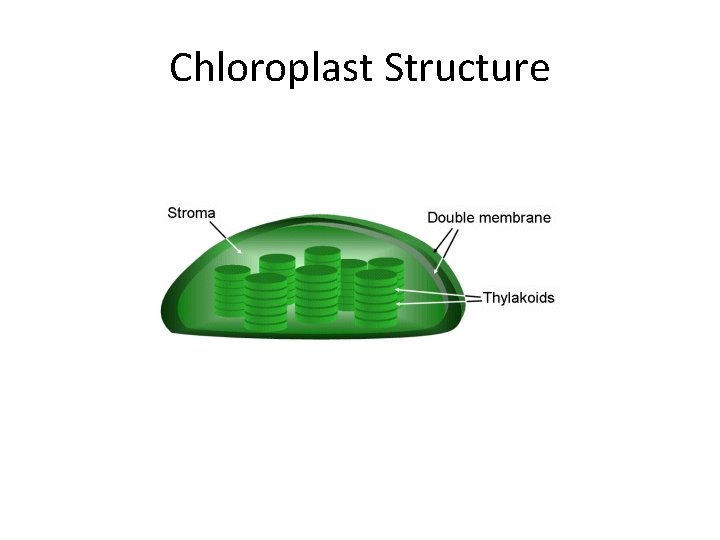
Structure of a chloroplast • Thylakoids – pigment found • Light strikes the thylakoids
Chloroplast Structure
Thykaloid Stucture
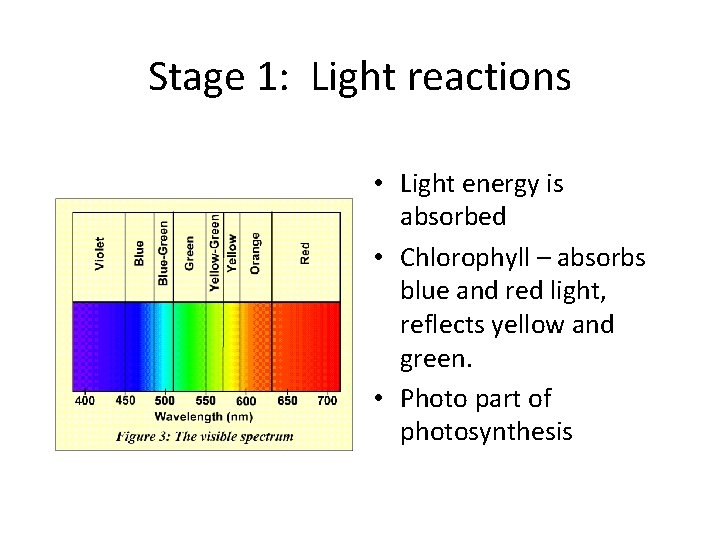
Stage 1: Light reactions • Light energy is absorbed • Chlorophyll – absorbs blue and red light, reflects yellow and green. • Photo part of photosynthesis
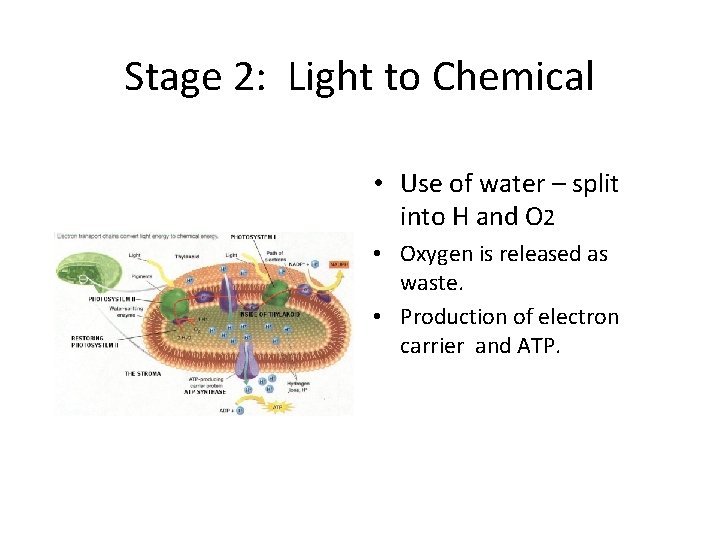
Stage 2: Light to Chemical • Use of water – split into H and O 2 • Oxygen is released as waste. • Production of electron carrier and ATP.
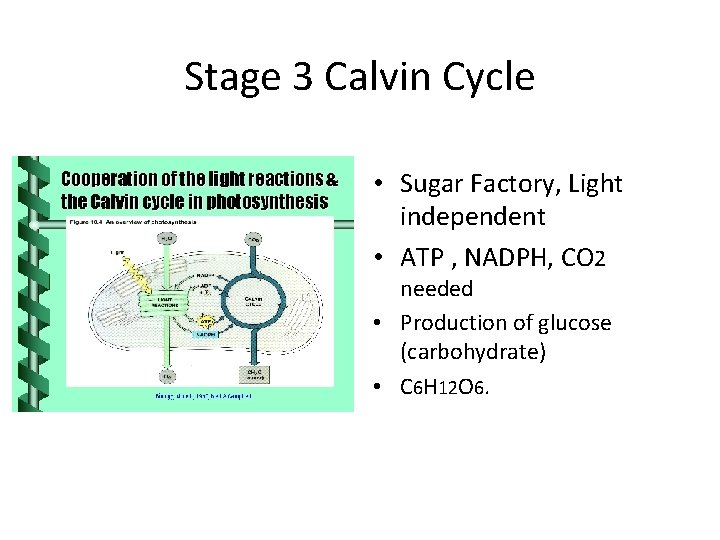
Stage 3 Calvin Cycle • Sugar Factory, Light independent • ATP , NADPH, CO 2 needed • Production of glucose (carbohydrate) • C 6 H 12 O 6.
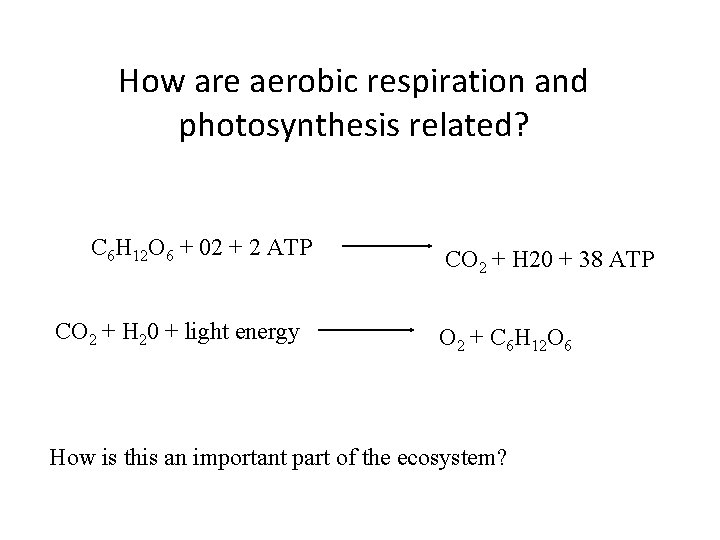
How are aerobic respiration and photosynthesis related? C 6 H 12 O 6 + 02 + 2 ATP CO 2 + H 20 + light energy CO 2 + H 20 + 38 ATP O 2 + C 6 H 12 O 6 How is this an important part of the ecosystem?