
Chapter 5 Phonemic Awareness Teaching Reading Sourcebook 2
Chapter 5: Phonemic Awareness Teaching Reading Sourcebook 2 nd Edition
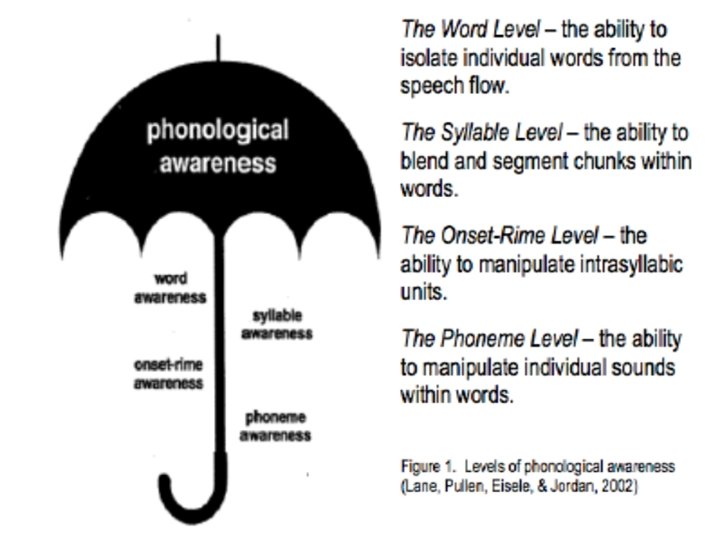
Phonological and Phonemic Awareness l l l A phoneme is the smallest unit of spoken language that makes a difference in a word’s meaning. Phonemic awareness is the ability to detect, identify, and manipulate phonemes in spoken words. Phonemic awareness is one component of phonological awareness. This is an umbrella term that includes larger parts of spoken words (syllables, onsets and rimes) as well as the smallest parts (phonemes).
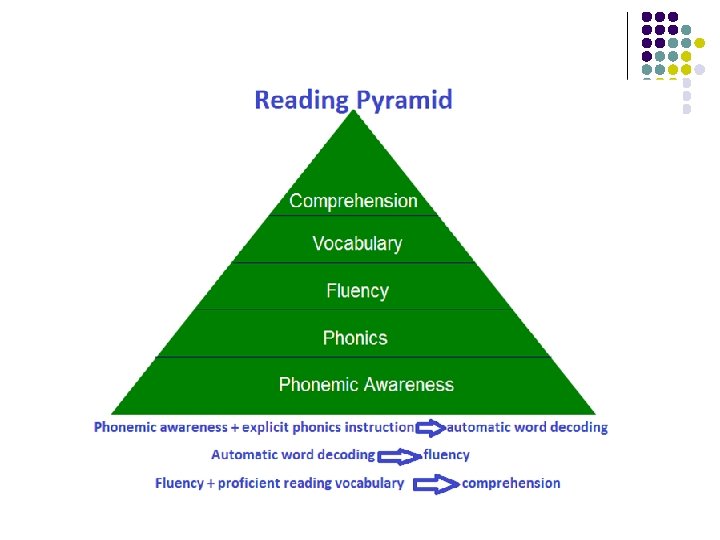
Phonemic Awareness and Phonics l l l Phonemic awareness is the understanding that spoken language can be broken down into phonemes or individual sounds. Phonics is the understanding of the relationship between phonemes and graphemes, the letters that represent the sounds in written language. When phonemic awareness is taught with letters it becomes phonics instruction.
What is phonological awareness? What is phonological awareness and why is it important? l Listen to Susan Landry explains why phonological awareness is a critical precursor to reading. l http: //www. youtube. com/watch? v=9 bg-g 5 e. YIgg l (3 min) 2 minutes to answer question in your own words with neighbor
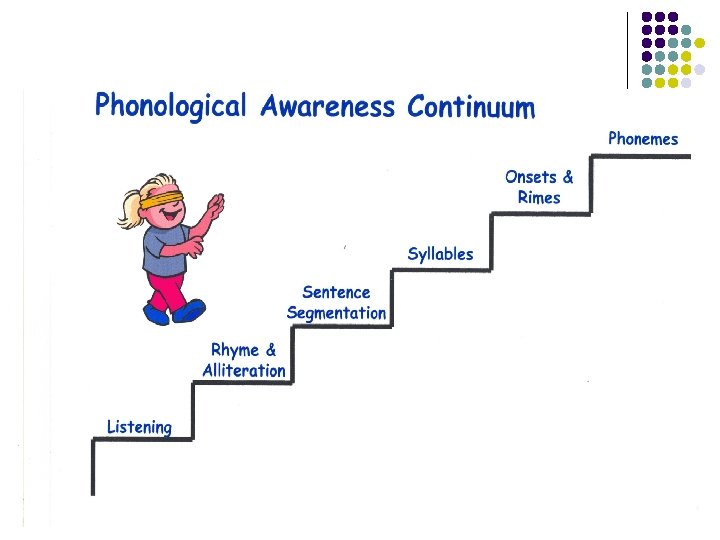
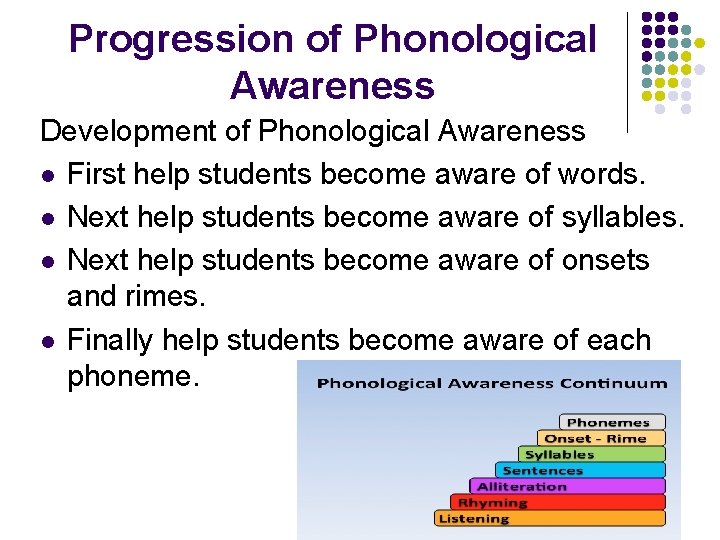
Progression of Phonological Awareness Development of Phonological Awareness l First help students become aware of words. l Next help students become aware of syllables. l Next help students become aware of onsets and rimes. l Finally help students become aware of each phoneme.
Phonemic awareness activities can be done in the dark or on the phone. l. Why? Many of the ideas in the remainder of this Power. Point came from www. readingfirst. virginia. edu and from Sarah Wiebke USBE.
Answer l l Phonemic awareness is hearing and manipulating individual phonemes in spoken words and syllables. Phonemic awareness helps students understand phonics, the combination of spoken sounds and written symbols. Phonemic awareness is NOT phonics. Phonemic awareness is auditory and does NOT involve words in print.
Phonemic Awareness Vocabulary l l l Phoneme: the smallest unit of language, a speech sound. Oral blending: the ability to put spoken sounds together to say a word. Oral segmenting: the ability to stretch out a spoken word and be able to say each sound heard in the word. Onset: Sounds that come before the vowel sound (bonset) BOY Rime: Vowel sound and the sounds that follow it in a syllable (oy) BOY
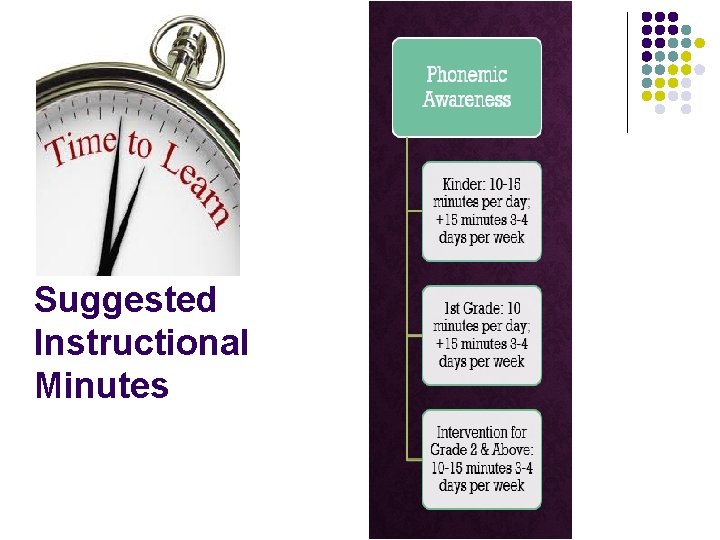
Phonemic Awareness Suggested Instructional Minutes
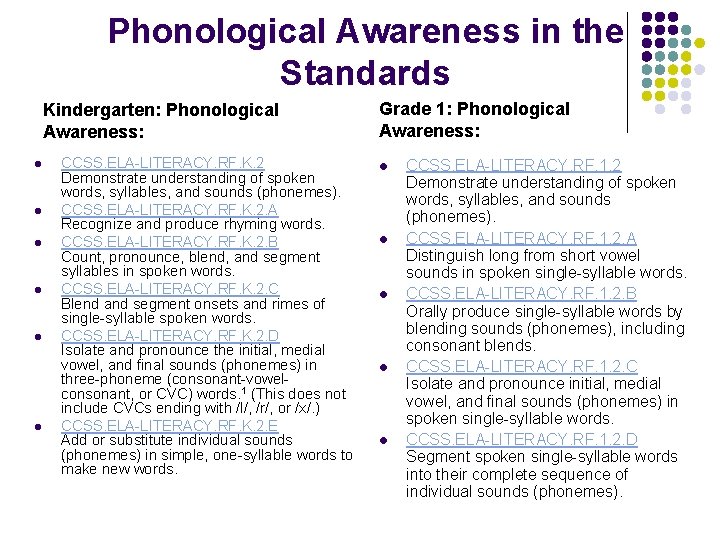
Phonological Awareness in the Standards Kindergarten: Phonological Awareness: l l l CCSS. ELA-LITERACY. RF. K. 2 Demonstrate understanding of spoken words, syllables, and sounds (phonemes). CCSS. ELA-LITERACY. RF. K. 2. A Recognize and produce rhyming words. CCSS. ELA-LITERACY. RF. K. 2. B Count, pronounce, blend, and segment syllables in spoken words. CCSS. ELA-LITERACY. RF. K. 2. C Blend and segment onsets and rimes of single-syllable spoken words. CCSS. ELA-LITERACY. RF. K. 2. D Isolate and pronounce the initial, medial vowel, and final sounds (phonemes) in three-phoneme (consonant-vowelconsonant, or CVC) words. 1 (This does not include CVCs ending with /l/, /r/, or /x/. ) CCSS. ELA-LITERACY. RF. K. 2. E Add or substitute individual sounds (phonemes) in simple, one-syllable words to make new words. Grade 1: Phonological Awareness: l l l CCSS. ELA-LITERACY. RF. 1. 2 Demonstrate understanding of spoken words, syllables, and sounds (phonemes). CCSS. ELA-LITERACY. RF. 1. 2. A Distinguish long from short vowel sounds in spoken single-syllable words. CCSS. ELA-LITERACY. RF. 1. 2. B Orally produce single-syllable words by blending sounds (phonemes), including consonant blends. CCSS. ELA-LITERACY. RF. 1. 2. C Isolate and pronounce initial, medial vowel, and final sounds (phonemes) in spoken single-syllable words. CCSS. ELA-LITERACY. RF. 1. 2. D Segment spoken single-syllable words into their complete sequence of individual sounds (phonemes).
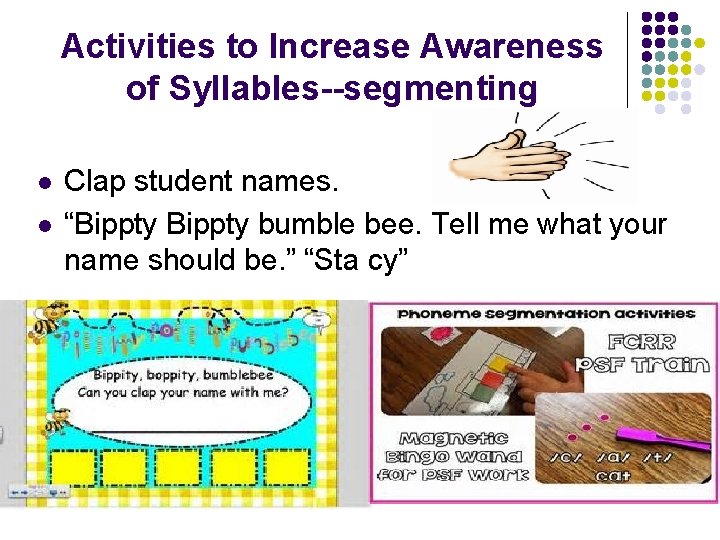
Activities to Increase Awareness of Syllables--segmenting l l Clap student names. “Bippty bumble bee. Tell me what your name should be. ” “Sta cy”
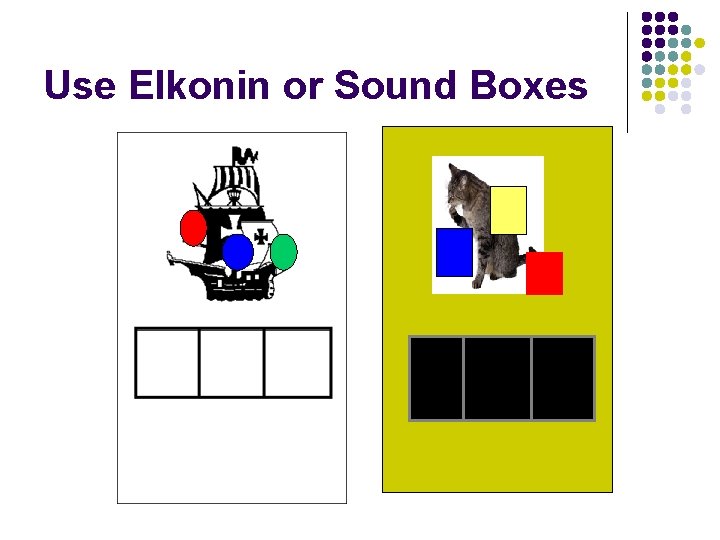
Use Elkonin or Sound Boxes
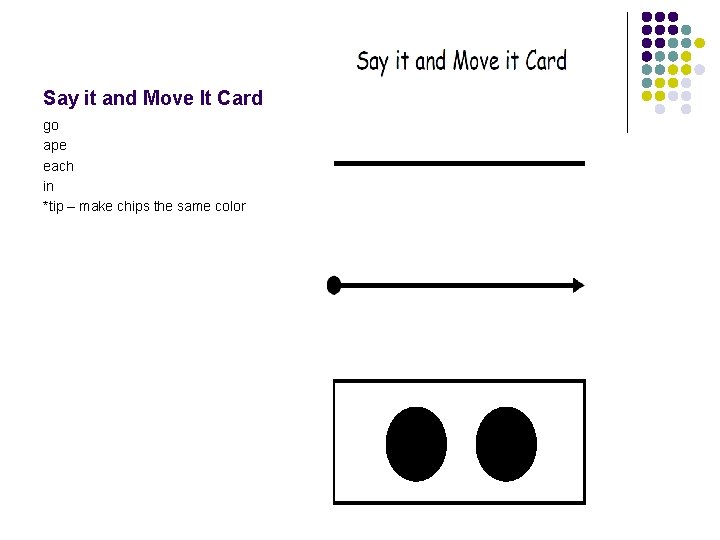
Say it and Move It Card go ape each in *tip – make chips the same color
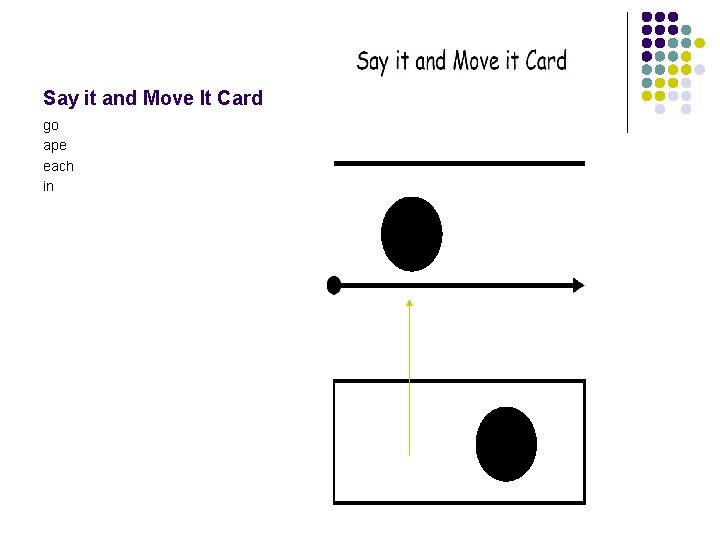
Say it and Move It Card go ape each in
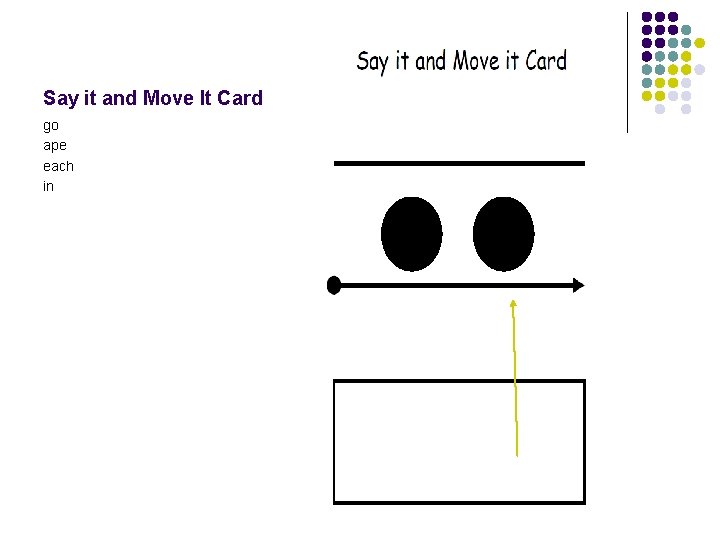
Say it and Move It Card go ape each in
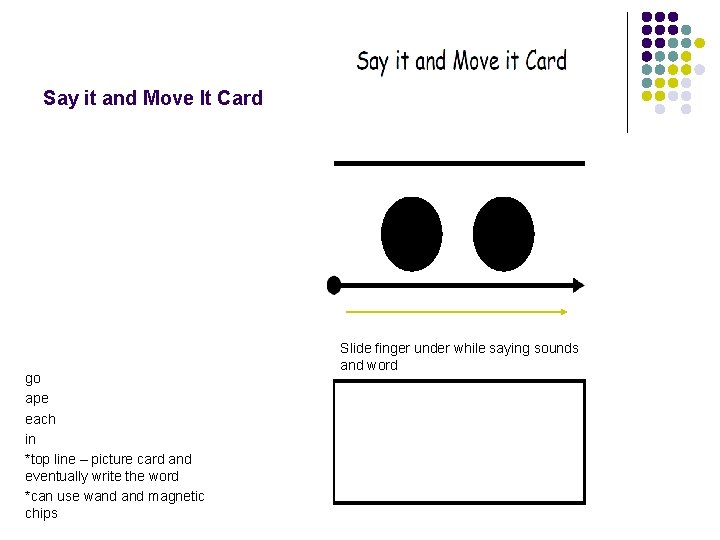
Say it and Move It Card go ape each in *top line – picture card and eventually write the word *can use wand magnetic chips Slide finger under while saying sounds and word
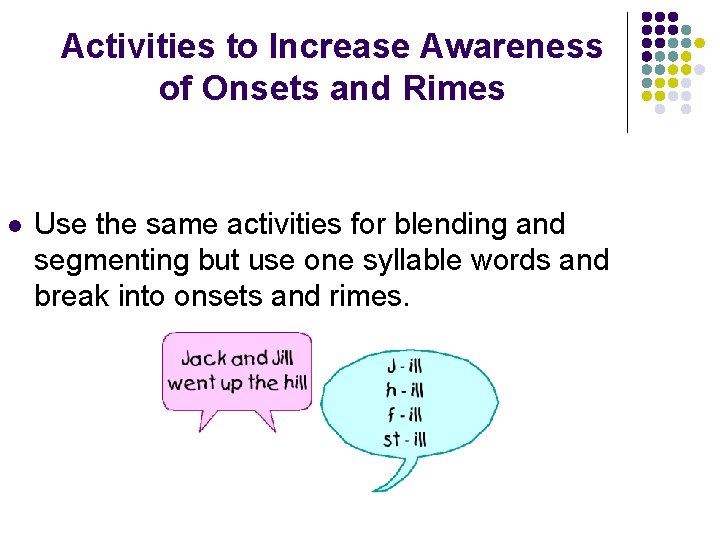
Activities to Increase Awareness of Onsets and Rimes l Use the same activities for blending and segmenting but use one syllable words and break into onsets and rimes.
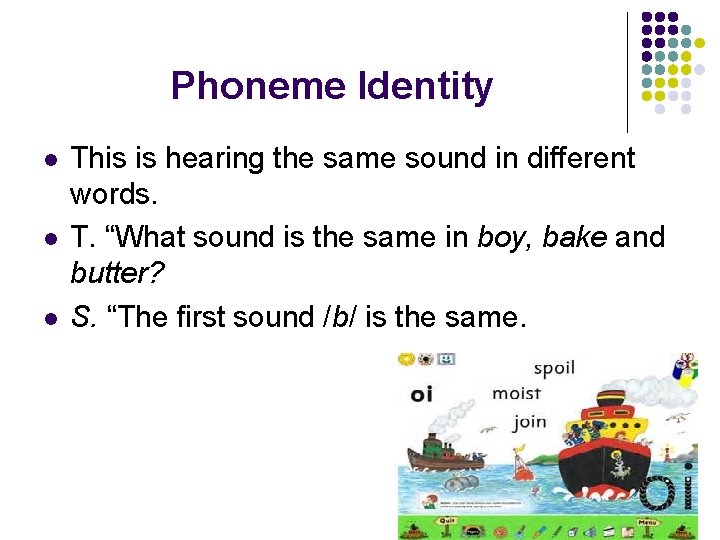
Phoneme Identity l l l This is hearing the same sound in different words. T. “What sound is the same in boy, bake and butter? S. “The first sound /b/ is the same.
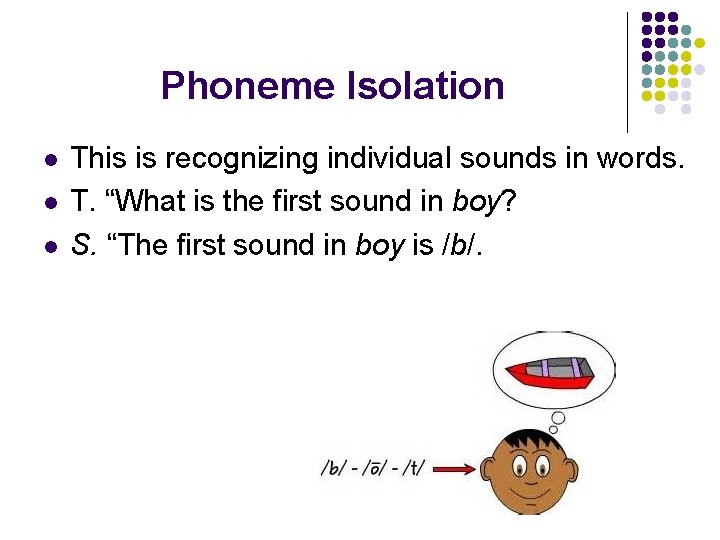
Phoneme Isolation l l l This is recognizing individual sounds in words. T. “What is the first sound in boy? S. “The first sound in boy is /b/.
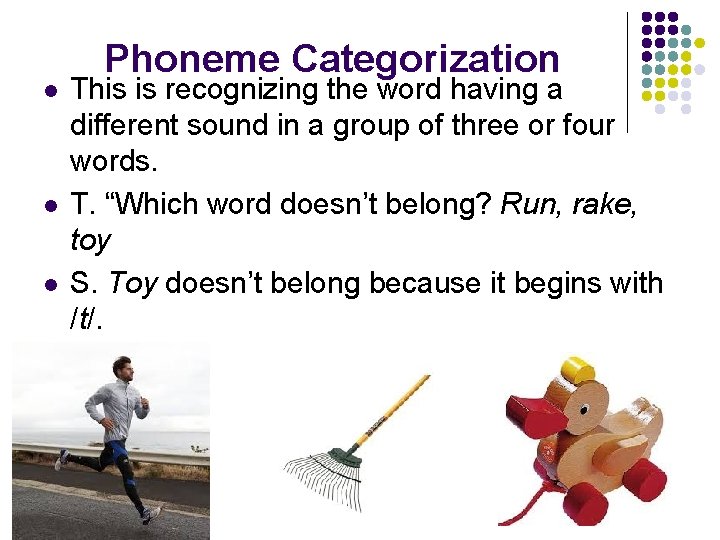
l l l Phoneme Categorization This is recognizing the word having a different sound in a group of three or four words. T. “Which word doesn’t belong? Run, rake, toy S. Toy doesn’t belong because it begins with /t/.
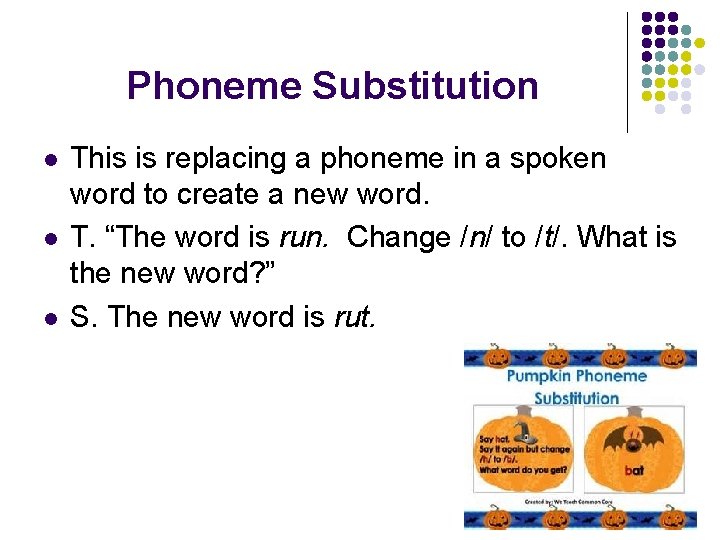
Phoneme Substitution l l l This is replacing a phoneme in a spoken word to create a new word. T. “The word is run. Change /n/ to /t/. What is the new word? ” S. The new word is rut.
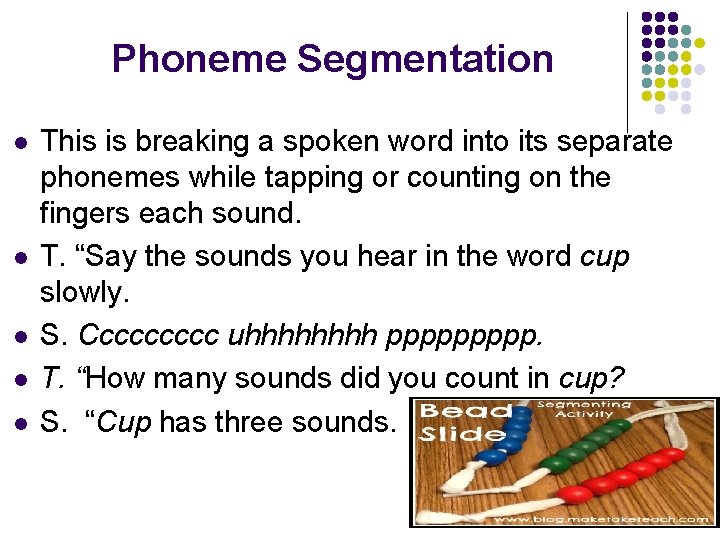
Phoneme Segmentation l l l This is breaking a spoken word into its separate phonemes while tapping or counting on the fingers each sound. T. “Say the sounds you hear in the word cup slowly. S. Ccccc uhhhh ppppp. T. “How many sounds did you count in cup? S. “Cup has three sounds.
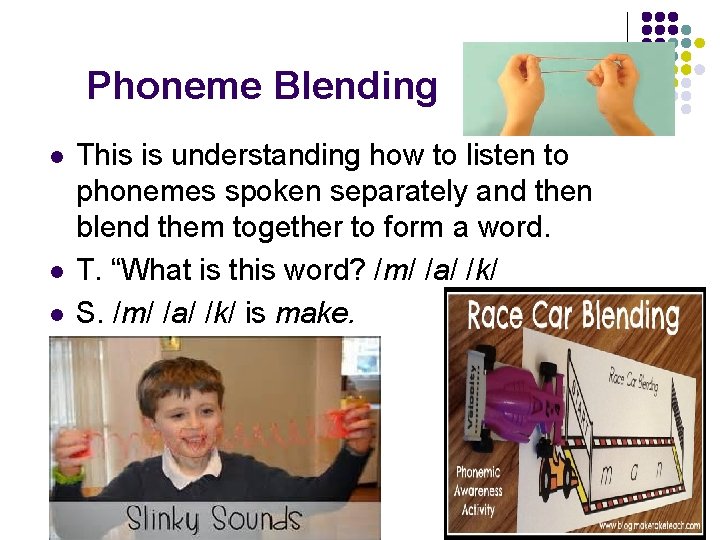
Phoneme Blending l l l This is understanding how to listen to phonemes spoken separately and then blend them together to form a word. T. “What is this word? /m/ /a/ /k/ S. /m/ /a/ /k/ is make.
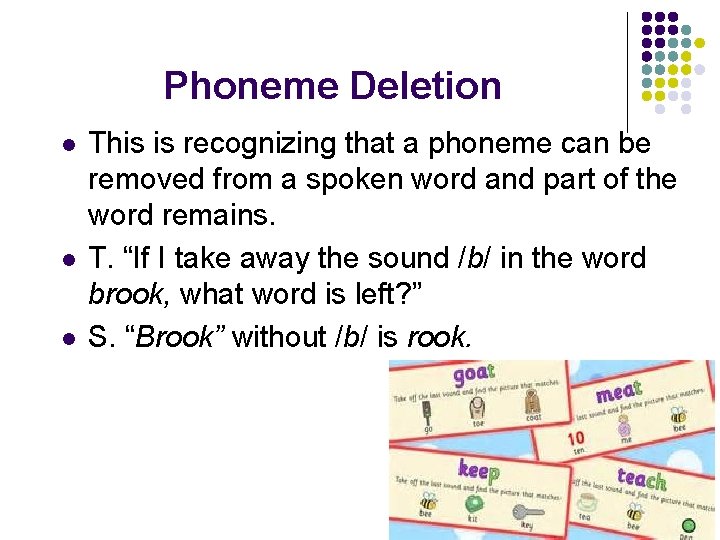
Phoneme Deletion l l l This is recognizing that a phoneme can be removed from a spoken word and part of the word remains. T. “If I take away the sound /b/ in the word brook, what word is left? ” S. “Brook” without /b/ is rook.
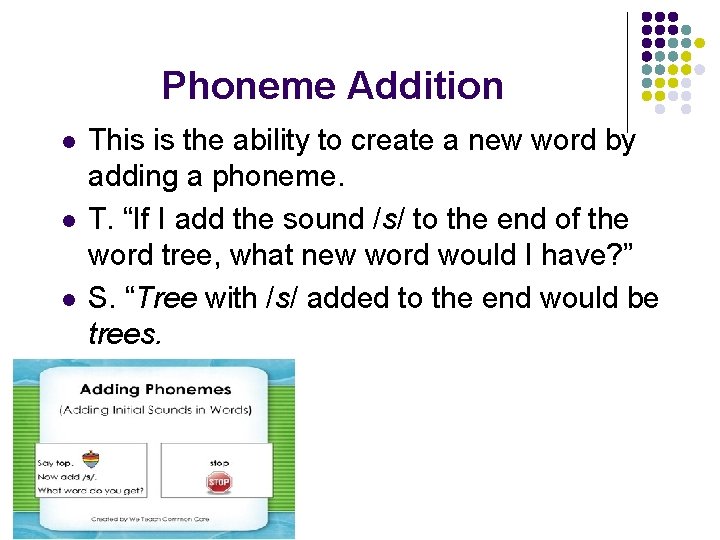
Phoneme Addition l l l This is the ability to create a new word by adding a phoneme. T. “If I add the sound /s/ to the end of the word tree, what new word would I have? ” S. “Tree with /s/ added to the end would be trees.
Phonemic Awareness Read Aloud Books l https: //www. youtube. com/watch? v=dl. VHb 3 w 4 EKQ l Practice using books to teach phonemic awareness
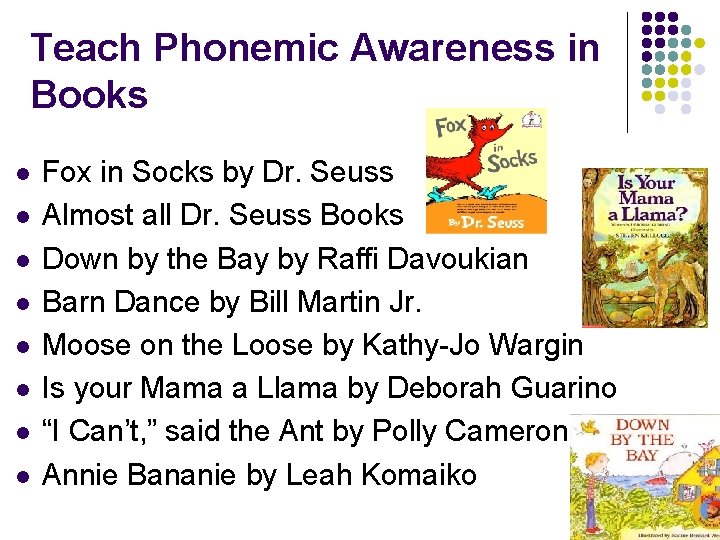
Teach Phonemic Awareness in Books l l l l Fox in Socks by Dr. Seuss Almost all Dr. Seuss Books Down by the Bay by Raffi Davoukian Barn Dance by Bill Martin Jr. Moose on the Loose by Kathy-Jo Wargin Is your Mama a Llama by Deborah Guarino “I Can’t, ” said the Ant by Polly Cameron Annie Bananie by Leah Komaiko
Assessment of Phonemic Awareness l l Dibels- Video of student lacking phonemic awareness/ establish phonemic awareness http: //www. youtube. com/watch? v=o. Ll. QVEq Rz_U
Assessing for PA Screener § DIBELS Measures: l l First Sound Fluency Phoneme Segmentation Fluency Diagnostic § § Progress monitoring Quick Phonological Awareness Screening (QPAS) CORE Phonological Segmentation Test (K-1) CORE Phoneme Deletion Test (K-3) CORE Phoneme Segmentation Test (2 -12) § Regularly monitor each student’s phonemic awareness progress (WBB-weekly, BB – 2 -4 weeks, BM – 4 -6 weeks § Data used to identify progress or necessity of additional instruction of skills not yet acquired
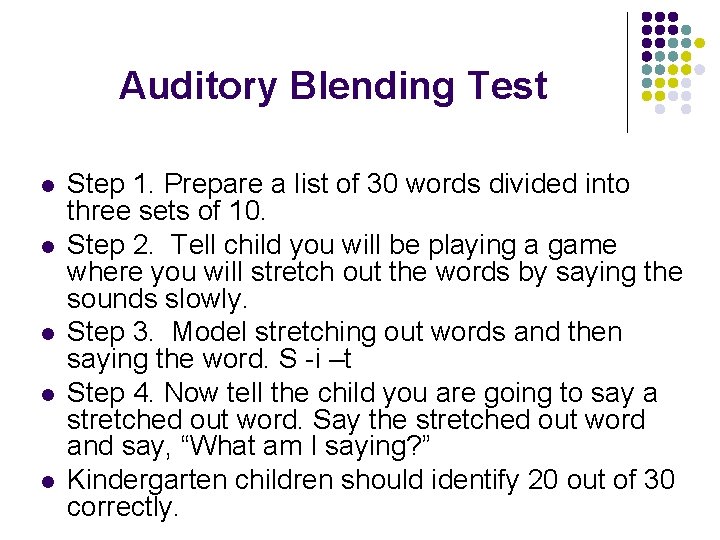
Auditory Blending Test l l l Step 1. Prepare a list of 30 words divided into three sets of 10. Step 2. Tell child you will be playing a game where you will stretch out the words by saying the sounds slowly. Step 3. Model stretching out words and then saying the word. S -i –t Step 4. Now tell the child you are going to say a stretched out word. Say the stretched out word and say, “What am I saying? ” Kindergarten children should identify 20 out of 30 correctly.
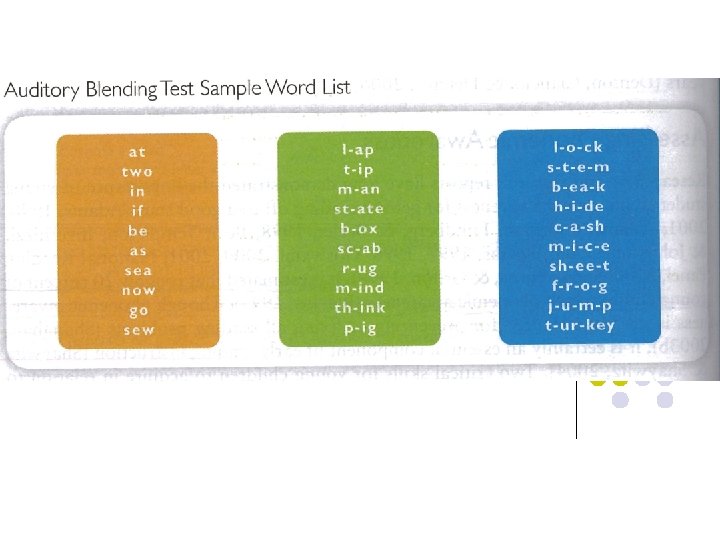
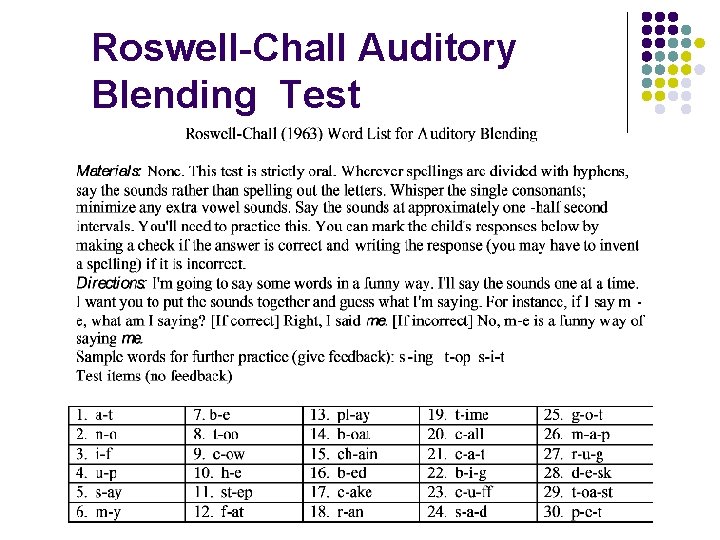
Roswell-Chall Auditory Blending Test
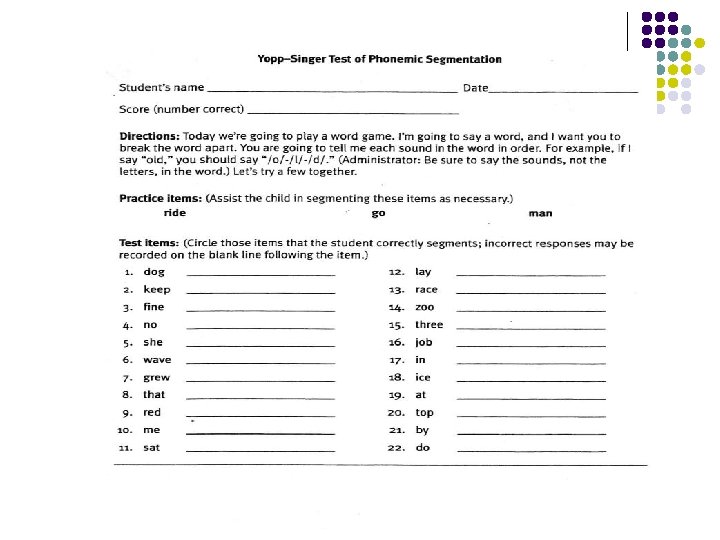
Phoneme Segmenting Test l l l This is an informal test to see if students can listen to and isolate sounds in spoken words. Yopp-Singer Test Phonemic Segmentation Test first link, Video student taking test second link http: //teams. lacoe. edu/reading/assessments/yopp. html http: //www. youtube. com/watch? v=t. Jdw-kxn. XM 0 Children should get two words correct at the beginning of kindergarten. They should be able to do most three letter words by the end of kindergarten.
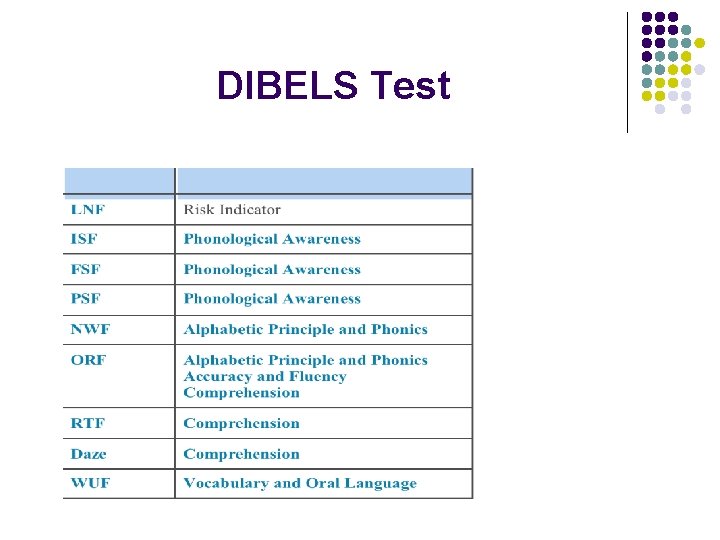
DIBELS Test
Great Resources Balanced Literacy Phonemic Awareness Strategies Videos http: //www. youtube. com/playlist? list=PL 365380 36 A 609498 E Songs for Teaching Phonemic Awareness http: //www. songsforteaching. com/phonemicawa reness. htm
Levels of Phonological Awareness l l l l Word: blending, segmentation, deletion Syllable: blending, segmentation, deletion Rhyme: recognition, generation, categorization Onset and Rime: blending, segmentation Phoneme: isolation, initial, ending, medial Phoneme: identifying/matching, categorizing Phoneme: blending, segmenting Phoneme: deletion, addition, substitution See the Phonological Skills by Level chart pages 118 and 119.
Effective Phonemic Awareness Instruction l l l Explicit: clear explanations, modeling, sufficient practice Teach with systematic instructional lessons. Progress from easier to more difficult tasks; follow sequence beginning with phonological awareness lessons. Make sounds less abstract and more concrete with markers. Support blending through clear articulation of sounds. Be engaging, motivating and use interactive games.
Phonemic Awareness Research l l l Phonemic awareness is a strong predictor of long-term reading and spelling success. It predicts literacy performance more accurately than intelligence, vocabulary knowledge, and socio-economic status. Phonemic instruction is more effective in small groups and when it focuses on only one or two phoneme manipulations. The development of the sound structure of words in a native alphabetic language can be transferred to a second language.
When to Teach Phonemic Awareness l l l Kindergartners should receive short, 15 -20 minute lessons, as one lesson or broken into informal activities throughout the day. First grade students should receive 10 minutes per day in conjunction with phonics instruction. Instruction in second grade and above is usually only taught for students who do not automatically recognize words or who are reading below grade level.
When to Assess and Intervene l l l Begin PA assessment in mid-Kindergarten and continue to assess throughout the early elementary grades as needed. Generally, once a student demonstrates decoding ability, then phonemic awareness assessment is no longer necessary. If a student continues to struggle with decoding in the upper grades, assessment and intervention in PA may be appropriate.
- Slides: 44