
CHAPTER 5 Pesticide Hazards and First Aid Chapter


- Slides: 55
CHAPTER 5 Pesticide Hazards and First Aid Chapter 5 National Pesticide Applicator Certification Core Manual
CHAPTER 5 Pesticide Hazards & First Aid This module will help you: v Know the different types of effects pesticides can have on your health v Understand signal words v Know the routes of exposure v Recognize symptoms of exposure v Know when and how to give first aid
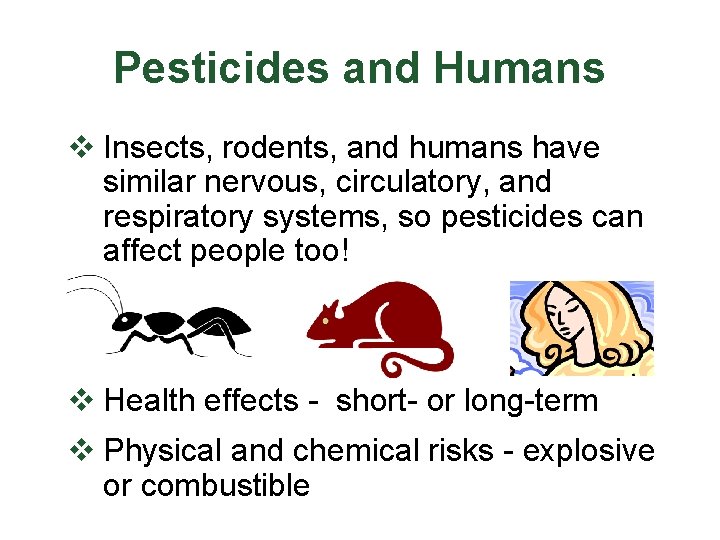
Pesticides and Humans v Insects, rodents, and humans have similar nervous, circulatory, and respiratory systems, so pesticides can affect people too! v Health effects - short- or long-term v Physical and chemical risks - explosive or combustible
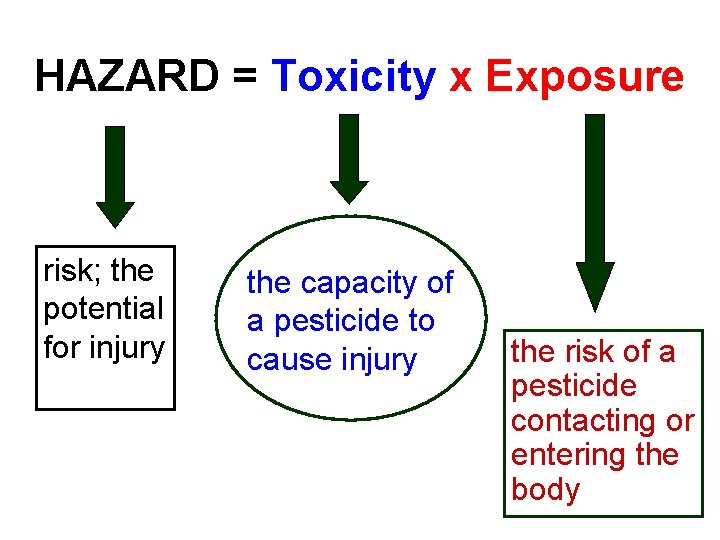
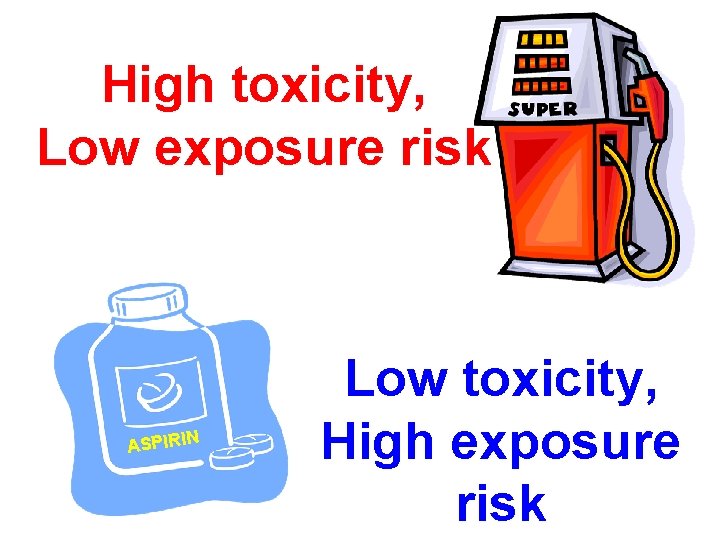
HAZARD = Toxicity x Exposure risk; the potential for injury the capacity of a pesticide to cause injury the risk of a pesticide contacting or entering the body
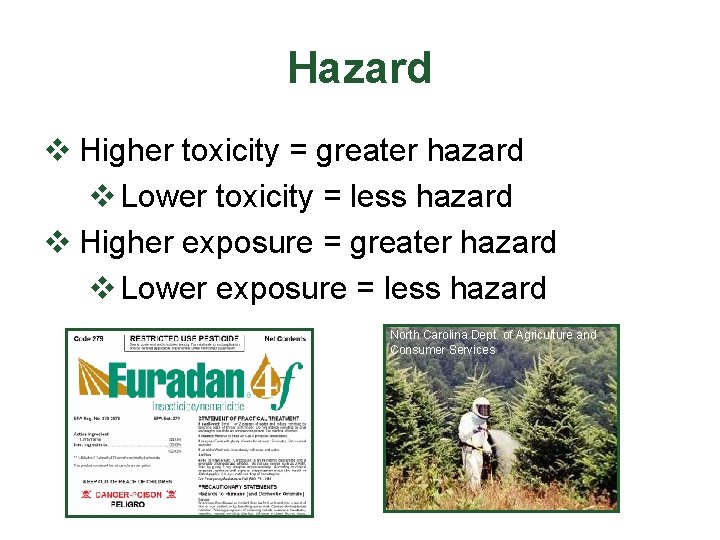
Hazard v Higher toxicity = greater hazard v Lower toxicity = less hazard v Higher exposure = greater hazard v Lower exposure = less hazard North Carolina Dept. of Agriculture and Consumer Services
High toxicity, Low exposure risk ASPIRIN Low toxicity, High exposure risk
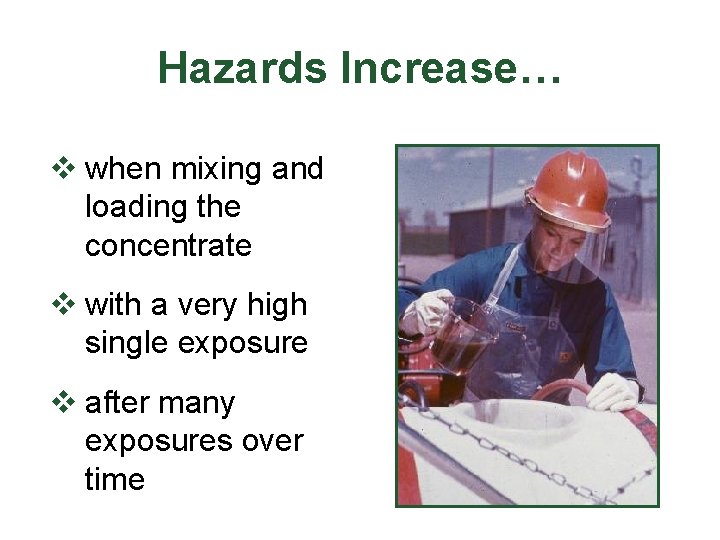
Hazards Increase… v when mixing and loading the concentrate v with a very high single exposure v after many exposures over time
Reduce Hazards!! v By using least toxic pesticides v Wearing personal protective equipment HAZARD = Toxicity x Exposure
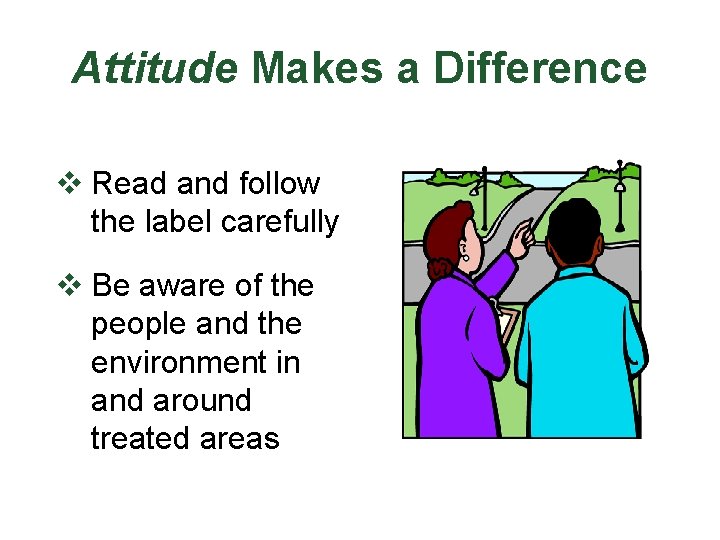
Attitude Makes a Difference v Read and follow the label carefully v Be aware of the people and the environment in and around treated areas
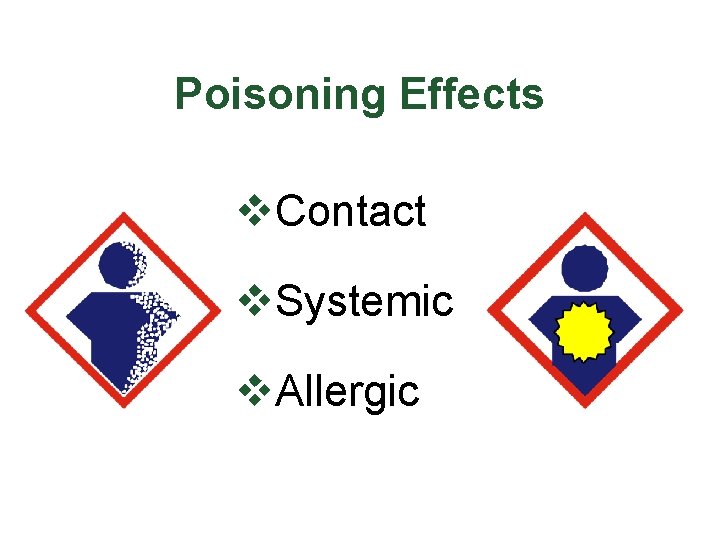
Poisoning Effects v. Contact v. Systemic v. Allergic
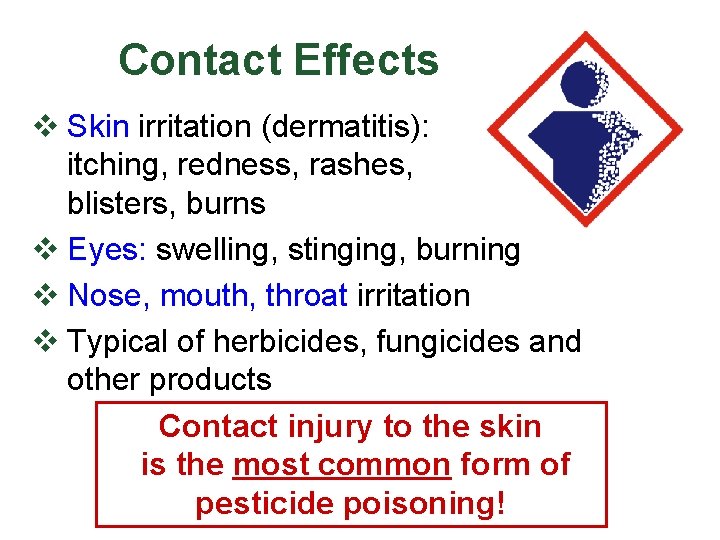
Contact Effects v Skin irritation (dermatitis): itching, redness, rashes, blisters, burns v Eyes: swelling, stinging, burning v Nose, mouth, throat irritation v Typical of herbicides, fungicides and other products Contact injury to the skin is the most common form of pesticide poisoning!
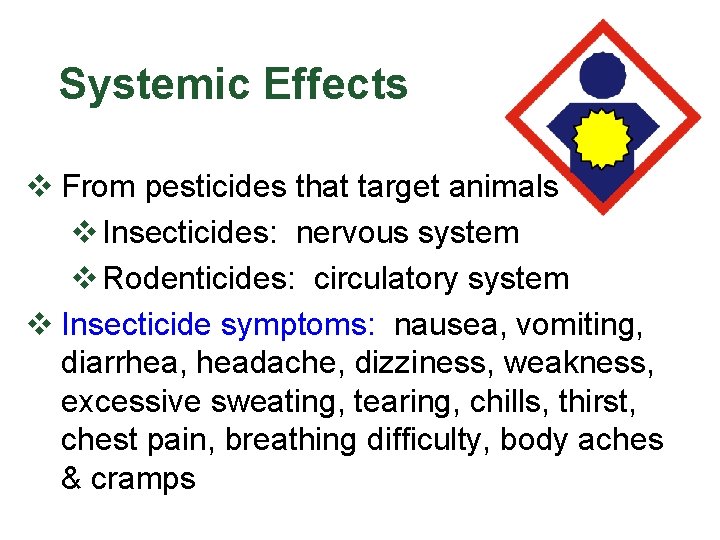
Systemic Effects v From pesticides that target animals v Insecticides: nervous system v Rodenticides: circulatory system v Insecticide symptoms: nausea, vomiting, diarrhea, headache, dizziness, weakness, excessive sweating, tearing, chills, thirst, chest pain, breathing difficulty, body aches & cramps
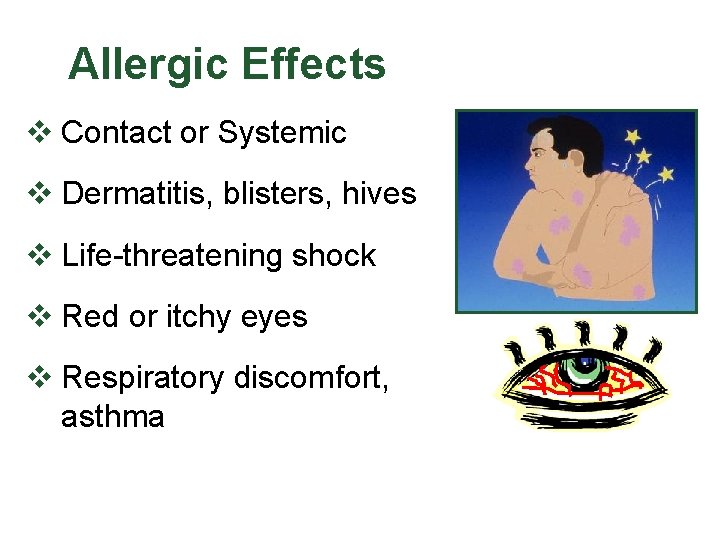
Allergic Effects v Contact or Systemic v Dermatitis, blisters, hives v Life-threatening shock v Red or itchy eyes v Respiratory discomfort, asthma
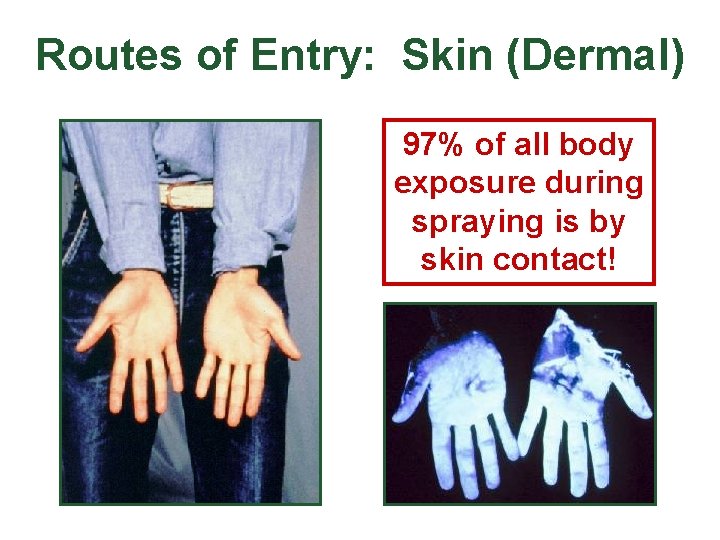
Routes of Entry: Skin (Dermal) 97% of all body exposure during spraying is by skin contact!
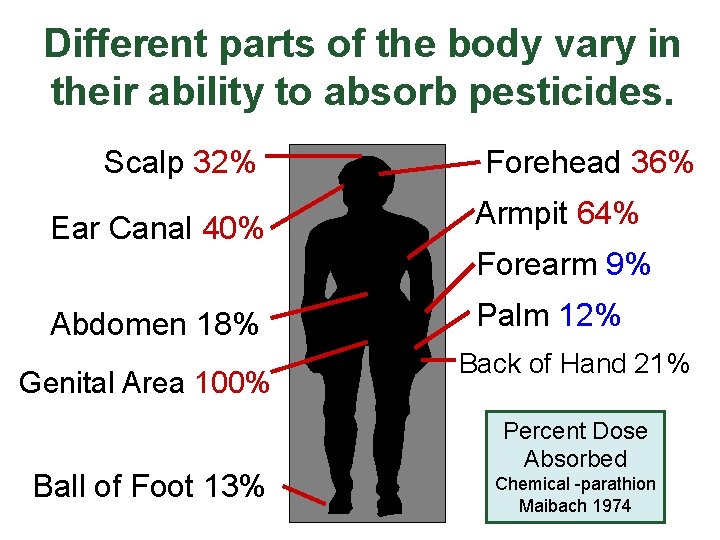
Different parts of the body vary in their ability to absorb pesticides. Scalp 32% Ear Canal 40% Forehead 36% Armpit 64% Forearm 9% Abdomen 18% Genital Area 100% Ball of Foot 13% Palm 12% Back of Hand 21% Percent Dose Absorbed Chemical -parathion Maibach 1974
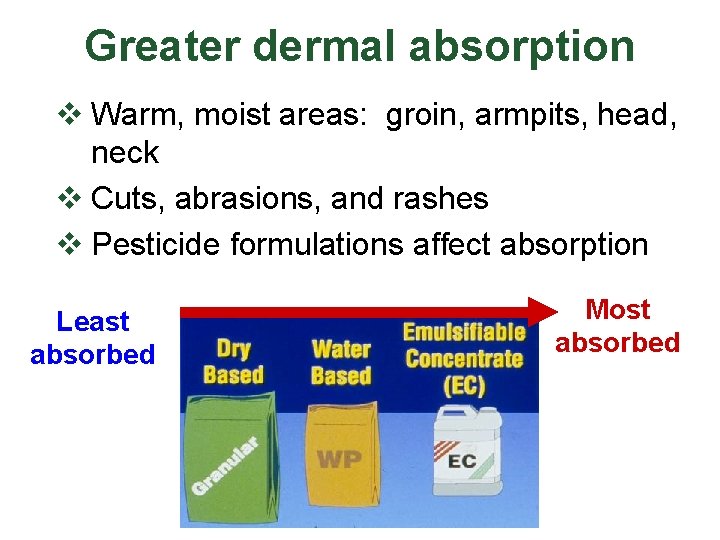
Greater dermal absorption v Warm, moist areas: groin, armpits, head, neck v Cuts, abrasions, and rashes v Pesticide formulations affect absorption Least absorbed Most absorbed
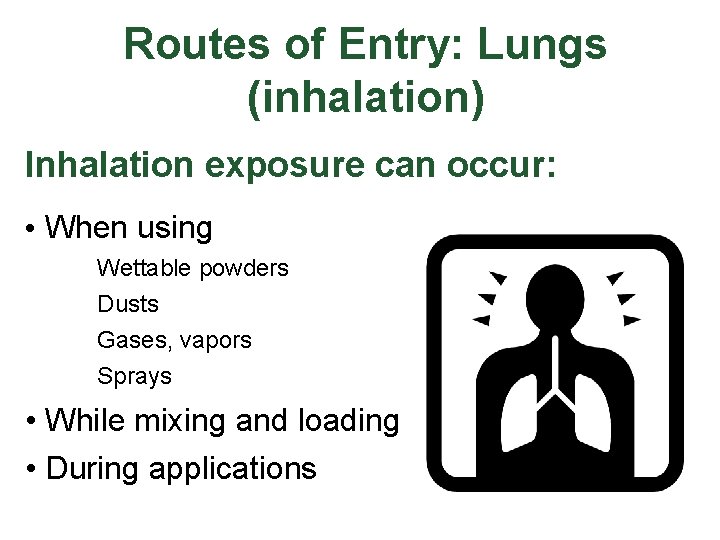
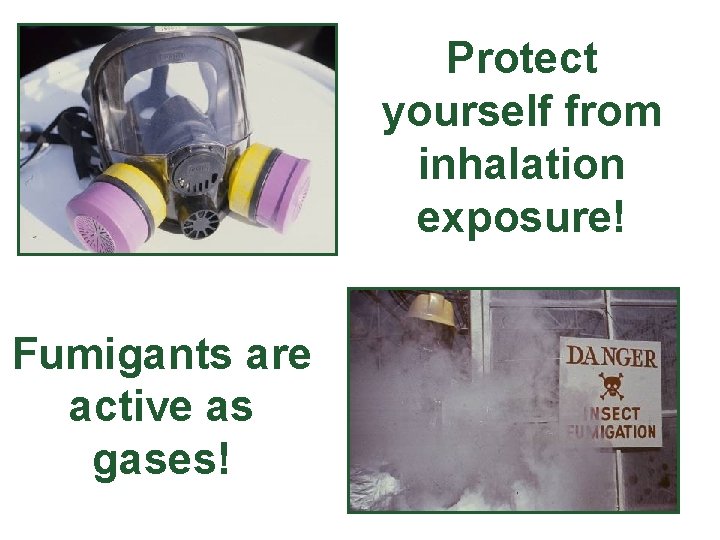
Routes of Entry: Lungs (inhalation) Inhalation exposure can occur: • When using Wettable powders Dusts Gases, vapors Sprays • While mixing and loading • During applications
Protect yourself from inhalation exposure! Fumigants are active as gases!
Routes of Entry: Eyes are able to absorb surprisingly large amounts of chemical
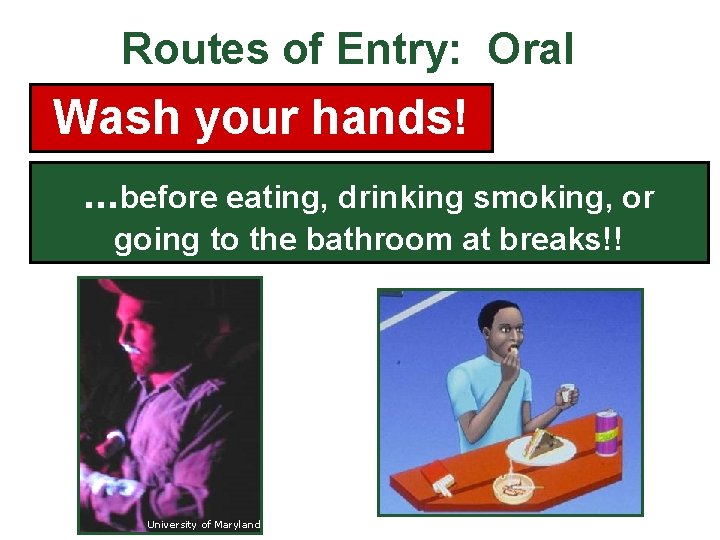
Routes of Entry: Oral Wash your hands!. . . before eating, drinking smoking, or going to the bathroom at breaks!! University of Maryland
Possible Harmful Effects from Pesticides v Acute effects v Chronic effects v Delayed effects
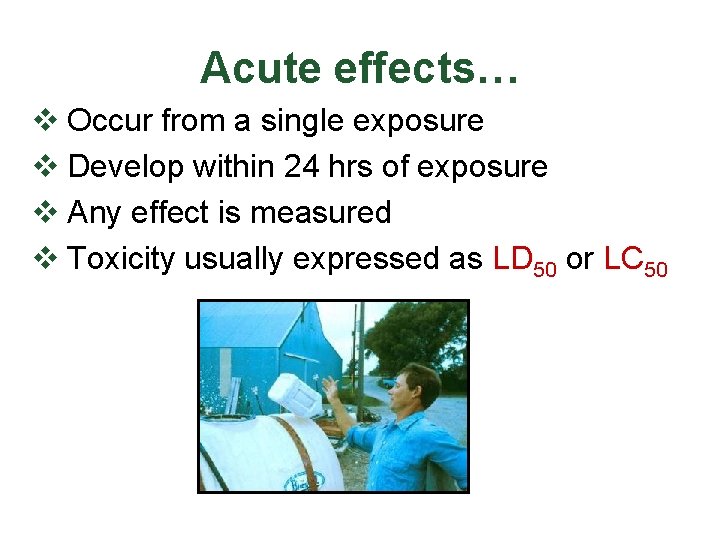
Acute effects… v Occur from a single exposure v Develop within 24 hrs of exposure v Any effect is measured v Toxicity usually expressed as LD 50 or LC 50
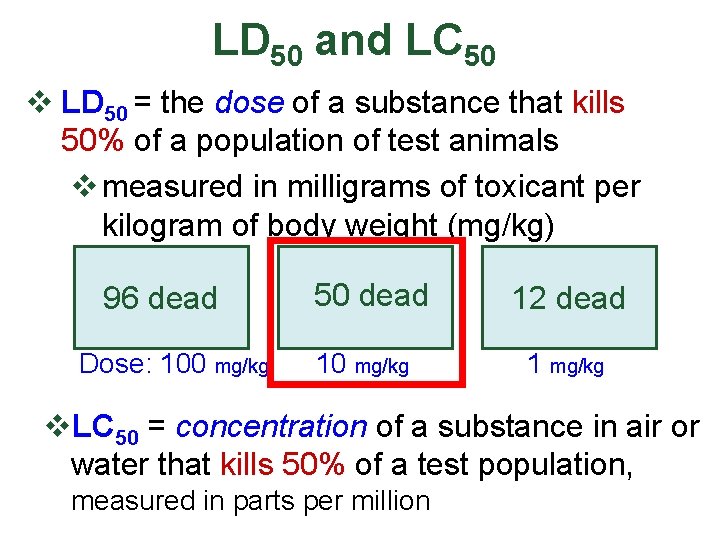
LD 50 and LC 50 v LD 50 = the dose of a substance that kills 50% of a population of test animals v measured in milligrams of toxicant per kilogram of body weight (mg/kg) 96 dead Dose: 100 mg/kg 50 dead 10 mg/kg 12 dead 1 mg/kg v. LC 50 = concentration of a substance in air or water that kills 50% of a test population, measured in parts per million
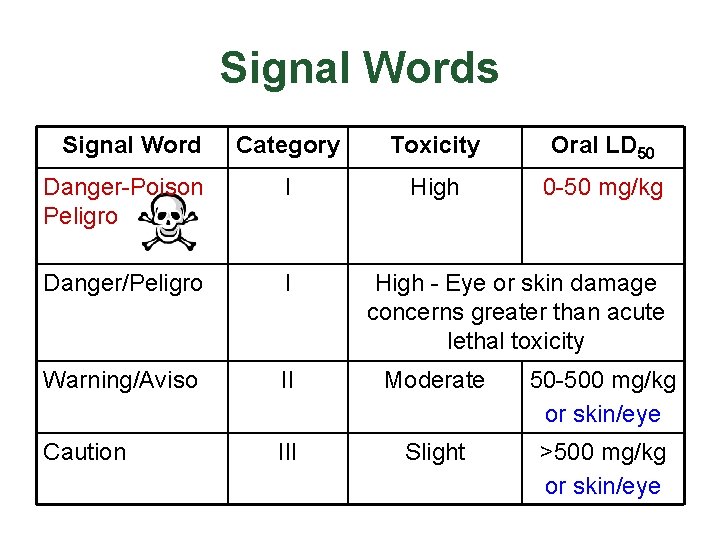
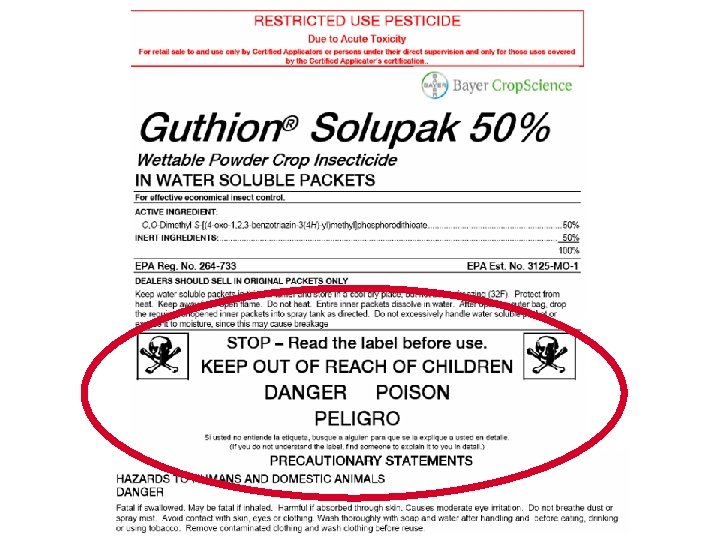
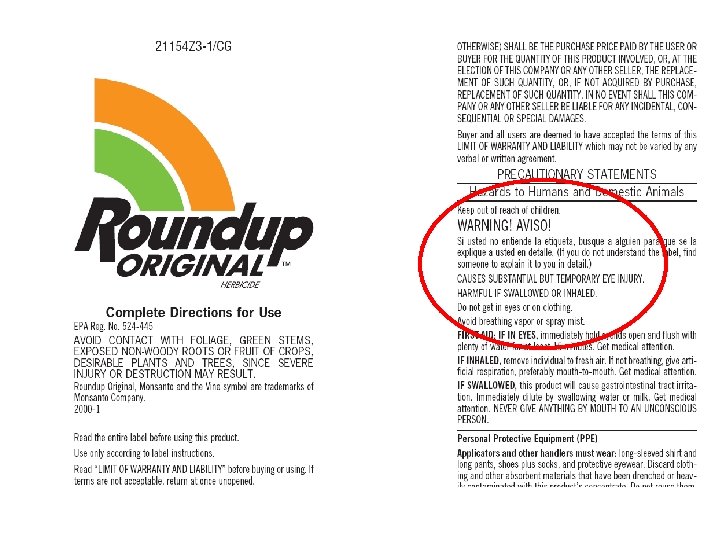
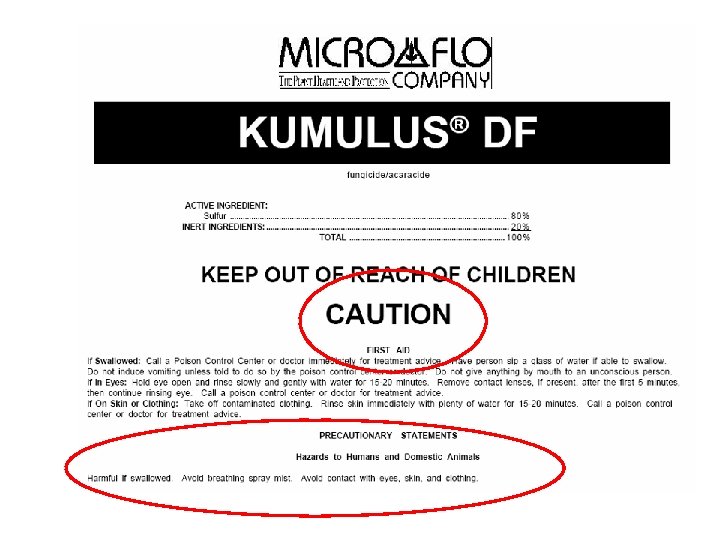
Signal Words Signal Word Category Toxicity Oral LD 50 Danger-Poison Peligro I High 0 -50 mg/kg Danger/Peligro I Warning/Aviso II Moderate 50 -500 mg/kg or skin/eye Caution III Slight >500 mg/kg or skin/eye High - Eye or skin damage concerns greater than acute lethal toxicity
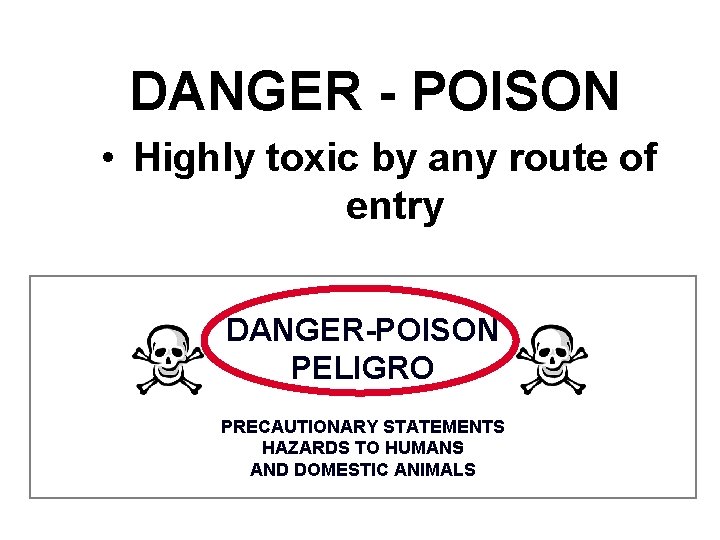
DANGER - POISON • Highly toxic by any route of entry DANGER-POISON PELIGRO PRECAUTIONARY STATEMENTS HAZARDS TO HUMANS AND DOMESTIC ANIMALS
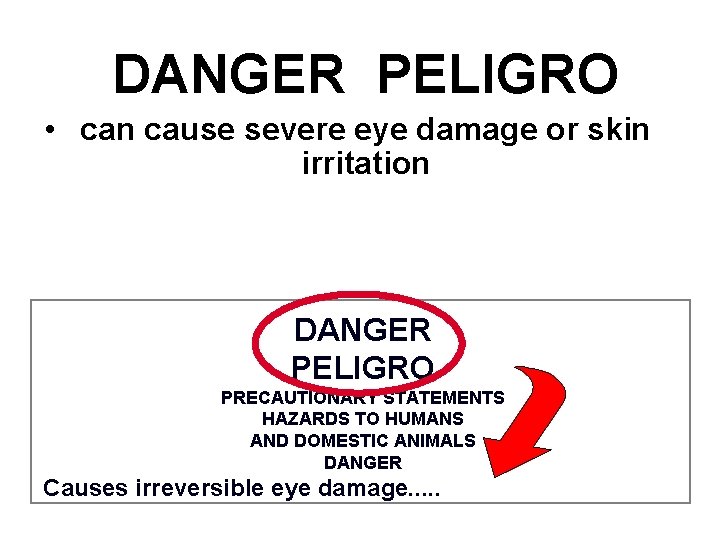
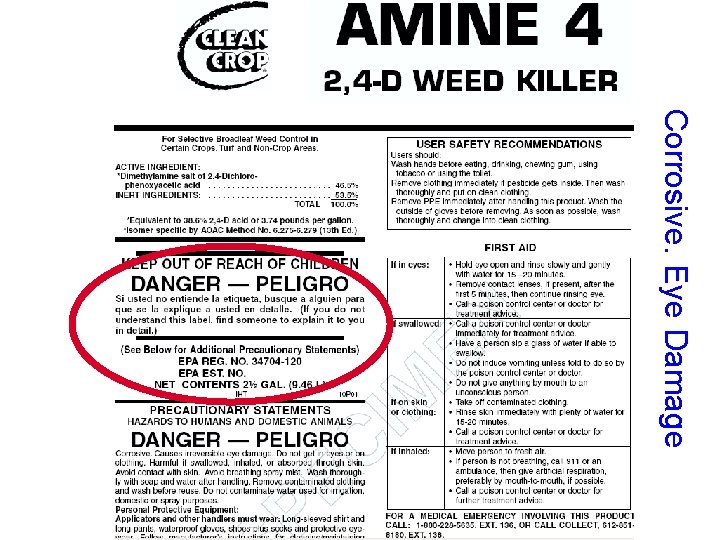
DANGER PELIGRO • can cause severe eye damage or skin irritation DANGER PELIGRO PRECAUTIONARY STATEMENTS HAZARDS TO HUMANS AND DOMESTIC ANIMALS DANGER Causes irreversible eye damage. . .
Corrosive. Eye Damage
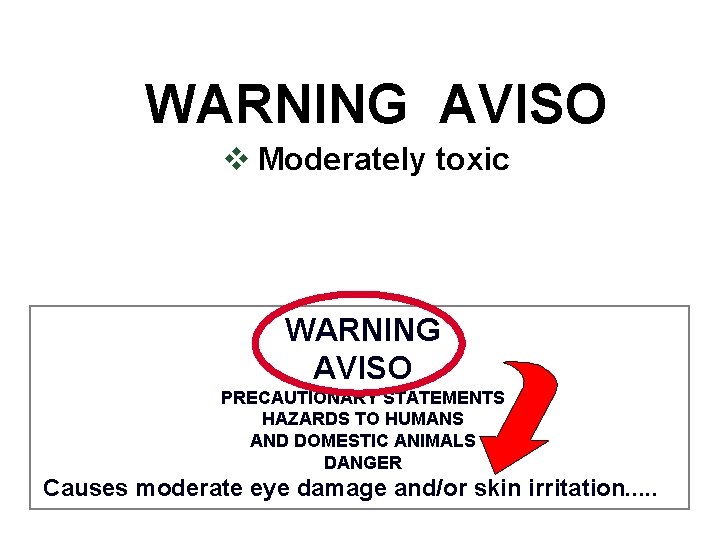
WARNING AVISO v Moderately toxic WARNING AVISO PRECAUTIONARY STATEMENTS HAZARDS TO HUMANS AND DOMESTIC ANIMALS DANGER Causes moderate eye damage and/or skin irritation. . .
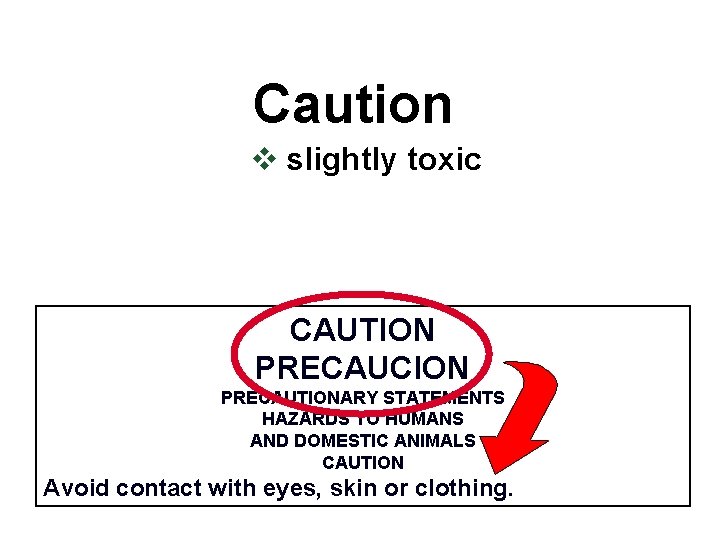
Caution v slightly toxic CAUTION PRECAUCION PRECAUTIONARY STATEMENTS HAZARDS TO HUMANS AND DOMESTIC ANIMALS CAUTION Avoid contact with eyes, skin or clothing.
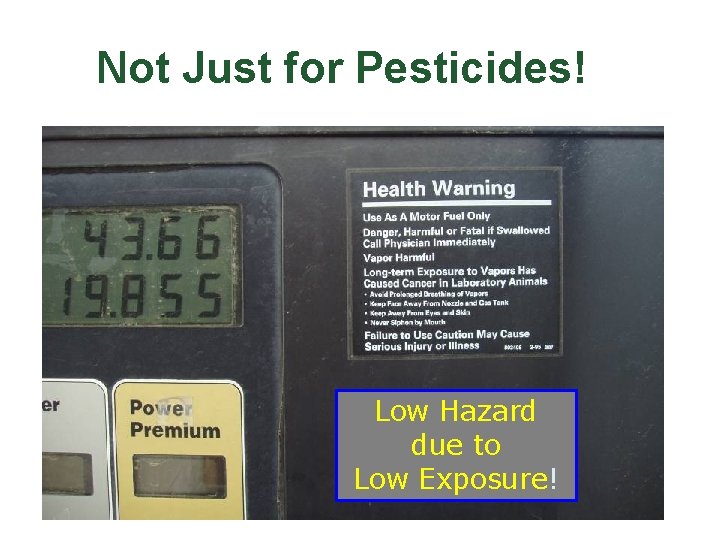
Not Just for Pesticides! Low Hazard due to Low Exposure!
LD 50 and LC 50 have limitations because… v they only measure death rates, not less serious acute effects v they do not translate directly to humans v they only measure effects of a single exposure, not multiple exposures
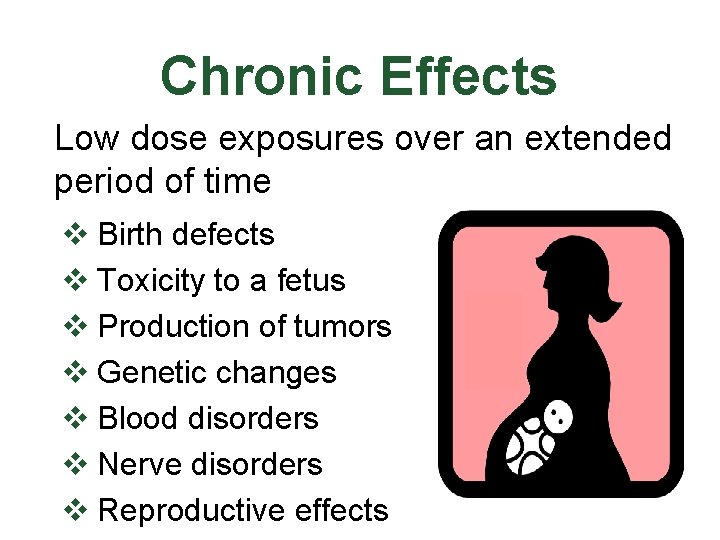
Chronic Effects Low dose exposures over an extended period of time v Birth defects v Toxicity to a fetus v Production of tumors v Genetic changes v Blood disorders v Nerve disorders v Reproductive effects
Delayed Effects v After 24 hours v After repeated exposures For example, organophosphates and carbamate INSECTICIDES…
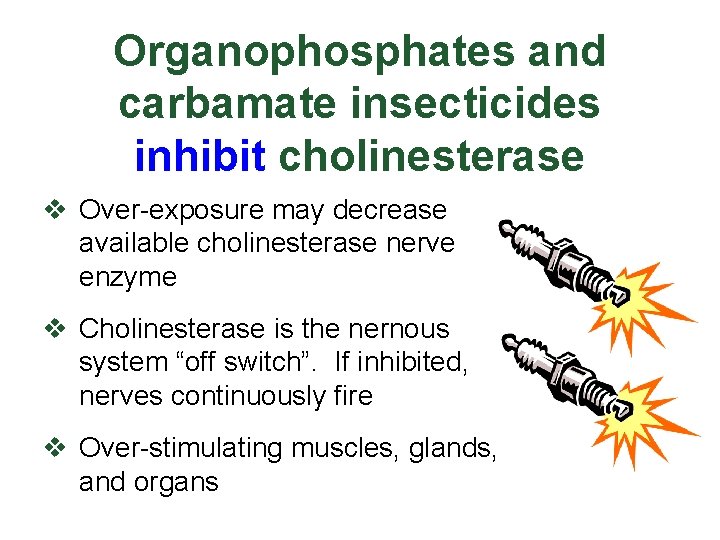
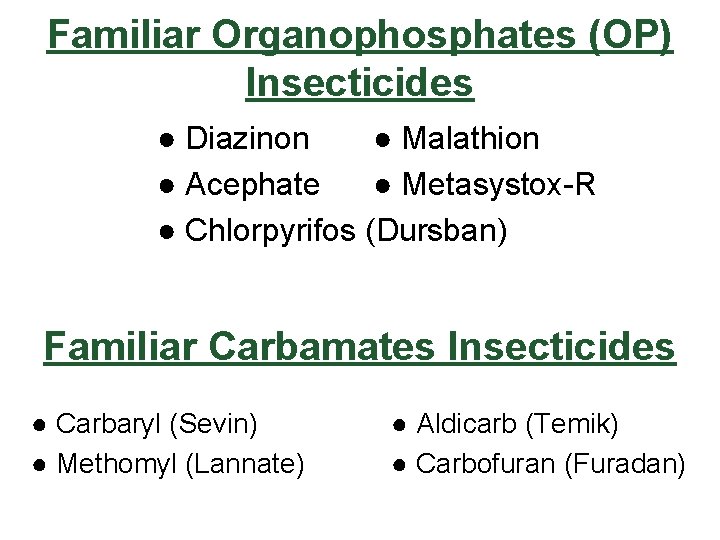
Organophosphates and carbamate insecticides inhibit cholinesterase v Over-exposure may decrease available cholinesterase nerve enzyme v Cholinesterase is the nernous system “off switch”. If inhibited, nerves continuously fire v Over-stimulating muscles, glands, and organs
Familiar Organophosphates (OP) Insecticides ● Diazinon ● Malathion ● Acephate ● Metasystox-R ● Chlorpyrifos (Dursban) Familiar Carbamates Insecticides ● Carbaryl (Sevin) ● Methomyl (Lannate) ● Aldicarb (Temik) ● Carbofuran (Furadan)
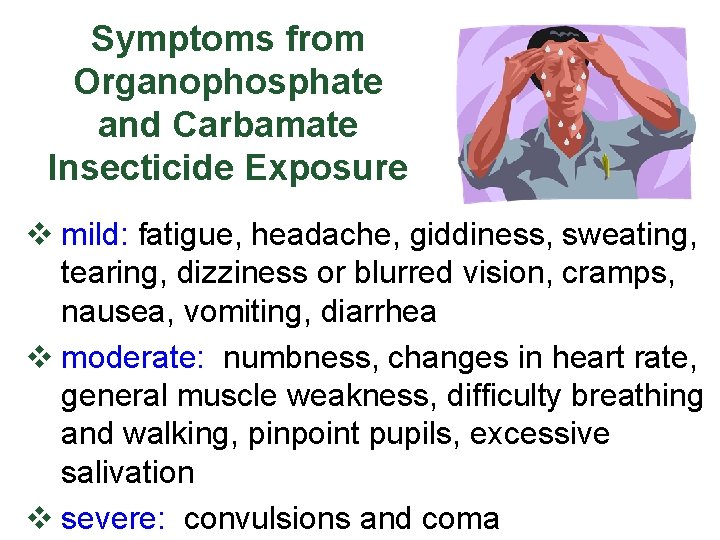
Symptoms from Organophosphate and Carbamate Insecticide Exposure v mild: fatigue, headache, giddiness, sweating, tearing, dizziness or blurred vision, cramps, nausea, vomiting, diarrhea v moderate: numbness, changes in heart rate, general muscle weakness, difficulty breathing and walking, pinpoint pupils, excessive salivation v severe: convulsions and coma
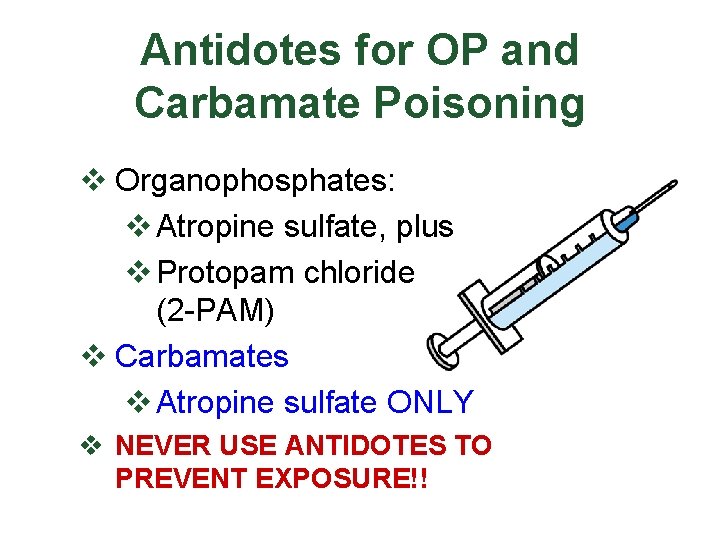
Antidotes for OP and Carbamate Poisoning v Organophosphates: v Atropine sulfate, plus v Protopam chloride (2 -PAM) v Carbamates v Atropine sulfate ONLY v NEVER USE ANTIDOTES TO PREVENT EXPOSURE!!
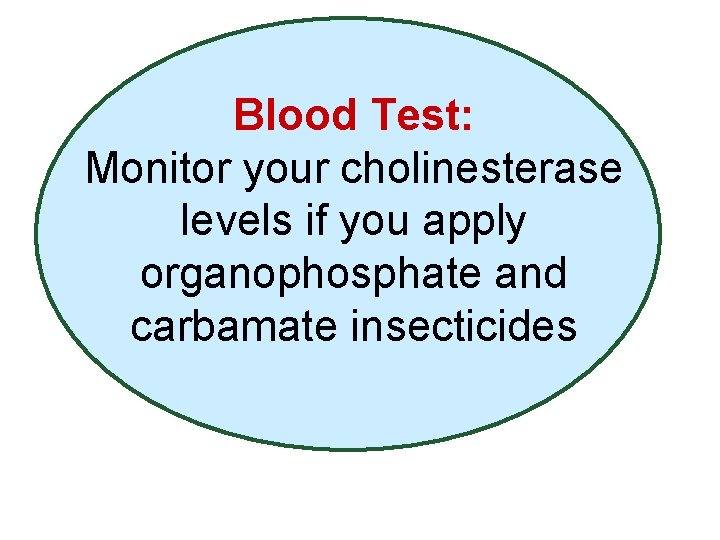
Blood Test: Monitor your cholinesterase levels if you apply organophosphate and carbamate insecticides
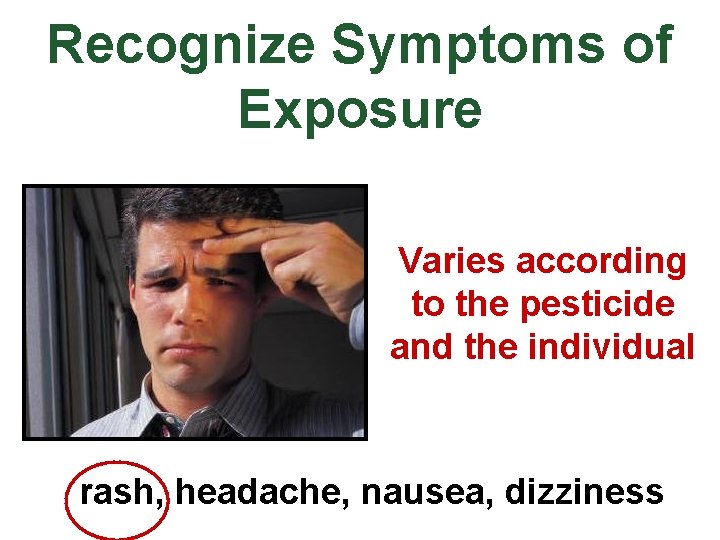
Recognize Symptoms of Exposure Varies according to the pesticide and the individual rash, headache, nausea, dizziness
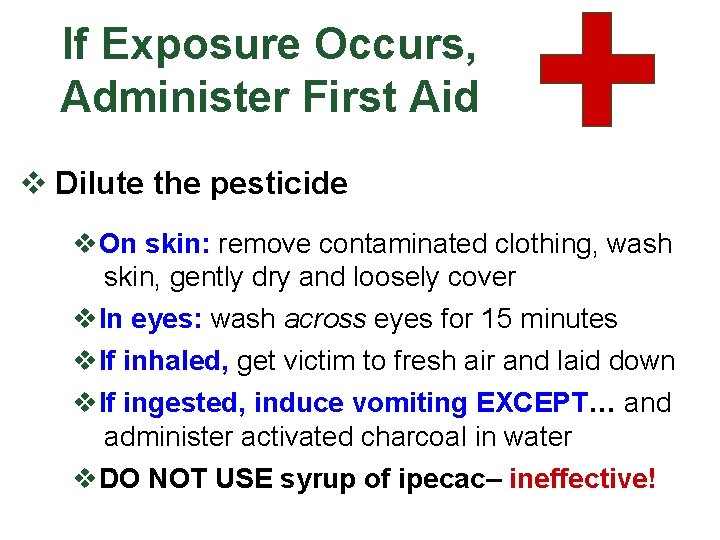
If Exposure Occurs, Administer First Aid v Dilute the pesticide v. On skin: remove contaminated clothing, wash skin, gently dry and loosely cover v. In eyes: wash across eyes for 15 minutes v. If inhaled, get victim to fresh air and laid down v. If ingested, induce vomiting EXCEPT… and administer activated charcoal in water v. DO NOT USE syrup of ipecac– ineffective!
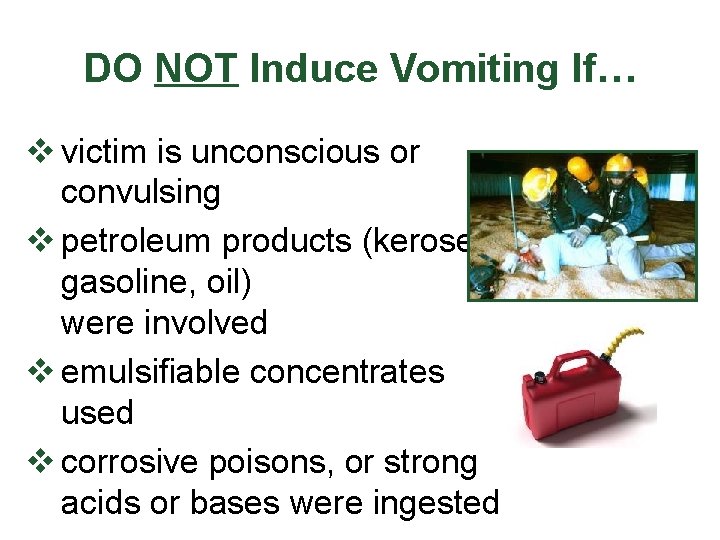
DO NOT Induce Vomiting If… v victim is unconscious or convulsing v petroleum products (kerosene, gasoline, oil) were involved v emulsifiable concentrates used v corrosive poisons, or strong acids or bases were ingested
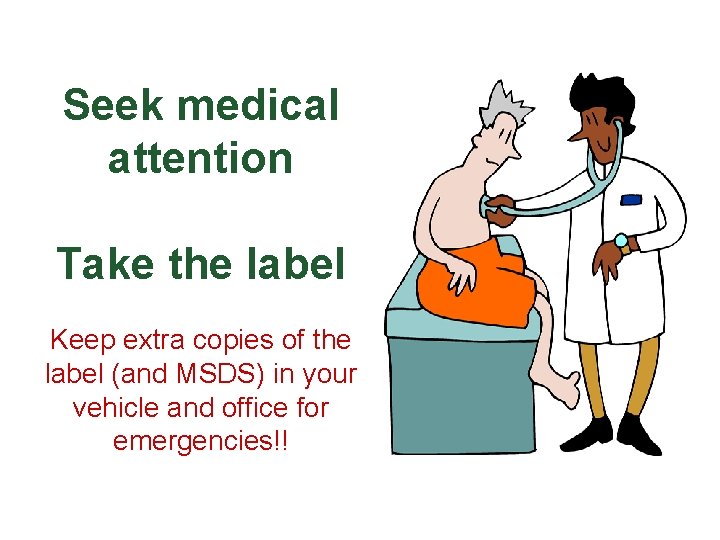
Seek medical attention Take the label Keep extra copies of the label (and MSDS) in your vehicle and office for emergencies!!
Post Emergency Numbers! National Poison Control Center 1 -800 -222 -1222 National Pesticide Information Center (NPIC) 1 -800 -858 -7378 npic. orst. edu
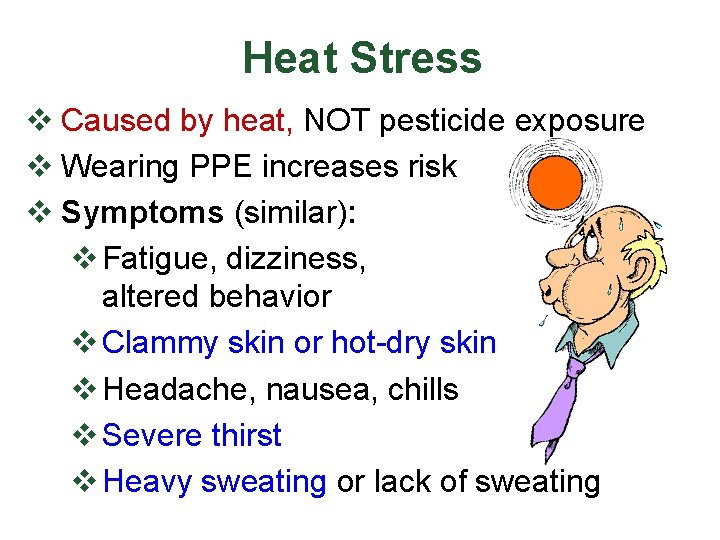
Heat Stress v Caused by heat, NOT pesticide exposure v Wearing PPE increases risk v Symptoms (similar): v Fatigue, dizziness, altered behavior v Clammy skin or hot-dry skin v Headache, nausea, chills v Severe thirst v Heavy sweating or lack of sweating
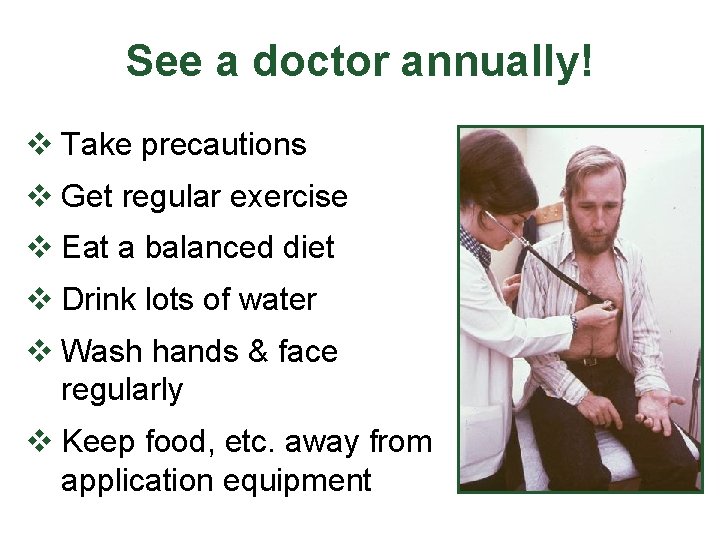
See a doctor annually! v Take precautions v Get regular exercise v Eat a balanced diet v Drink lots of water v Wash hands & face regularly v Keep food, etc. away from application equipment
CHAPTER 5 Summary v Hazard = Toxicity x Exposure v Contact, Systemic, or Allergic effects v Routes of entry: skin, eyes, mouth, lungs v Use least toxic pesticides v Always use PPE! v Know symptoms of acute & chronic exposure v Know first aid!
CHAPTER 5 Q 1. The ability of a pesticide to cause harm from extended exposures to low doses, years later, is termed: A. B. C. D. Acute Toxicity Behavioral Toxicity Chronic Toxicity Lactic Toxicity
CHAPTER 5 Q 2. HAZARD is the measure of 1. Cholinesterase levels 2. LD 50 and LC 50 values 3. Oral, skin, eye, and inhalation exposure 4. The capacity of a pesticide to cause injury A. 1 and 2 only B. 1 and 3 only C. 1 and 4 only D. 2 and 3 only
CHAPTER 5 Q 3. The most common way pesticides enter the body is by: A. Eyes B. Lungs C. Mouth D. Skin
CHAPTER 5 Acknowledgements v Washington State University Urban IPM and Pesticide Safety Education Program authored this presentation v Illustrations were provided by Nevada Dept. of Agriculture, University of Maryland, University of Missouri. Lincoln, Virginia Tech. , Washington Dept. of Agriculture, Washington State University
CHAPTER 5 Acknowledgements v Presentation was reviewed by Beth Long, University of Tennessee; Ed Crow, Maryland Dept. of Agriculture; Jeanne Kasai, US EPA; and Susan Whitney King, University of Delaware. v Narration was provided by Becky Hines, Washington State University Urban IPM & Pesticide Safety Education
CHAPTER 5 Support for this project was made possible through EPA Office of Pesticide Program cooperative agreements with the Council for Agricultural, Science and Technology, and the National Association of State Departments of Agriculture Research Foundation. The views expressed herein are those of the authors and do not necessarily represent the views and policies of the EPA.