
Chapter 5 Patterns and GUI Programming Part 2



- Slides: 68
Chapter 5 Patterns and GUI Programming -Part 2 -
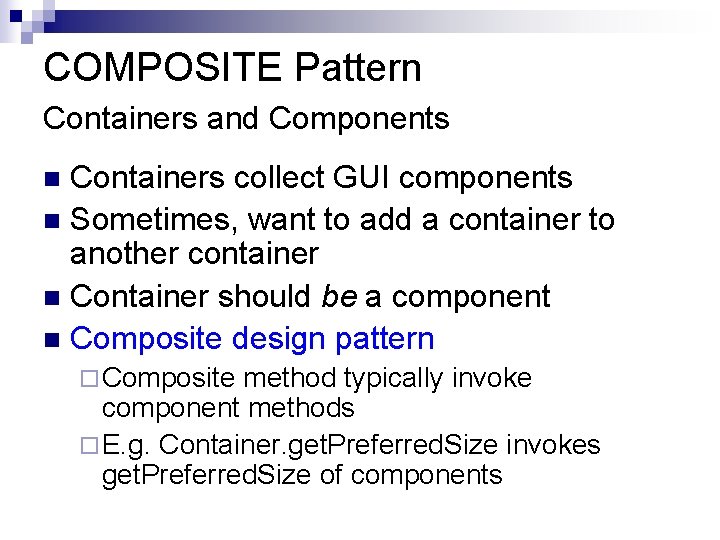
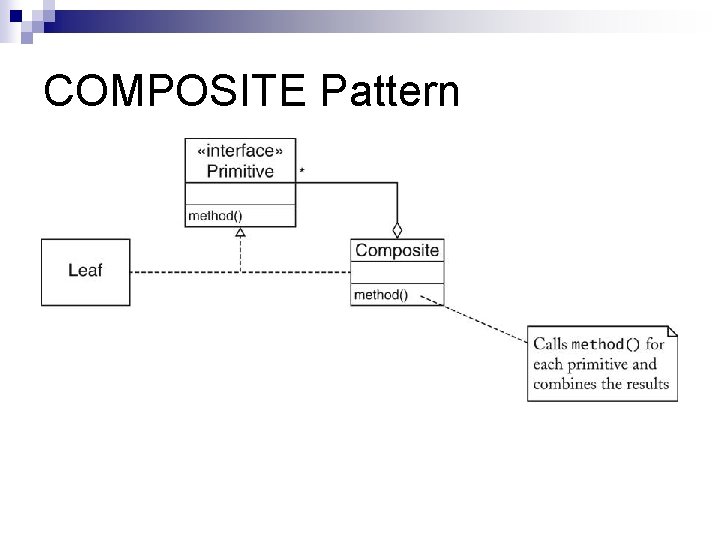
COMPOSITE Pattern Containers and Components Containers collect GUI components n Sometimes, want to add a container to another container n Container should be a component n Composite design pattern n ¨ Composite method typically invoke component methods ¨ E. g. Container. get. Preferred. Size invokes get. Preferred. Size of components
COMPOSITE Pattern Containers and Components n The COMPOSITE pattern teaches how to combine several objects into an object that has the same behavior as its parts.
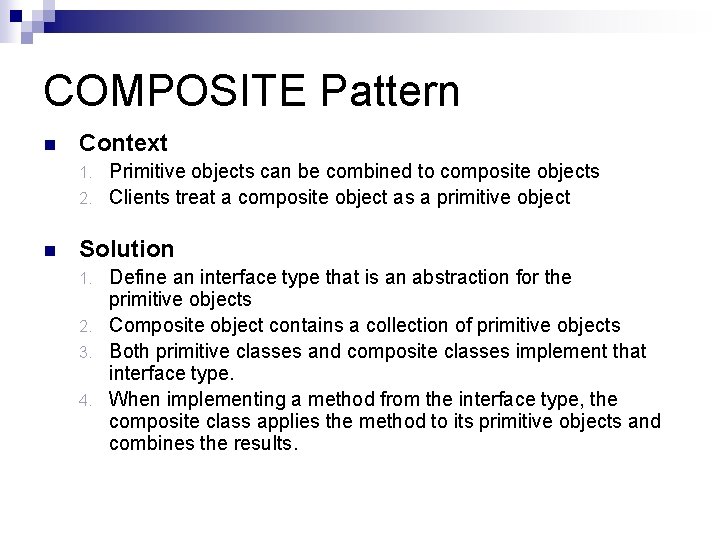
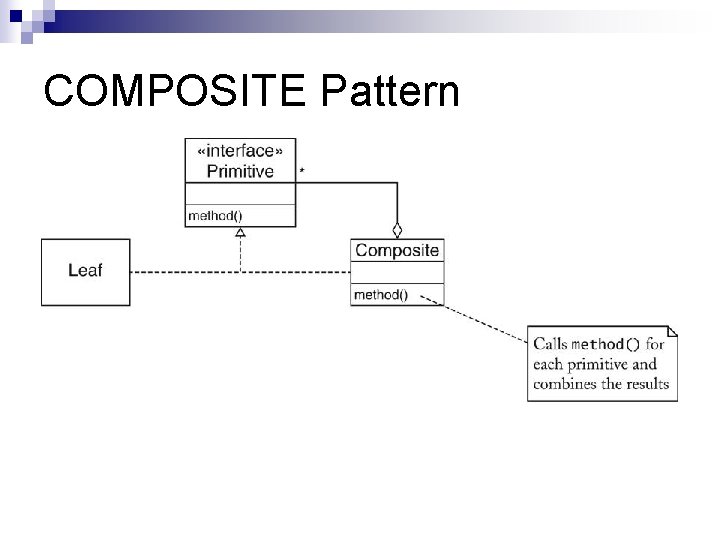
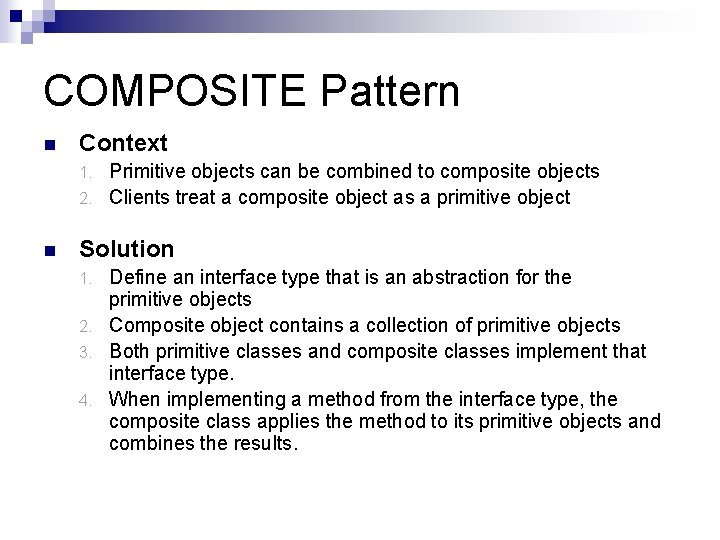
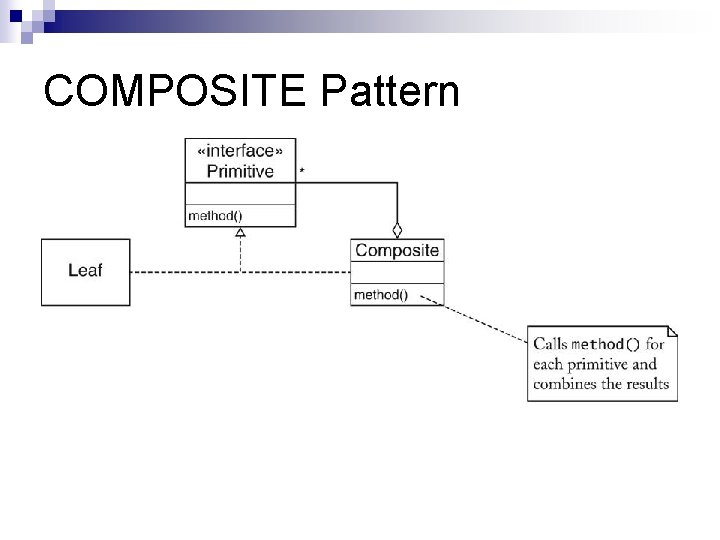
COMPOSITE Pattern n Context Primitive objects can be combined to composite objects 2. Clients treat a composite object as a primitive object 1. n Solution Define an interface type that is an abstraction for the primitive objects 2. Composite object contains a collection of primitive objects 3. Both primitive classes and composite classes implement that interface type. 4. When implementing a method from the interface type, the composite class applies the method to its primitive objects and combines the results. 1.
COMPOSITE Pattern
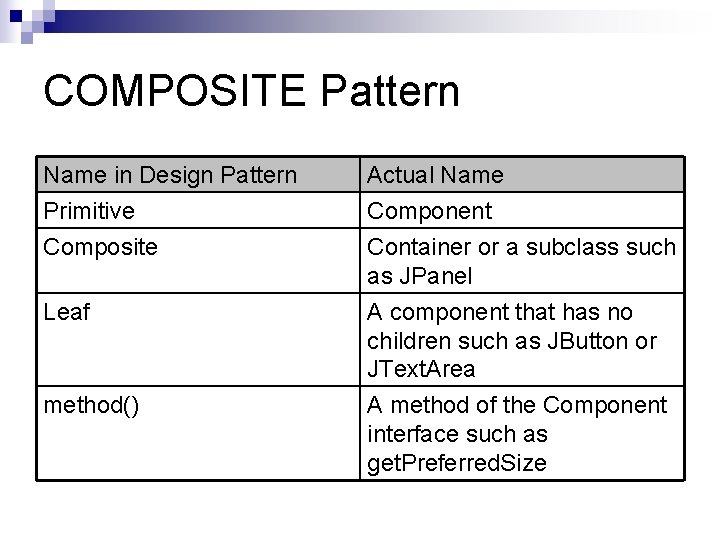
COMPOSITE Pattern Name in Design Pattern Primitive Composite Actual Name Component Container or a subclass such as JPanel Leaf A component that has no children such as JButton or JText. Area method() A method of the Component interface such as get. Preferred. Size
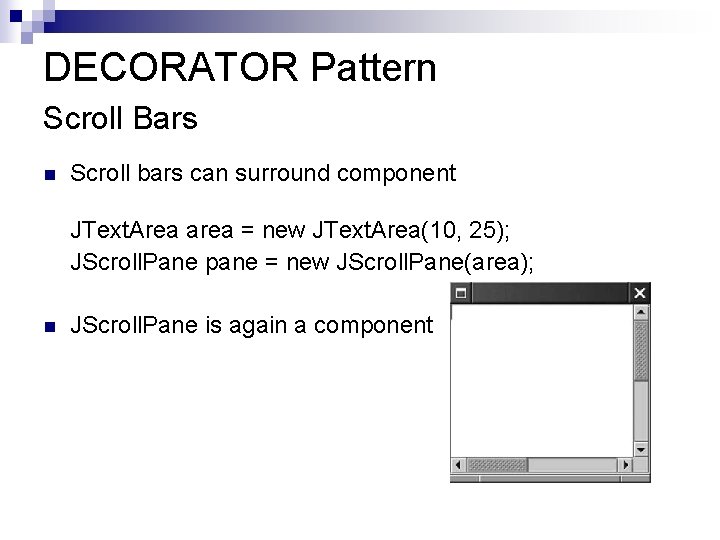
DECORATOR Pattern Scroll Bars n Scroll bars can surround component JText. Area area = new JText. Area(10, 25); JScroll. Pane pane = new JScroll. Pane(area); n JScroll. Pane is again a component
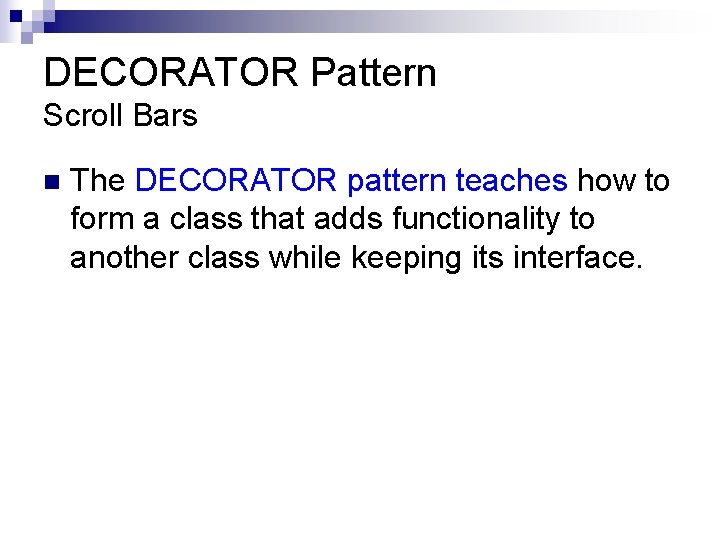
DECORATOR Pattern Scroll Bars n The DECORATOR pattern teaches how to form a class that adds functionality to another class while keeping its interface.
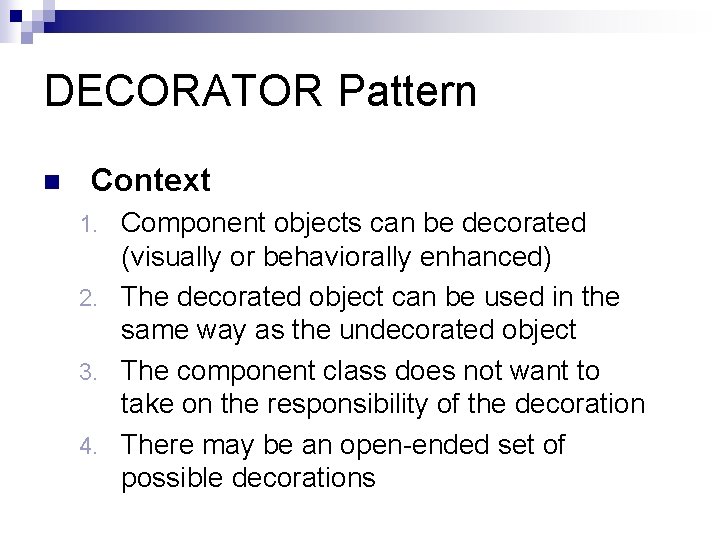
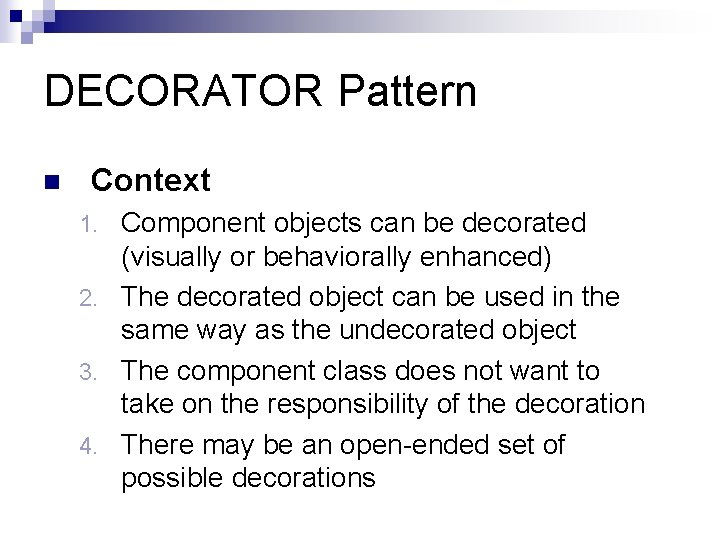
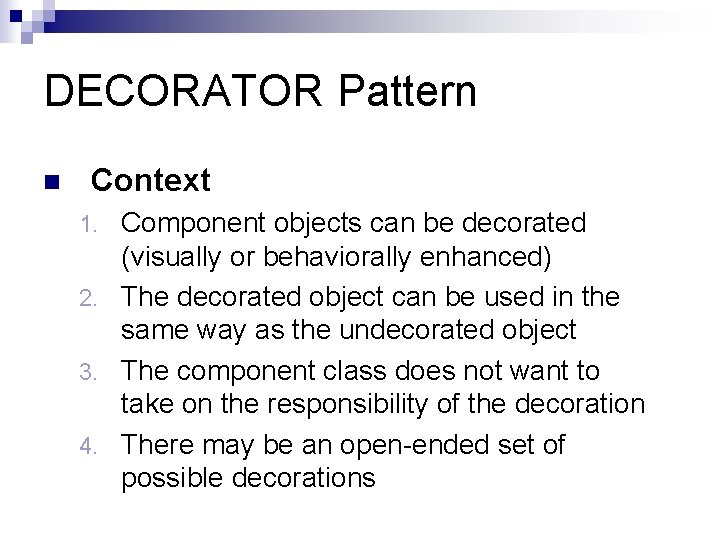
DECORATOR Pattern n Context Component objects can be decorated (visually or behaviorally enhanced) 2. The decorated object can be used in the same way as the undecorated object 3. The component class does not want to take on the responsibility of the decoration 4. There may be an open-ended set of possible decorations 1.
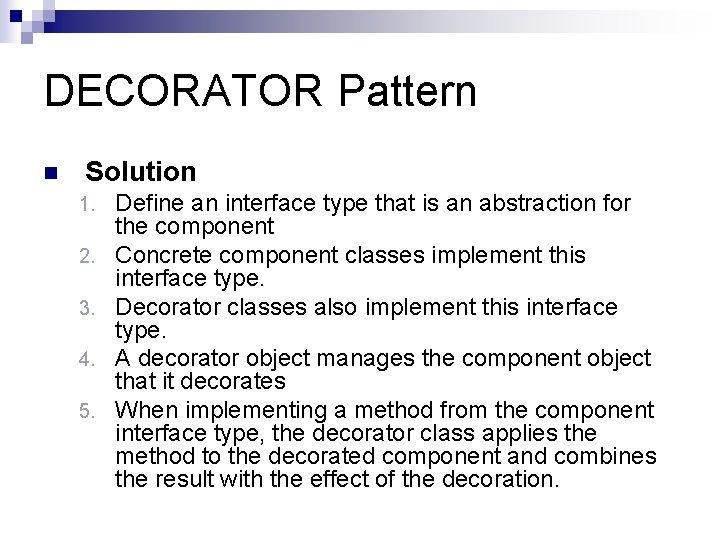
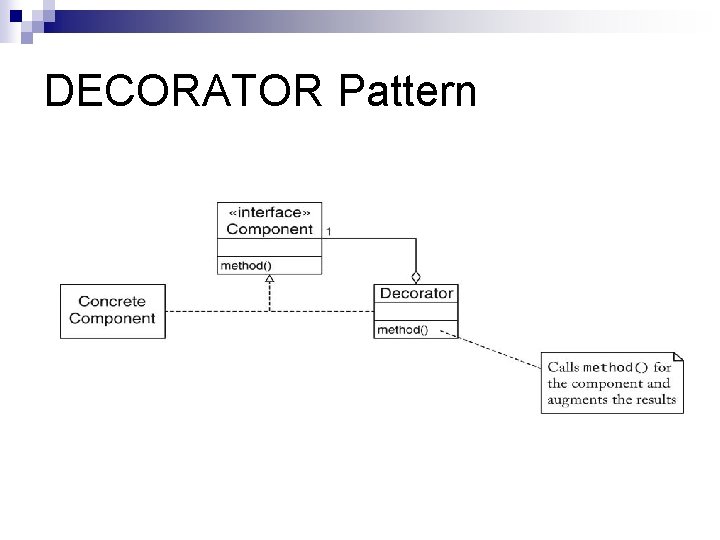
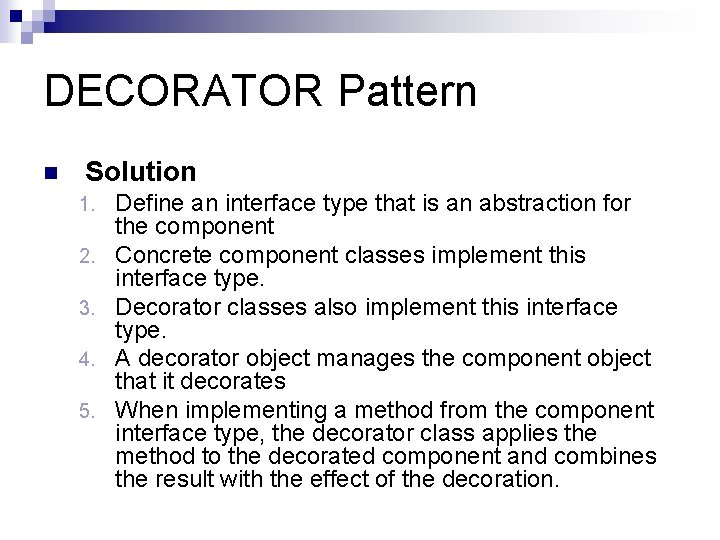
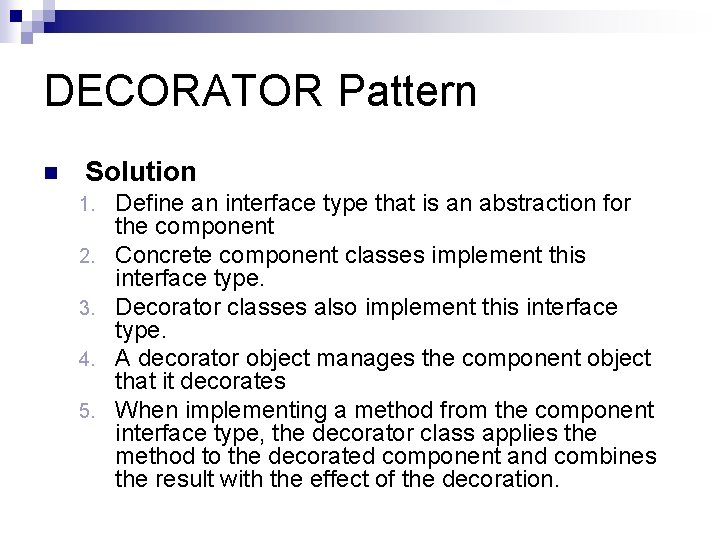
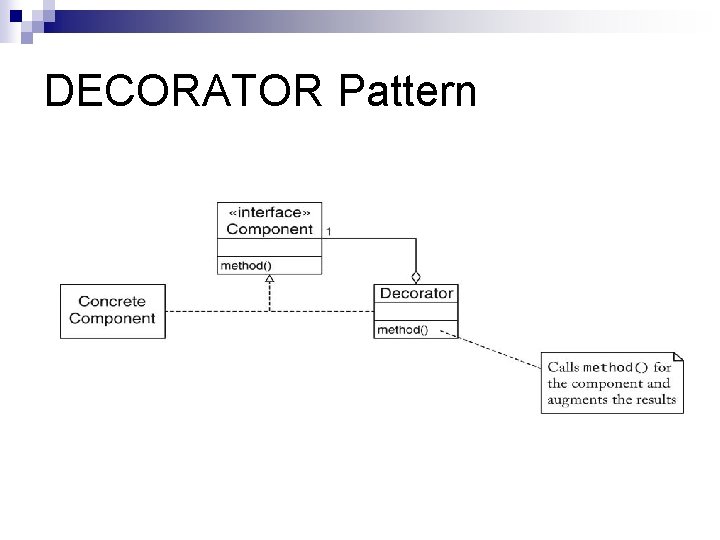
DECORATOR Pattern n Solution 1. 2. 3. 4. 5. Define an interface type that is an abstraction for the component Concrete component classes implement this interface type. Decorator classes also implement this interface type. A decorator object manages the component object that it decorates When implementing a method from the component interface type, the decorator class applies the method to the decorated component and combines the result with the effect of the decoration.
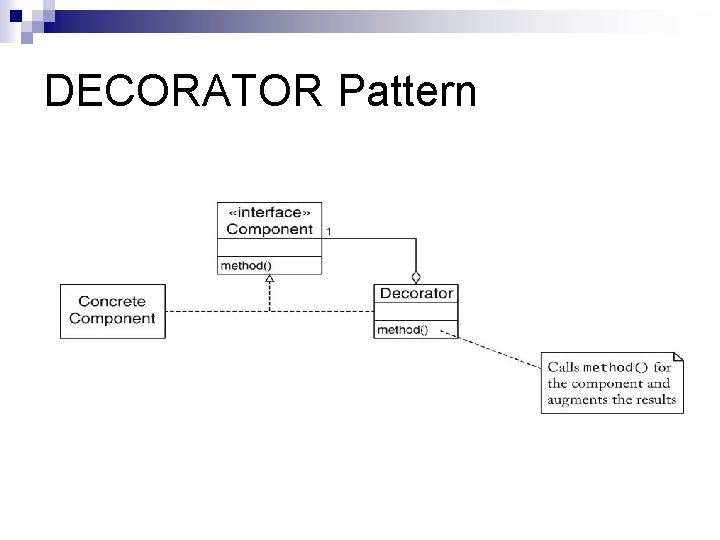
DECORATOR Pattern
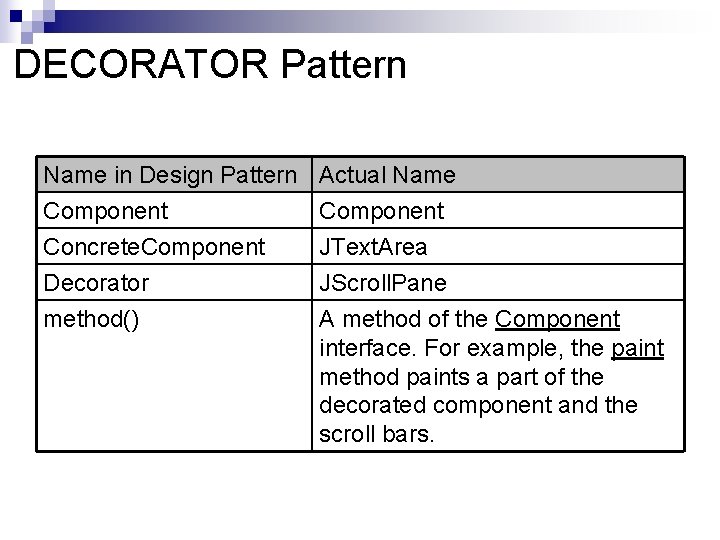
DECORATOR Pattern Name in Design Pattern Actual Name Component Concrete. Component Decorator Component JText. Area JScroll. Pane method() A method of the Component interface. For example, the paint method paints a part of the decorated component and the scroll bars.
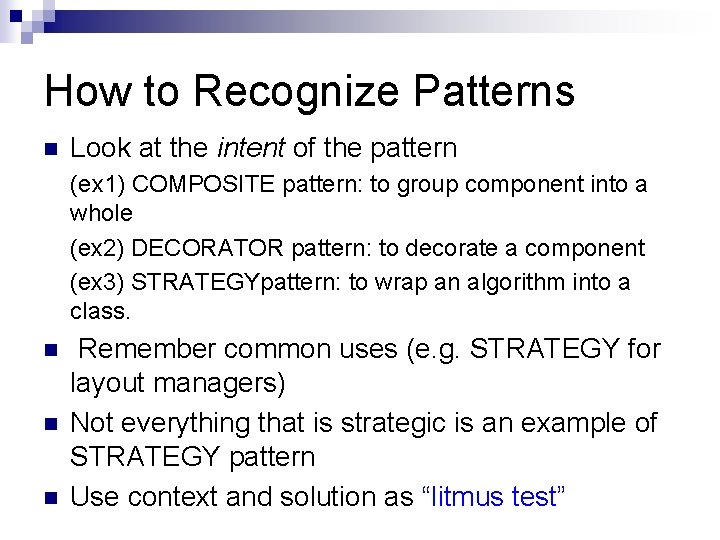
How to Recognize Patterns n Look at the intent of the pattern (ex 1) COMPOSITE pattern: to group component into a whole (ex 2) DECORATOR pattern: to decorate a component (ex 3) STRATEGYpattern: to wrap an algorithm into a class. n n n Remember common uses (e. g. STRATEGY for layout managers) Not everything that is strategic is an example of STRATEGY pattern Use context and solution as “litmus test”
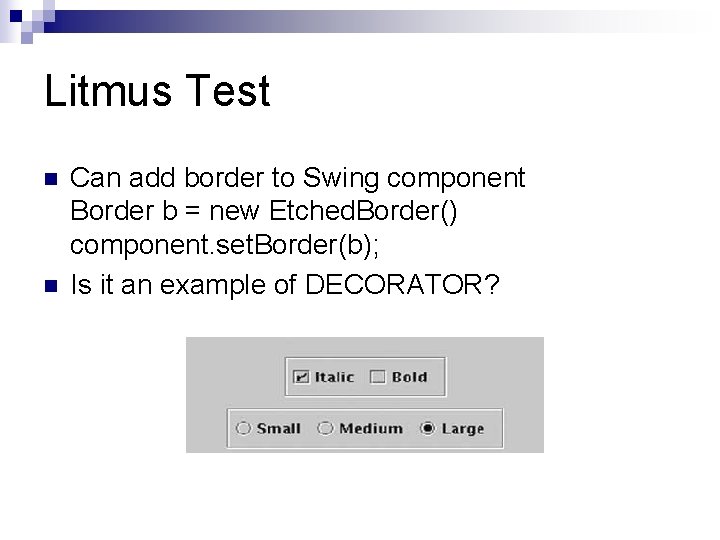
Litmus Test n n Can add border to Swing component Border b = new Etched. Border() component. set. Border(b); Is it an example of DECORATOR?
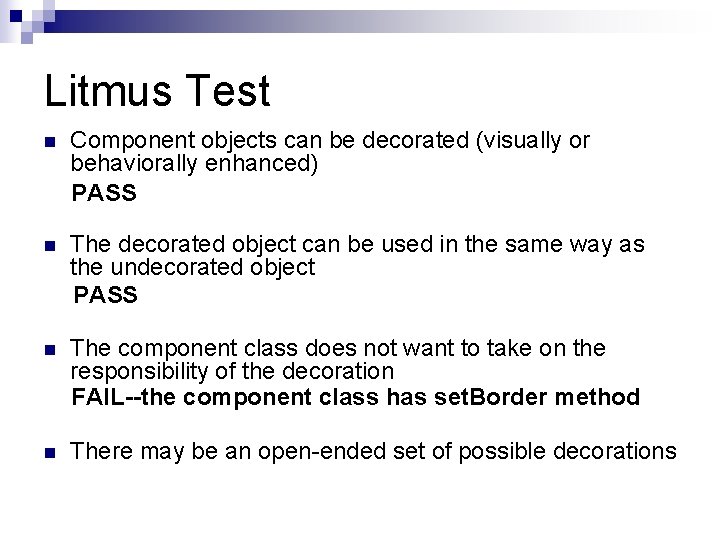
Litmus Test n Component objects can be decorated (visually or behaviorally enhanced) PASS n The decorated object can be used in the same way as the undecorated object PASS n The component class does not want to take on the responsibility of the decoration FAIL--the component class has set. Border method n There may be an open-ended set of possible decorations
Quick Review on Patterns
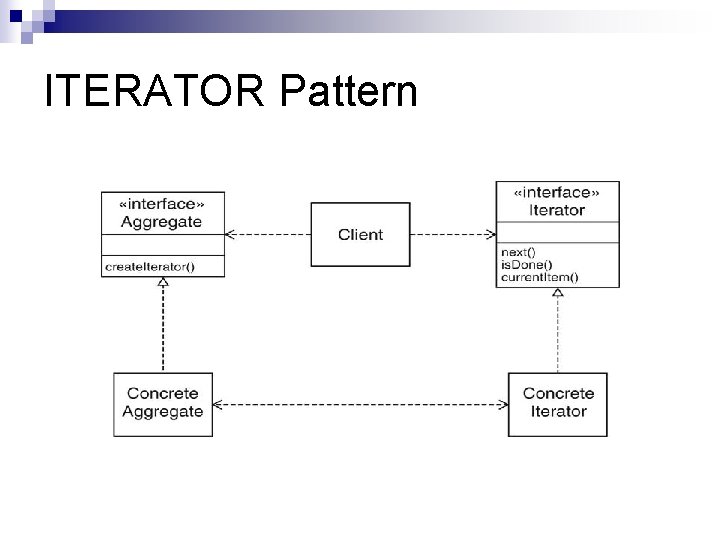
ITERATOR Pattern n The ITERATOR pattern teaches how to access the elements of an aggregate object.
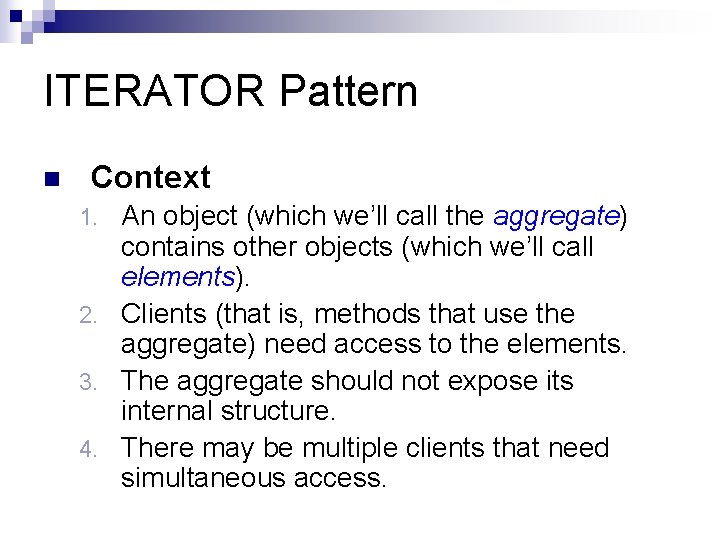
ITERATOR Pattern n Context An object (which we’ll call the aggregate) contains other objects (which we’ll call elements). 2. Clients (that is, methods that use the aggregate) need access to the elements. 3. The aggregate should not expose its internal structure. 4. There may be multiple clients that need simultaneous access. 1.
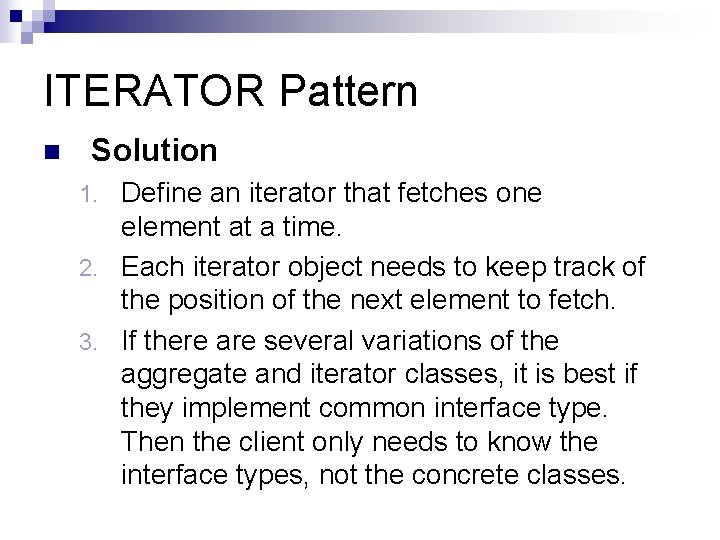
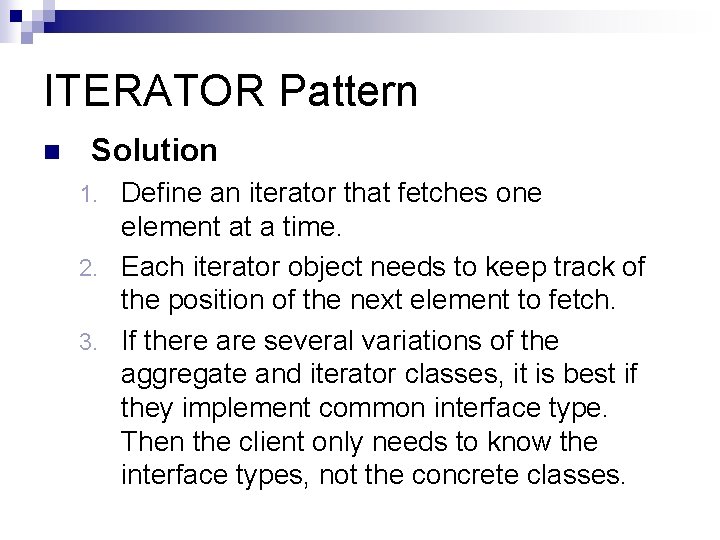
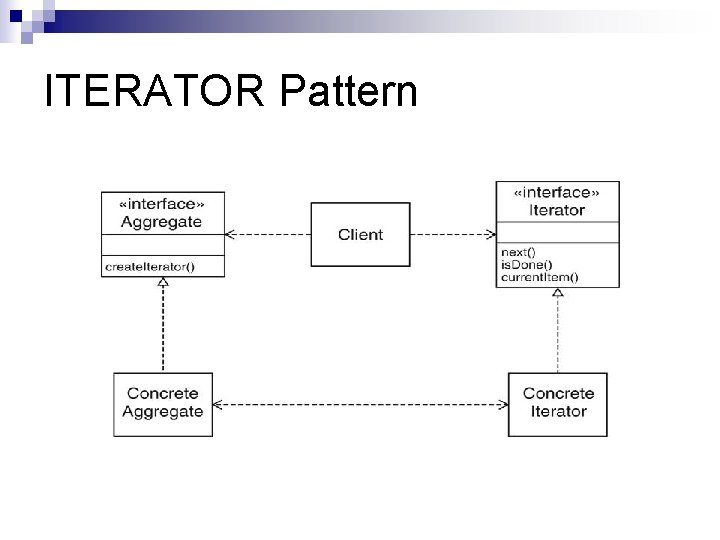
ITERATOR Pattern n Solution Define an iterator that fetches one element at a time. 2. Each iterator object needs to keep track of the position of the next element to fetch. 3. If there are several variations of the aggregate and iterator classes, it is best if they implement common interface type. Then the client only needs to know the interface types, not the concrete classes. 1.
ITERATOR Pattern
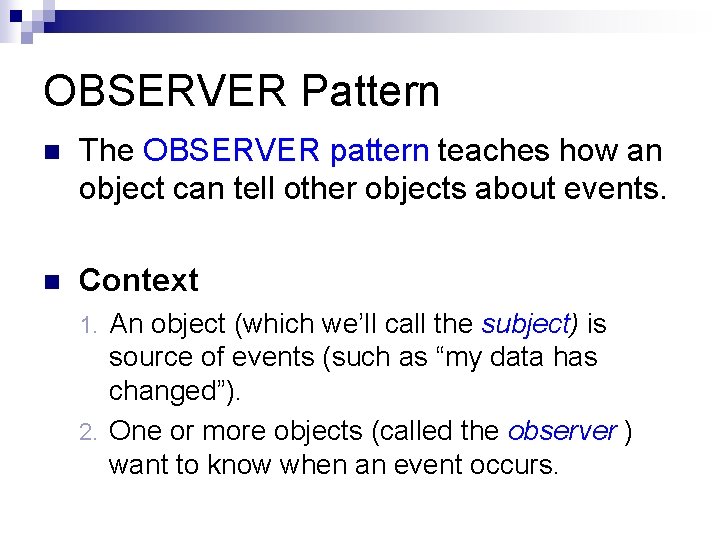
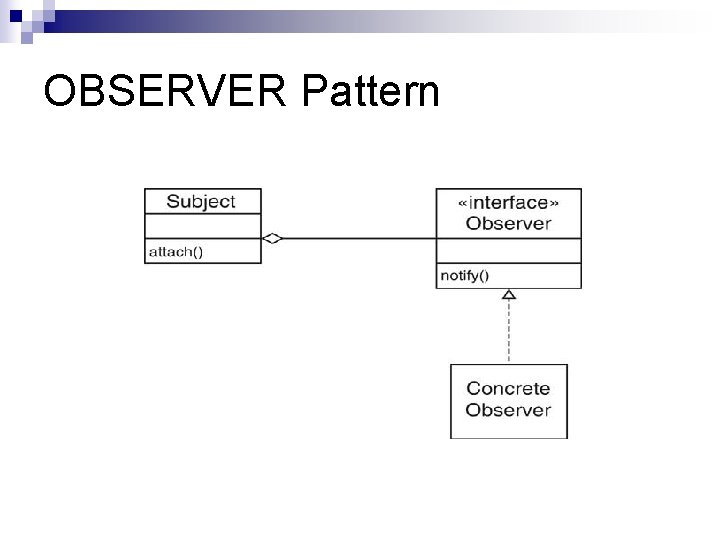
OBSERVER Pattern n The OBSERVER pattern teaches how an object can tell other objects about events. n Context An object (which we’ll call the subject) is source of events (such as “my data has changed”). 2. One or more objects (called the observer ) want to know when an event occurs. 1.
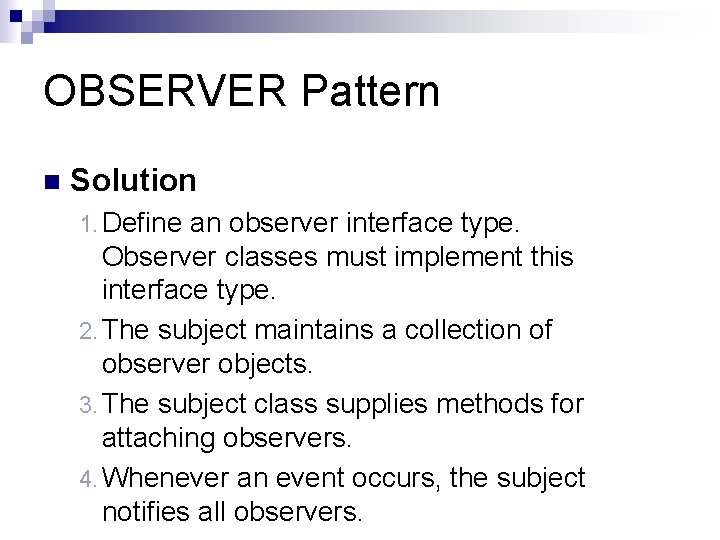
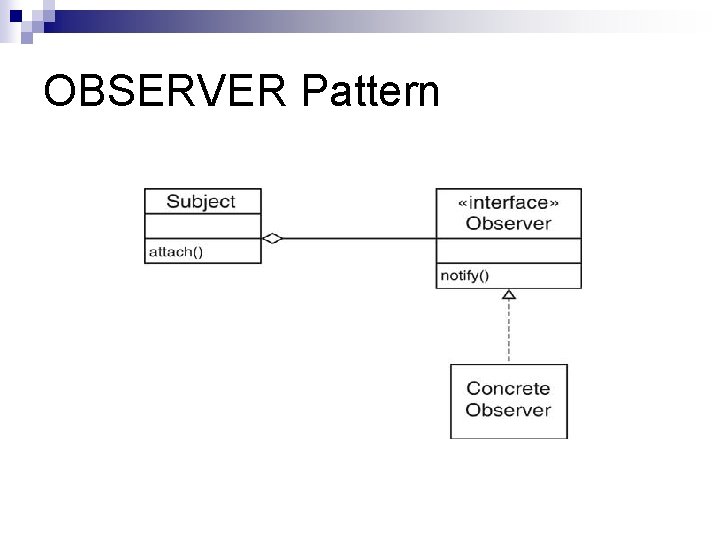
OBSERVER Pattern n Solution 1. Define an observer interface type. Observer classes must implement this interface type. 2. The subject maintains a collection of observer objects. 3. The subject class supplies methods for attaching observers. 4. Whenever an event occurs, the subject notifies all observers.
OBSERVER Pattern
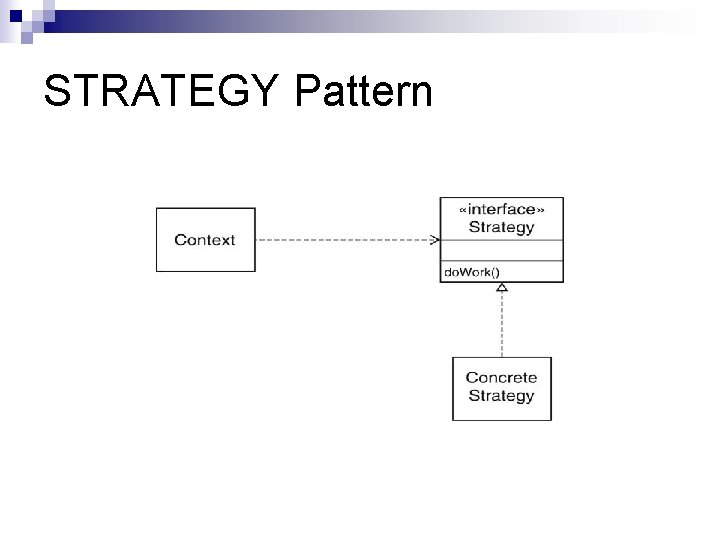
STRATEGY Pattern n The STRATEGY pattern teaches how to supply variants of an algorithm
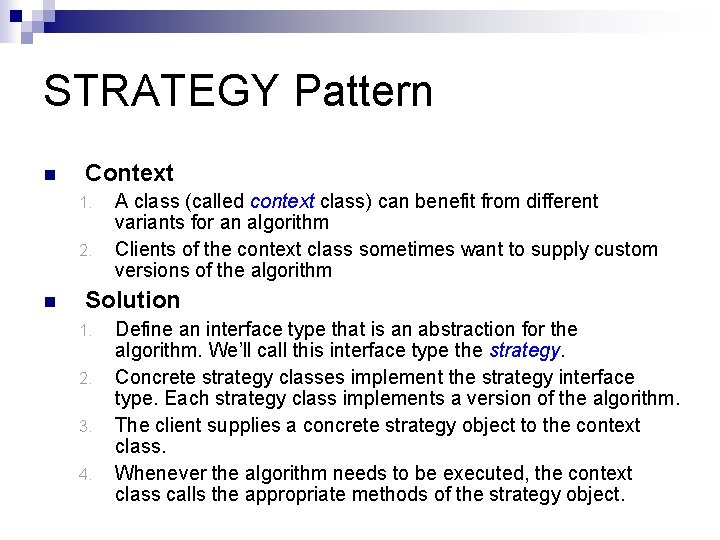
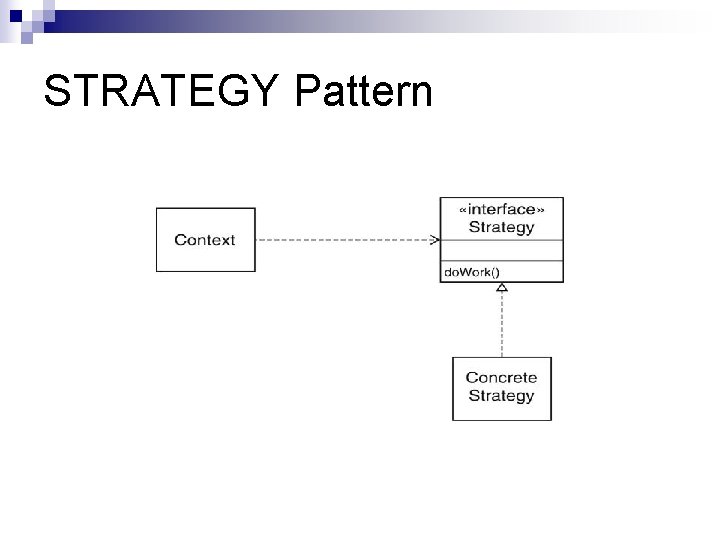
STRATEGY Pattern n Context 1. 2. n A class (called context class) can benefit from different variants for an algorithm Clients of the context class sometimes want to supply custom versions of the algorithm Solution 1. 2. 3. 4. Define an interface type that is an abstraction for the algorithm. We’ll call this interface type the strategy. Concrete strategy classes implement the strategy interface type. Each strategy class implements a version of the algorithm. The client supplies a concrete strategy object to the context class. Whenever the algorithm needs to be executed, the context class calls the appropriate methods of the strategy object.
STRATEGY Pattern
COMPOSITE Pattern Containers and Components n The COMPOSITE pattern teaches how to combine several objects into an object that has the same behavior as its parts.
COMPOSITE Pattern n Context Primitive objects can be combined to composite objects 2. Clients treat a composite object as a primitive object 1. n Solution Define an interface type that is an abstraction for the primitive objects 2. Composite object contains a collection of primitive objects 3. Both primitive classes and composite classes implement that interface type. 4. When implementing a method from the interface type, the composite class applies the method to its primitive objects and combines the results. 1.
COMPOSITE Pattern
DECORATOR Pattern Scroll Bars n The DECORATOR pattern teaches how to form a class that adds functionality to another class while keeping its interface.
DECORATOR Pattern n Context Component objects can be decorated (visually or behaviorally enhanced) 2. The decorated object can be used in the same way as the undecorated object 3. The component class does not want to take on the responsibility of the decoration 4. There may be an open-ended set of possible decorations 1.
DECORATOR Pattern n Solution 1. 2. 3. 4. 5. Define an interface type that is an abstraction for the component Concrete component classes implement this interface type. Decorator classes also implement this interface type. A decorator object manages the component object that it decorates When implementing a method from the component interface type, the decorator class applies the method to the decorated component and combines the result with the effect of the decoration.
DECORATOR Pattern
Review End~!
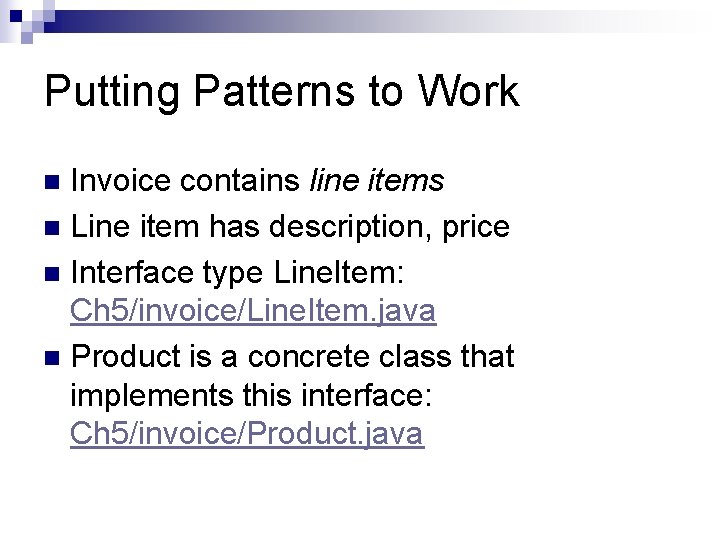
Putting Patterns to Work Invoice contains line items n Line item has description, price n Interface type Line. Item: Ch 5/invoice/Line. Item. java n Product is a concrete class that implements this interface: Ch 5/invoice/Product. java n
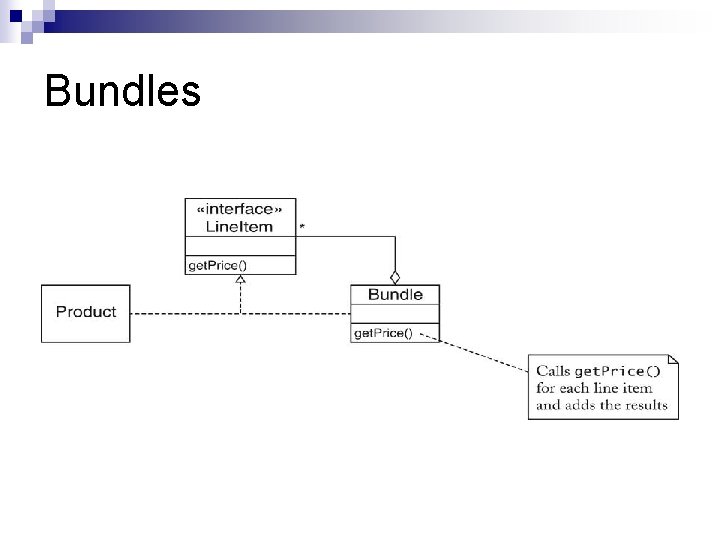
Bundles Bundle = set of related items with description+price n (ex) stereo system with tuner, amplifier, CD player + speakers n A bundle has line items n A bundle is a line item Therefore, COMPOSITE pattern n Ch 5/invoice/Bundle. java (look at get. Price) n
Bundles
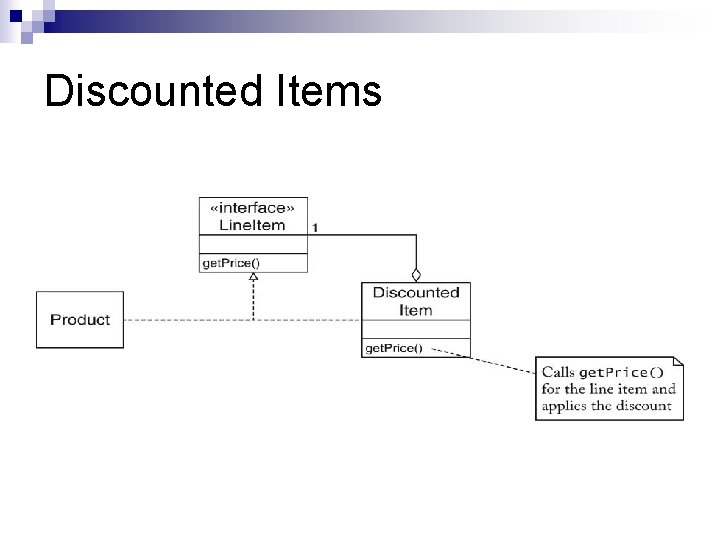
Discounted Items Store may give discount for an item n Discounted item is again an item n DECORATOR pattern n Ch 5/invoice/Discounted. Item. java (look at get. Price) n
Discounted Items
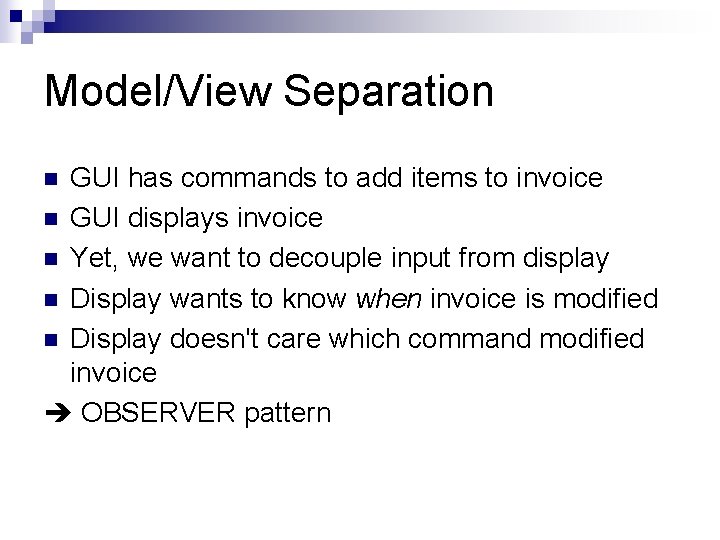
Model/View Separation GUI has commands to add items to invoice n GUI displays invoice n Yet, we want to decouple input from display n Display wants to know when invoice is modified n Display doesn't care which command modified invoice OBSERVER pattern n
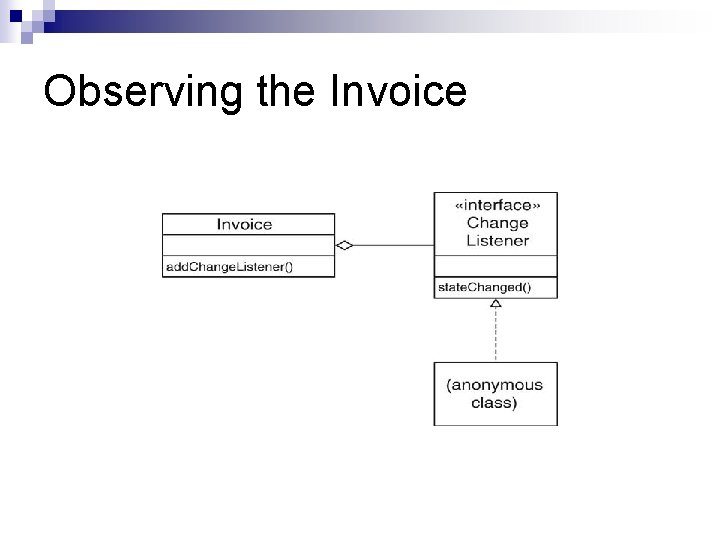
Observing the Invoice
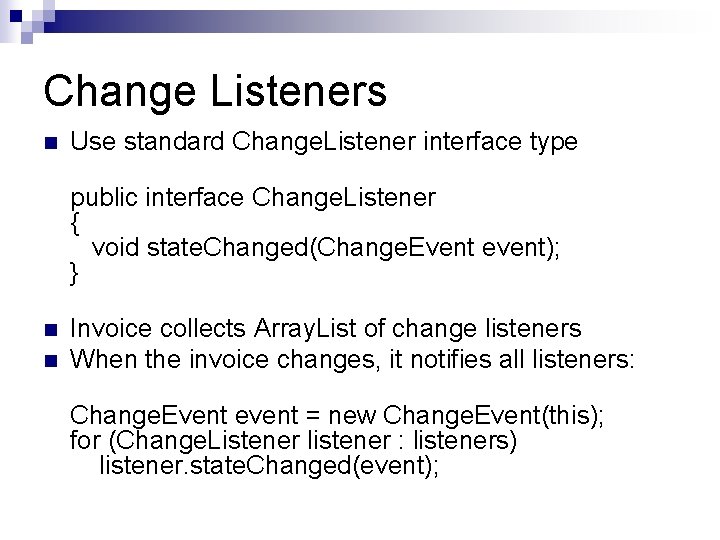
Change Listeners n Use standard Change. Listener interface type public interface Change. Listener { void state. Changed(Change. Event event); } n n Invoice collects Array. List of change listeners When the invoice changes, it notifies all listeners: Change. Event event = new Change. Event(this); for (Change. Listener listener : listeners) listener. state. Changed(event);
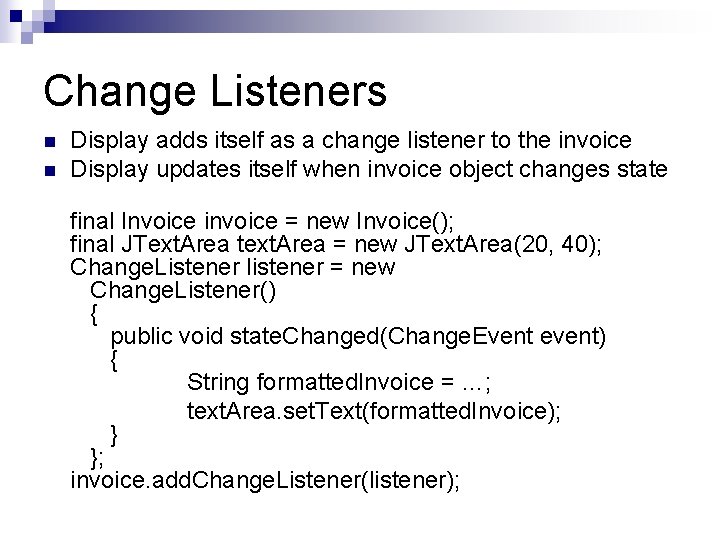
Change Listeners n n Display adds itself as a change listener to the invoice Display updates itself when invoice object changes state final Invoice invoice = new Invoice(); final JText. Area text. Area = new JText. Area(20, 40); Change. Listener listener = new Change. Listener() { public void state. Changed(Change. Event event) { String formatted. Invoice = …; text. Area. set. Text(formatted. Invoice); } }; invoice. add. Change. Listener(listener);
Iterating Through Invoice Items Invoice collect line items n Clients need to iterate over line items n Don't want to expose Array. List n May change (e. g. if storing invoices in database) ITERATOR pattern n
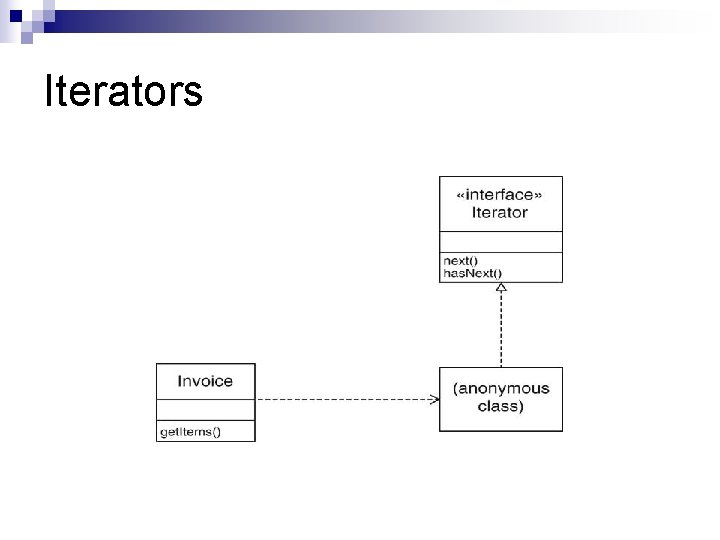
Iterators
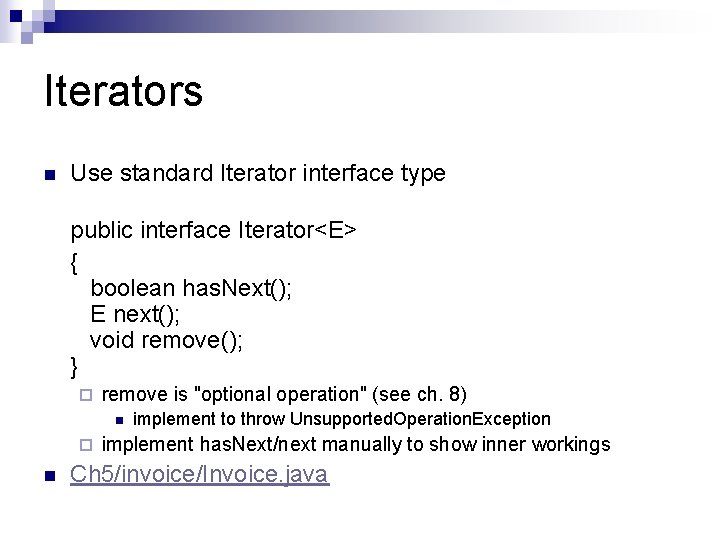
Iterators n Use standard Iterator interface type public interface Iterator<E> { boolean has. Next(); E next(); void remove(); } ¨ remove is "optional operation" (see ch. 8) n ¨ n implement to throw Unsupported. Operation. Exception implement has. Next/next manually to show inner workings Ch 5/invoice/Invoice. java
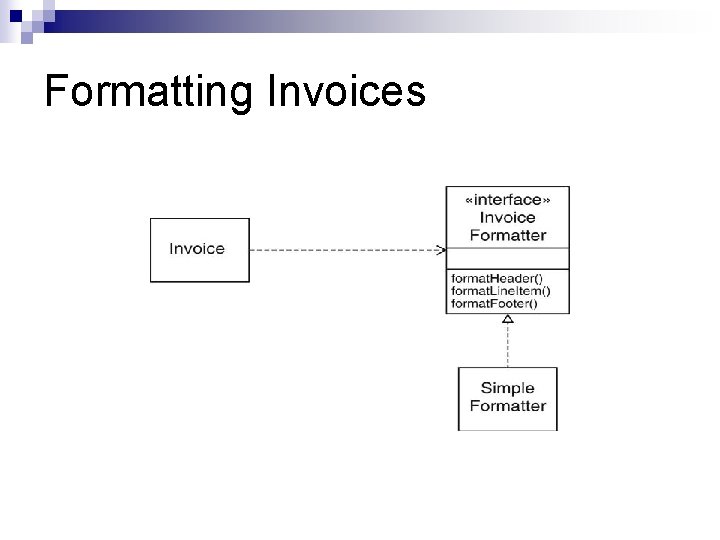
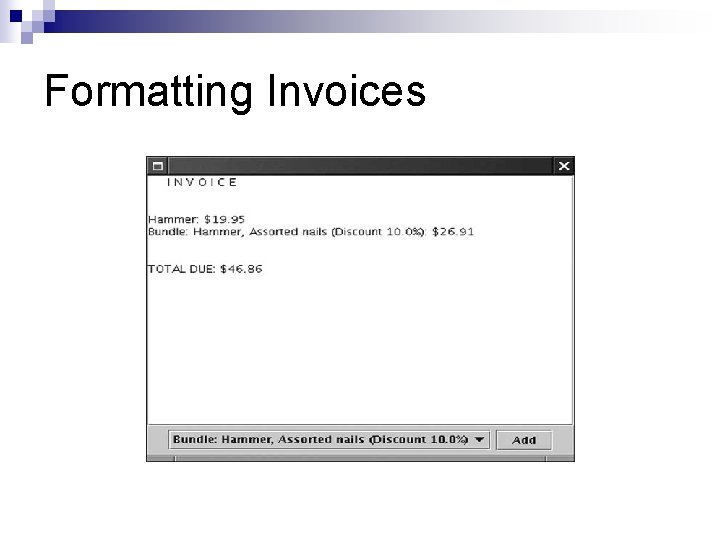
Formatting Invoices n Simple format: dump into text area ¨ May not be good enough n OR Invoice on a Web page? ¨ E. g. HTML tags for display in browser Want to allow for multiple formatting algorithms STRATEGY pattern
Formatting Invoices
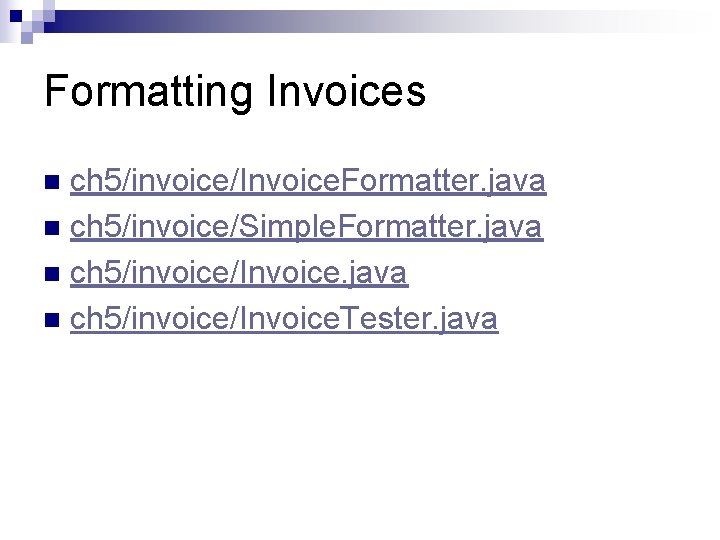
Formatting Invoices ch 5/invoice/Invoice. Formatter. java n ch 5/invoice/Simple. Formatter. java n ch 5/invoice/Invoice. Tester. java n
Formatting Invoices
Recap of Standardized Patterns
ITERATOR Pattern n The ITERATOR pattern teaches how to access the elements of an aggregate object.
ITERATOR Pattern n Context An object (which we’ll call the aggregate) contains other objects (which we’ll call elements). 2. Clients (that is, methods that use the aggregate) need access to the elements. 3. The aggregate should not expose its internal structure. 4. There may be multiple clients that need simultaneous access. 1.
ITERATOR Pattern n Solution Define an iterator that fetches one element at a time. 2. Each iterator object needs to keep track of the position of the next element to fetch. 3. If there are several variations of the aggregate and iterator classes, it is best if they implement common interface type. Then the client only needs to know the interface types, not the concrete classes. 1.
ITERATOR Pattern
OBSERVER Pattern n The OBSERVER pattern teaches how an object can tell other objects about events. n Context An object (which we’ll call the subject) is source of events (such as “my data has changed”). 2. One or more objects (called the observer ) want to know when an event occurs. 1.
OBSERVER Pattern n Solution 1. Define an observer interface type. Observer classes must implement this interface type. 2. The subject maintains a collection of observer objects. 3. The subject class supplies methods for attaching observers. 4. Whenever an event occurs, the subject notifies all observers.
OBSERVER Pattern
STRATEGY Pattern n The STRATEGY pattern teaches how to supply variants of an algorithm
STRATEGY Pattern n Context 1. 2. n A class (called context class) can benefit from different variants for an algorithm Clients of the context class sometimes want to supply custom versions of the algorithm Solution 1. 2. 3. 4. Define an interface type that is an abstraction for the algorithm. We’ll call this interface type the strategy. Concrete strategy classes implement the strategy interface type. Each strategy class implements a version of the algorithm. The client supplies a concrete strategy object to the context class. Whenever the algorithm needs to be executed, the context class calls the appropriate methods of the strategy object.
STRATEGY Pattern
COMPOSITE Pattern Containers and Components n The COMPOSITE pattern teaches how to combine several objects into an object that has the same behavior as its parts.
COMPOSITE Pattern n Context Primitive objects can be combined to composite objects 2. Clients treat a composite object as a primitive object 1. n Solution Define an interface type that is an abstraction for the primitive objects 2. Composite object contains a collection of primitive objects 3. Both primitive classes and composite classes implement that interface type. 4. When implementing a method from the interface type, the composite class applies the method to its primitive objects and combines the results. 1.
COMPOSITE Pattern
DECORATOR Pattern Scroll Bars n The DECORATOR pattern teaches how to form a class that adds functionality to another class while keeping its interface.
DECORATOR Pattern n Context Component objects can be decorated (visually or behaviorally enhanced) 2. The decorated object can be used in the same way as the undecorated object 3. The component class does not want to take on the responsibility of the decoration 4. There may be an open-ended set of possible decorations 1.
DECORATOR Pattern n Solution 1. 2. 3. 4. 5. Define an interface type that is an abstraction for the component Concrete component classes implement this interface type. Decorator classes also implement this interface type. A decorator object manages the component object that it decorates When implementing a method from the component interface type, the decorator class applies the method to the decorated component and combines the result with the effect of the decoration.
DECORATOR Pattern