
Chapter 5 Operating and Financial Leverage Chapter 5
- Slides: 21
Chapter 5 Operating and Financial Leverage
Chapter 5 - Outline What is Leverage? Break-Even (BE) Point Operating Leverage Financial Leverage Means Risk Combined or Total Leverage
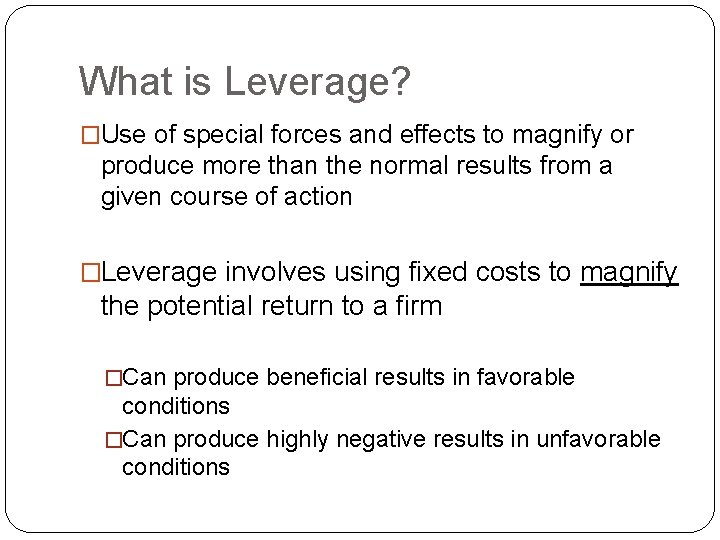
What is Leverage? �Use of special forces and effects to magnify or produce more than the normal results from a given course of action �Leverage involves using fixed costs to magnify the potential return to a firm �Can produce beneficial results in favorable conditions �Can produce highly negative results in unfavorable conditions
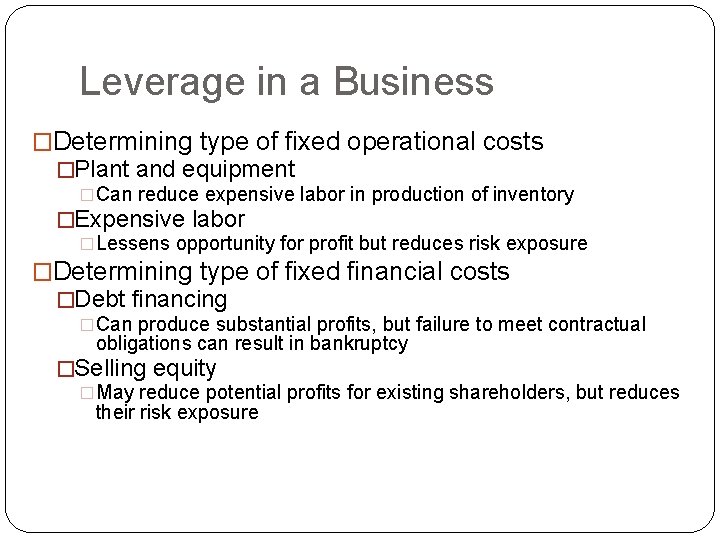
Leverage in a Business �Determining type of fixed operational costs �Plant and equipment �Can reduce expensive labor in production of inventory �Expensive labor �Lessens opportunity for profit but reduces risk exposure �Determining type of fixed financial costs �Debt financing �Can produce substantial profits, but failure to meet contractual obligations can result in bankruptcy �Selling equity �May reduce potential profits for existing shareholders, but reduces their risk exposure
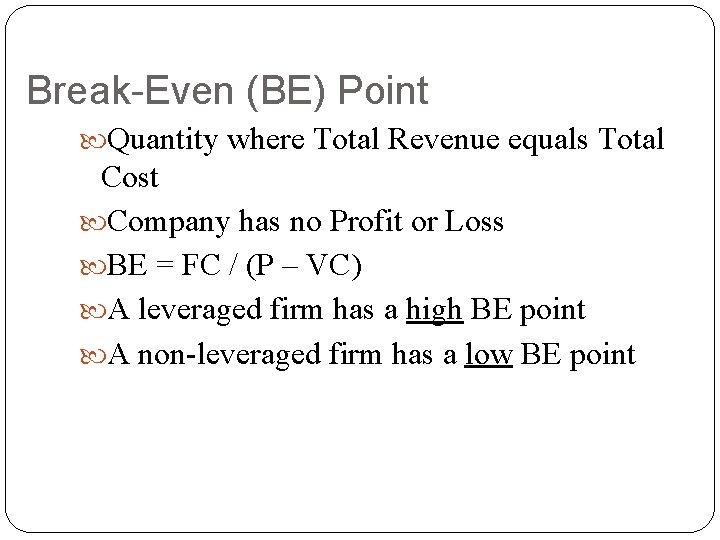
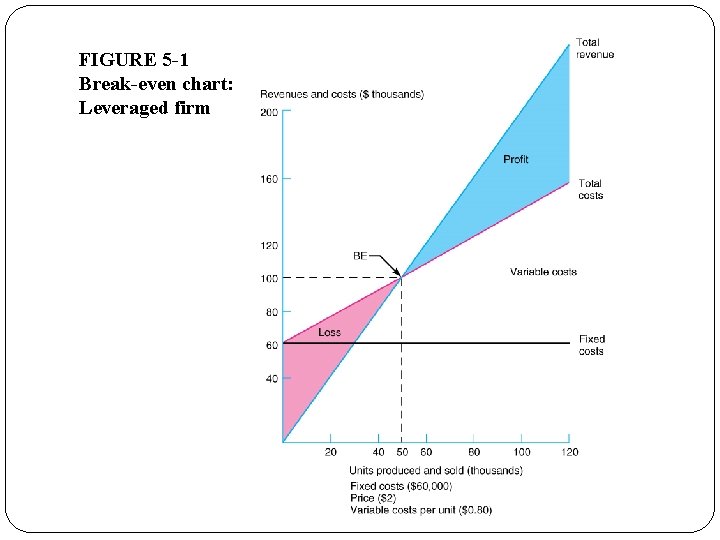
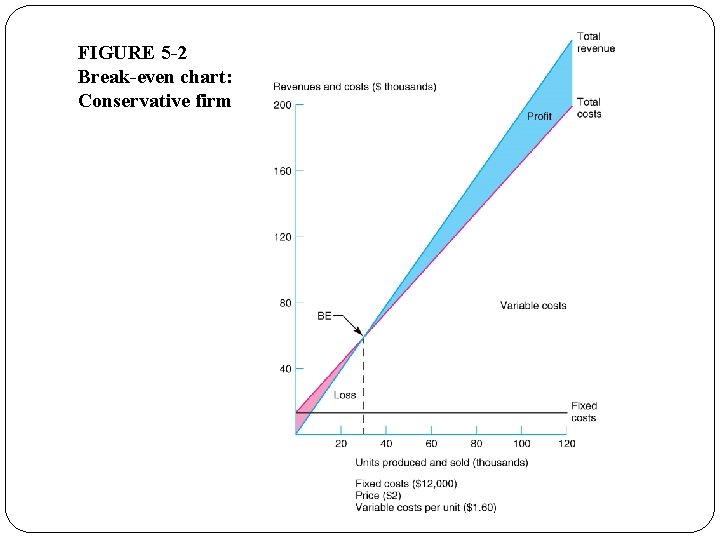
Break-Even (BE) Point Quantity where Total Revenue equals Total Cost Company has no Profit or Loss BE = FC / (P – VC) A leveraged firm has a high BE point A non-leveraged firm has a low BE point
FIGURE 5 -1 Break-even chart: Leveraged firm
FIGURE 5 -2 Break-even chart: Conservative firm
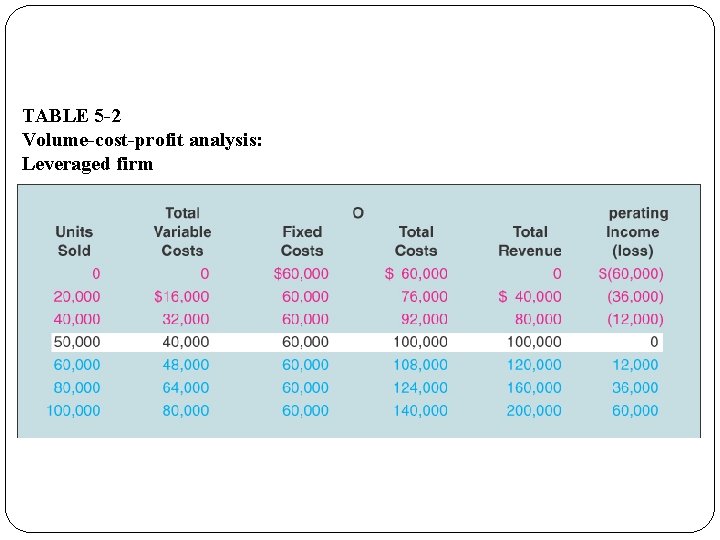
TABLE 5 -2 Volume-cost-profit analysis: Leveraged firm
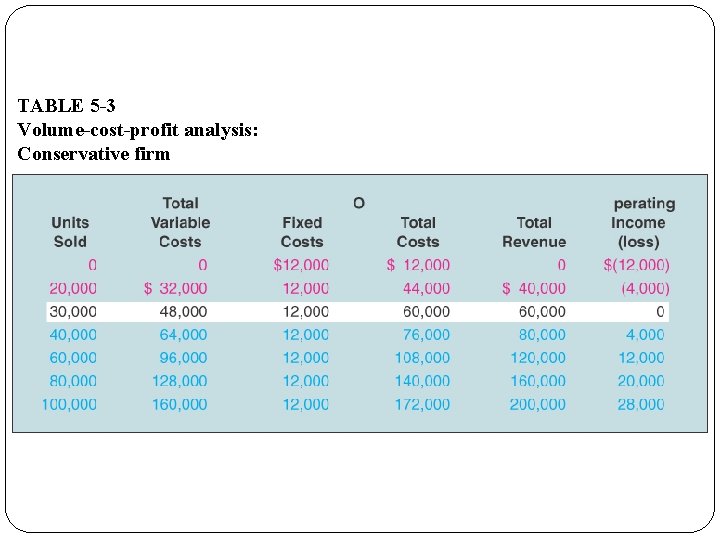
TABLE 5 -3 Volume-cost-profit analysis: Conservative firm
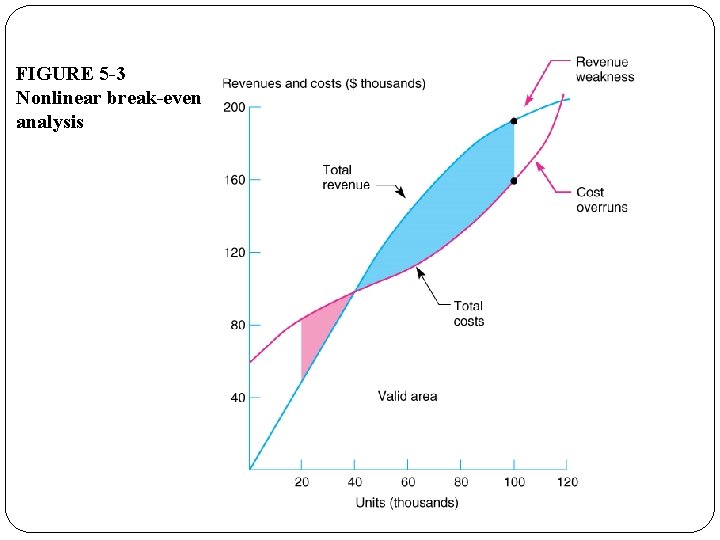
FIGURE 5 -3 Nonlinear break-even analysis
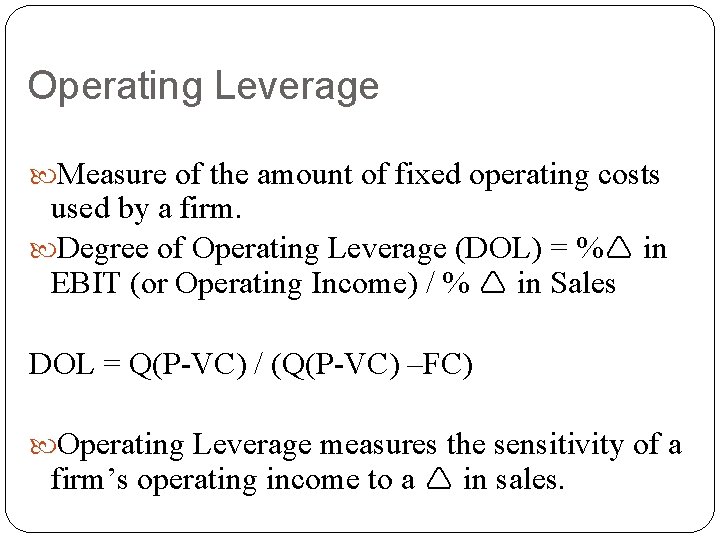
Operating Leverage Measure of the amount of fixed operating costs used by a firm. Degree of Operating Leverage (DOL) = % in EBIT (or Operating Income) / % in Sales DOL = Q(P-VC) / (Q(P-VC) –FC) Operating Leverage measures the sensitivity of a firm’s operating income to a in sales.
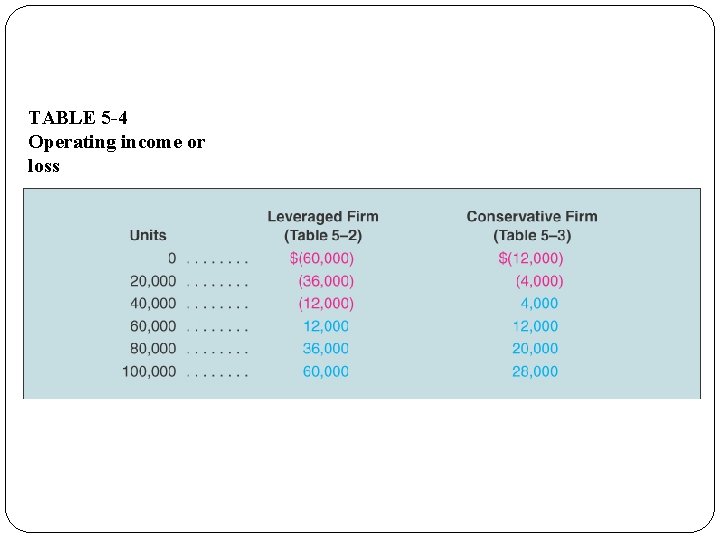
TABLE 5 -4 Operating income or loss
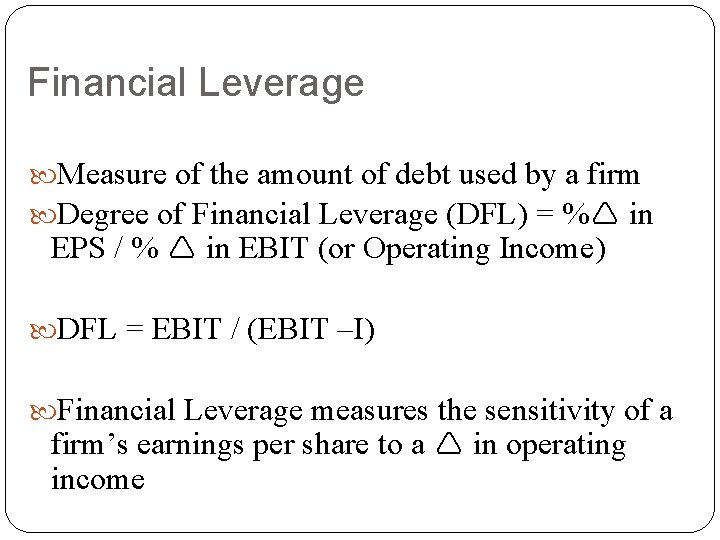
Financial Leverage Measure of the amount of debt used by a firm Degree of Financial Leverage (DFL) = % in EPS / % in EBIT (or Operating Income) DFL = EBIT / (EBIT –I) Financial Leverage measures the sensitivity of a firm’s earnings per share to a in operating income
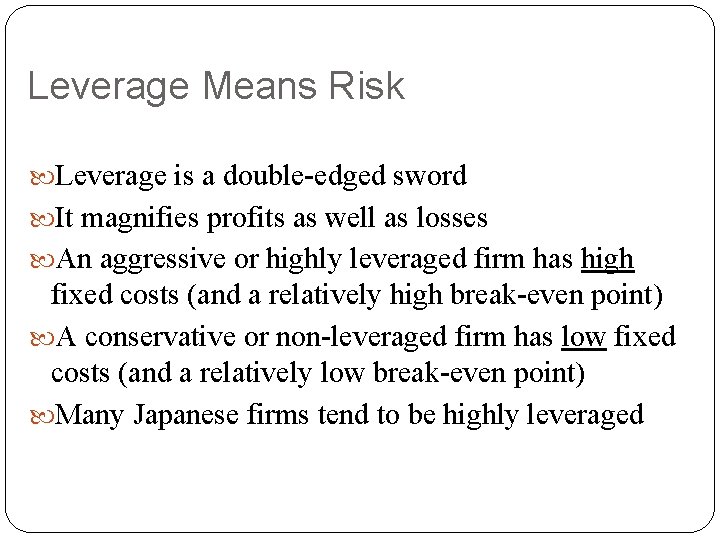
Leverage Means Risk Leverage is a double-edged sword It magnifies profits as well as losses An aggressive or highly leveraged firm has high fixed costs (and a relatively high break-even point) A conservative or non-leveraged firm has low fixed costs (and a relatively low break-even point) Many Japanese firms tend to be highly leveraged
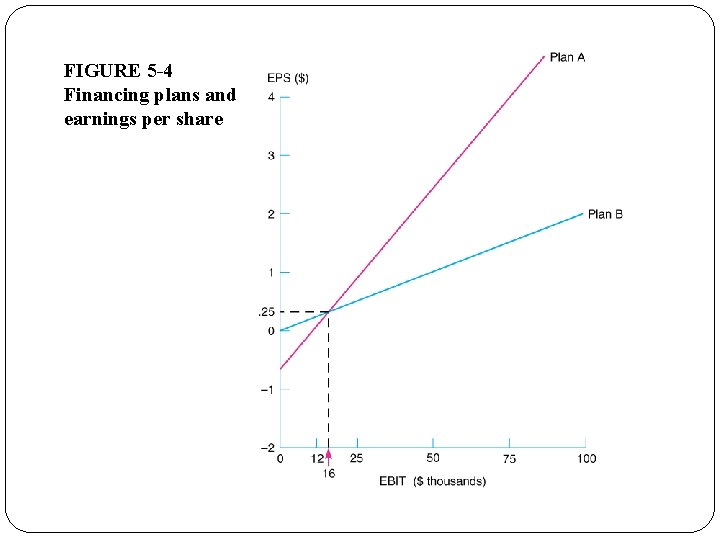
FIGURE 5 -4 Financing plans and earnings per share
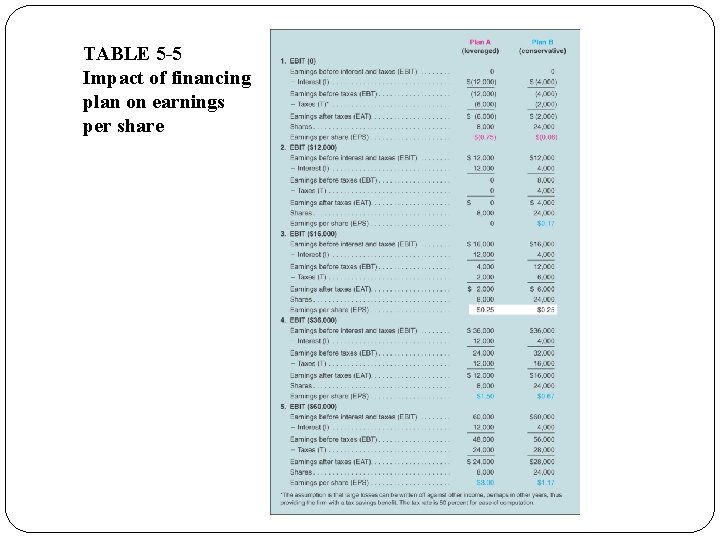
TABLE 5 -5 Impact of financing plan on earnings per share
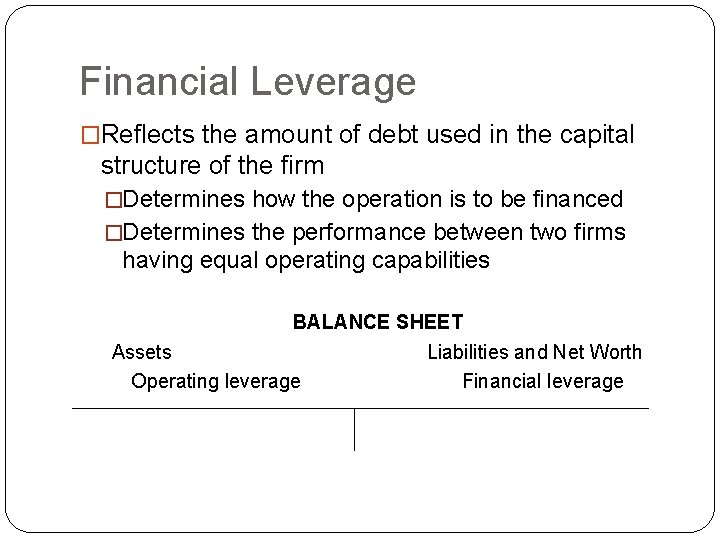
Financial Leverage �Reflects the amount of debt used in the capital structure of the firm �Determines how the operation is to be financed �Determines the performance between two firms having equal operating capabilities BALANCE SHEET Assets Liabilities and Net Worth Operating leverage Financial leverage
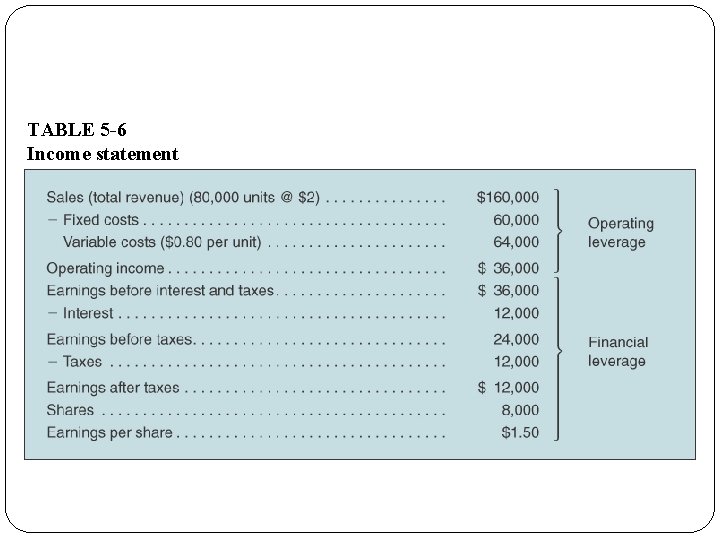
TABLE 5 -6 Income statement
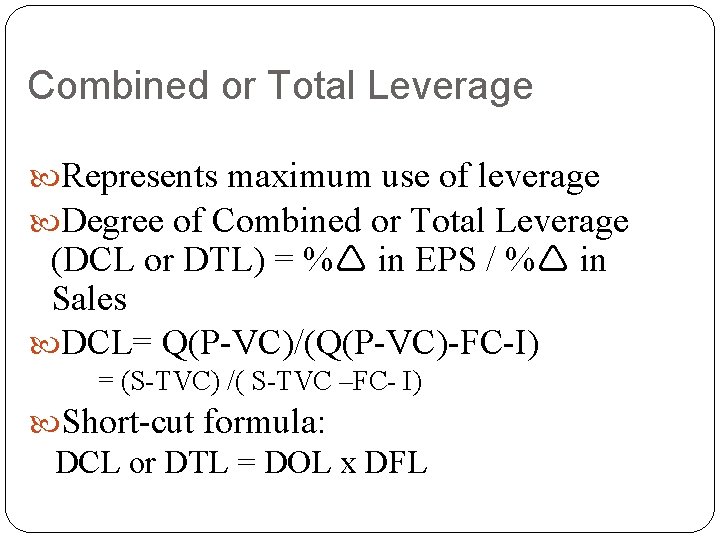
Combined or Total Leverage Represents maximum use of leverage Degree of Combined or Total Leverage (DCL or DTL) = % in EPS / % in Sales DCL= Q(P-VC)/(Q(P-VC)-FC-I) = (S-TVC) /( S-TVC –FC- I) Short-cut formula: DCL or DTL = DOL x DFL
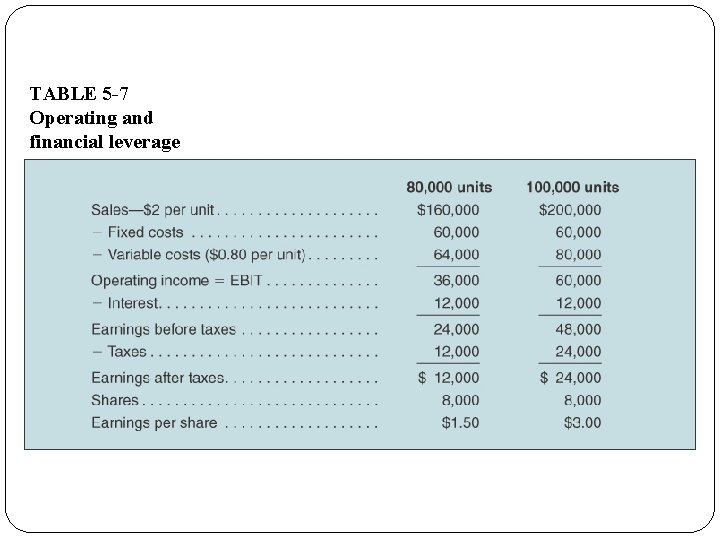
TABLE 5 -7 Operating and financial leverage
Combining Operating and Financial Leverage �Combined leverage: when both leverages allow a firm to maximize returns �Operating leverage: �Affects the asset structure of the firm �Determines the return from operations �Financial leverage: �Affects the debt-equity mix �Determines how the benefits received will be allocated