
Chapter 5 Movement Walking standing turning sitting and
- Slides: 13
Chapter 5 Movement
Walking, standing, turning, sitting, and gesturing are all kinds of movement. Effective movement is motivated by a characters intentions.
Gestures include expressive bodily actions such as: shrugging, pointing, or raising your eyebrows. Gestures need to have motivation behind them and also need to be executed in a way that shows you mean to do them.
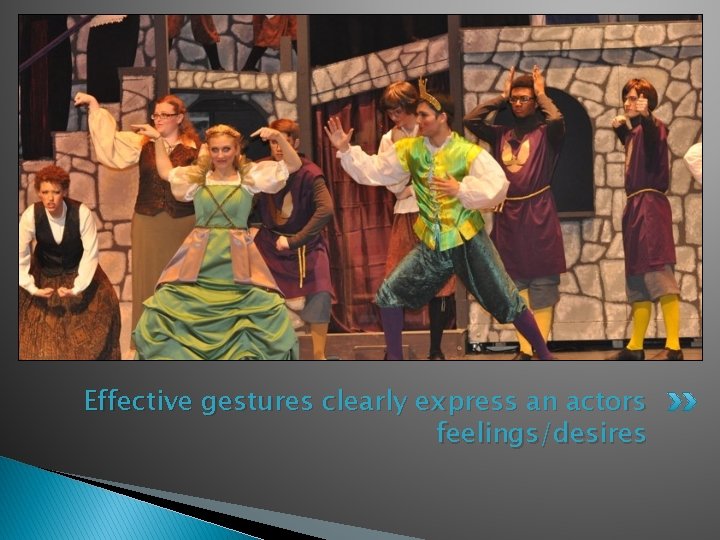
Effective gestures clearly express an actors feelings/desires
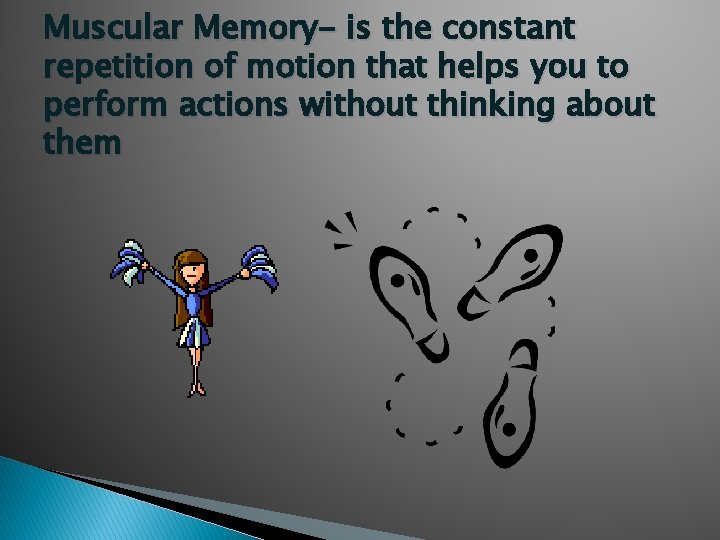
Muscular Memory- is the constant repetition of motion that helps you to perform actions without thinking about them
Scenario includes information about the plot, characters, and conflict. Has a clear beginning, middle, and end.
Entering/Exit Be in character until you are certain the audience can no longer see you.
Sitting/Standing Sit with your back straight and rise gracefully. Don’t look down at chair or use hands unless it is part of your character.
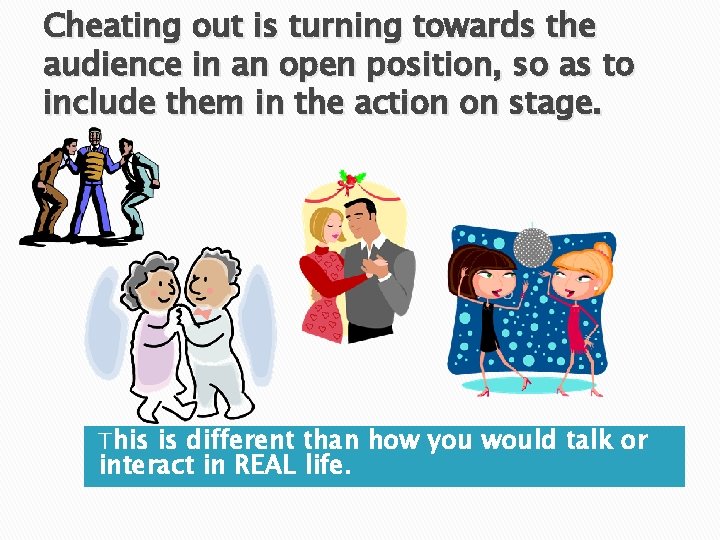
Cheating out is turning towards the audience in an open position, so as to include them in the action on stage. This is different than how you would talk or interact in REAL life.
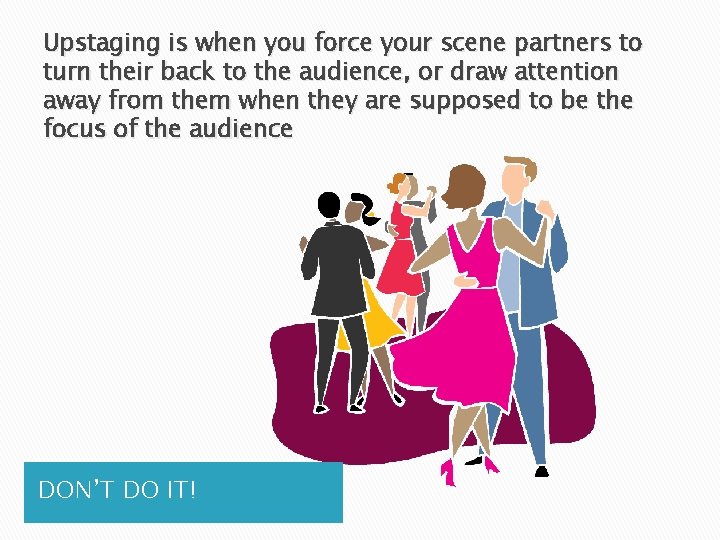
Upstaging is when you force your scene partners to turn their back to the audience, or draw attention away from them when they are supposed to be the focus of the audience DON’T DO IT!
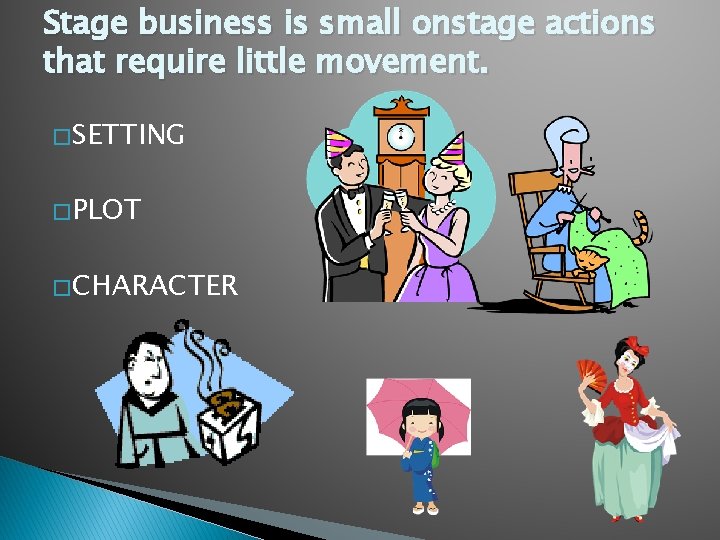
Stage business is small onstage actions that require little movement. � SETTING � PLOT � CHARACTER
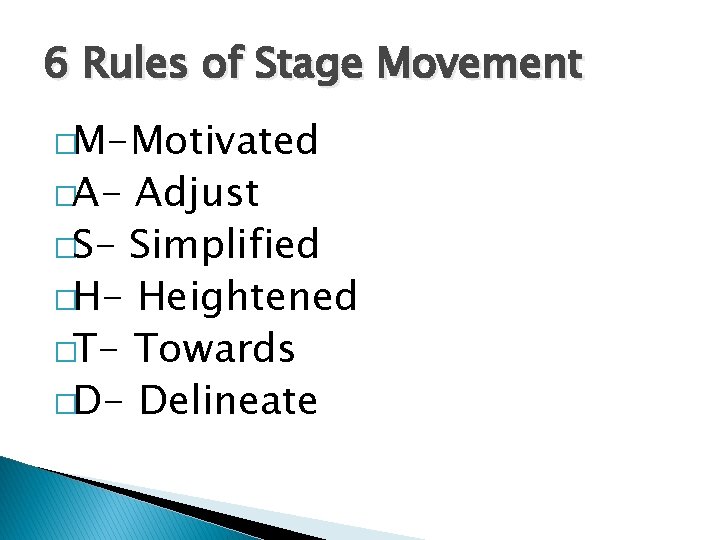
6 Rules of Stage Movement �M-Motivated �A- Adjust �S- Simplified �H- Heightened �T- Towards �D- Delineate
How should we keep the audience in mind when moving on stage? � Remain open to the audience as much as possible, CHEAT OUT � Enter/Exit in character � Use only those movements that are motivated by the plot or dialogue. Be aware of your actions and be sure to not steal focus from others. � Remember the 6 Rules