
Chapter 5 Molecular Orbital Theory Interactions of two
Chapter 5 Molecular Orbital Theory
Interactions of two s orbitals: H 2 Look at combinations of 1 s wavefunctions:
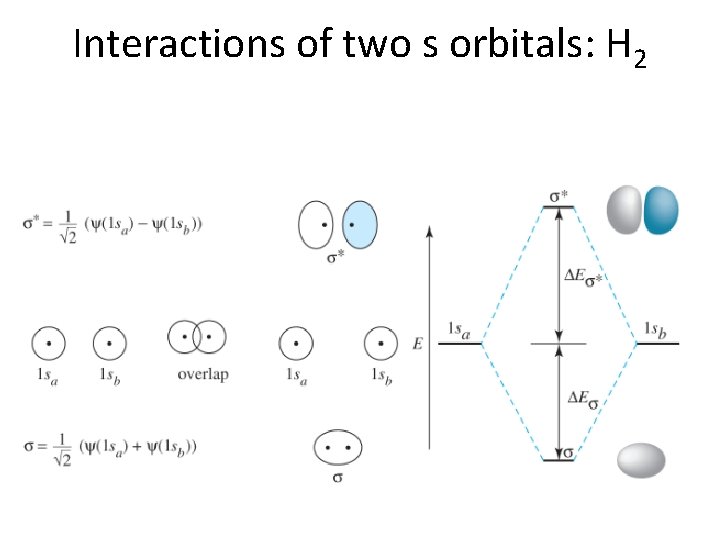
Interactions of two s orbitals: H 2
Interactions of two p orbitals
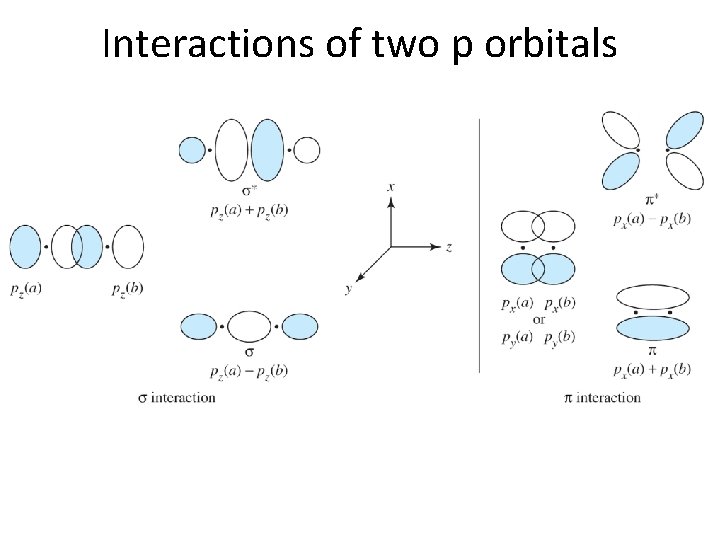
Interactions of two p orbitals
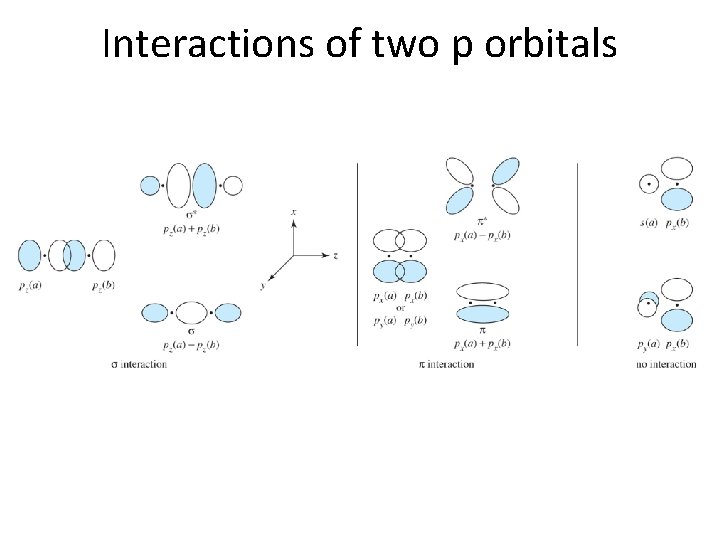
Interactions of two p orbitals
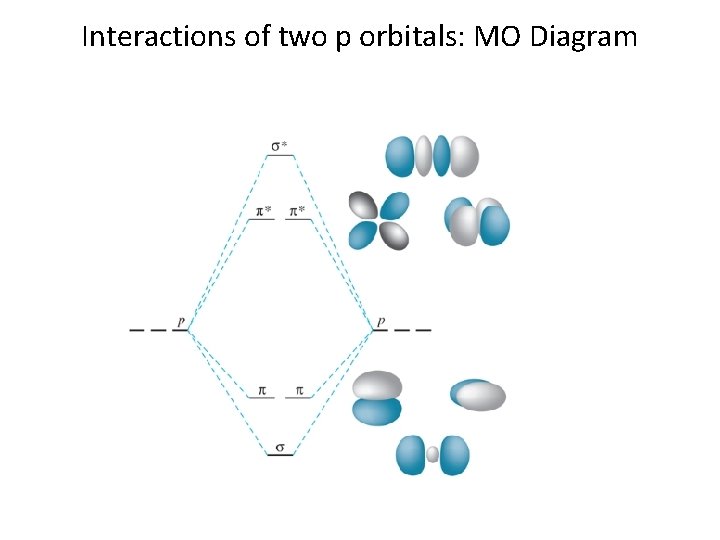
Interactions of two p orbitals: MO Diagram
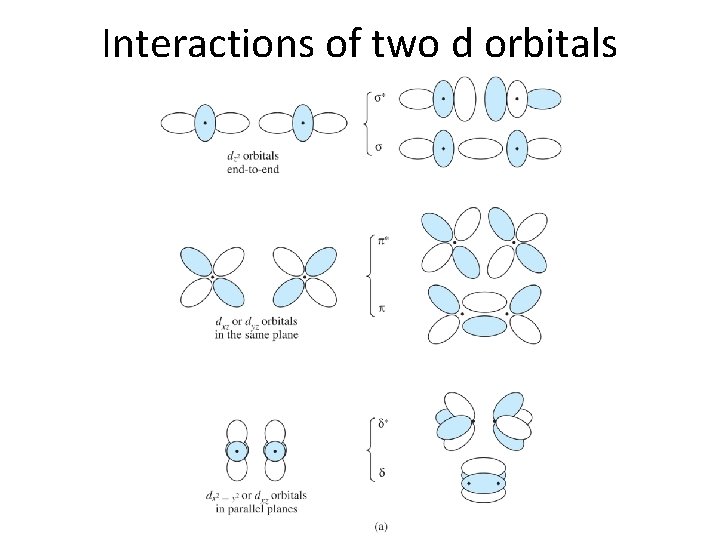
Interactions of two d orbitals
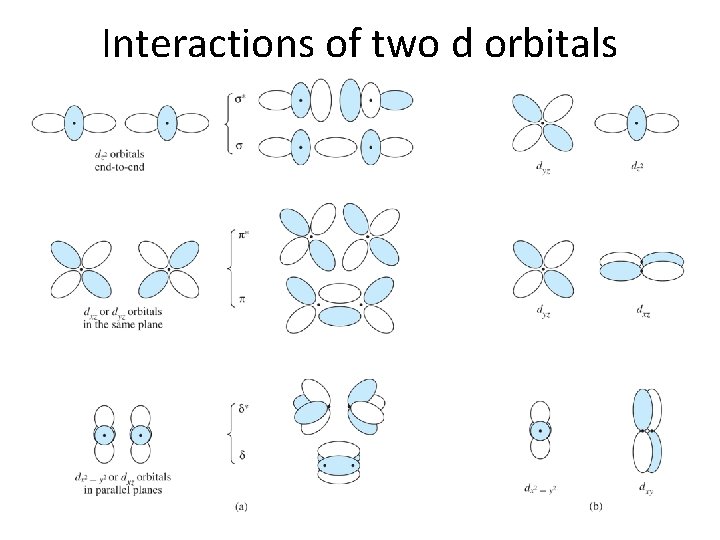
Interactions of two d orbitals
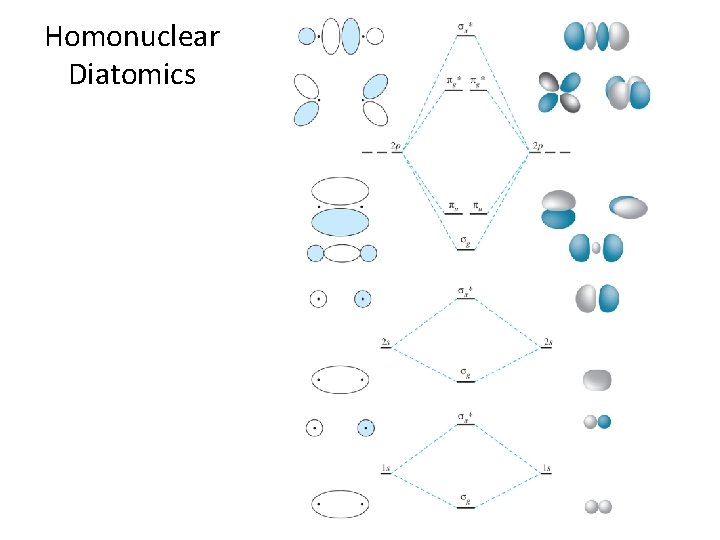
Homonuclear Diatomics

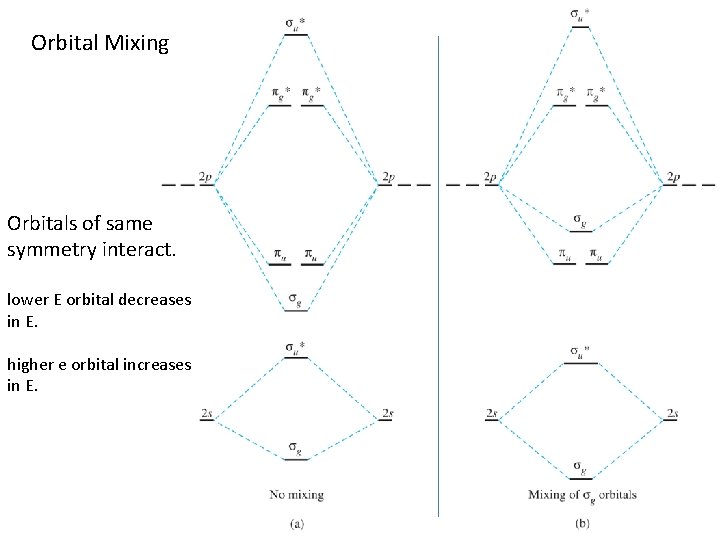
Orbital Mixing Orbitals of same symmetry interact. lower E orbital decreases in E. higher e orbital increases in E.
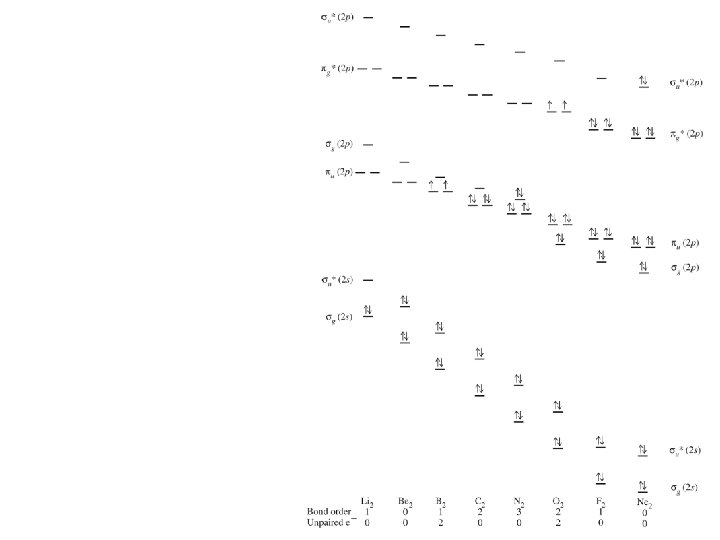
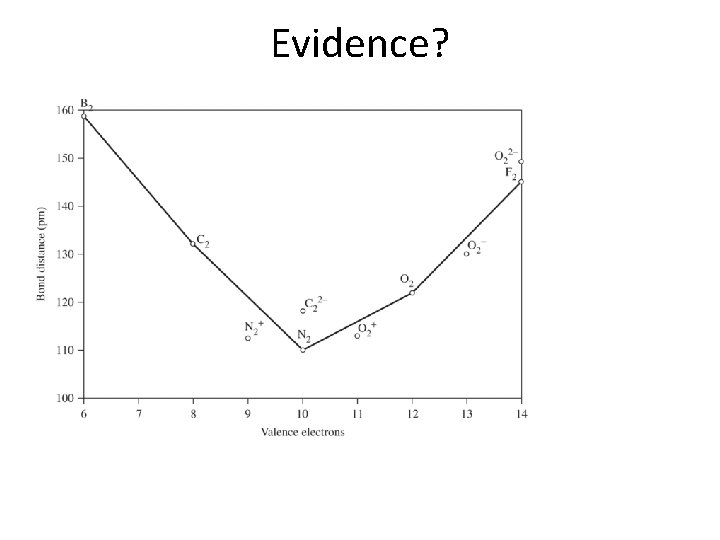
Evidence?
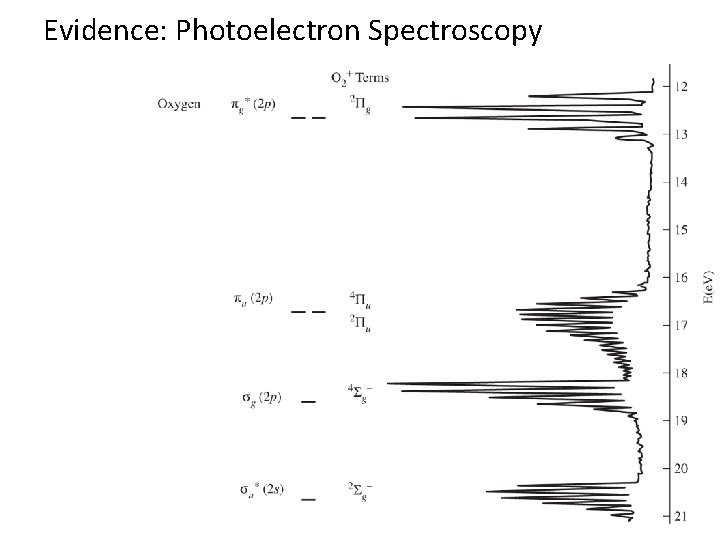
Evidence: Photoelectron Spectroscopy
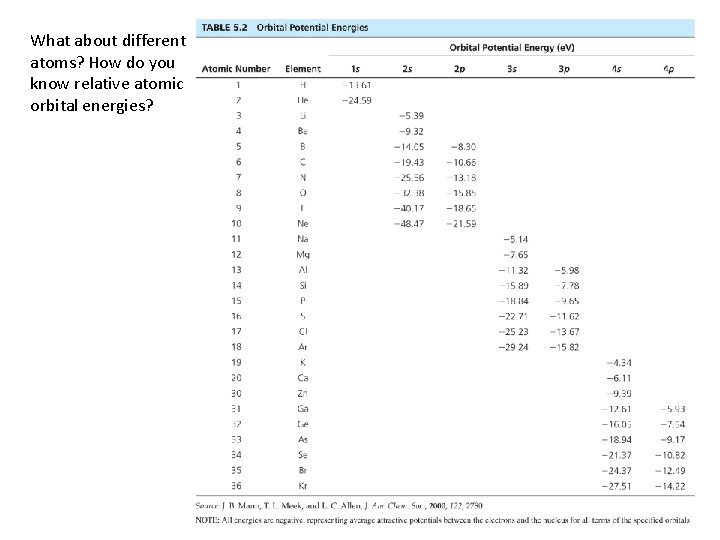
What about different atoms? How do you know relative atomic orbital energies?
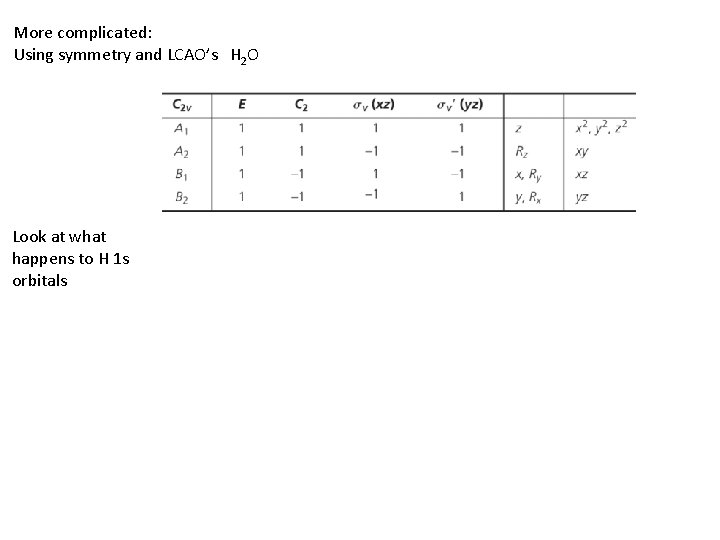
More complicated: Using symmetry and LCAO’s H 2 O Look at what happens to H 1 s orbitals

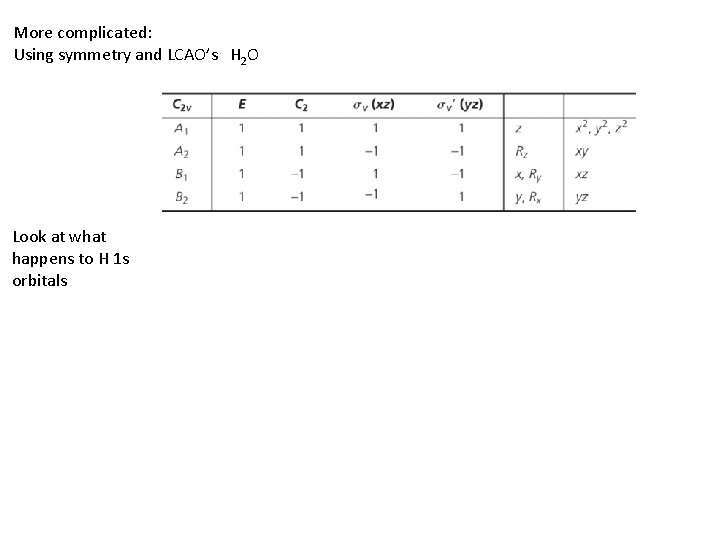
More complicated: Using symmetry and LCAO’s H 2 O Look at what happens to H 1 s orbitals
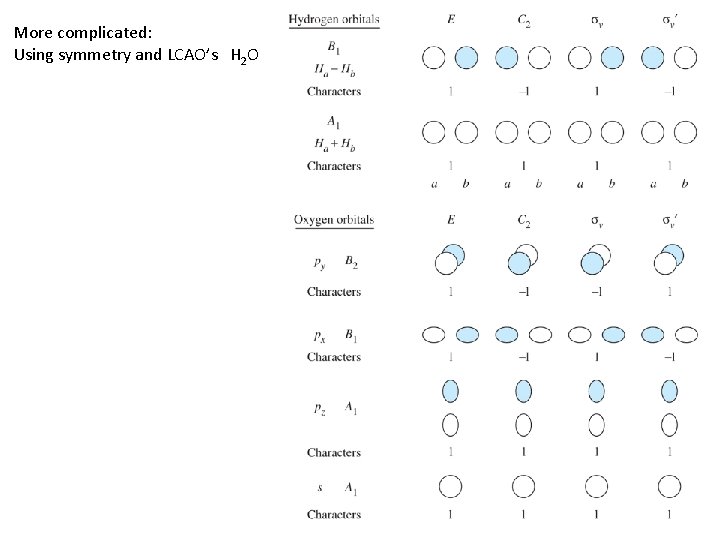
More complicated: Using symmetry and LCAO’s H 2 O
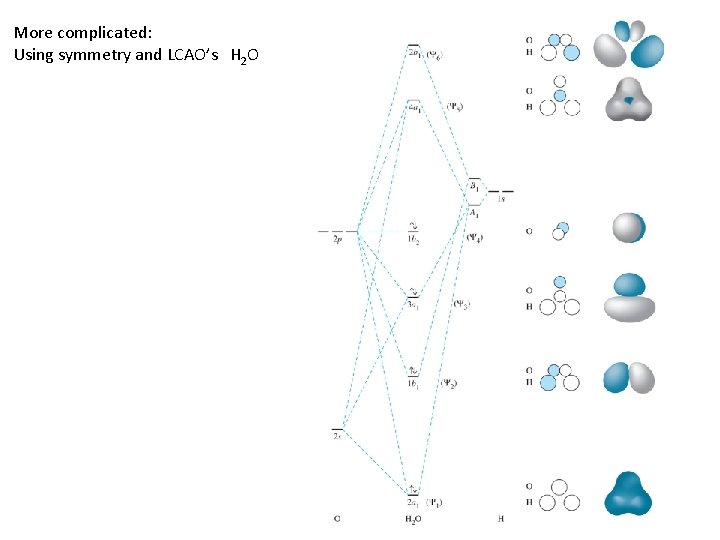
More complicated: Using symmetry and LCAO’s H 2 O
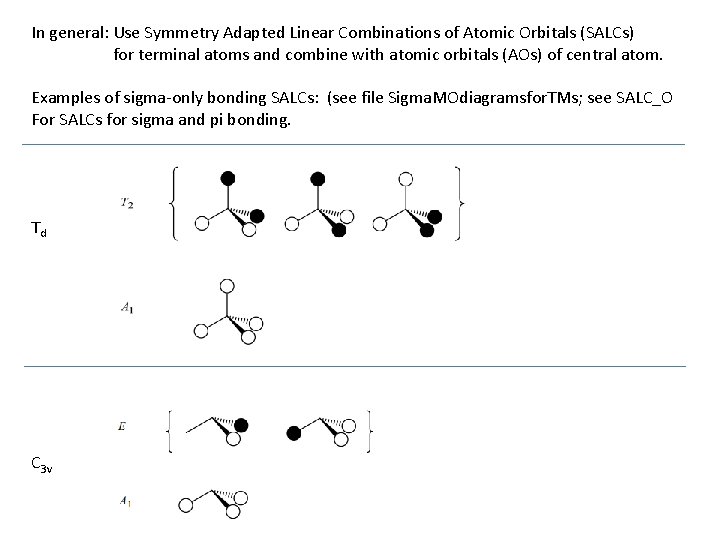
In general: Use Symmetry Adapted Linear Combinations of Atomic Orbitals (SALCs) for terminal atoms and combine with atomic orbitals (AOs) of central atom. Examples of sigma-only bonding SALCs: (see file Sigma. MOdiagramsfor. TMs; see SALC_O For SALCs for sigma and pi bonding. Td C 3 v
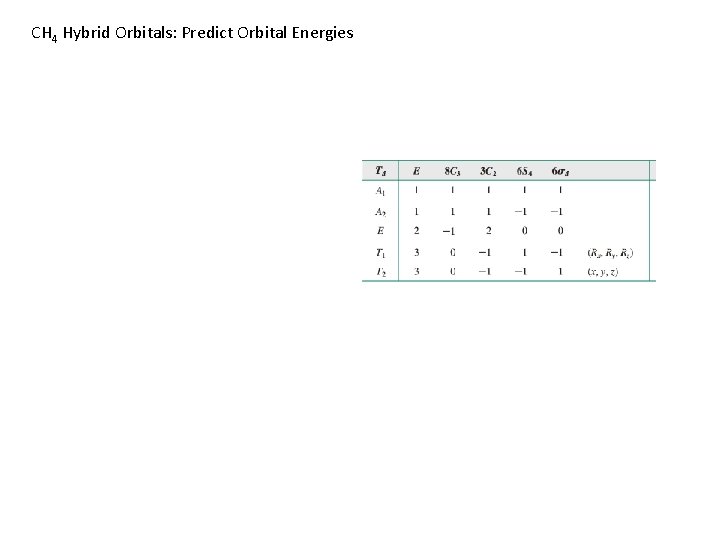
CH 4 Hybrid Orbitals: Predict Orbital Energies
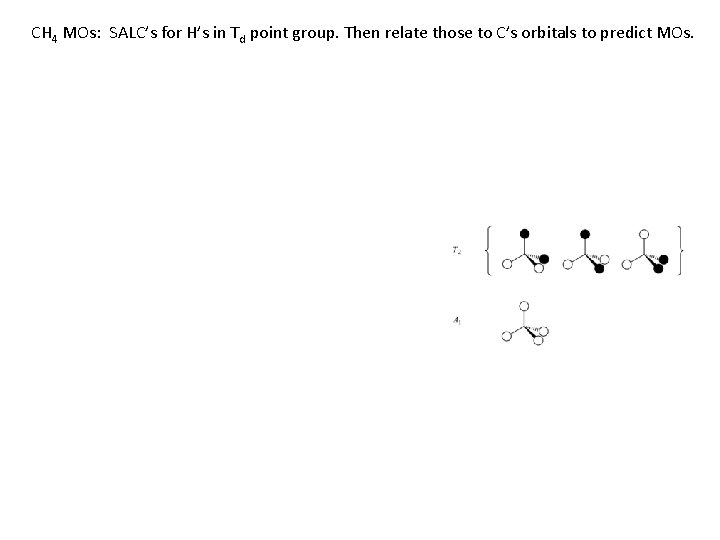
CH 4 MOs: SALC’s for H’s in Td point group. Then relate those to C’s orbitals to predict MOs.
- Slides: 24