
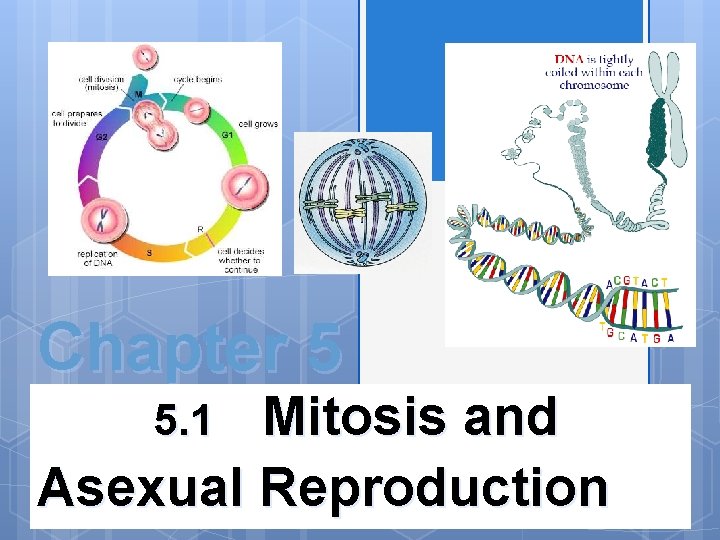
Chapter 5 Mitosis and Asexual Reproduction 5 1
- Slides: 21
Chapter 5 Mitosis and Asexual Reproduction 5. 1
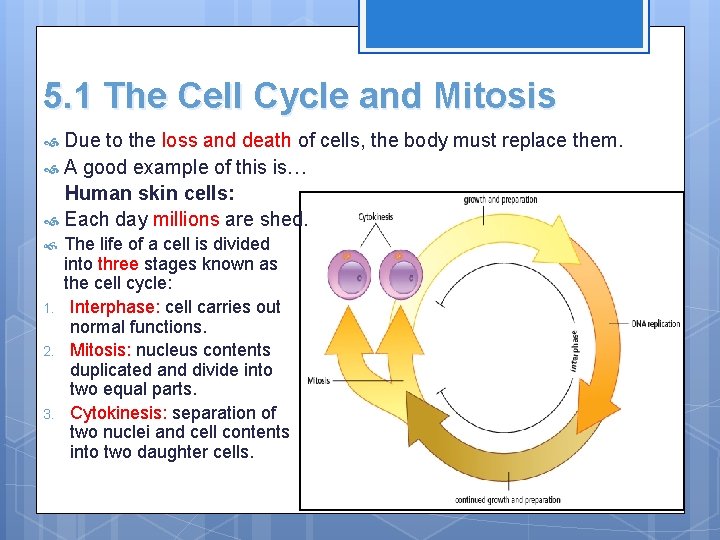
5. 1 The Cell Cycle and Mitosis Due to the loss and death of cells, the body must replace them. A good example of this is… Human skin cells: Each day millions are shed. 1. 2. 3. The life of a cell is divided into three stages known as the cell cycle: Interphase: cell carries out normal functions. Mitosis: nucleus contents duplicated and divide into two equal parts. Cytokinesis: separation of two nuclei and cell contents into two daughter cells.
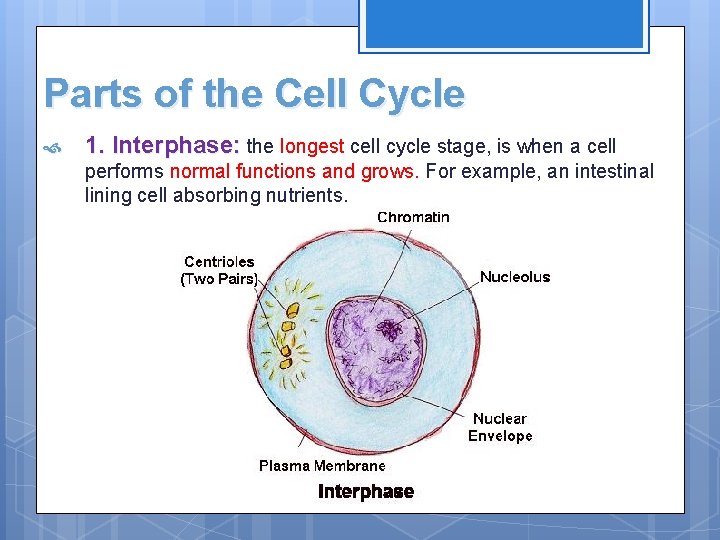
Parts of the Cell Cycle 1. Interphase: the longest cell cycle stage, is when a cell performs normal functions and grows. For example, an intestinal lining cell absorbing nutrients.
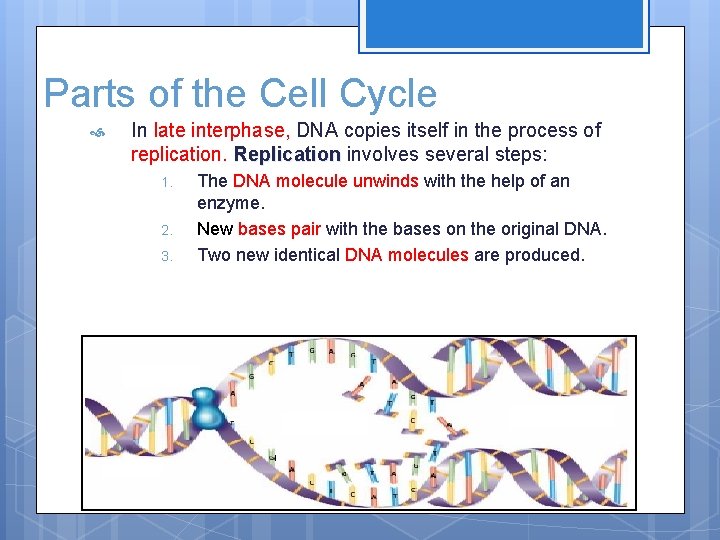
Parts of the Cell Cycle In late interphase, DNA copies itself in the process of replication. Replication involves several steps: 1. 2. 3. The DNA molecule unwinds with the help of an enzyme. New bases pair with the bases on the original DNA. Two new identical DNA molecules are produced.
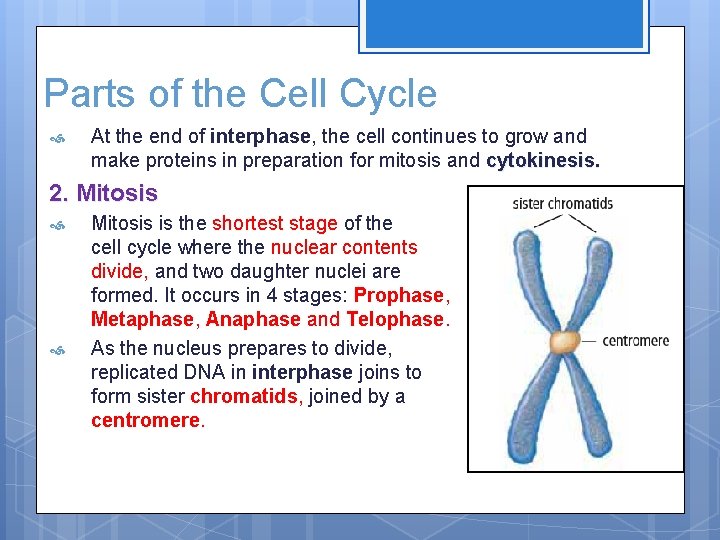
Parts of the Cell Cycle At the end of interphase, the cell continues to grow and make proteins in preparation for mitosis and cytokinesis. 2. Mitosis is the shortest stage of the cell cycle where the nuclear contents divide, and two daughter nuclei are formed. It occurs in 4 stages: Prophase, Metaphase, Anaphase and Telophase. As the nucleus prepares to divide, replicated DNA in interphase joins to form sister chromatids, joined by a centromere.
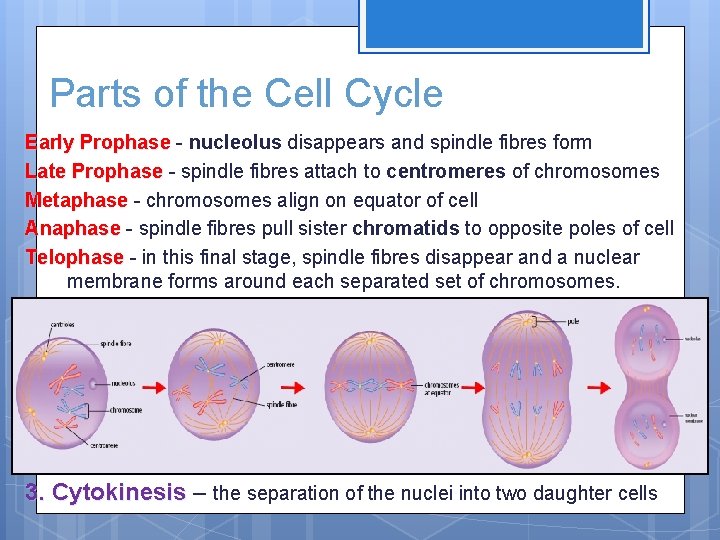
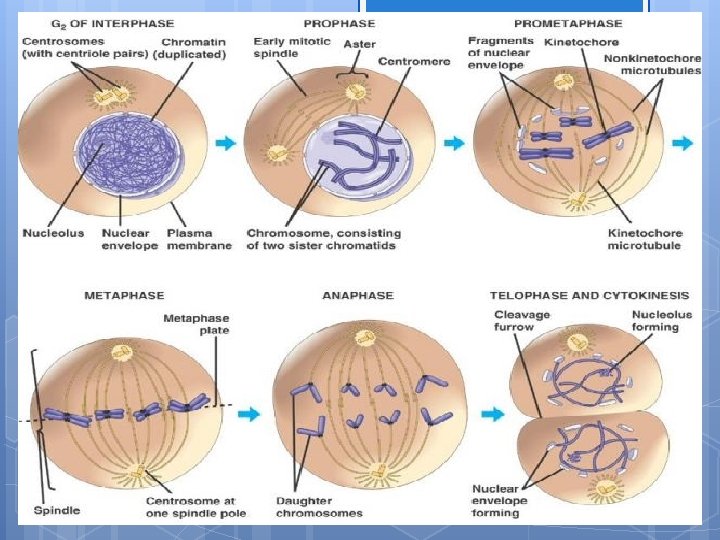
Parts of the Cell Cycle Early Prophase - nucleolus disappears and spindle fibres form Late Prophase - spindle fibres attach to centromeres of chromosomes Metaphase - chromosomes align on equator of cell Anaphase - spindle fibres pull sister chromatids to opposite poles of cell Telophase - in this final stage, spindle fibres disappear and a nuclear membrane forms around each separated set of chromosomes. 3. Cytokinesis – the separation of the nuclei into two daughter cells
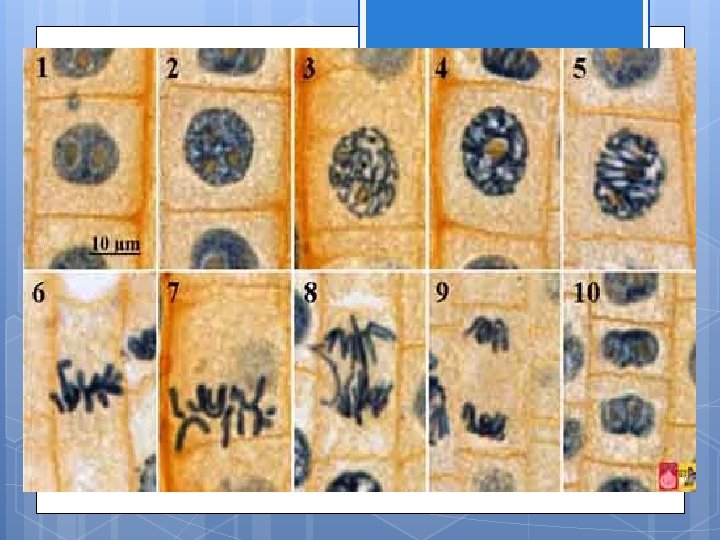
Mitosis in Onion Root Tip
Cell Cycle Problems Checkpoints in the cell cycle will prevent division if: If the cell is short of nutrients If the DNA within the nucleus has not been replicated If the DNA is damaged Mutations in genes involving checkpoints can result in an out-of-control cell cycle. The result can be uncontrolled cell division: cancer.
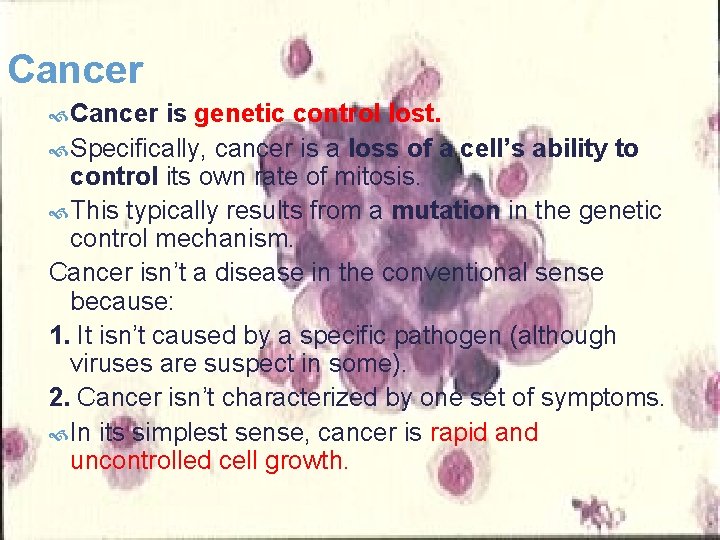
Cancer is genetic control lost. Specifically, cancer is a loss of a cell’s ability to control its own rate of mitosis. This typically results from a mutation in the genetic control mechanism. Cancer isn’t a disease in the conventional sense because: 1. It isn’t caused by a specific pathogen (although viruses are suspect in some). 2. Cancer isn’t characterized by one set of symptoms. In its simplest sense, cancer is rapid and uncontrolled cell growth.
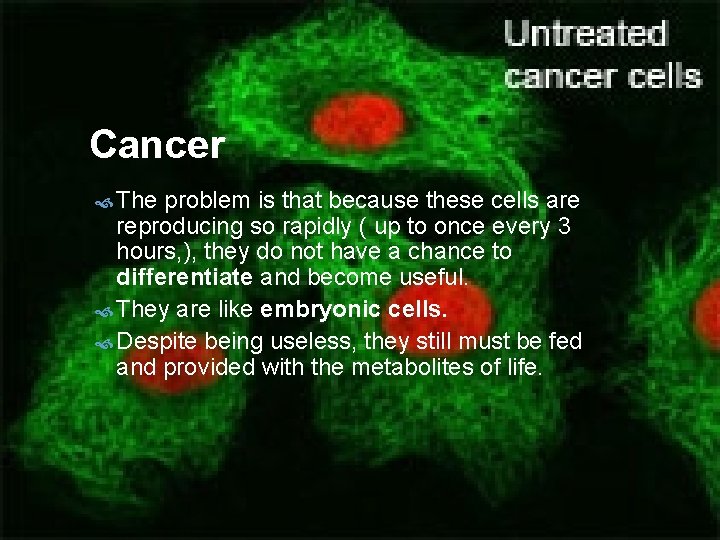
Cancer The problem is that because these cells are reproducing so rapidly ( up to once every 3 hours, ), they do not have a chance to differentiate and become useful. They are like embryonic cells. Despite being useless, they still must be fed and provided with the metabolites of life.
Cancer They survive at the expense of normal cells that do have a function. This ultimately can lead to the death of the individual as so many normal cells become sacrificed to satisfy the voracious appetite of the cancer cells.
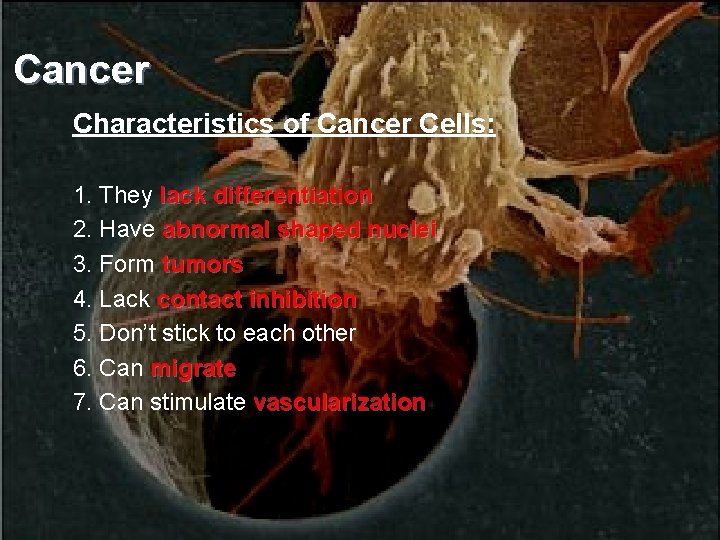
Cancer Characteristics of Cancer Cells: 1. They lack differentiation 2. Have abnormal shaped nuclei 3. Form tumors 4. Lack contact inhibition 5. Don’t stick to each other 6. Can migrate 7. Can stimulate vascularization
7 Warning Signs of Cancer: 1. Persistent cough 2. Lump under the skin 3. Pain in joints 4. Persistent headache 5. Blurred vision 6. Abnormal discharge of body fluids 7. Sore that won’t heal or change in mole
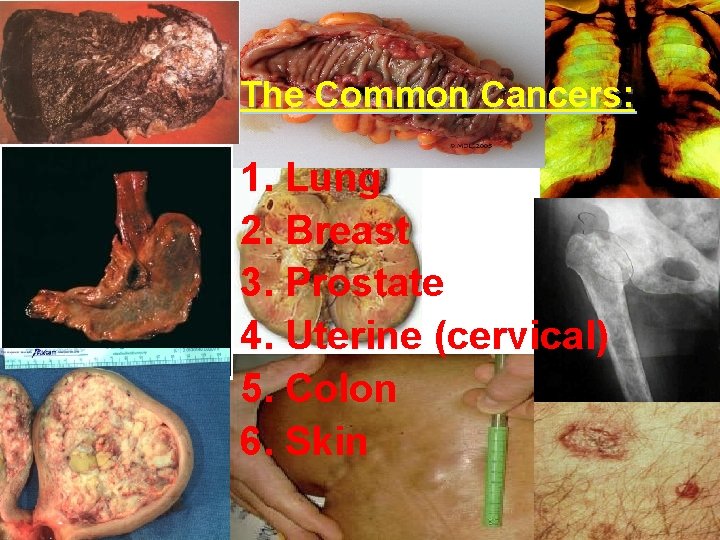
The Common Cancers: 1. Lung 2. Breast 3. Prostate 4. Uterine (cervical) 5. Colon 6. Skin
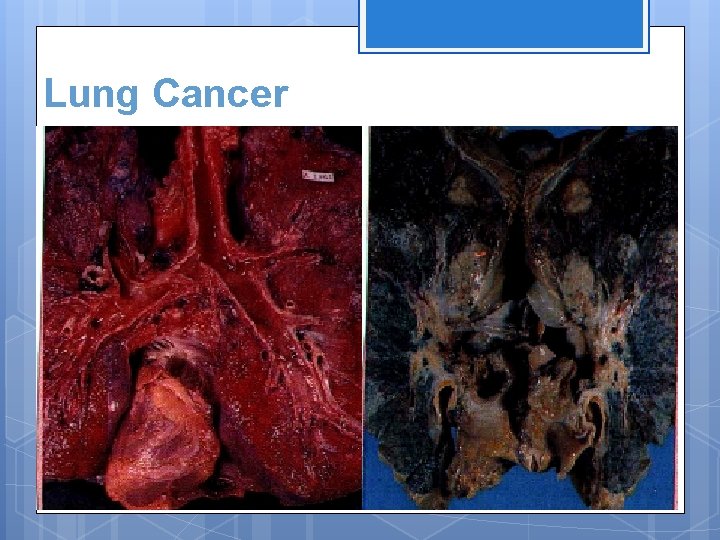
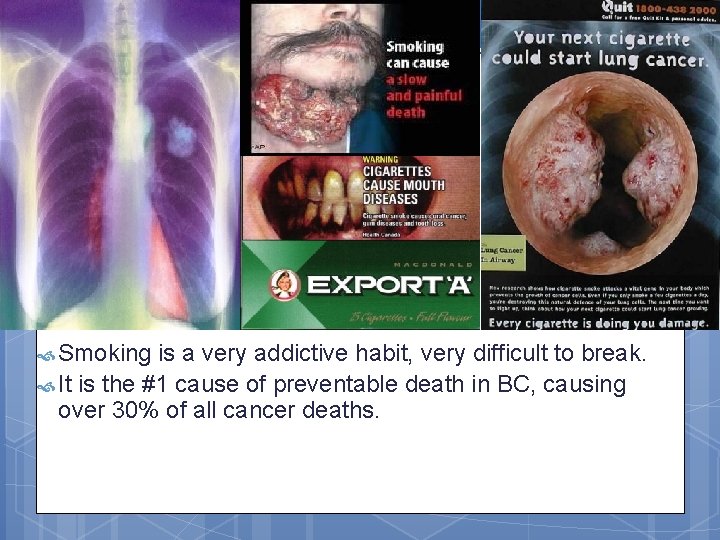
Lung Cancer
Smoking is a very addictive habit, very difficult to break. It is the #1 cause of preventable death in BC, causing over 30% of all cancer deaths.
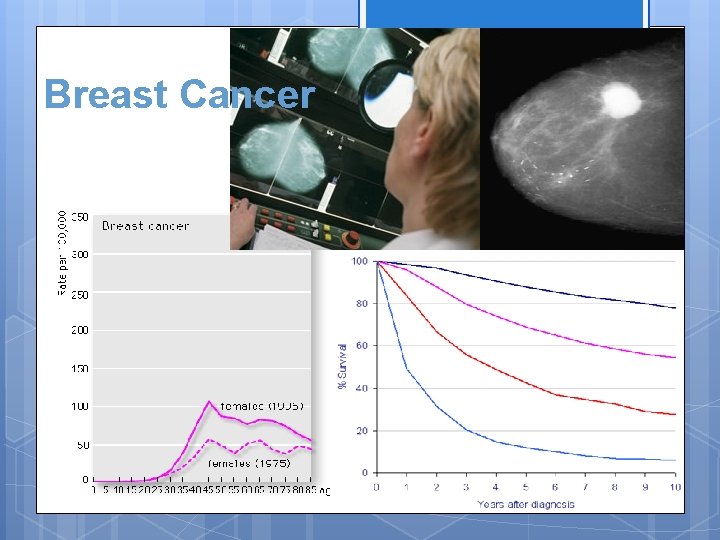
Breast Cancer
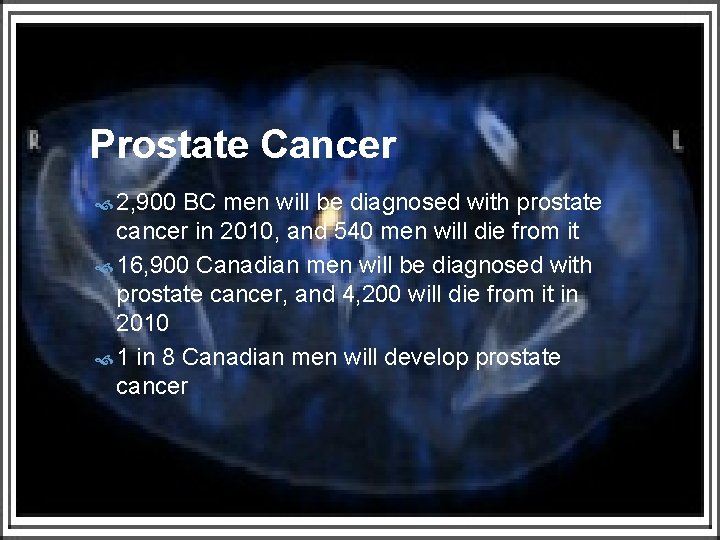
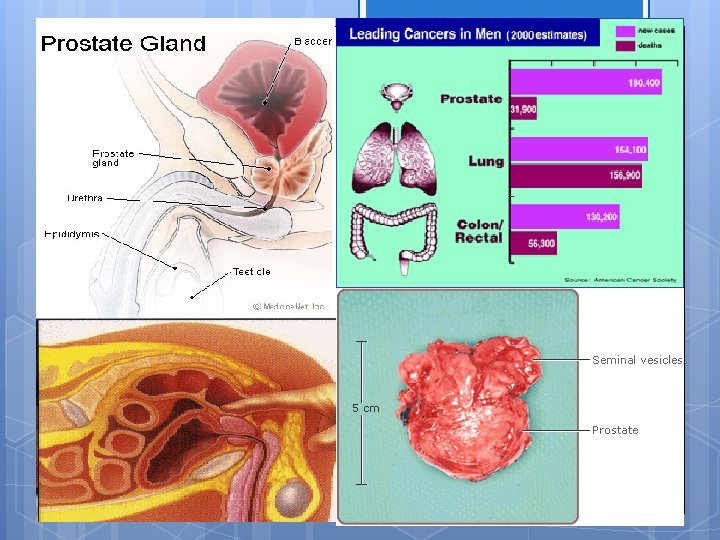
Prostate Cancer 2, 900 BC men will be diagnosed with prostate cancer in 2010, and 540 men will die from it 16, 900 Canadian men will be diagnosed with prostate cancer, and 4, 200 will die from it in 2010 1 in 8 Canadian men will develop prostate cancer
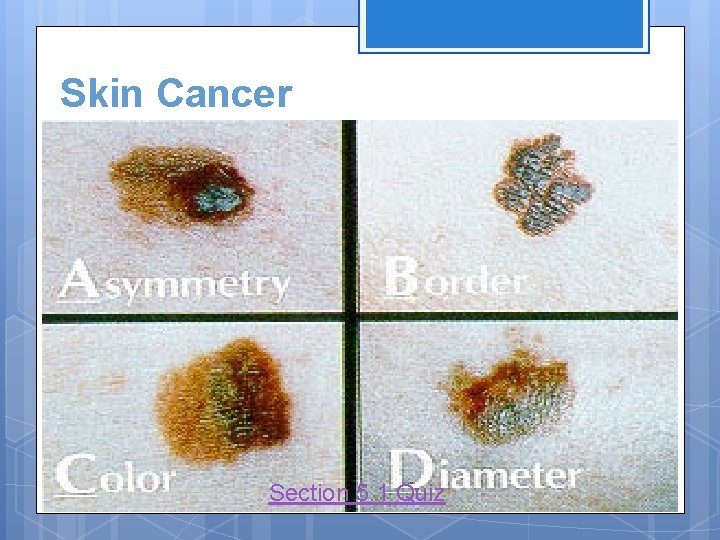
Skin Cancer Section 5. 1 Quiz