
Chapter 5 Membrane Structure Motion Synthesis Learning Outcomes
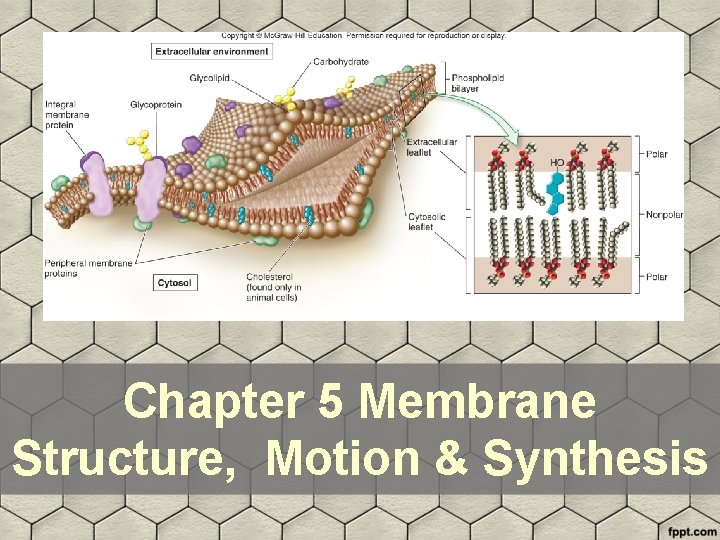
Chapter 5 Membrane Structure, Motion & Synthesis
Learning Outcomes • Identify the structural components of the cell membrane and describe how they work together. • Identify the three different types of membrane proteins. • Describe the fluid-mosaic model of membrane structure. • Describe the fluidity of membranes. • Outline the synthesis of lipids at the ER membrane. • Explain how transmembrane proteins are inserted into the ER membrane. • Describe the process of glycosylation and its functional consequences.
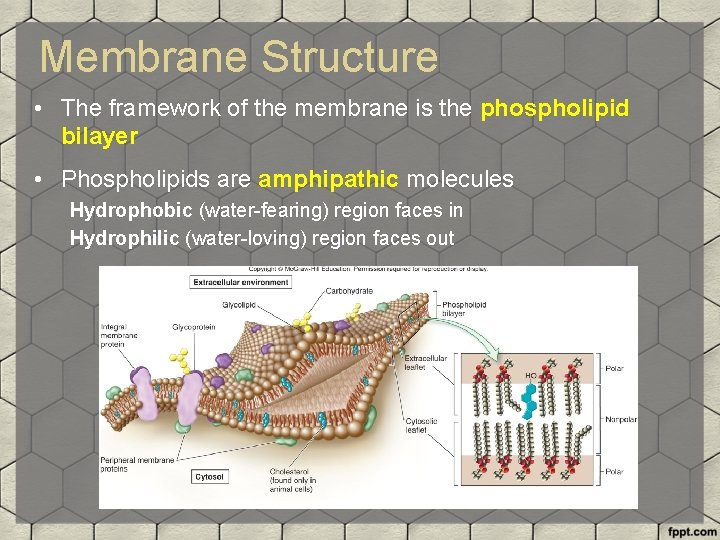
Membrane Structure • The framework of the membrane is the phospholipid bilayer • Phospholipids are amphipathic molecules Hydrophobic (water-fearing) region faces in Hydrophilic (water-loving) region faces out
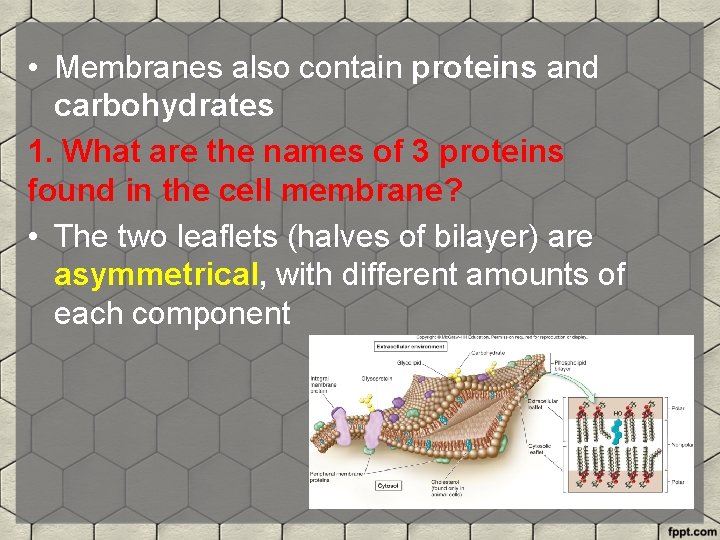
• Membranes also contain proteins and carbohydrates 1. What are the names of 3 proteins found in the cell membrane? • The two leaflets (halves of bilayer) are asymmetrical, with different amounts of each component
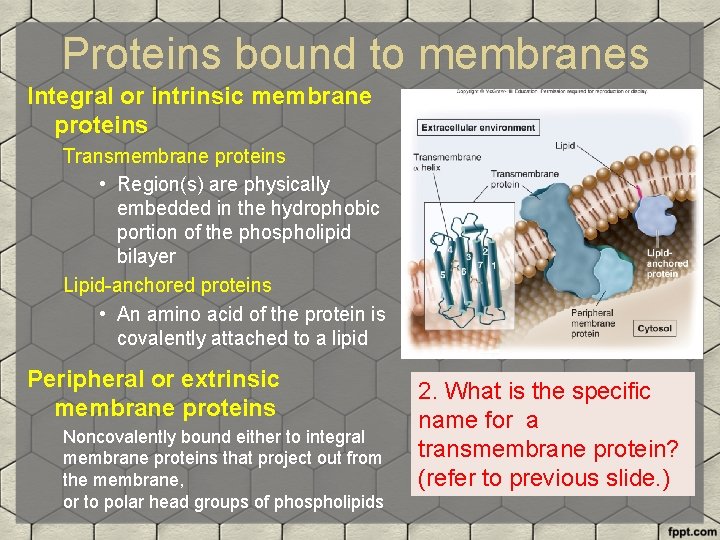
Proteins bound to membranes Integral or intrinsic membrane proteins Transmembrane proteins • Region(s) are physically embedded in the hydrophobic portion of the phospholipid bilayer Lipid-anchored proteins • An amino acid of the protein is covalently attached to a lipid Peripheral or extrinsic membrane proteins Noncovalently bound either to integral membrane proteins that project out from the membrane, or to polar head groups of phospholipids 2. What is the specific name for a transmembrane protein? (refer to previous slide. )

Approximately 20 -30% of All Genes Encode Transmembrane Proteins • Membranes are important medically as well as biologically • Computer programs can be used to predict the number of transmembrane proteins • Estimated percentage of membrane proteins is substantial: 20– 30% of all genes may encode transmembrane proteins • This trend is found throughout all domains of life including archaea, bacteria, and eukaryotes • Function of many genes is unknown – study may provide better understanding and better treatments for disease 3. What is the study of the proteins that make up the cell membrane called?
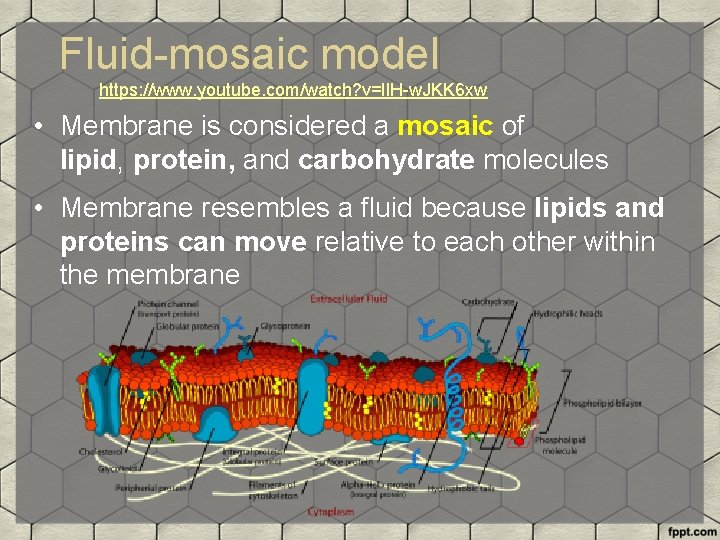
Fluid-mosaic model https: //www. youtube. com/watch? v=Il. H-w. JKK 6 xw • Membrane is considered a mosaic of lipid, protein, and carbohydrate molecules • Membrane resembles a fluid because lipids and proteins can move relative to each other within the membrane
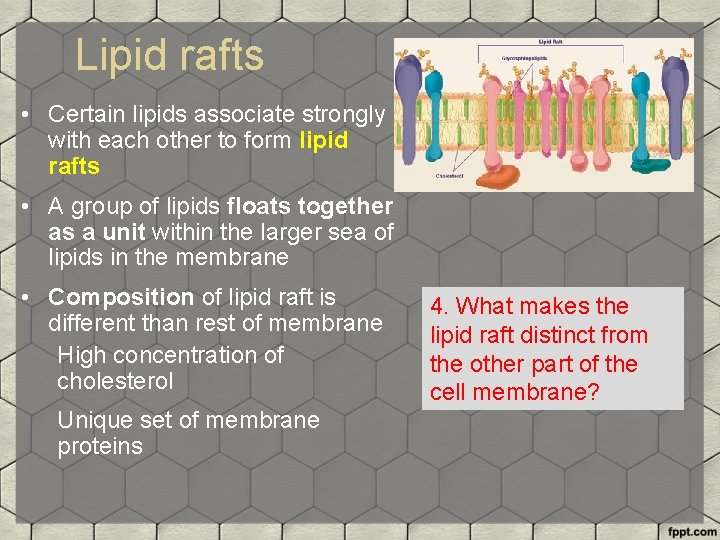
Lipid rafts • Certain lipids associate strongly with each other to form lipid rafts • A group of lipids floats together as a unit within the larger sea of lipids in the membrane • Composition of lipid raft is different than rest of membrane High concentration of cholesterol Unique set of membrane proteins 4. What makes the lipid raft distinct from the other part of the cell membrane?
Factors affecting fluidity • Length of fatty tails Shorter tails are less likely to interact, which makes the membrane more fluid • Presence of double bonds Double bond creates a kink in the fatty acyl tail, making it more difficult for neighboring tails to interact and making the bilayer more fluid • Presence of cholesterol Cholesterol tends to stabilize membranes Effects vary depending on temperature 5. Why do all of the factors make sense when thinking about fluidity?
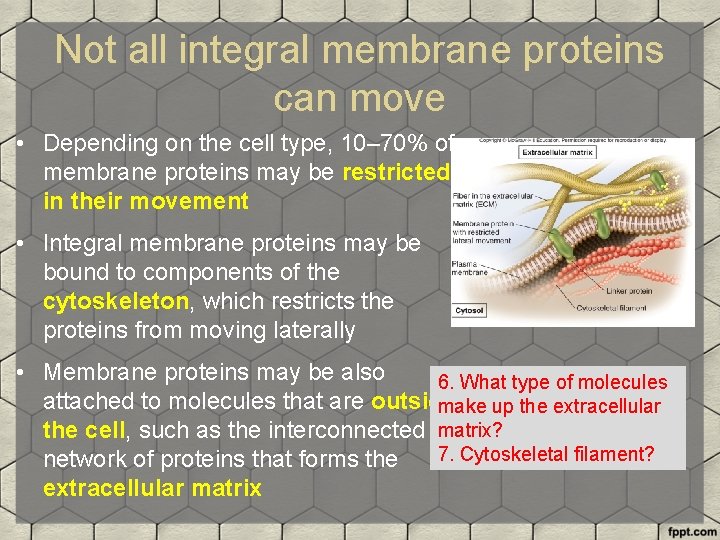
Not all integral membrane proteins can move • Depending on the cell type, 10– 70% of membrane proteins may be restricted in their movement • Integral membrane proteins may be bound to components of the cytoskeleton, which restricts the proteins from moving laterally • Membrane proteins may be also 6. What type of molecules attached to molecules that are outside make up the extracellular the cell, such as the interconnected matrix? 7. Cytoskeletal filament? network of proteins that forms the extracellular matrix

Synthesis of Membrane Components in Eukaryotic Cells Synthesis of Lipids • In eukaryotes, the cytosol and endomembrane system work together to synthesize lipids • Fatty acid building blocks are made via enzymes in cytosol or taken into cells from food • Process occurs at cytosolic leaflet of the Smooth Endoplastic Reticulum (ER) Figure 5. 7
Transfer of lipids to other membranes • Lipids in ER membrane can diffuse laterally to nuclear envelope • Transported via vesicles to Golgi, lysosomes, vacuoles, or plasma membrane • Lipid exchange proteins – extract lipid from one membrane for insertion in another
Synthesis of Transmembrane Proteins • Except for proteins destined for semiautonomous organelles, most transmembrane proteins are directed to the ER membrane first • From the ER, membrane proteins can be transferred via vesicles to other membranes of the cell 8. What is a semiautonomous organelle? 9. Where are “other membranes of the cell? ”
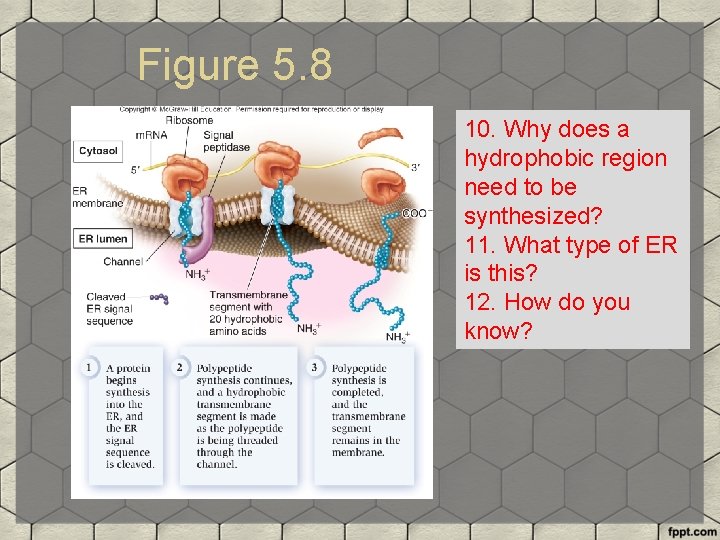
Figure 5. 8 10. Why does a hydrophobic region need to be synthesized? 11. What type of ER is this? 12. How do you know?
Glycosylation • Process of covalently attaching a carbohydrate to a protein or lipid Glycolipid – carbohydrate to lipid Glycoprotein – carbohydrate to protein • Can serve as recognition signals for other cellular proteins • Often play a role in cell surface recognition • Helps protect proteins from damage
Glycosylation continued N-linked Glycosylation q Attachment of carbohydrate to nitrogen atom of asparagine (amino acid) side chain O-linked Glycosylation q Addition of sugars to oxygen atom of serine or threonine (amino acids) side chains q Occurs only in Golgi
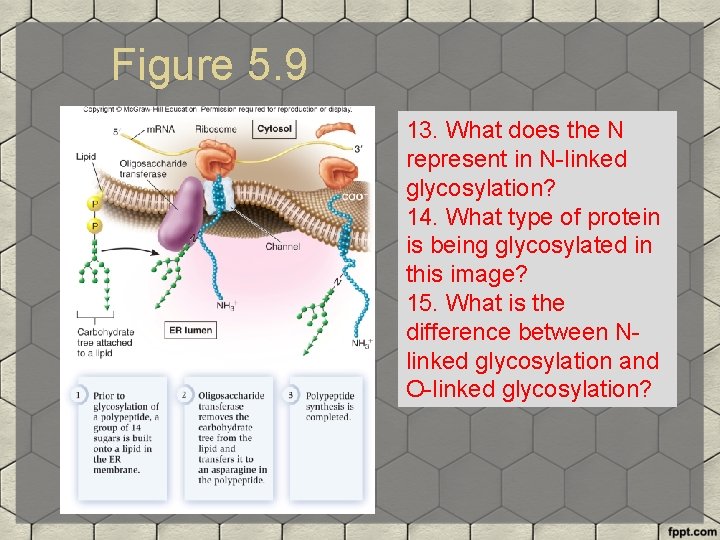
Figure 5. 9 13. What does the N represent in N-linked glycosylation? 14. What type of protein is being glycosylated in this image? 15. What is the difference between Nlinked glycosylation and O-linked glycosylation?
Take home quiz! • Watch the following video and write down as many facts as you can that describe information you have learned about the cell and the cell membrane. • https: //www. youtube. com/watch? v=Fzc. Tgrx. Mz. Zk • Explain these facts in your own words (don’t use a word you don’t know the meaning of!) Specific names of molecules and structures you have not learned should be described or changed to something you do know. • You may need to pause the video many times to capture all of the information it contains but this is your only assignment for next class! • You may work together but paper should not be exact copies of one another. • The sky is the limit. The student having the most facts will get the most points up to 25!!!
- Slides: 18