
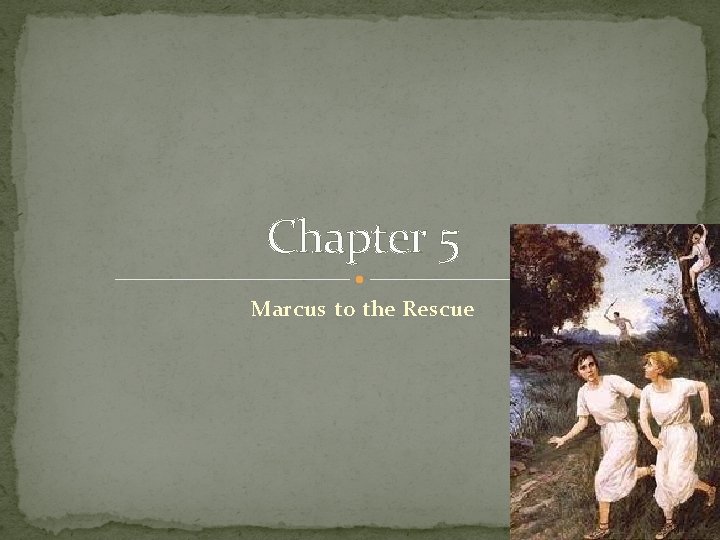
Chapter 5 Marcus to the Rescue SI Conj












- Slides: 82
Chapter 5 Marcus to the Rescue
SI Conj. if
DIES Noun day
CALIDUS Adj. warm
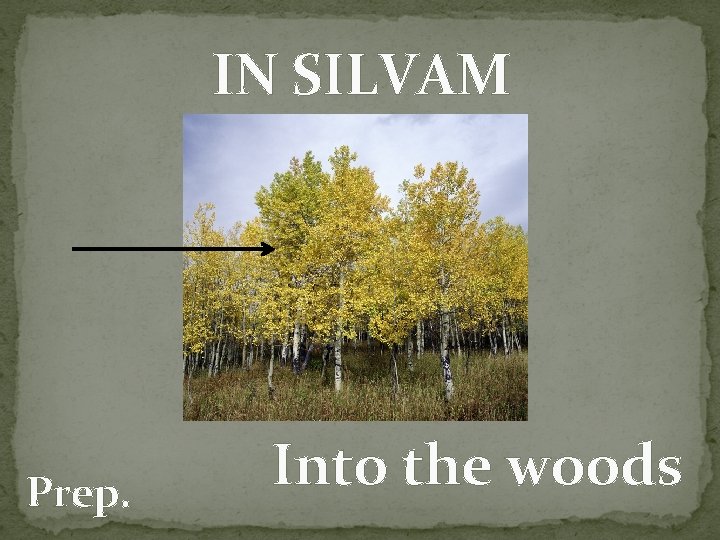
IN SILVAM Prep. Into the woods
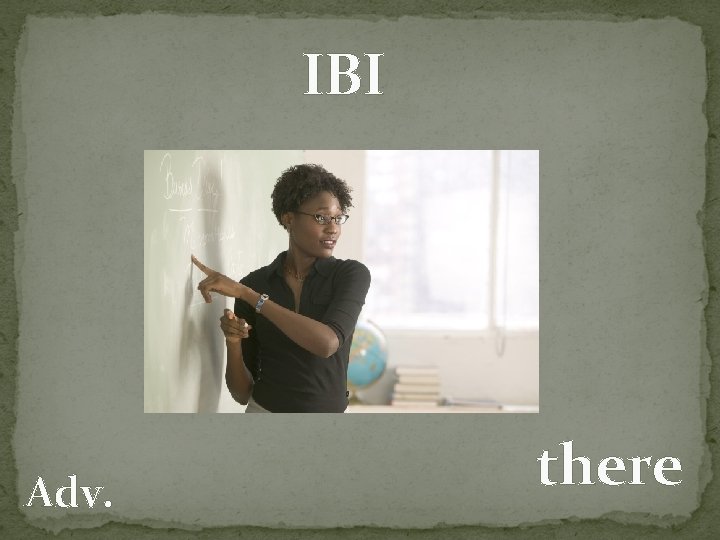
IBI Adv. there
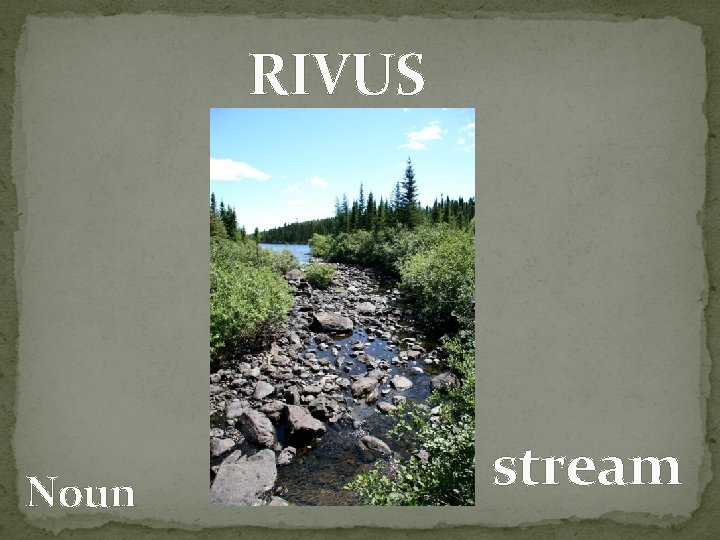
RIVUS Noun stream
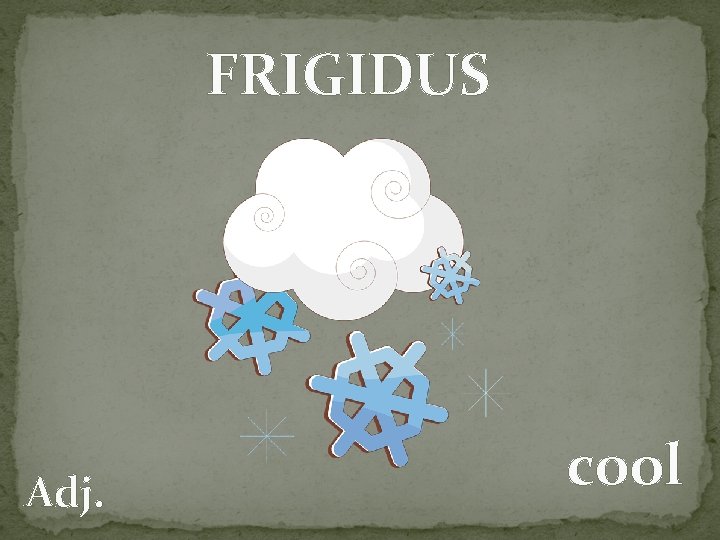
FRIGIDUS Adj. cool
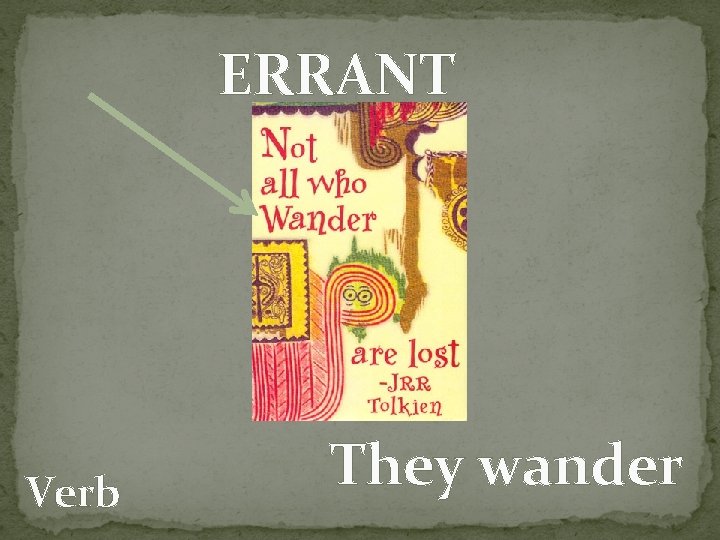
ERRANT Verb They wander
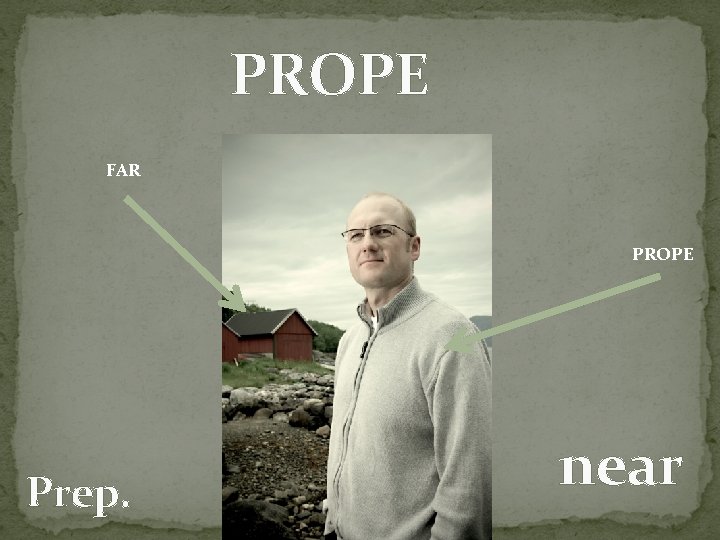
PROPE FAR PROPE Prep. near
VULT Verb Wishes, wants
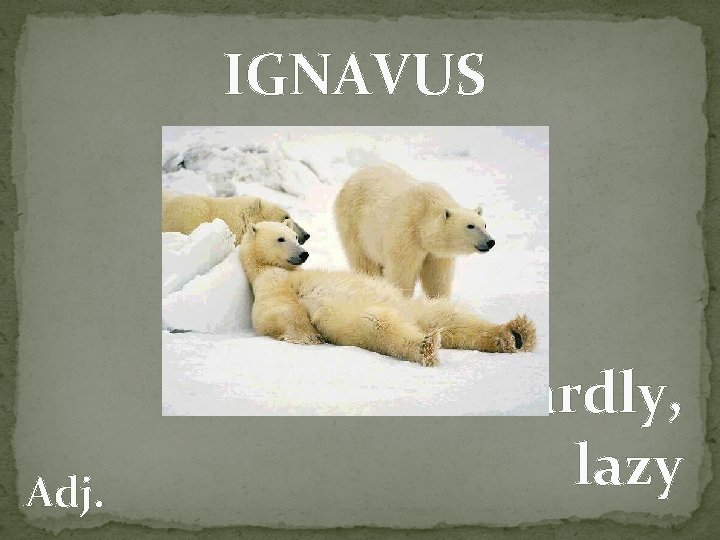
IGNAVUS Adj. Cowardly, lazy
RESPONDET Verb replies
NEQUE…NEQUE Conj. Neither…nor…
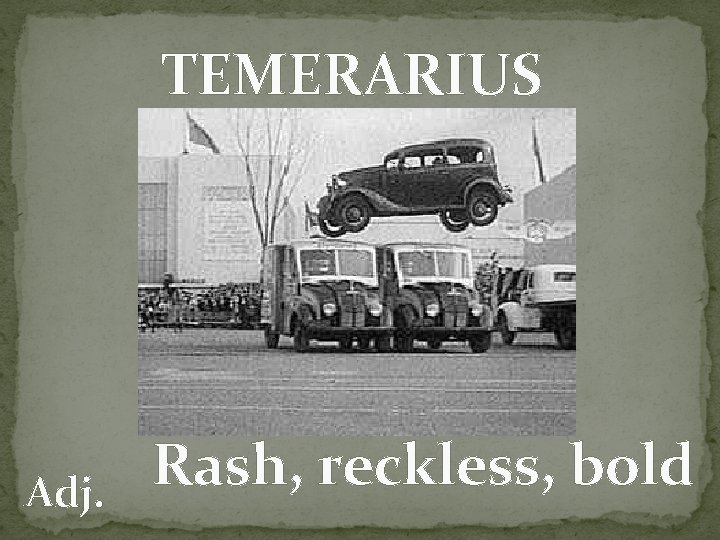
TEMERARIUS Adj. Rash, reckless, bold
LUPUS Noun wolf
PERTERRITUS Adj. Frightened, terrified
STATIM Adv. immediately
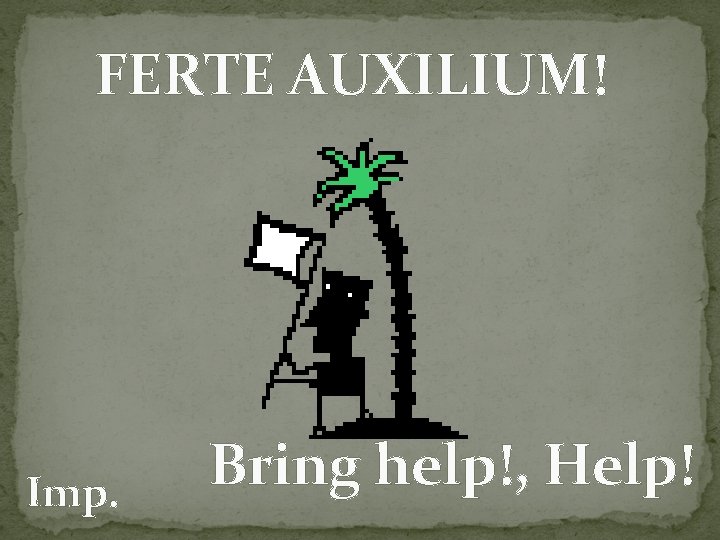
FERTE AUXILIUM! Imp. Bring help!, Help!
UBI Conj. Where, when
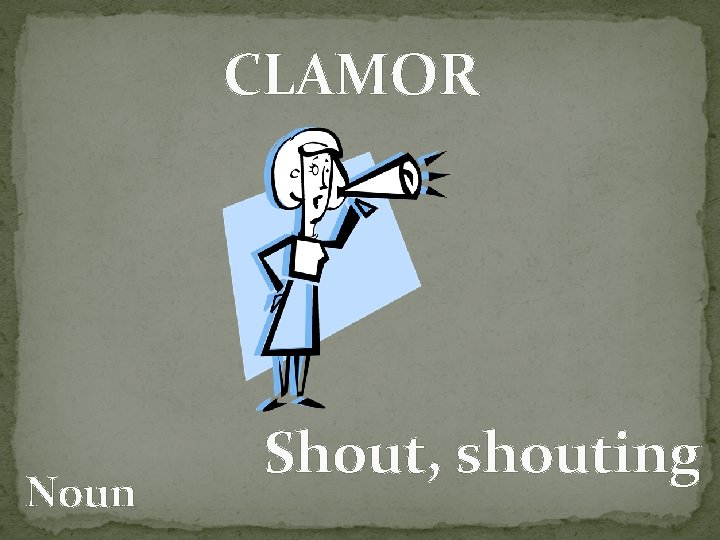
CLAMOR Noun Shout, shouting
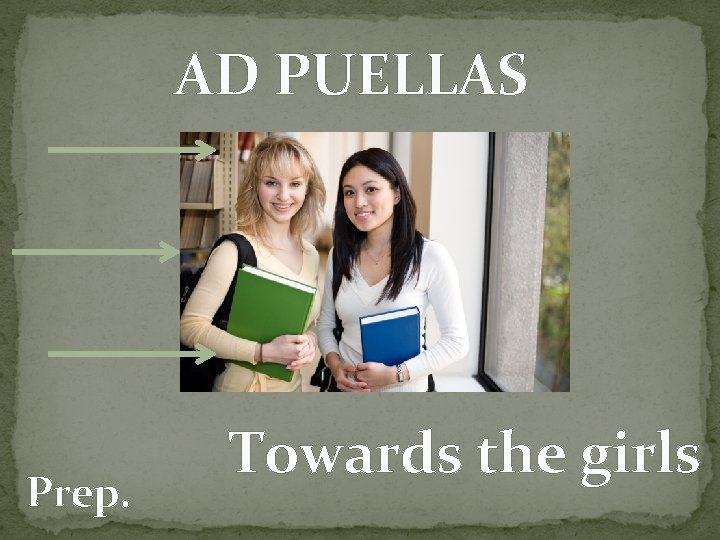
AD PUELLAS Prep. Towards the girls
EOS Pro. them
EUM Pro. him
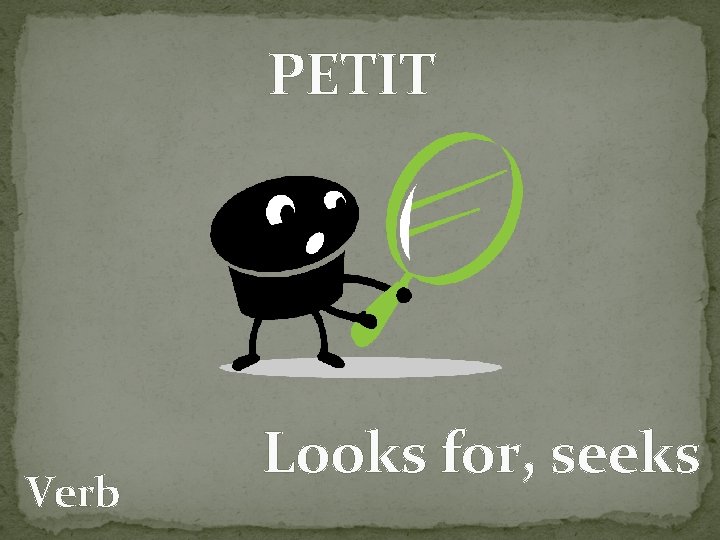
PETIT Verb Looks for, seeks
ARRIPIT Grabs hold of, snatches Verb
REPELLIT Verb Drives off
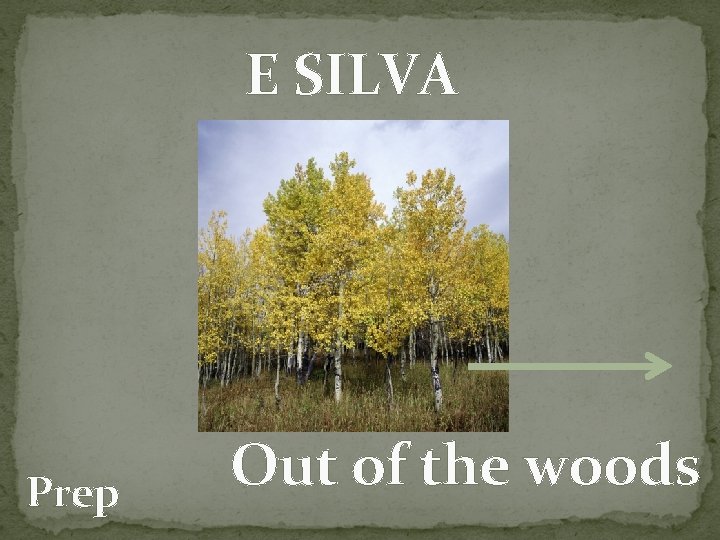
E SILVA Prep Out of the woods
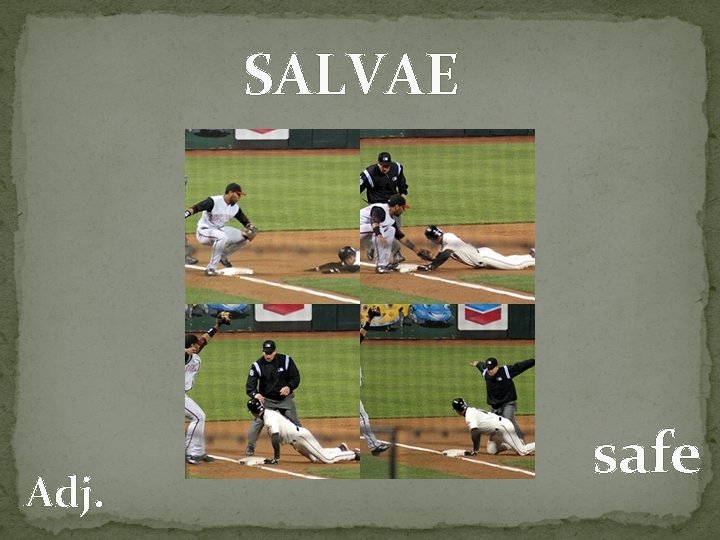
SALVAE Adj. safe
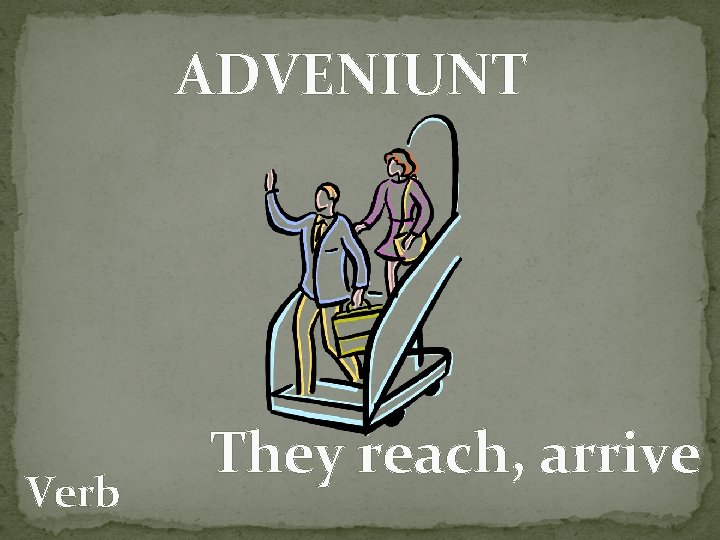
ADVENIUNT Verb They reach, arrive
EXCIPIUNT Verb They welcome
ADHUC Adv. still
TIMET Verb Fears, is afraid
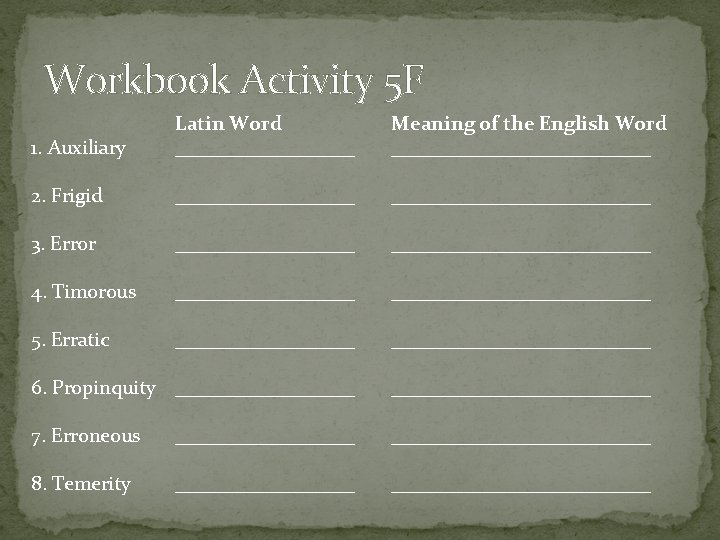
Workbook Activity 5 F 1. Auxiliary Latin Word _________ Meaning of the English Word _____________ 2. Frigid ______________________ 3. Error ______________________ 4. Timorous ______________________ 5. Erratic ______________________ 6. Propinquity ______________________ 7. Erroneous ______________________ 8. Temerity ______________________
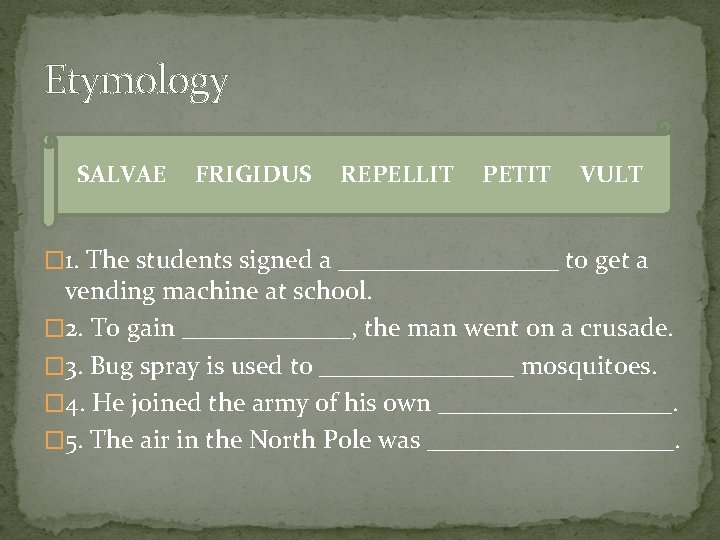
Etymology SALVAE FRIGIDUS REPELLIT PETIT VULT � 1. The students signed a _________ to get a vending machine at school. � 2. To gain _______, the man went on a crusade. � 3. Bug spray is used to ________ mosquitoes. � 4. He joined the army of his own _________. � 5. The air in the North Pole was __________.
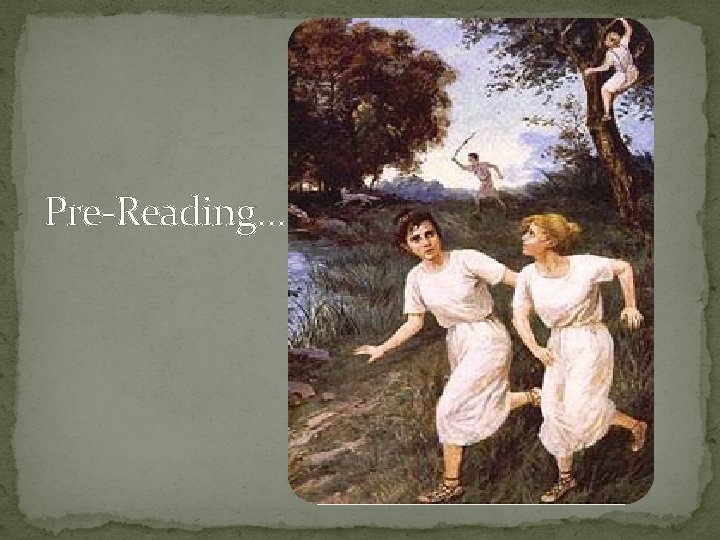
Pre-Reading…
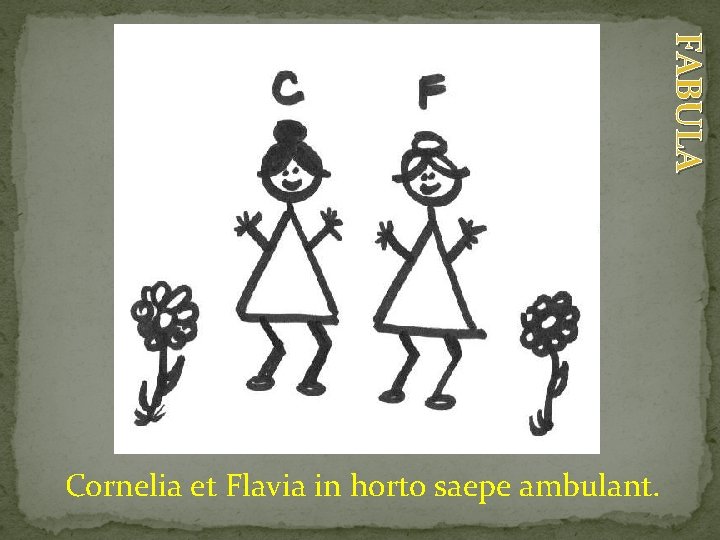
FABULA Cornelia et Flavia in horto saepe ambulant.
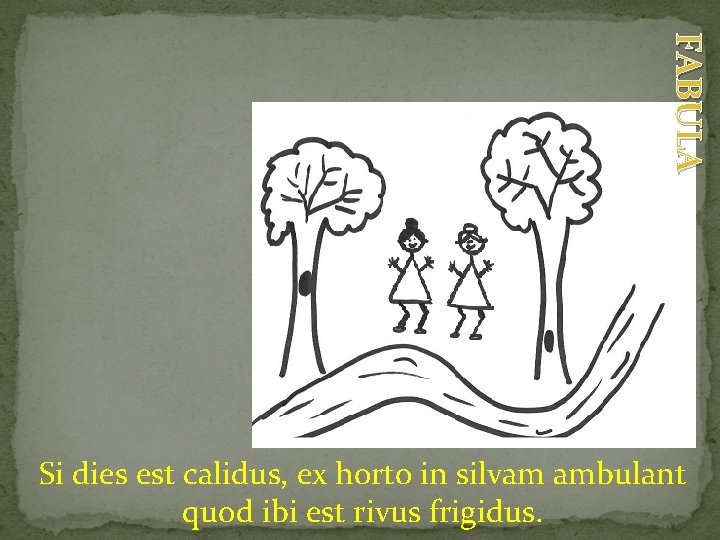
FABULA Si dies est calidus, ex horto in silvam ambulant quod ibi est rivus frigidus.
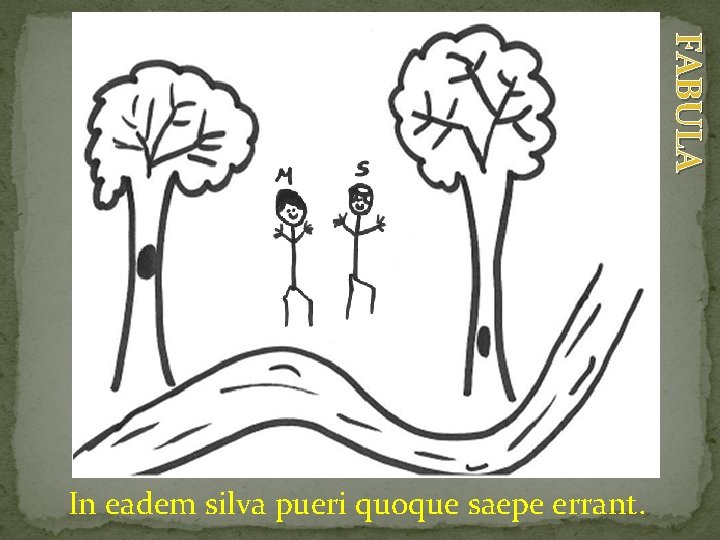
FABULA In eadem silva pueri quoque saepe errant.
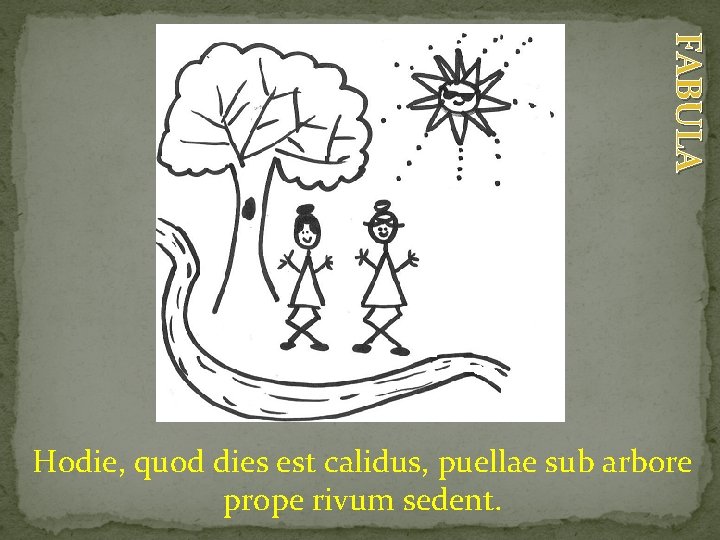
FABULA Hodie, quod dies est calidus, puellae sub arbore prope rivum sedent.
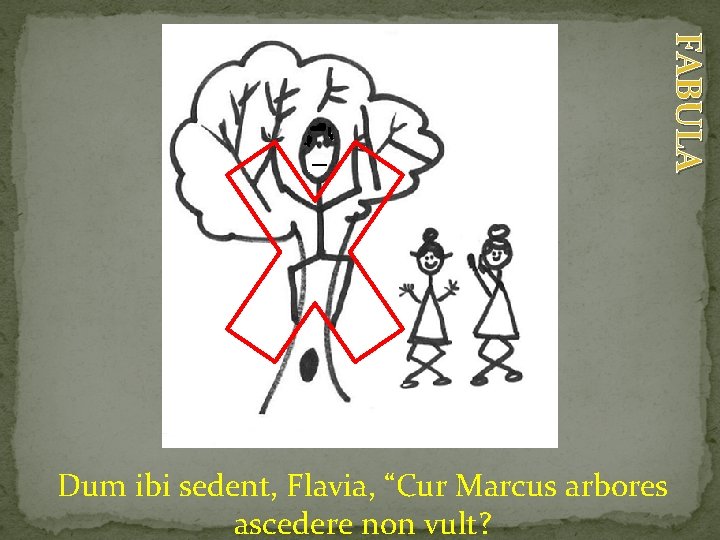
FABULA Dum ibi sedent, Flavia, “Cur Marcus arbores ascedere non vult?
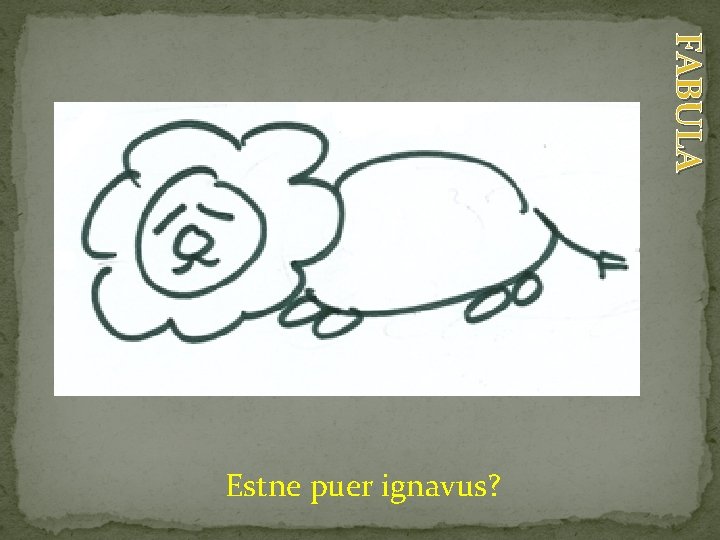
FABULA Estne puer ignavus?
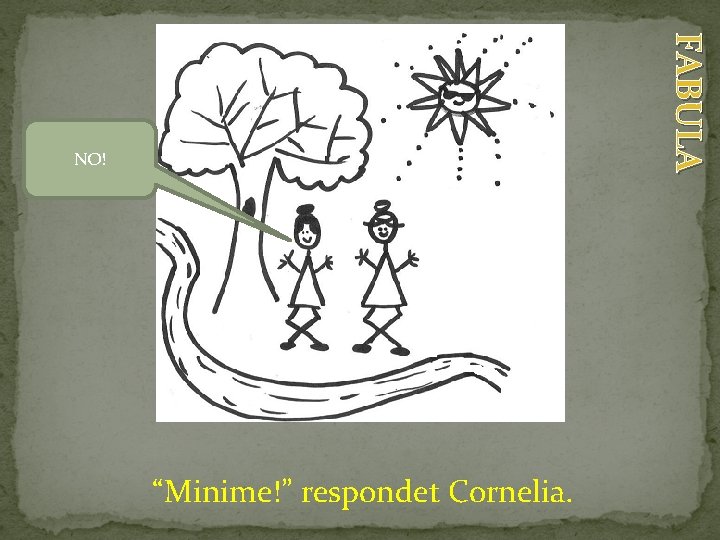
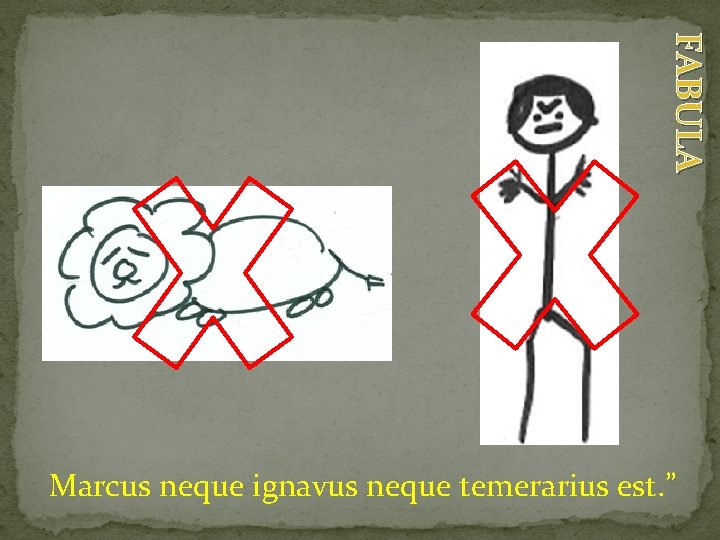
FABULA NO! “Minime!” respondet Cornelia.
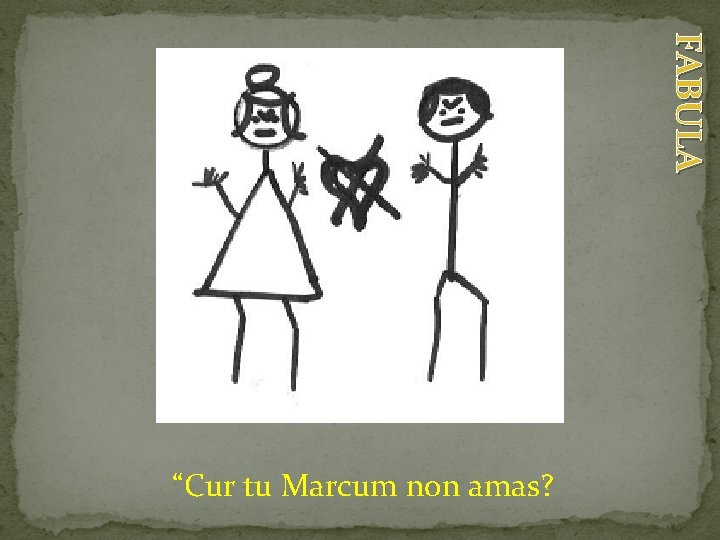
FABULA “Cur tu Marcum non amas?
FABULA Marcus neque ignavus neque temerarius est. ”
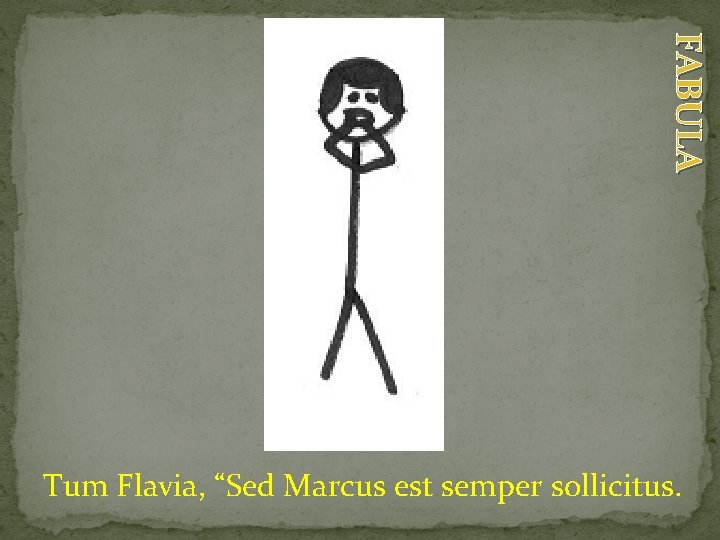
FABULA Tum Flavia, “Sed Marcus est semper sollicitus.
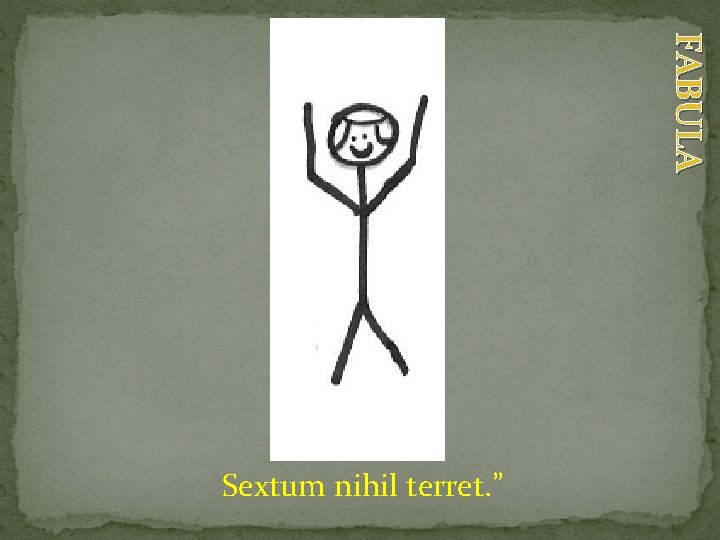
FABULA Sextum nihil terret. ”
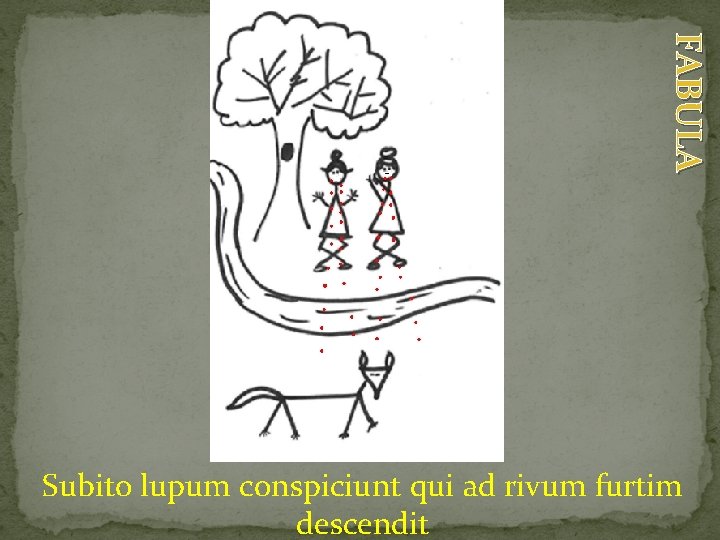
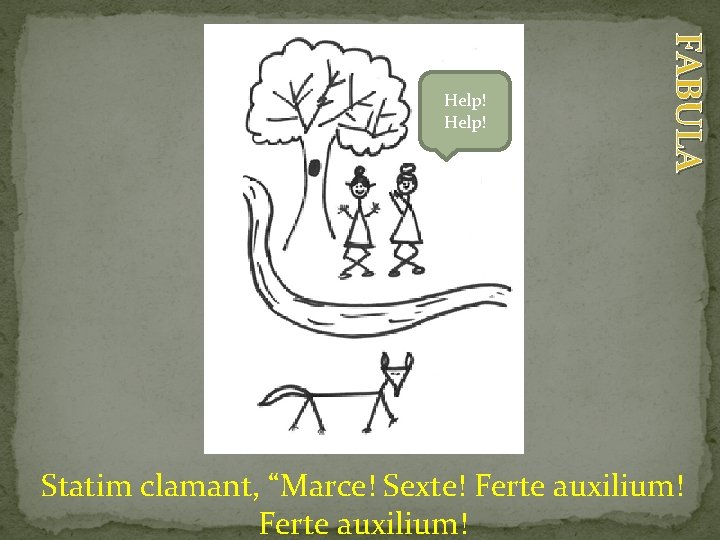
FABULA Subito lupum conspiciunt qui ad rivum furtim descendit
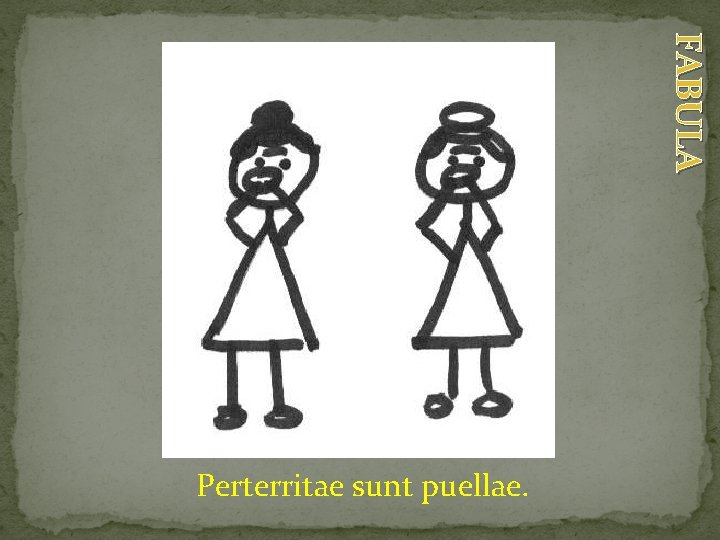
FABULA Perterritae sunt puellae.
FABULA Help! Statim clamant, “Marce! Sexte! Ferte auxilium!
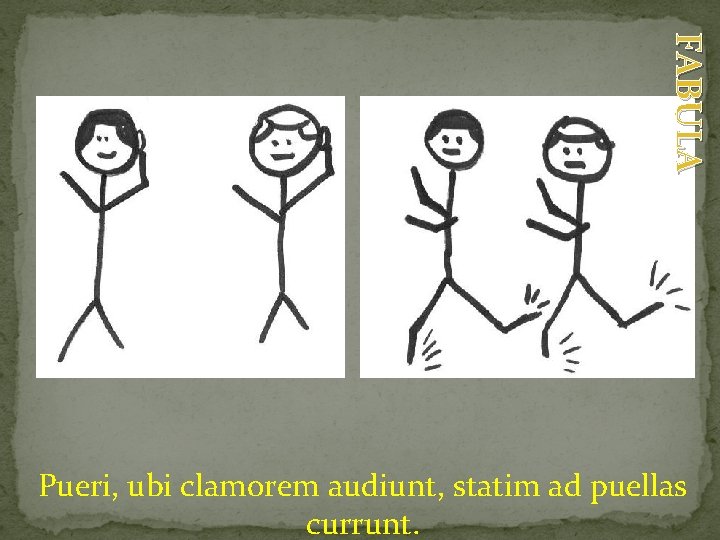
FABULA Pueri, ubi clamorem audiunt, statim ad puellas currunt.
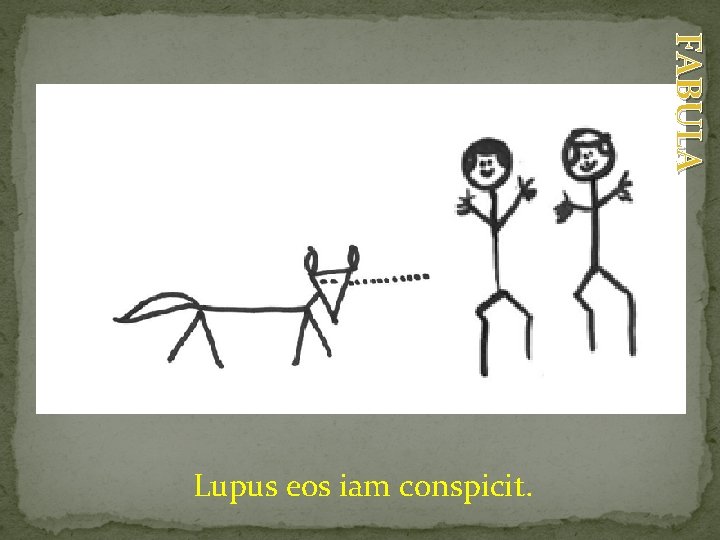
FABULA Lupus eos iam conspicit.
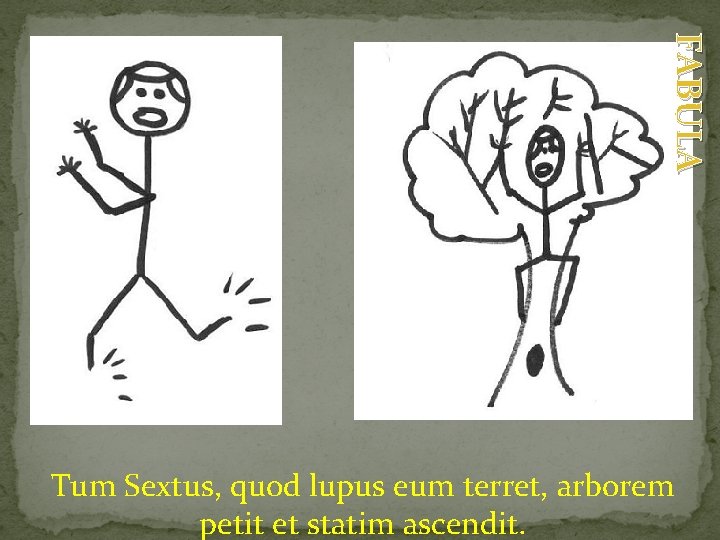
FABULA Tum Sextus, quod lupus eum terret, arborem petit et statim ascendit.
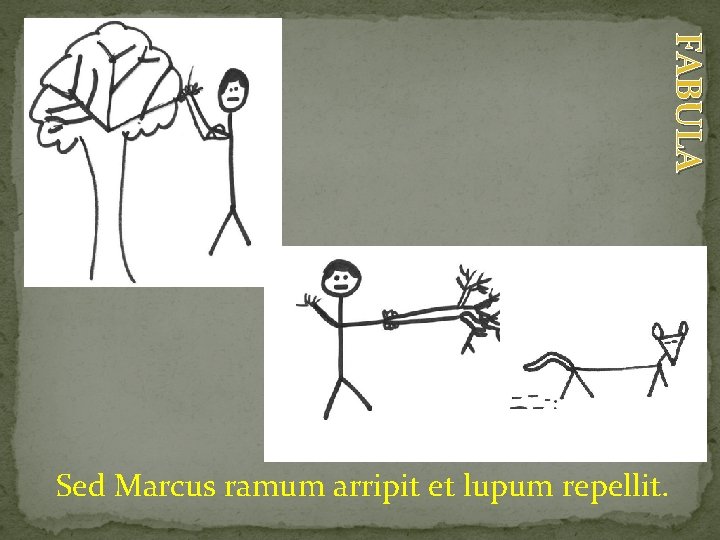
FABULA Sed Marcus ramum arripit et lupum repellit.
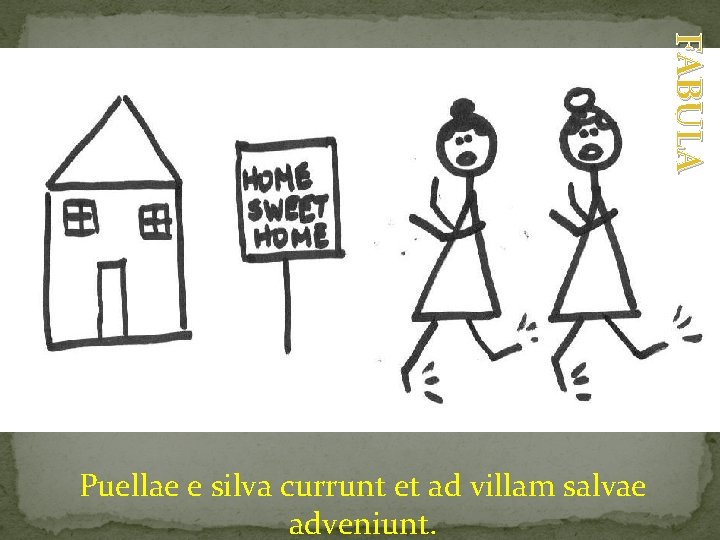
FABULA Puellae e silva currunt et ad villam salvae adveniunt.
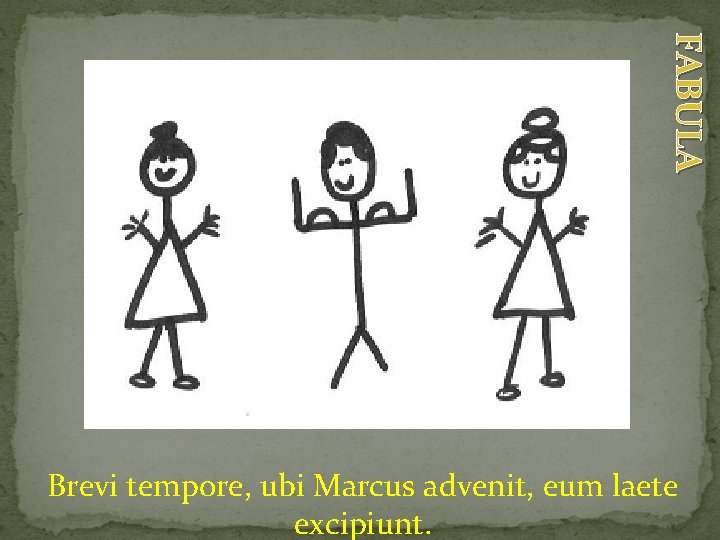
FABULA Brevi tempore, ubi Marcus advenit, eum laete excipiunt.
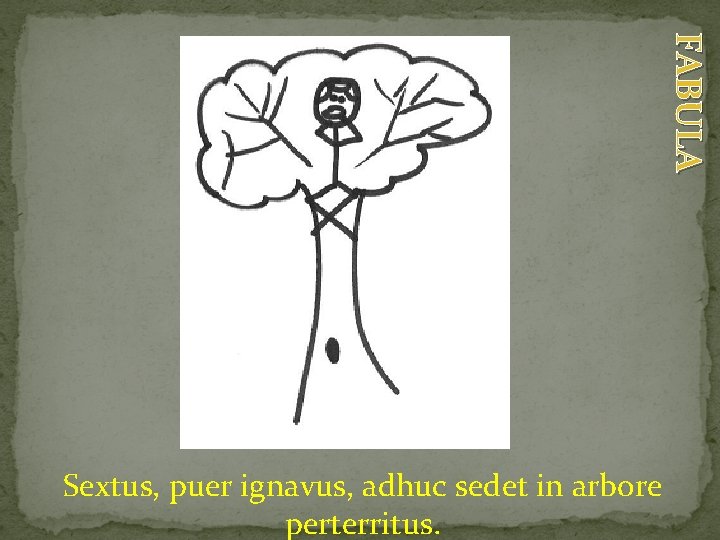
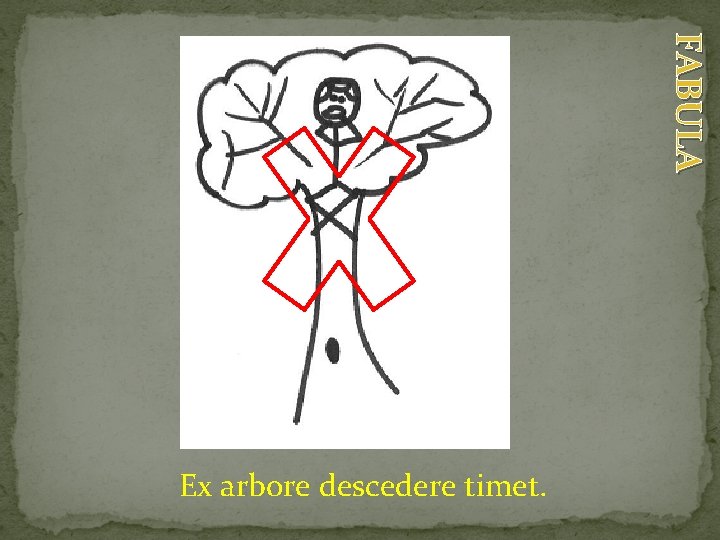
FABULA Sextus, puer ignavus, adhuc sedet in arbore perterritus.
FABULA Ex arbore descedere timet.
Complete Story Cornelia et Flavia in horto saepe ambulant. Si dies est calidus, ex horto in silvam ambulant quod ibi est rivus frigidus. In eadem silva pueri quoque saepe errant. Hodie, quod dies est calidus, puellae sub arbore prope rivum sedent. Dum ibi sedent, Flavia, “Cur Marcus arbores ascendere non vult? Estne puer ignavus? ” “Minime!” respondet Cornelia. “Cut tu Marcum non amas? Marcus neque ignavus neque temerarius est. ” Tum Flavia, “Sed Marcus est semper sollicitus. Sextum nihil terret. ” Subito lupum conspiciunt qui ad rivum furtim descendit. Perterritae sunt puellae. Statim slamant, “Marce! Sexte! Ferte auxilium!” Pueri, ubi clamorem audiunt, statim ad puellas currunt. Lupus eos iam conspicit. Tum Sextus, quod lupus eum terret, arborem petit et statim ascendit. Sed Marcus ramum arripit et lupum repellit. Puellae e silva currunt et ad villam salvae adveniunt. Brevi tempore, ubi Marcus advenit, eum laetae excipiunt. Sextus, puer ignavus, adhuc sedet in arbore perterritus. Ex arbore descendere timet.
Reading Comprehension � 1. Ubi puellae hodie sedent? � 2. Cur puellae perterritae sunt? � 3. Quid faciunt pueri ubi clamorem audiunt? � 4. Quem lupus terret? Quem…? Whom…? � 5. Quid facit Marcus? � 6. Qualis puer est Sextus? � 7. Cur Sextus ex arbore non descendit? �
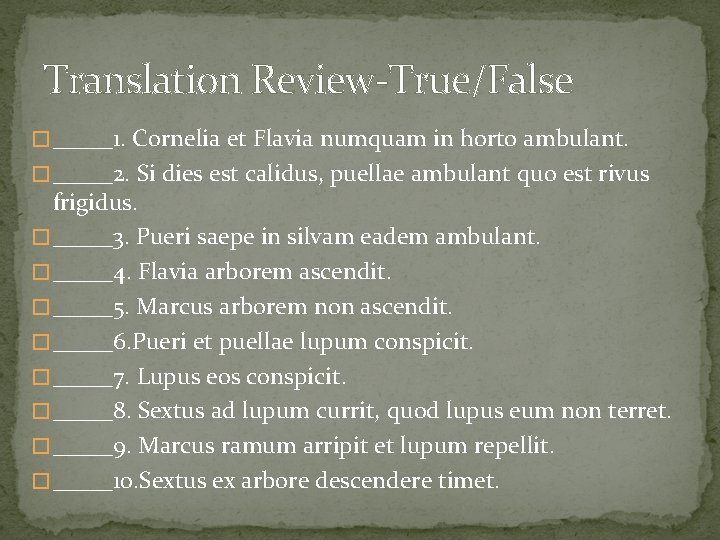
Translation Review-True/False � _____1. Cornelia et Flavia numquam in horto ambulant. � _____2. Si dies est calidus, puellae ambulant quo est rivus frigidus. � _____3. Pueri saepe in silvam eadem ambulant. � _____4. Flavia arborem ascendit. � _____5. Marcus arborem non ascendit. � _____6. Pueri et puellae lupum conspicit. � _____7. Lupus eos conspicit. � _____8. Sextus ad lupum currit, quod lupus eum non terret. � _____9. Marcus ramum arripit et lupum repellit. � _____10. Sextus ex arbore descendere timet.
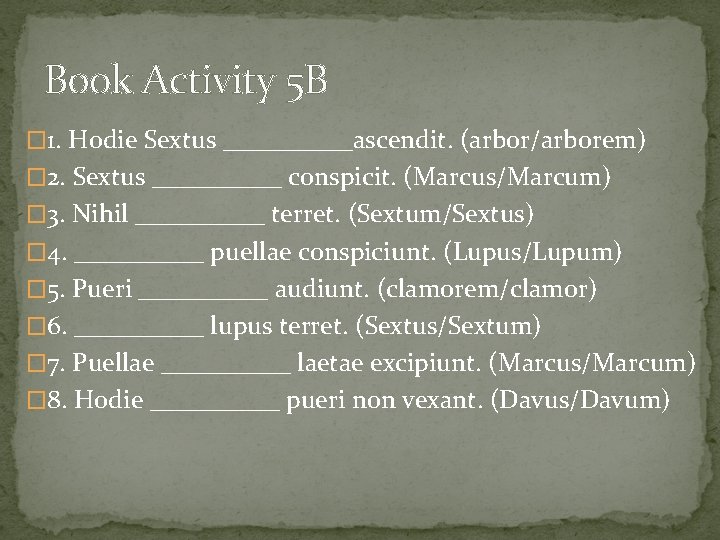
Book Activity 5 B � 1. Hodie Sextus _____ascendit. (arbor/arborem) � 2. Sextus _____ conspicit. (Marcus/Marcum) � 3. Nihil _____ terret. (Sextum/Sextus) � 4. _____ puellae conspiciunt. (Lupus/Lupum) � 5. Pueri _____ audiunt. (clamorem/clamor) � 6. _____ lupus terret. (Sextus/Sextum) � 7. Puellae _____ laetae excipiunt. (Marcus/Marcum) � 8. Hodie _____ pueri non vexant. (Davus/Davum)
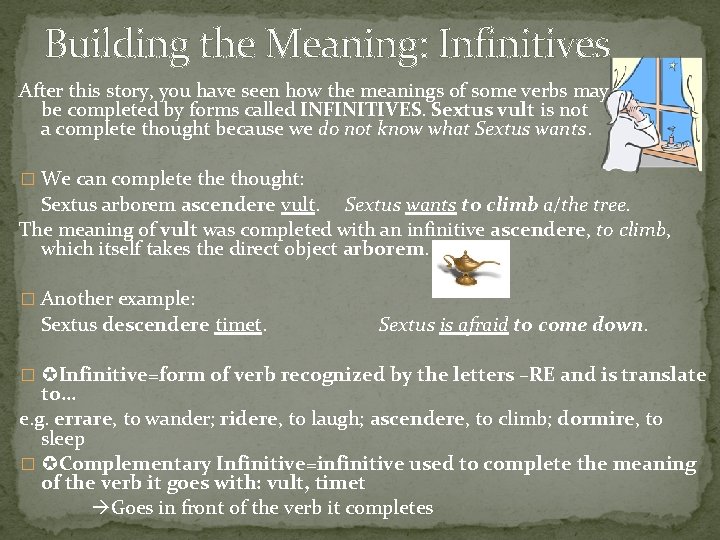
Building the Meaning: Infinitives After this story, you have seen how the meanings of some verbs may be completed by forms called INFINITIVES. Sextus vult is not a complete thought because we do not know what Sextus wants. � We can complete thought: Sextus arborem ascendere vult. Sextus wants to climb a/the tree. The meaning of vult was completed with an infinitive ascendere, to climb, which itself takes the direct object arborem. � Another example: Sextus descendere timet. Sextus is afraid to come down. � Infinitive=form of verb recognized by the letters –RE and is translate to… e. g. errare, to wander; ridere, to laugh; ascendere, to climb; dormire, to sleep � Complementary Infinitive=infinitive used to complete the meaning of the verb it goes with: vult, timet Goes in front of the verb it completes
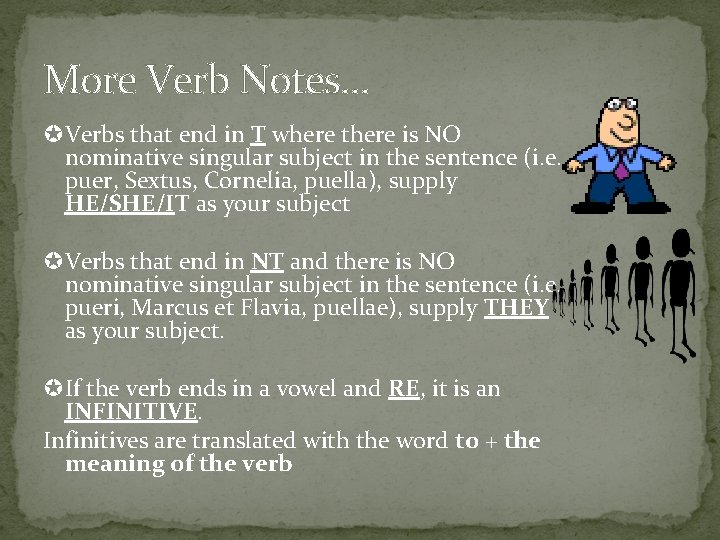
More Verb Notes… Verbs that end in T where there is NO nominative singular subject in the sentence (i. e. puer, Sextus, Cornelia, puella), supply HE/SHE/IT as your subject Verbs that end in NT and there is NO nominative singular subject in the sentence (i. e. pueri, Marcus et Flavia, puellae), supply THEY as your subject. If the verb ends in a vowel and RE, it is an INFINITIVE. Infinitives are translated with the word to + the meaning of the verb
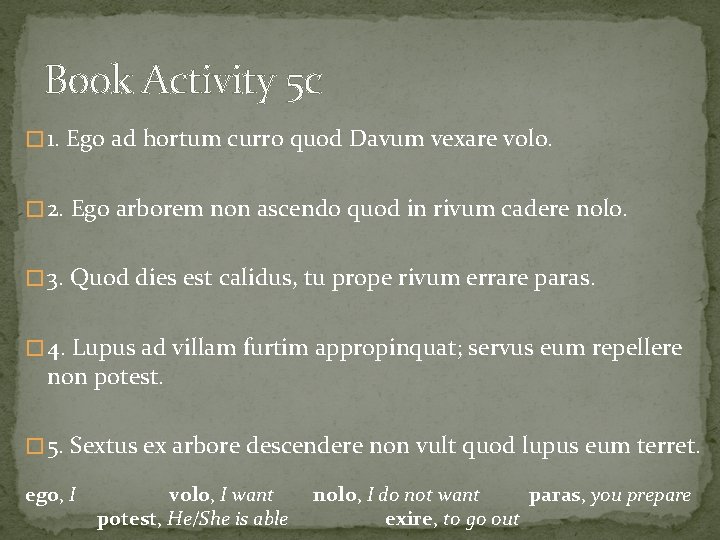
Book Activity 5 c � 1. Ego ad hortum curro quod Davum vexare volo. � 2. Ego arborem non ascendo quod in rivum cadere nolo. � 3. Quod dies est calidus, tu prope rivum errare paras. � 4. Lupus ad villam furtim appropinquat; servus eum repellere non potest. � 5. Sextus ex arbore descendere non vult quod lupus eum terret. ego, I volo, I want potest, He/She is able nolo, I do not want paras, you prepare exire, to go out
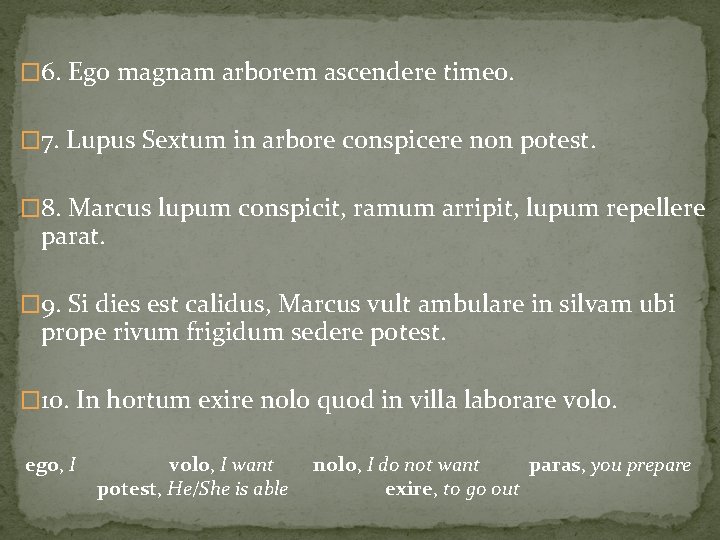
� 6. Ego magnam arborem ascendere timeo. � 7. Lupus Sextum in arbore conspicere non potest. � 8. Marcus lupum conspicit, ramum arripit, lupum repellere parat. � 9. Si dies est calidus, Marcus vult ambulare in silvam ubi prope rivum frigidum sedere potest. � 10. In hortum exire nolo quod in villa laborare volo. ego, I volo, I want potest, He/She is able nolo, I do not want paras, you prepare exire, to go out
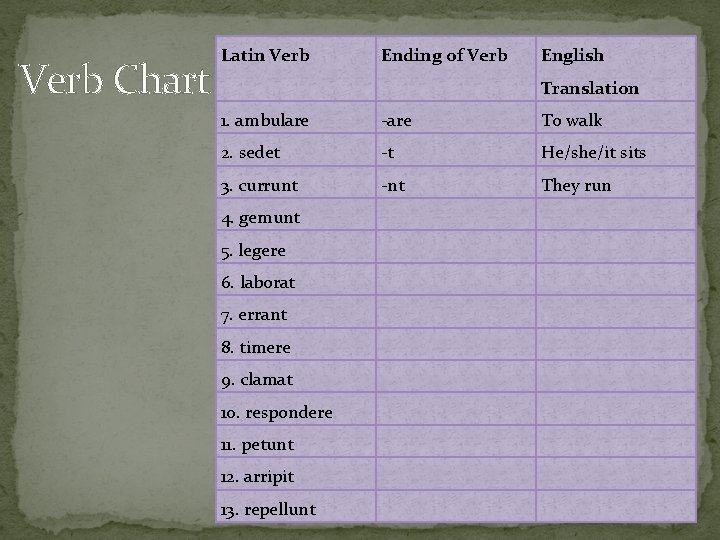
Verb Chart Latin Verb Ending of Verb English Translation 1. ambulare -are To walk 2. sedet -t He/she/it sits 3. currunt -nt They run 4. gemunt 5. legere 6. laborat 7. errant 8. timere 9. clamat 10. respondere 11. petunt 12. arripit 13. repellunt
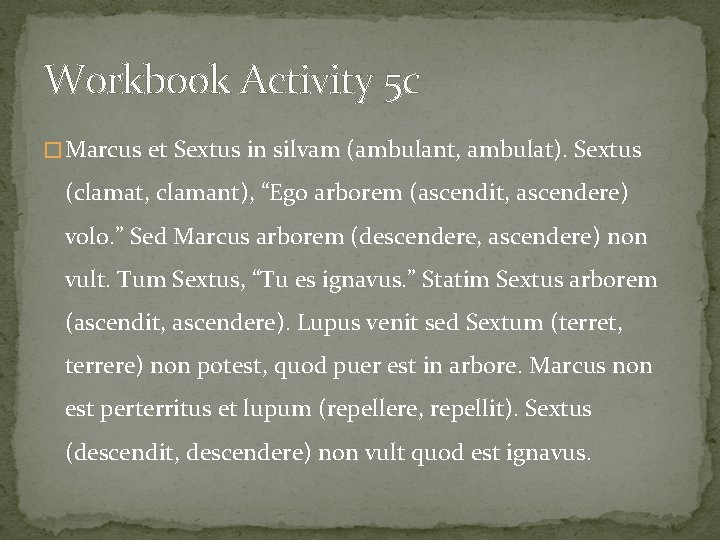
Workbook Activity 5 c � Marcus et Sextus in silvam (ambulant, ambulat). Sextus (clamat, clamant), “Ego arborem (ascendit, ascendere) volo. ” Sed Marcus arborem (descendere, ascendere) non vult. Tum Sextus, “Tu es ignavus. ” Statim Sextus arborem (ascendit, ascendere). Lupus venit sed Sextum (terret, terrere) non potest, quod puer est in arbore. Marcus non est perterritus et lupum (repellere, repellit). Sextus (descendit, descendere) non vult quod est ignavus.
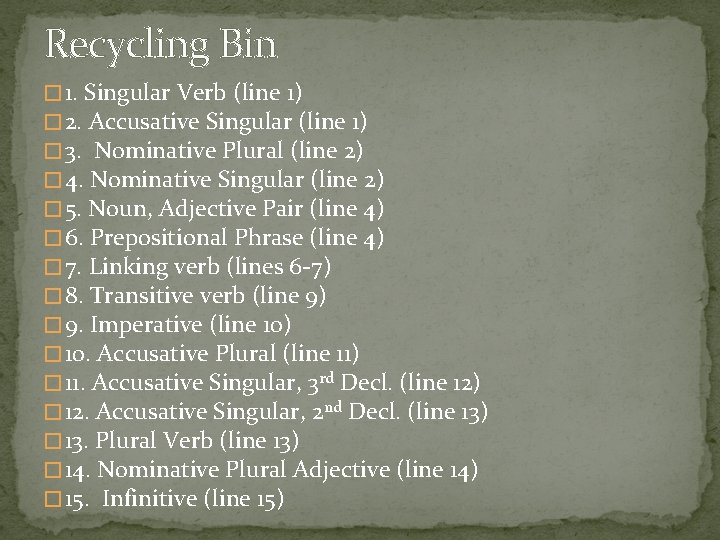
Recycling Bin � 1. Singular Verb (line 1) � 2. Accusative Singular (line 1) � 3. Nominative Plural (line 2) � 4. Nominative Singular (line 2) � 5. Noun, Adjective Pair (line 4) � 6. Prepositional Phrase (line 4) � 7. Linking verb (lines 6 -7) � 8. Transitive verb (line 9) � 9. Imperative (line 10) � 10. Accusative Plural (line 11) � 11. Accusative Singular, 3 rd Decl. (line 12) � 12. Accusative Singular, 2 nd Decl. (line 13) � 13. Plural Verb (line 13) � 14. Nominative Plural Adjective (line 14) � 15. Infinitive (line 15)
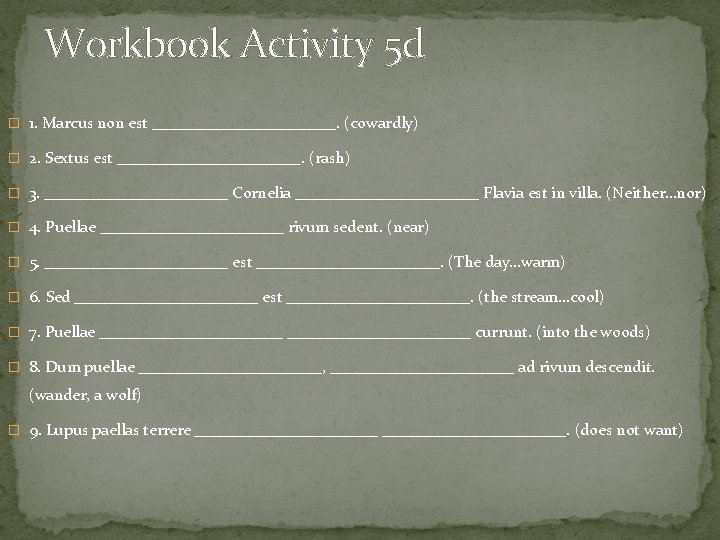
Workbook Activity 5 d � 1. Marcus non est ____________. (cowardly) � 2. Sextus est ____________. (rash) � 3. ____________ Cornelia ____________ Flavia est in villa. (Neither…nor) � 4. Puellae ____________ rivum sedent. (near) � 5. ____________ est ____________. (The day…warm) � 6. Sed ____________ est ____________. (the stream…cool) � 7. Puellae _______________________ currunt. (into the woods) � 8. Dum puellae ____________, ____________ ad rivum descendit. (wander, a wolf) � 9. Lupus paellas terrere _______________________. (does not want)
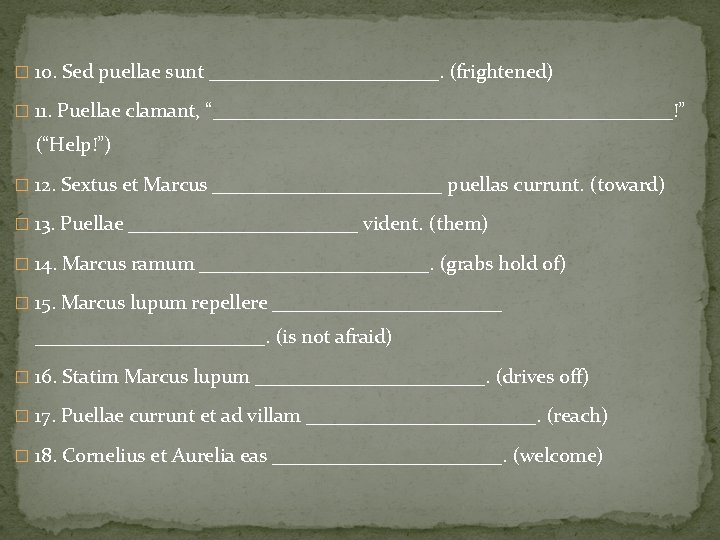
� 10. Sed puellae sunt ____________. (frightened) � 11. Puellae clamant, “_______________________!” (“Help!”) � 12. Sextus et Marcus ____________ puellas currunt. (toward) � 13. Puellae ____________ vident. (them) � 14. Marcus ramum ____________. (grabs hold of) � 15. Marcus lupum repellere _______________________. (is not afraid) � 16. Statim Marcus lupum ____________. (drives off) � 17. Puellae currunt et ad villam ____________. (reach) � 18. Cornelius et Aurelia eas ____________. (welcome)
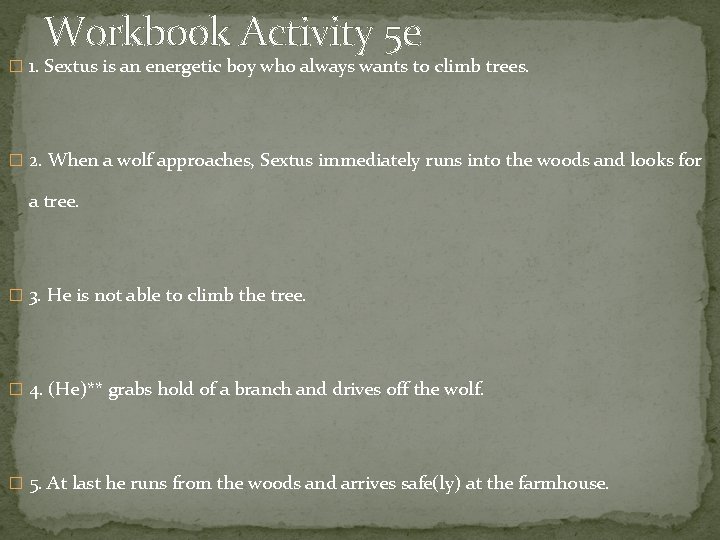
Workbook Activity 5 e � 1. Sextus is an energetic boy who always wants to climb trees. � 2. When a wolf approaches, Sextus immediately runs into the woods and looks for a tree. � 3. He is not able to climb the tree. � 4. (He)** grabs hold of a branch and drives off the wolf. � 5. At last he runs from the woods and arrives safe(ly) at the farmhouse.
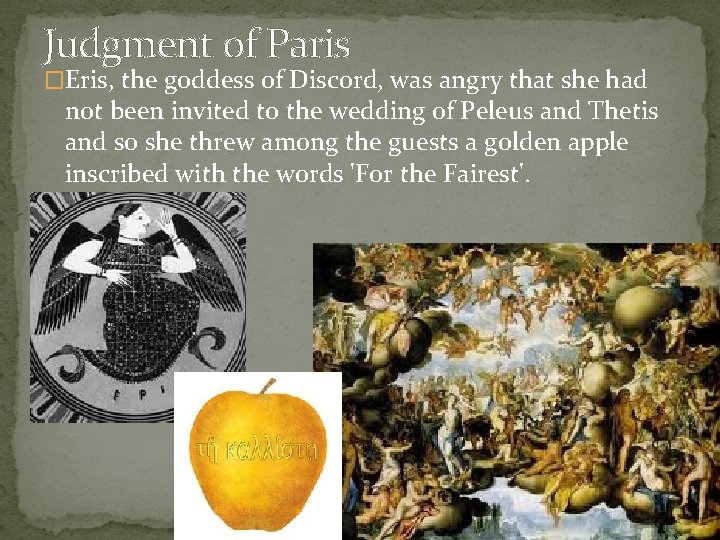
Judgment of Paris �Eris, the goddess of Discord, was angry that she had not been invited to the wedding of Peleus and Thetis and so she threw among the guests a golden apple inscribed with the words 'For the Fairest'.
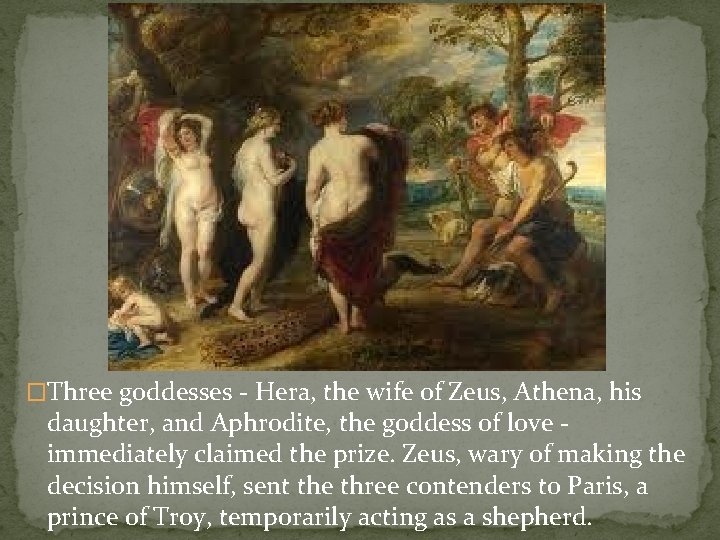
�Three goddesses - Hera, the wife of Zeus, Athena, his daughter, and Aphrodite, the goddess of love immediately claimed the prize. Zeus, wary of making the decision himself, sent the three contenders to Paris, a prince of Troy, temporarily acting as a shepherd.
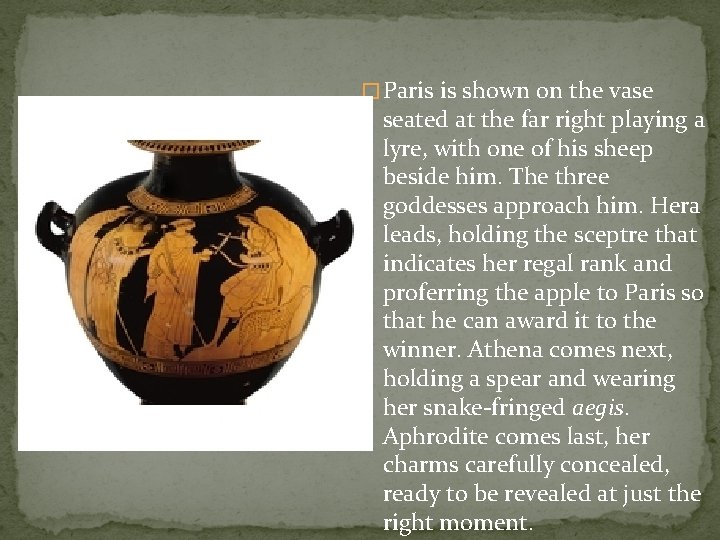
� Paris is shown on the vase seated at the far right playing a lyre, with one of his sheep beside him. The three goddesses approach him. Hera leads, holding the sceptre that indicates her regal rank and proferring the apple to Paris so that he can award it to the winner. Athena comes next, holding a spear and wearing her snake-fringed aegis. Aphrodite comes last, her charms carefully concealed, ready to be revealed at just the right moment.
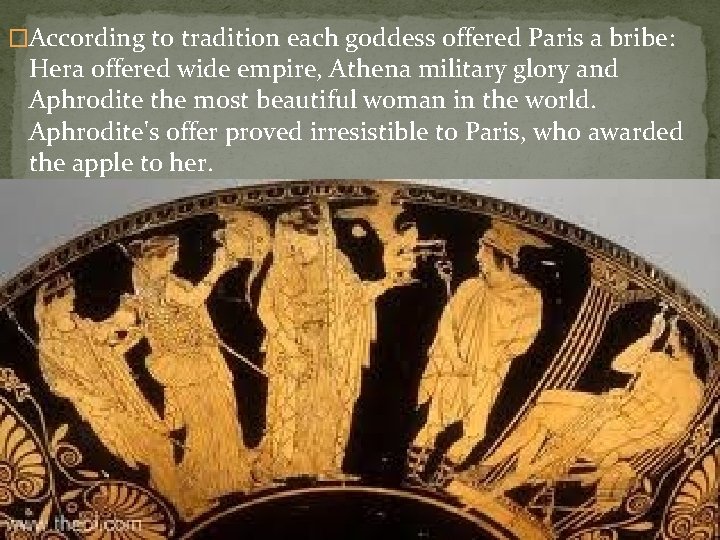
�According to tradition each goddess offered Paris a bribe: Hera offered wide empire, Athena military glory and Aphrodite the most beautiful woman in the world. Aphrodite's offer proved irresistible to Paris, who awarded the apple to her.
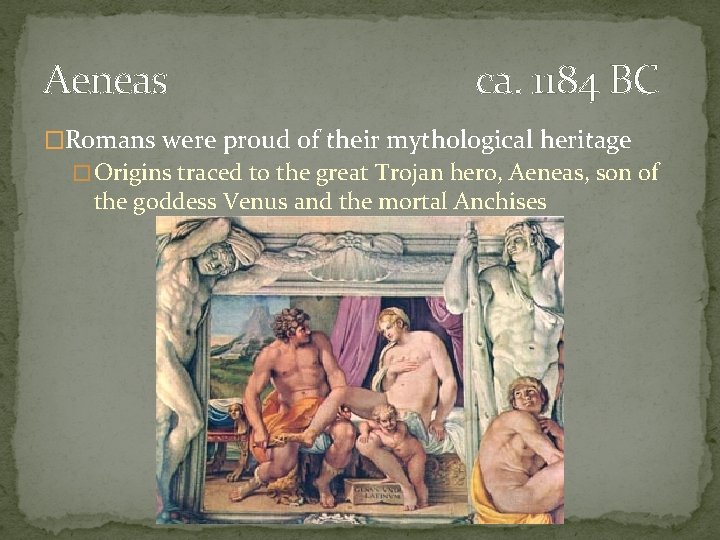
Aeneas ca. 1184 BC �Romans were proud of their mythological heritage � Origins traced to the great Trojan hero, Aeneas, son of the goddess Venus and the mortal Anchises
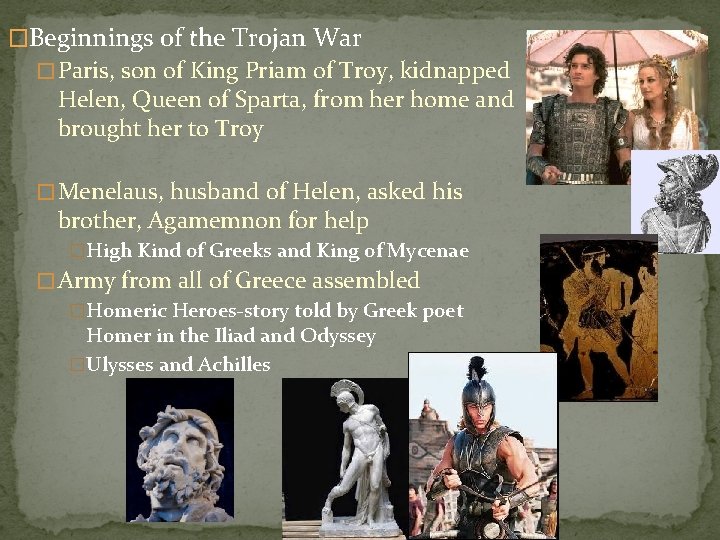
�Beginnings of the Trojan War � Paris, son of King Priam of Troy, kidnapped Helen, Queen of Sparta, from her home and brought her to Troy � Menelaus, husband of Helen, asked his brother, Agamemnon for help �High Kind of Greeks and King of Mycenae � Army from all of Greece assembled �Homeric Heroes-story told by Greek poet Homer in the Iliad and Odyssey �Ulysses and Achilles
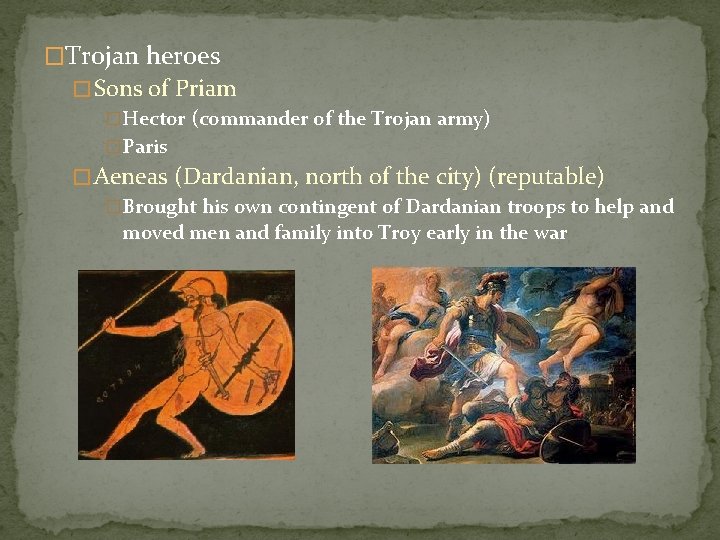
�Trojan heroes � Sons of Priam �Hector (commander of the Trojan army) �Paris � Aeneas (Dardanian, north of the city) (reputable) �Brought his own contingent of Dardanian troops to help and moved men and family into Troy early in the war
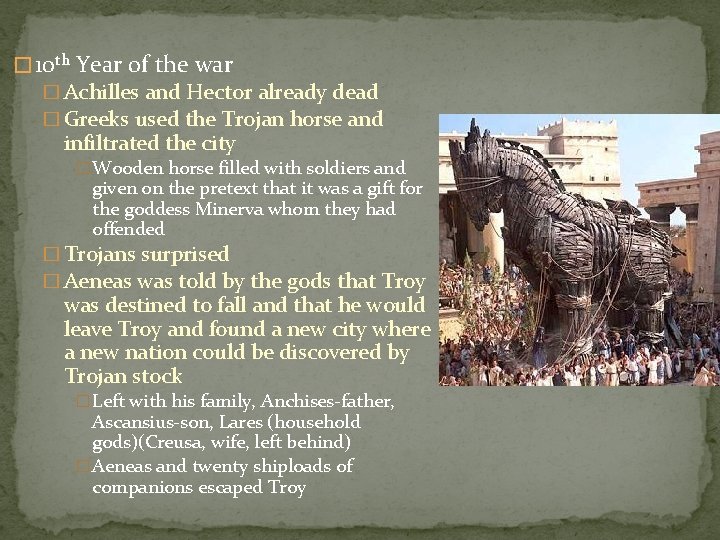
� 10 th Year of the war � Achilles and Hector already dead � Greeks used the Trojan horse and infiltrated the city � Wooden horse filled with soldiers and given on the pretext that it was a gift for the goddess Minerva whom they had offended � Trojans surprised � Aeneas was told by the gods that Troy was destined to fall and that he would leave Troy and found a new city where a new nation could be discovered by Trojan stock � Left with his family, Anchises-father, Ascansius-son, Lares (household gods)(Creusa, wife, left behind) � Aeneas and twenty shiploads of companions escaped Troy
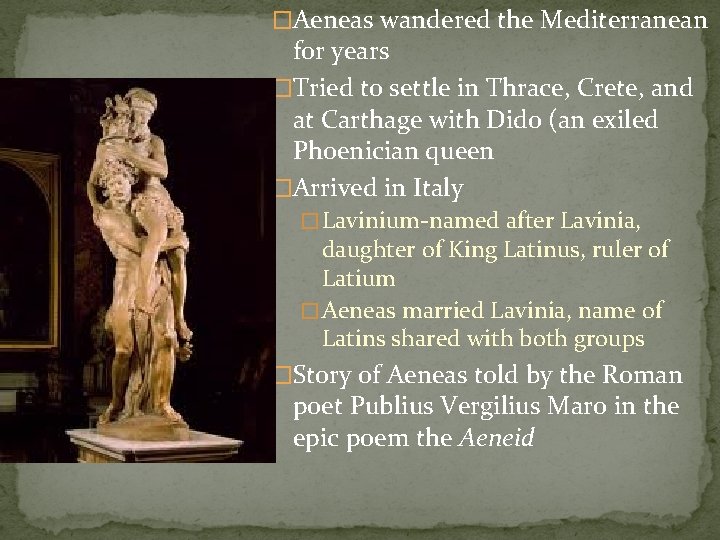
�Aeneas wandered the Mediterranean for years �Tried to settle in Thrace, Crete, and at Carthage with Dido (an exiled Phoenician queen �Arrived in Italy � Lavinium-named after Lavinia, daughter of King Latinus, ruler of Latium � Aeneas married Lavinia, name of Latins shared with both groups �Story of Aeneas told by the Roman poet Publius Vergilius Maro in the epic poem the Aeneid
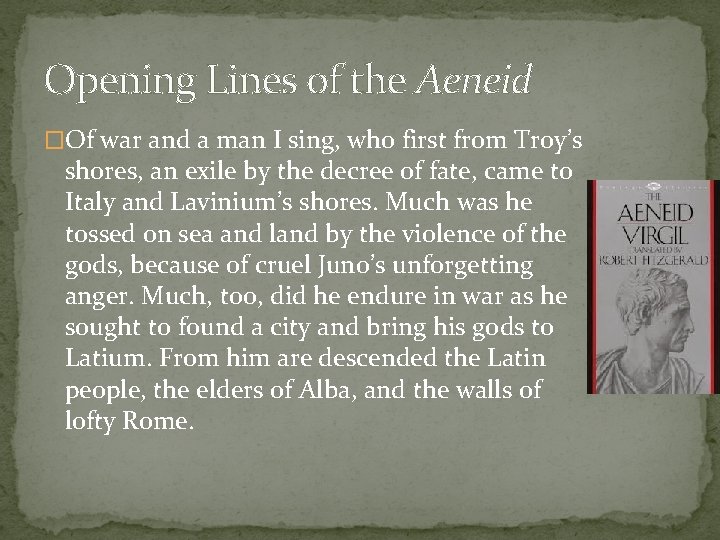
Opening Lines of the Aeneid �Of war and a man I sing, who first from Troy’s shores, an exile by the decree of fate, came to Italy and Lavinium’s shores. Much was he tossed on sea and land by the violence of the gods, because of cruel Juno’s unforgetting anger. Much, too, did he endure in war as he sought to found a city and bring his gods to Latium. From him are descended the Latin people, the elders of Alba, and the walls of lofty Rome.