
Chapter 5 Manifest Destiny Manifest Destiny Go West
- Slides: 37
Chapter 5 Manifest Destiny
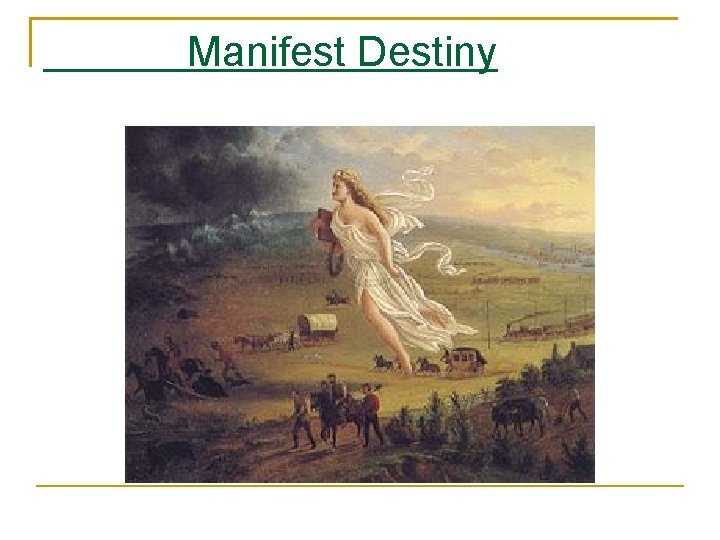
Manifest Destiny
“Go West Young Man” Horace Greeley Expansionists: People who favored territorial growth. Why? • Land – Fertile Soil means opportunity (land ownership) • Trade – New Markets • Fresh Start (especially after the panic of 1837) • Spread Protestant Christianity • GOLD Who? • Immigrants, missionaries, Mormans, Trappers, Traders, Miners
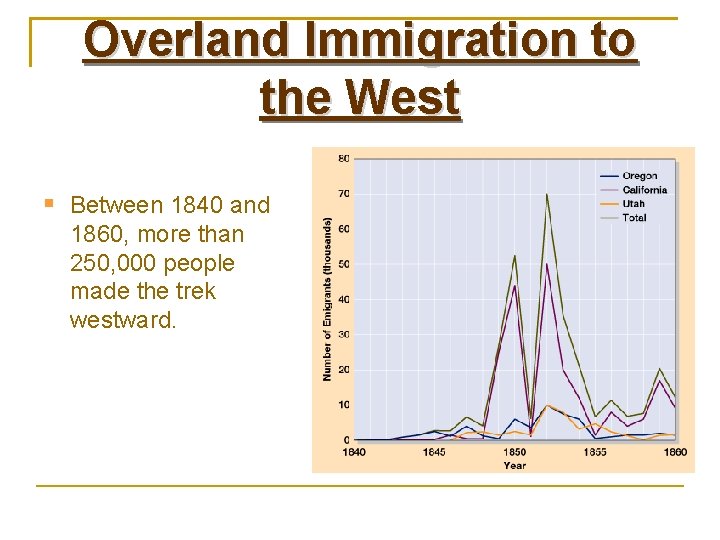
Overland Immigration to the West Between 1840 and 1860, more than 250, 000 people made the trek westward.
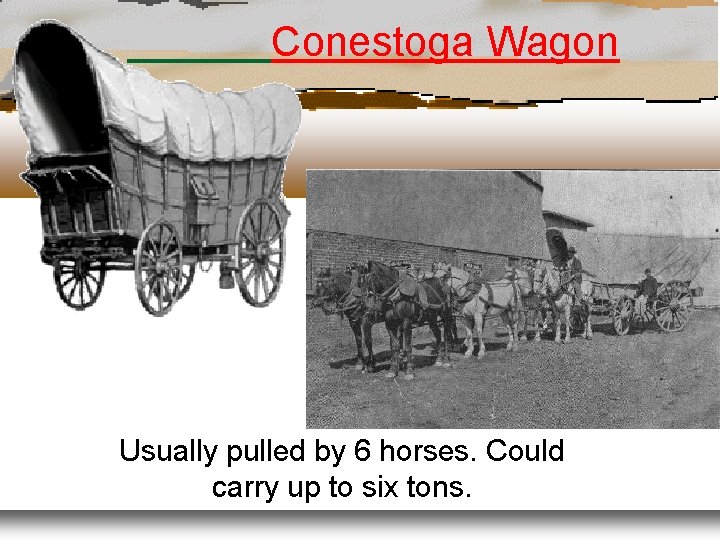
Conestoga Wagon Usually pulled by 6 horses. Could carry up to six tons.
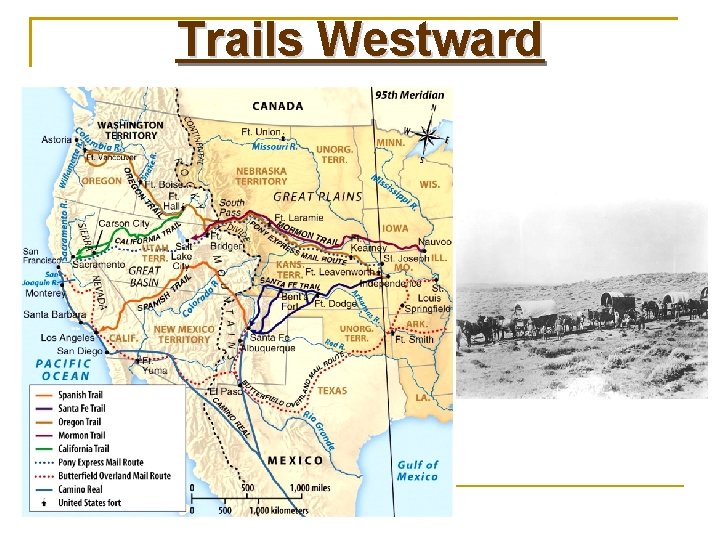
Trails Westward
Trails and Opportunity Oregon Trail – 11, 000 to fertile farm land in Willamette Valley. Founded by Marcus and Narcissa Whitman. Mormon Trail- 4, 600 to Great Salt Lake in present-day Utah for religious refuge California Trail – 2, 700 to present-day San Francisco to farm and open trade with China Santa Fe Trail- thousands to Santa Fe to trade with newly independent Mexico
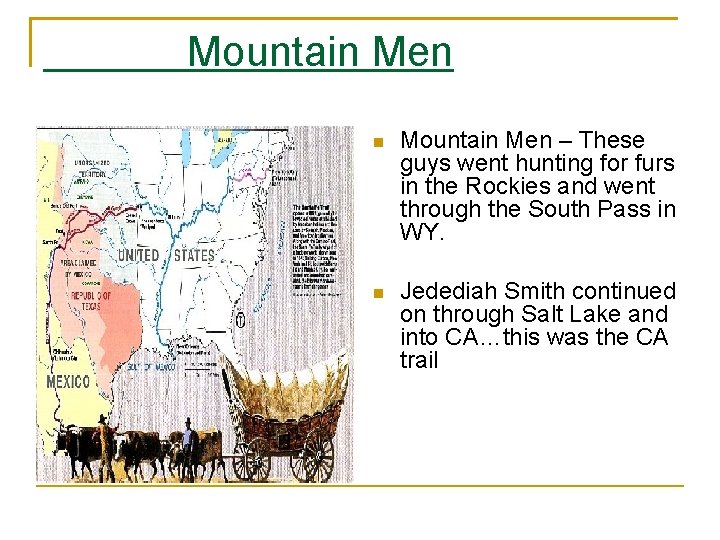
Mountain Men – These guys went hunting for furs in the Rockies and went through the South Pass in WY. Jedediah Smith continued on through Salt Lake and into CA…this was the CA trail
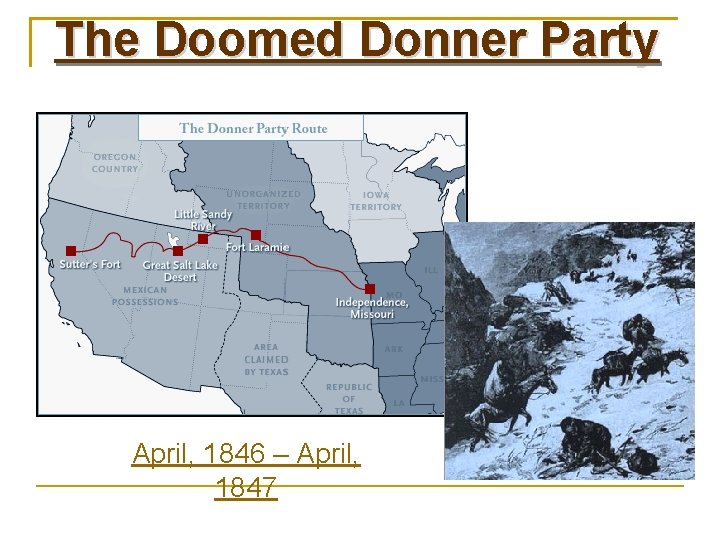
The Doomed Donner Party April, 1846 – April, 1847
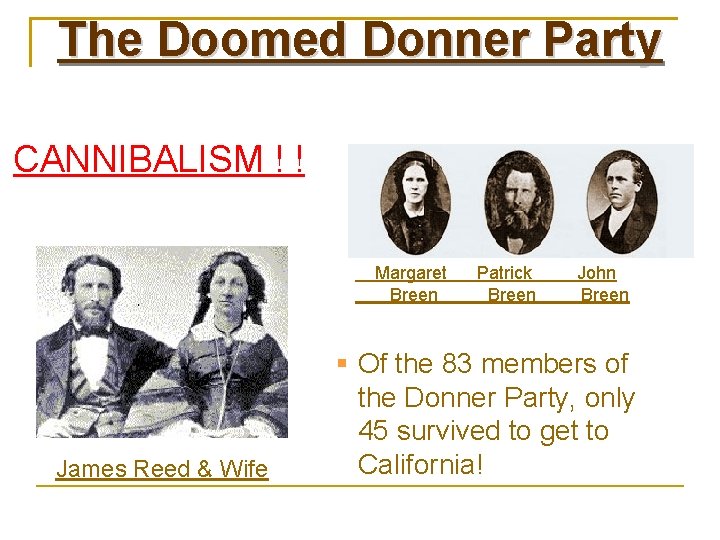
The Doomed Donner Party CANNIBALISM ! ! Margaret Breen James Reed & Wife Patrick Breen John Breen Of the 83 members of the Donner Party, only 45 survived to get to California!
The Mormon Migration One group that migrated westward along the Oregon trail consisted of the Mormons, a religious community that would play a major role in settling of the West. Leadership transferred to Brigham Young when Mormon founder, Joseph Smith was killed. Mormons continue to be discriminated against Today.
Mexico Invites U. S. Settlers 1. 2. 3. Mexico offered cheap land grants in return for allowing Americans to settle in Texas! Americans also had to… Agree to become Mexican citizens. Worship as Roman Catholics. Accept the Mexican Constitution, which banned slavery.
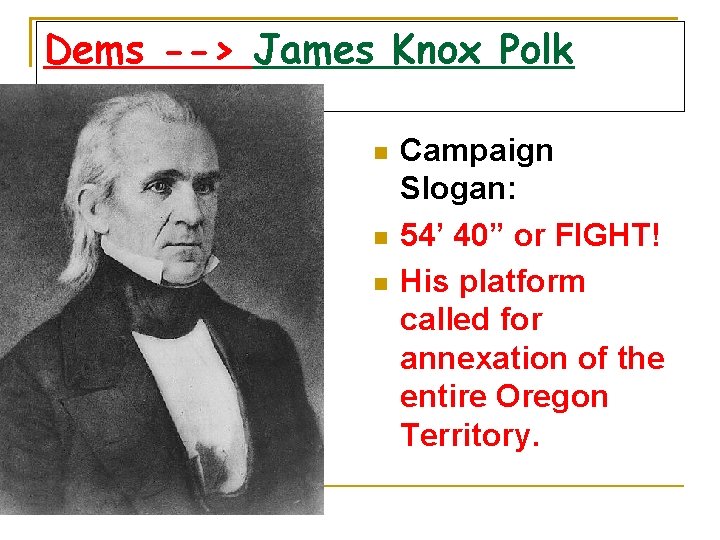
Dems --> James Knox Polk Campaign Slogan: 54’ 40” or FIGHT! His platform called for annexation of the entire Oregon Territory.
The Disputed Oregon Territory The Oregon Territory was only one point of contention between the United States and Britain. In the early 1840 s, Great Britain still claimed areas in parts of what are now Maine and Minnesota. The two nations continued a joint occupation of the Oregon Territory. In 1844, Democrat James K Polk’s presidential platform called for the complete annexation of the entire Oregon Territory. The two countries agreed to extend the mainland boundary with Canada along the 49 th parallel westward from the Rocky Mountains to Puget Sound, establishing the current U. S. boundary.
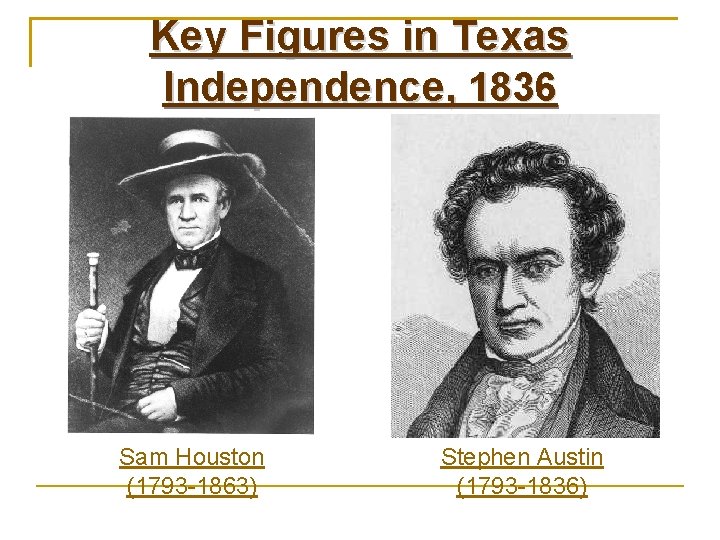
Key Figures in Texas Independence, 1836 Sam Houston (1793 -1863) Stephen Austin (1793 -1836)
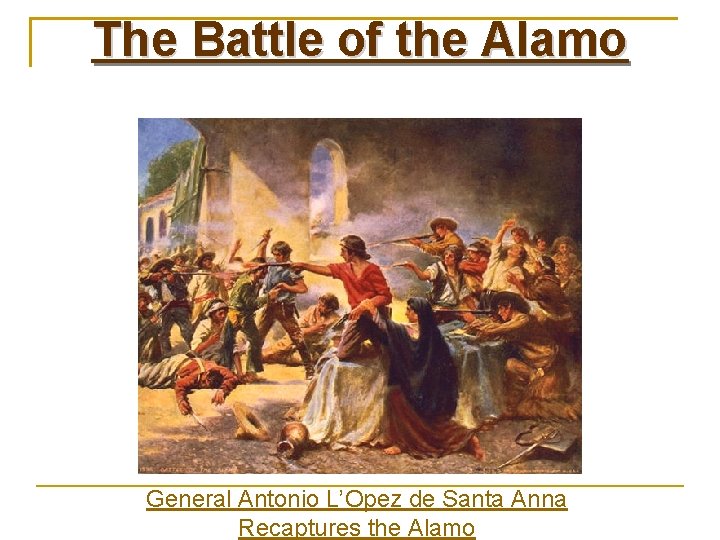
“Remember the Alamo!” Austin had argued with Santa Anna for selfgovernment in Texas. Determined to force Texas to obey laws he had established, Santa Anna marched toward San Antonio at the head of a 4, 000 member army. Santa Anna and his forces slaughtered the Texans, including Jim Bowie and Davie Crockett. “Remember the Alamo” became the rallying cry, attracting volunteers to help the Texan cause.
The Battle of the Alamo General Antonio L’Opez de Santa Anna Recaptures the Alamo
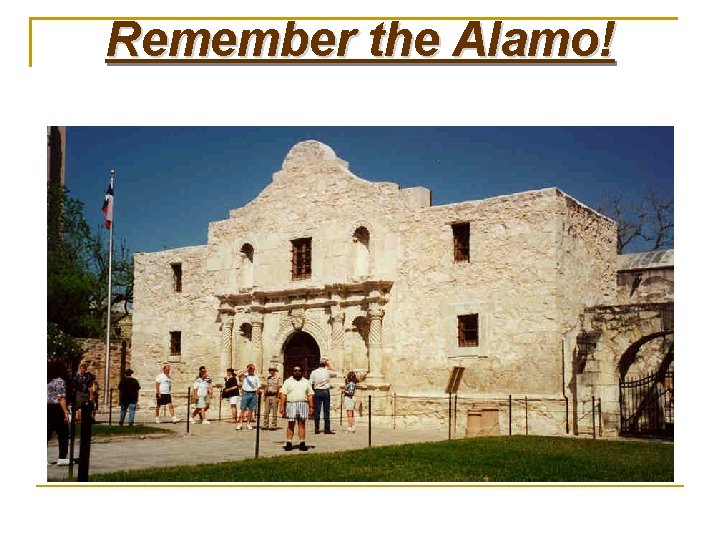
Remember the Alamo!
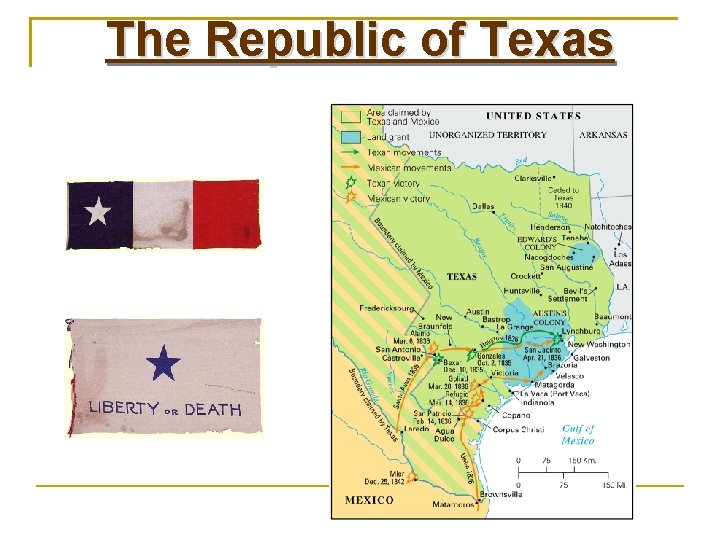
The Lone Star Republic Later in March of 1836, Santa Anna’s troops executed 300 rebels at Goliad. The Alamo and Goliad victories would prove costly for Santa Anna. Six weeks after the defeat of the Alamo, on April 21, the Texans struck back led by Sam Houston. They defeated Santa Anna at the Battle of San Jacinto. With shouts of “Remember the Alamo, ” the Texans killed 630 Mexican soldiers in 18 minutes and captured Santa Anna.
Republic of Texas The victorious Texans set Santa Anna free after he signed the Treaty of Velasco, which granted independence to Texas. In September 1836, Houston became president of the Republic of Texas. The new “Lone Star Republic” set up an army, navy, and proudly flew its new silk flag with the lone gold star.
The Republic of Texas
Polk Urges War Hostilities between the United States and Mexico, which had flared during the Texas Revolution in 1836, reignited over the American annexation of Texas in 1845. The two countries might have solved these issues peaceably if not for the continuing instability of the Mexican government and the territorial aspirations of the U. S. president James K. Polk.
Sectional Attitudes Toward War Southerners saw the annexation of Texas as an opportunity to extend slavery and increase Southern power in Congress. Northerners mainly opposed the war. Antislavery Whigs and abolitionists saw the war as a plot to expand slavery and ensure Southern domination of the Union.
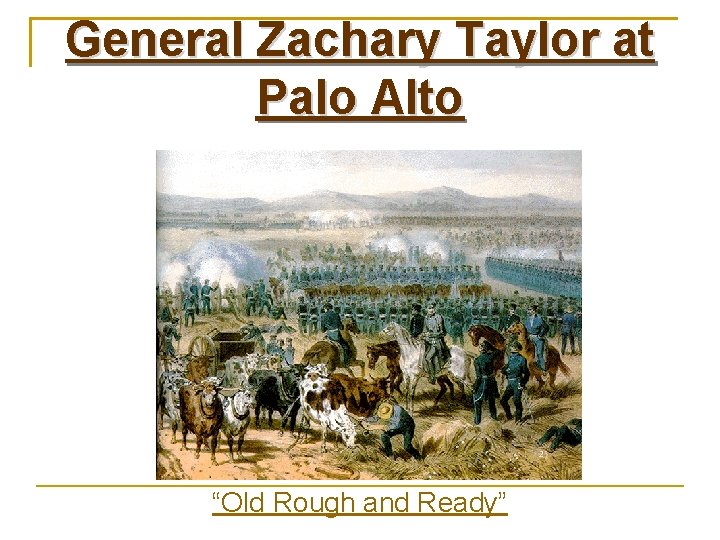
General Zachary Taylor at Palo Alto “Old Rough and Ready”
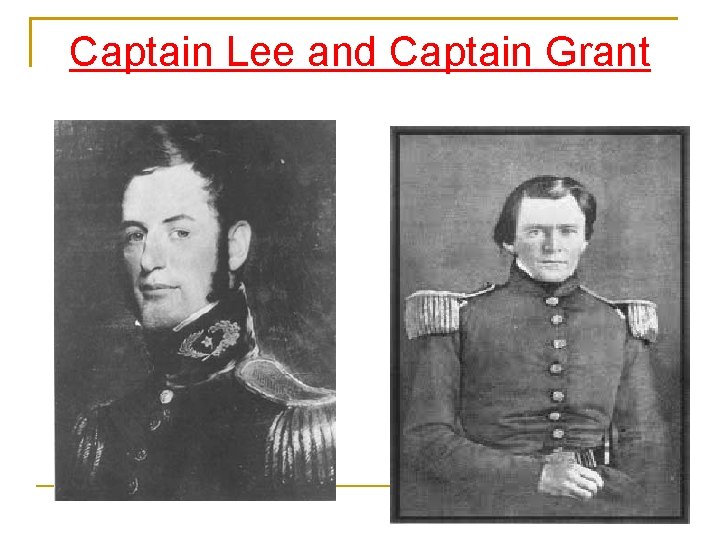
The War in Mexico For American troops in Mexico, one military victory after another. U. S. soldiers served under some of the best officers, Captain Robert E. Lee and Captain Ulysses S. Grant, both West Point graduates.
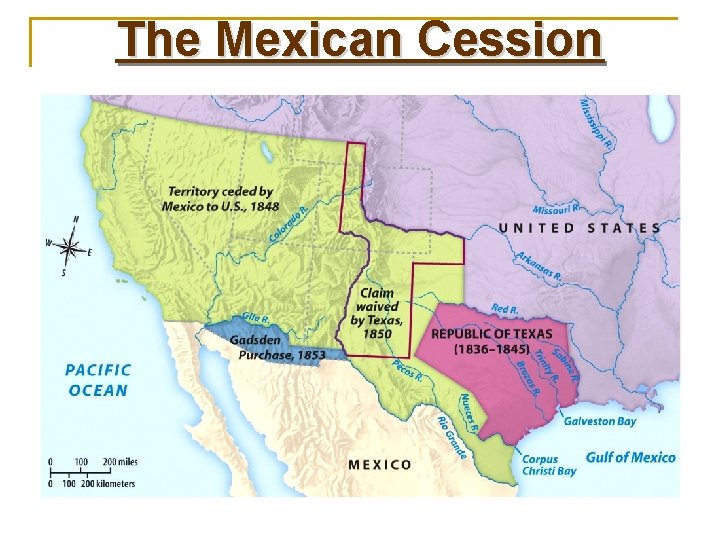
The Mexican Cession
Captain Lee and Captain Grant
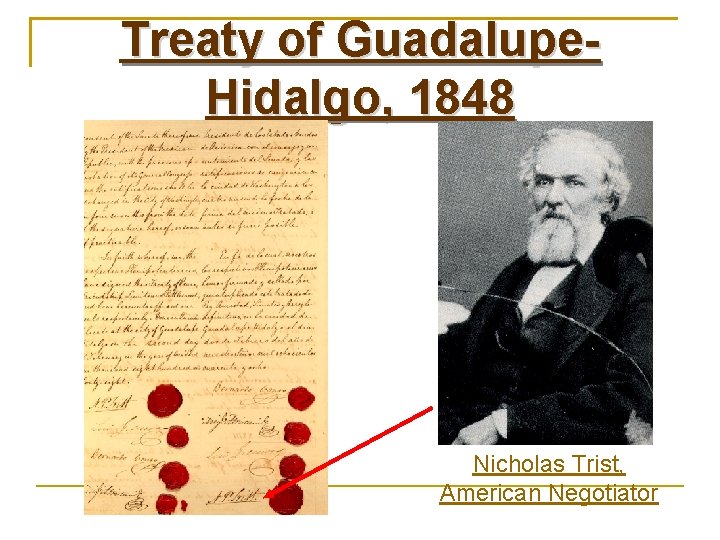
Treaty of Guadalupe. Hidalgo, 1848 Nicholas Trist, American Negotiator
Treaty of Guadalupe. Hidalgo, 1848 Mexico lost 25, 000 lives and nearly half its land. War enlarged America’s territory by 1/3 February 2, 1848 the U. S. and Mexico signed the Treaty of Guadalupe Hidalgo Mexico gave up claims to Texas above the Rio Grande River. Mexico gave the U. S. California and New Mexico Territory U. S. paid $15 million for Mexican cession, included California, Nevada, NM, Utah and most of Arizona.
The Gadsden Purchase In 1853, five years later, President Franklin Pierce would authorize his emissary James Gadsden to pay Mexico and additional $10 million for another piece of territory. Along with the settlement of Oregon and the Treaty of Guadalupe Hidalgo, the Gadsden Purchase established the current borders of the lower states. https: //youtu. be/gn 2 Fzu. Py. Fl. Y
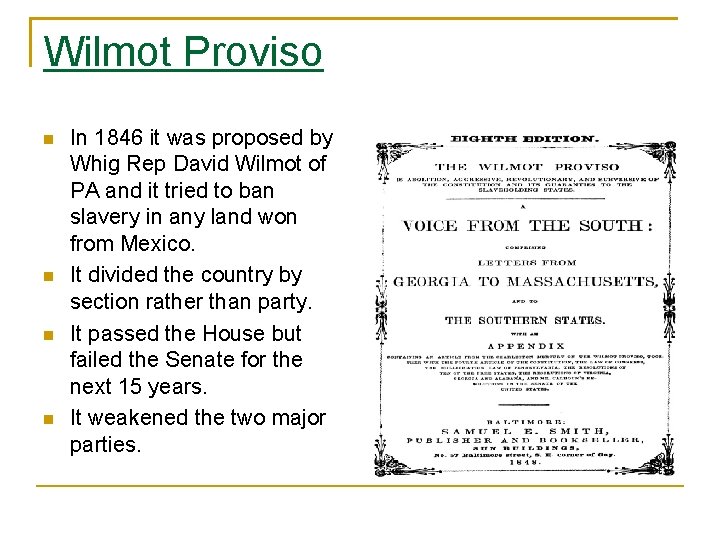
Wilmot Proviso In 1846 it was proposed by Whig Rep David Wilmot of PA and it tried to ban slavery in any land won from Mexico. It divided the country by section rather than party. It passed the House but failed the Senate for the next 15 years. It weakened the two major parties.
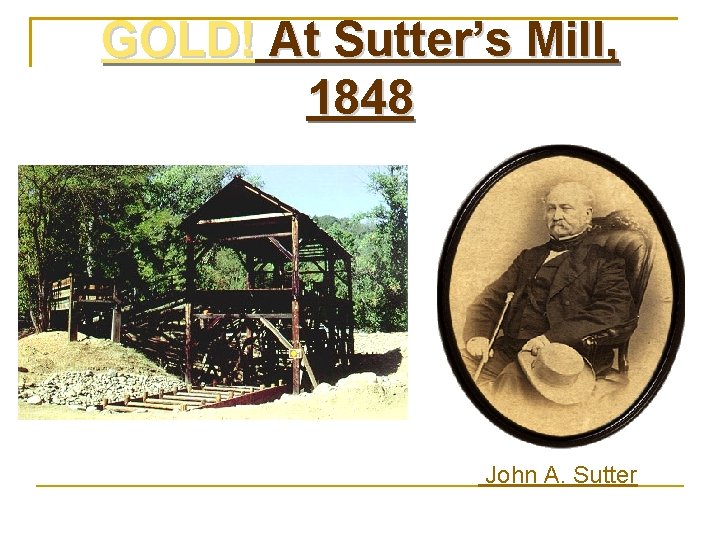
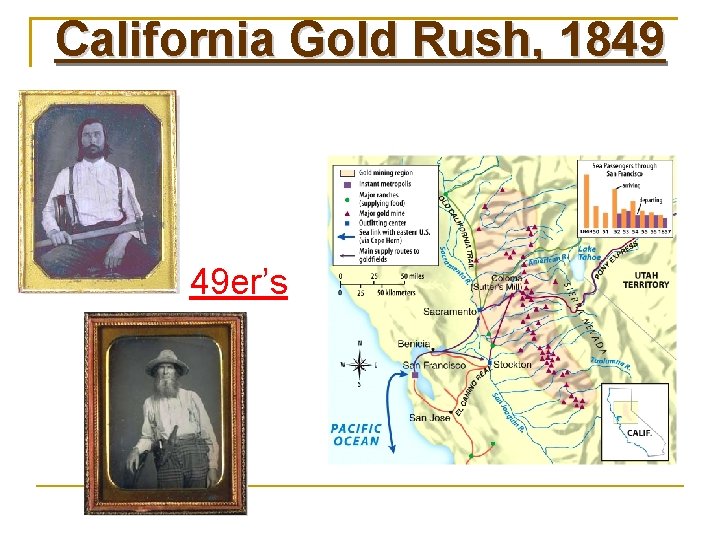
The California Gold Rush In January 1848, James Marshall, an American carpenter working on John Sutter’s property in the California Sierra Nevadas, discovered gold at Sutter’s Mill. Word of the chance discovery traveled east. From 400 in 1848, 44, 000 in 1850. The people who rushed were called fortyniners.
GOLD! At Sutter’s Mill, 1848 John A. Sutter
California Gold Rush, 1849 49 er’s
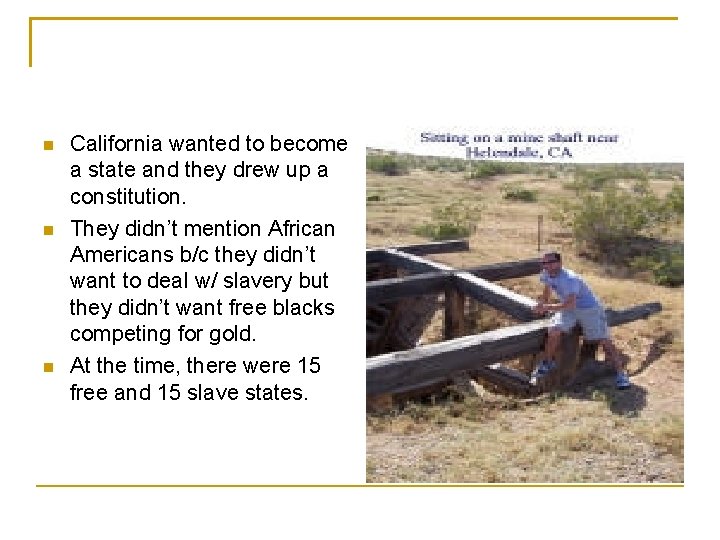
California wanted to become a state and they drew up a constitution. They didn’t mention African Americans b/c they didn’t want to deal w/ slavery but they didn’t want free blacks competing for gold. At the time, there were 15 free and 15 slave states.
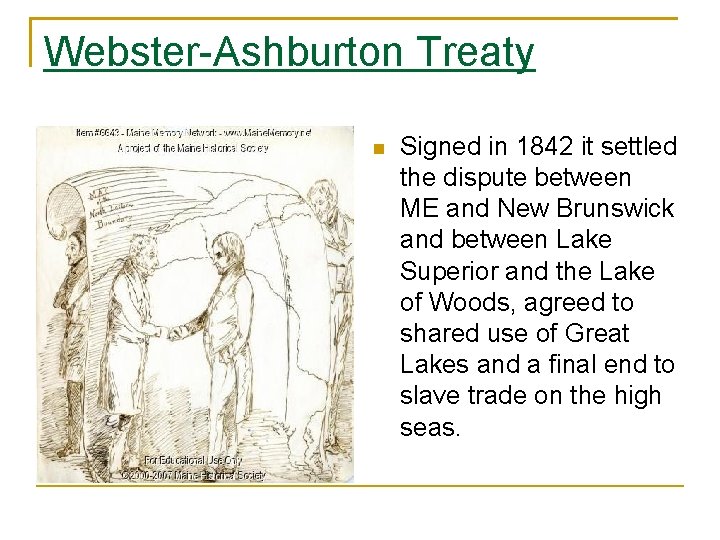
Webster-Ashburton Treaty Signed in 1842 it settled the dispute between ME and New Brunswick and between Lake Superior and the Lake of Woods, agreed to shared use of Great Lakes and a final end to slave trade on the high seas.