
Chapter 5 Logical Database Design and the Relational

Chapter 5: Logical Database Design and the Relational Model 註 : 於 11版為Chapter 4 楊立偉教授 台灣大學 管系 2015 Fall 1
Relation n Relation is a named, two-dimensional table of data 二維的 表格 Table consists of rows 列 (records 紀錄) and columns 欄 (attribute 屬性 or field 欄位) Requirements for a table to qualify as a relation: n n n It must have a unique name Every attribute value must be atomic (not multivalued, not composite) Every row must be unique (can’t have two rows with exactly the same values for all their fields) 不可以有兩列是完全一樣的 Attributes (columns) in tables must have unique names The order of the columns must be irrelevant 欄位順序不重要 The order of the rows must be irrelevant 紀錄順序不重要 Chapter 5 2
從E-R model來建立表格的對應方法 Correspondence with E-R Model n Relations (tables) correspond with entity types and with many-to-many relationship types 個體、多對多關係、有屬性的關係,應該轉成Table n Rows correspond with entity instances and with many-to-many relationship instances Columns correspond with attributes n NOTE: The word relation (in relational database) is NOT the same n as the word relationship (in E-R model) Chapter 5 3
Key Fields n Keys are special fields that serve two main purposes: n n n Primary keys 主鍵 are unique identifiers of the relation. Examples include employee numbers, social security numbers, etc. This is how we can guarantee that all rows are unique Foreign keys 外鍵 are identifiers that enable a dependent relation (on the many side of a relationship) to refer to its parent relation (on the one side of the relationship) Keys can be simple (a single field) or composite (more than one field) Note: keys usually are used as indexes to speed up the response to user queries Chapter 5 4
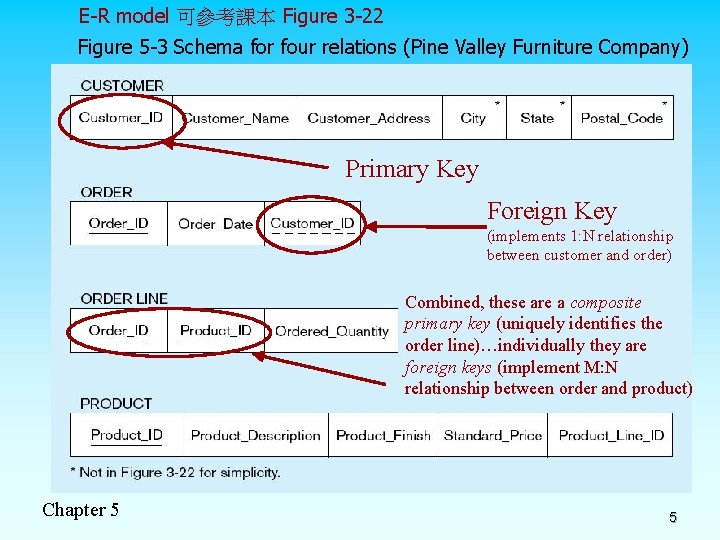
E-R model 可參考課本 Figure 3 -22 Figure 5 -3 Schema for four relations (Pine Valley Furniture Company) Primary Key Foreign Key (implements 1: N relationship between customer and order) Combined, these are a composite primary key (uniquely identifies the order line)…individually they are foreign keys (implement M: N relationship between order and product) Chapter 5 5
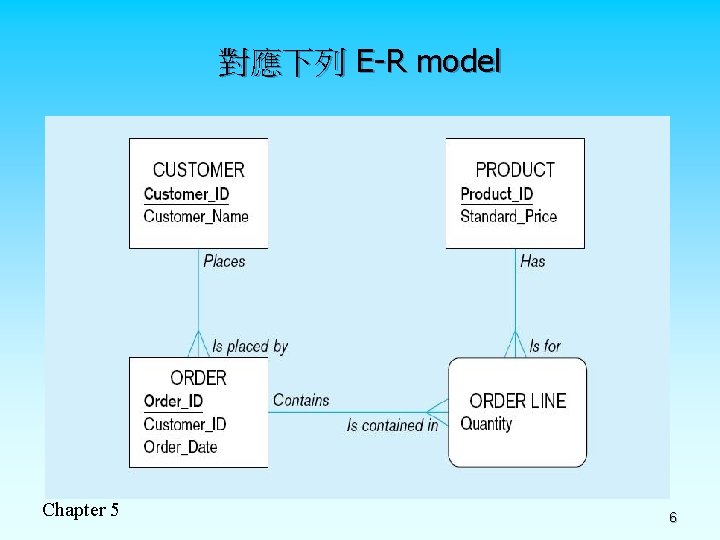
對應下列 E-R model Chapter 5 6

Integrity Constraints n Domain Constraints n n Allowable values for an attribute. See Table 5 -1 Entity Integrity n No primary key attribute may be null. All primary key fields MUST have data 主鍵欄位一定要有值 Chapter 5 7
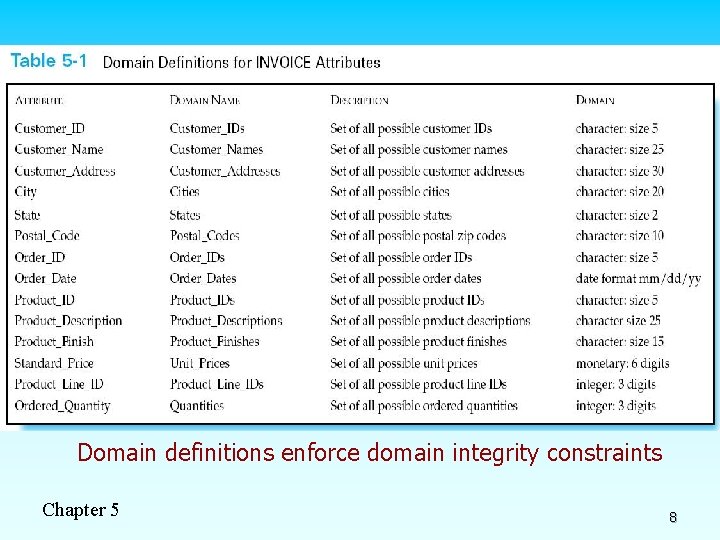
Domain definitions enforce domain integrity constraints Chapter 5 8
Integrity Constraints n Referential Integrity 參照完整性 – any foreign key value (on the relation of the many side) MUST match a primary key value in the relation of the one side. (Or the foreign key can be null) 外鍵一定是指向某筆紀錄, 或者為空 n For example: Delete Rules 在刪除資料時,為了保持參照完整性的三種做法 n n n Restrict – don’t allow delete of “parent” side if related rows exist in “dependent” side Cascade – automatically delete “dependent” side rows that correspond with the “parent” side row to be deleted Set-to-Null – set the foreign key in the dependent side to null if deleting from the parent side not allowed for weak entities Chapter 5 9
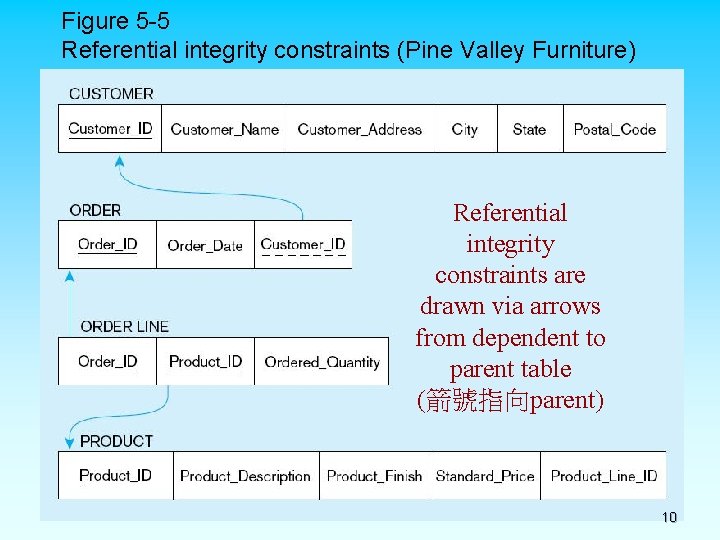
Figure 5 -5 Referential integrity constraints (Pine Valley Furniture) Referential integrity constraints are drawn via arrows from dependent to parent table (箭號指向parent) Chapter 5 10
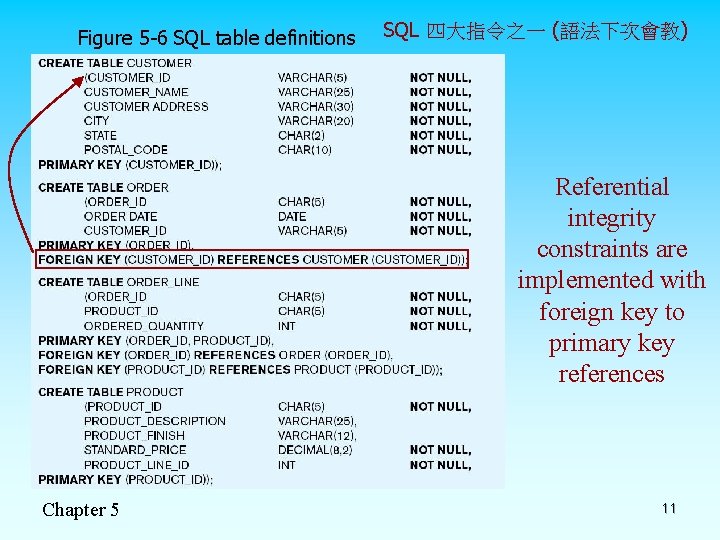
Figure 5 -6 SQL table definitions SQL 四大指令之一 (語法下次會教) Referential integrity constraints are implemented with foreign key to primary key references Chapter 5 11
Transforming E-R Diagrams into Relations (1) Mapping Regular Entities to Relations 1. 2. 3. Chapter 5 Simple attributes: E-R attributes map directly onto the relation Composite attributes: Use only their simple, component attributes 複合屬性則個 別建立對應欄位 Multivalued Attribute: Becomes a separate relation with a foreign key taken from the superior entity 多值欄位應獨立成Table 12
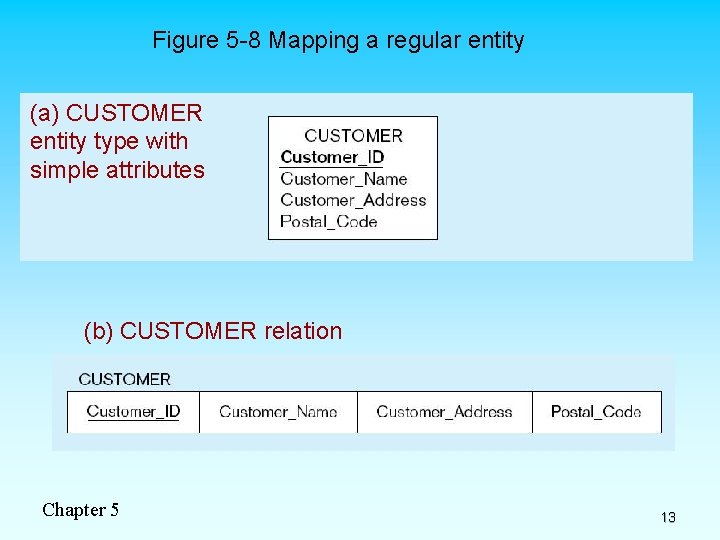
Figure 5 -8 Mapping a regular entity (a) CUSTOMER entity type with simple attributes (b) CUSTOMER relation Chapter 5 13
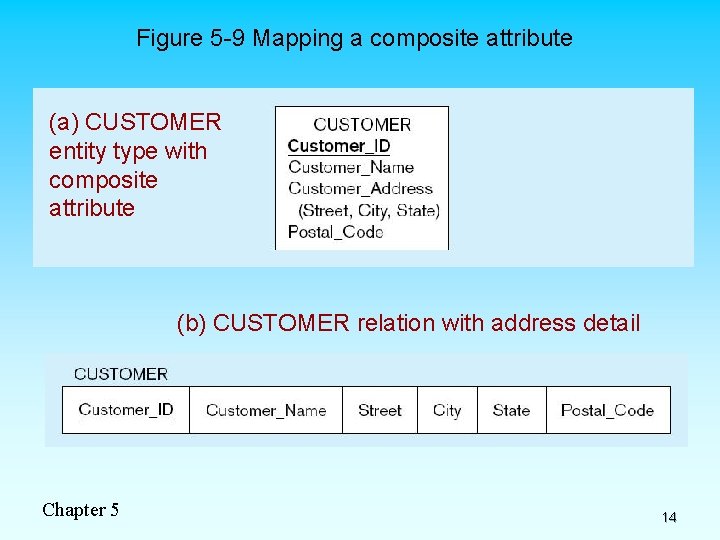
Figure 5 -9 Mapping a composite attribute (a) CUSTOMER entity type with composite attribute (b) CUSTOMER relation with address detail Chapter 5 14
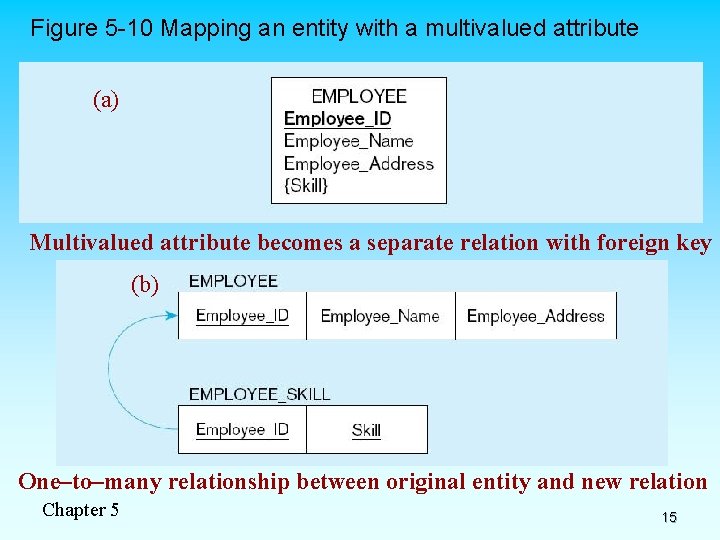
Figure 5 -10 Mapping an entity with a multivalued attribute (a) Multivalued attribute becomes a separate relation with foreign key (b) One–to–many relationship between original entity and new relation Chapter 5 15
Transforming E-R Diagrams into Relations (2) Mapping Weak Entities n Becomes a separate relation with a foreign key taken from the superior entity n Primary key composed of: n Partial identifier of weak entity 部份自己的ID欄 位 n Primary key of identifying relation (strong entity) 加上Parent的主鍵欄位 Chapter 5 16
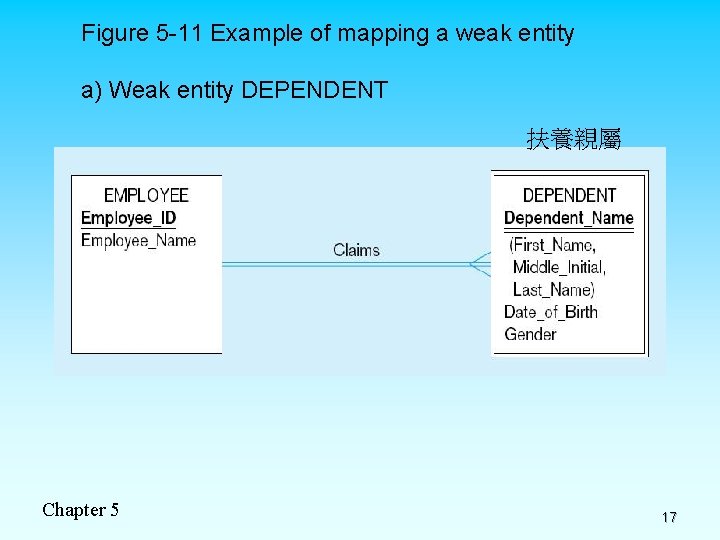
Figure 5 -11 Example of mapping a weak entity a) Weak entity DEPENDENT 扶養親屬 Chapter 5 17
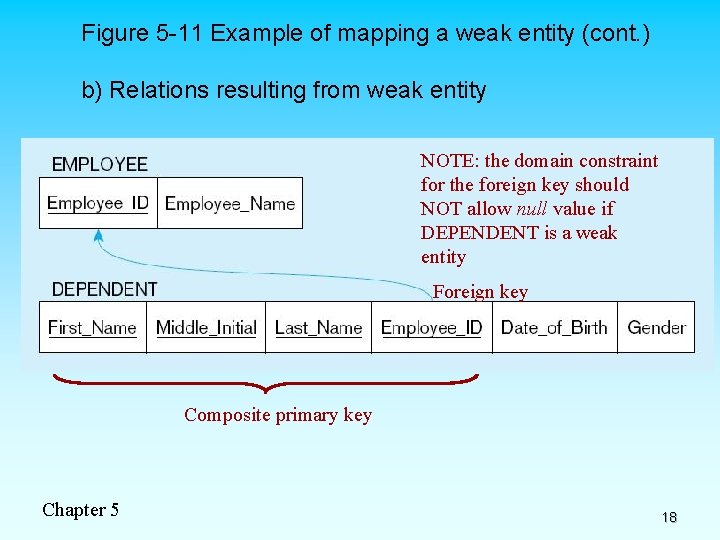
Figure 5 -11 Example of mapping a weak entity (cont. ) b) Relations resulting from weak entity NOTE: the domain constraint for the foreign key should NOT allow null value if DEPENDENT is a weak entity Foreign key Composite primary key Chapter 5 18
Transforming E-R Diagrams into Relations (3) Mapping Binary Relationships One-to-Many – Primary key on the one side becomes a foreign key on the many side n Many-to-Many – Create a new relation with the primary keys of the two entities as its primary key n One-to-One – Primary key on the mandatory side becomes a foreign key on the optional side n Chapter 5 19
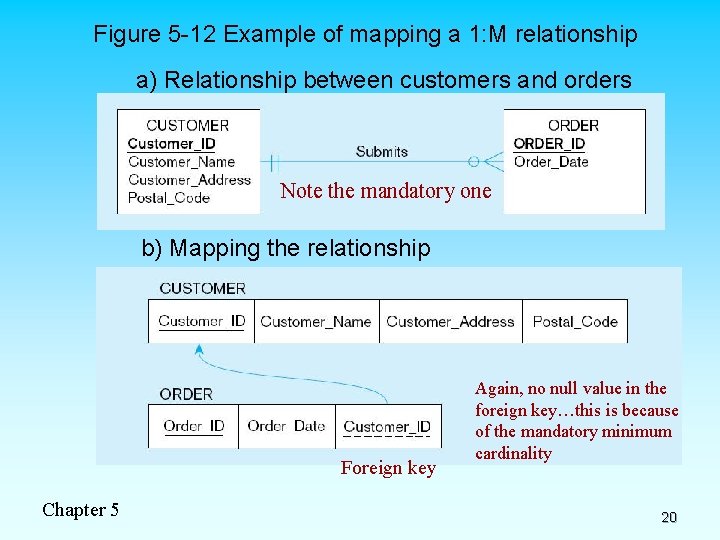
Figure 5 -12 Example of mapping a 1: M relationship a) Relationship between customers and orders Note the mandatory one b) Mapping the relationship Foreign key Chapter 5 Again, no null value in the foreign key…this is because of the mandatory minimum cardinality 20
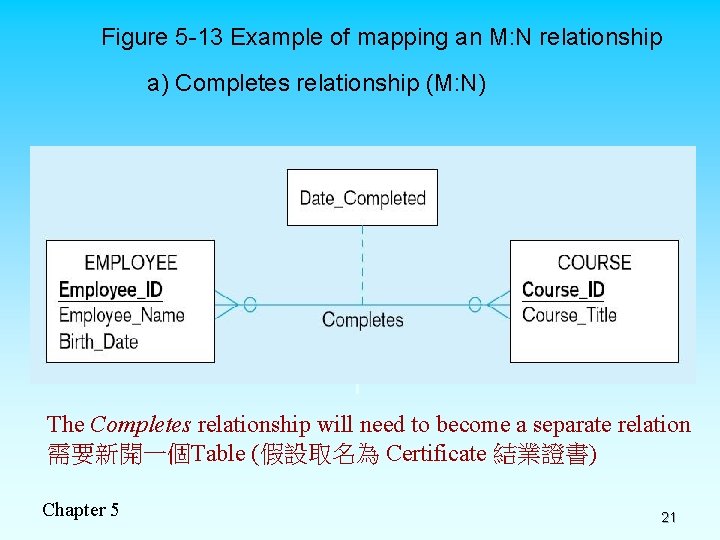
Figure 5 -13 Example of mapping an M: N relationship a) Completes relationship (M: N) The Completes relationship will need to become a separate relation 需要新開一個Table (假設取名為 Certificate 結業證書) Chapter 5 21
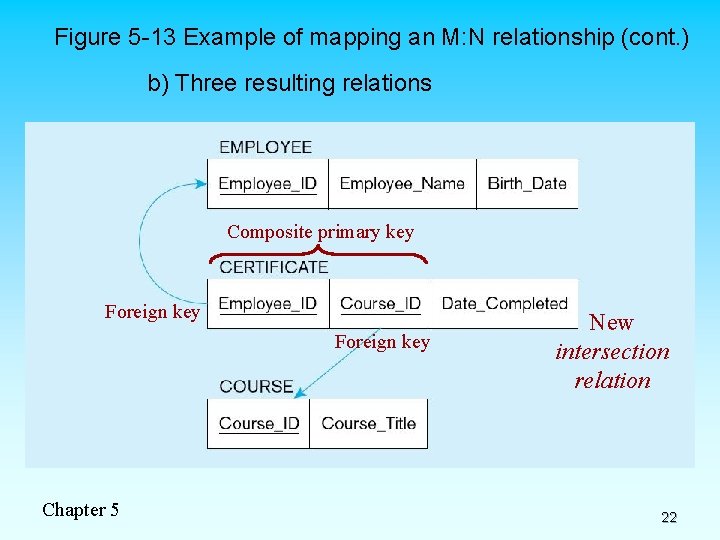
Figure 5 -13 Example of mapping an M: N relationship (cont. ) b) Three resulting relations Composite primary key Foreign key Chapter 5 New intersection relation 22
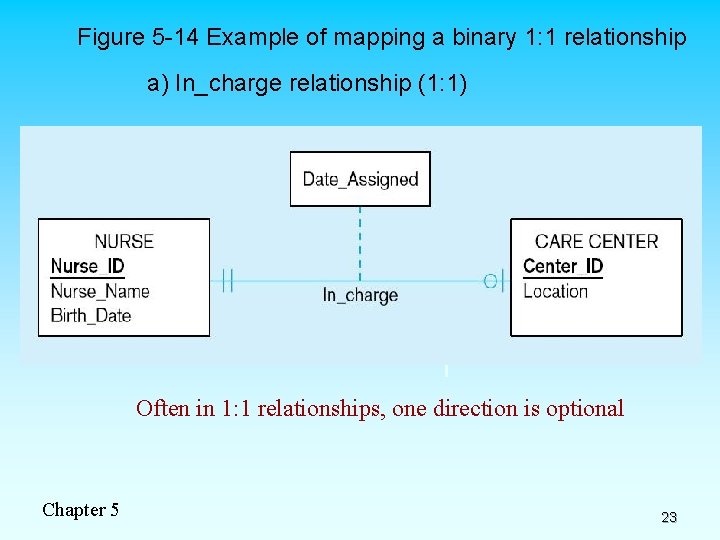
Figure 5 -14 Example of mapping a binary 1: 1 relationship a) In_charge relationship (1: 1) Often in 1: 1 relationships, one direction is optional Chapter 5 23
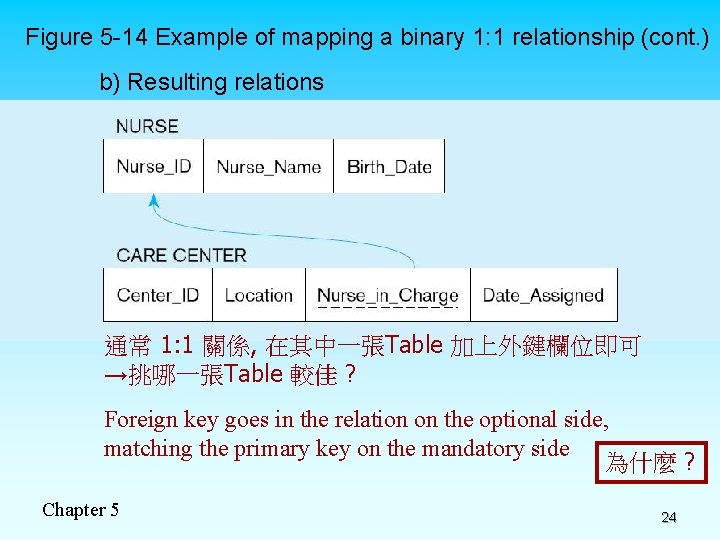
Figure 5 -14 Example of mapping a binary 1: 1 relationship (cont. ) b) Resulting relations 通常 1: 1 關係, 在其中一張Table 加上外鍵欄位即可 →挑哪一張Table 較佳 ? Foreign key goes in the relation on the optional side, matching the primary key on the mandatory side 為什麼 ? Chapter 5 24
Transforming E-R Diagrams into Relations (4) Mapping Associative Entities n Identifier Not Assigned 未特別給定ID者 n Default primary key for the association relation is composed of the primary keys of the two entities (as in M: N relationship) n Identifier Assigned 另給定ID者 n It is natural and familiar to end-users n Default identifier may not be unique Chapter 5 25
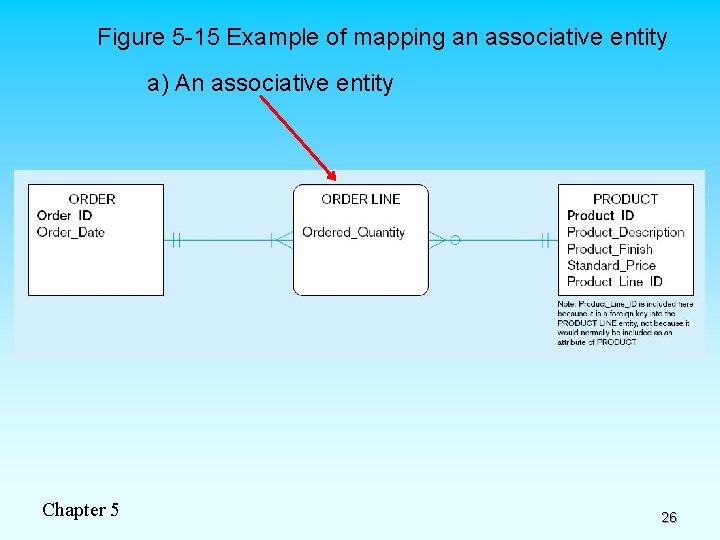
Figure 5 -15 Example of mapping an associative entity a) An associative entity Chapter 5 26
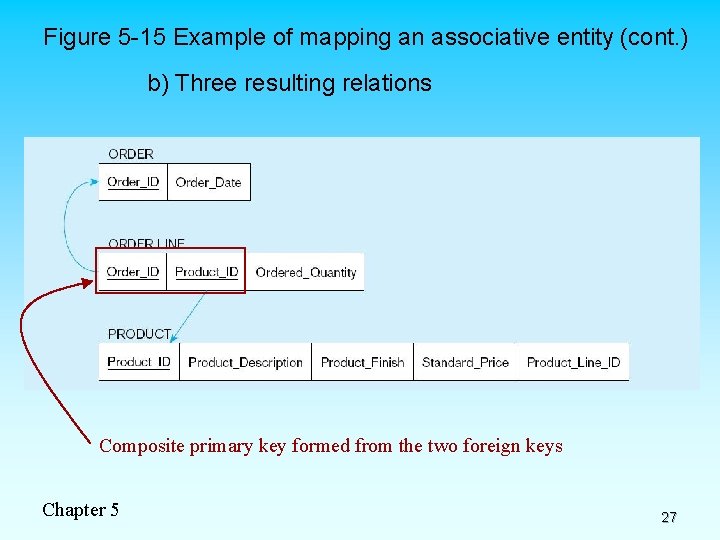
Figure 5 -15 Example of mapping an associative entity (cont. ) b) Three resulting relations Composite primary key formed from the two foreign keys Chapter 5 27
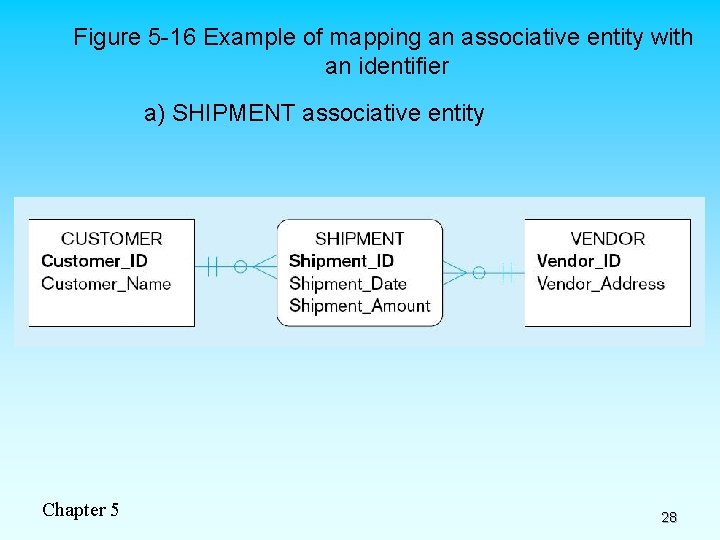
Figure 5 -16 Example of mapping an associative entity with an identifier a) SHIPMENT associative entity Chapter 5 28
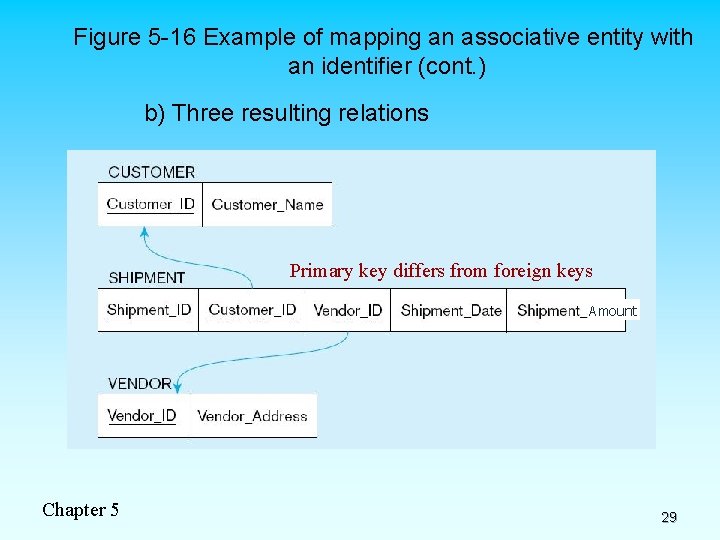
Figure 5 -16 Example of mapping an associative entity with an identifier (cont. ) b) Three resulting relations Primary key differs from foreign keys Amount Chapter 5 29
Transforming E-R Diagrams into Relations (5) Mapping Unary Relationships One-to-Many – Recursive foreign key in the same relation 直接加外鍵欄位即可 n Many-to-Many – Two relations: 要多開一張Table n One for the entity type n One for an associative relation in which the primary key has two attributes, both taken from the primary key of the entity n Chapter 5 30
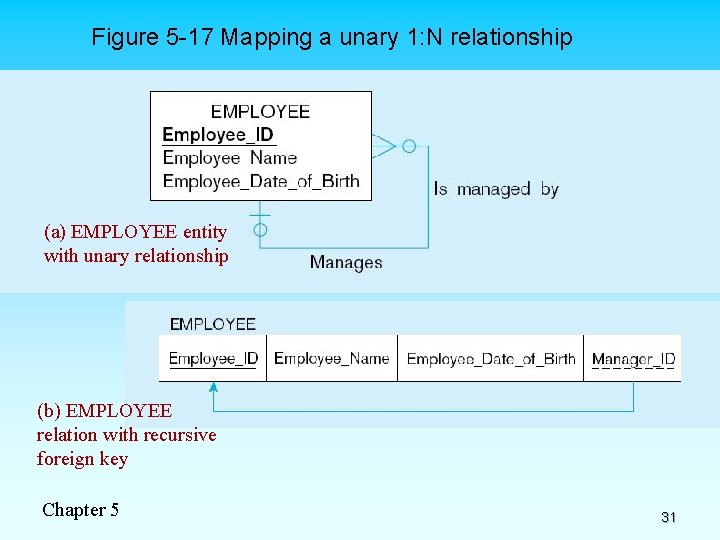
Figure 5 -17 Mapping a unary 1: N relationship (a) EMPLOYEE entity with unary relationship (b) EMPLOYEE relation with recursive foreign key Chapter 5 31
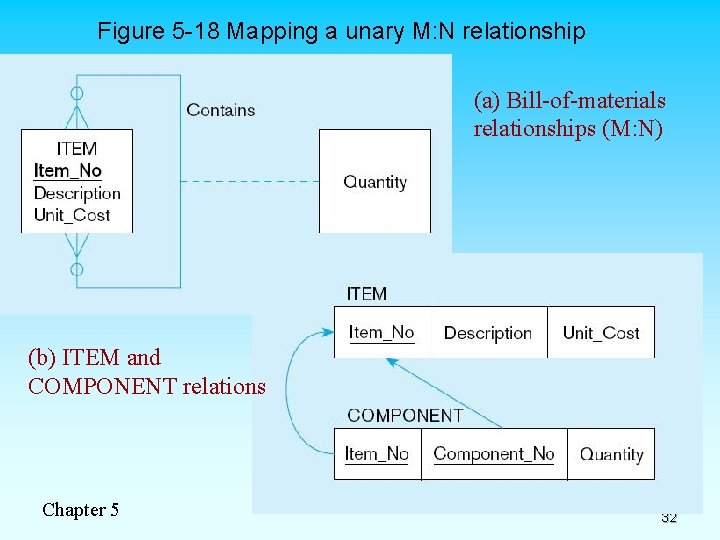
Figure 5 -18 Mapping a unary M: N relationship (a) Bill-of-materials relationships (M: N) (b) ITEM and COMPONENT relations Chapter 5 32
Transforming E-R Diagrams into Relations (6) Mapping Ternary (and n-ary) Relationships One relation for each entity and one for the associative entity n Associative entity has foreign keys to each entity in the relationship n Chapter 5 33
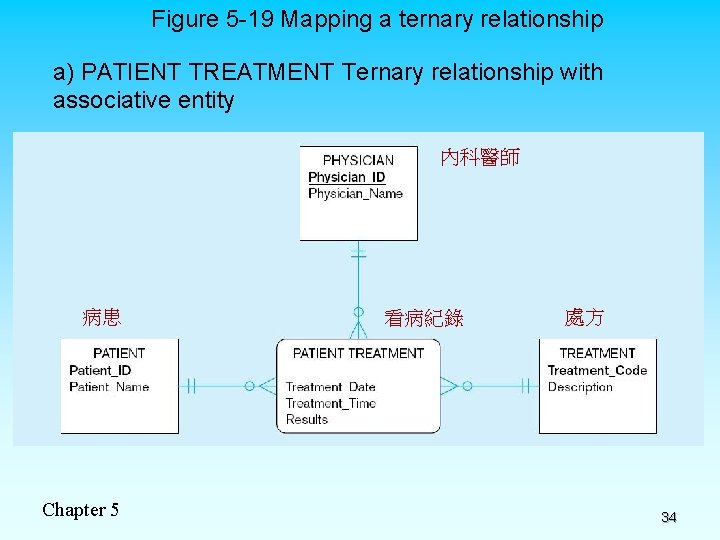
Figure 5 -19 Mapping a ternary relationship a) PATIENT TREATMENT Ternary relationship with associative entity 內科醫師 病患 Chapter 5 看病紀錄 處方 34
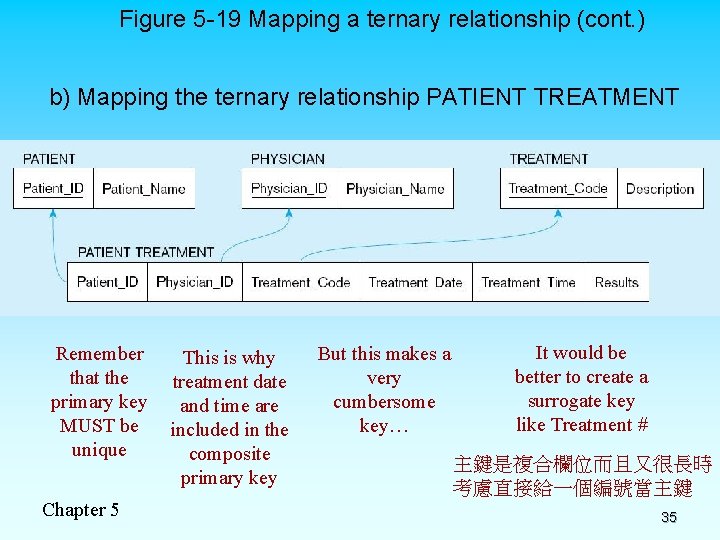
Figure 5 -19 Mapping a ternary relationship (cont. ) b) Mapping the ternary relationship PATIENT TREATMENT Remember that the primary key MUST be unique Chapter 5 This is why treatment date and time are included in the composite primary key But this makes a very cumbersome key… It would be better to create a surrogate key like Treatment # 主鍵是複合欄位而且又很長時 考慮直接給一個編號當主鍵 35
Data Normalization 正規化 n To validate and improve a logical design so that it satisfies certain constraints that avoid unnecessary duplication of data 避免資料重複與各種異象 n The process of decomposing relations with anomalies to produce smaller, wellstructured relations 切成較小, 結構較好的表 Chapter 5 36
Well-Structured Relations n n A relation that contains minimal data redundancy and allows users to insert, delete, and update rows without causing data inconsistencies Goal is to avoid anomalies 為了避免異象 n n n Insertion Anomaly – adding new rows forces user to create duplicate data Deletion Anomaly – deleting rows may cause a loss of data that would be needed for other future rows Modification Anomaly – changing data in a row forces changes to other rows because of duplication General rule of thumb: A table should not pertain to more than one entity type 一張表不該表示超過一個Entity Chapter 5 37
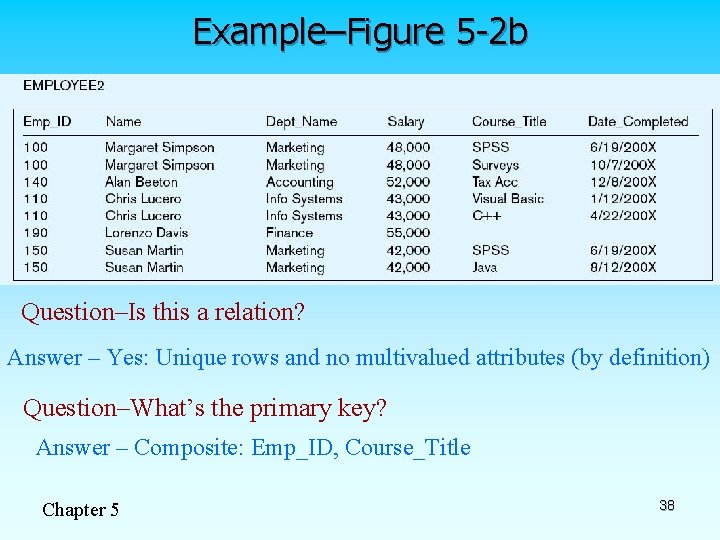
Example–Figure 5 -2 b Question–Is this a relation? Answer – Yes: Unique rows and no multivalued attributes (by definition) Question–What’s the primary key? Answer – Composite: Emp_ID, Course_Title Chapter 5 38
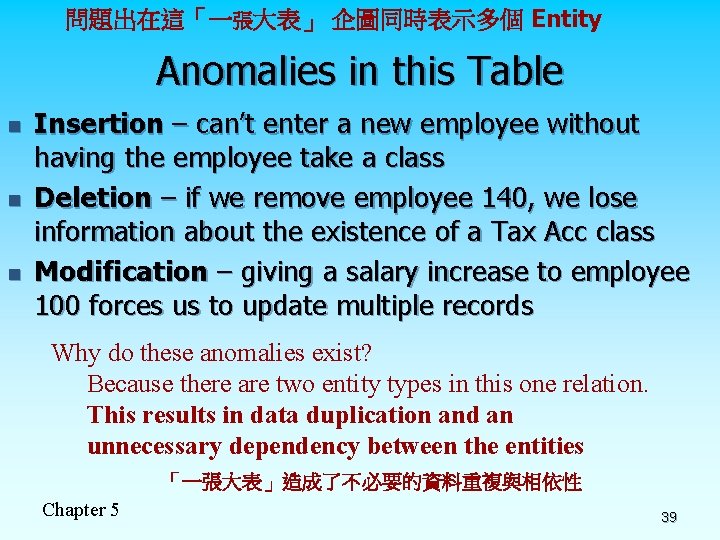
問題出在這「一張大表」 企圖同時表示多個 Entity Anomalies in this Table n n n Insertion – can’t enter a new employee without having the employee take a class Deletion – if we remove employee 140, we lose information about the existence of a Tax Acc class Modification – giving a salary increase to employee 100 forces us to update multiple records Why do these anomalies exist? Because there are two entity types in this one relation. This results in data duplication and an unnecessary dependency between the entities 「一張大表」造成了不必要的資料重複與相依性 Chapter 5 39
Functional Dependencies and Keys n n Functional Dependency: The value of one attribute (the determinant) determines the value of another attribute 相依: 一個欄位是 受另一個欄位所決定 Candidate Key: n A unique identifier. One of the candidate keys will become the primary key n n E. g. perhaps there is both credit card number and SSN in a table…in this case both are candidate keys Each non-key field is functionally dependent on every candidate key Chapter 5 40
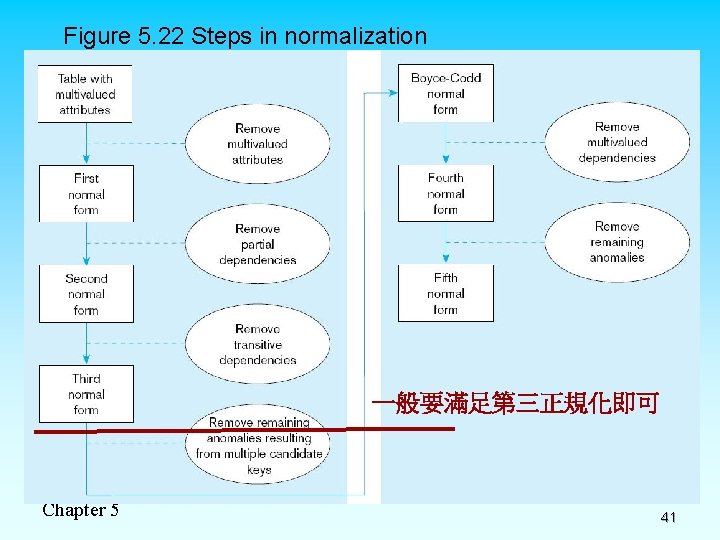
Figure 5. 22 Steps in normalization 一般要滿足第三正規化即可 Chapter 5 41
First Normal Form 第一正規化 n n n No multivalued attributes 不可有多值的欄位 Every attribute value is atomic Fig. 5 -25 is not in 1 st Normal Form (multivalued attributes) it is not a relation Fig. 5 -26 is in 1 st Normal form All relations are in 1 st Normal Form Chapter 5 42
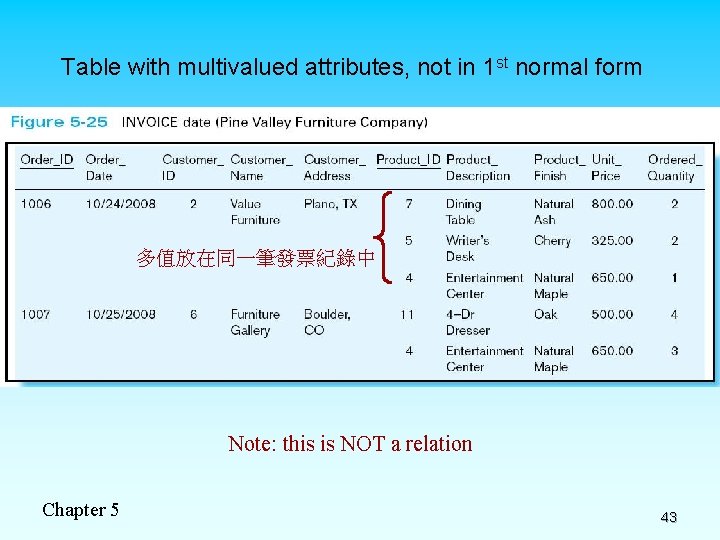
Table with multivalued attributes, not in 1 st normal form 多值放在同一筆發票紀錄中 Note: this is NOT a relation Chapter 5 43
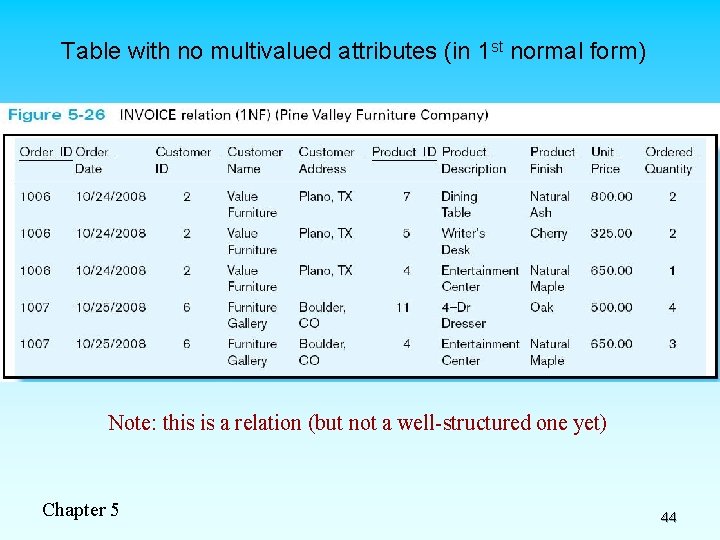
Table with no multivalued attributes (in 1 st normal form) Note: this is a relation (but not a well-structured one yet) Chapter 5 44
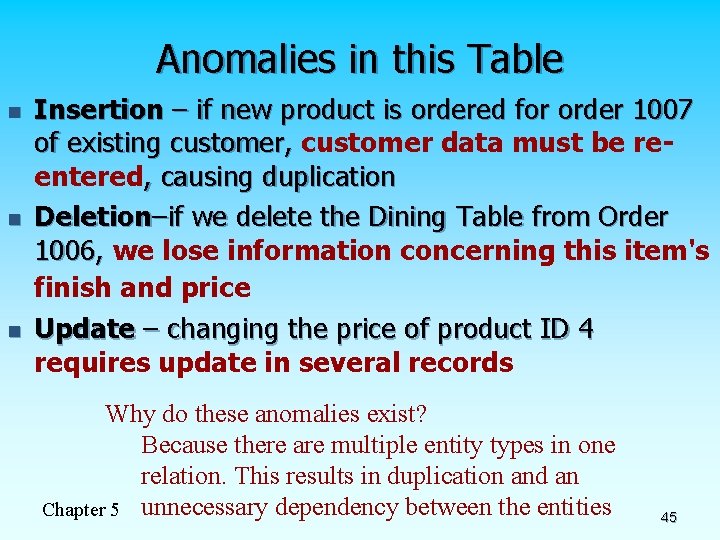
Anomalies in this Table n n n Insertion – if new product is ordered for order 1007 of existing customer, customer data must be reentered, causing duplication Deletion–if we delete the Dining Table from Order 1006, we lose information concerning this item's finish and price Update – changing the price of product ID 4 requires update in several records Why do these anomalies exist? Because there are multiple entity types in one relation. This results in duplication and an Chapter 5 unnecessary dependency between the entities 45
Second Normal Form 第二正規化 n 1 NF PLUS every non-key attribute is fully functionally dependent on the ENTIRE primary key 每個非鍵值欄位, 只能與整個主鍵相依 n Every non-key attribute must be defined by the entire key, not by only part of the key n No partial functional dependencies 不能只與 n 部份主鍵相依 Chapter 5 46
Third Normal Form 第三正規化 n 2 NF PLUS no transitive dependencies n (functional dependencies on non-primary-key attributes) 每個非鍵值欄位, 不能與任何非鍵值欄位相依 ( 反面再講一次, 語氣更強) Note: This is called transitive, because the primary key is a determinant for another attribute, which in turn is a determinant for a third n Solution: Non-key determinant with transitive dependencies go into a new table; non-key determinant becomes primary key in the new table and stays as foreign key in the old table n Chapter 5 47
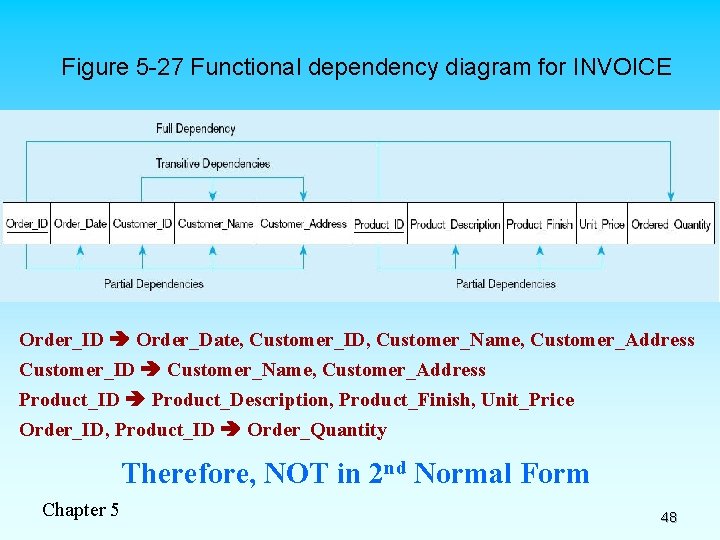
Figure 5 -27 Functional dependency diagram for INVOICE Order_ID Order_Date, Customer_ID, Customer_Name, Customer_Address Customer_ID Customer_Name, Customer_Address Product_ID Product_Description, Product_Finish, Unit_Price Order_ID, Product_ID Order_Quantity Therefore, NOT in 2 nd Normal Form Chapter 5 48
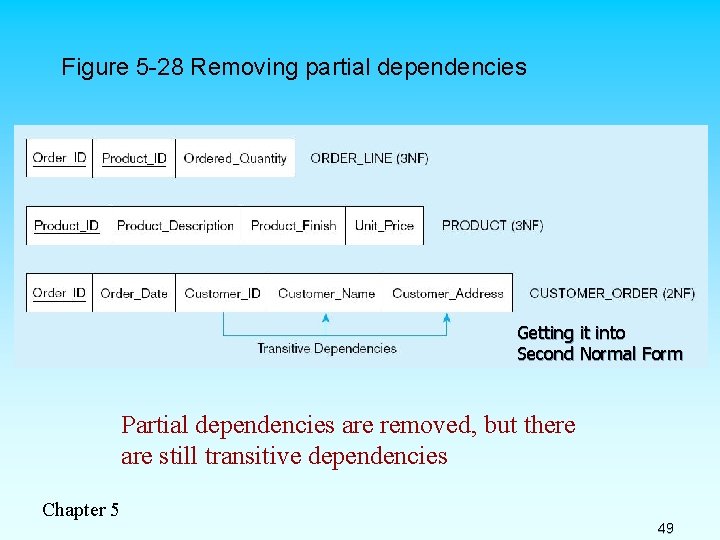
Figure 5 -28 Removing partial dependencies Getting it into Second Normal Form Partial dependencies are removed, but there are still transitive dependencies Chapter 5 49
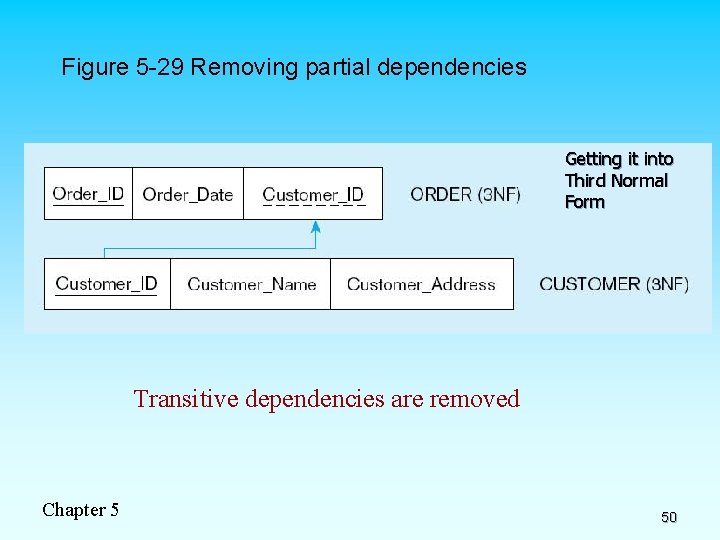
Figure 5 -29 Removing partial dependencies Getting it into Third Normal Form Transitive dependencies are removed Chapter 5 50
Merging Relations n Combining entities from multiple E-R models into common relations n n 合併多個E-R models成一組表格 when merging entities from different ER models 合併要注意的事 : n n n Synonyms 異名同義詞問題? – two or more attributes with different names but same meaning Ex. Author Creator Homonyms 同名異義詞問題? –attributes with same name but different meanings Ex. Price (means unit or total? ) Transitive dependencies – even if relations are in 3 NF prior to merging, they may not be after merging 合併之 後要再檢查第三正規化 Chapter 5 53
Enterprise Keys n n Primary keys that are unique in the whole database, not just within a single relation 整個資料庫內都可用的主鍵 Corresponds with the concept of an object ID in object-oriented systems Chapter 5 54
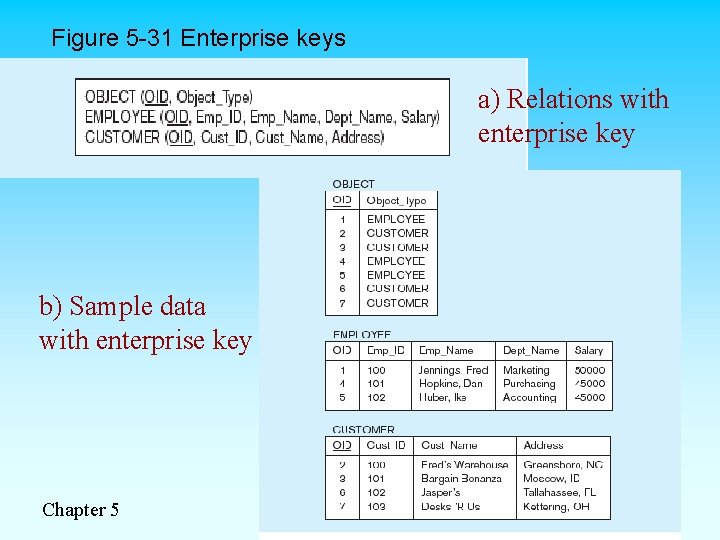
Figure 5 -31 Enterprise keys a) Relations with enterprise key b) Sample data with enterprise key Chapter 5 55
- Slides: 55