
CHAPTER 5 LOGICAL DATABASE DESIGN AND THE RELATIONAL
CHAPTER 5: LOGICAL DATABASE DESIGN AND THE RELATIONAL MODEL Modern Database Management 6 th Edition Jeffrey A. Hoffer, Mary B. Prescott, Fred R. Mc. Fadden © PRENTICE HALL, 2002 1
RELATION Definition: A relation is a named, two-dimensional table of data Table is made up of rows (records), and columns (attribute or field) Not all tables qualify as relations Requirements: Every relation has a unique name. Every attribute value is atomic (not multivalued, not composite) Every row is unique (can’t have two rows with exactly the same values for all their fields) Attributes (columns) in tables have unique names The order of the columns is irrelevant The order of the rows is irrelevant Chapter 5 NOTE: all relations are in 1 st Normal form © PRENTICE HALL, 2002 2
CORRESPONDENCE WITH ER MODEL Relations (tables) correspond with entity types and with many-to-many relationship types Rows correspond with entity instances and with many-to-many relationship instances Columns correspond with attributes NOTE: The word relation (in relational database) is NOT the same the word relationship (in ER model) Chapter 5 © PRENTICE HALL, 2002 3
KEY FIELDS Keys are special fields that serve two main purposes: Primary keys are unique identifiers of the relation in question. Examples include employee numbers, social security numbers, etc. This is how we can guarantee that all rows are unique Foreign keys are identifiers that enable a dependent relation (on the many side of a relationship) to refer to its parent relation (on the one side of the relationship) Keys can be simple (a single field) or composite (more than one field) Keys usually are used as indexes to speed up the response to user queries. Chapter 5 © PRENTICE HALL, 2002 4
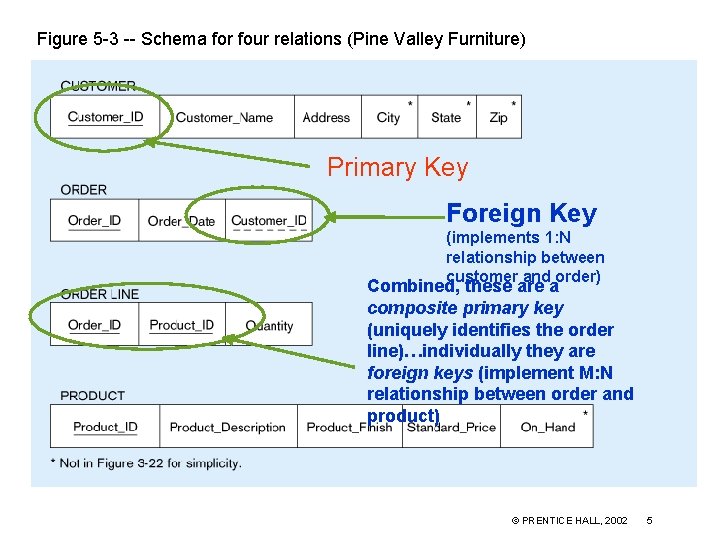
Figure 5 -3 -- Schema for four relations (Pine Valley Furniture) Primary Key Foreign Key (implements 1: N relationship between customer and order) Combined, these are a composite primary key (uniquely identifies the order line)…individually they are foreign keys (implement M: N relationship between order and product) © PRENTICE HALL, 2002 5
INTEGRITY CONSTRAINTS Domain Constraints Allowable values for an attribute. Entity Integrity No primary key attribute may be null. All primary key fields MUST have data Action Assertions Business rules. Chapter 5 © PRENTICE HALL, 2002 6
INTEGRITY CONSTRAINTS Referential Integrity – rule that states that any foreign key value (on the relation of the many side) MUST match a primary key value in the relation of the one side. (Or the foreign key can be null) For example: Delete Rules Restrict – don’t allow delete of “parent” side if related rows exist in “dependent” side Cascade – automatically delete “dependent” side rows that correspond with the “parent” side row to be deleted Set-to-Null – set the foreign key in the dependent side to null if deleting from the parent side not allowed for weak entities Chapter 5 © PRENTICE HALL, 2002 7
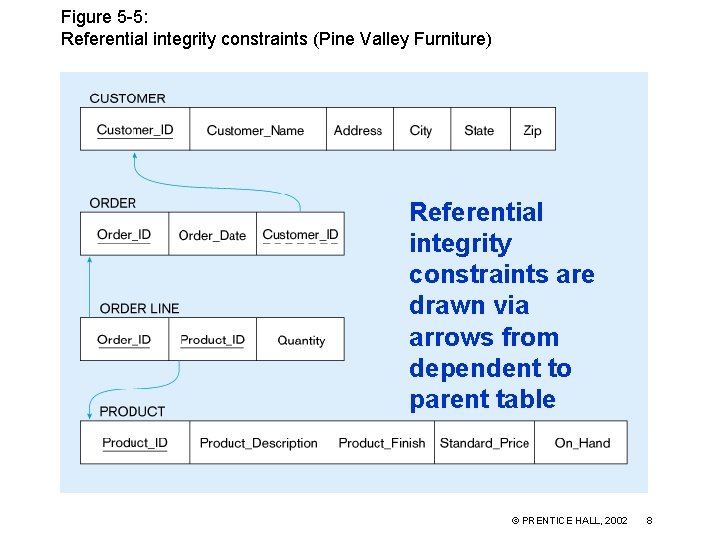
Figure 5 -5: Referential integrity constraints (Pine Valley Furniture) Referential integrity constraints are drawn via arrows from dependent to parent table © PRENTICE HALL, 2002 8
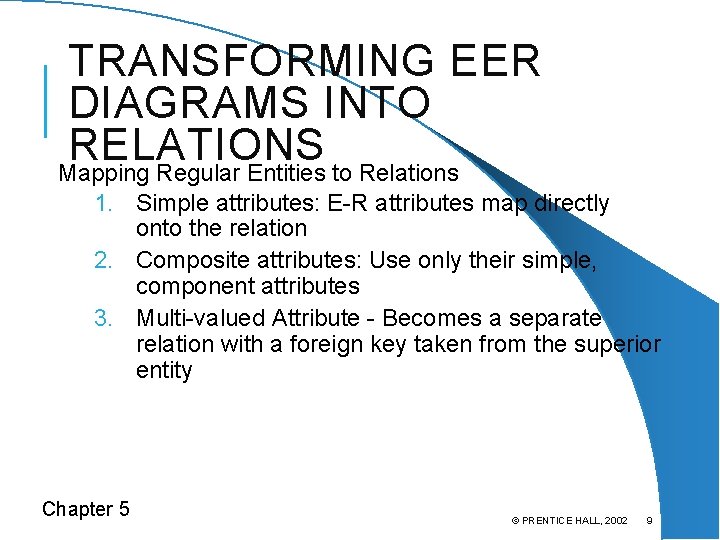
TRANSFORMING EER DIAGRAMS INTO RELATIONS Mapping Regular Entities to Relations 1. Simple attributes: E-R attributes map directly onto the relation 2. Composite attributes: Use only their simple, component attributes 3. Multi-valued Attribute - Becomes a separate relation with a foreign key taken from the superior entity Chapter 5 © PRENTICE HALL, 2002 9
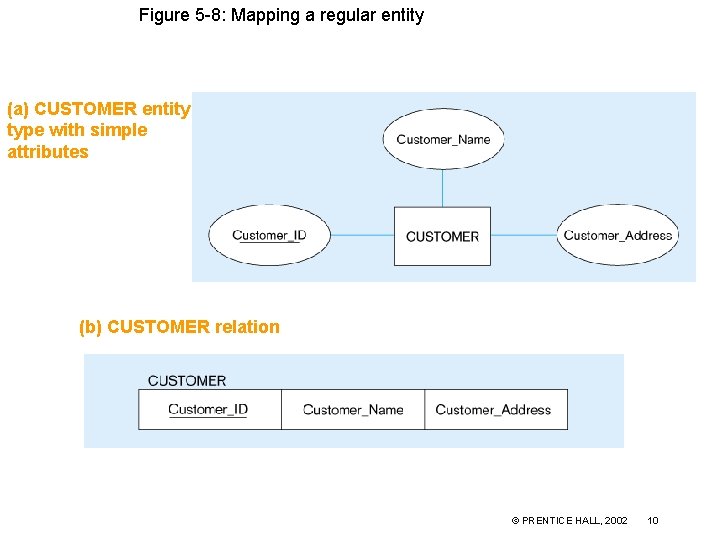
Figure 5 -8: Mapping a regular entity (a) CUSTOMER entity type with simple attributes (b) CUSTOMER relation © PRENTICE HALL, 2002 10
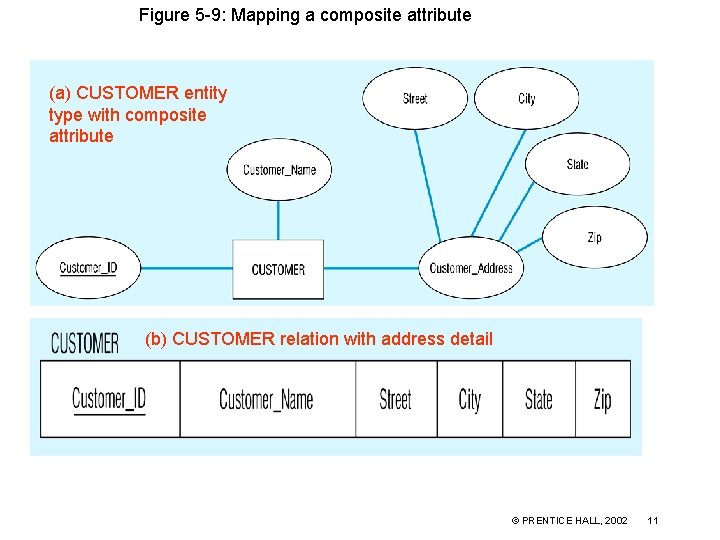
Figure 5 -9: Mapping a composite attribute (a) CUSTOMER entity type with composite attribute (b) CUSTOMER relation with address detail © PRENTICE HALL, 2002 11
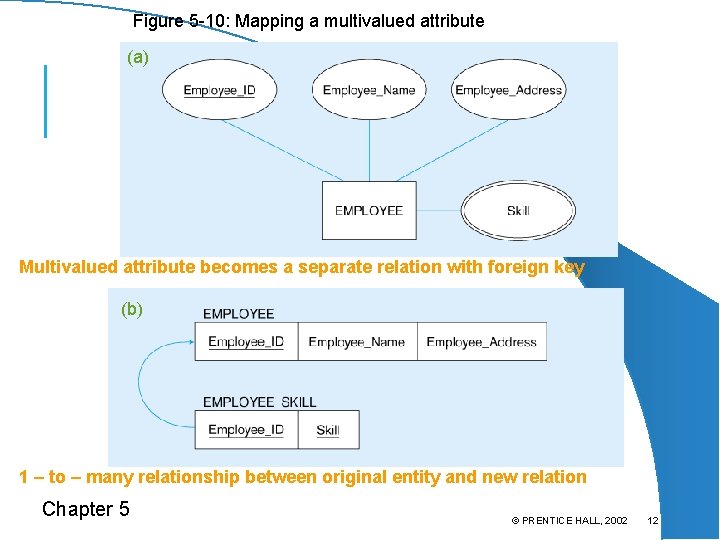
Figure 5 -10: Mapping a multivalued attribute (a) Multivalued attribute becomes a separate relation with foreign key (b) 1 – to – many relationship between original entity and new relation Chapter 5 © PRENTICE HALL, 2002 12
TRANSFORMING EER DIAGRAMS INTO RELATIONS Mapping Weak Entities Becomes a separate relation with a foreign key taken from the superior entity Primary key composed of: Partial identifier of weak entity Primary key of identifying relation (strong entity) Chapter 5 © PRENTICE HALL, 2002 13
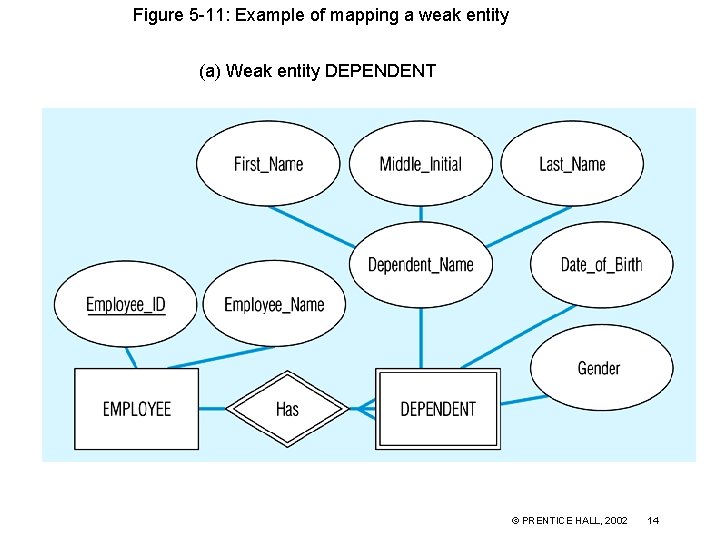
Figure 5 -11: Example of mapping a weak entity (a) Weak entity DEPENDENT © PRENTICE HALL, 2002 14
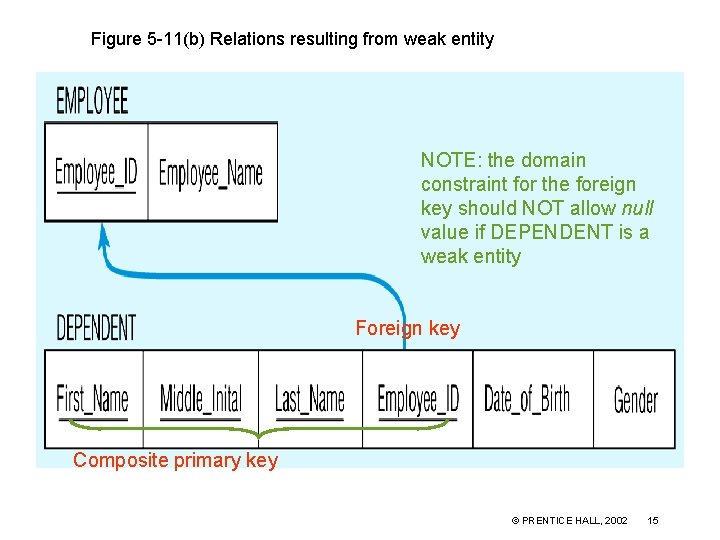
Figure 5 -11(b) Relations resulting from weak entity NOTE: the domain constraint for the foreign key should NOT allow null value if DEPENDENT is a weak entity Foreign key Composite primary key © PRENTICE HALL, 2002 15
TRANSFORMING EER DIAGRAMS INTO RELATIONS Mapping Binary Relationships One-to-Many - Primary key on the one side becomes a foreign key on the many side Many-to-Many - Create a new relation with the primary keys of the two entities as its primary key One-to-One - Primary key on the mandatory side becomes a foreign key on the optional side Chapter 5 © PRENTICE HALL, 2002 16
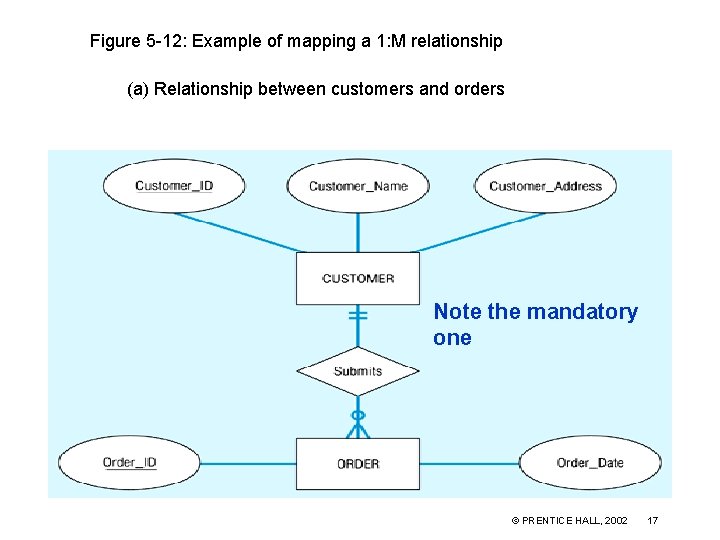
Figure 5 -12: Example of mapping a 1: M relationship (a) Relationship between customers and orders Note the mandatory one © PRENTICE HALL, 2002 17
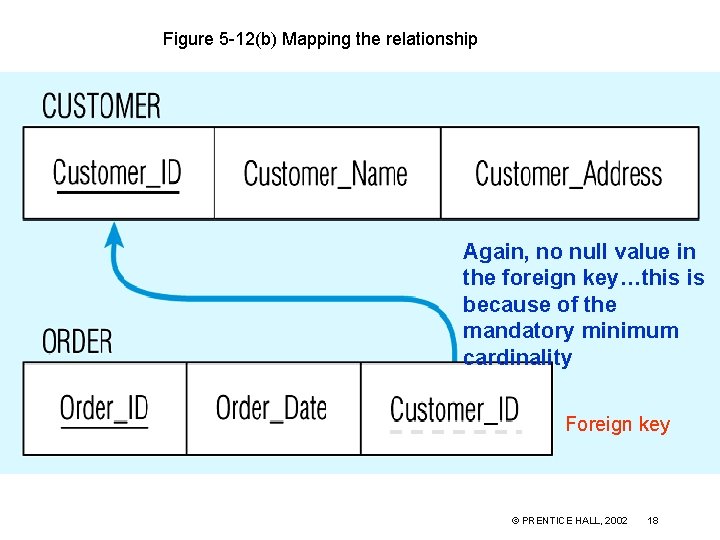
Figure 5 -12(b) Mapping the relationship Again, no null value in the foreign key…this is because of the mandatory minimum cardinality Foreign key © PRENTICE HALL, 2002 18
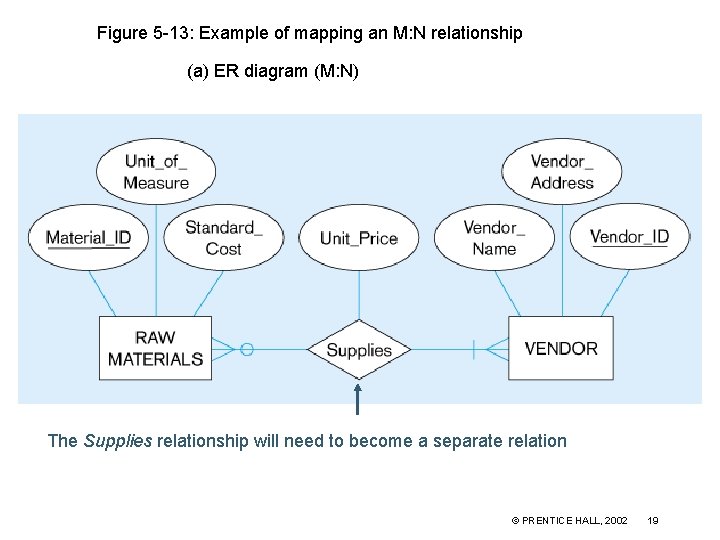
Figure 5 -13: Example of mapping an M: N relationship (a) ER diagram (M: N) The Supplies relationship will need to become a separate relation © PRENTICE HALL, 2002 19
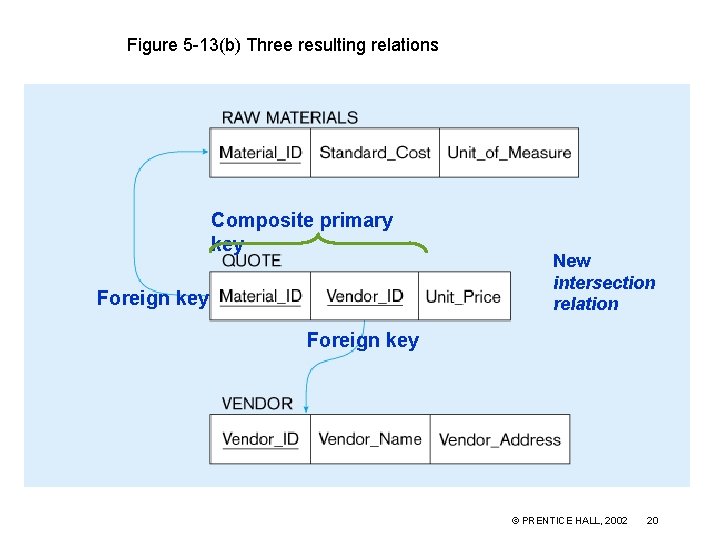
Figure 5 -13(b) Three resulting relations Composite primary key Foreign key New intersection relation Foreign key © PRENTICE HALL, 2002 20
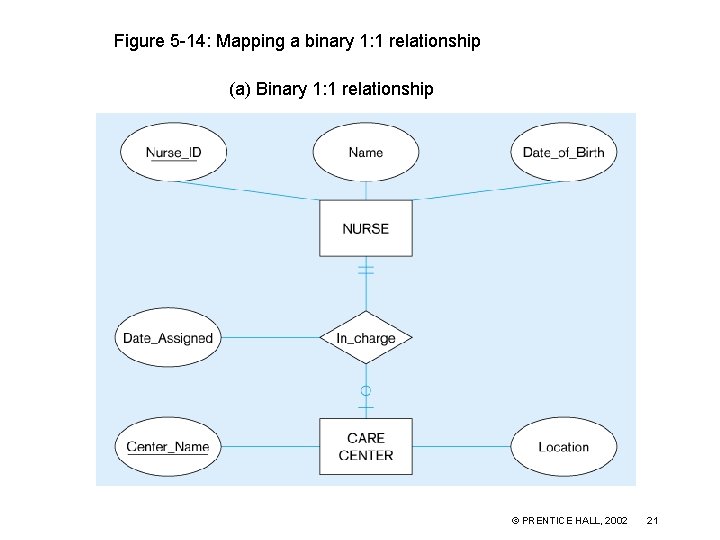
Figure 5 -14: Mapping a binary 1: 1 relationship (a) Binary 1: 1 relationship © PRENTICE HALL, 2002 21
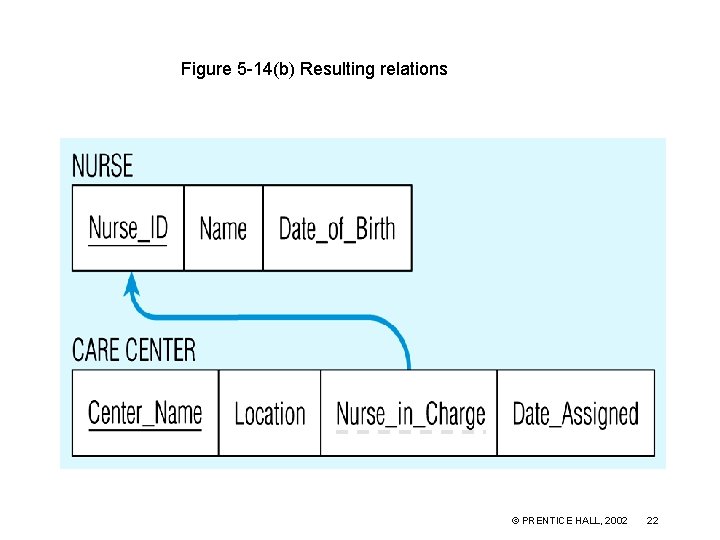
Figure 5 -14(b) Resulting relations © PRENTICE HALL, 2002 22
TRANSFORMING EER DIAGRAMS INTO RELATIONS Mapping Associative Entities Identifier Not Assigned Default primary key for the association relation is composed of the primary keys of the two entities (as in M: N relationship) Identifier Assigned It is natural and familiar to end-users Default identifier may not be unique Chapter 5 © PRENTICE HALL, 2002 23
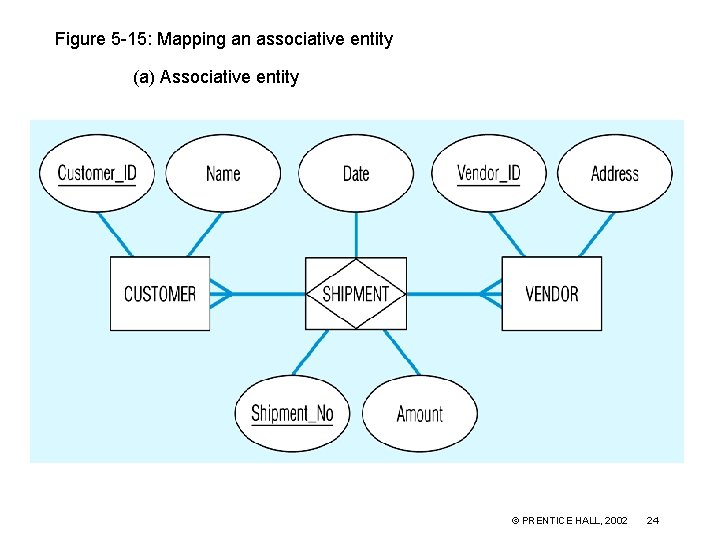
Figure 5 -15: Mapping an associative entity (a) Associative entity © PRENTICE HALL, 2002 24
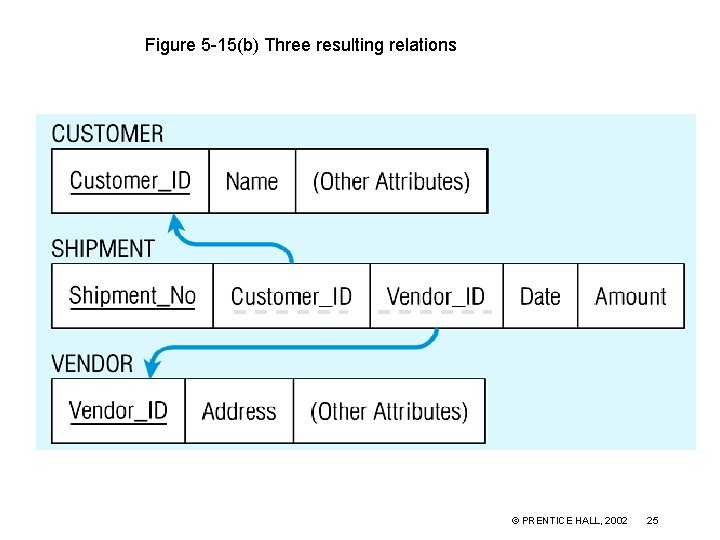
Figure 5 -15(b) Three resulting relations © PRENTICE HALL, 2002 25
TRANSFORMING EER DIAGRAMS INTO RELATIONS Mapping Unary Relationships One-to-Many - Recursive foreign key in the same relation Many-to-Many - Two relations: One for the entity type One for an associative relation in which the primary key has two attributes, both taken from the primary key of the entity Chapter 5 © PRENTICE HALL, 2002 26
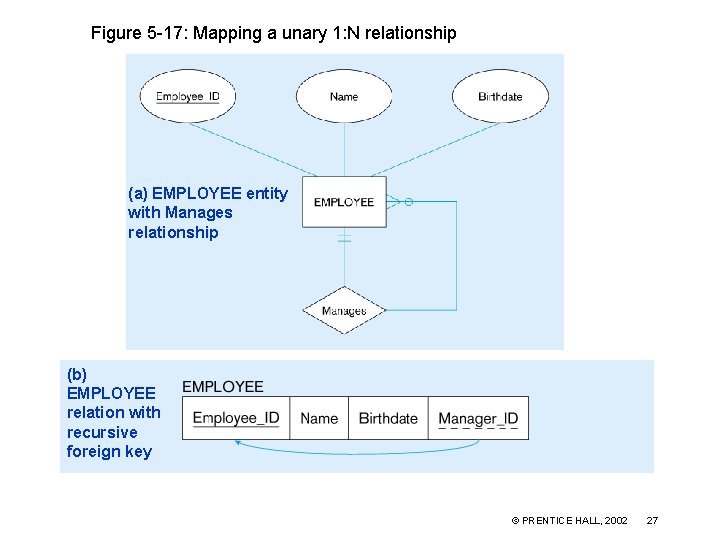
Figure 5 -17: Mapping a unary 1: N relationship (a) EMPLOYEE entity with Manages relationship (b) EMPLOYEE relation with recursive foreign key © PRENTICE HALL, 2002 27
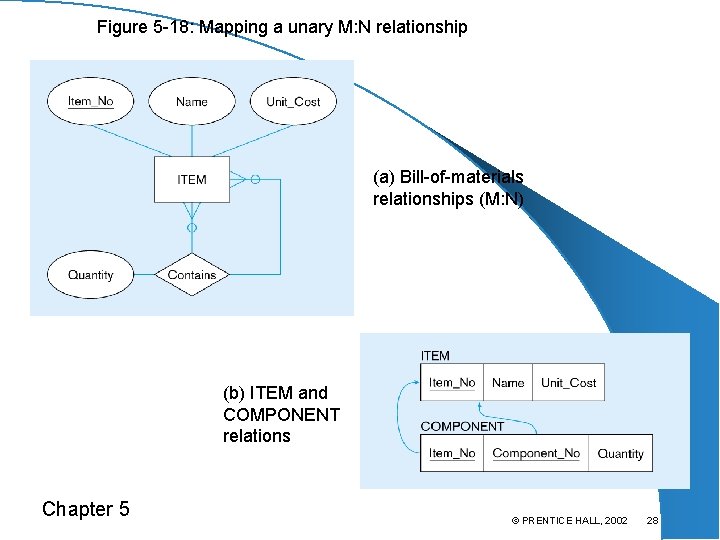
Figure 5 -18: Mapping a unary M: N relationship (a) Bill-of-materials relationships (M: N) (b) ITEM and COMPONENT relations Chapter 5 © PRENTICE HALL, 2002 28
TRANSFORMING EER DIAGRAMS INTO RELATIONS Mapping Ternary (and n-ary) Relationships One relation for each entity and one for the associative entity Associative entity has foreign keys to each entity in the relationship Chapter 5 © PRENTICE HALL, 2002 29
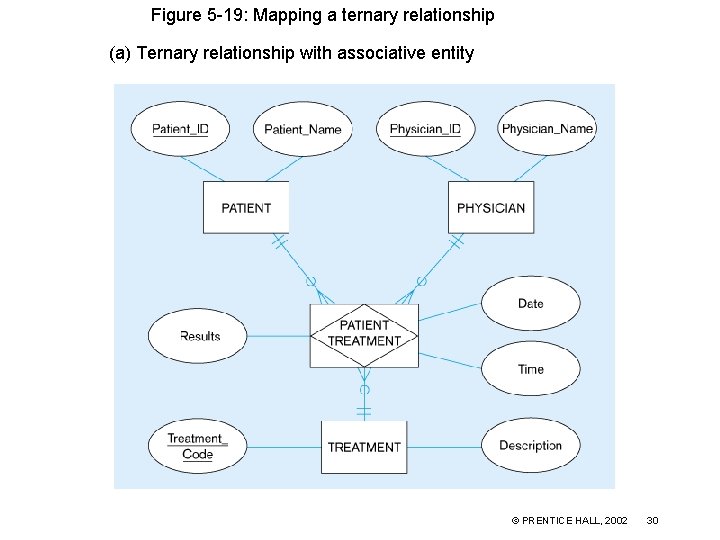
Figure 5 -19: Mapping a ternary relationship (a) Ternary relationship with associative entity © PRENTICE HALL, 2002 30
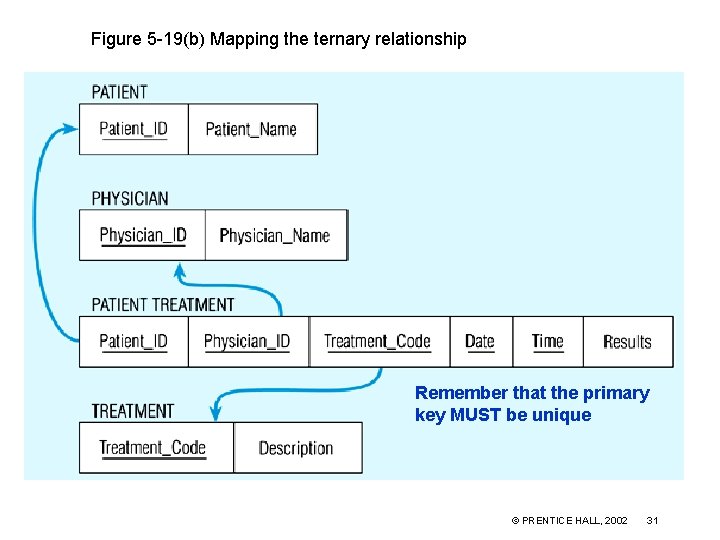
Figure 5 -19(b) Mapping the ternary relationship Remember that the primary key MUST be unique © PRENTICE HALL, 2002 31
- Slides: 31