
Chapter 5 Lesson 1 Air and Weather EQ
- Slides: 19
Chapter 5 Lesson 1: Air and Weather EQ: Where does weather take place? How are tools helpful to scientists when predicting weather?
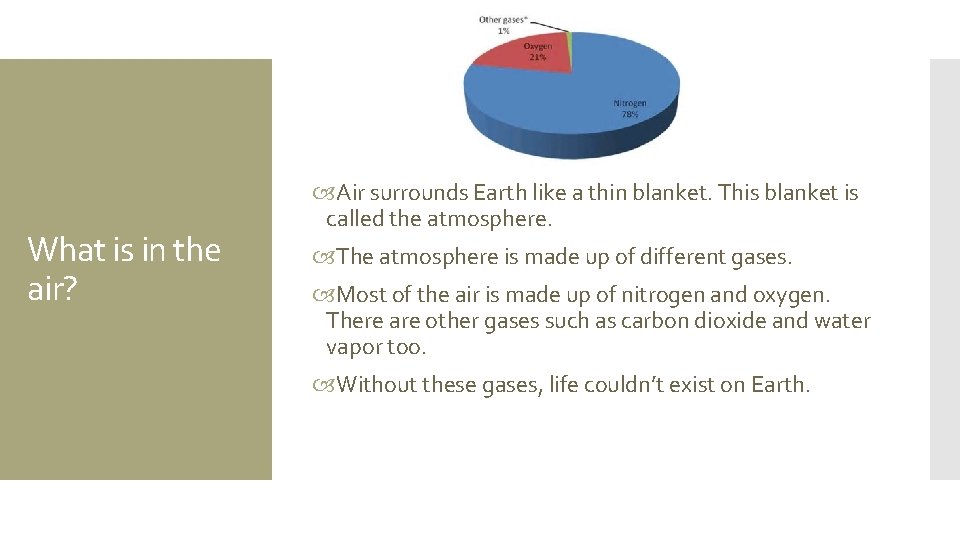
What is in the air? Air surrounds Earth like a thin blanket. This blanket is called the atmosphere. The atmosphere is made up of different gases. Most of the air is made up of nitrogen and oxygen. There are other gases such as carbon dioxide and water vapor too. Without these gases, life couldn’t exist on Earth.
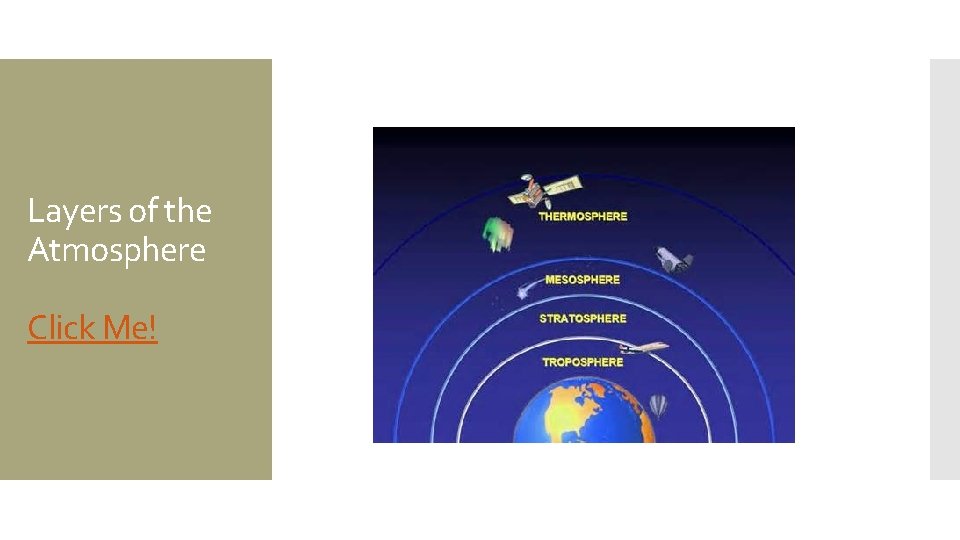
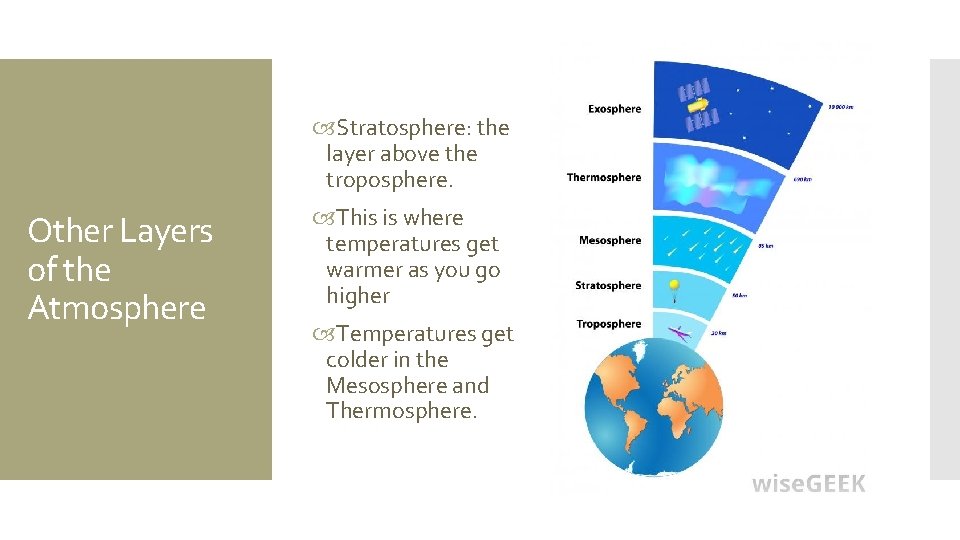
Troposphere Earth’s atmosphere is made up of layers. The layer closest to Earth is the troposphere. The troposphere is where all of Earth’s weather takes place. The air is always on the move from place to place called wind. Any change in the wind brings a change in the weather.
Layers of the Atmosphere Click Me!
Stratosphere: the layer above the troposphere. Other Layers of the Atmosphere This is where temperatures get warmer as you go higher Temperatures get colder in the Mesosphere and Thermosphere.
What are some properties of weather? Air temperature Humidity Air pressure Precipitation Weather is the condition of the atmosphere at a given time and place.
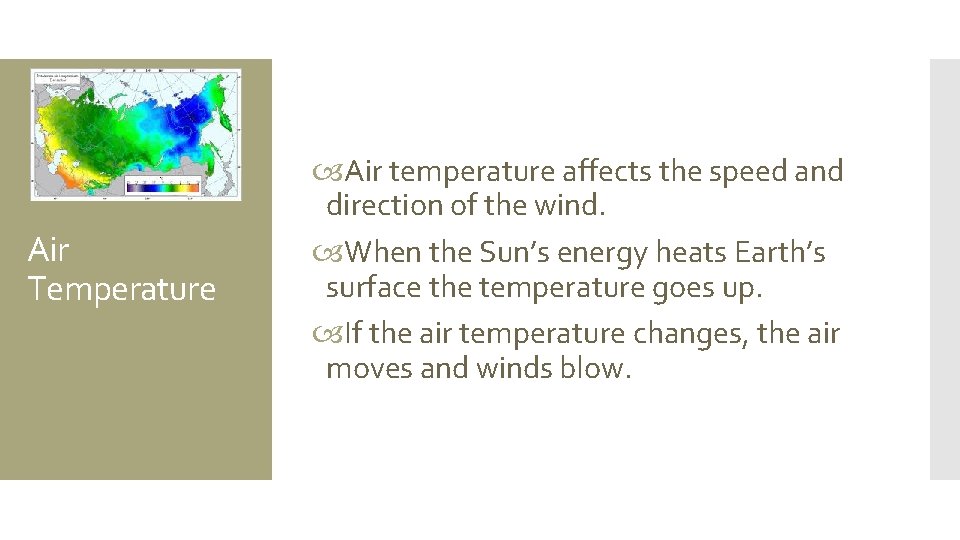
Air Temperature Air temperature affects the speed and direction of the wind. When the Sun’s energy heats Earth’s surface the temperature goes up. If the air temperature changes, the air moves and winds blow.
Humidity Click Me! If the air around us feels damp and sticky, we say it is humid. Humidity measures how much water vapor is in the air. Air always has some amount of water vapor in it. Most of the gas comes ocean water that has evaporated and this is why air is more humid over oceans and lakes.
We live at the bottom of the Troposphere and all of the weight of the entire atmosphere pushes down on us. The force pushing down on an area is called air pressure. Air Pressure Cool air particles are closer together than particles of warm air. Air that weighs more has greater air pressure. For that reason, cool air has higher air pressure than warm air.
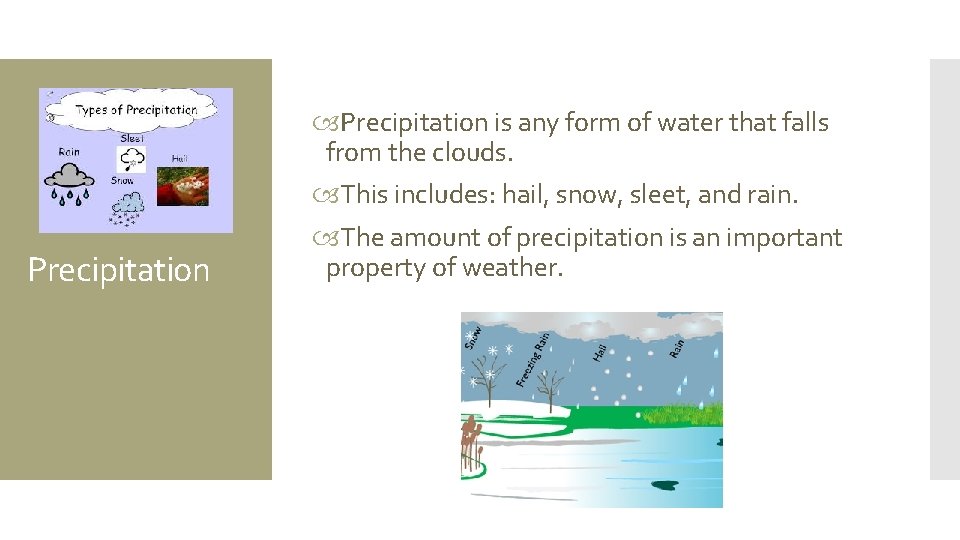
Precipitation is any form of water that falls from the clouds. This includes: hail, snow, sleet, and rain. The amount of precipitation is an important property of weather.
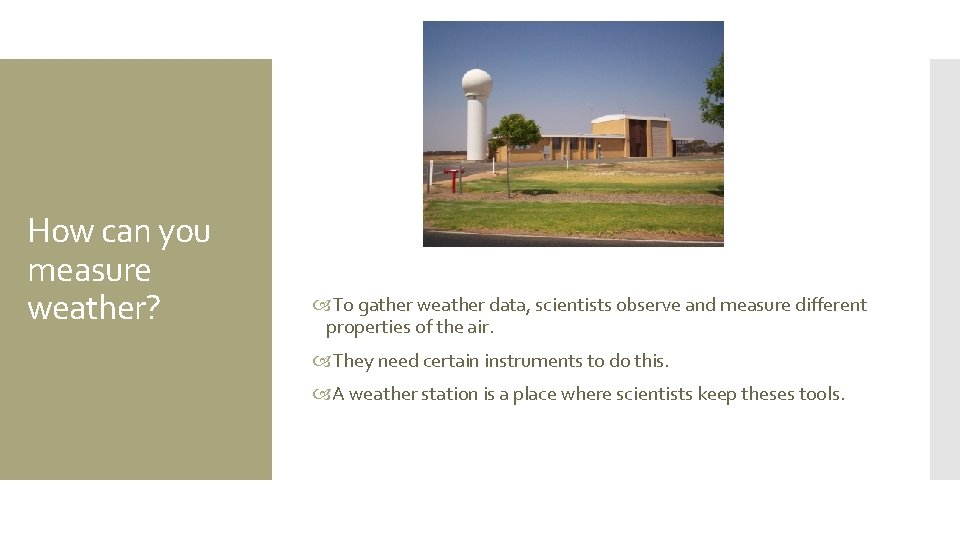
How can you measure weather? To gather weather data, scientists observe and measure different properties of the air. They need certain instruments to do this. A weather station is a place where scientists keep theses tools.
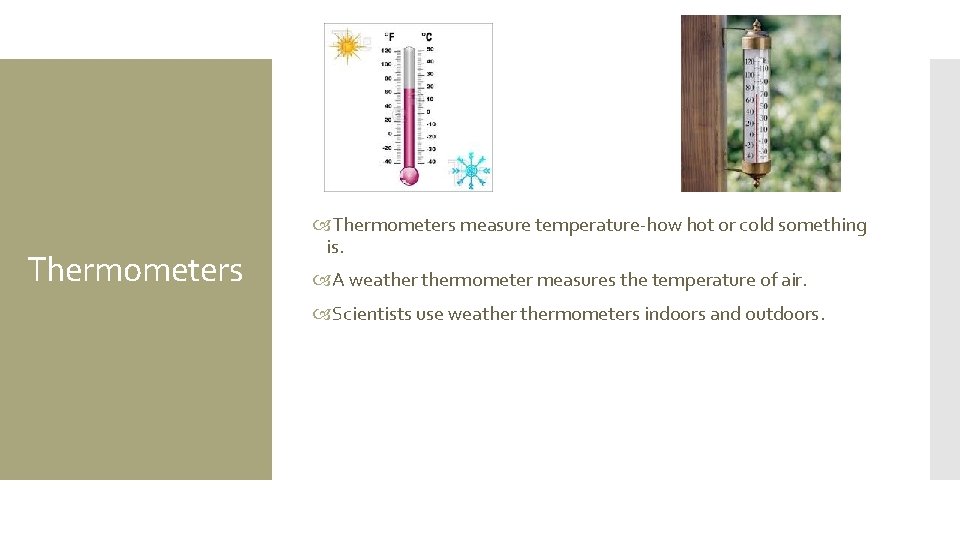
Thermometers measure temperature-how hot or cold something is. A weathermometer measures the temperature of air. Scientists use weathermometers indoors and outdoors.
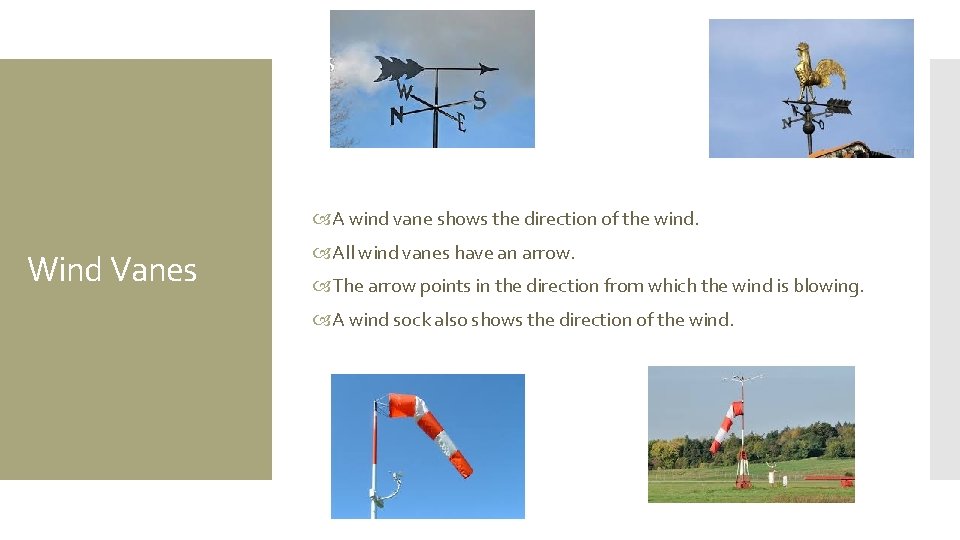
A wind vane shows the direction of the wind. Wind Vanes All wind vanes have an arrow. The arrow points in the direction from which the wind is blowing. A wind sock also shows the direction of the wind.
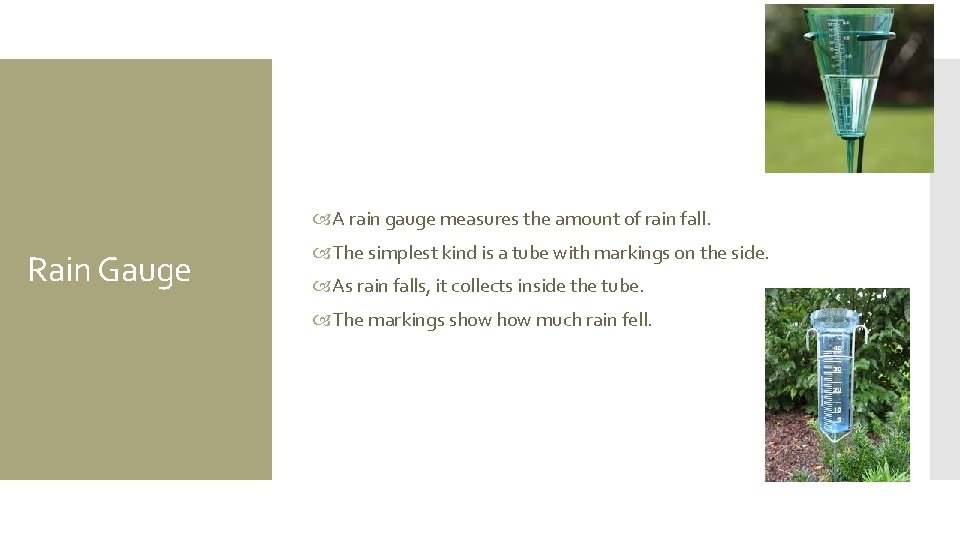
A rain gauge measures the amount of rain fall. Rain Gauge The simplest kind is a tube with markings on the side. As rain falls, it collects inside the tube. The markings show much rain fell.
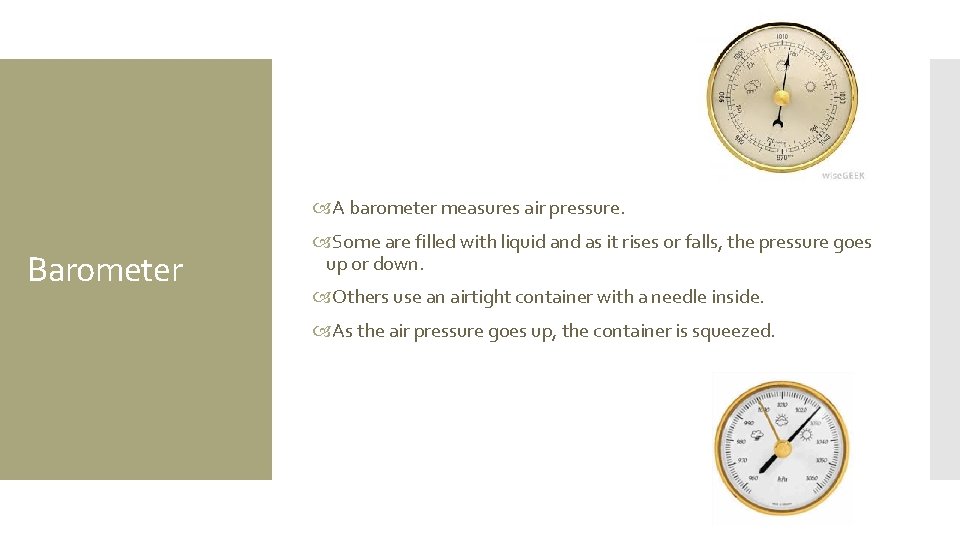
A barometer measures air pressure. Barometer Some are filled with liquid and as it rises or falls, the pressure goes up or down. Others use an airtight container with a needle inside. As the air pressure goes up, the container is squeezed.
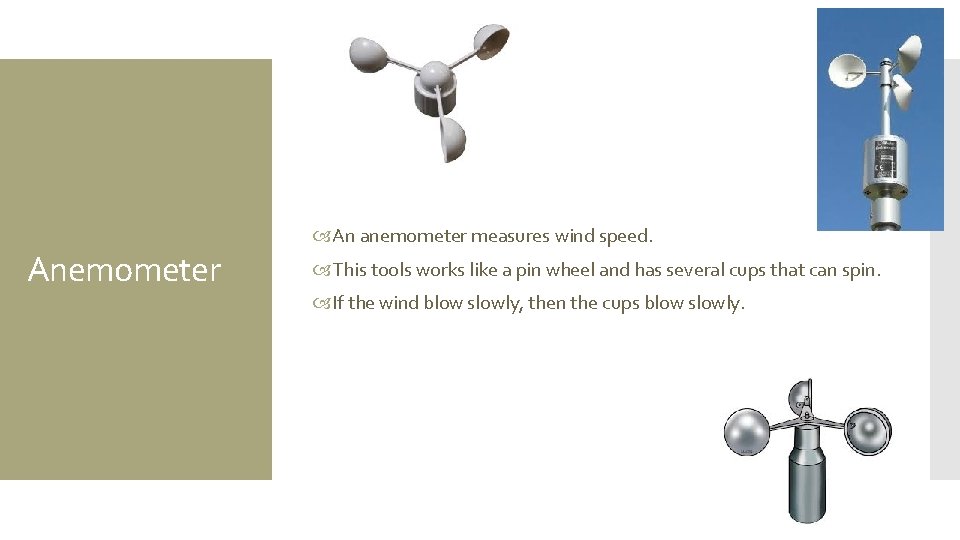
Anemometer An anemometer measures wind speed. This tools works like a pin wheel and has several cups that can spin. If the wind blow slowly, then the cups blow slowly.
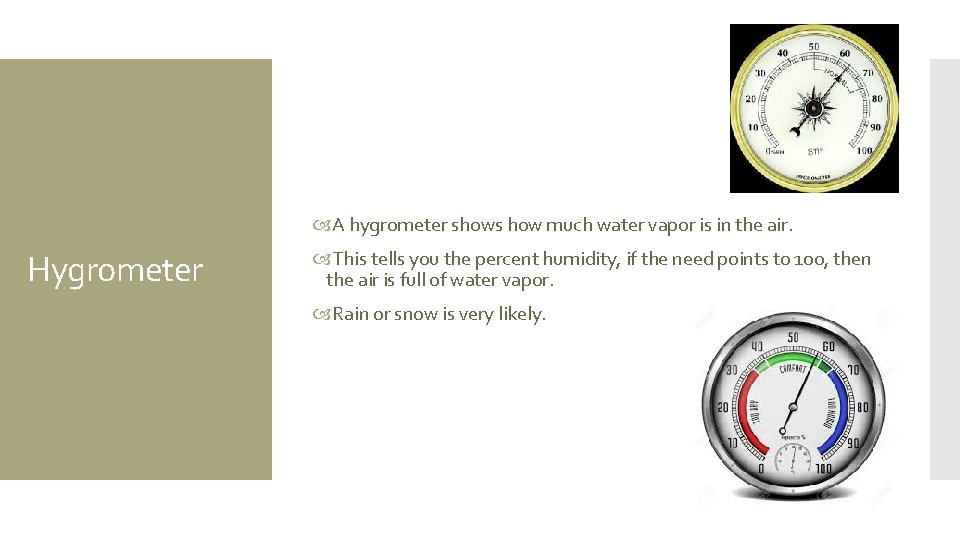
A hygrometer shows how much water vapor is in the air. Hygrometer This tells you the percent humidity, if the need points to 100, then the air is full of water vapor. Rain or snow is very likely.
Weather Instruments Click ME!
How do scientists make forecasts? A weather forecast is a prediction. It tells you what the weather might be in the future. They need data that they gather from their weather instruments. These are basic tools used by forecasters, but they also use computers and complex tools.