
Chapter 5 Ion Exchange Lecture Outline Uses Fundamental
![Fundamental Concepts ¡ General equilibrium reaction: l n[R-A+] + Bn+ n. R-Bn+ +n. A+](https://slidetodoc.com/presentation_image_h2/538a94e455e48ddecfe3d18d2de37b60/image-12.jpg "Fundamental Concepts ¡ General equilibrium reaction: l n[R-A+] + Bn+ n. R-Bn+ +n. A+")
![Selectivity coefficient ¡ General equilibrium reaction: l ¡ n[R-A+] + Bn+ n. R-Bn+ +n.](https://slidetodoc.com/presentation_image_h2/538a94e455e48ddecfe3d18d2de37b60/image-13.jpg "Selectivity coefficient ¡ General equilibrium reaction: l ¡ n[R-A+] + Bn+ n. R-Bn+ +n.")
![Fundamental Concepts ¡ General equilibrium reaction: l n[R-A+] + Bn+ n. R-Bn+ +n. A+](https://slidetodoc.com/presentation_image_h2/538a94e455e48ddecfe3d18d2de37b60/image-19.jpg "Fundamental Concepts ¡ General equilibrium reaction: l n[R-A+] + Bn+ n. R-Bn+ +n. A+")
- Slides: 26
Chapter 5 Ion Exchange
Lecture Outline Uses ¡ Fundamental Concepts ¡ Process Operation ¡ Practice ¡ Operation and Maintenance ¡
Uses Both in water and wastewater treatment ¡ Softening ¡ Demineralization ¡ Ammonia removal ¡ Removal of metals ¡ Concentration of radionuclides ¡
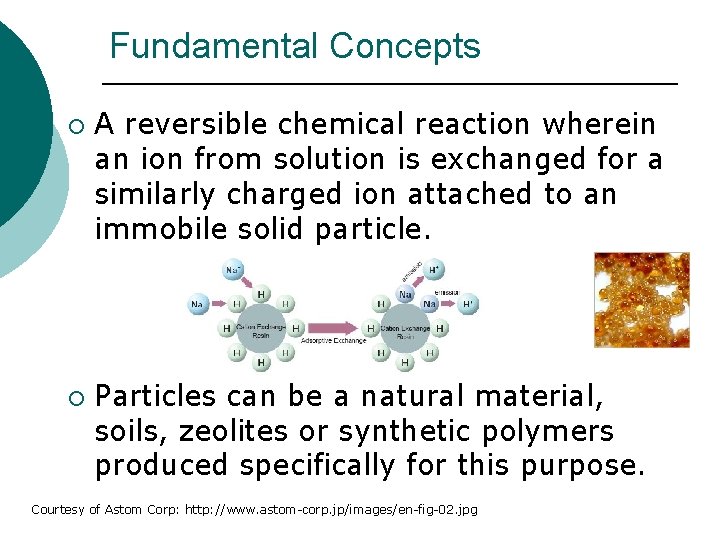
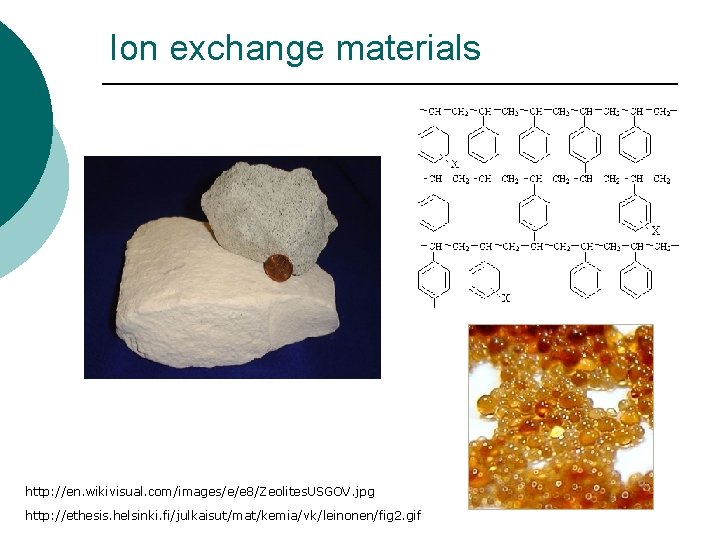
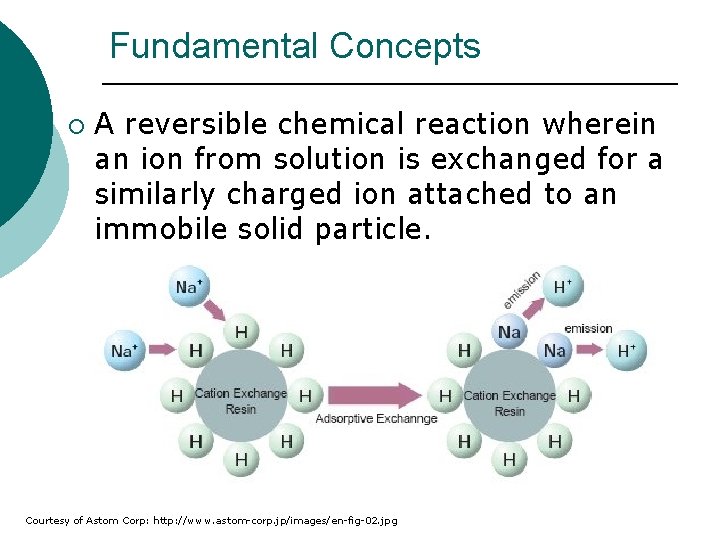
Fundamental Concepts ¡ ¡ A reversible chemical reaction wherein an ion from solution is exchanged for a similarly charged ion attached to an immobile solid particle. Particles can be a natural material, soils, zeolites or synthetic polymers produced specifically for this purpose. Courtesy of Astom Corp: http: //www. astom-corp. jp/images/en-fig-02. jpg
Ion exchange materials http: //en. wikivisual. com/images/e/e 8/Zeolites. USGOV. jpg http: //ethesis. helsinki. fi/julkaisut/mat/kemia/vk/leinonen/fig 2. gif
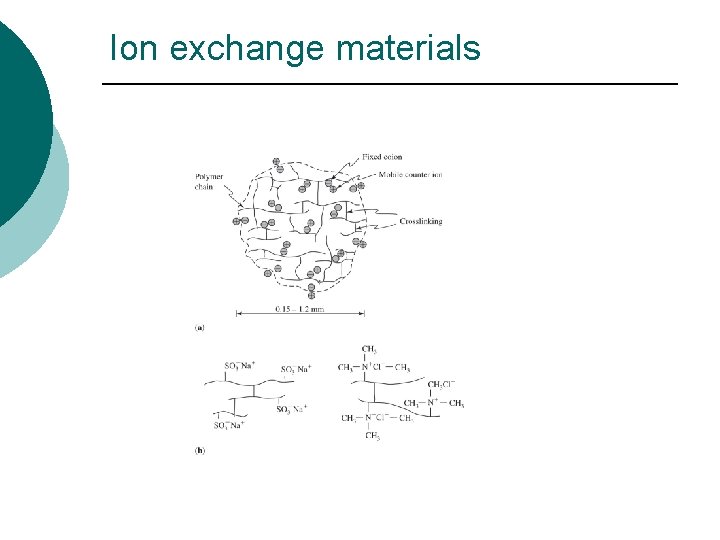
Ion exchange materials
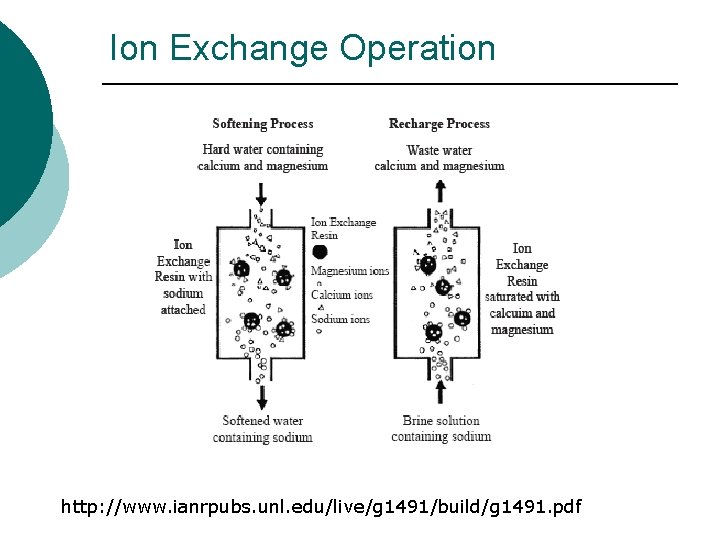
Ion Exchange Operation http: //www. ianrpubs. unl. edu/live/g 1491/build/g 1491. pdf
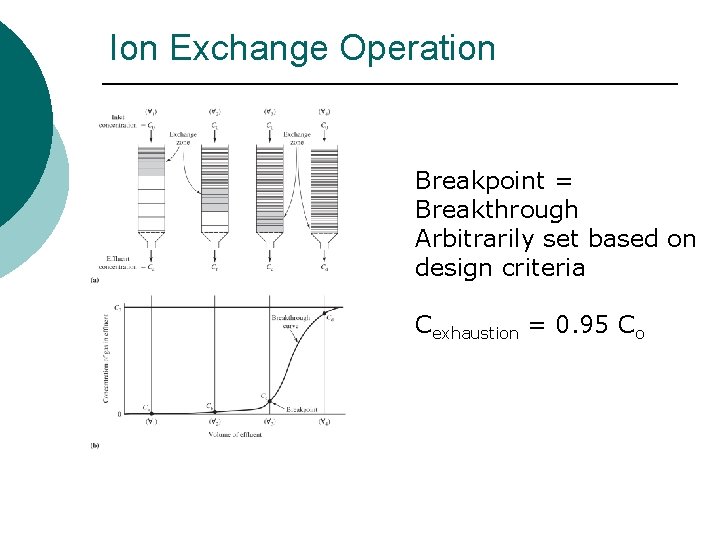
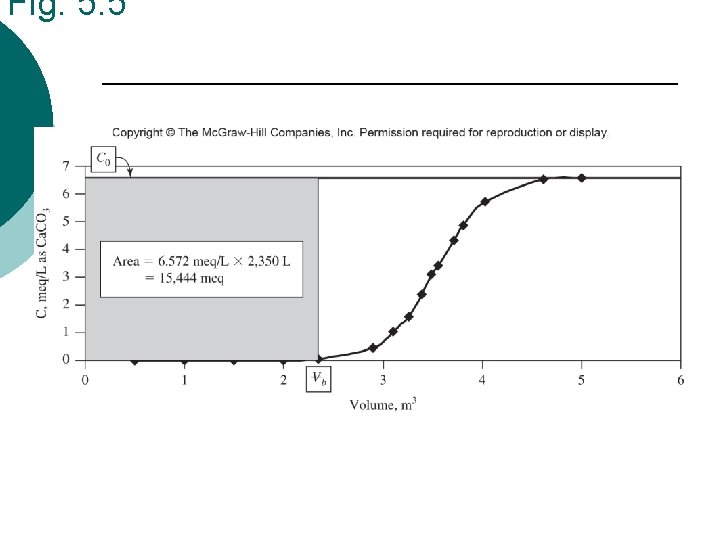
Ion Exchange Operation Breakpoint = Breakthrough Arbitrarily set based on design criteria Cexhaustion = 0. 95 Co
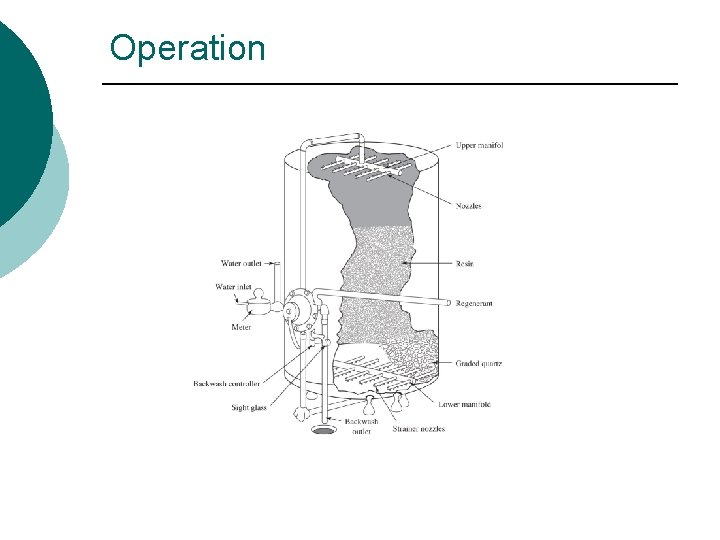
Operation
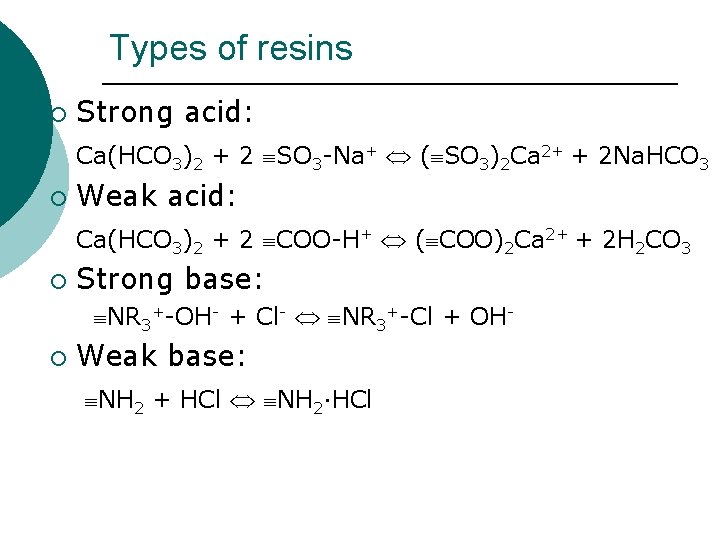
Types of resins ¡ Strong acid: Ca(HCO 3)2 + 2 SO 3 -Na+ ( SO 3)2 Ca 2+ + 2 Na. HCO 3 ¡ Weak acid: Ca(HCO 3)2 + 2 COO-H+ ( COO)2 Ca 2+ + 2 H 2 CO 3 ¡ Strong base: NR 3+-OH- + Cl- NR 3+-Cl + OH- ¡ Weak base: NH 2 + HCl NH 2·HCl
Fundamental Concepts ¡ A reversible chemical reaction wherein an ion from solution is exchanged for a similarly charged ion attached to an immobile solid particle. Courtesy of Astom Corp: http: //www. astom-corp. jp/images/en-fig-02. jpg
Fundamental Concepts ¡ General equilibrium reaction: l n[R-A+] + Bn+ n. R-Bn+ +n. A+ Apparent equilibrium constant or selectivity coefficient ¡ Not a true equilibrium constant because it is not based on thermodynamics ¡ Courtesy of Astom Corp: http: //www. astom-corp. jp/images/en-fig-02. jpg
Selectivity coefficient ¡ General equilibrium reaction: l ¡ n[R-A+] + Bn+ n. R-Bn+ +n. A+ Problem is that while activities of solution concentrations can be approximated with molar concentrations, the resin concentrations are very high. Valid for narrow conc. Ranges. Courtesy of Astom Corp: http: //www. astom-corp. jp/images/en-fig-02. jpg
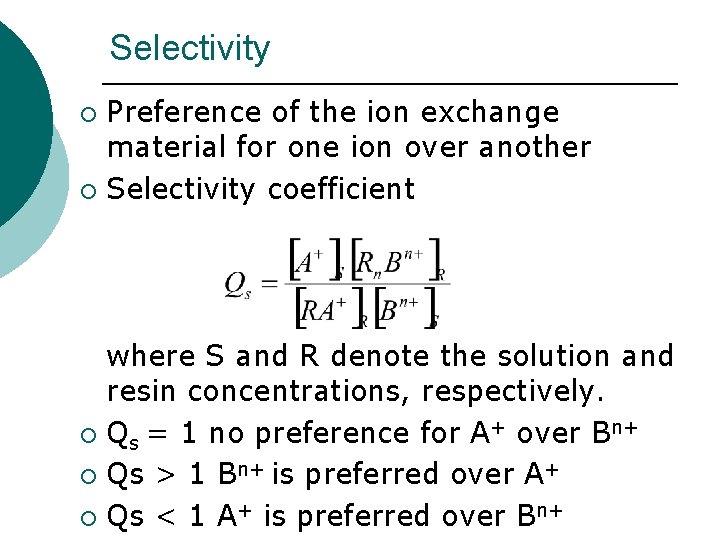
Selectivity Preference of the ion exchange material for one ion over another ¡ Selectivity coefficient ¡ where S and R denote the solution and resin concentrations, respectively. ¡ Qs = 1 no preference for A+ over Bn+ ¡ Qs > 1 Bn+ is preferred over A+ ¡ Qs < 1 A+ is preferred over Bn+
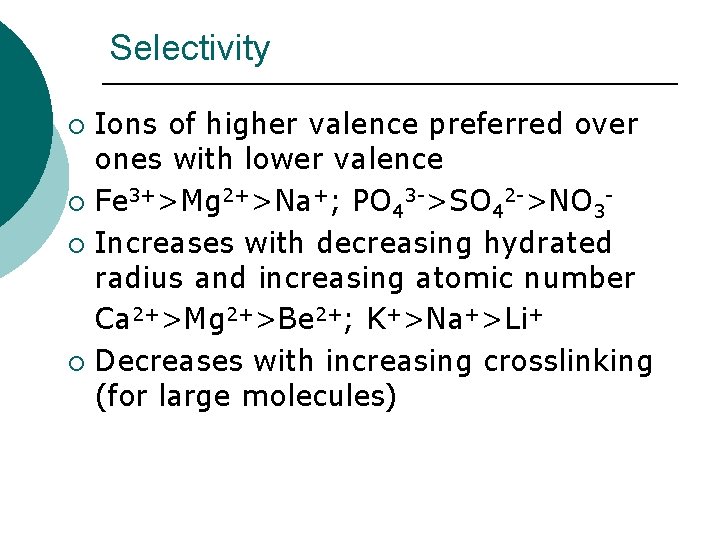
Selectivity Ions of higher valence preferred over ones with lower valence ¡ Fe 3+>Mg 2+>Na+; PO 43 ->SO 42 ->NO 3¡ Increases with decreasing hydrated radius and increasing atomic number Ca 2+>Mg 2+>Be 2+; K+>Na+>Li+ ¡ Decreases with increasing crosslinking (for large molecules) ¡
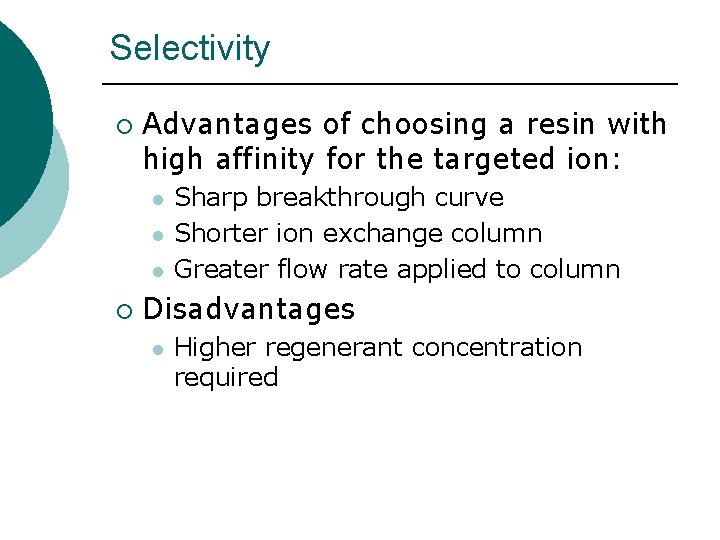
Selectivity ¡ Advantages of choosing a resin with high affinity for the targeted ion: l l l ¡ Sharp breakthrough curve Shorter ion exchange column Greater flow rate applied to column Disadvantages l Higher regenerant concentration required
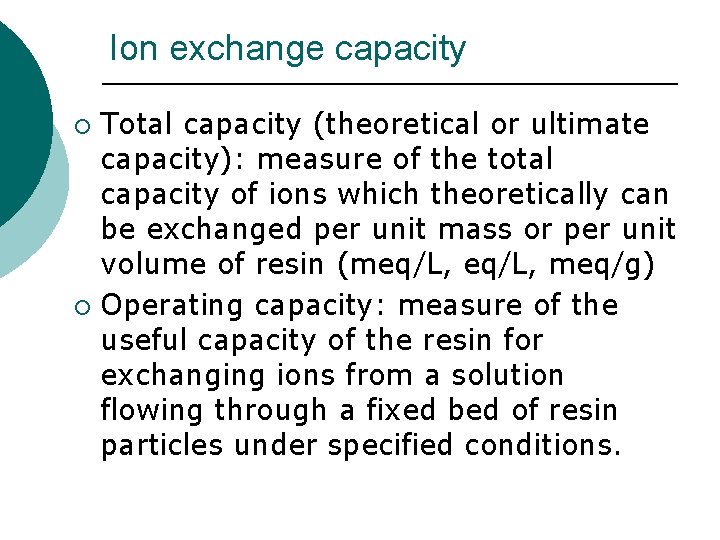
Ion exchange capacity Total capacity (theoretical or ultimate capacity): measure of the total capacity of ions which theoretically can be exchanged per unit mass or per unit volume of resin (meq/L, meq/g) ¡ Operating capacity: measure of the useful capacity of the resin for exchanging ions from a solution flowing through a fixed bed of resin particles under specified conditions. ¡
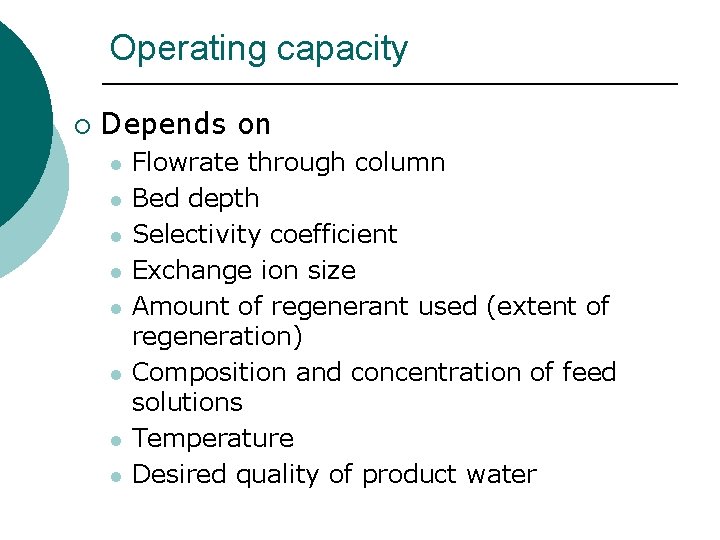
Operating capacity ¡ Depends on l l l l Flowrate through column Bed depth Selectivity coefficient Exchange ion size Amount of regenerant used (extent of regeneration) Composition and concentration of feed solutions Temperature Desired quality of product water
Fundamental Concepts ¡ General equilibrium reaction: l n[R-A+] + Bn+ n. R-Bn+ +n. A+ Apparent equilibrium constant or selectivity coefficient ¡ Not a true equilibrium constant because it is not based on thermodynamics ¡ Courtesy of Astom Corp: http: //www. astom-corp. jp/images/en-fig-02. jpg
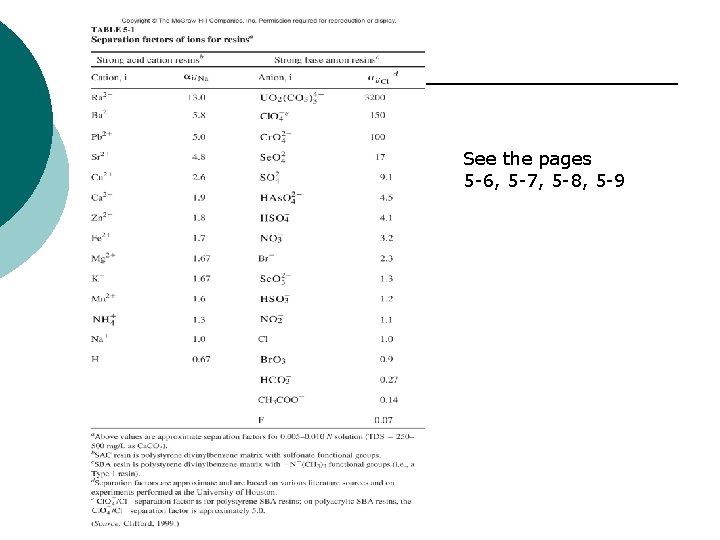
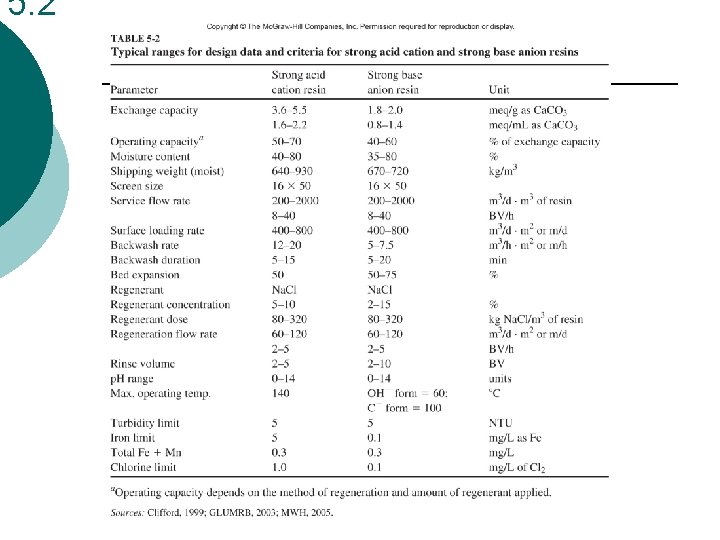
See the pages 5 -6, 5 -7, 5 -8, 5 -9
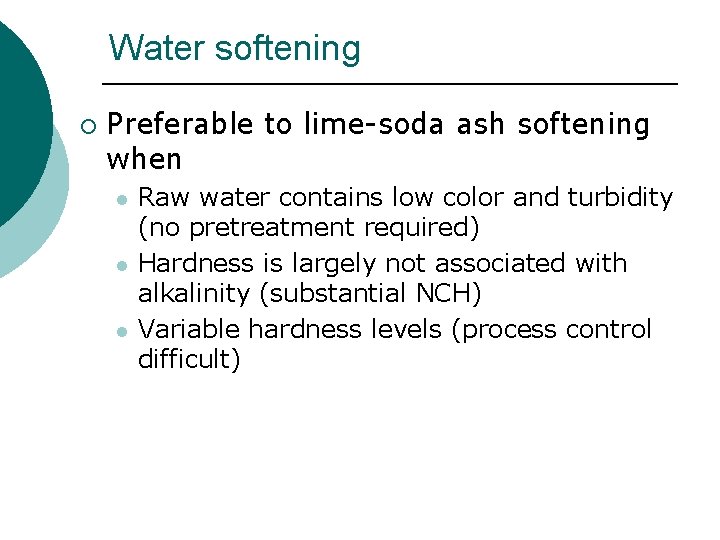
Water softening ¡ Preferable to lime-soda ash softening when l l l Raw water contains low color and turbidity (no pretreatment required) Hardness is largely not associated with alkalinity (substantial NCH) Variable hardness levels (process control difficult)
Fig. 5. 5
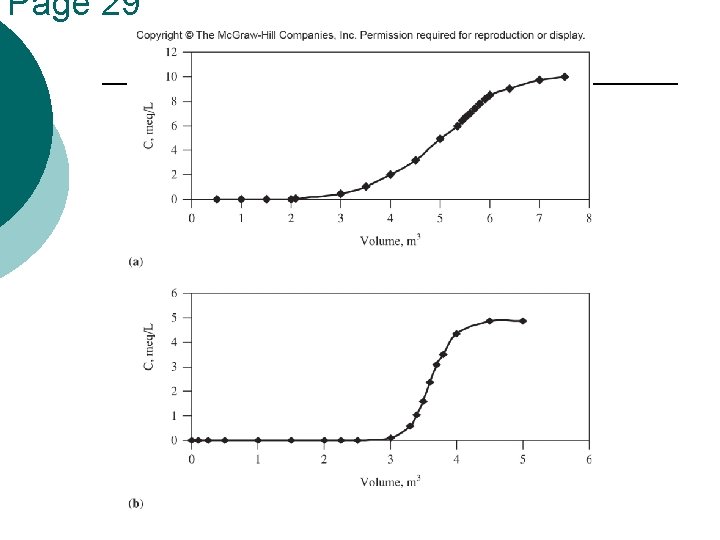
Page 29
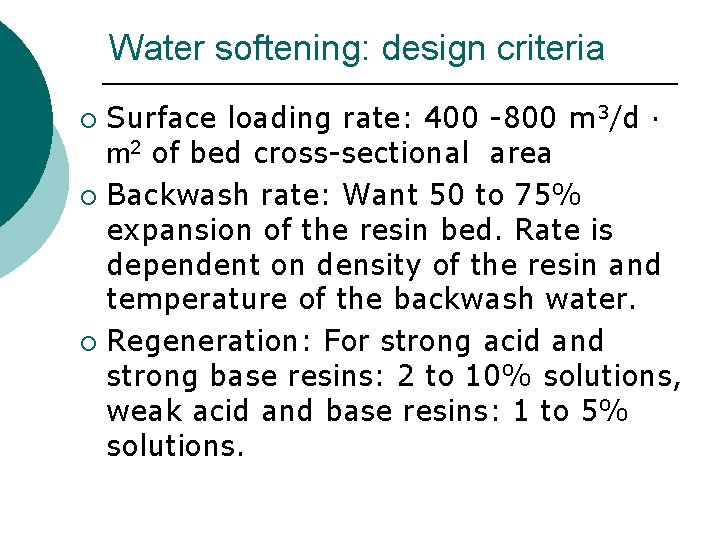
Water softening: design criteria Surface loading rate: 400 -800 m 3/d · m 2 of bed cross-sectional area ¡ Backwash rate: Want 50 to 75% expansion of the resin bed. Rate is dependent on density of the resin and temperature of the backwash water. ¡ Regeneration: For strong acid and strong base resins: 2 to 10% solutions, weak acid and base resins: 1 to 5% solutions. ¡
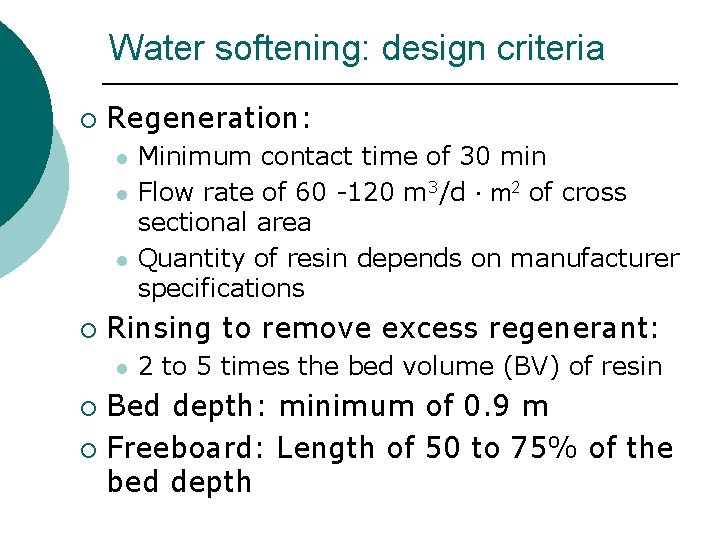
Water softening: design criteria ¡ Regeneration: l l l ¡ Minimum contact time of 30 min Flow rate of 60 -120 m 3/d · m 2 of cross sectional area Quantity of resin depends on manufacturer specifications Rinsing to remove excess regenerant: l 2 to 5 times the bed volume (BV) of resin Bed depth: minimum of 0. 9 m ¡ Freeboard: Length of 50 to 75% of the bed depth ¡
5. 2