
Chapter 5 Integumentary System 1 2 The Integument

- Slides: 37
Chapter 5: Integumentary System 1
2
The Integument n n n The skin that covers your body. Skin is also known as the cutaneous membrane. Integumentary system consists of the skin and its derivatives—nails, hair, sweat glands, and sebaceous glands. 3
The Integument n n n Is the body’s largest organ. Its surface is covered by an epithelium that protects underlying body layers. The connective tissues contain blood vessels that provide nutrients and provide strength and resilience to the skin. Smooth muscle controls both blood vessel diameter and hair position. Neural tissue supports and monitors sensory receptors in the skin 4
Functions of Skin n n n protection from abrasion, chemicals and pathogens prevention of water loss (in spite of sweat) temperature regulation (heating and cooling) production of vitamin D (calcium absorption) immune defense (white blood cells) sensory reception (nerve cells) Excretion of wastes in sweat 5
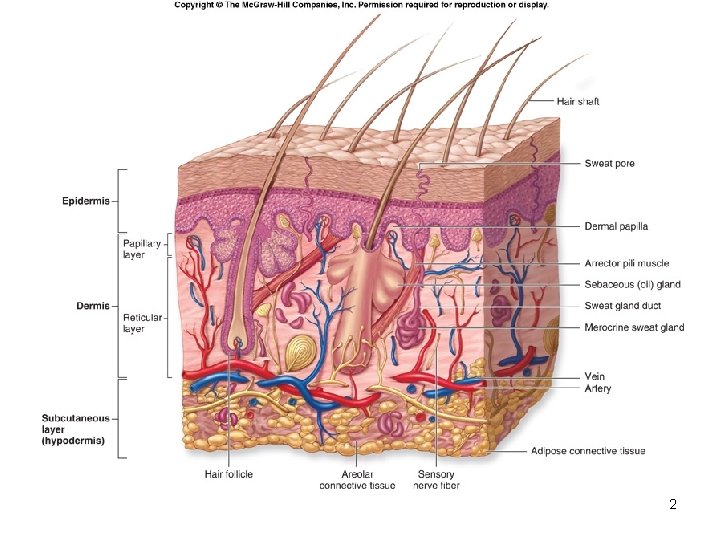
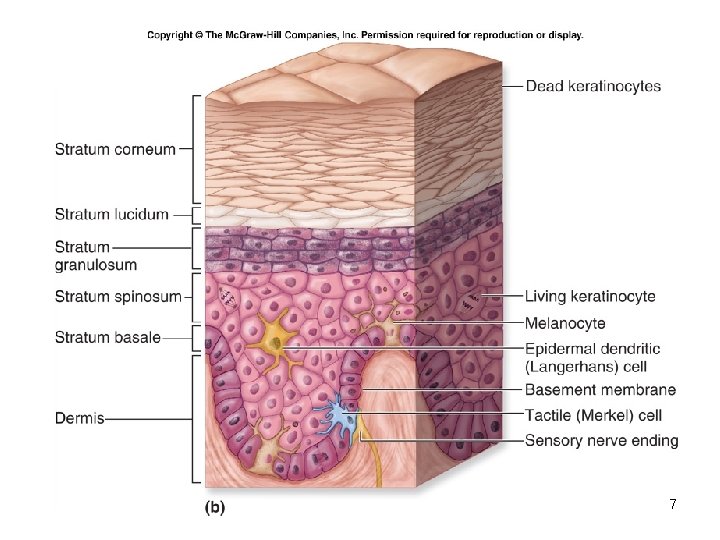
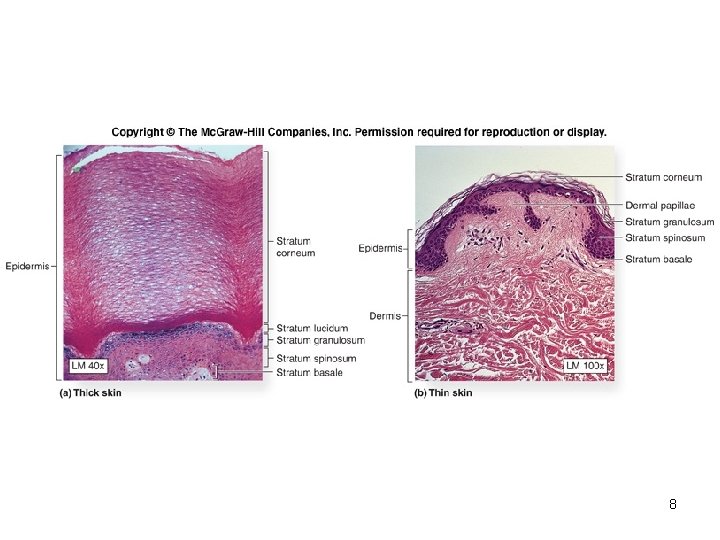
2 Distinct Layers n n A layer of stratified squamous epithelium called the epidermis. A deeper layer of dense irregular connective tissue called the dermis. - deep to the dermis is a layer of areolar and adipose connective tissue called the subcutaneous layer, or hypodermis 6
7
8
Epidermis n n Outermost layer of skin Composed of many layer of flat keratinized cells keratinized = full of keratin protein n n Composed of several strata (layers) Has no direct blood supply; deepest layers receive nutrients from dermis 9
Epidermal strata (layers) n n Stratum Basale (or germinativum) - Deepest layer composed of living cells - Contains keratinocytes, melanocytes, and Merkel (tactile) cells Stratum spinosum; spiny layer Stratum lucidum; clear layer Stratum corneum; superficial, dead, flattened cells that contain large amount of keratin - these cells are shed regularly and replaced from lower layers 10
Skin Color n n Living skin (dermis) contains blood vessels - Hemoglobin is a red oxygen-binding protein present in red blood cells. Melanin is a pigment produced and stored in cells called melanocytes. n n n The amount of melanin stored in melanocytes depends on two factors; Exposure to UV light and genetic predisposition Carotene comes primarily from diet. 11
Friction Ridges n n n Found on the fingers, palms, soles, and toes. Formed from large folds and valleys of both dermal and epidermal tissue. Help us grasp objects, and they Increase friction so that items do not slip easily from our hands. Our feet do not slip on the floor when we walk. 12
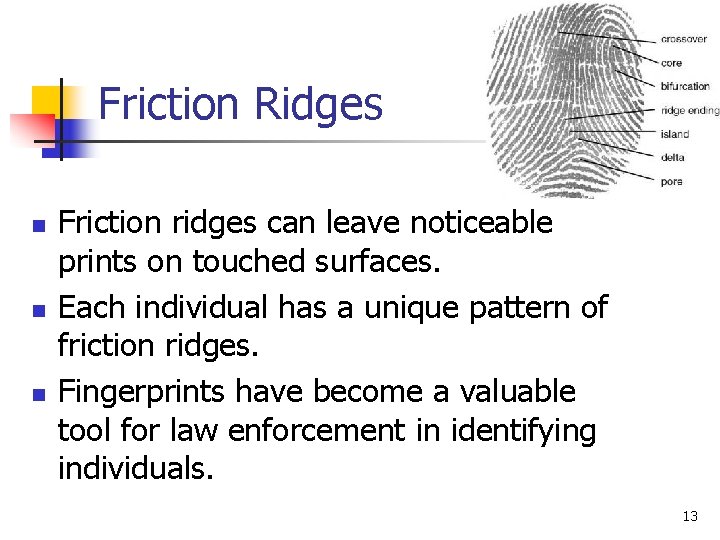
Friction Ridges n n n Friction ridges can leave noticeable prints on touched surfaces. Each individual has a unique pattern of friction ridges. Fingerprints have become a valuable tool for law enforcement in identifying individuals. 13
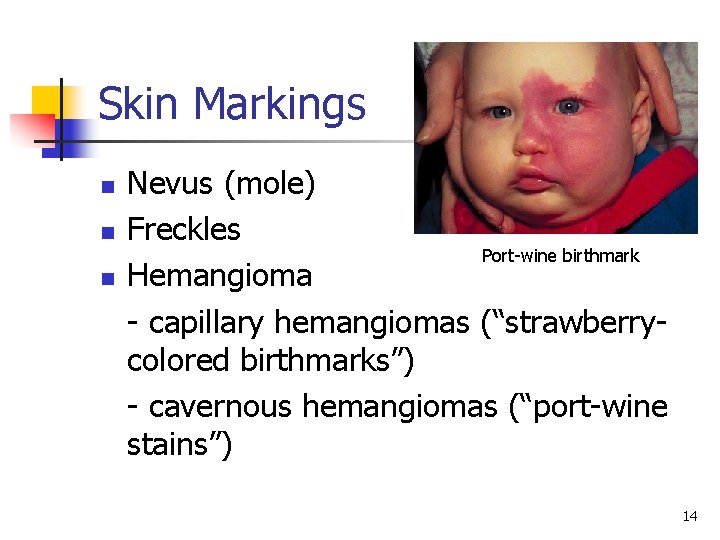
Skin Markings n n n Nevus (mole) Freckles Port-wine birthmark Hemangioma - capillary hemangiomas (“strawberrycolored birthmarks”) - cavernous hemangiomas (“port-wine stains”) 14
Layers of the Dermis n n Composed of cells of the connective tissue proper and primarily of collagen fibers, although both elastic and reticular fibers are also present. Other components of the dermis are blood vessels, sweat glands, sebaceous glands, hair follicles, nail roots, sensory nerve endings, and muscular tissue. 15
2 Major Regions of Dermis n n Superficial papillary layer - Contains dermal papillae; increase surface area contact with epidermis - Contains blood vessels which nourish epidermis Deeper reticular layer - dense irregular connective tissue of collagen fibers - give skin its strength and ability to stretch 16
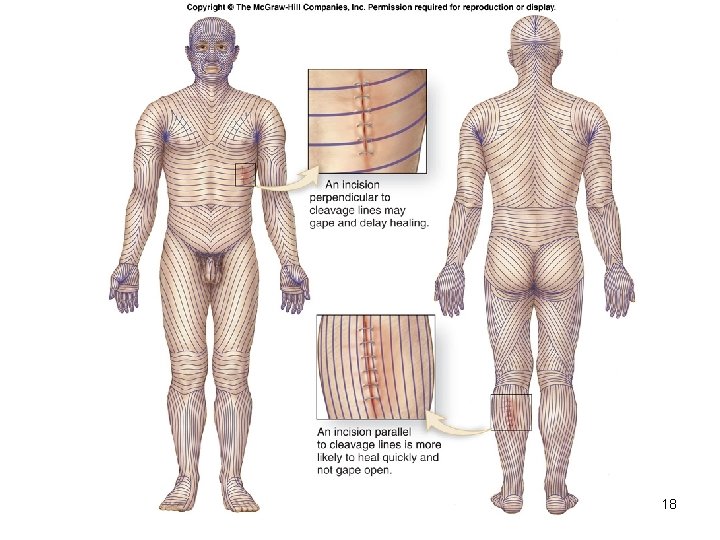
Lines of Cleavage n n Tension lines in the skin identify the predominant orientation of collagen fiber bundles. Clinically and surgically significant because cuts can result in slow healing and increased scarring. 17
18
Innervation and Blood Supply n n n The dermis has extensive innervation. Monitor sensory receptors in the dermis and epidermis, and control both blood flow and gland secretion rates. - Vasodilation; blood vessels expand more blood flows through area (what effect on thermoregulation? ) - Vasoconstriction; blood vessels constrict (effect? ) Tactile corpuscles and tactile (Merkel) cells - perceive touch sensations, - work with a variety of other sensory nerve endings in the skin. 19
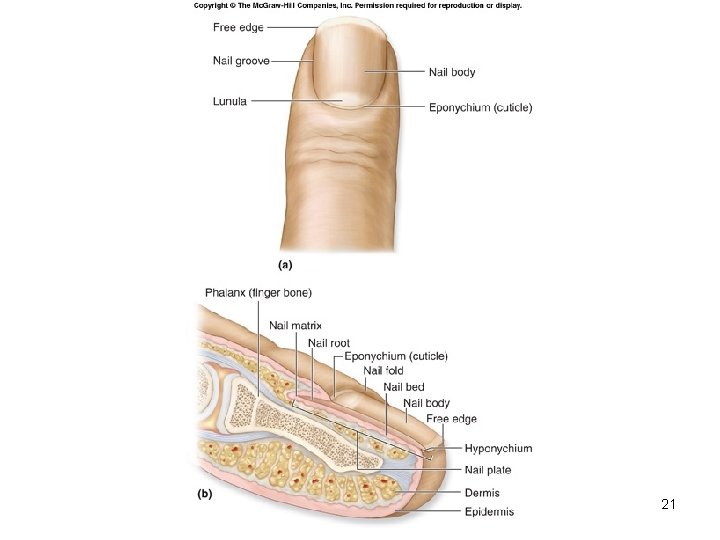
Nails n n n Scalelike modifications of the epidermis that form on the dorsal surfaces of the tips of the fingers and toes. Protect the exposed distal tips and prevent damage or distortion during jumping, kicking, catching, or grasping. Hard derivatives formed from the stratum corneum layer of the epidermis. 20
21
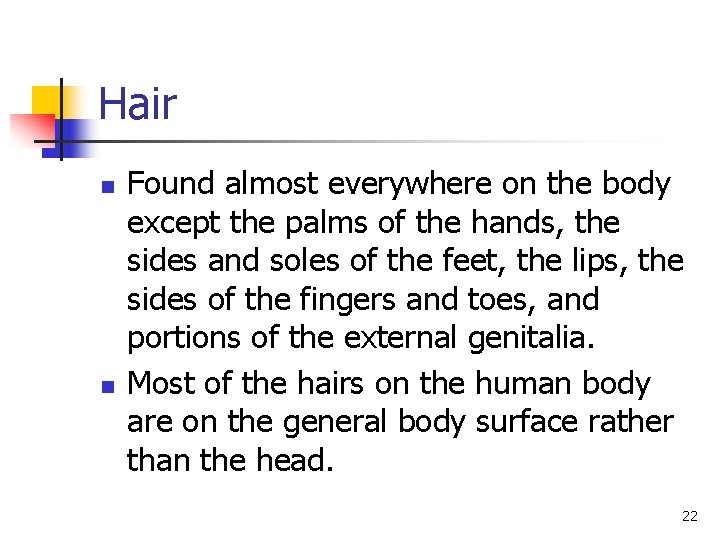
Hair n n Found almost everywhere on the body except the palms of the hands, the sides and soles of the feet, the lips, the sides of the fingers and toes, and portions of the external genitalia. Most of the hairs on the human body are on the general body surface rather than the head. 22
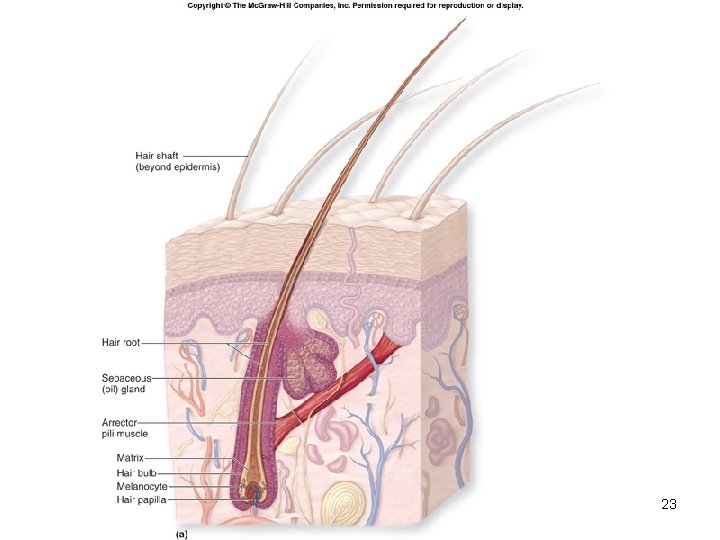
23
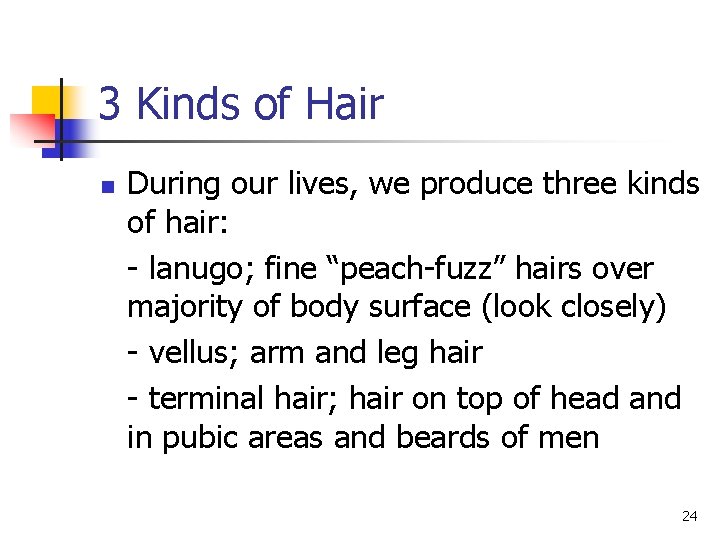
3 Kinds of Hair n During our lives, we produce three kinds of hair: - lanugo; fine “peach-fuzz” hairs over majority of body surface (look closely) - vellus; arm and leg hair - terminal hair; hair on top of head and in pubic areas and beards of men 24
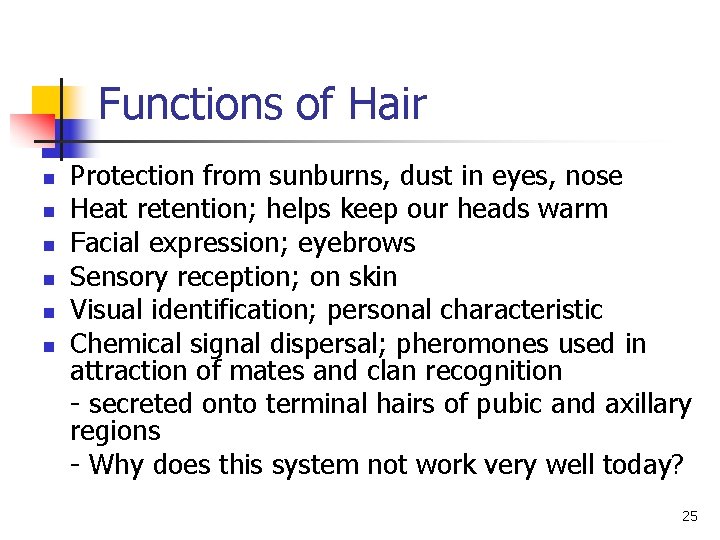
Functions of Hair n n n Protection from sunburns, dust in eyes, nose Heat retention; helps keep our heads warm Facial expression; eyebrows Sensory reception; on skin Visual identification; personal characteristic Chemical signal dispersal; pheromones used in attraction of mates and clan recognition - secreted onto terminal hairs of pubic and axillary regions - Why does this system not work very well today? 25
Hair Color n n Result of the synthesis of melanin in the matrix adjacent to the papillae. Variations in hair color reflect genetically determined differences in the structure of the melanin. Environmental and hormonal factors Age; Blonde hair, Gray hair 26
Hair Growth and Replacement n n n Sometimes hair loss may be temporary as a result of one or more of the following factors: exposure to drugs, dietary factors, radiation, high fever, or stress. Thinning of the hair, called alopecia can occur in both sexes, usually as a result of aging. Male pattern baldness is due to genetics and hormones (see clinical view on pg. 135) 27
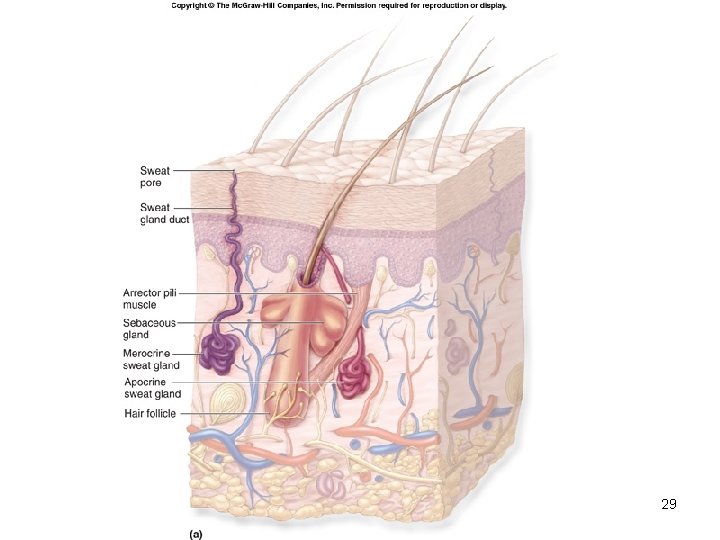
Exocrine Glands of the Skin n n Sweat (sudoriferous) glands produce a watery solution that performs several specific functions. - merocrine (eccrine) sweat glands; cooling and excretory function - apocrine sweat glands; produce odors in pubic and axillary regions may have had a communication function in our ancestors Sebaceous glands produce an oily material that coats hair shafts and the epidermal surface preventing drying. 28
29
Other Integumentary Glands n n Ceruminous glands; produce ear wax Mammary glands n n modified apocrine sweat glands Produce milk for babies 30
Burns n n Major cause of accidental death, primarily as a result of their effects on the skin. Usually caused by heat, radiation, harmful chemicals, sunlight, or electrical shock. The immediate threat to life results primarily from fluid loss, infection, and the effects of burned, dead tissue. Burns are classified according to the depth of tissue involvement. 31
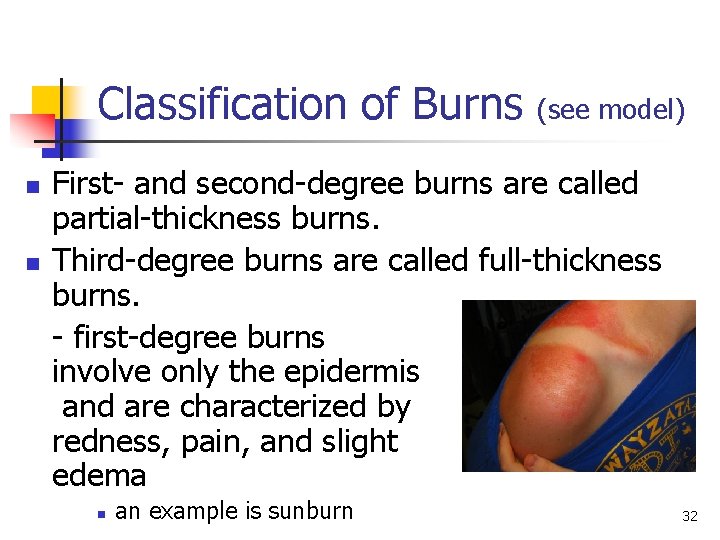
Classification of Burns n n (see model) First- and second-degree burns are called partial-thickness burns. Third-degree burns are called full-thickness burns. - first-degree burns involve only the epidermis and are characterized by redness, pain, and slight edema n an example is sunburn 32
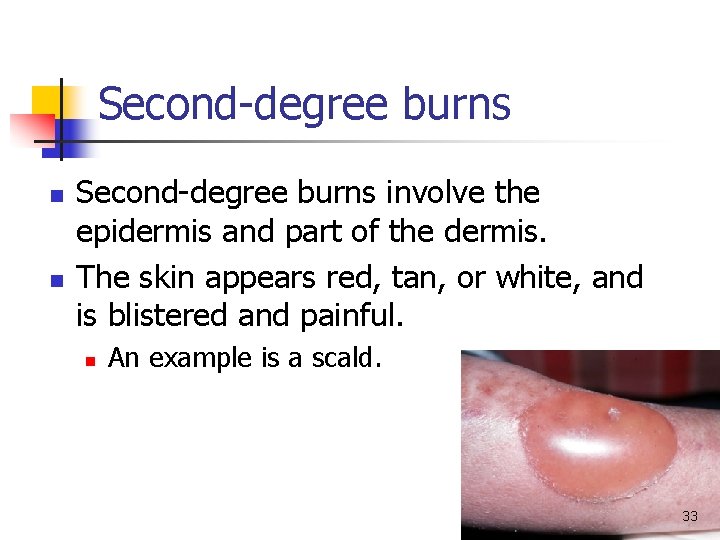
Second-degree burns n n Second-degree burns involve the epidermis and part of the dermis. The skin appears red, tan, or white, and is blistered and painful. n An example is a scald. 33
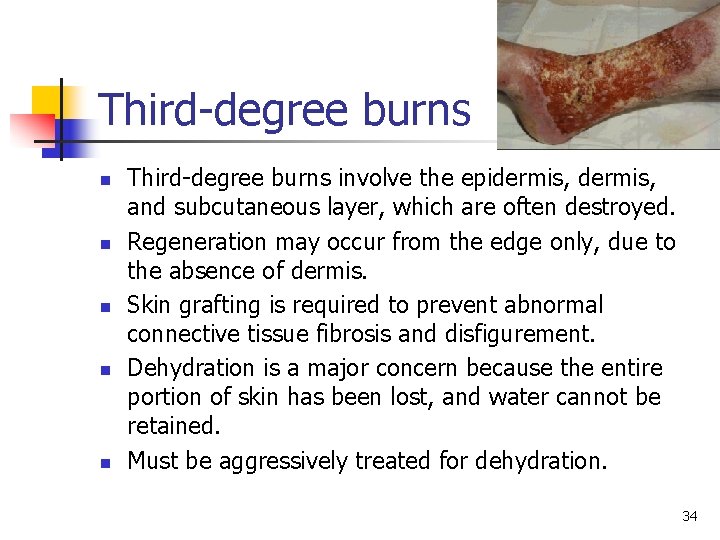
Third-degree burns n n n Third-degree burns involve the epidermis, and subcutaneous layer, which are often destroyed. Regeneration may occur from the edge only, due to the absence of dermis. Skin grafting is required to prevent abnormal connective tissue fibrosis and disfigurement. Dehydration is a major concern because the entire portion of skin has been lost, and water cannot be retained. Must be aggressively treated for dehydration. 34
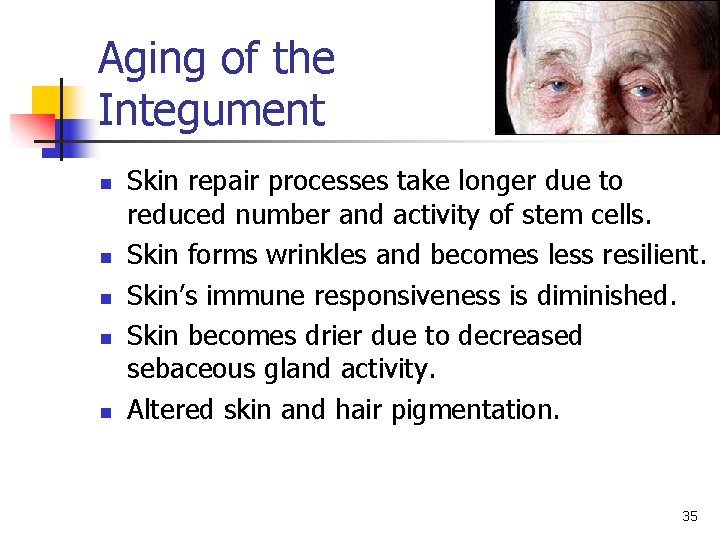
Aging of the Integument n n n Skin repair processes take longer due to reduced number and activity of stem cells. Skin forms wrinkles and becomes less resilient. Skin’s immune responsiveness is diminished. Skin becomes drier due to decreased sebaceous gland activity. Altered skin and hair pigmentation. 35
Aging of the Integument n n n Sweat production diminishes. Blood supply to the dermis is reduced leading to impaired thermoregulation. Hair thinning and loss. Integumentary production of vitamin D 3 diminishes. Development of skin cancers. 36
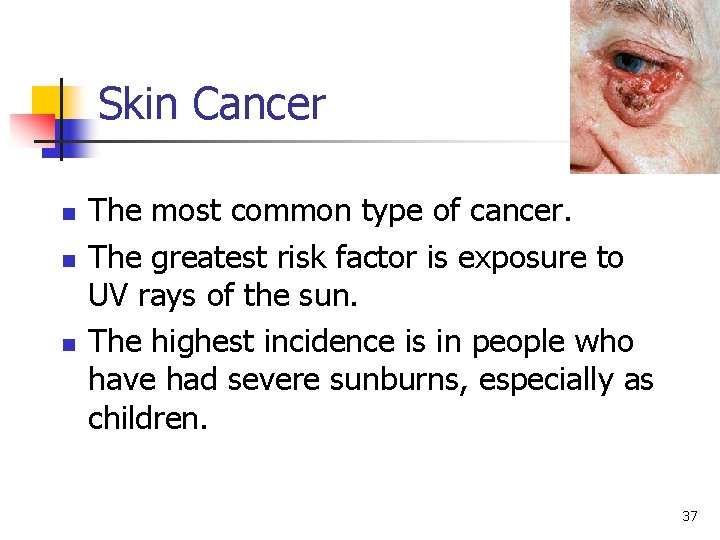
Skin Cancer n n n The most common type of cancer. The greatest risk factor is exposure to UV rays of the sun. The highest incidence is in people who have had severe sunburns, especially as children. 37