
Chapter 5 Industrialization The Gilded Age Between 1869
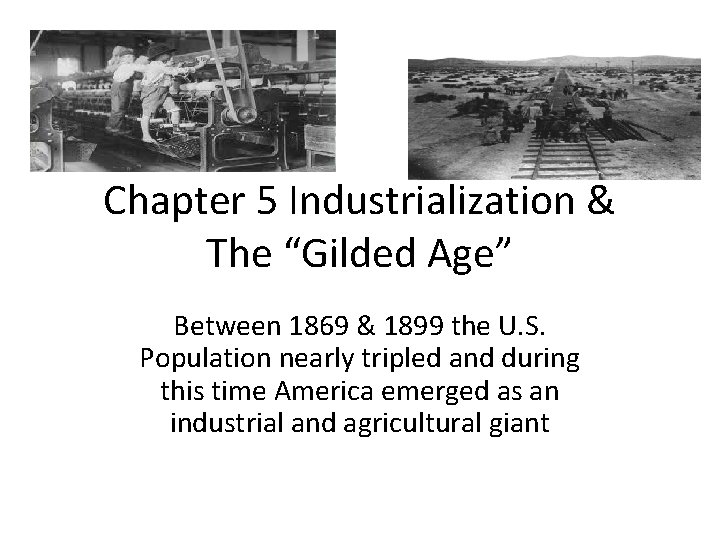
Chapter 5 Industrialization & The “Gilded Age” Between 1869 & 1899 the U. S. Population nearly tripled and during this time America emerged as an industrial and agricultural giant
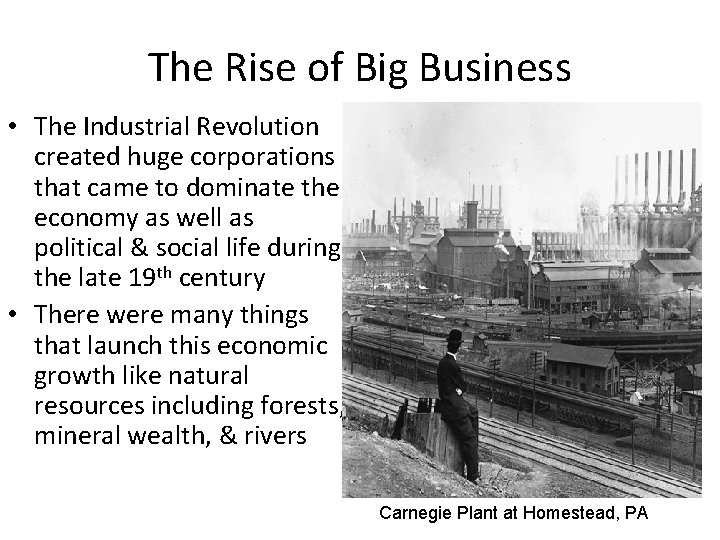
The Rise of Big Business • The Industrial Revolution created huge corporations that came to dominate the economy as well as political & social life during the late 19 th century • There were many things that launch this economic growth like natural resources including forests, mineral wealth, & rivers Carnegie Plant at Homestead, PA
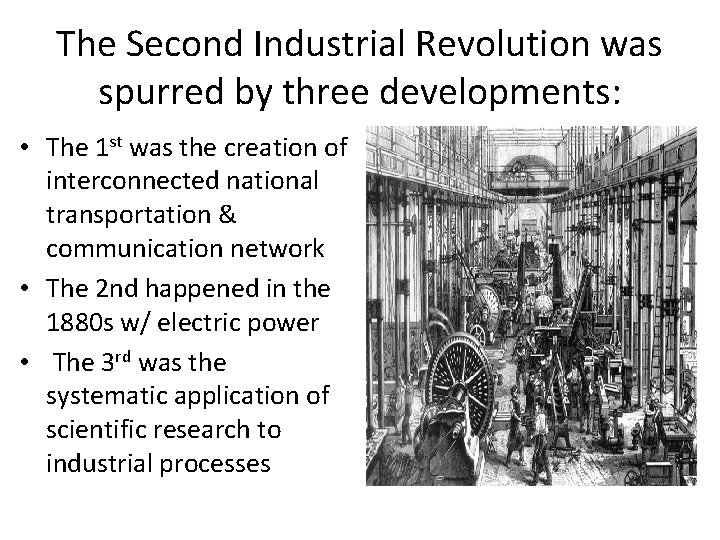
The Second Industrial Revolution was spurred by three developments: • The 1 st was the creation of interconnected national transportation & communication network • The 2 nd happened in the 1880 s w/ electric power • The 3 rd was the systematic application of scientific research to industrial processes
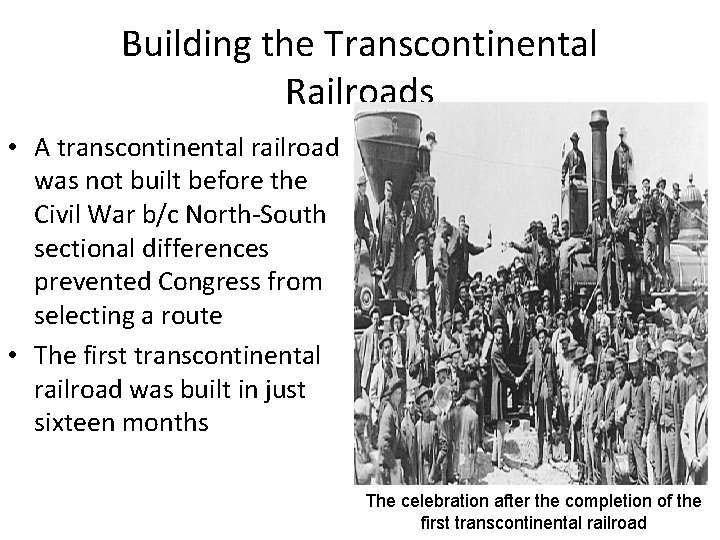
Building the Transcontinental Railroads • A transcontinental railroad was not built before the Civil War b/c North-South sectional differences prevented Congress from selecting a route • The first transcontinental railroad was built in just sixteen months The celebration after the completion of the first transcontinental railroad
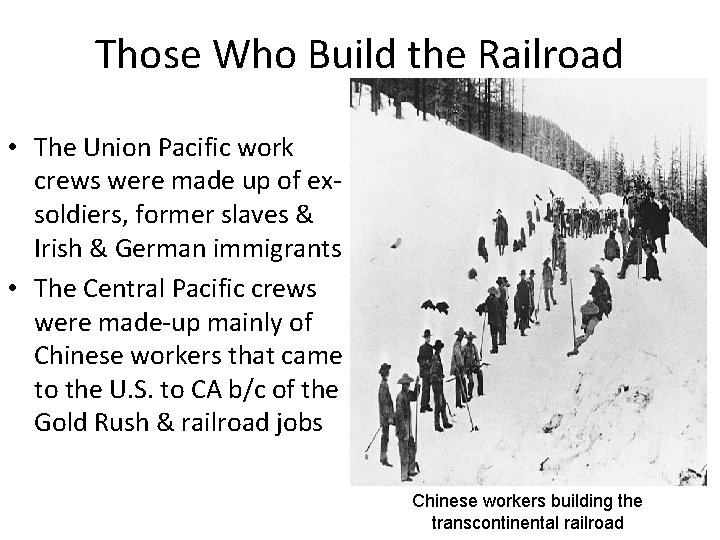
Those Who Build the Railroad • The Union Pacific work crews were made up of exsoldiers, former slaves & Irish & German immigrants • The Central Pacific crews were made-up mainly of Chinese workers that came to the U. S. to CA b/c of the Gold Rush & railroad jobs Chinese workers building the transcontinental railroad
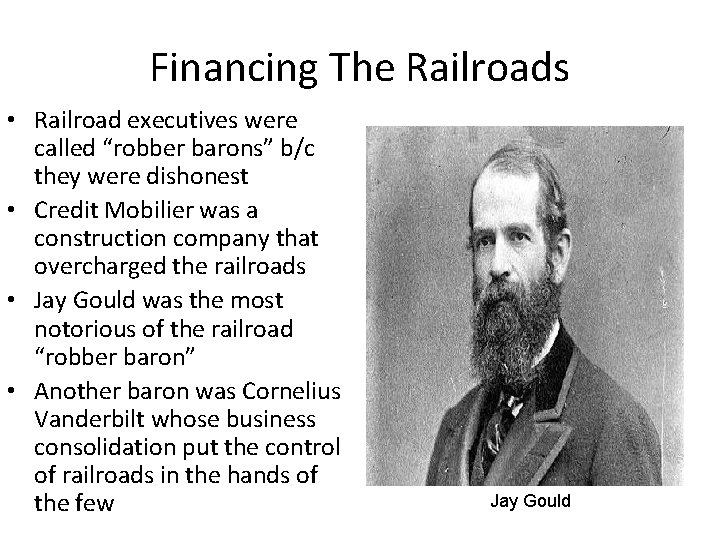
Financing The Railroads • Railroad executives were called “robber barons” b/c they were dishonest • Credit Mobilier was a construction company that overcharged the railroads • Jay Gould was the most notorious of the railroad “robber baron” • Another baron was Cornelius Vanderbilt whose business consolidation put the control of railroads in the hands of the few Jay Gould
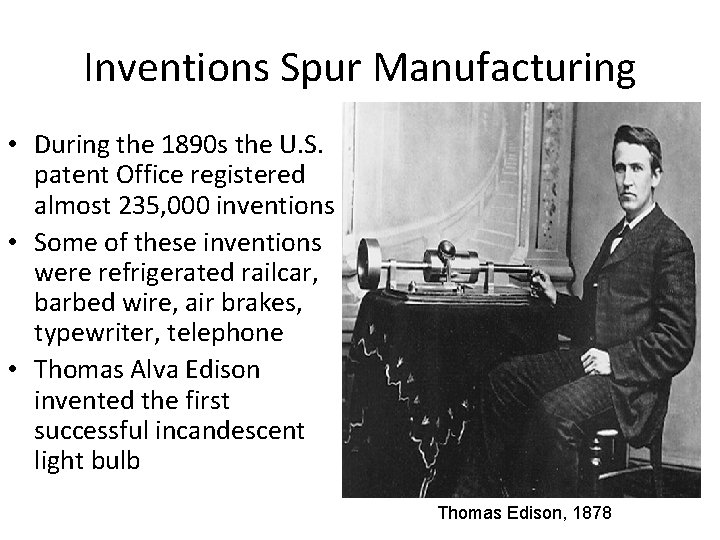
Inventions Spur Manufacturing • During the 1890 s the U. S. patent Office registered almost 235, 000 inventions • Some of these inventions were refrigerated railcar, barbed wire, air brakes, typewriter, telephone • Thomas Alva Edison invented the first successful incandescent light bulb Thomas Edison, 1878
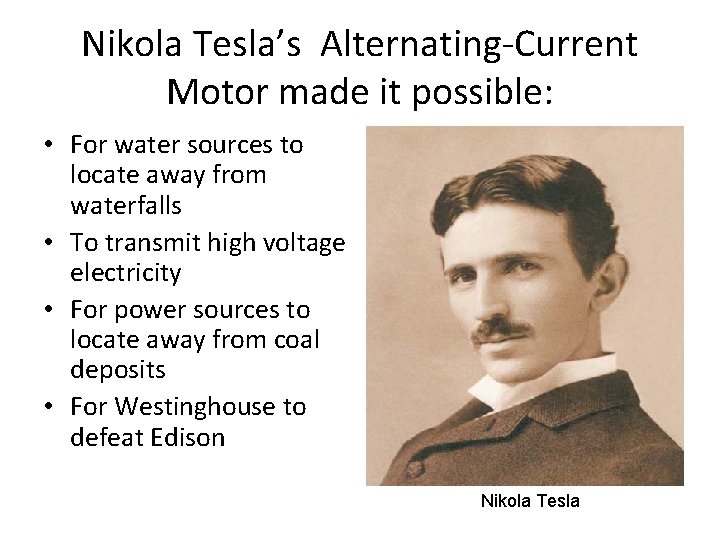
Nikola Tesla’s Alternating-Current Motor made it possible: • For water sources to locate away from waterfalls • To transmit high voltage electricity • For power sources to locate away from coal deposits • For Westinghouse to defeat Edison Nikola Tesla
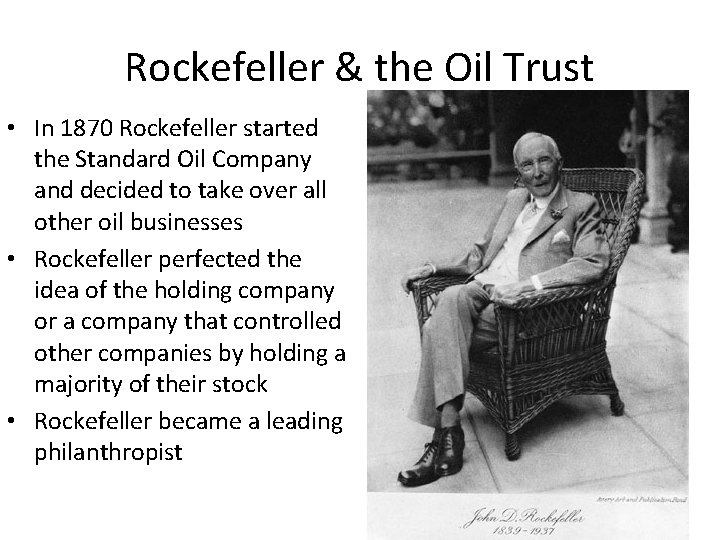
Rockefeller & the Oil Trust • In 1870 Rockefeller started the Standard Oil Company and decided to take over all other oil businesses • Rockefeller perfected the idea of the holding company or a company that controlled other companies by holding a majority of their stock • Rockefeller became a leading philanthropist
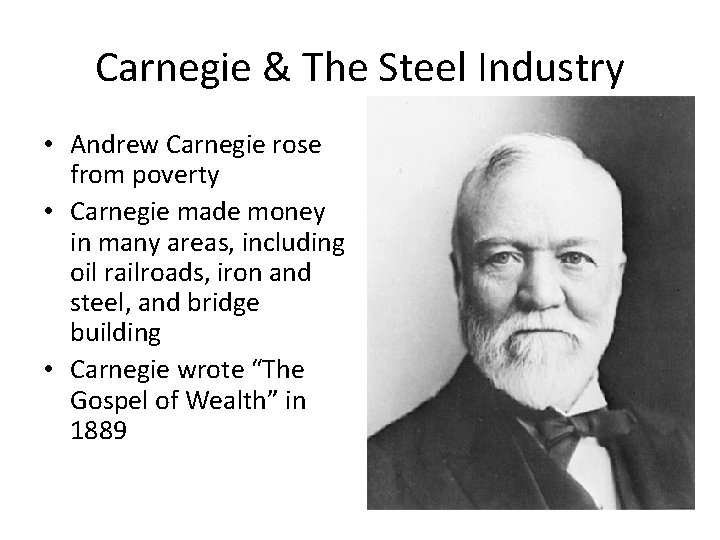
Carnegie & The Steel Industry • Andrew Carnegie rose from poverty • Carnegie made money in many areas, including oil railroads, iron and steel, and bridge building • Carnegie wrote “The Gospel of Wealth” in 1889
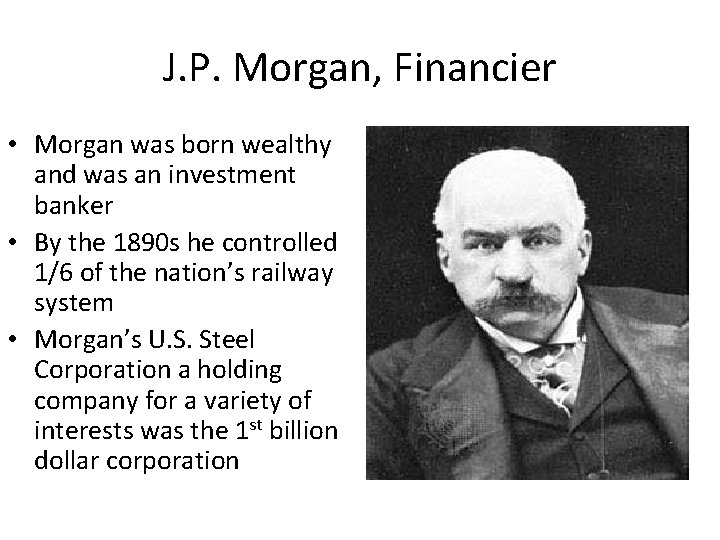
J. P. Morgan, Financier • Morgan was born wealthy and was an investment banker • By the 1890 s he controlled 1/6 of the nation’s railway system • Morgan’s U. S. Steel Corporation a holding company for a variety of interests was the 1 st billion dollar corporation
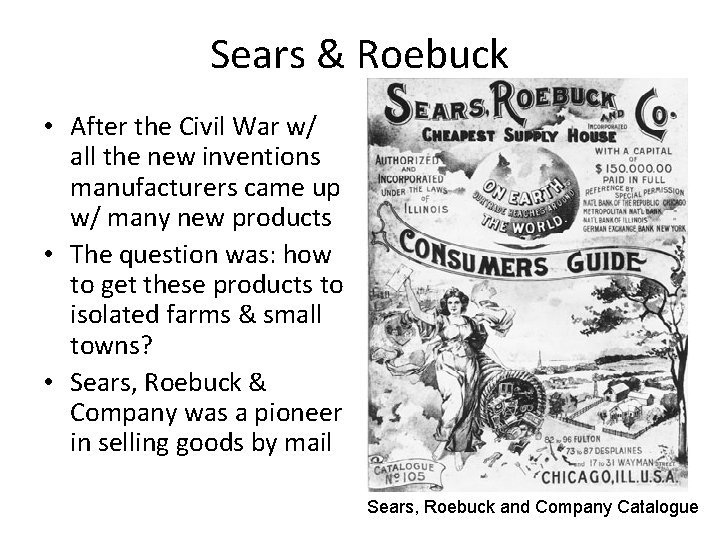
Sears & Roebuck • After the Civil War w/ all the new inventions manufacturers came up w/ many new products • The question was: how to get these products to isolated farms & small towns? • Sears, Roebuck & Company was a pioneer in selling goods by mail Sears, Roebuck and Company Catalogue
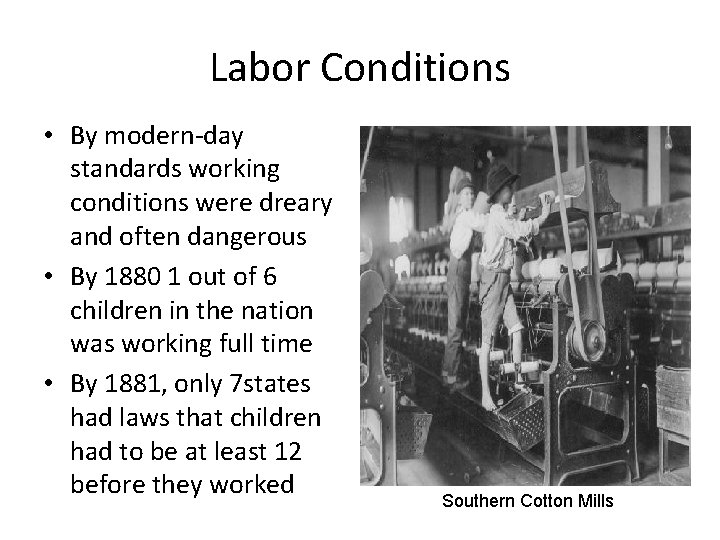
Labor Conditions • By modern-day standards working conditions were dreary and often dangerous • By 1880 1 out of 6 children in the nation was working full time • By 1881, only 7 states had laws that children had to be at least 12 before they worked Southern Cotton Mills
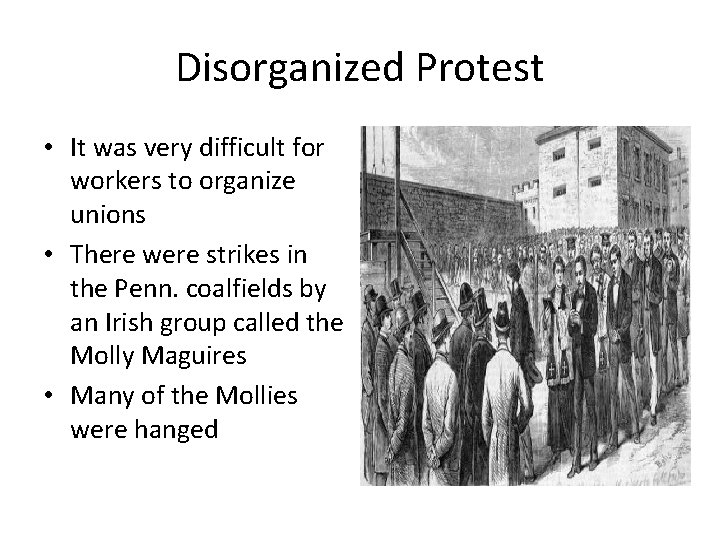
Disorganized Protest • It was very difficult for workers to organize unions • There were strikes in the Penn. coalfields by an Irish group called the Molly Maguires • Many of the Mollies were hanged
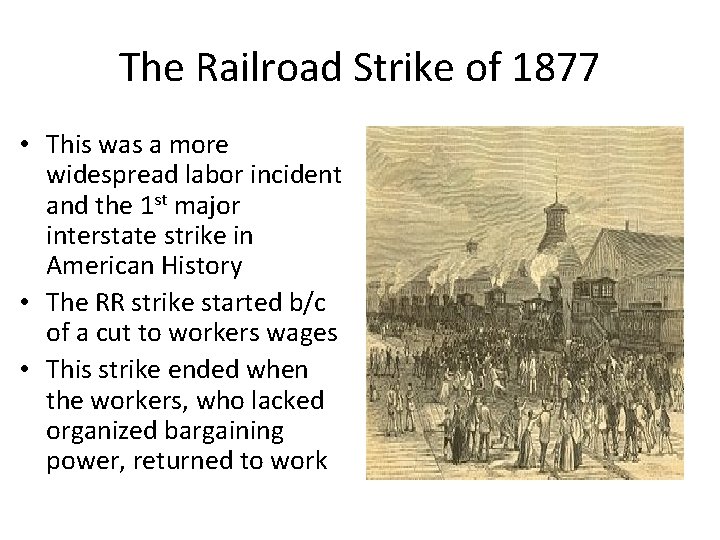
The Railroad Strike of 1877 • This was a more widespread labor incident and the 1 st major interstate strike in American History • The RR strike started b/c of a cut to workers wages • This strike ended when the workers, who lacked organized bargaining power, returned to work
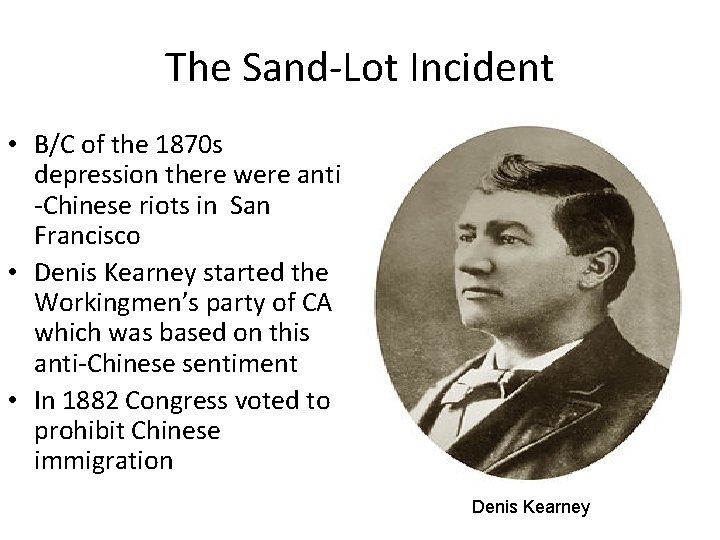
The Sand-Lot Incident • B/C of the 1870 s depression there were anti -Chinese riots in San Francisco • Denis Kearney started the Workingmen’s party of CA which was based on this anti-Chinese sentiment • In 1882 Congress voted to prohibit Chinese immigration Denis Kearney
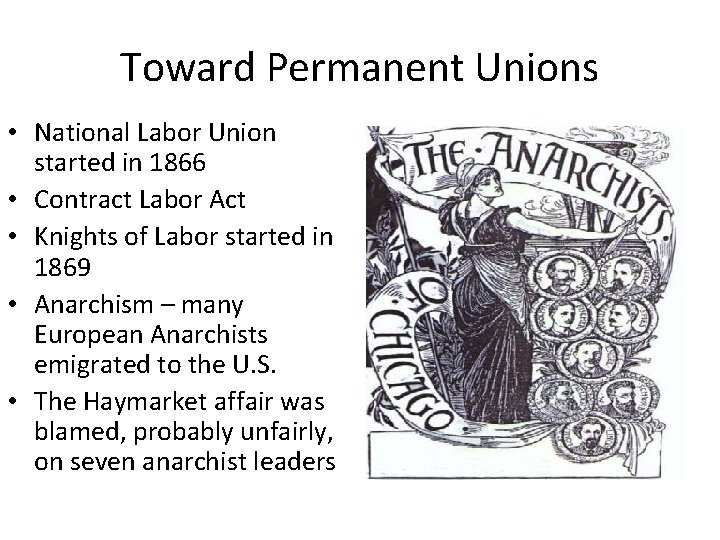
Toward Permanent Unions • National Labor Union started in 1866 • Contract Labor Act • Knights of Labor started in 1869 • Anarchism – many European Anarchists emigrated to the U. S. • The Haymarket affair was blamed, probably unfairly, on seven anarchist leaders
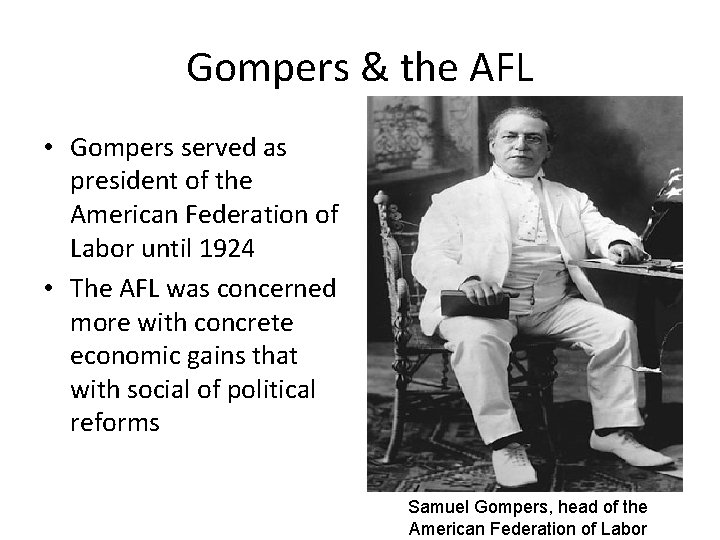
Gompers & the AFL • Gompers served as president of the American Federation of Labor until 1924 • The AFL was concerned more with concrete economic gains that with social of political reforms Samuel Gompers, head of the American Federation of Labor
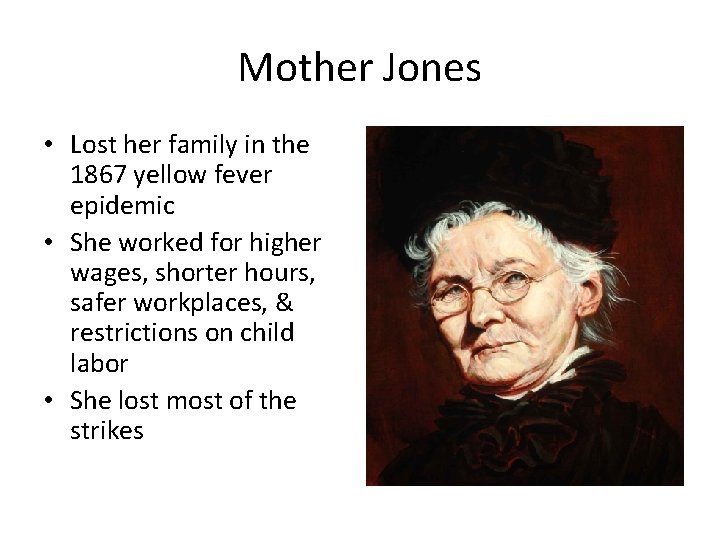
Mother Jones • Lost her family in the 1867 yellow fever epidemic • She worked for higher wages, shorter hours, safer workplaces, & restrictions on child labor • She lost most of the strikes
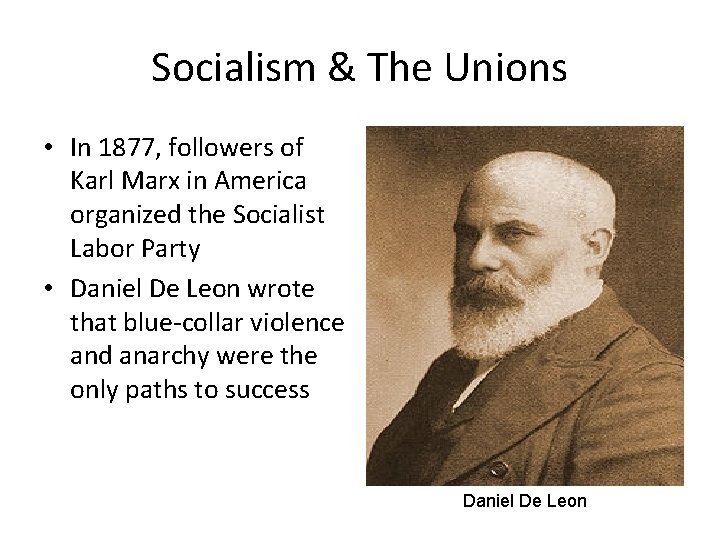
Socialism & The Unions • In 1877, followers of Karl Marx in America organized the Socialist Labor Party • Daniel De Leon wrote that blue-collar violence and anarchy were the only paths to success Daniel De Leon
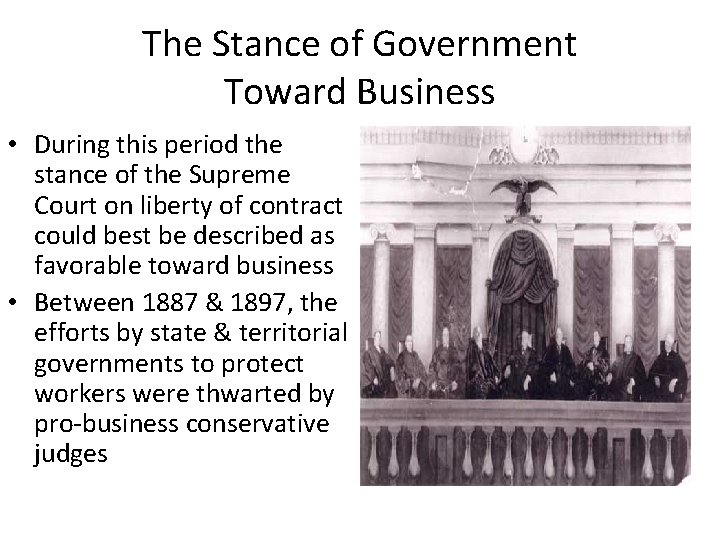
The Stance of Government Toward Business • During this period the stance of the Supreme Court on liberty of contract could best be described as favorable toward business • Between 1887 & 1897, the efforts by state & territorial governments to protect workers were thwarted by pro-business conservative judges
- Slides: 21