
Chapter 5 INCOME MEASUREMENT AND PROFITABLITY ANALYSIS Mc
Chapter 5 INCOME MEASUREMENT AND PROFITABLITY ANALYSIS Mc. Graw-Hill /Irwin © 2009 The Mc. Graw-Hill Companies, Inc.
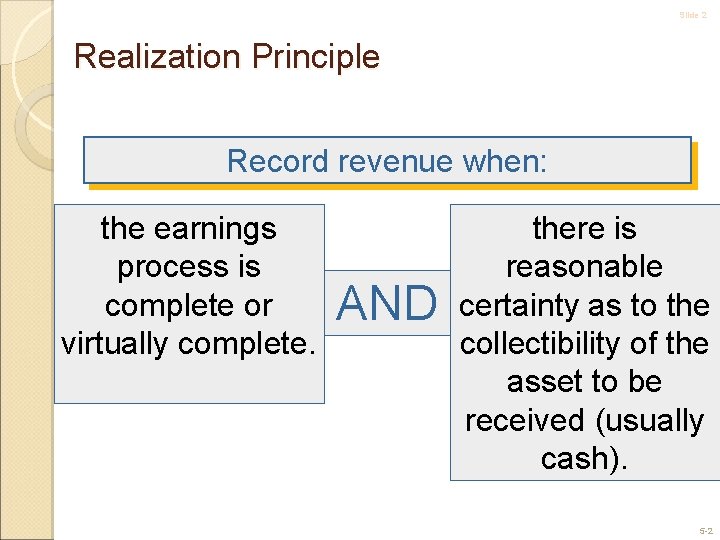
Slide 2 Realization Principle Record revenue when: the earnings process is complete or virtually complete. AND there is reasonable certainty as to the collectibility of the asset to be received (usually cash). 5 -2
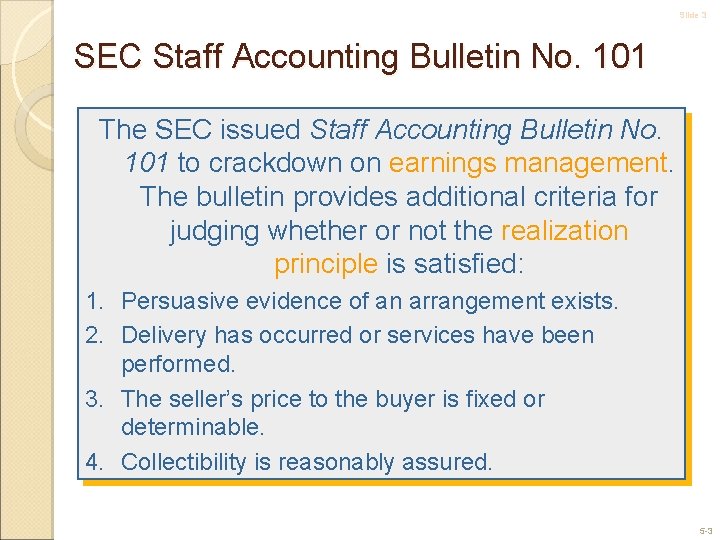
Slide 3 SEC Staff Accounting Bulletin No. 101 The SEC issued Staff Accounting Bulletin No. 101 to crackdown on earnings management. The bulletin provides additional criteria for judging whether or not the realization principle is satisfied: 1. Persuasive evidence of an arrangement exists. 2. Delivery has occurred or services have been performed. 3. The seller’s price to the buyer is fixed or determinable. 4. Collectibility is reasonably assured. 5 -3
Completion of the Earnings Process within a Single Reporting Period Slide 4 Recognize Revenue When the product or service has been delivered to the customer and cash has been received or a receivable has been generated that has reasonable assurance of collectibility. 5 -4
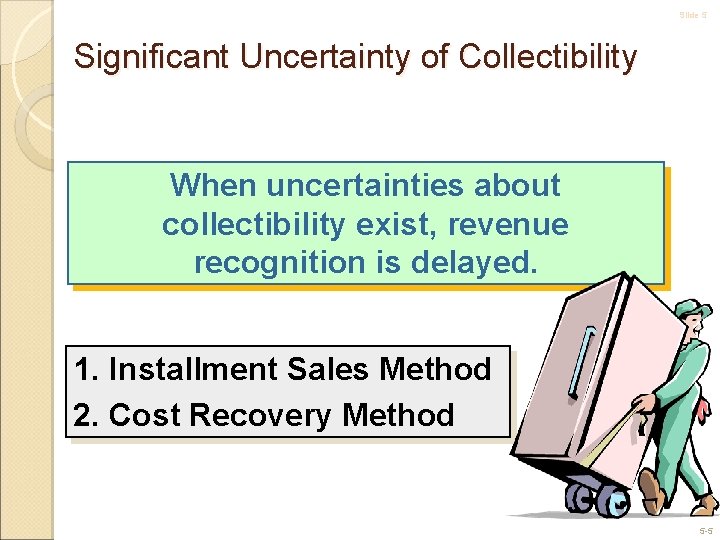
Slide 5 Significant Uncertainty of Collectibility When uncertainties about collectibility exist, revenue recognition is delayed. 1. Installment Sales Method 2. Cost Recovery Method 5 -5

Slide 6 Installment Sales Method On November 1, 2009, the Belmont Corporation, a real estate developer, sold a tract of land for $800, 000. The sales agreement requires the customer to make four equal annual payments of $200, 000 plus interest on each November 1, beginning November 1, 2009. The land cost $560, 000 to develop. The company’s fiscal year ends on December 31. Gross Profit $240, 000 ÷ $800, 000 = 30% 5 -6
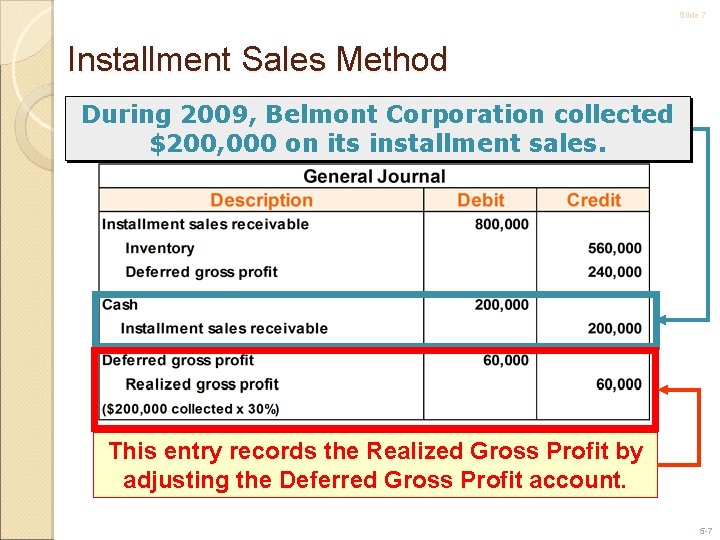
Slide 7 Installment Sales Method During 2009, Belmont Corporation collected $200, 000 on its installment sales. This entry records the Realized Gross Profit by adjusting the Deferred Gross Profit account. 5 -7
Slide 8 Cost Recovery Method On November 1, 2009, the Belmont Corporation, a real estate developer, sold a tract of land for $800, 000. The sales agreement requires the customer to make four equal annual payments of $200, 000 plus interest on each November 1, beginning November 1, 2009. The land cost $560, 000 to develop. The company’s fiscal year ends on December 31. 5 -8
Slide 9 Cost Recovery Method 5 -9
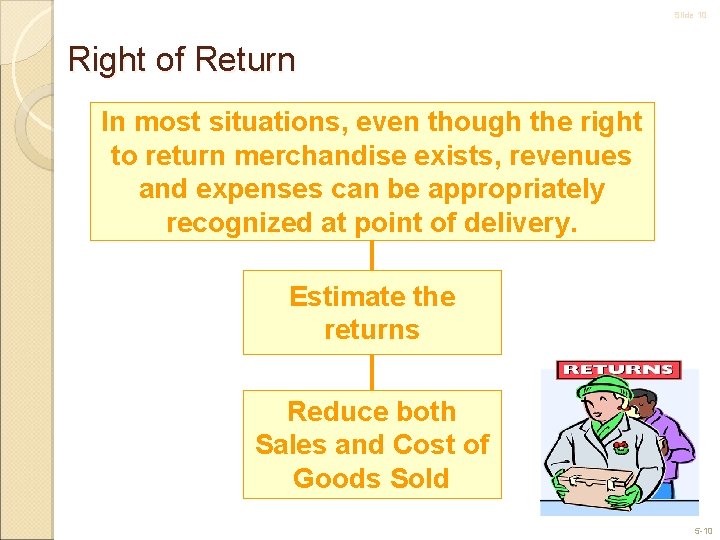
Slide 10 Right of Return In most situations, even though the right to return merchandise exists, revenues and expenses can be appropriately recognized at point of delivery. Estimate the returns Reduce both Sales and Cost of Goods Sold 5 -10
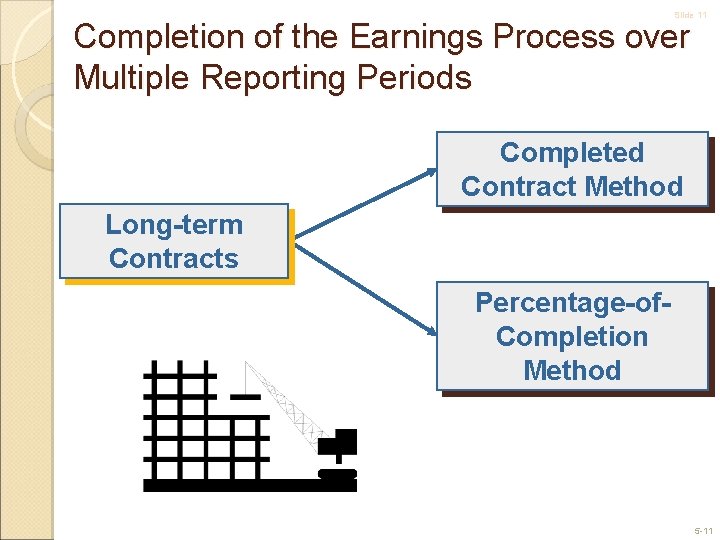
Slide 11 Completion of the Earnings Process over Multiple Reporting Periods Completed Contract Method Long-term Contracts Percentage-of. Completion Method 5 -11
Companies Engaged in Long-term Contracts Slide 12 5 -12
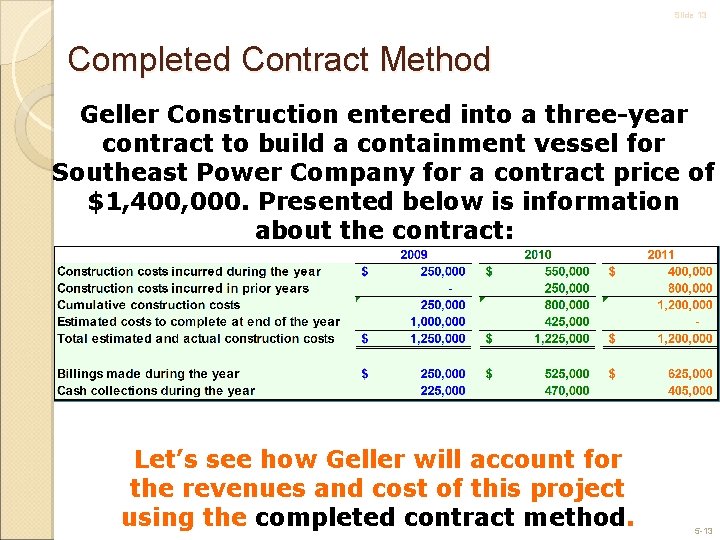
Slide 13 Completed Contract Method Geller Construction entered into a three-year contract to build a containment vessel for Southeast Power Company for a contract price of $1, 400, 000. Presented below is information about the contract: Let’s see how Geller will account for the revenues and cost of this project using the completed contract method. 5 -13
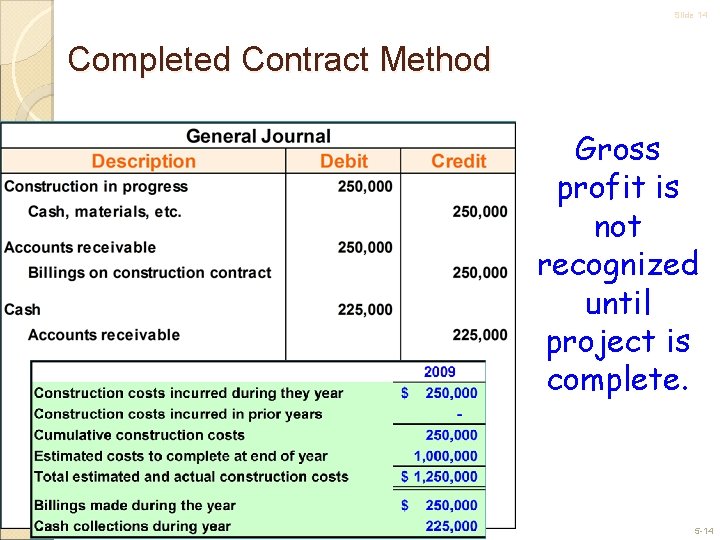
Slide 14 Completed Contract Method Gross profit is not recognized until project is complete. 5 -14
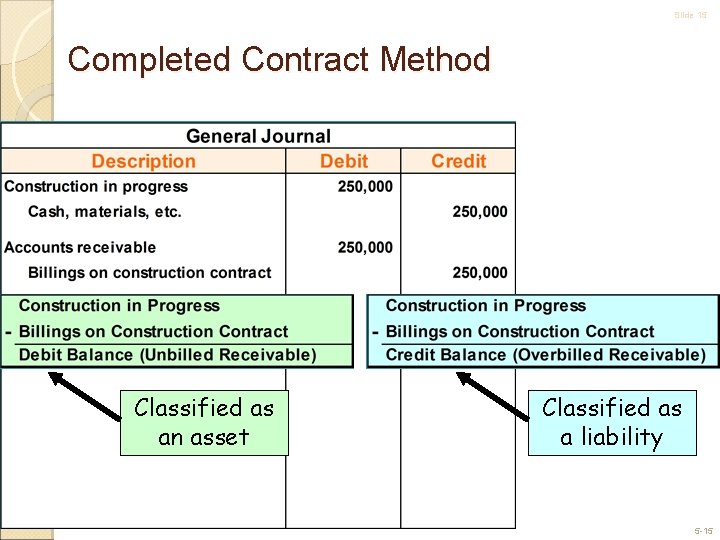
Slide 15 Completed Contract Method Classified as an asset Classified as a liability 5 -15
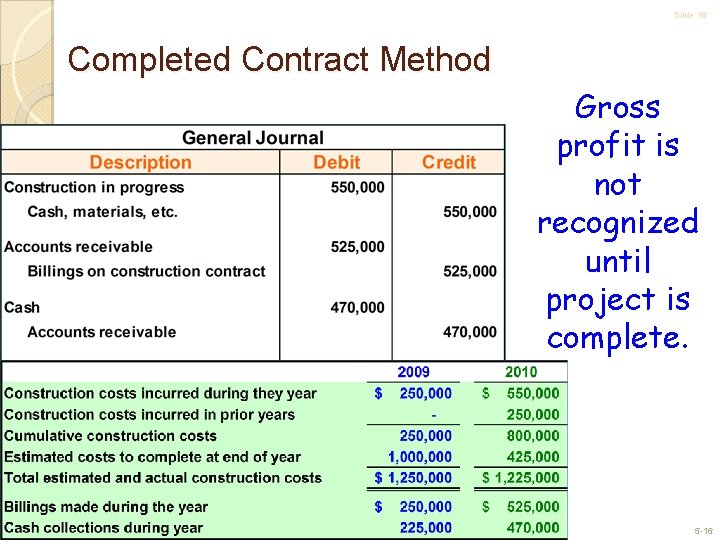
Slide 16 Completed Contract Method Gross profit is not recognized until project is complete. 5 -16
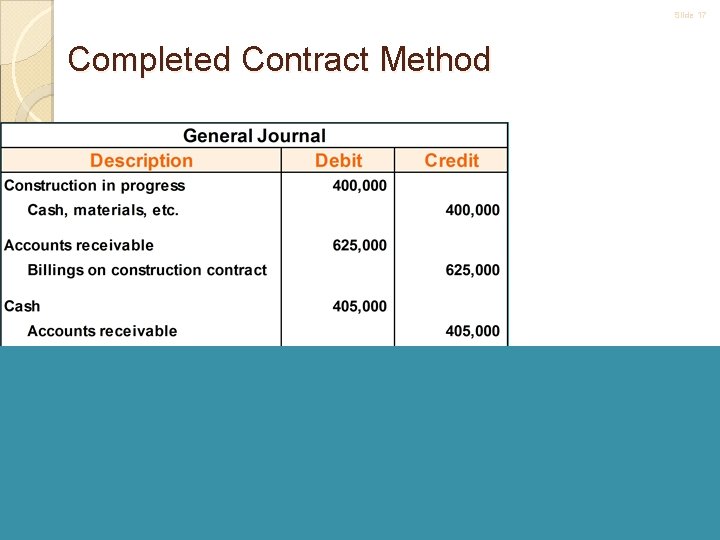
Slide 17 Completed Contract Method 5 -17
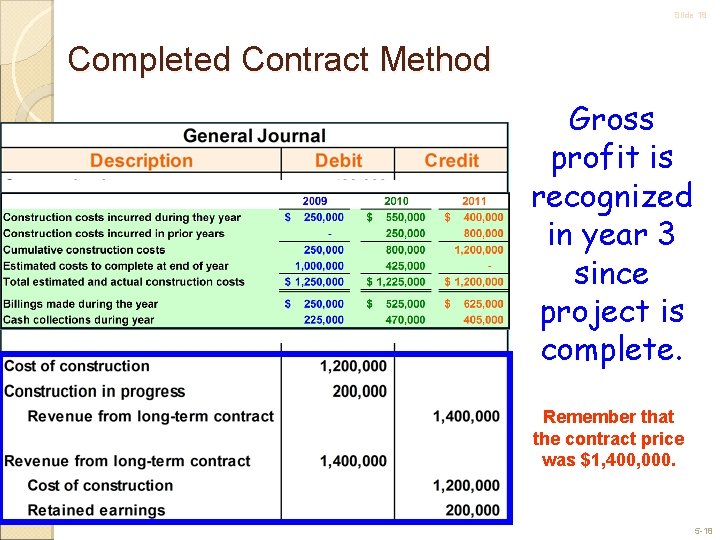
Slide 18 Completed Contract Method Gross profit is recognized in year 3 since project is complete. Remember that the contract price was $1, 400, 000. 5 -18
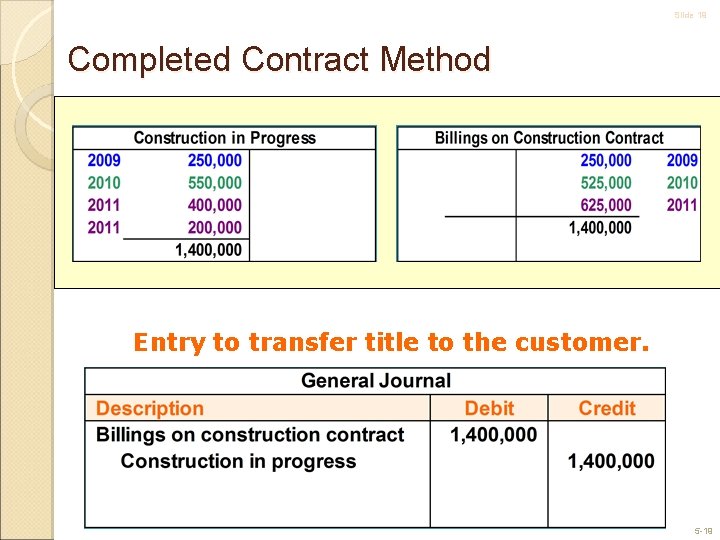
Slide 19 Completed Contract Method Entry to transfer title to the customer. 5 -19
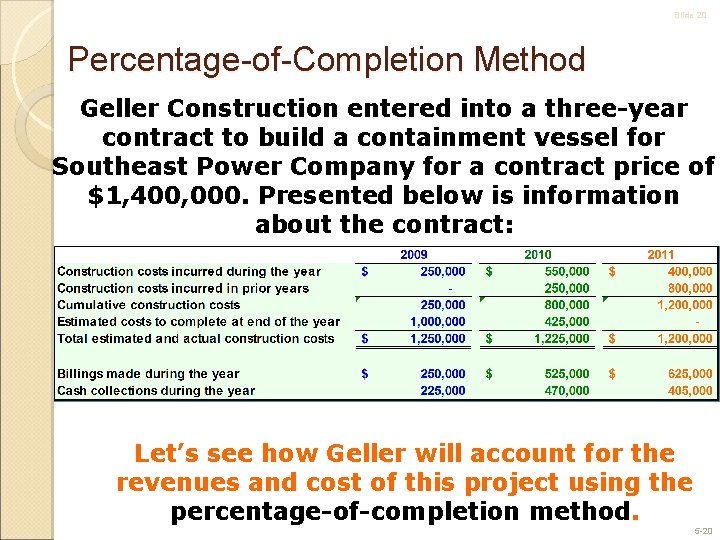
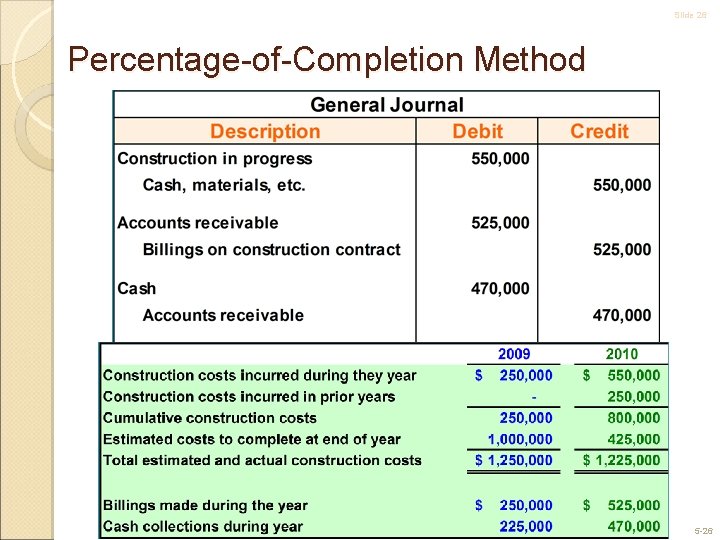
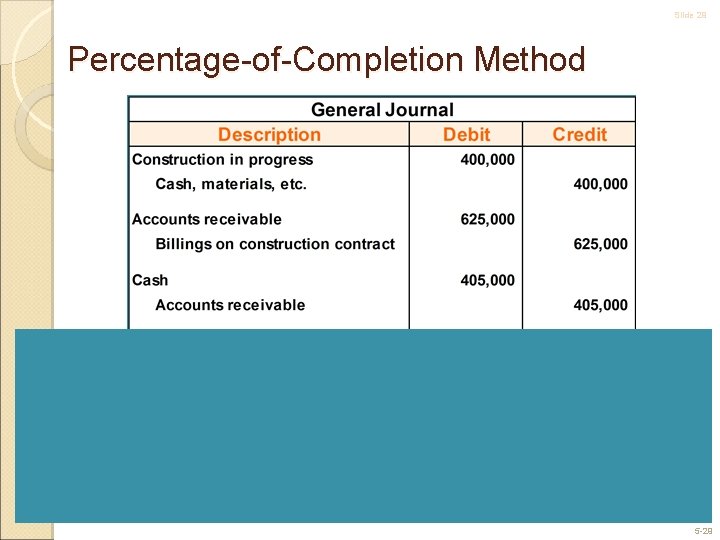
Slide 20 Percentage-of-Completion Method Geller Construction entered into a three-year contract to build a containment vessel for Southeast Power Company for a contract price of $1, 400, 000. Presented below is information about the contract: Let’s see how Geller will account for the revenues and cost of this project using the percentage-of-completion method. 5 -20
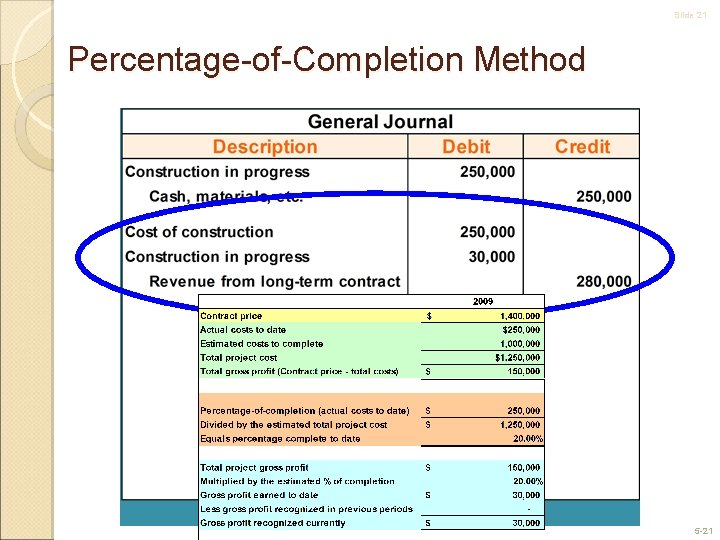
Slide 21 Percentage-of-Completion Method 5 -21
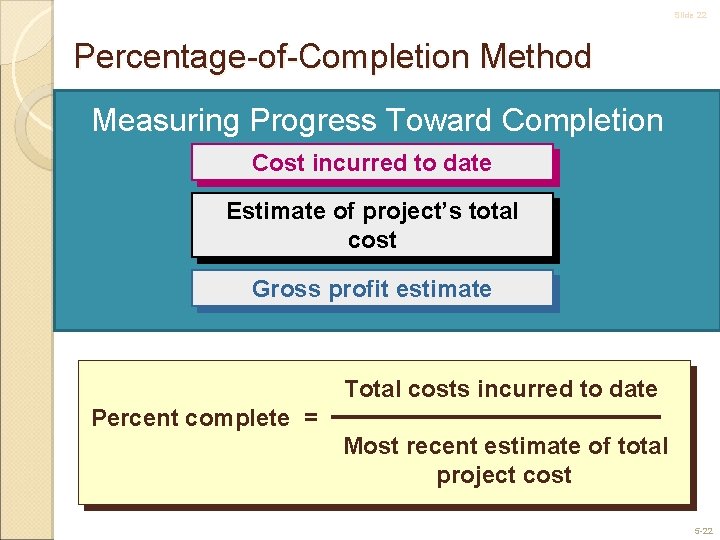
Slide 22 Percentage-of-Completion Method Measuring Progress Toward Completion Cost incurred to date Estimate of project’s total cost Gross profit estimate Total costs incurred to date Percent complete = Most recent estimate of total project cost 5 -22
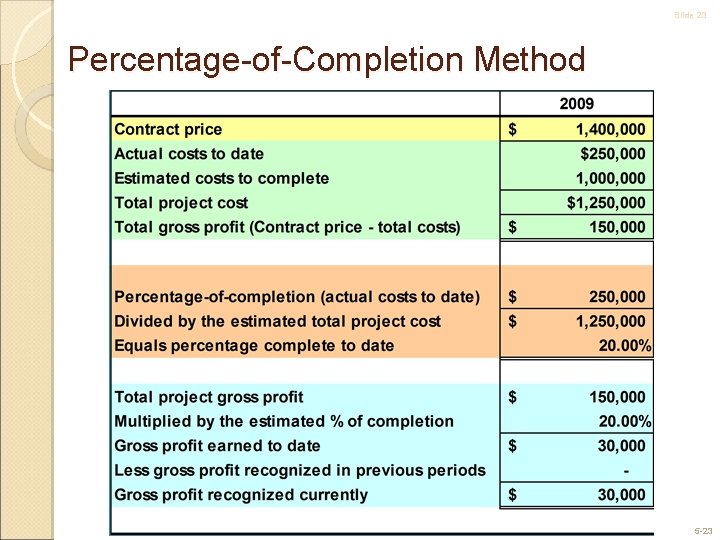
Slide 23 Percentage-of-Completion Method 5 -23
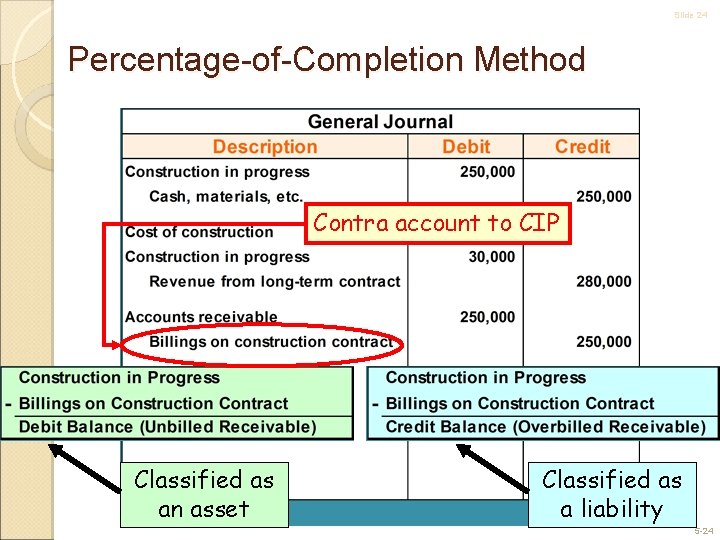
Slide 24 Percentage-of-Completion Method Contra account to CIP Classified as an asset Classified as a liability 5 -24
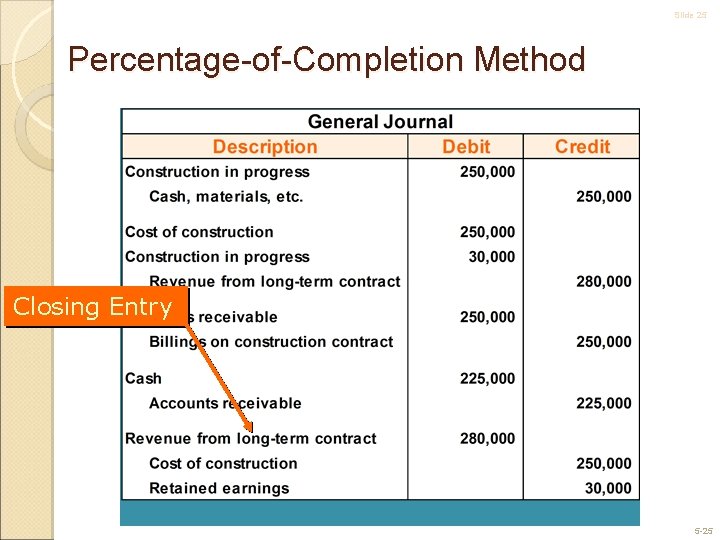
Slide 25 Percentage-of-Completion Method Closing Entry 5 -25
Slide 26 Percentage-of-Completion Method 5 -26
Slide 27 Percentage-of-Completion Method 5 -27
Slide 28 Percentage-of-Completion Method 5 -28
Slide 29 Percentage-of-Completion Method 5 -29
Slide 30 Percentage-of-Completion Method 5 -30
Slide 31 Percentage-of-Completion Method 5 -31
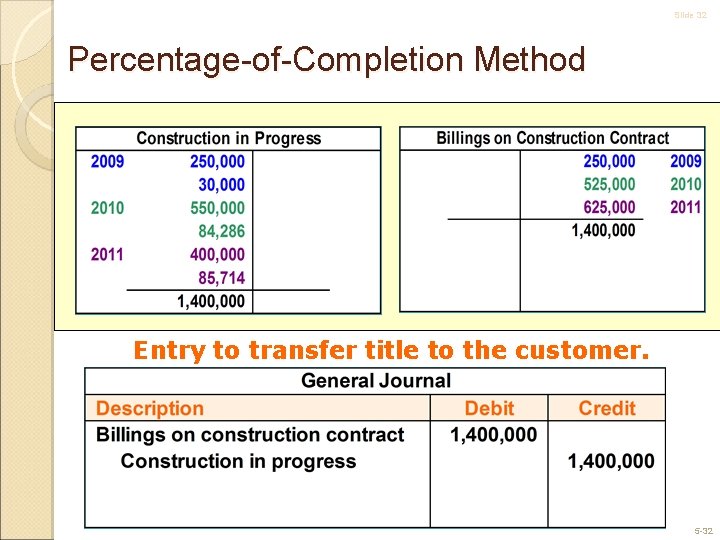
Slide 32 Percentage-of-Completion Method Entry to transfer title to the customer. 5 -32
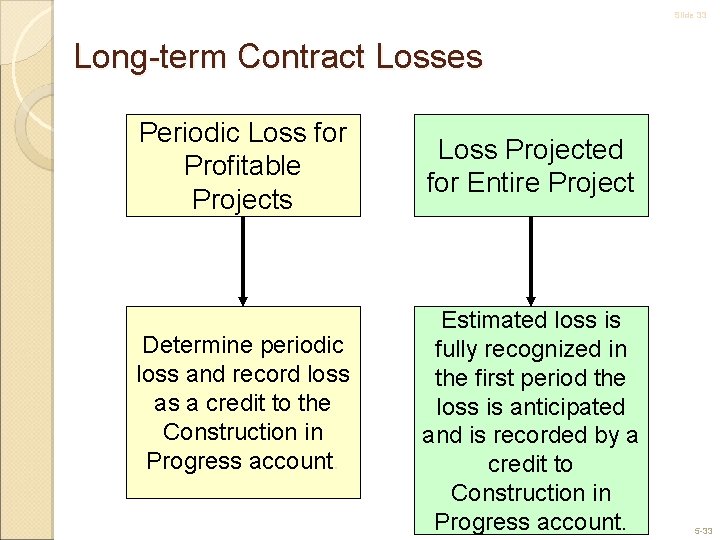
Slide 33 Long-term Contract Losses Periodic Loss for Profitable Projects Determine periodic loss and record loss as a credit to the Construction in Progress account. Loss Projected for Entire Project Estimated loss is fully recognized in the first period the loss is anticipated and is recorded by a credit to Construction in Progress account. 5 -33
International Accounting Standards and Long-term Contracts Slide 34 Under the International Financial Reporting Standards, International Accounting Standard (IAS) No. 11 governs revenue recognition for long-term construction contracts. Like U. S. GAAP, IAS No. 11 requires use of percentage-ofcompletion accounting when estimates can be made precisely. Unlike U. S. GAAP, IAS No. 11 requires use of the cost recovery method rather than the completed contract method when estimates cannot be made precisely enough to allow percentage-of-completion accounting. 5 -34
Slide 35 Software and Other Multiple Deliverable Arrangements Statement of Position 97 -2 If a sale includes multiple elements (software, future upgrades, postcontract customer support, etc. ), the revenue should be allocated to the various elements based on the relative fair value of the individual elements. This will likely result in a portion of the proceeds received from the sale of software being deferred and recognized as revenue in future periods. 5 -35
Slide 36 Other Multiple Deliverable Arrangements For multiple-deliverable arrangements, revenue should be allocated to individual deliverables that qualify for separate revenue recognition. Otherwise, revenue is delayed until completion of later deliverables. 5 -36
Slide 37 Franchise Sales Initial Franchise Fees Continuing Franchise Fees Generally are recognized at a point in time when the earnings process is virtually complete. Recognized over time as the services are performed. Source: SFAS 45 5 -37
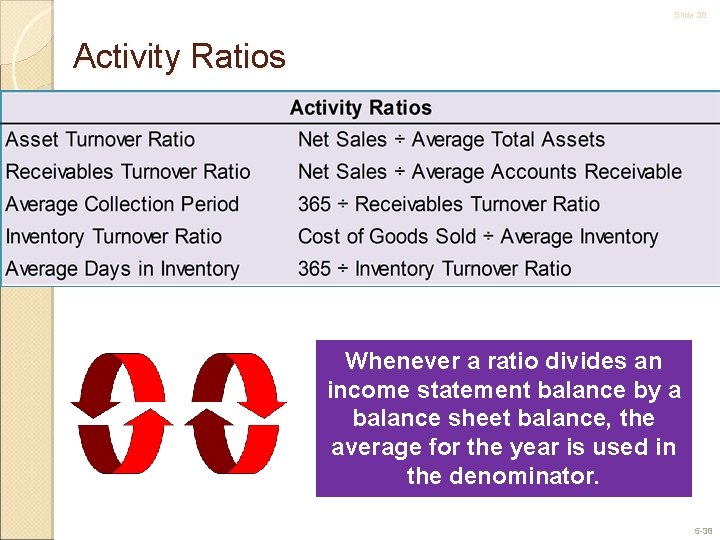
Slide 38 Activity Ratios Whenever a ratio divides an income statement balance by a balance sheet balance, the average for the year is used in the denominator. 5 -38
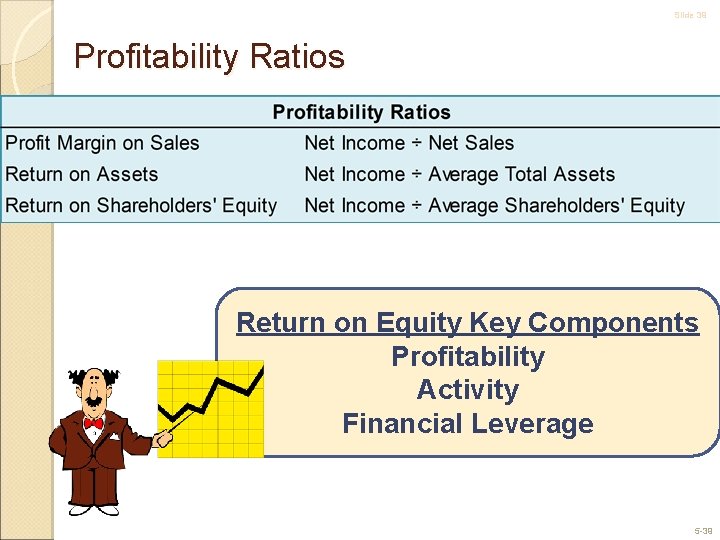
Slide 39 Profitability Ratios Return on Equity Key Components Profitability Activity Financial Leverage 5 -39
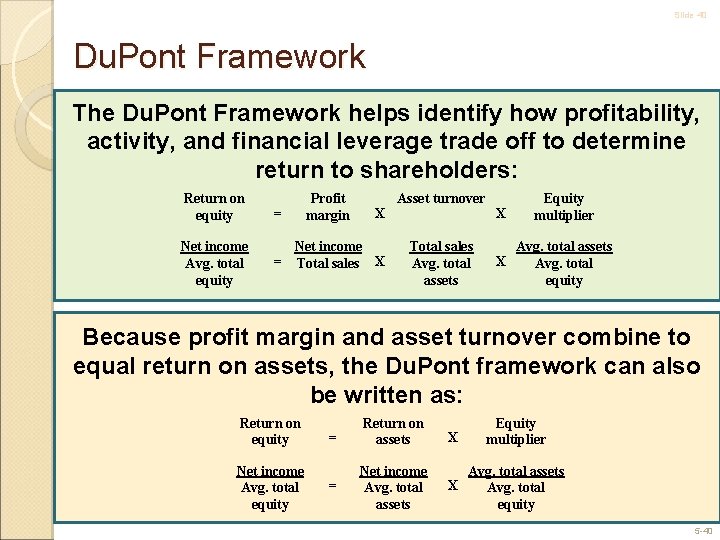
Slide 40 Du. Pont Framework The Du. Pont Framework helps identify how profitability, activity, and financial leverage trade off to determine return to shareholders: Return on equity Net income Avg. total equity = Profit margin X Net income = Total sales X Asset turnover Total sales Avg. total assets X Equity multiplier Avg. total assets X Avg. total equity Because profit margin and asset turnover combine to equal return on assets, the Du. Pont framework can also This is called the Du. Pont be written as: because the Du. Pont framework Return on equity Net income Avg. total equity = Return. Company on Equity was a pioneer X assets multiplier in emphasizng this relationship. = Net income Avg. total assets X Avg. total equity 5 -40
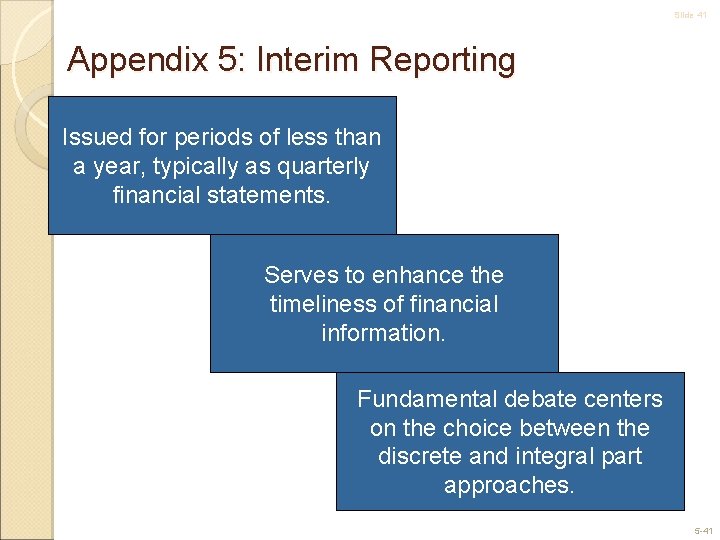
Slide 41 Appendix 5: Interim Reporting Issued for periods of less than a year, typically as quarterly financial statements. Serves to enhance the timeliness of financial information. Fundamental debate centers on the choice between the discrete and integral part approaches. 5 -41
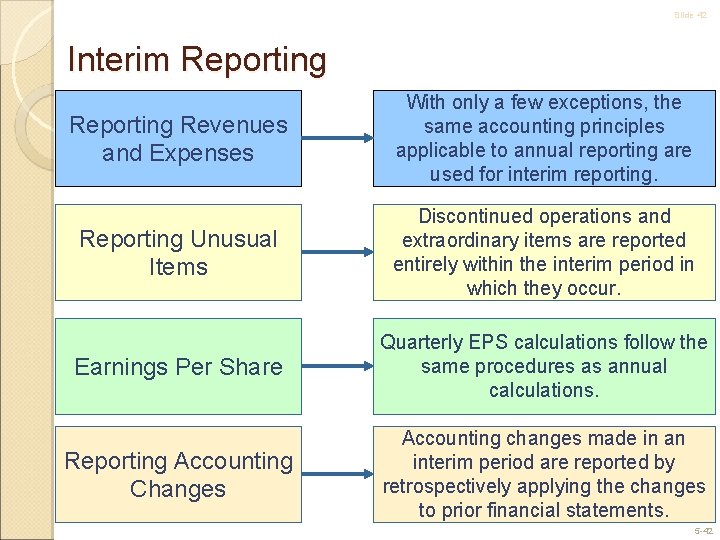
Slide 42 Interim Reporting Revenues and Expenses With only a few exceptions, the same accounting principles applicable to annual reporting are used for interim reporting. Reporting Unusual Items Discontinued operations and extraordinary items are reported entirely within the interim period in which they occur. Earnings Per Share Quarterly EPS calculations follow the same procedures as annual calculations. Reporting Accounting Changes Accounting changes made in an interim period are reported by retrospectively applying the changes to prior financial statements. 5 -42
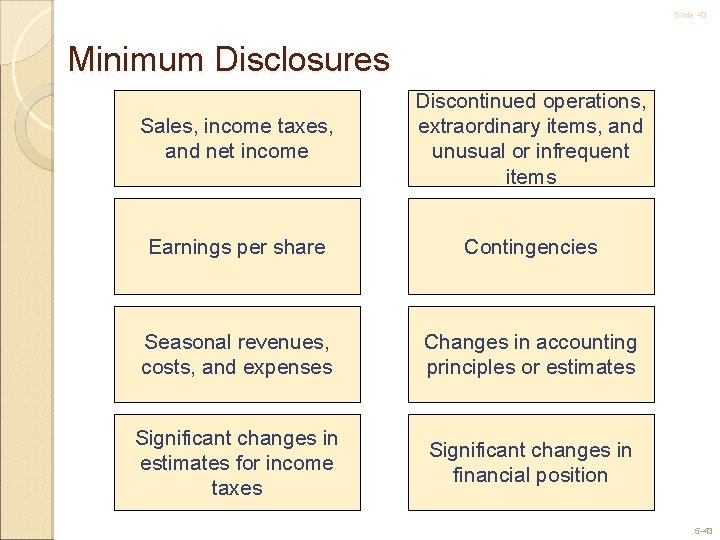
Slide 43 Minimum Disclosures Sales, income taxes, and net income Discontinued operations, extraordinary items, and unusual or infrequent items Earnings per share Contingencies Seasonal revenues, costs, and expenses Changes in accounting principles or estimates Significant changes in estimates for income taxes Significant changes in financial position 5 -43

End of Chapter 5 Mc. Graw-Hill /Irwin © 2009 The Mc. Graw-Hill Companies, Inc.
- Slides: 44