
CHAPTER 5 Human Resource Planning and Retention SECTION

- Slides: 35
CHAPTER 5 Human Resource Planning and Retention SECTION 2 Jobs and Labor Power. Point Presentation by Charlie Cook The University of West Alabama
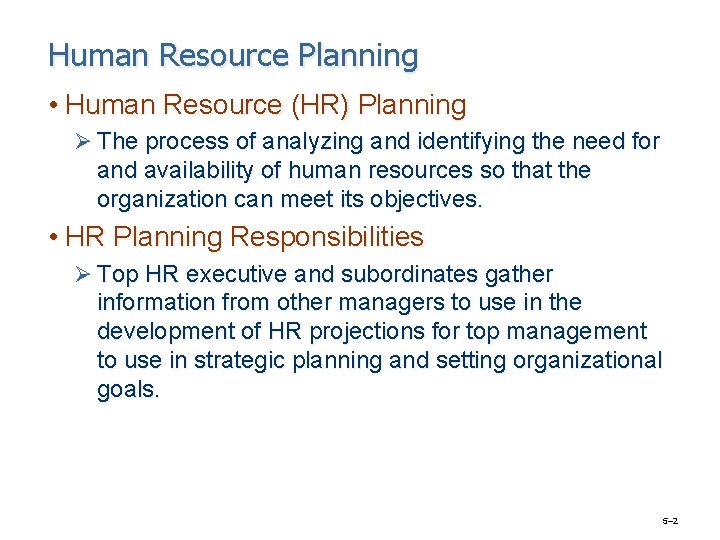
Human Resource Planning • Human Resource (HR) Planning Ø The process of analyzing and identifying the need for and availability of human resources so that the organization can meet its objectives. • HR Planning Responsibilities Ø Top HR executive and subordinates gather information from other managers to use in the development of HR projections for top management to use in strategic planning and setting organizational goals. 5– 2
Purpose of HR Planning Effective HR Planning Right people Right capabilities Right times Right places 5– 3
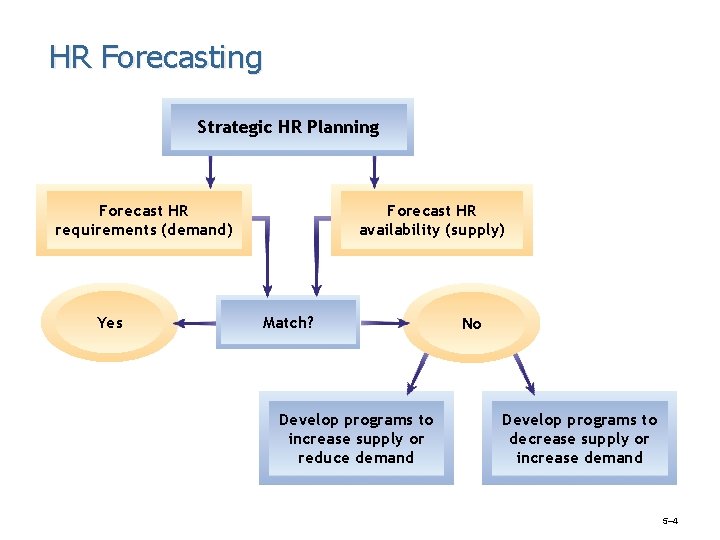
HR Forecasting Strategic HR Planning Forecast HR requirements (demand) Yes Forecast HR availability (supply) Match? Develop programs to increase supply or reduce demand No Develop programs to decrease supply or increase demand 5– 4
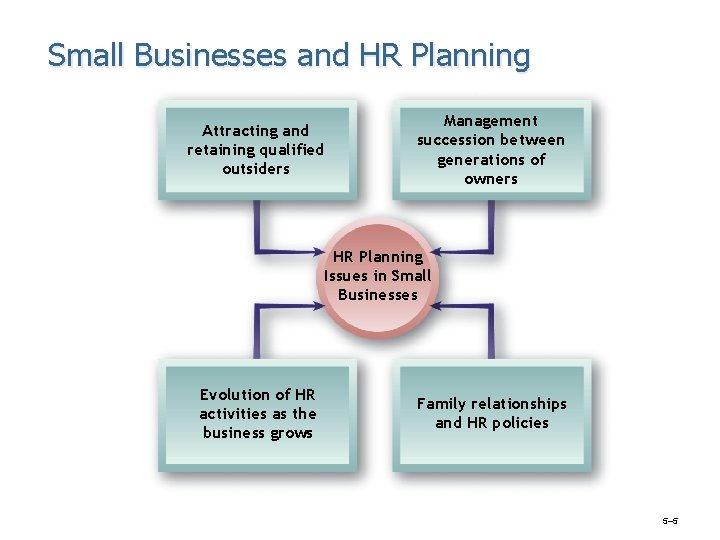
Small Businesses and HR Planning Attracting and retaining qualified outsiders Management succession between generations of owners HR Planning Issues in Small Businesses Evolution of HR activities as the business grows Family relationships and HR policies 5– 5
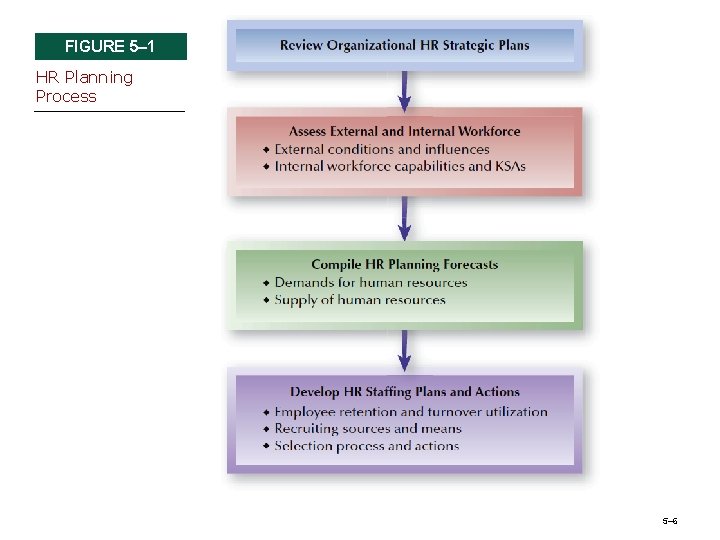
FIGURE 5– 1 HR Planning Process 5– 6
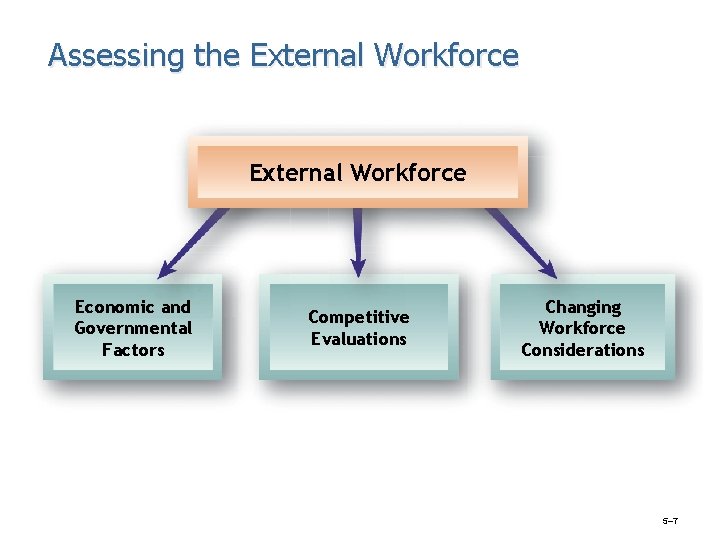
Assessing the External Workforce Economic and Governmental Factors Competitive Evaluations Changing Workforce Considerations 5– 7
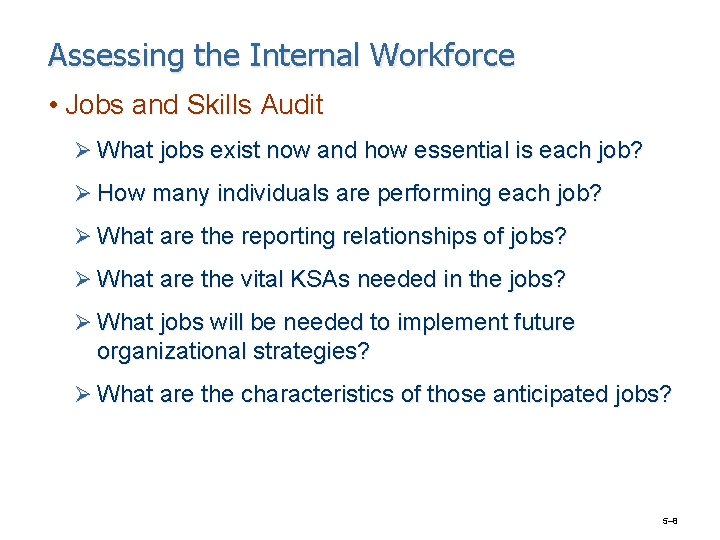
Assessing the Internal Workforce • Jobs and Skills Audit Ø What jobs exist now and how essential is each job? Ø How many individuals are performing each job? Ø What are the reporting relationships of jobs? Ø What are the vital KSAs needed in the jobs? Ø What jobs will be needed to implement future organizational strategies? Ø What are the characteristics of those anticipated jobs? 5– 8
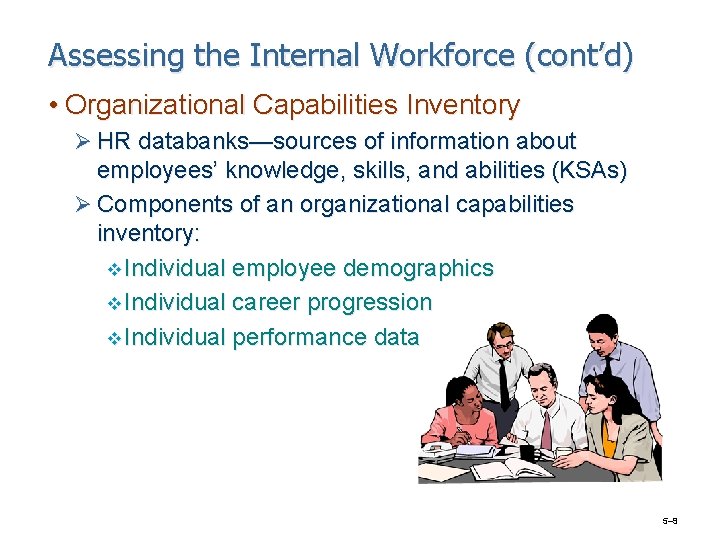
Assessing the Internal Workforce (cont’d) • Organizational Capabilities Inventory Ø HR databanks—sources of information about employees’ knowledge, skills, and abilities (KSAs) Ø Components of an organizational capabilities inventory: v Individual employee demographics v Individual career progression v Individual performance data 5– 9
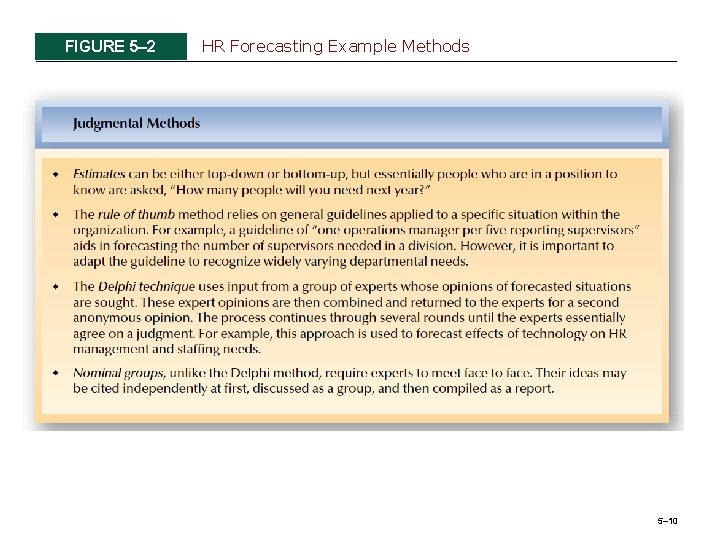
FIGURE 5– 2 HR Forecasting Example Methods 5– 10
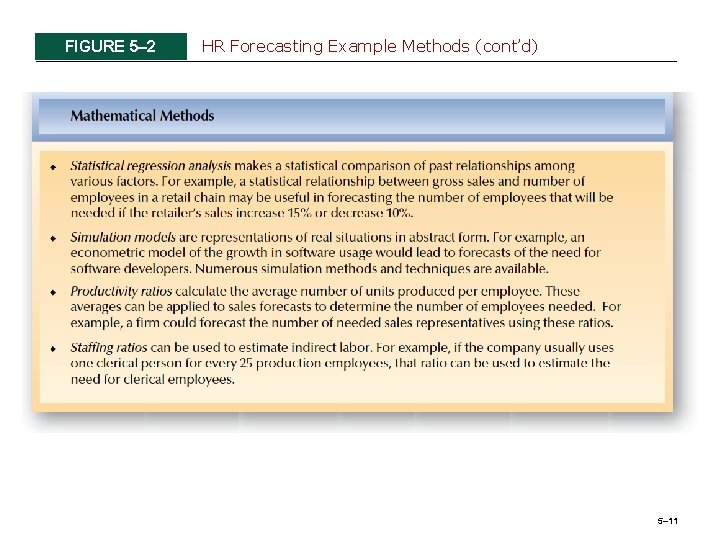
FIGURE 5– 2 HR Forecasting Example Methods (cont’d) 5– 11
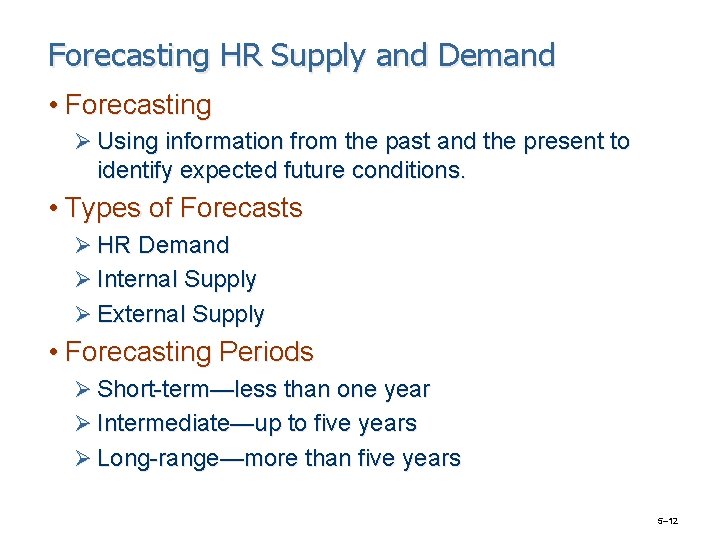
Forecasting HR Supply and Demand • Forecasting Ø Using information from the past and the present to identify expected future conditions. • Types of Forecasts Ø HR Demand Ø Internal Supply Ø External Supply • Forecasting Periods Ø Short-term—less than one year Ø Intermediate—up to five years Ø Long-range—more than five years 5– 12
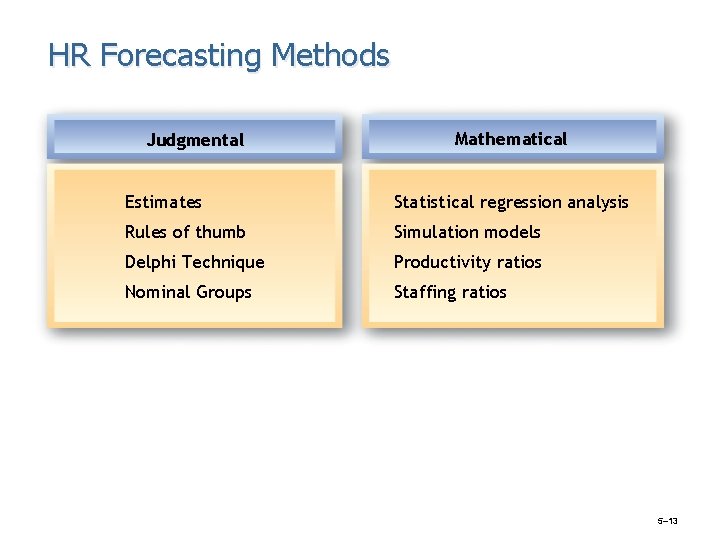
HR Forecasting Methods Judgmental Mathematical Estimates Statistical regression analysis Rules of thumb Simulation models Delphi Technique Productivity ratios Nominal Groups Staffing ratios 5– 13
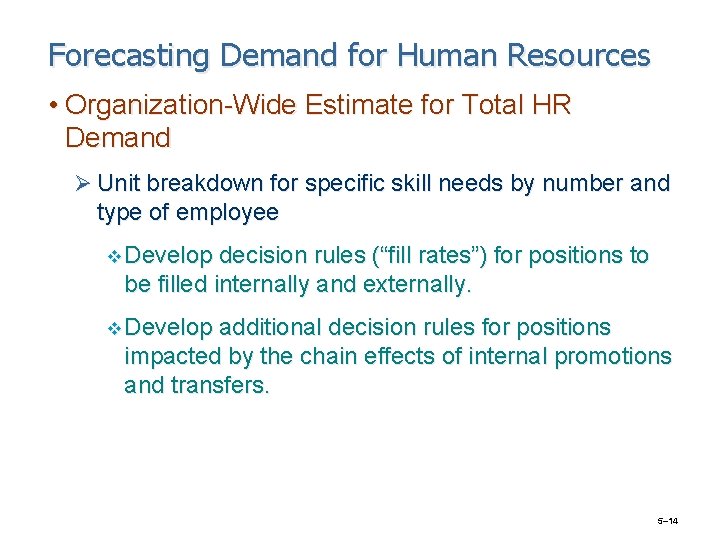
Forecasting Demand for Human Resources • Organization-Wide Estimate for Total HR Demand Ø Unit breakdown for specific skill needs by number and type of employee v Develop decision rules (“fill rates”) for positions to be filled internally and externally. v Develop additional decision rules for positions impacted by the chain effects of internal promotions and transfers. 5– 14
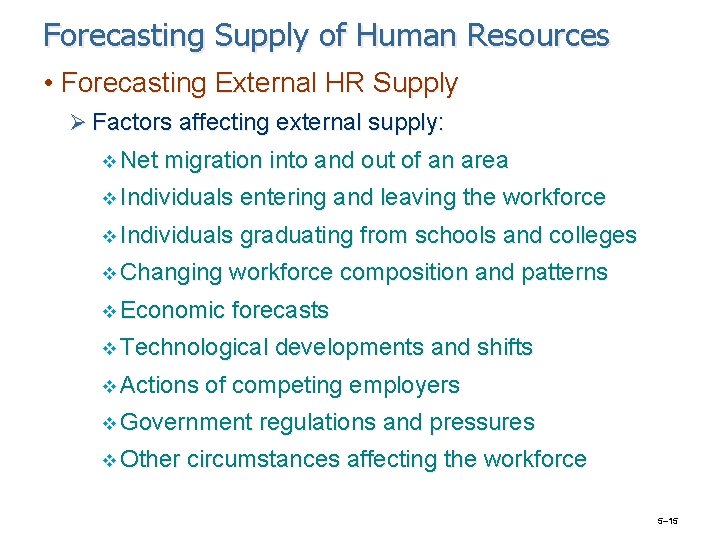
Forecasting Supply of Human Resources • Forecasting External HR Supply Ø Factors affecting external supply: v Net migration into and out of an area v Individuals entering and leaving the workforce v Individuals graduating from schools and colleges v Changing workforce composition and patterns v Economic forecasts v Technological v Actions of competing employers v Government v Other developments and shifts regulations and pressures circumstances affecting the workforce 5– 15
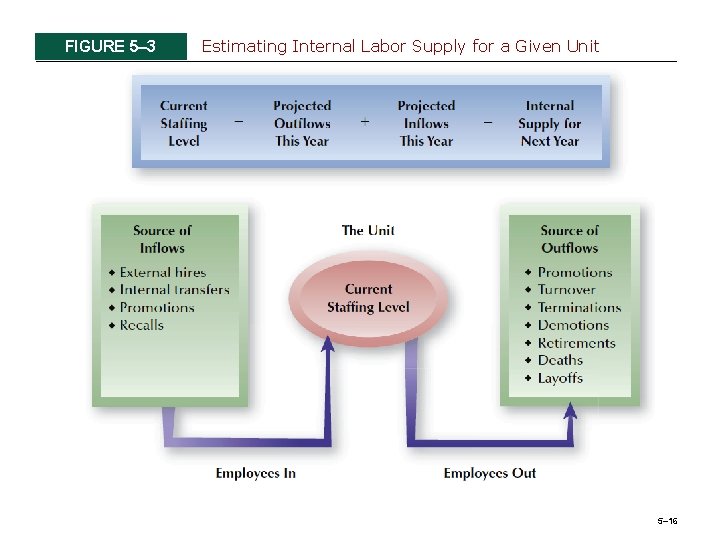
FIGURE 5– 3 Estimating Internal Labor Supply for a Given Unit 5– 16
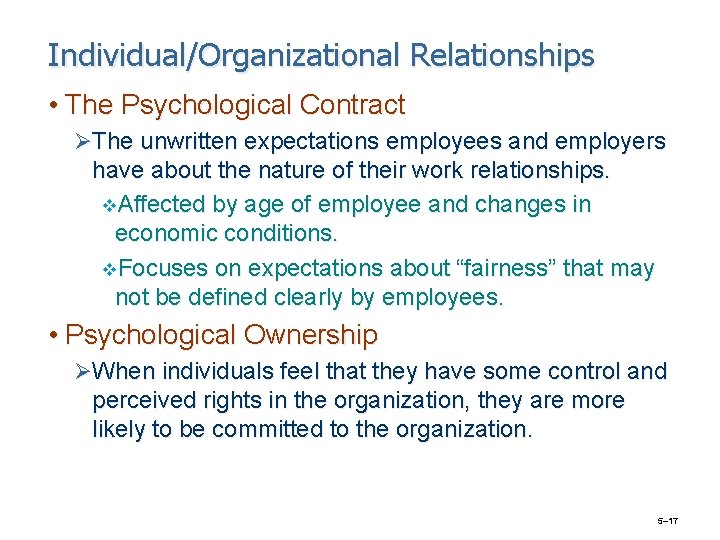
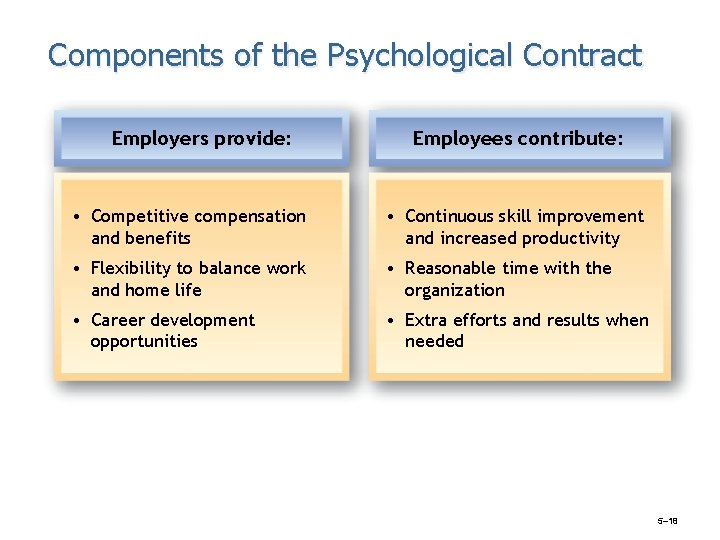
Individual/Organizational Relationships • The Psychological Contract ØThe unwritten expectations employees and employers have about the nature of their work relationships. v. Affected by age of employee and changes in economic conditions. v. Focuses on expectations about “fairness” that may not be defined clearly by employees. • Psychological Ownership ØWhen individuals feel that they have some control and perceived rights in the organization, they are more likely to be committed to the organization. 5– 17
Components of the Psychological Contract Employers provide: Employees contribute: • Competitive compensation and benefits • Continuous skill improvement and increased productivity • Flexibility to balance work and home life • Reasonable time with the organization • Career development opportunities • Extra efforts and results when needed 5– 18
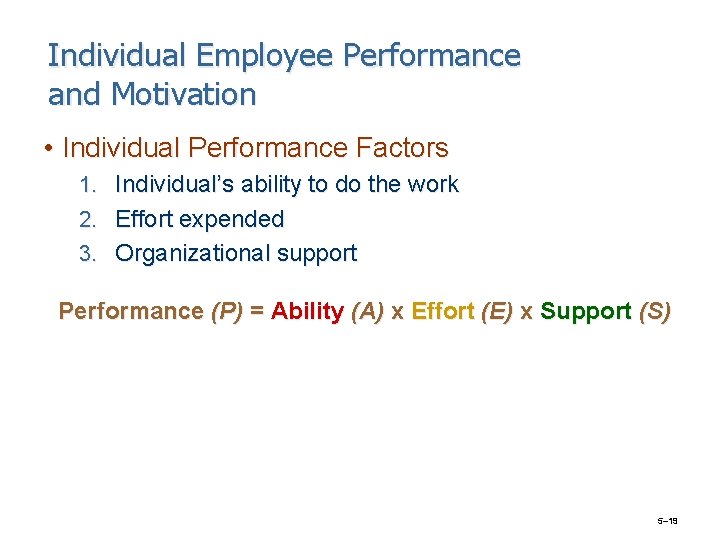
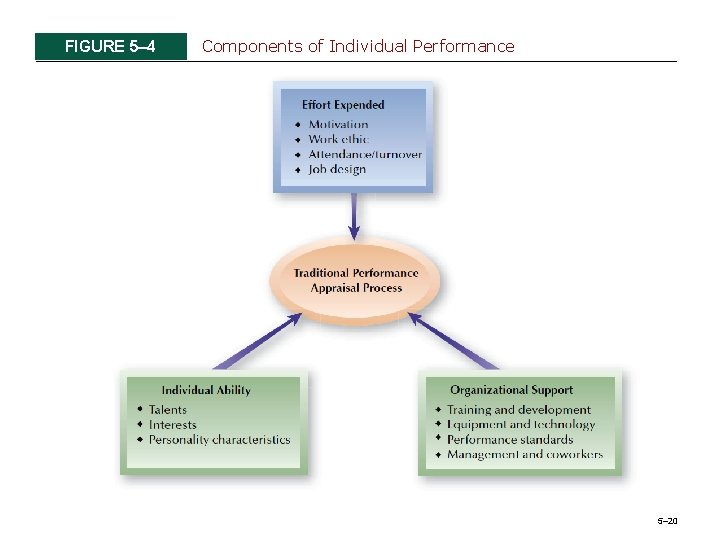
Individual Employee Performance and Motivation • Individual Performance Factors 1. Individual’s ability to do the work 2. Effort expended 3. Organizational support Performance (P) = Ability (A) x Effort (E) x Support (S) 5– 19
FIGURE 5– 4 Components of Individual Performance 5– 20
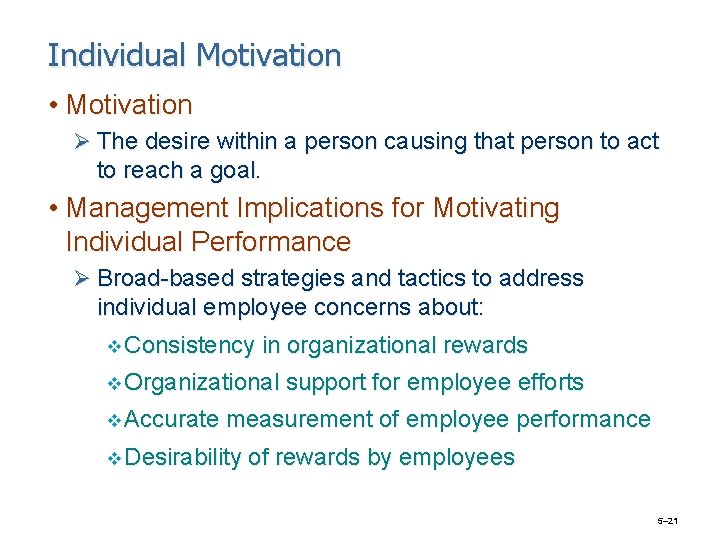
Individual Motivation • Motivation Ø The desire within a person causing that person to act to reach a goal. • Management Implications for Motivating Individual Performance Ø Broad-based strategies and tactics to address individual employee concerns about: v Consistency in organizational rewards v Organizational v Accurate support for employee efforts measurement of employee performance v Desirability of rewards by employees 5– 21
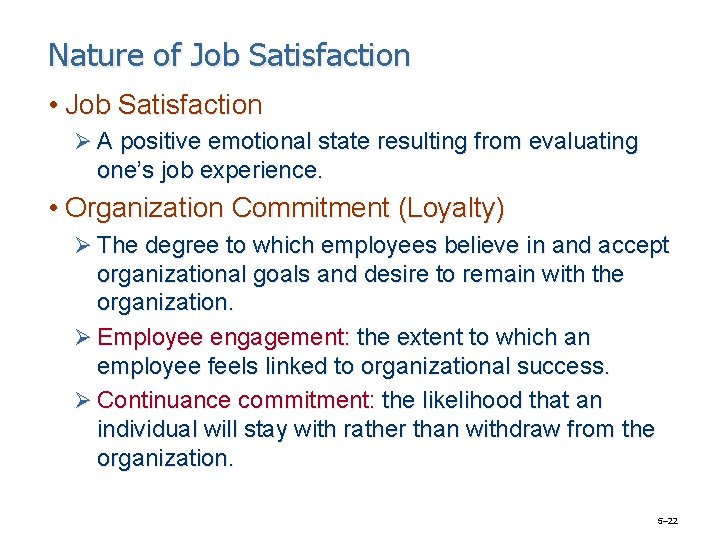
Nature of Job Satisfaction • Job Satisfaction Ø A positive emotional state resulting from evaluating one’s job experience. • Organization Commitment (Loyalty) Ø The degree to which employees believe in and accept organizational goals and desire to remain with the organization. Ø Employee engagement: the extent to which an employee feels linked to organizational success. Ø Continuance commitment: the likelihood that an individual will stay with rather than withdraw from the organization. 5– 22
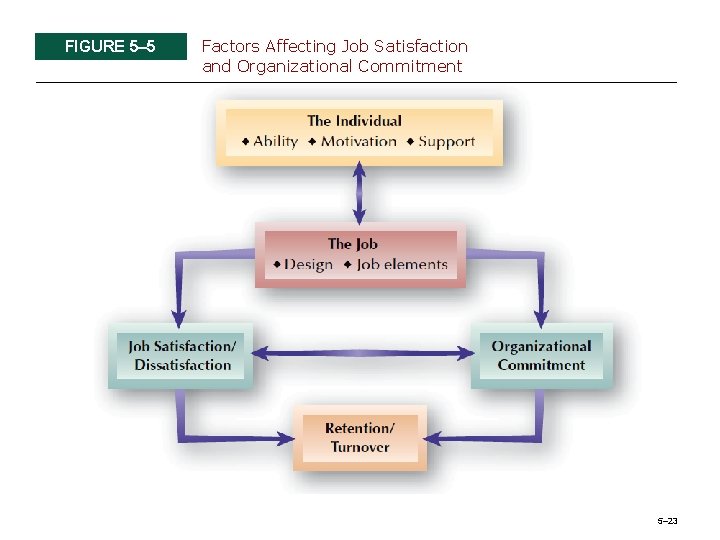
FIGURE 5– 5 Factors Affecting Job Satisfaction and Organizational Commitment 5– 23
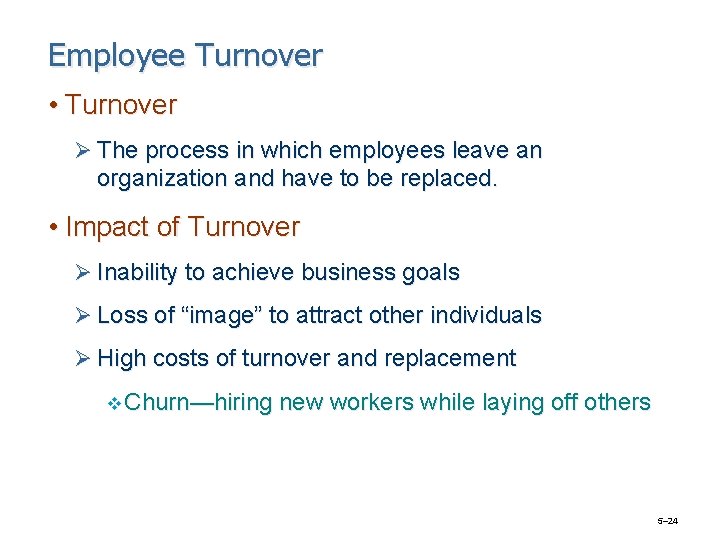
Employee Turnover • Turnover Ø The process in which employees leave an organization and have to be replaced. • Impact of Turnover Ø Inability to achieve business goals Ø Loss of “image” to attract other individuals Ø High costs of turnover and replacement v Churn—hiring new workers while laying off others 5– 24
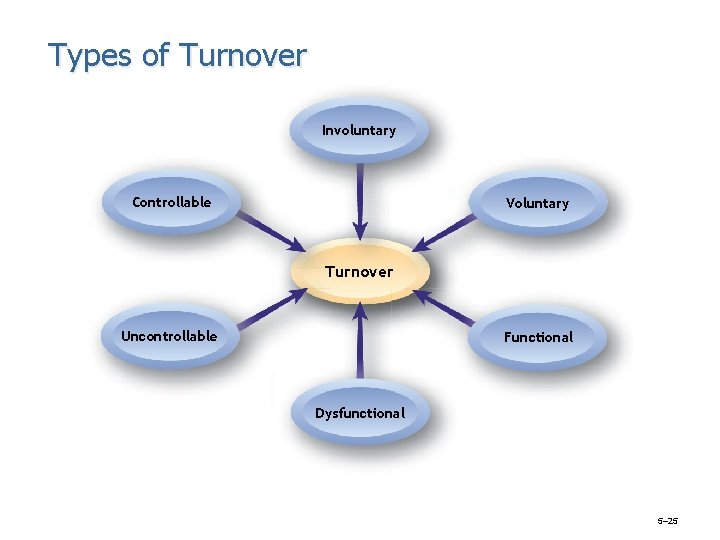
Types of Turnover Involuntary Controllable Voluntary Turnover Uncontrollable Functional Dysfunctional 5– 25
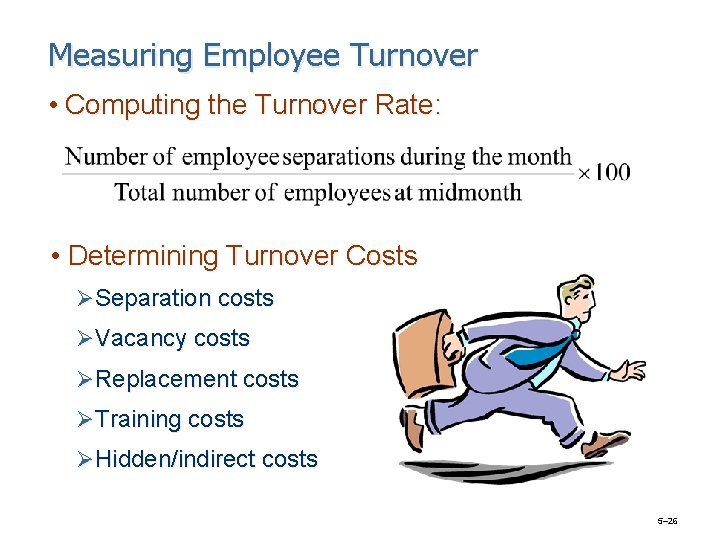
Measuring Employee Turnover • Computing the Turnover Rate: • Determining Turnover Costs ØSeparation costs ØVacancy costs ØReplacement costs ØTraining costs ØHidden/indirect costs 5– 26
Measuring Employee Turnover (cont’d) • Ways to Measure Turnover: Ø Job and job levels Ø Department, units, and location Ø Reason for leaving Ø Length of service Ø Demographic characteristics Ø Education and training Ø Knowledge, skills and abilities Ø Performance ratings/levels 5– 27
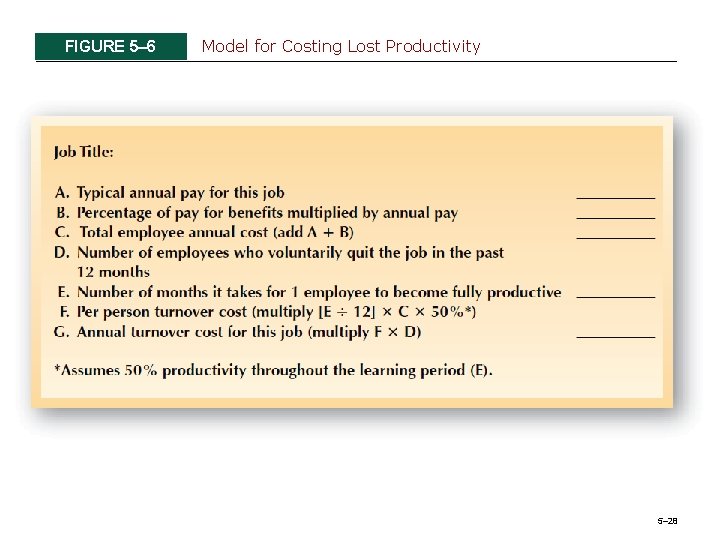
FIGURE 5– 6 Model for Costing Lost Productivity 5– 28
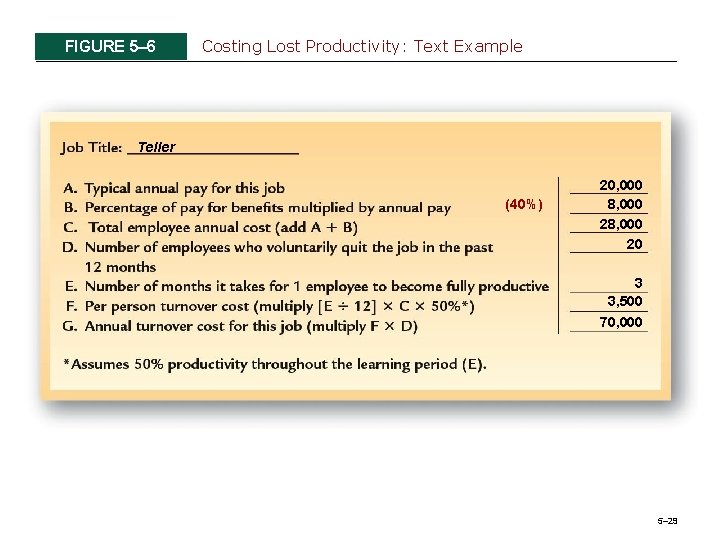
FIGURE 5– 6 Costing Lost Productivity: Text Example Teller (40%) 20, 000 8, 000 20 3 3, 500 70, 000 5– 29
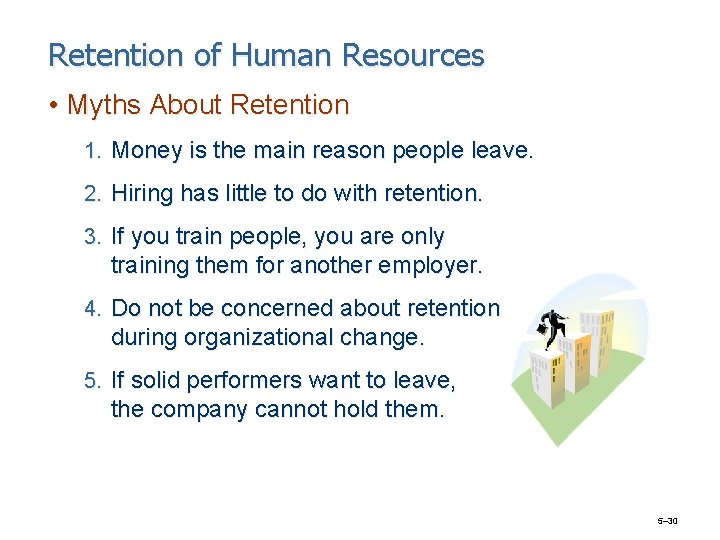
Retention of Human Resources • Myths About Retention 1. Money is the main reason people leave. 2. Hiring has little to do with retention. 3. If you train people, you are only training them for another employer. 4. Do not be concerned about retention during organizational change. 5. If solid performers want to leave, the company cannot hold them. 5– 30
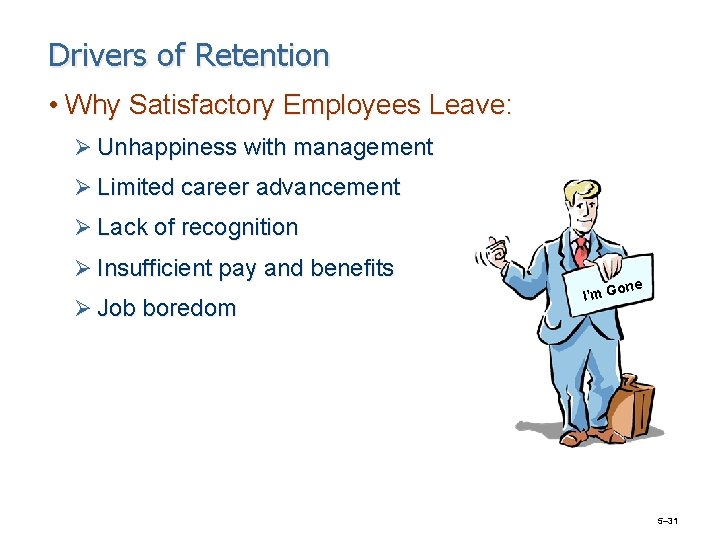
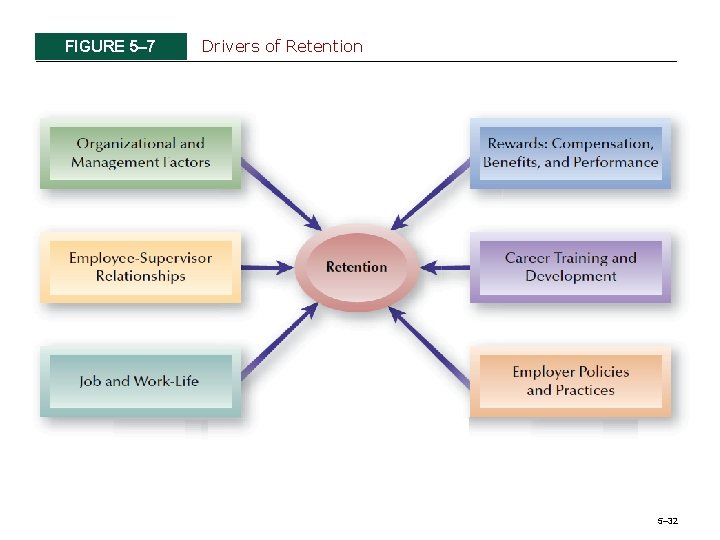
Drivers of Retention • Why Satisfactory Employees Leave: Ø Unhappiness with management Ø Limited career advancement Ø Lack of recognition Ø Insufficient pay and benefits Ø Job boredom ne o I’m G 5– 31
FIGURE 5– 7 Drivers of Retention 5– 32
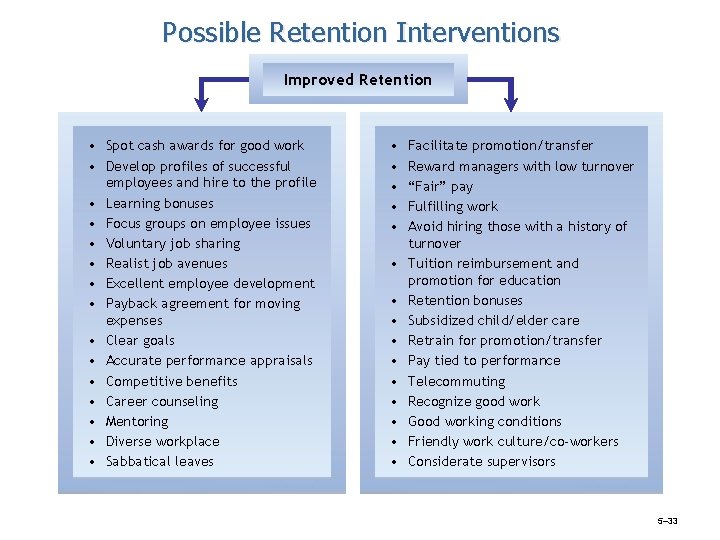
Possible Retention Interventions Improved Retention • Spot cash awards for good work • Develop profiles of successful employees and hire to the profile • Learning bonuses • Focus groups on employee issues • Voluntary job sharing • Realist job avenues • Excellent employee development • Payback agreement for moving expenses • Clear goals • Accurate performance appraisals • Competitive benefits • Career counseling • Mentoring • Diverse workplace • Sabbatical leaves • • • • Facilitate promotion/transfer Reward managers with low turnover “Fair” pay Fulfilling work Avoid hiring those with a history of turnover Tuition reimbursement and promotion for education Retention bonuses Subsidized child/elder care Retrain for promotion/transfer Pay tied to performance Telecommuting Recognize good work Good working conditions Friendly work culture/co-workers Considerate supervisors 5– 33
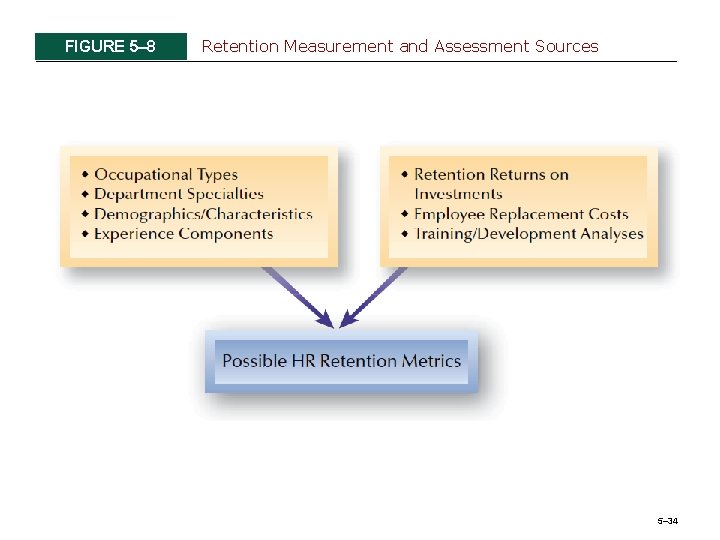
FIGURE 5– 8 Retention Measurement and Assessment Sources 5– 34
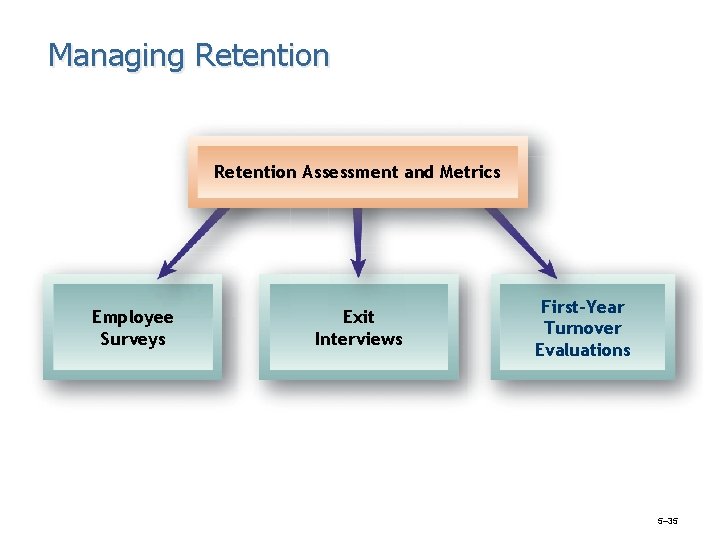
Managing Retention Assessment and Metrics Employee Surveys Exit Interviews First-Year Turnover Evaluations 5– 35