
Chapter 5 How Ecosystems Work 1 Section 1
- Slides: 21
Chapter 5 How Ecosystems Work 1
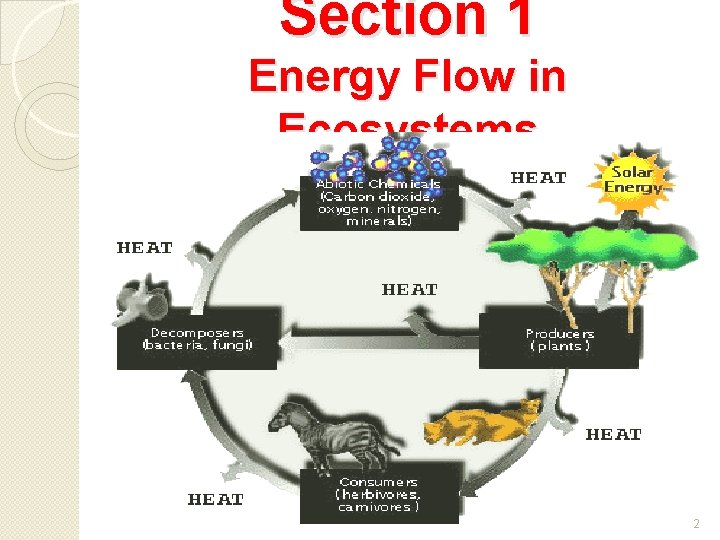
Section 1 Energy Flow in Ecosystems 2
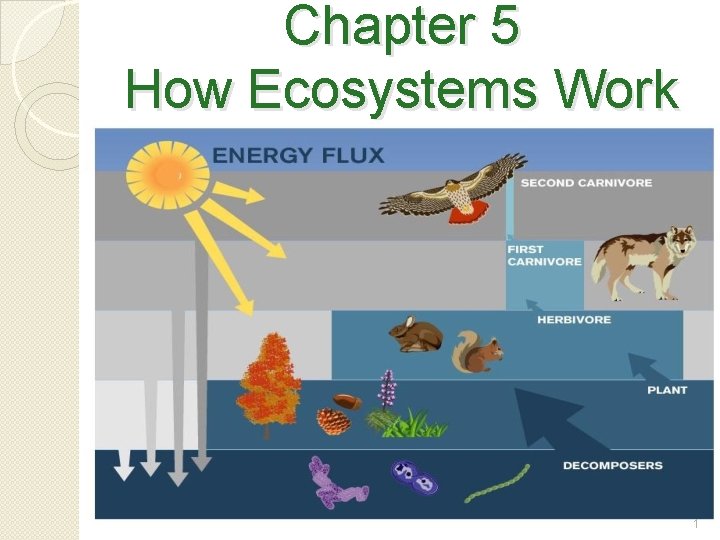
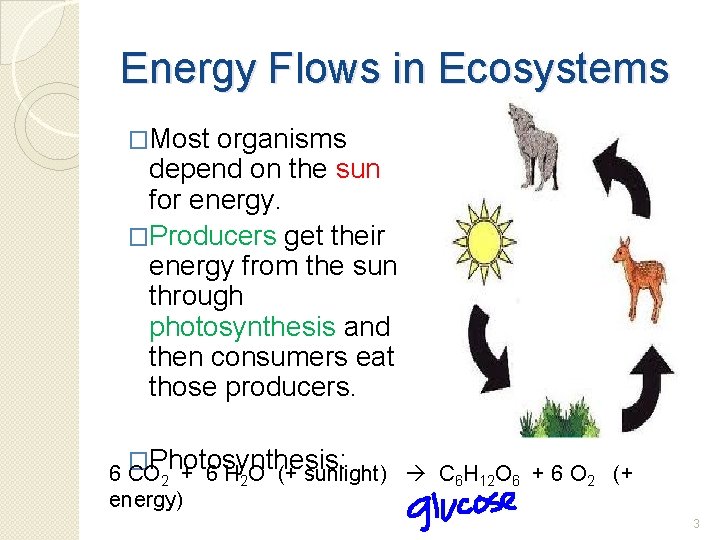
Energy Flows in Ecosystems �Most organisms depend on the sun for energy. �Producers get their energy from the sun through photosynthesis and then consumers eat those producers. �Photosynthesis: 6 CO 2 + 6 H 2 O (+ sunlight) C 6 H 12 O 6 + 6 O 2 (+ energy) 3
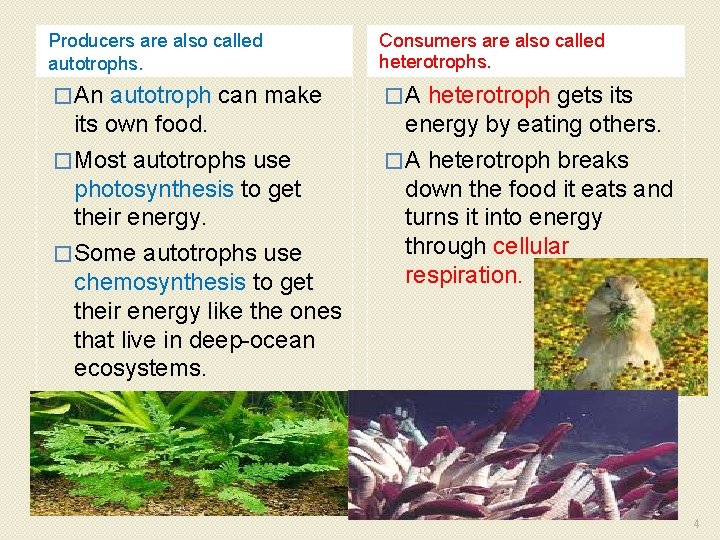
Producers are also called autotrophs. Consumers are also called heterotrophs. � An �A autotroph can make its own food. � Most autotrophs use photosynthesis to get their energy. � Some autotrophs use chemosynthesis to get their energy like the ones that live in deep-ocean ecosystems. heterotroph gets its energy by eating others. � A heterotroph breaks down the food it eats and turns it into energy through cellular respiration. 4
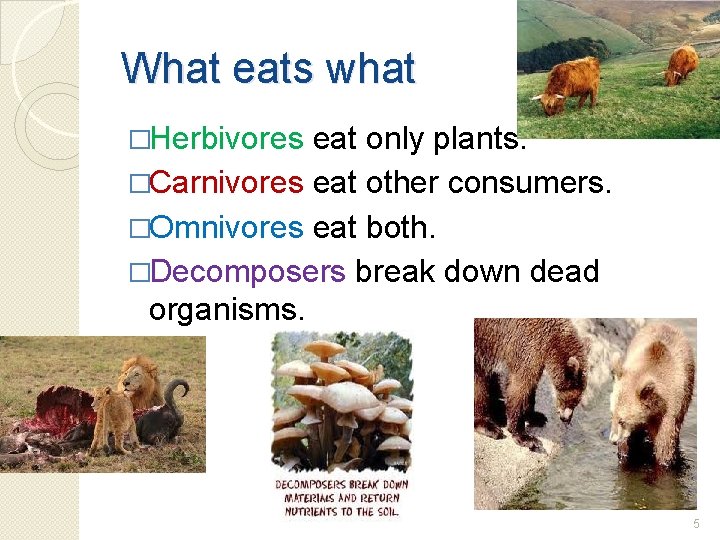
What eats what �Herbivores eat only plants. �Carnivores eat other consumers. �Omnivores eat both. �Decomposers break down dead organisms. 5
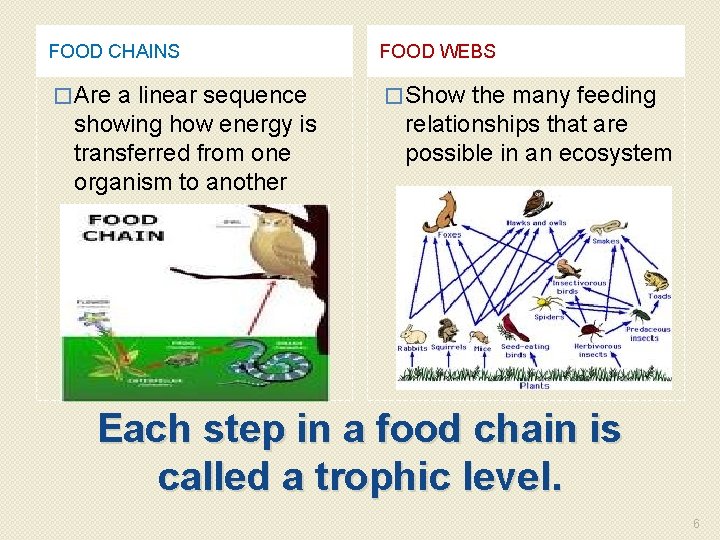
FOOD CHAINS FOOD WEBS � Are � Show a linear sequence showing how energy is transferred from one organism to another the many feeding relationships that are possible in an ecosystem Each step in a food chain is called a trophic level. 6
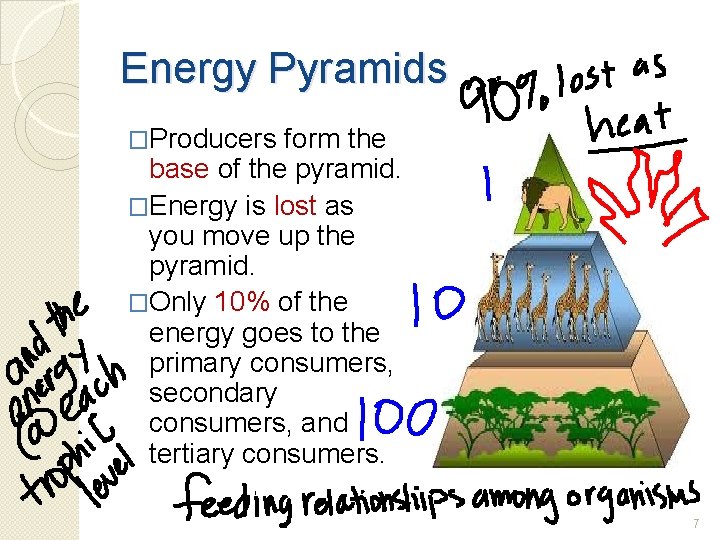
Energy Pyramids �Producers form the base of the pyramid. �Energy is lost as you move up the pyramid. �Only 10% of the energy goes to the primary consumers, secondary consumers, and tertiary consumers. 7
That is all for 5. 1 Time for quiz 1. 8
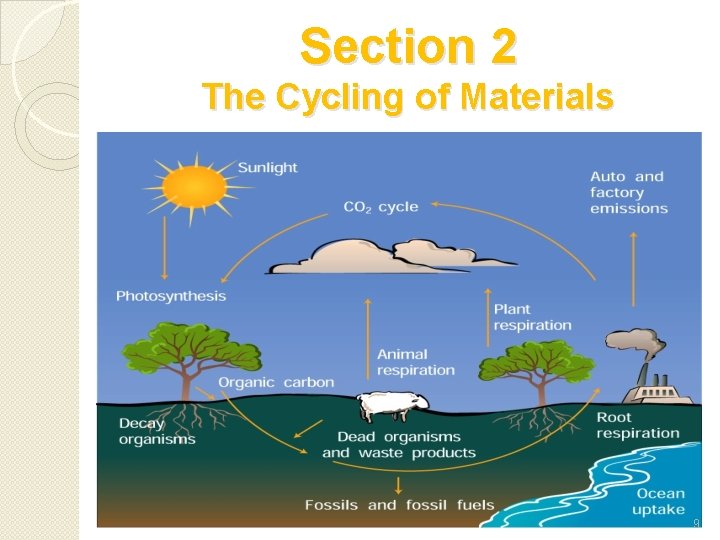
Section 2 The Cycling of Materials 9
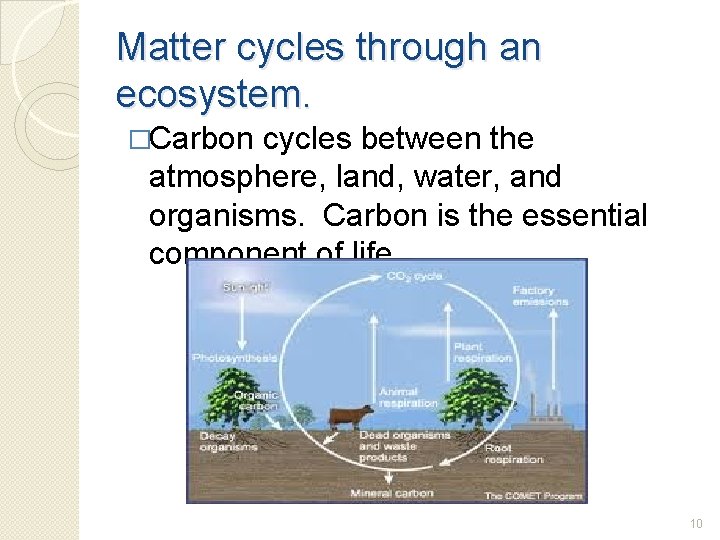
Matter cycles through an ecosystem. �Carbon cycles between the atmosphere, land, water, and organisms. Carbon is the essential component of life. 10
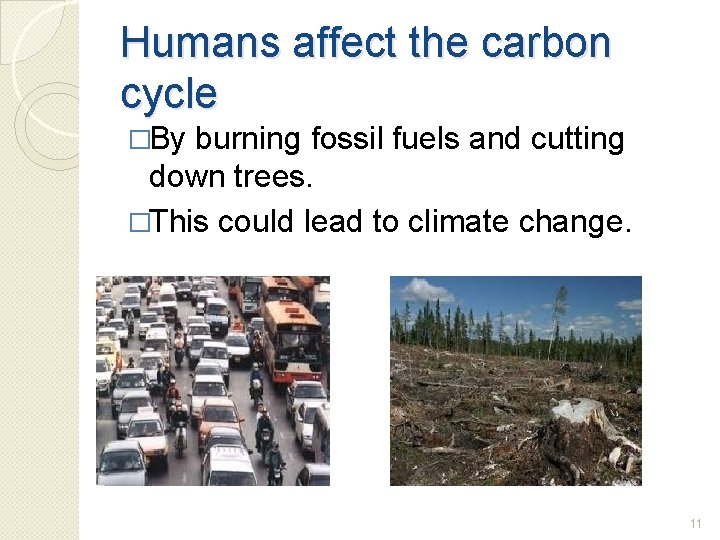
Humans affect the carbon cycle �By burning fossil fuels and cutting down trees. �This could lead to climate change. 11
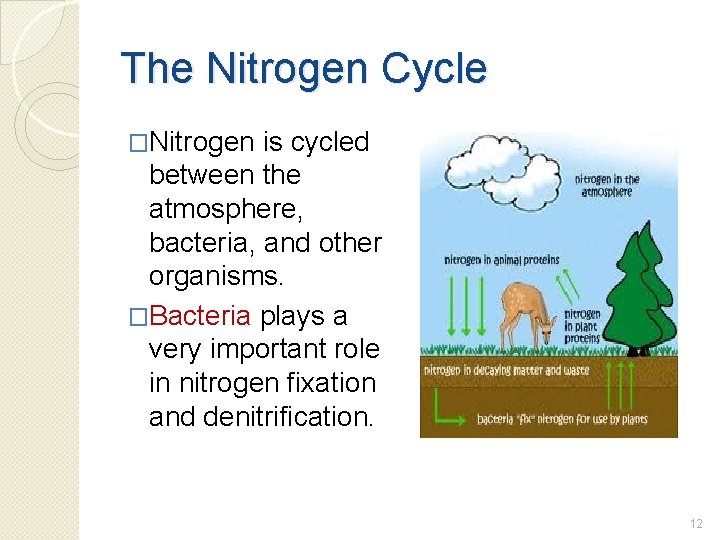
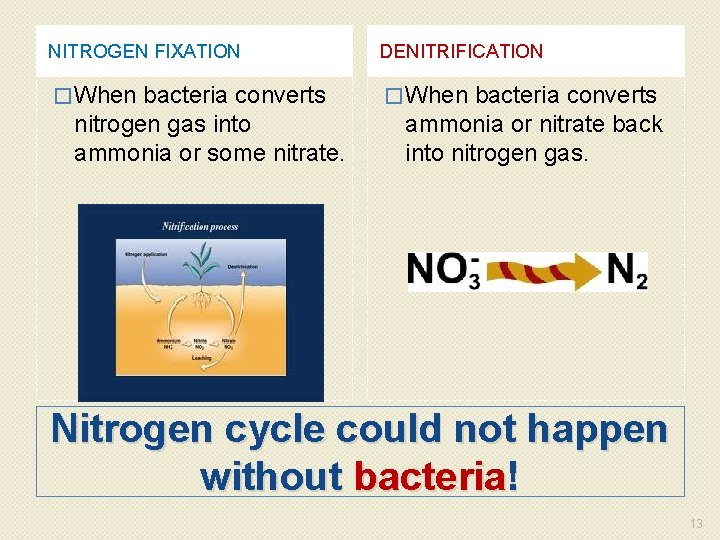
The Nitrogen Cycle �Nitrogen is cycled between the atmosphere, bacteria, and other organisms. �Bacteria plays a very important role in nitrogen fixation and denitrification. 12
NITROGEN FIXATION DENITRIFICATION � When bacteria converts nitrogen gas into ammonia or some nitrate. bacteria converts ammonia or nitrate back into nitrogen gas. Nitrogen cycle could not happen without bacteria! 13
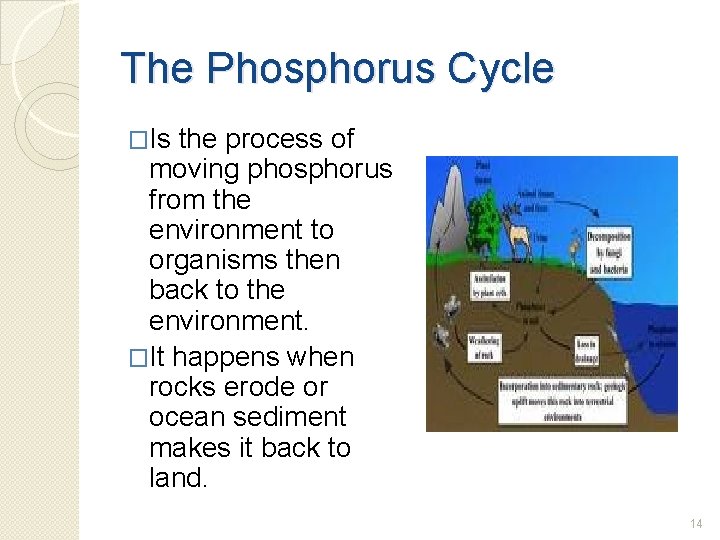
The Phosphorus Cycle �Is the process of moving phosphorus from the environment to organisms then back to the environment. �It happens when rocks erode or ocean sediment makes it back to land. 14
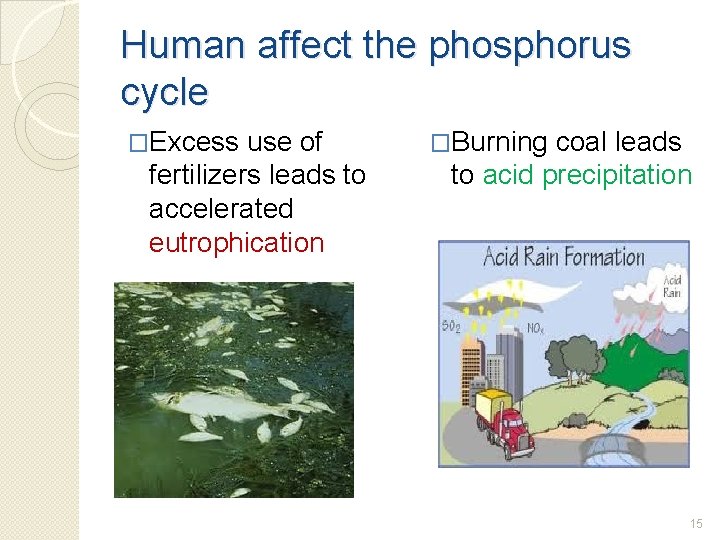
Human affect the phosphorus cycle �Excess use of fertilizers leads to accelerated eutrophication �Burning coal leads to acid precipitation 15
That’s all for 5. 2 Time for quiz 2 16
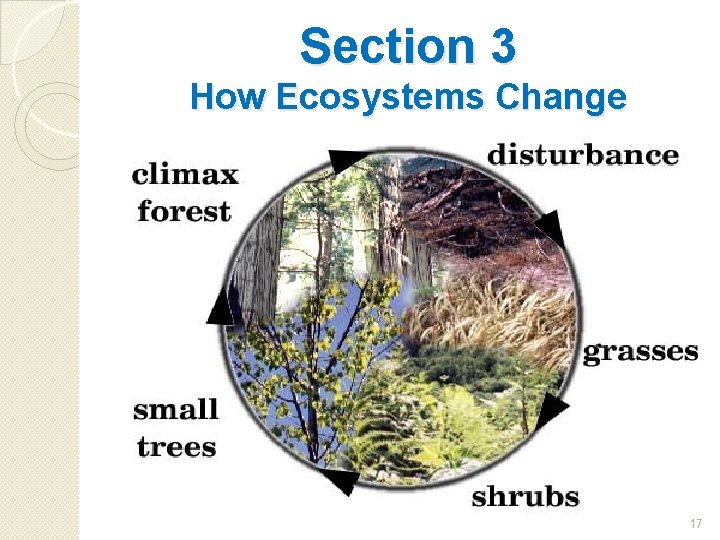
Section 3 How Ecosystems Change 17
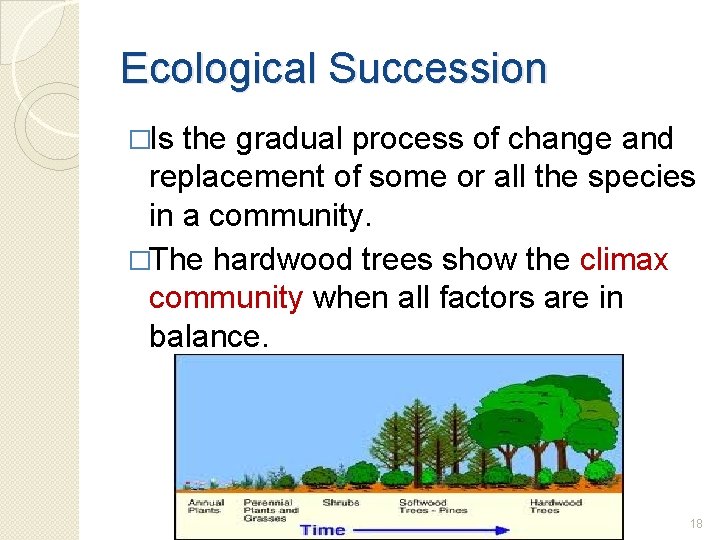
Ecological Succession �Is the gradual process of change and replacement of some or all the species in a community. �The hardwood trees show the climax community when all factors are in balance. 18
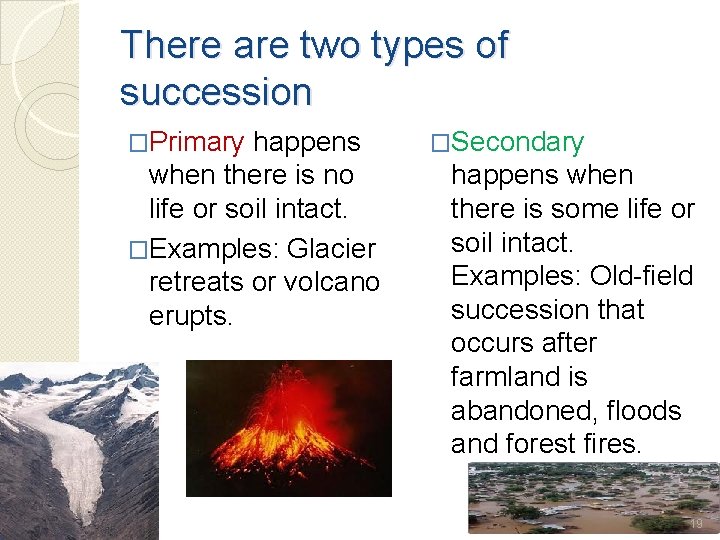
There are two types of succession �Primary happens when there is no life or soil intact. �Examples: Glacier retreats or volcano erupts. �Secondary happens when there is some life or soil intact. Examples: Old-field succession that occurs after farmland is abandoned, floods and forest fires. 19
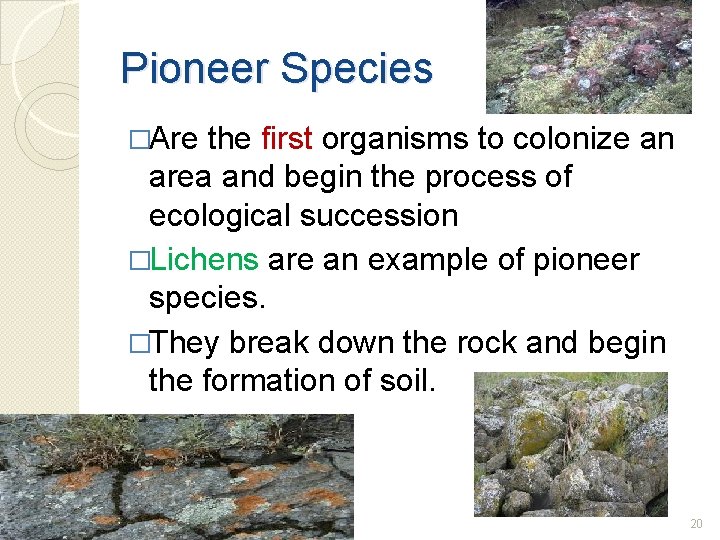
Pioneer Species �Are the first organisms to colonize an area and begin the process of ecological succession �Lichens are an example of pioneer species. �They break down the rock and begin the formation of soil. 20
That is all for 5. 3 �Time for quiz 3. 21