
Chapter 5 Homeostasis and Cell Transport Section 1


- Slides: 50
Chapter 5 Homeostasis and Cell Transport
Section 1: Passive Transport • Objectives: • Explain how an equilibrium is established as a result of diffusion. • Distinguish between diffusion and osmosis. • Explain how substances cross the cell membrane through facilitated diffusion. • Explain how ion channels assist the diffusion of ions across the cell membrane.
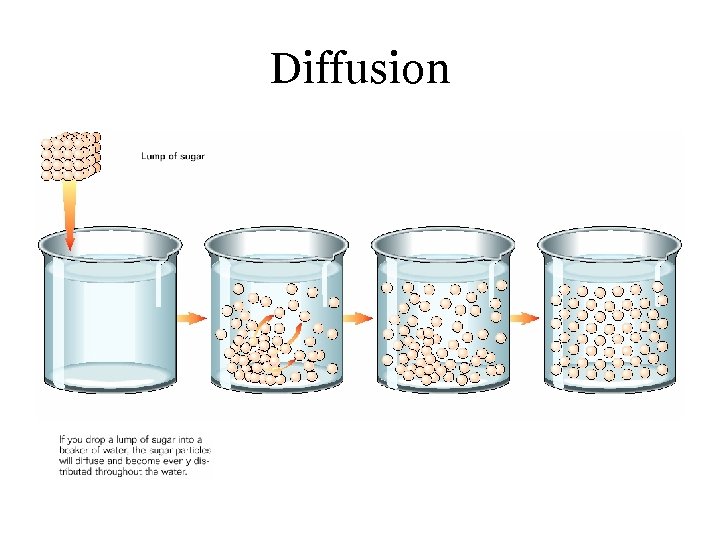
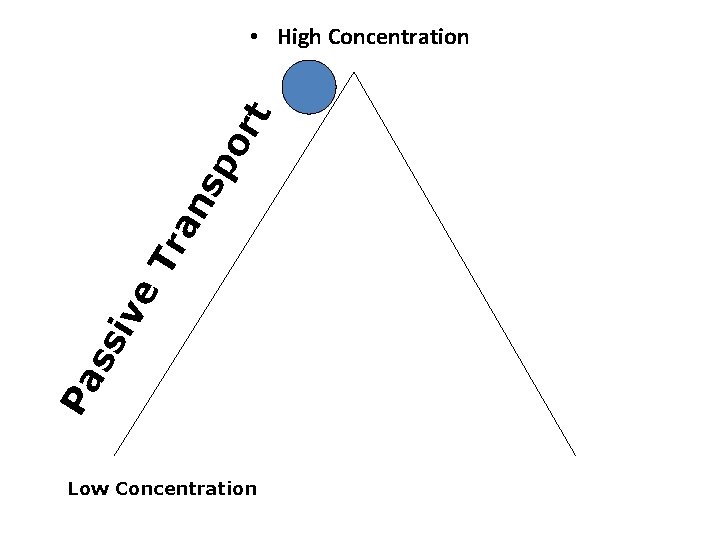
Diffusion • Passive transport involves the movement of molecules across the cell membrane without an input of energy by the cell. • Simplest type of passive transport is diffusion. • Diffusion is the movement of molecules from an area of higher concentration to an area of lower concentration, driven by the molecules’ kinetic energy until equilibrium is reached.
Diffusion
Diffusion • Diffusion is driven by the molecules’ kinetic energy. • Molecules are in constant motion because they have kinetic energy.
Pa ss iv e Tr a ns po rt • High Concentration Low Concentration
Visual concept • Ch 0560075. html
Diffusion Across Membranes ¡ Molecules can diffuse across a cell membrane by dissolving in the phospholipid bilayer or by passing through pores in the membrane. ¡ Cell membranes allow some molecules to pass through, but not others. ¡ If a molecule can pass through a membrane, it will diffuse from an area of high concentration to an area of low concentration.
Simple Diffusion • Diffusion across a membrane is also called simple diffusion. • The simple diffusion of a molecule across a cell membrane depends on the size and the type of the molecule.
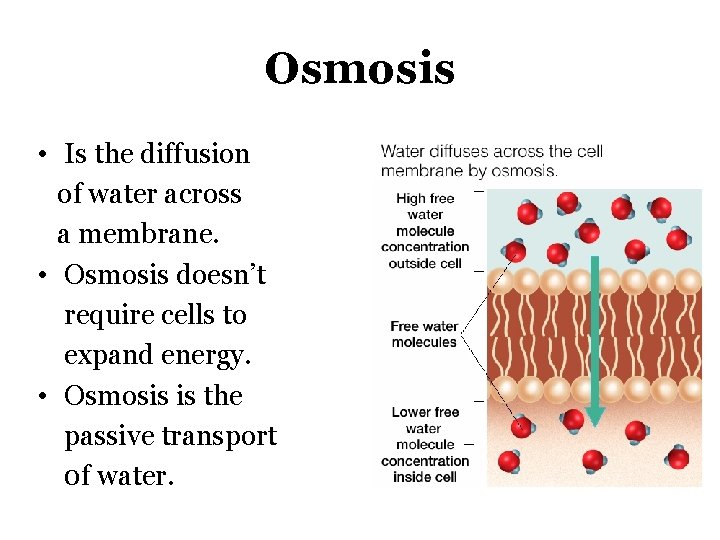
Osmosis • Is the diffusion of water across a membrane. • Osmosis doesn’t require cells to expand energy. • Osmosis is the passive transport 0 f water.
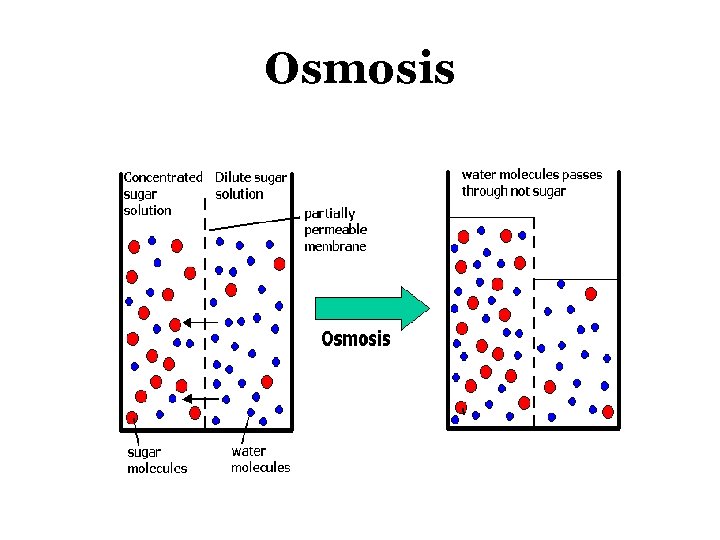
Osmosis
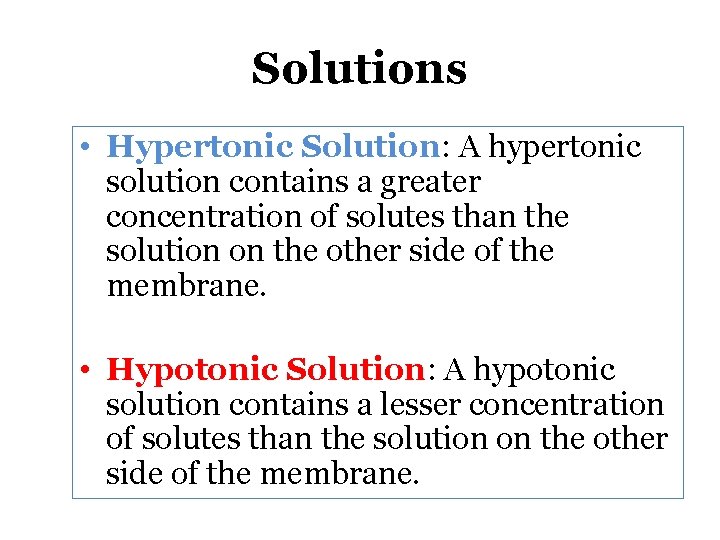
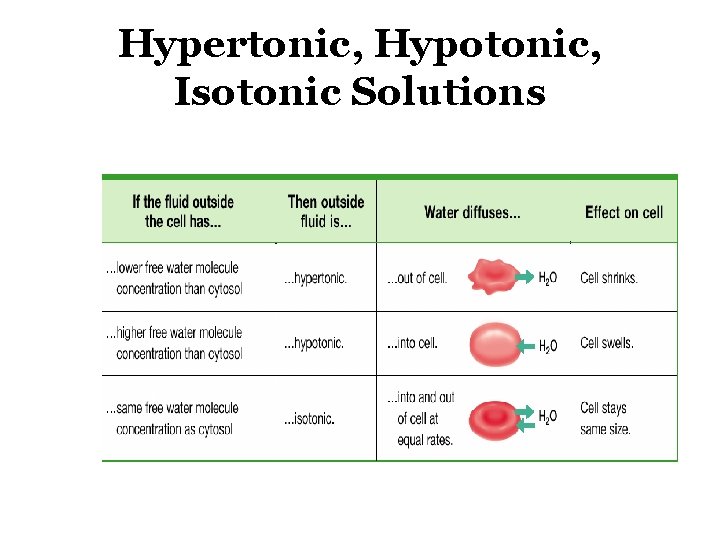
Solutions • Hypertonic Solution: A hypertonic solution contains a greater concentration of solutes than the solution on the other side of the membrane. • Hypotonic Solution: A hypotonic solution contains a lesser concentration of solutes than the solution on the other side of the membrane.
Solutions • When the concentrations of solutes outside and inside are equal, the outside solution is said to be isotonic to the cytosol. • Hypo, hyper and iso- refer to the relative solute concentrations of two solutions.
Direction of Osmosis • The direction of osmosis depends on the relative concentration of solutes on the two sides of the membrane. • Water tends to diffuse from a hypotonic solution to a hypertonic solution.
Direction of Osmosis o When the solute concentration outside the cell is higher than that in the cytosol, the solution outside is hypertonic to the cytosol, and water will diffuse out of the cell. ¡ When the solute concentrations outside and inside the cell are equal, the solution outside is isotonic, and there will be no net movement of water.
Visual concept, osmosis • Ch 0560076. html
Hypertonic, Hypotonic, Isotonic Solutions
Visual concept, Osmosis • Ch 0560080. html
How cells deal with Osmosis? – To remain alive, cells must compensate for the water that enters the cell in hypotonic environments and leaves the cell in hypertonic environments. – Contractile vacuoles are organelles that regulate water levels in paramecia. They collect the excess water and then contract, pumping the water out of the cell.
How cells deal with Osmosis? • Cells of multicellular organisms respond to hypotonic environment by pumping solutes out of the cytosol. • This lowers the solute concentration in the cytosol brining it to the solute concentration in the environment; thus water molecules are less likely to diffuse into the cell.
How cells deal with Osmosis? • Some plant cells may be surrounded by water that moves into the cell by osmosis. • Cells become turgid. • The cell wall is strong to resist the pressure exerted by water called turgor pressure.
How cells deal with Osmosis? • In a hypertonic environment, the cell shrinks and turgor pressure is lost. • This condition is called plasmolysis; it is the reason that plants wilt if they don’t receive enough water.
How cells deal with Osmosis? • Some cells can’t compensate for changes in the solute concentration of their environment. • Human RBCs lack contractile vacuoles, solute pumps, and cell walls. • RBCs loose their normal shape when they are exposed to an environment that isn’t isotonic to their cytosol.
How cells deal with Osmosis? • Hypertonic environment leads to cell shrinkage. • Hypotonic environment leads to cell swelling and bursting. • Cell bursting is called cytolysis.
Facilitated Diffusion • Facilitated Diffusion is another type of passive transport. • This process is used for molecules that can’t readily diffuse through the cell membrane: o may not be soluble in the lipid bilayer o Too large to pass in the pores of the membrane.
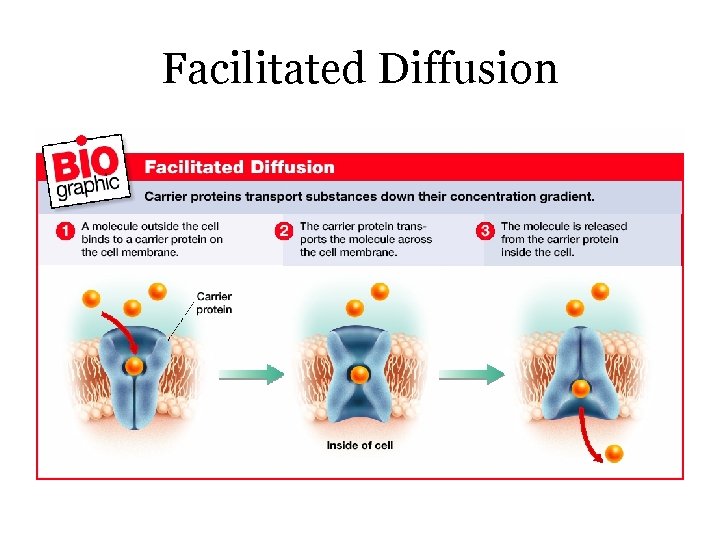
Facilitated Diffusion • In facilitated diffusion, a molecule binds to a carrier protein on one side of the cell membrane. • The carrier protein transports the molecule from an area of high concentration to an area of low concentration no energy expenditure.
Facilitated Diffusion • A molecule binds to a specific carrier protein that transports it. • The carrier protein then changes its shape (may shield the molecule from the hydrophobic interior of the lipid bilayer). • It transports the molecule down its concentration gradient to the other side of the membrane.
Facilitated Diffusion
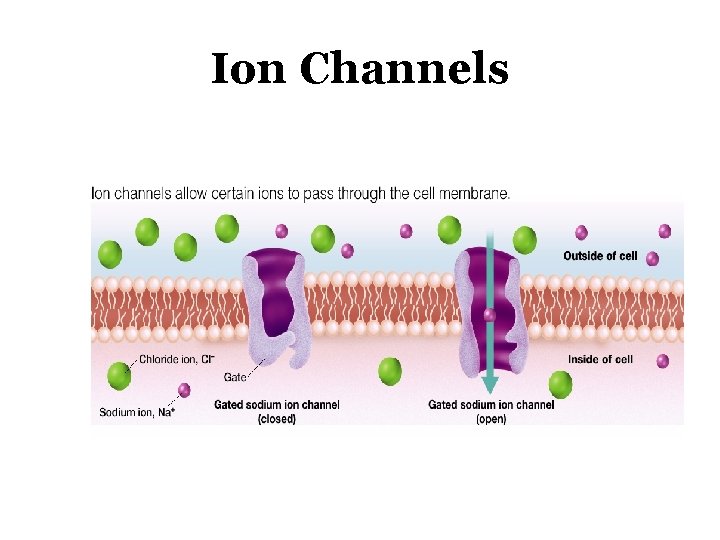
Diffusion Through Ion Channels • Ion channels are proteins that provide small passageways across the cell membrane through which specific ions can diffuse. • Ion channels transport ions such as calcium, sodium, potassium, and chloride. (These ions aren’t soluble in lipids). • Each type of ion channel is specific for one type of ion.
Diffusion Through Ion Channels • Some ion channels are always open. • Others have gates that open or close. • The gates may open or close in response to three kind of stimuli: Ø Stretching of the cell membrane. Ø Electric signals. Ø Chemicals in the cytosol or external environment. • These stimuli control the ability of specific ions to cross the membrane.
Ion Channels
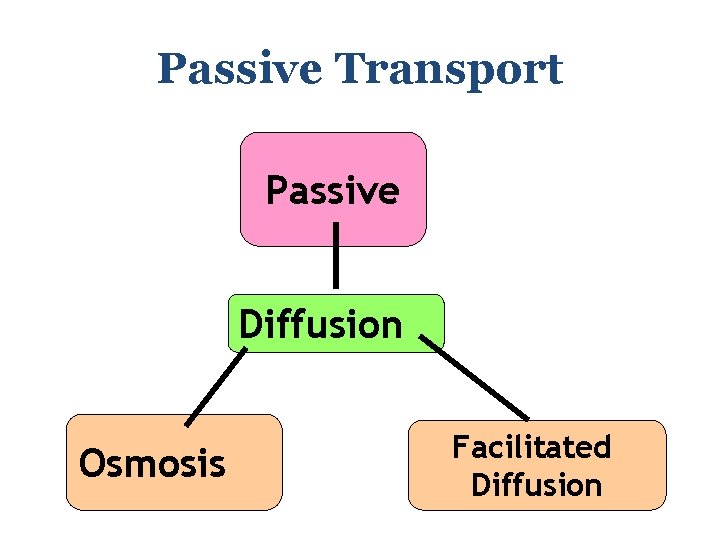
Passive Transport Passive Diffusion Osmosis Facilitated Diffusion
Section 2: Active Transport • Objectives: • Distinguish between passive transport and active transport. • Explain how the sodium-potassium pump operates. • Compare endocytosis and exocytosis.
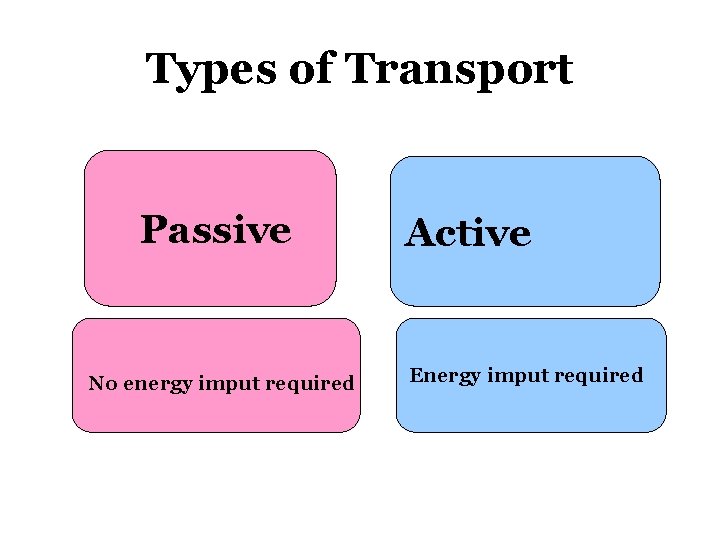
Types of Transport Passive No energy imput required Active Energy imput required
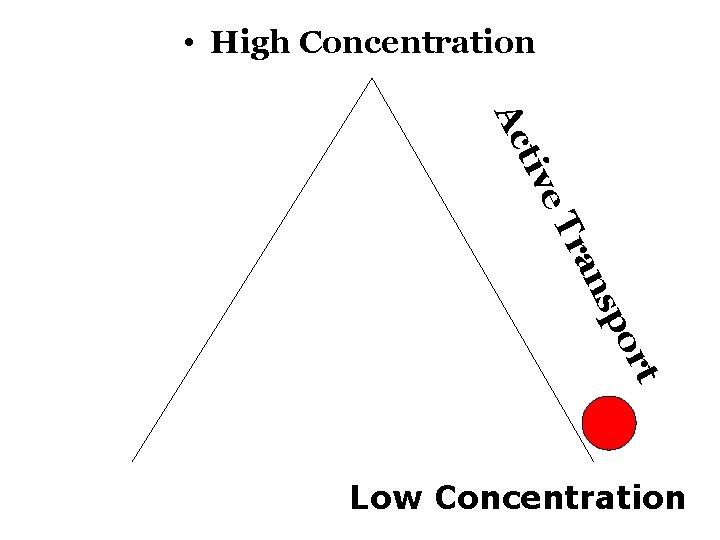
Active Transport • Movement of materials from low concentration to high concentration using a protein carrier that requires energy (costs ATP)
• High Concentration e tiv Ac rt po ns a Tr Low Concentration
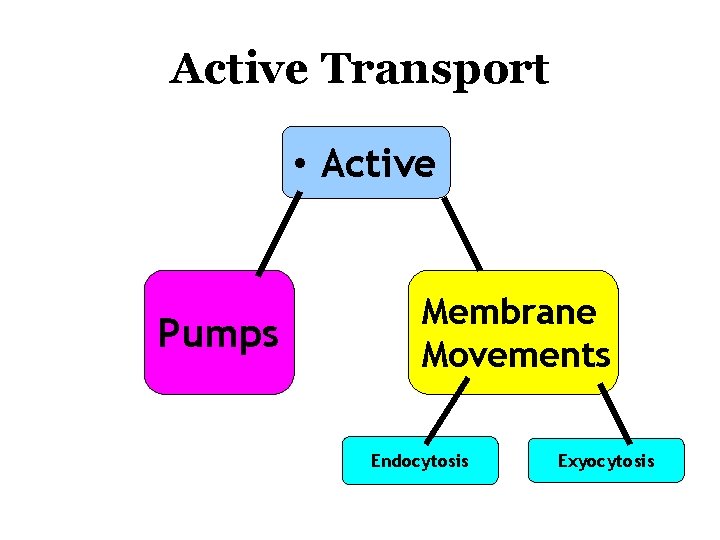
Active Transport • Active Pumps Membrane Movements Endocytosis Exyocytosis
Cell Membrane Pumps • Ion channels & carrier proteins not only assist in passive transport but also help with active transport. • The carrier proteins that serve in active transport are called cell membrane pumps.
Cell Membrane Pumps • Carrier proteins involved in facilitated diffusion and those involved in active transport are very similar.
Cell Membrane Pumps • In both, the molecule first binds to a carrier protein, the protein changes shape, the protein then transports the molecule. • However, cell membrane pumps require energy, which is supplied by ATP.
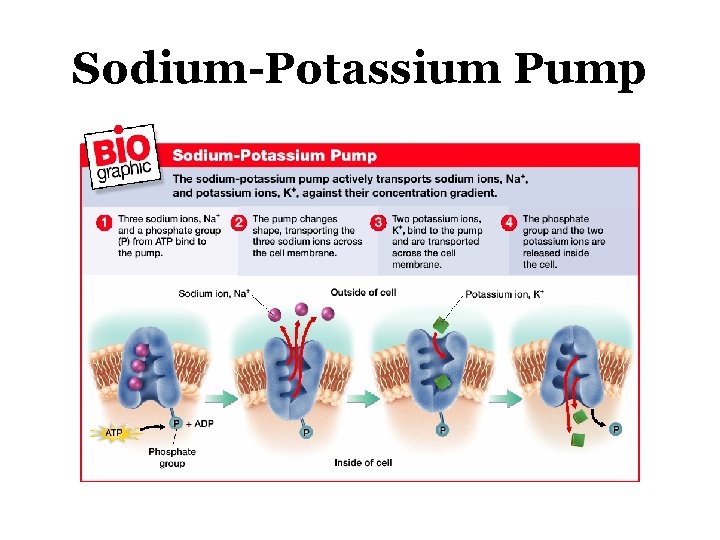
Cell Membrane Pumps • Sodium-Potassium Pump – The sodium-potassium pump moves three Na+ ions into the cell’s external environment for every two K+ ions it moves into the cytosol. – ATP supplies the energy that drives the pump.
Sodium-Potassium Pump
Sodium-Potassium Pump • The exchange of 3 sodium ions for 2 potassium ions creates an electric gradient across the cell membrane.
Sodium-Potassium Pump • The outside of the membrane becomes positively charged relative to the inside which becomes negatively charged. • This is important for conduction of electrical impulses.
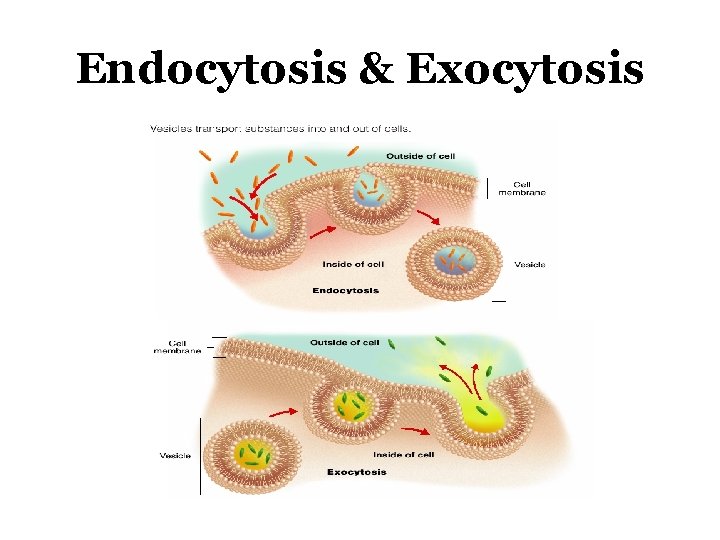
Movement in Vesicles • Endocytosis – In endocytosis, cells ingest external materials by folding around them and forming a pouch. – The pouch then pinches off and becomes a membrane -bound organelle called a vesicle.
Movement in Vesicles • Endocytosis – Endocytosis includes pinocytosis, in which the vesicle contains solutes or fluids, and phagocytosis, in which the vesicle contains large particles or cells. – Cells known as phagocytes ingest bacteria and viruses by phagocytosis. The vesicles then fuse with lysosomes, where lysosomal enzymes destroy the bacteria and viruses.
Endocytosis • Ch 0560087. html
Movement in Vesicles • Exocytosis – In exocytosis, vesicles made by the cell fuse with the cell membrane, releasing their contents into the external environment.
Exocytosis • Ch 0560086. html
Endocytosis & Exocytosis