
Chapter 5 Eukaryotic Cells and Microorganisms 5 1
- Slides: 20
Chapter 5: Eukaryotic Cells and Microorganisms
5. 1 The History of Eukaryotes • First eukaryotic cells on earth approximately 2 billion years ago • Evidence points to these eukaryotic cells evolving from prokaryotic organisms through intracellular symbiosis – Eukaryotic organelles originated from prokaryotic cells trapped inside of them – First primitive eukaryotes- probably single-celled and independent – Eventually formed colonies – Cells within colonies became specialized – Evolved in to multicellular organisms • Eukaryotes have many levels of cellular complexity
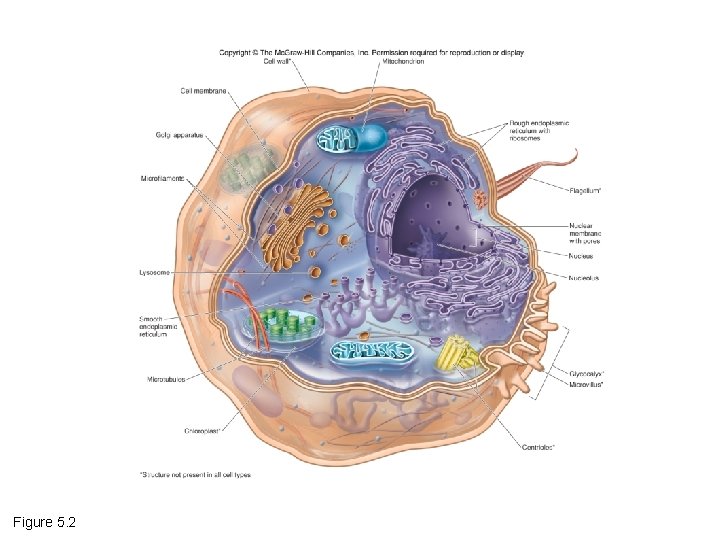
Figure 5. 2
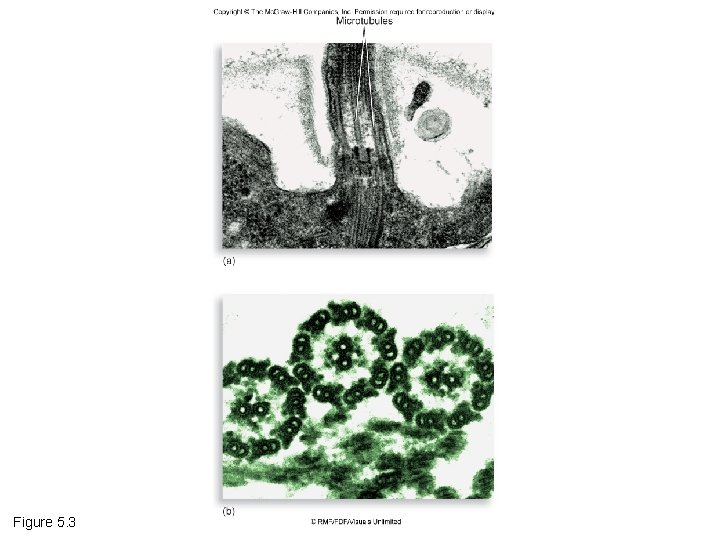
Locomotor Appendages: Cilia and Flagella • Eukaryotic flagella are much different from those of prokaryotes – 10 X thicker – Structurally more complex – Covered by an extension of the cell membrane • A single flagellum contains regularly spaced microtubules along its length – 9 pairs surrounding a single pair – The 9 + 2 arrangement
Figure 5. 3
• Cilia- similar to flagella but some differences – Shorter – More numerous – Can also function as feeding and filtering structures
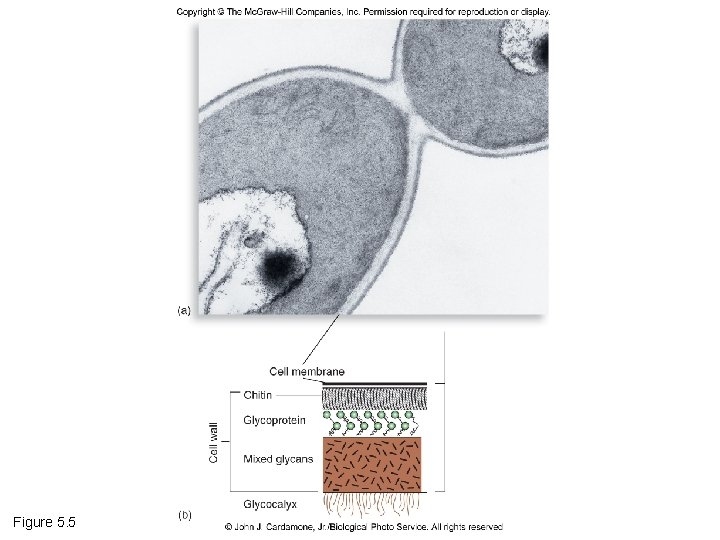
The Glycocalyx • Most eukaryotic cells have this outermost boundary that comes into direct contact with the environment • Usually composed of polysaccharides • Appears as a network of fibers, a slime layer, or a capsule • Functions – Protection – Adhesion – Reception of signals • The layer beneath the glycocalyx varies among eukaryotes – Fungi and most algae have a thick, rigid cell wall – Protozoa and animal cells do not have this cell wall
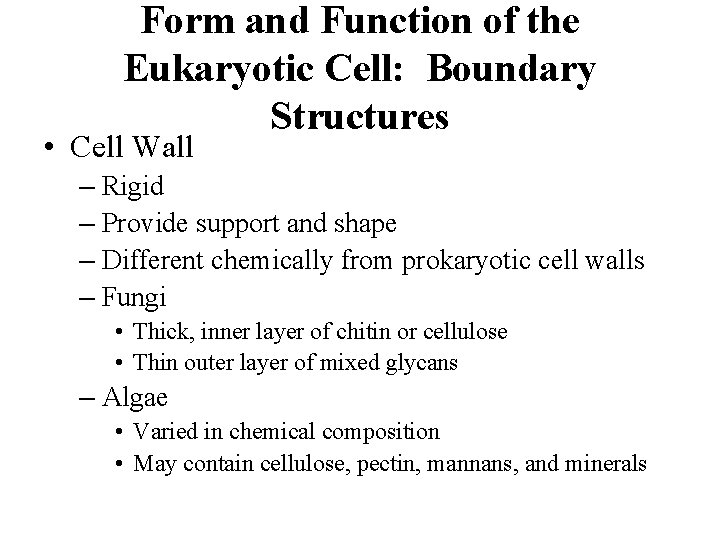
Form and Function of the Eukaryotic Cell: Boundary Structures • Cell Wall – Rigid – Provide support and shape – Different chemically from prokaryotic cell walls – Fungi • Thick, inner layer of chitin or cellulose • Thin outer layer of mixed glycans – Algae • Varied in chemical composition • May contain cellulose, pectin, mannans, and minerals
Figure 5. 5
• Cytoplasmic Membrane – Bilayer of phospholipids with protein molecules embedded – Also contain sterols • Gives stability • Especially important in cells without a cell wall – Selectively permeable
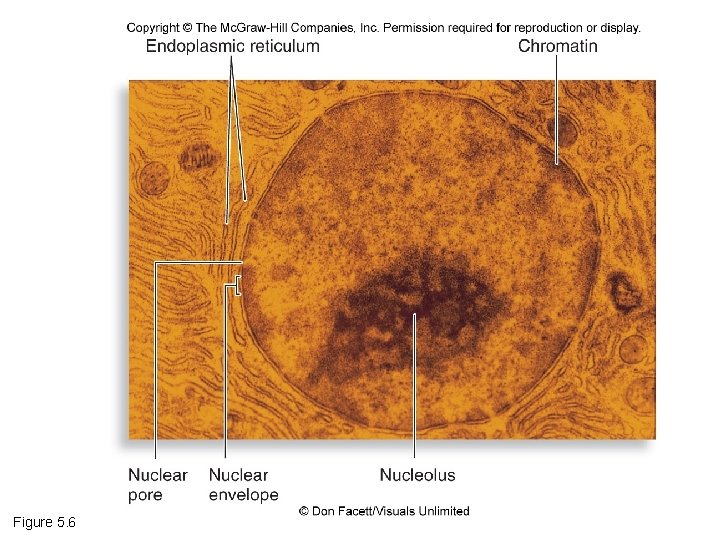
Eukaryotic Cell: Internal Structures • The Nucleus: The Control Center – Separated from the cytoplasm by a nuclear envelope • Two parallel membranes separated by a narrow space • Perforated with nuclear pores – Filled with nucleoplasm – Contains the nucleolus • r. RNA synthesis • Colelction area for ribosomal subunits – Chromatin • Comprises the chromosomes – Long, linear DNA molecules – Bound to histone proteins – Visible during mitosis
Figure 5. 6
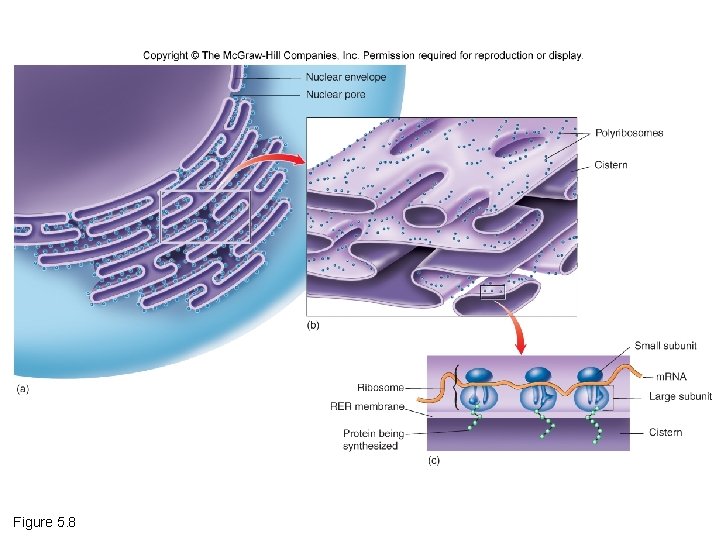
Endoplasmic Reticulum (ER): A Passageway in the Cell • Microscopic series of tunnels • Used in transport and storage • Two kinds – Rough endoplasmic reticulum (RER) • Originates from the outer membrane of the nuclear envelope • Extends through the cytoplasm • Spaces in the RER- cisternae- transport materials from the nucleus to the cytoplasm • “Rough” because of ribosomes attached to its surface • Proteins synthesized on the ribosomes shunted into the cavity of the RER and held for later packaging and transport
Figure 5. 8
• Smooth endoplasmic reticulum (SER) – Closed tubular network – No ribosomes – Functions • Nutrient processing • Synthesis and storage of nonprotein macromolecules
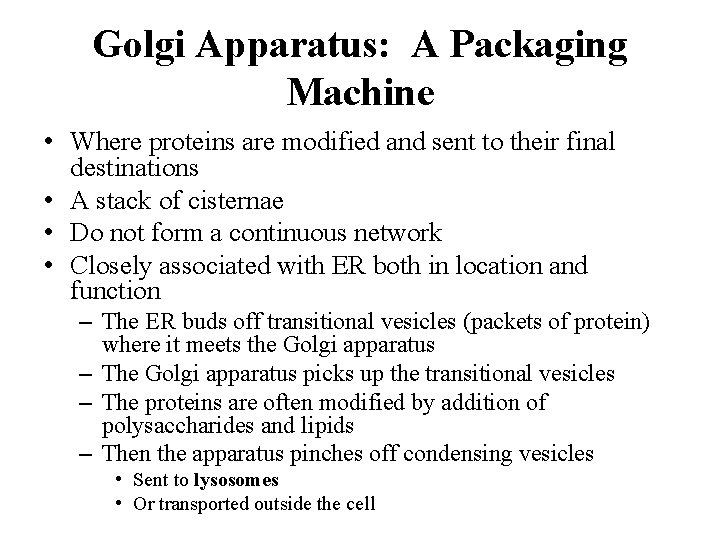
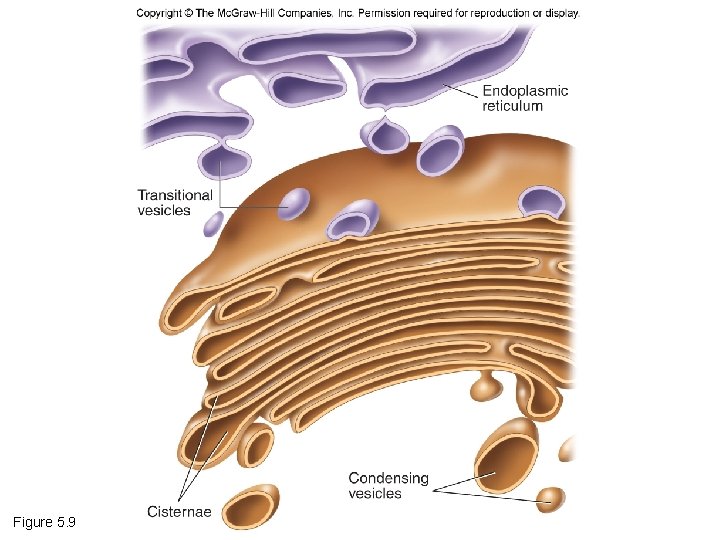
Golgi Apparatus: A Packaging Machine • Where proteins are modified and sent to their final destinations • A stack of cisternae • Do not form a continuous network • Closely associated with ER both in location and function – The ER buds off transitional vesicles (packets of protein) where it meets the Golgi apparatus – The Golgi apparatus picks up the transitional vesicles – The proteins are often modified by addition of polysaccharides and lipids – Then the apparatus pinches off condensing vesicles • Sent to lysosomes • Or transported outside the cell
Figure 5. 9
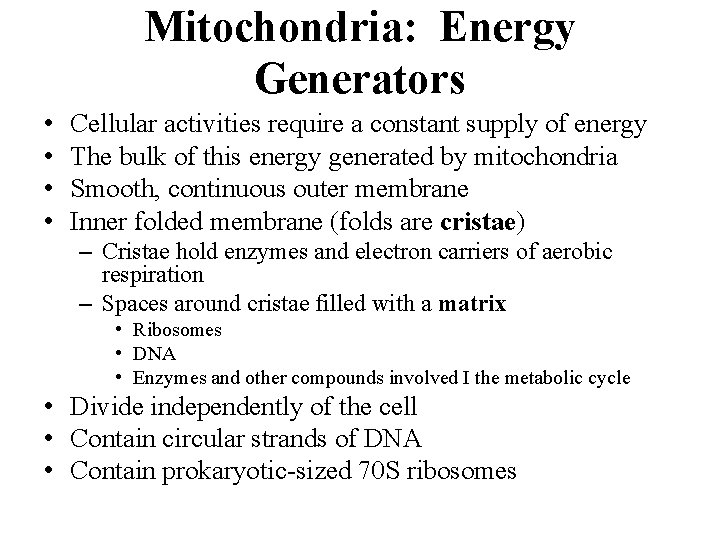
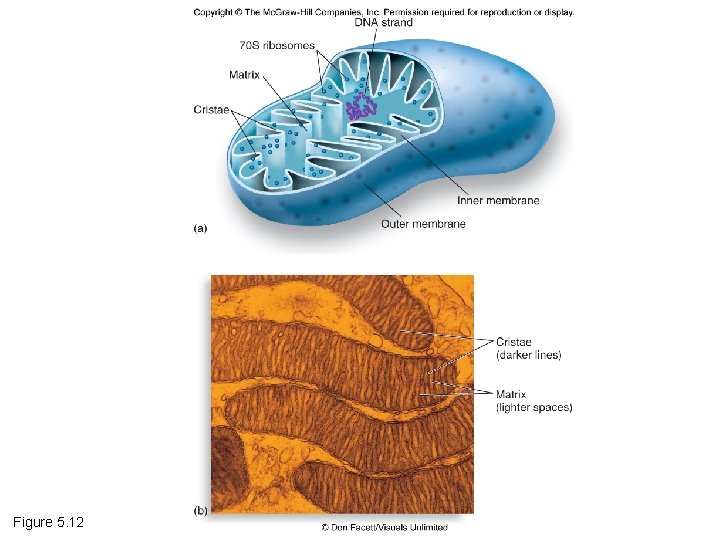
Mitochondria: Energy Generators • • Cellular activities require a constant supply of energy The bulk of this energy generated by mitochondria Smooth, continuous outer membrane Inner folded membrane (folds are cristae) – Cristae hold enzymes and electron carriers of aerobic respiration – Spaces around cristae filled with a matrix • Ribosomes • DNA • Enzymes and other compounds involved I the metabolic cycle • Divide independently of the cell • Contain circular strands of DNA • Contain prokaryotic-sized 70 S ribosomes
Figure 5. 12