
Chapter 5 Ecosystems concepts and fundamentals Background Golden
Chapter 5 Ecosystems: concepts and fundamentals
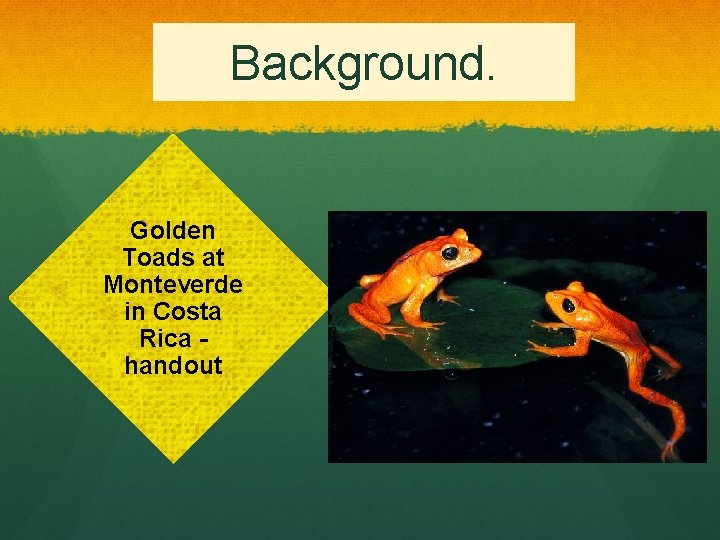
Background. Golden Toads at Monteverde in Costa Rica handout
Do Now Let’s say ecologists are studying a single fern that grows in the forest. Should they take that fern and bring it into a lab? Should they look at the soil around it? How about the nearby plants, the insects, and animals that interact with the plant? What about the bacteria and creatures that break it down? And how about the weather patterns of the area? What do you think should be included in studying a single organism, and why? If everything is “connected” how can scientists study anything at all?
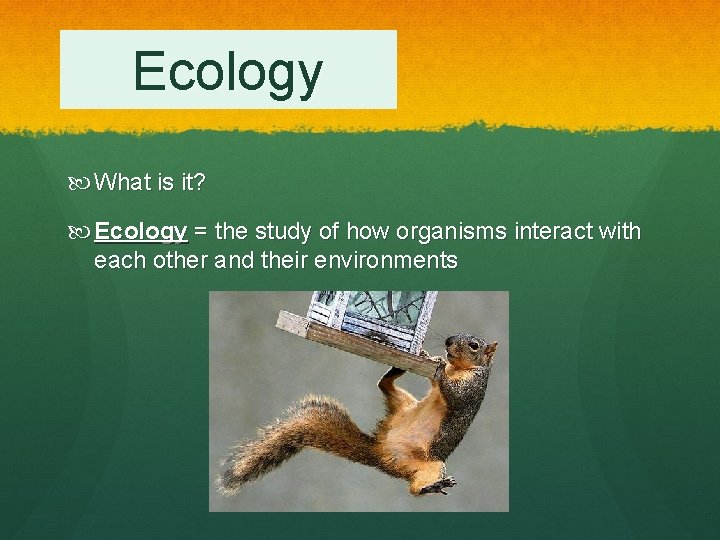
Ecology What is it? Ecology = the study of how organisms interact with each other and their environments
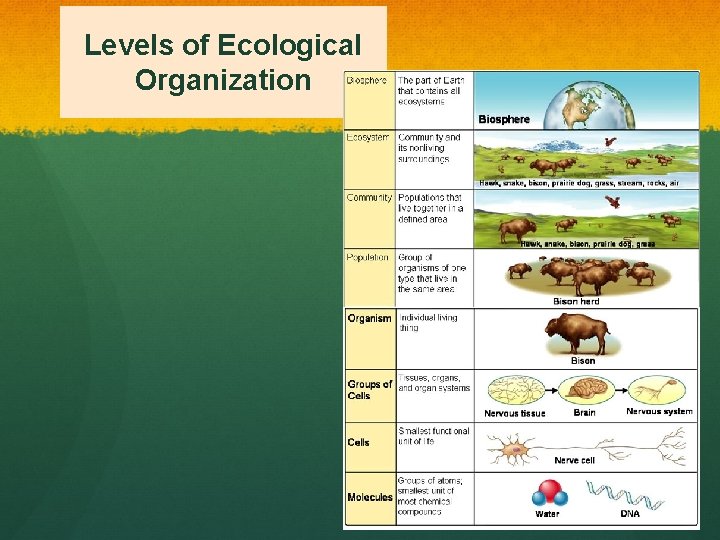
Levels of Ecological Organization
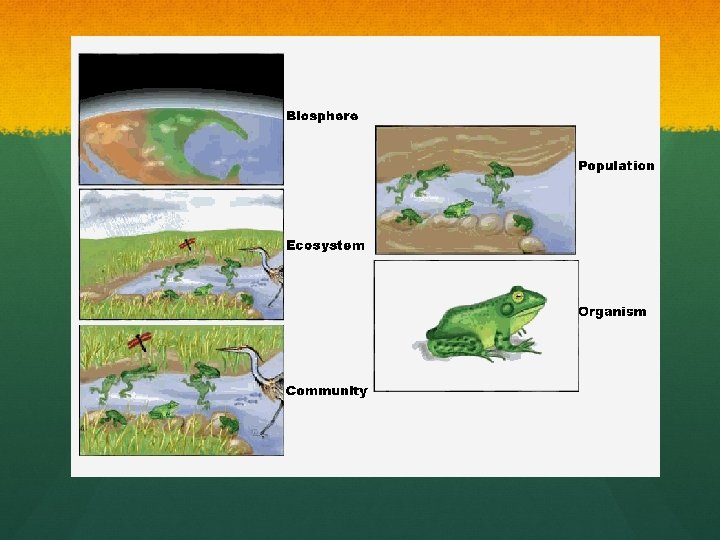
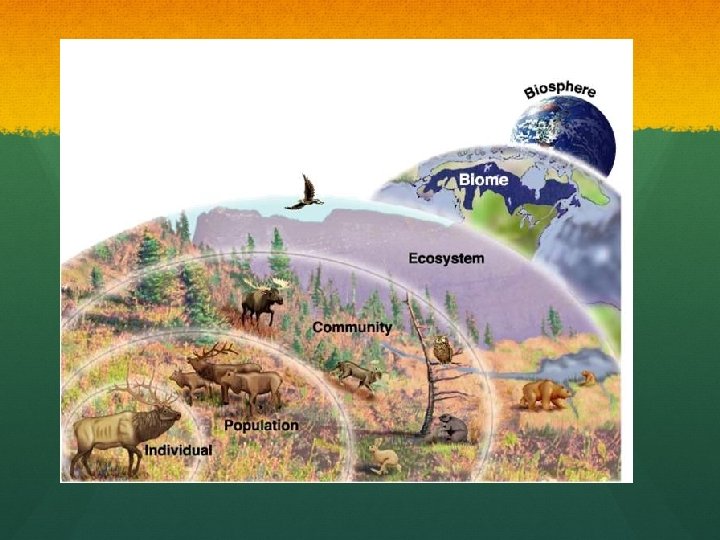
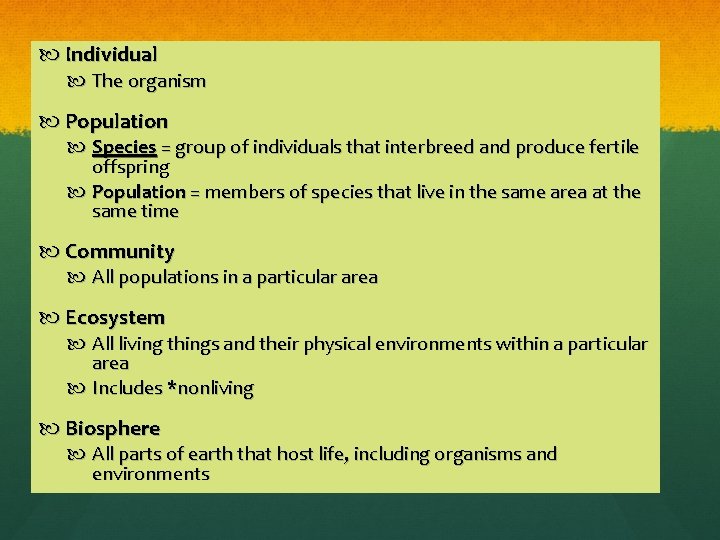
Individual The organism Population Species = group of individuals that interbreed and produce fertile offspring Population = members of species that live in the same area at the same time Community All populations in a particular area Ecosystem All living things and their physical environments within a particular area Includes *nonliving Biosphere All parts of earth that host life, including organisms and environments
What is an ecosystem………?
1. Ecosystem Structure
Biotic and Abiotic Factors in an ecosystem Biotic • Everything that is living or used to be living • Ex: bacteria, toads, trees The “ecological community” Abiotic • Things that have never been living • Ex: sunlight, oxygen, wind, Atmosphere, etc. water, mineral soil, other substrate
Activity Consider all of the living and nonliving things in the school’s ecosystem. Make 1 cluster diagram for biotic and 1 for abiotic Go outside, to specified location Observe biotic and abiotic factors. Note abiotic and biotic factors, and add new ones. Be specific.
Activity Questions Was it easier to identify biotic factors or abiotic factors? Did your classmates find factors you missed? Why do you think you missed them? Choose 3 of the abiotic factors you observed and describe how each might affect some of the biotic factors you observed Can biotic factors affect abiotic factors? explain
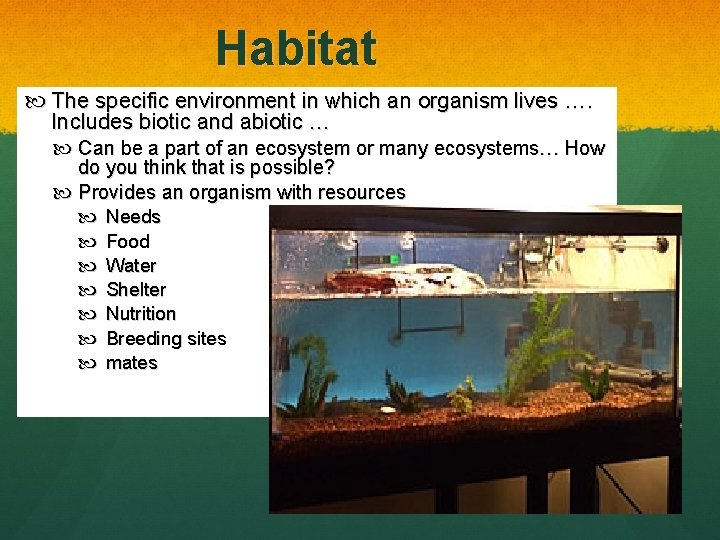
Habitat The specific environment in which an organism lives …. Includes biotic and abiotic … Can be a part of an ecosystem or many ecosystems… How do you think that is possible? Provides an organism with resources Needs Food Water Shelter Nutrition Breeding sites mates
2. Ecosystem Process
Ecosystem Process 1. Cycling of chemical elements 2. Flow of energy
Cycling of Chemical elements are needed by some form of life. Are required for growth and reproduction, must be available to organisms at the right time, in the right amount, and the right ratio Are recycled Waste food waste food
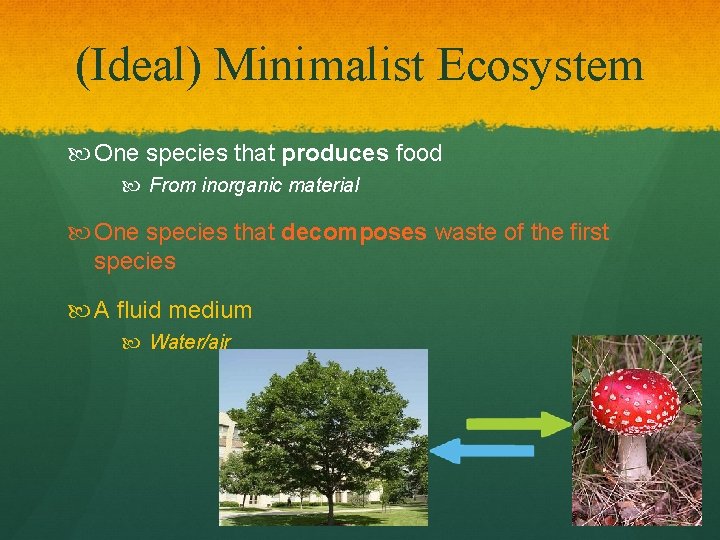
(Ideal) Minimalist Ecosystem One species that produces food From inorganic material One species that decomposes waste of the first species A fluid medium Water/air
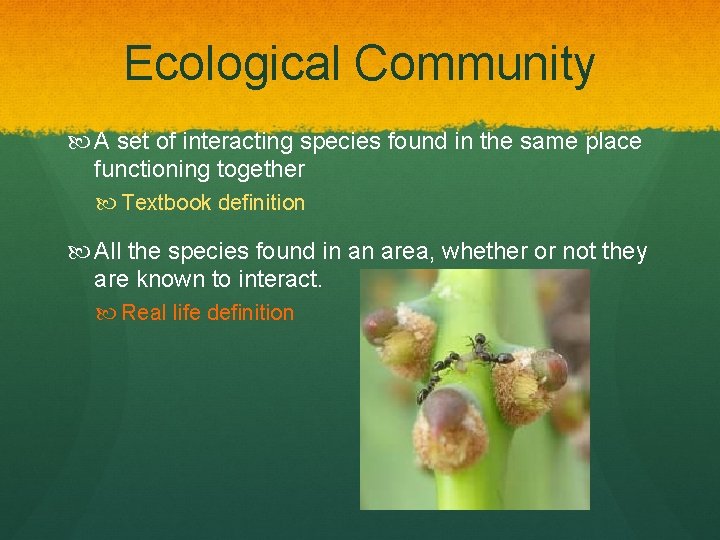
Ecological Community A set of interacting species found in the same place functioning together Textbook definition All the species found in an area, whether or not they are known to interact. Real life definition
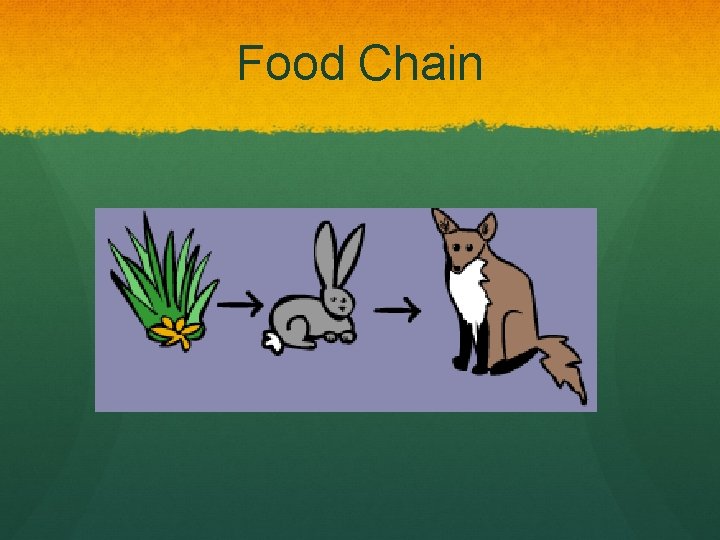
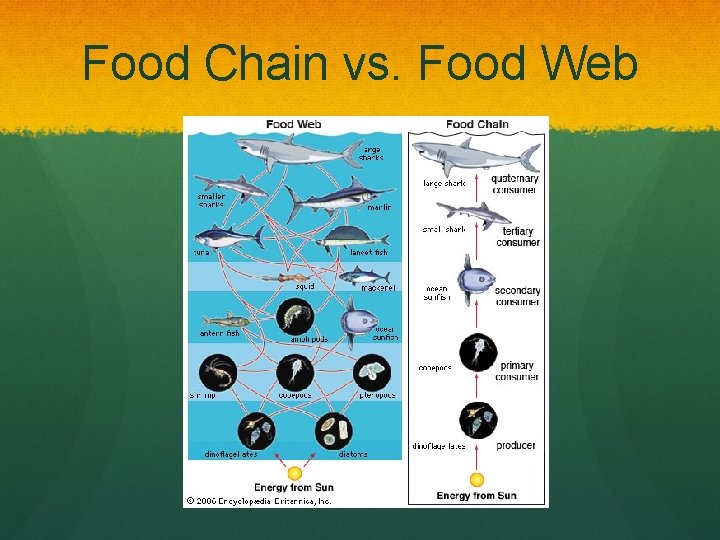
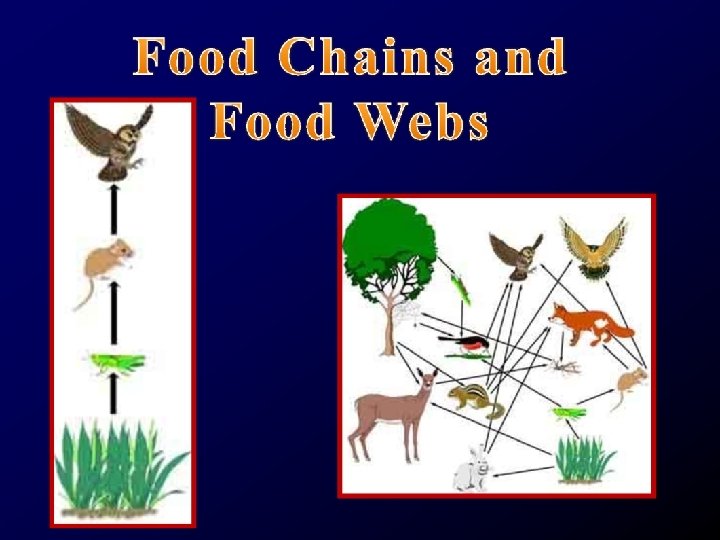
Species interaction FOOD CHAINS! Circle of Life Who eats who? How is energy transferred? Food chain = more simple Food web = more complex
Food Chain
Food Chain vs. Food Web
Food Chain vs. Food Web
Trophic Levels Trophic? ? ? Trophic = to nourish
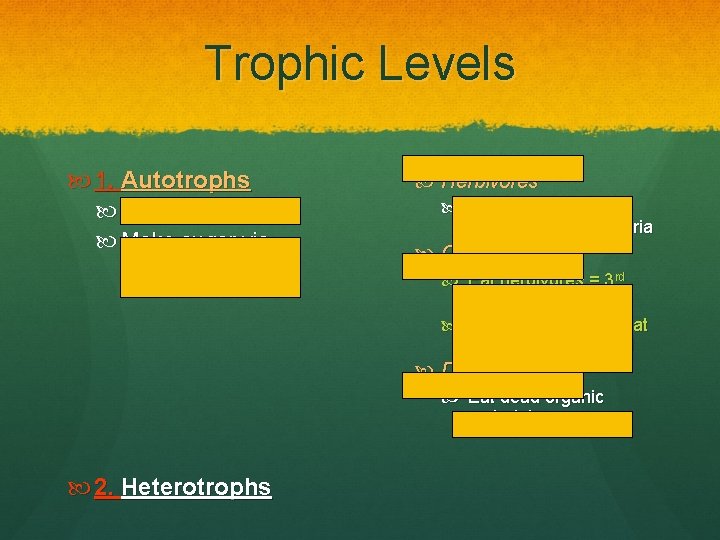
Trophic Levels 1. Autotrophs “self- nourishing” Make sugar via photosynthesis Herbivores Eat plants, algae, or photosynthetic bacteria Carnivores Eat herbivores = 3 rd level Eat carnivores that eat herbivores = 4 th level Decomposers Eat dead organic material 2. Heterotrophs
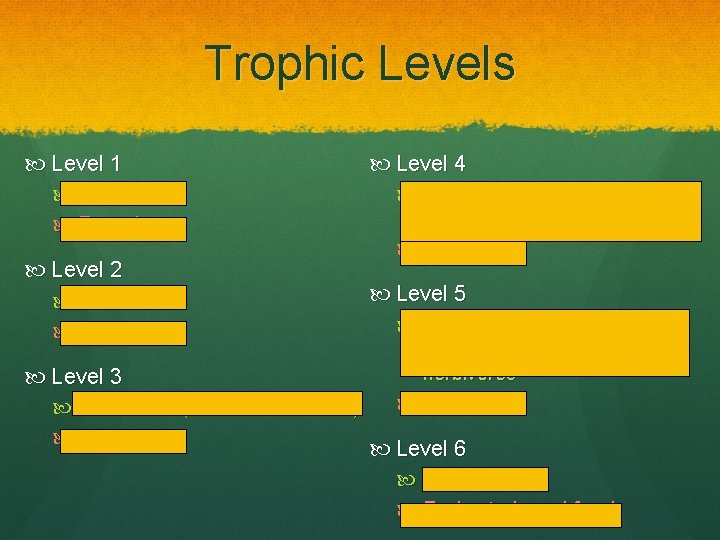
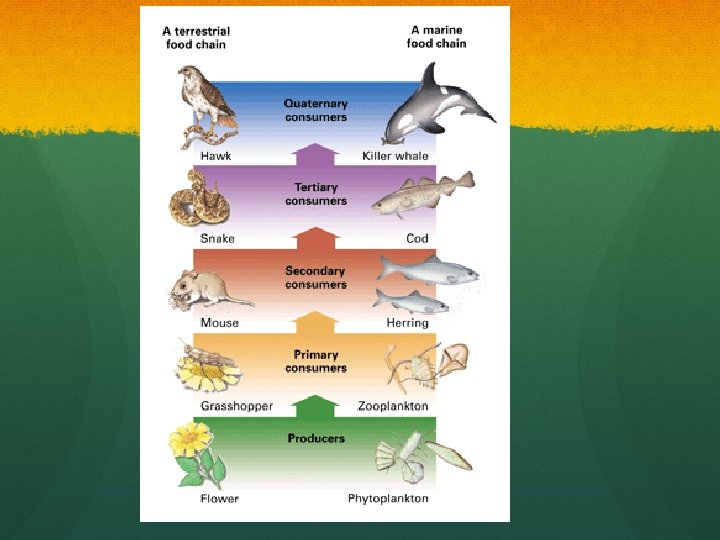
Trophic Levels Level 1 Autotrophs Ex: oak tree Level 2 Herbivores Ex: mouse Level 3 Carnivores (that eat herbivores) Ex: snake Level 4 Carnivores (that eat carnivores that ate herbivores) Ex: bird Level 5 Carnivores that eat carnivores that ate herbivores Ex: hawk Level 6 Decomposers Ex: bacteria and fungi
- Slides: 27